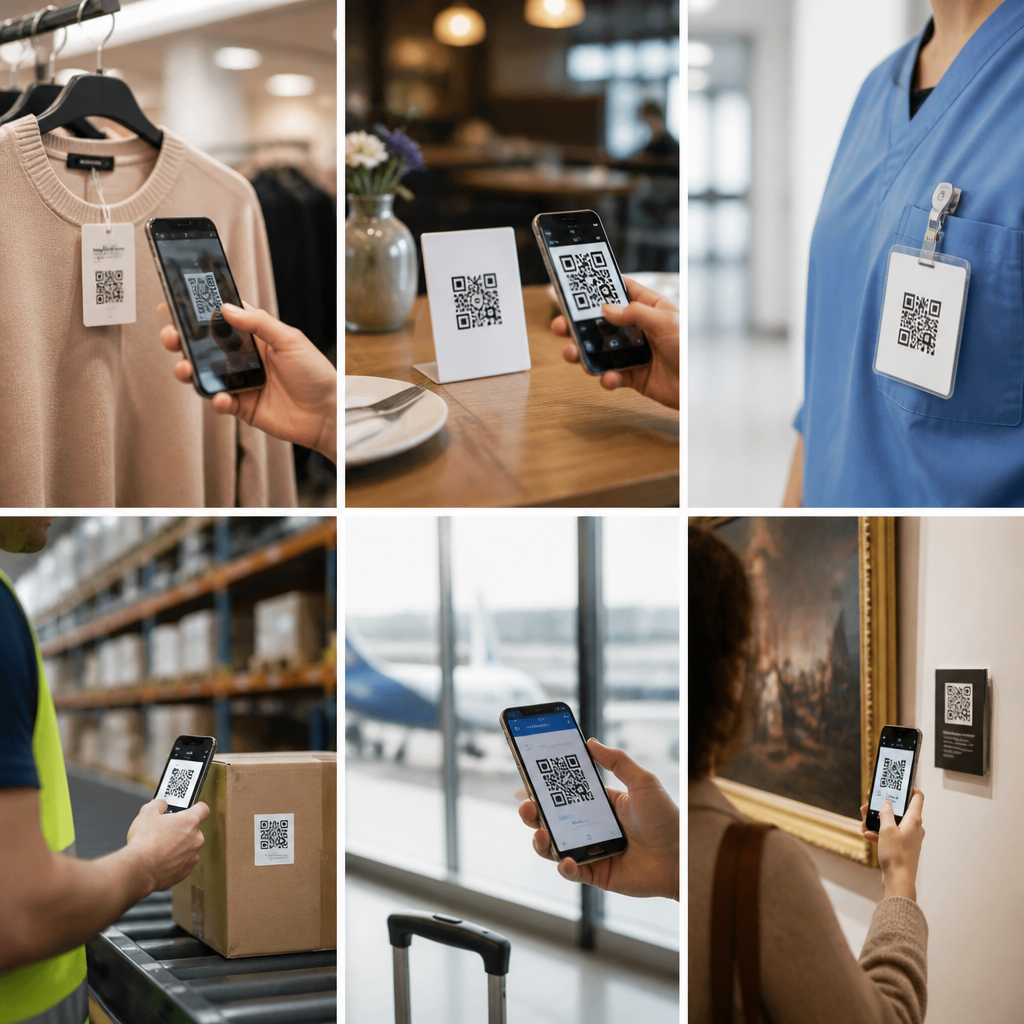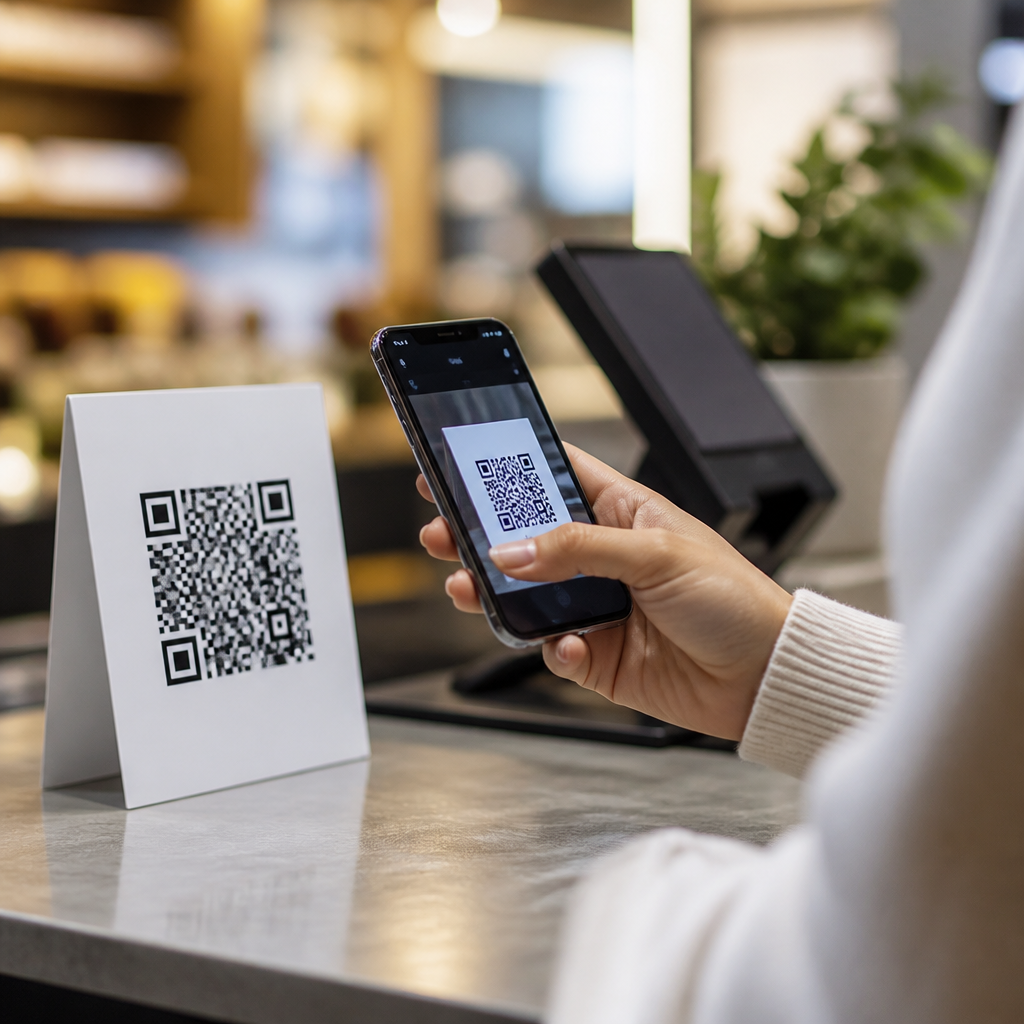

QR codes and RFID tags both connect physical objects to digital systems, but they solve different problems and perform best under different operating conditions. A QR code is a two-dimensional barcode read by a camera, usually a smartphone or industrial scanner. RFID, or radio-frequency identification, uses electromagnetic fields to identify tagged items through a reader, often without line of sight. In the broader landscape, NFC, Bluetooth Low Energy beacons, and traditional barcodes also compete for the same budget and workflow decisions. Choosing correctly affects inventory accuracy, checkout speed, traceability, customer experience, hardware cost, and long-term scalability.
I have worked with retailers, event operators, and warehouse teams that assumed these tools were interchangeable. They are not. A restaurant wants low-cost menus and fast customer access, a hospital wants asset visibility without constant rescanning, and a manufacturer wants serialized tracking that survives harsh handling. The right answer depends on read range, data capacity, environmental durability, security controls, standards support, and the behavior expected from users or staff. This article explains the key differences between QR codes, RFID, NFC, and related identification technologies, then maps each option to practical use cases so decision-makers can build a system that fits real operations instead of marketing claims.
What QR Codes and RFID Actually Do
The simplest distinction is this: QR codes are optical, while RFID is radio-based. A QR code stores data in a square matrix of black and white modules. It must usually be visible and captured by a camera with adequate lighting, focus, and angle. Static QR codes hold fixed information, such as a product URL, while dynamic QR codes point to editable destinations and support analytics, redirects, and campaign management. Because smartphones already include cameras and QR readers, deployment costs are often minimal. Printing labels is cheap, and global standards from ISO and GS1 make implementation straightforward across packaging, tickets, and marketing materials.
RFID uses a tag and a reader. Passive RFID tags draw power from the reader signal, while active tags use a battery for longer range and more frequent beaconing. UHF RFID, standardized under EPCglobal and ISO/IEC 18000, is common in logistics and retail inventory because hundreds of items can be read rapidly without direct visibility. High-frequency RFID includes NFC, which most smartphones support for short-range tap interactions. In practice, RFID excels when objects move quickly, are stacked, or cannot be individually presented to a scanner. That operational difference, more than the acronym, is why RFID changes labor models in warehouses, laundries, hospitals, and apparel stores.
Core Differences: Cost, Range, Speed, Security, and Data
When clients ask, “Which is better, QR code or RFID?” the accurate answer is that each wins on different variables. QR codes are dramatically cheaper at the item level. A printed code can cost almost nothing beyond normal label production. Passive RFID tags cost more, and the infrastructure cost is significantly higher because readers, antennas, middleware, and calibration are required. However, RFID can reduce labor enough to justify the spend. Zara and Decathlon are widely cited examples of retailers using RFID to improve stock accuracy and support omnichannel fulfillment, because reading many garments at once is far faster than scanning one code at a time.
Read range is another decisive factor. A QR code typically requires a near-field camera capture and line of sight. RFID may work from a few centimeters to several meters, depending on frequency, power, antenna design, and the environment. Speed also differs sharply. A cashier or worker can scan QR codes quickly, but each scan is still a discrete action. RFID supports bulk reads, portal reads, and automated checkpoints. Security is nuanced: QR codes can be copied visually and replaced by malicious stickers, while RFID can be cloned in some implementations if encryption and authentication are weak. NFC usually offers stronger phone-native secure interaction patterns for payments and access.
| Technology | How it works | Typical range | Main strengths | Common limits | Best-fit use cases |
|---|---|---|---|---|---|
| QR code | Camera reads printed 2D code | Close visual scan | Very low cost, smartphone-ready, easy to print | Needs visibility, can be damaged, one-at-a-time scanning | Menus, tickets, packaging, onboarding, payments |
| RFID | Reader uses radio waves to detect tag | Centimeters to meters | No line of sight, bulk reads, automation | Higher tag and reader cost, interference risks | Inventory, asset tracking, logistics, laundry |
| NFC | Short-range high-frequency radio tap | Usually under 4 cm | Secure tap UX, smartphone support, fast authentication | Short range, tag cost above print | Payments, access control, smart posters, authentication |
| Barcode | Laser or camera reads linear code | Close visual scan | Mature, cheap, universal retail support | Low data density, line-of-sight required | POS, shipping labels, basic inventory |
| BLE beacon | Battery device broadcasts signal | Meters to tens of meters | Indoor proximity and location experiences | Battery maintenance, app dependence | Wayfinding, proximity marketing, RTLS layers |
QR Codes vs NFC vs Other Tech in Customer-Facing Experiences
For customer interactions, QR codes dominate because they are friction-light and inexpensive. Restaurants adopted them widely for digital menus, especially after 2020, because any printed surface could become a mobile entry point without app installation. The same logic applies to product packaging, museum exhibits, event signage, warranty registration, and direct-to-consumer campaigns. Dynamic QR platforms also let brands change landing pages, localize content, add UTM parameters, and track scan volume by time and location. That flexibility is a major reason QR codes remain central to mobile engagement even as newer technologies attract attention.
NFC is often better when the desired action is a deliberate tap with stronger assurance. Contactless card payments are the clearest example. Apple Pay and Google Wallet rely on secure elements, tokenization, and near-field communication, making them suitable for payments and identity-related experiences where simply scanning a visible code is not enough. NFC also works well for smart business cards, hotel room access, transit validation, and anti-counterfeit product verification. In premium packaging, I have seen brands combine NFC and QR together: the QR code drives universal access, while the NFC tag enables trusted tap authentication for customers with compatible phones.
Bluetooth Low Energy and ultra-wideband enter the conversation when businesses need real-time location, not just identification. BLE beacons can trigger app-based experiences inside stores, airports, or venues, but they depend on software permissions and battery upkeep. UWB provides high-precision ranging and is increasingly used in premium access systems and item finding, yet costs remain higher than printed or passive options. For most public interactions, QR codes remain the broadest-reach tool because they require no special hardware beyond a camera. When identity, tap convenience, or secure provisioning matter more than universality, NFC usually has the advantage.
Operational Use Cases: Retail, Healthcare, Manufacturing, and Events
Retail shows the split clearly. QR codes are excellent for shelf-edge content, self-checkout support, returns workflows, and linking shoppers to product details, care instructions, or loyalty offers. RFID is stronger for back-of-house inventory counts, cycle counting, loss prevention, and omnichannel order picking. A store associate can scan one dress label with a QR code, but an RFID reader can identify an entire rack in seconds. That difference improves inventory accuracy, which in turn improves buy-online-pickup-in-store reliability. According to widely reported industry deployments, item-level RFID can push apparel inventory accuracy materially higher than manual barcode-only processes.
Healthcare environments demand a more cautious design. QR codes are useful for patient education, medication instructions, specimen labeling, and device onboarding because they are visible, inexpensive, and compatible with standard mobile devices. RFID is often preferred for asset tracking, surgical instrument management, linen control, and patient flow monitoring, where staff cannot stop to scan every item individually. Yet radio performance can degrade near liquids and metals, both common in hospitals, so tag selection and testing matter. In regulated settings, neither QR nor RFID should be viewed as a standalone safety control; they must connect to auditable systems and clear governance.
Manufacturing and events illustrate two ends of the spectrum. In factories, QR codes work well for work instructions, machine maintenance links, serialized components, and quality records. RFID adds value when pallets, totes, work-in-progress containers, or returnable transport items need automated movement tracking through dock doors or process gates. At events, QR codes dominate ticketing because attendees can present a phone screen or printed pass cheaply at scale. RFID wristbands, however, are often selected for festivals and large conferences when organizers want faster entry, cashless payment, access zoning, and crowd-flow analytics without requiring each person to unlock a screen.
How to Choose the Right Technology Stack
A practical selection framework starts with six questions. First, do you need line-of-sight scanning or hands-free capture? Second, how many items must be read at once? Third, what is the acceptable per-item tag cost? Fourth, will users rely on their own phones, or will staff use dedicated readers? Fifth, what security or authentication level is required? Sixth, what environment will the tag face, including abrasion, moisture, metal, temperature, and tampering risk? Once teams answer those questions honestly, the shortlist usually becomes obvious. Most failed deployments I have reviewed happened because buyers chased novelty instead of matching the tool to the workflow.
In many cases, the best answer is not either-or but layered deployment. A manufacturer may print a QR code for universal visibility and add RFID for warehouse automation. A luxury brand may use QR for storytelling, NFC for authentication, and a traditional barcode for retail point-of-sale compatibility. GS1 Digital Link is especially relevant here because it helps connect a single standards-based identifier to multiple digital destinations across packaging and commerce. That approach supports internal linking across systems, cleaner data governance, and future flexibility. If you are evaluating QR codes vs RFID vs NFC, start with the user journey, map the operational constraints, and pilot under real conditions before scaling.
QR codes, RFID, NFC, barcodes, and BLE all have legitimate roles, but they are not interchangeable. QR codes are the lowest-cost bridge between physical media and digital content, making them ideal for customer access, packaging, tickets, and simple operational workflows. RFID shines when organizations need non-line-of-sight, multi-item, automated identification at speed. NFC fits trusted tap interactions such as payments, access, and authentication. BLE and UWB support proximity and location layers where identification alone is insufficient. The best systems align the technology with the environment, required security, staffing model, and customer behavior rather than selecting a tool based on trend cycles.
For most businesses building a practical roadmap, the decision starts with one question: are you trying to inform, identify, authenticate, or locate? Inform usually points to QR codes. Identify at scale often points to RFID. Authenticate and tap-based access usually point to NFC. Locate in real time may require BLE or UWB. Use that logic, then validate it with a pilot, durability testing, and integration planning. If you are expanding your knowledge under QR Code Trends, Statistics and Future, use this hub as your starting point and compare each technology against your exact use case before investing.
Frequently Asked Questions
What is the main difference between QR codes and RFID?
The biggest difference is how each technology identifies an item and how it is read. A QR code is a visual, two-dimensional barcode that must be scanned by a camera-based device such as a smartphone, tablet, or fixed industrial scanner. In most cases, the code needs to be visible and properly positioned so the camera can capture it clearly. RFID, by contrast, uses radio waves to communicate between a tag and a reader. That means an RFID tag can often be detected without direct line of sight, even when it is inside packaging, behind a label, or moving through a gate or portal.
That difference leads to very different strengths. QR codes are simple, low-cost, and widely accessible because nearly every smartphone can read them. They are ideal when a person is expected to interact with the item, such as scanning a package for product details, menus, authentication, or payment. RFID is better suited for automation, speed, and bulk identification. A reader can detect many tagged items quickly, which is why RFID is commonly used in inventory control, warehouse operations, asset tracking, retail stock management, and access control. In short, QR codes are visual and user-driven, while RFID is radio-based and often process-driven.
When should a business choose QR codes instead of RFID?
A business should choose QR codes when affordability, simplicity, and customer accessibility are top priorities. QR codes are inexpensive to generate and print, and they can be placed on product packaging, signage, documents, tickets, labels, and marketing materials without adding much cost. Because consumers can scan them with their own phones, QR codes work especially well for public-facing experiences such as linking to websites, manuals, promotions, loyalty programs, event check-in pages, restaurant menus, and product verification tools.
QR codes are also a strong choice when each item does not need to be detected automatically from a distance. If a user can intentionally point a camera at the code, then a QR system may be all that is needed. They are useful in environments where line-of-sight scanning is acceptable and where the value of the tracked item does not justify the higher infrastructure cost of RFID readers and tags. For example, small businesses, healthcare forms, educational materials, consumer packaging, and temporary campaigns often benefit from QR codes because deployment is fast and the barrier to adoption is low. If the goal is to connect a physical object to digital content in a straightforward and highly scalable way, QR codes are often the practical choice.
In what situations does RFID perform better than QR codes?
RFID performs better when speed, automation, and non-line-of-sight reading are required. In a warehouse or distribution center, workers may need to identify cartons, pallets, bins, or assets without stopping to align each label in front of a scanner. RFID supports that kind of workflow because readers can capture tag data wirelessly, sometimes from multiple items at once. This makes RFID especially valuable in supply chain operations, manufacturing, logistics, retail inventory counts, tool tracking, and returnable asset management.
RFID also stands out in environments where items are moving quickly or where manual scanning would slow operations down. A retail store, for example, can use RFID for faster cycle counts and improved inventory accuracy. A hospital can use RFID to track equipment and reduce time spent locating critical assets. A secured facility can use RFID credentials for contactless access control. While performance depends on the type of RFID system, tag material, reader placement, and environmental conditions, RFID is generally the better fit when a business needs efficient, repeated, large-scale identification with minimal human intervention. If the process depends on reading hidden, stacked, or fast-moving items, RFID usually has the advantage over QR codes.
How do cost, setup, and maintenance compare between QR code and RFID systems?
QR codes usually have a much lower cost of entry. Creating a QR code can be nearly free, and applying one to a label, sign, or package is often just part of the normal printing process. There is little specialized hardware required if users scan with smartphones, and even in industrial settings, camera-based scanners are generally easier and less expensive to deploy than a full RFID system. For this reason, QR codes are often attractive to startups, small businesses, and organizations that want a fast rollout without major infrastructure investment.
RFID typically involves higher upfront and operational costs. Businesses need RFID tags, readers, antennas, software integration, and sometimes physical adjustments to the environment for optimal read performance. Tag prices vary widely depending on whether the tags are passive, active, ruggedized, reusable, or designed for specialty materials like metal. Setup can also be more complex because radio performance must be tested in real-world conditions. Metals, liquids, interference, and orientation can all affect read reliability. However, the higher investment can be justified when RFID reduces labor, improves inventory visibility, lowers shrinkage, or enables automation that QR codes cannot match. In other words, QR codes win on simplicity and low cost, while RFID can deliver a stronger return when operational efficiency and scale matter more than initial budget.
How do QR codes, RFID, NFC, BLE beacons, and traditional barcodes fit into the same technology landscape?
These technologies all help connect physical objects to digital systems, but they are designed for different interaction models. Traditional barcodes are the simplest and most established option for basic item identification, especially in retail and logistics. QR codes expand on that idea by storing more information and supporting rich digital interactions through camera scanning. They are excellent for linking people to websites, apps, product data, service workflows, and mobile experiences. RFID moves beyond visual scanning by using radio communication, making it more suitable for automated identification, bulk reading, and operational tracking where line of sight is a limitation.
NFC is closely related to RFID but is usually used for short-range, intentional interactions such as mobile payments, smart posters, secure tap-to-pair functions, ticketing, and authentication. BLE beacons serve a different purpose again, focusing more on proximity and location-aware experiences, such as indoor navigation, presence detection, and contextual notifications. The right choice depends on the job to be done. If a person should actively scan or access information, QR codes are often ideal. If a system needs to identify items automatically and at scale, RFID is stronger. If secure close-range tap interaction is needed, NFC is often the better option. If location and presence matter more than identity alone, BLE may be more appropriate. In practice, many organizations use several of these technologies together rather than treating them as direct replacements for one another.