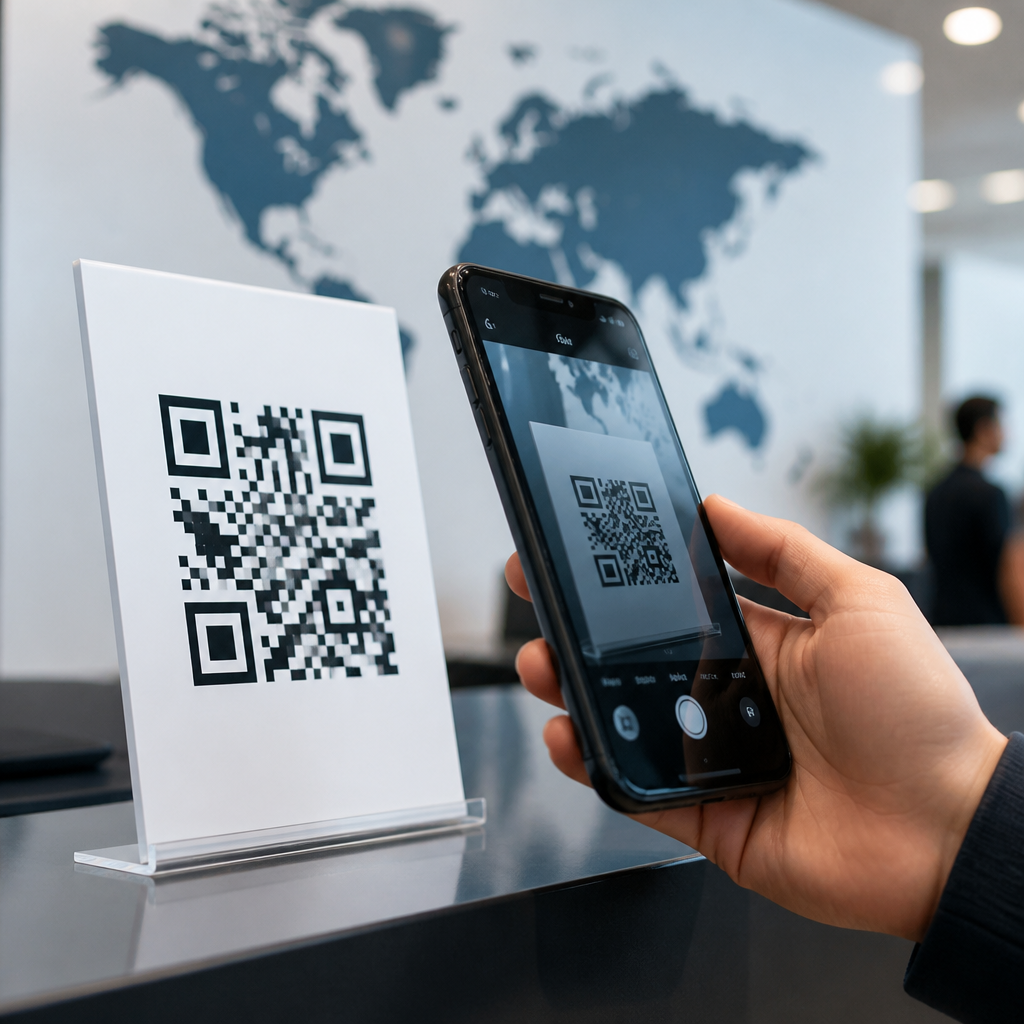
QR code adoption rates worldwide have moved from a niche convenience to a mainstream digital behavior, reshaping how consumers pay, authenticate, learn, and interact with brands. A QR code, or Quick Response code, is a two-dimensional barcode that stores information such as a URL, payment credential, app deep link, menu, product record, or event ticket. Unlike older linear barcodes, QR codes can be scanned quickly from multiple angles and can hold far more data. That combination of low cost, high speed, and smartphone compatibility explains why QR code usage statistics now matter to retailers, banks, restaurants, manufacturers, healthcare systems, transit operators, and marketers.
In practice, adoption is not one global story. I have seen the same code type perform very differently depending on mobile wallet penetration, camera app defaults, payment regulation, and local consumer trust. China normalized QR payments years before many Western markets, while India accelerated adoption through UPI-linked scanning. In the United States and Europe, the strongest growth initially came from menu replacement, contactless check-in, and packaging campaigns, then expanded into payments, loyalty, and authentication. Worldwide adoption rates therefore reflect infrastructure, not just consumer curiosity.
Understanding QR code usage statistics helps businesses decide where to invest and what outcomes to expect. High scan volume alone is not the full signal. The important measures are active scanner share, payment penetration, repeat usage, scan-to-action conversion, fraud controls, and sector-specific utility. A restaurant using static menu codes needs different benchmarks than a manufacturer printing serialized dynamic codes for product traceability. This hub article maps the global picture, explains the regional differences, and highlights the business cases driving continued growth.
Global adoption patterns and what the numbers show
Worldwide, QR code adoption has been driven by the spread of smartphones with built-in cameras, maturing mobile wallet ecosystems, and contactless habits reinforced during the pandemic. Industry reporting from firms such as Juniper Research, Statista, EMARKETER, and payments networks consistently points in the same direction: billions of QR code interactions now occur annually, and the user base continues to expand across both developed and emerging economies. While methodologies differ, most studies show a clear increase in the number of consumers who have scanned a QR code in the past year, especially for payments, product information, and promotions.
The most useful way to interpret global QR code usage statistics is by separating mature, payment-led markets from utility-led markets. In mature payment-led markets, QR scanning is a default point-of-sale behavior supported by super apps or bank apps. In utility-led markets, consumers scan more selectively for menus, tickets, Wi-Fi access, login verification, and marketing offers. Both groups contribute to worldwide growth, but they produce different engagement curves. Payment-led markets typically have higher frequency per user. Utility-led markets often have broader awareness but lower repeated daily use.
Another global pattern is the shift from static to dynamic QR codes. Static codes link to a fixed destination and are cheap to deploy, but dynamic codes allow destination changes, campaign tracking, fraud mitigation, and device-specific experiences. In my experience, organizations that treat QR codes as measurable digital entry points get better results than those that simply print codes everywhere. Adoption rates rise when the destination is fast, mobile-optimized, and clearly valuable.
Regional leaders: Asia-Pacific sets the pace
Asia-Pacific remains the strongest region for QR code adoption, especially in China, India, Southeast Asia, South Korea, and increasingly Japan. China established the modern consumer expectation that scanning a code could handle everyday life, from street food payments to hospital registration and peer-to-peer transfers. Alipay and WeChat Pay made merchant acceptance simple and inexpensive, which created a self-reinforcing network effect. Once both merchants and consumers were trained, QR codes became standard infrastructure rather than a campaign tactic.
India followed a different but equally important path. UPI transformed QR payments by connecting banks, apps, and merchants through interoperable rails. Small merchants could display a printed code and begin accepting digital payments without card terminals. That lowered cost barriers dramatically. The result has been explosive transaction growth and wider financial inclusion, especially among microbusinesses and informal retail. In market visits, I have repeatedly seen QR signs at roadside stalls, pharmacies, fuel stations, and temple donation points, a level of penetration that demonstrates habitual rather than experimental use.
Southeast Asian markets such as Thailand, Singapore, Indonesia, and Vietnam also show strong momentum, supported by tourism, central bank standards, and wallet competition. Interoperability matters here. National standards like Thailand’s PromptPay and Singapore’s SGQR reduced fragmentation, making codes easier for merchants and more predictable for consumers. Where regulators support shared frameworks, adoption rates usually climb faster.
North America and Europe: broad awareness, uneven depth
In North America and Europe, QR code adoption rose sharply when restaurants, venues, and employers needed low-touch interactions. Digital menus, vaccine or event check-ins, and package-based promotions introduced millions of users to scanning behavior. Apple and Google helped remove friction by integrating QR recognition directly into camera apps. That matters more than many companies realize. When users no longer need a separate scanner app, trial becomes habit much faster.
The United States has strong awareness but mixed repeat behavior by use case. Consumers commonly scan restaurant codes, retail promotions, app download prompts, and peer-to-peer payment requests, yet point-of-sale QR payments still trail card tap and wallet NFC in many stores. Merchant economics explain part of this. Card acceptance infrastructure is already widespread, and many retailers are cautious about introducing parallel payment workflows unless fees, loyalty integration, or checkout speed improve materially.
Europe shows a similarly split picture. Countries with strong bank payment apps or account-to-account initiatives have more room for QR growth, while card-dominant markets often use QR codes more for ticketing, authentication, and product information than for in-store payments. The region’s privacy expectations also shape deployment. Codes linked to first-party data collection perform best when the value exchange is explicit, such as warranty registration, digital receipts, or verified product provenance.
What sectors are driving QR code usage statistics
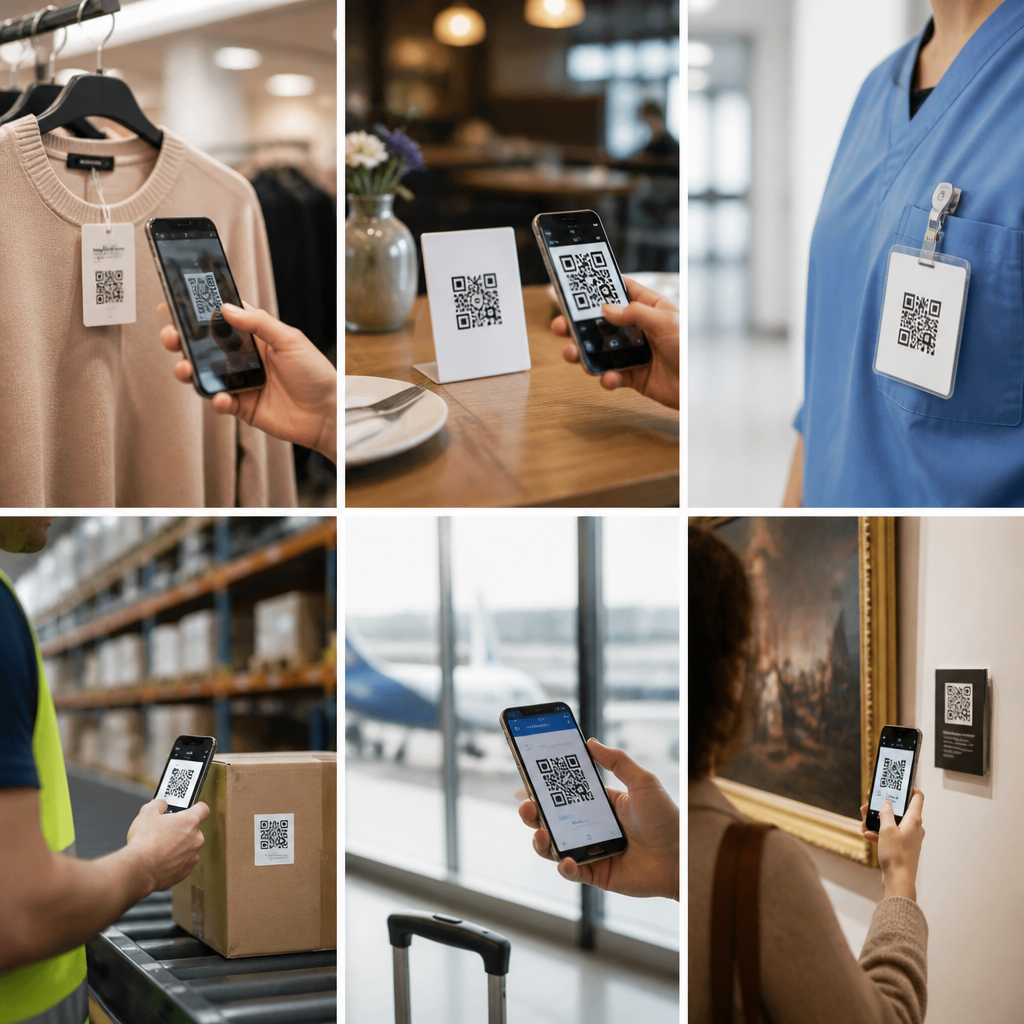
Different industries contribute to QR code adoption in distinct ways, and sector context is essential when reading usage statistics. Retail uses QR codes for shelf-level promotions, self-checkout, product detail pages, and mobile payments. Restaurants rely on them for menus, ordering, table payment, and loyalty enrollment. Transportation uses them for ticketing, boarding, and asset tracking. Healthcare uses them for patient identification, medication management, and appointment workflows. Manufacturing and logistics use QR codes for traceability, maintenance records, and warehouse operations.
Packaging is one of the most important long-term growth channels. A code printed on a product can connect the physical item to digital content after the sale, turning packaging into a persistent customer touchpoint. Brands use this for recipe content, care instructions, refill ordering, anti-counterfeit verification, and recall communication. In regulated industries, that function goes beyond marketing. It supports compliance, provenance, and chain-of-custody documentation.
| Sector | Primary QR use | Why adoption grows |
|---|---|---|
| Retail | Promotions, payments, product details | Low-cost engagement and measurable conversion |
| Restaurants | Menus, ordering, table payments | Faster service and lower printing costs |
| Healthcare | Patient ID, medication workflows | Accuracy, safety, and record access |
| Manufacturing | Traceability and maintenance logs | Operational visibility and compliance |
| Transit and events | Ticketing and entry validation | Speed, fraud control, and easy distribution |
When organizations compare sectors, they should avoid assuming one benchmark fits all. A successful payment code may be scanned several times per week by the same user, while a warranty code may be scanned once per product. Both can represent strong adoption if they support the intended workflow and produce measurable outcomes.
Key factors that influence adoption rates
Five variables consistently determine whether QR code adoption rises or stalls. First is smartphone readiness: camera quality, operating system support, and data access. Second is acceptance infrastructure: merchant signage, app support, and payment rails. Third is consumer trust: people scan more readily when branding is clear and the destination is recognizable. Fourth is value clarity: the code must promise a specific benefit such as pay now, see ingredients, claim discount, or verify authenticity. Fifth is performance: slow landing pages and broken redirects suppress repeat use quickly.
Security concerns are real and should be addressed directly. Fraudsters can replace printed codes with malicious ones, especially in public spaces. The most effective response combines tamper checks, short branded domains, app-based verification, and staff training. Dynamic codes also help because organizations can disable compromised destinations without reprinting every asset. In sectors handling payments or personal data, strong controls are not optional; they are essential to sustained adoption.
Measurement quality also shapes strategy. Useful QR code usage statistics include unique scans, repeat scans, time-to-action, location, device type, completed transactions, and post-scan retention. I recommend separating raw scan count from qualified scans. A campaign can produce high curiosity and poor business impact if the destination is weak. The strongest programs connect scans to downstream events such as purchases, registrations, support deflection, or reduced service time.
Where worldwide growth is headed next
QR code adoption rates worldwide will keep rising because the format solves practical problems across payments, commerce, identity, and operations. The next stage of growth will come less from novelty and more from integration. Expect deeper links with digital wallets, passkeys, omnichannel loyalty, product passports, and connected packaging. Regulations around sustainability and traceability, especially in consumer goods and industrial supply chains, will make item-level codes more valuable. Cross-border payment initiatives will also expand usage where tourists and small merchants need simple acceptance.
The main lesson from global QR code usage statistics is that adoption accelerates when the scan replaces friction with certainty. Consumers use QR codes repeatedly when the action is obvious, the destination is trusted, and the outcome is immediate. Businesses that want stronger results should map the customer journey, choose dynamic codes where possible, and measure scans against a concrete business objective. As a hub for QR code usage statistics, this page points to a simple conclusion: QR codes are no longer an experiment. They are established digital infrastructure. Review your market, benchmark your use case, and build the next test around a real customer need.
Frequently Asked Questions
1. How widely are QR codes used around the world today?
QR codes are now used at scale across most major global markets, and their adoption has expanded far beyond early use cases like product tracking and promotional links. What began as a practical way to connect physical objects to digital information has become a mainstream behavior in payments, ticketing, restaurant ordering, app downloads, product authentication, identity verification, customer support, and omnichannel marketing. In many countries, consumers now expect to see QR codes in stores, on packaging, in public transportation systems, at events, in healthcare settings, and across digital advertising.
The biggest reason adoption rates have accelerated worldwide is that QR codes solve a universal problem: they reduce friction between offline and online experiences. A person can scan a code on a poster to buy a ticket, scan a table tent to open a menu, scan a package to verify authenticity, or scan a payment code at checkout without installing specialized hardware. Because modern smartphone cameras can read QR codes natively, the technology no longer feels technical or niche to most users. That built-in accessibility has dramatically lowered barriers to adoption for both businesses and consumers.
Adoption levels still vary by region, however. In parts of Asia, QR code usage is deeply integrated into everyday commerce and financial services, especially for mobile payments. In North America and Europe, usage has grown rapidly in hospitality, retail, logistics, healthcare, and advertising, with strong momentum after contactless interactions became more important. In emerging markets, QR codes are also gaining traction because they offer a relatively low-cost digital layer that can support payments, access to information, and customer engagement without requiring expensive infrastructure.
Overall, the global trend is clear: QR codes have moved from optional novelty to standard digital utility. Their worldwide adoption reflects not just a technology trend, but a broader shift in consumer behavior toward instant, mobile-first interaction.
2. Why have QR code adoption rates increased so quickly in recent years?
Several forces have combined to make QR codes one of the fastest-scaling digital interaction tools in the world. The first is smartphone readiness. Years ago, QR code use depended on third-party scanner apps, which created friction and limited use. Today, most smartphones can scan QR codes directly through the native camera, making the experience immediate and intuitive. That simple change removed one of the largest historical obstacles to mass adoption.
A second major driver is the rise of contactless behavior. Businesses and consumers increasingly prefer touch-free interactions for speed, convenience, and hygiene. QR codes fit naturally into this shift because they allow users to access information, make payments, check in, verify identity, or start digital workflows without handling shared devices, paper materials, or physical cash. This made QR codes especially attractive in restaurants, transportation, healthcare, events, and retail environments.
Another reason for rapid growth is their low implementation cost. A business does not need to invest heavily in new hardware to deploy QR codes. A printed sign, product label, receipt, package insert, or digital display can instantly become an entry point to a landing page, payment flow, loyalty offer, support resource, or app experience. That makes QR codes particularly appealing to small businesses, large enterprises, and organizations operating across multiple markets.
QR codes also support a very broad range of use cases, which strengthens adoption. They are not tied to a single industry or behavior. The same underlying format can support payments in one market, mobile menus in another, equipment tracking in another, and education, tourism, or authentication elsewhere. This flexibility makes them easy to standardize across different customer touchpoints.
Finally, businesses value QR codes because they are measurable. Unlike many traditional offline materials, QR code scans can often be tracked by campaign, location, device type, time period, or audience segment. That gives marketers and operators better insight into performance and return on investment, which further encourages rollout. In short, adoption has accelerated because QR codes are simple, cheap, mobile-friendly, versatile, and increasingly expected by users.
3. Which regions and industries are leading global QR code adoption?
QR code adoption is strongest in regions where mobile-first behavior, digital payments, and platform ecosystems are already deeply established. Many Asian markets are frequently seen as leaders, particularly in mobile commerce and QR-based payments. In these environments, consumers often use QR codes not just occasionally, but as part of daily routines for shopping, peer-to-peer payments, public transit, food ordering, and digital services. Strong ecosystem support from banks, super apps, merchants, and payment providers has helped make QR scanning a habitual behavior.
Europe has also seen substantial growth, particularly in transportation, hospitality, tourism, retail, and product information access. Consumers are increasingly comfortable scanning codes for menus, museum guides, digital receipts, event entry, package details, and service interactions. In North America, adoption has become especially visible in restaurants, e-commerce packaging, in-store promotions, healthcare forms, event ticketing, and omnichannel marketing campaigns. What was once uneven usage has become much more mainstream as businesses have normalized QR interactions across customer journeys.
Emerging markets are another important part of the global adoption story. In many of these regions, QR codes provide a practical bridge between offline commerce and digital access. They can support financial inclusion, small merchant digitization, government service access, and mobile engagement without requiring expensive point-of-sale systems or advanced hardware. This makes QR codes especially valuable where affordability and infrastructure flexibility matter.
From an industry perspective, payments remain one of the most influential drivers of adoption. Retail and food service are close behind, especially where speed and convenience shape customer expectations. Logistics and manufacturing use QR codes for tracking and inventory visibility. Healthcare organizations use them for patient intake, prescription workflows, information access, and asset management. Consumer brands place them on packaging to connect buyers to instructions, sustainability details, promotions, and verification tools. Events, travel, education, and real estate have also embraced QR codes because they simplify access to dynamic information.
The industries leading adoption tend to share one common trait: they benefit from connecting physical moments to digital action instantly. That is exactly where QR codes perform best.
4. What do QR code adoption rates mean for businesses and marketers?
For businesses and marketers, rising QR code adoption rates signal that customers are increasingly comfortable using their phones as the primary bridge between the physical and digital world. That matters because it changes how brands can design customer journeys. A package, storefront, ad, receipt, table sign, brochure, badge, or product label is no longer just a static object. It can become an interactive touchpoint that drives engagement, conversion, data collection, support, retention, or loyalty enrollment.
One of the biggest advantages is speed. QR codes can compress multiple steps into one simple action. Instead of asking a customer to type a long URL, search for a product page, download a file manually, or wait for staff assistance, a business can offer immediate access through a scan. That makes interactions smoother and often improves completion rates. In environments where customer attention is limited, removing friction can have a meaningful impact on outcomes.
QR codes also give marketers a more accountable way to connect offline campaigns to digital metrics. A printed ad, direct mail piece, product shelf display, or event banner can be measured in ways traditional media often cannot. Businesses can track which locations generate scans, which creatives perform best, what time scans occur, and whether those scans lead to purchases, sign-ups, downloads, or repeat engagement. This helps improve campaign optimization and budget allocation.
At the same time, adoption rates alone do not guarantee results. Effectiveness depends on execution. The code must be easy to see, placed in a context where scanning makes sense, and connected to a destination that loads quickly and delivers clear value. If a QR code leads to a generic homepage, a broken page, or a poor mobile experience, users may abandon the interaction and lose trust. The strongest implementations offer a compelling reason to scan, such as a payment shortcut, personalized offer, exclusive content, warranty registration, or instant support.
In practical terms, growing global adoption means businesses should stop treating QR codes as experimental add-ons and start treating them as a standard interface. When used thoughtfully, they can improve customer experience, lower operational friction, and make offline marketing far more measurable and interactive.
5. Are there any challenges or limitations affecting QR code adoption worldwide?
Yes, although QR codes are widely adopted and increasingly familiar, their growth is not without challenges. One of the biggest concerns is user trust and security. Because a QR code can hide the destination until it is scanned, malicious actors sometimes use them in phishing, payment fraud, or fake login schemes. This can make some users hesitant, especially in markets where awareness of QR-related scams is rising. Businesses need to address this by using recognizable branding, trusted domains, secure landing pages, and clear instructions that reassure users they are scanning an authentic code.
Another limitation is uneven user behavior across demographics and regions. While smartphone ownership is widespread, not every audience uses QR codes with the same frequency or confidence. Some users still prefer direct links, search, or in-person assistance. In certain contexts, poor connectivity, outdated devices, bad lighting, damaged print quality, or awkward code placement can also reduce scanning success. Adoption may be strong in principle but weaker in real-world execution if these practical details are ignored.
There is also