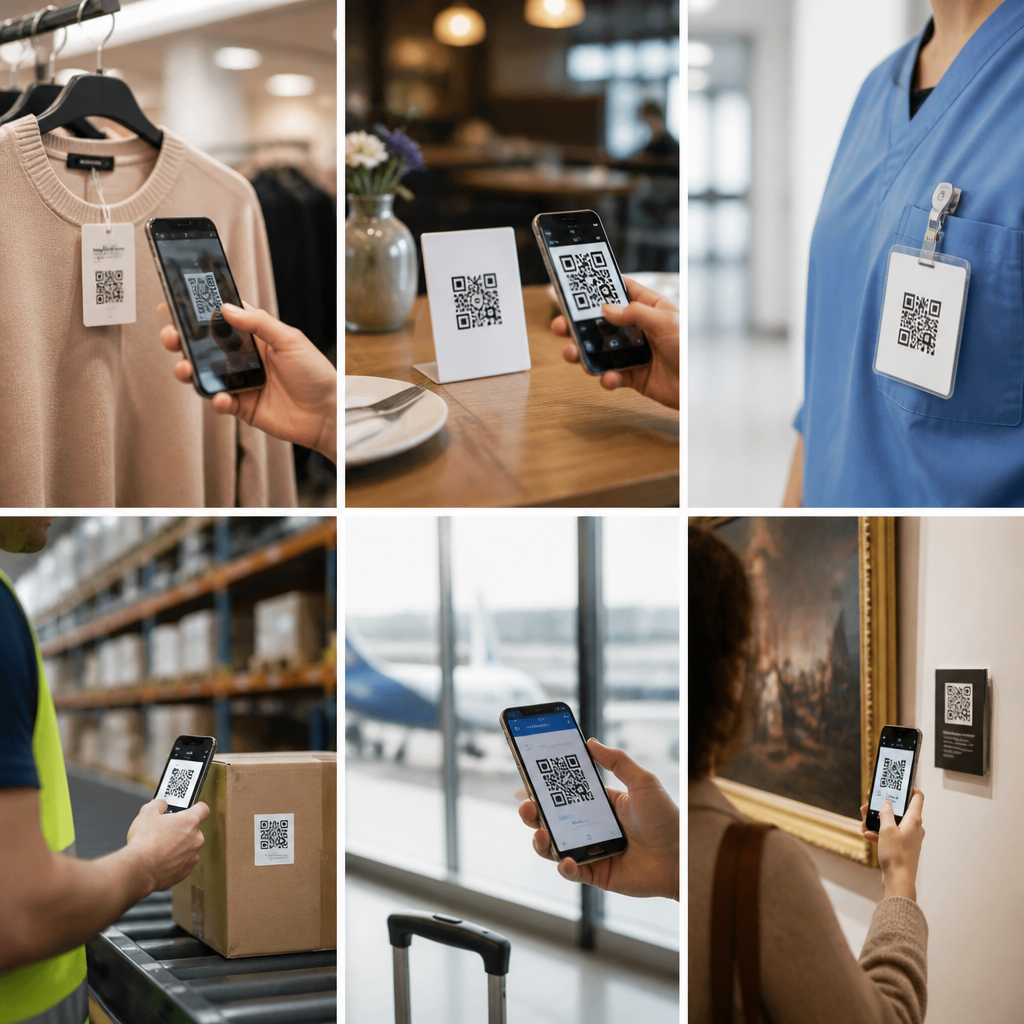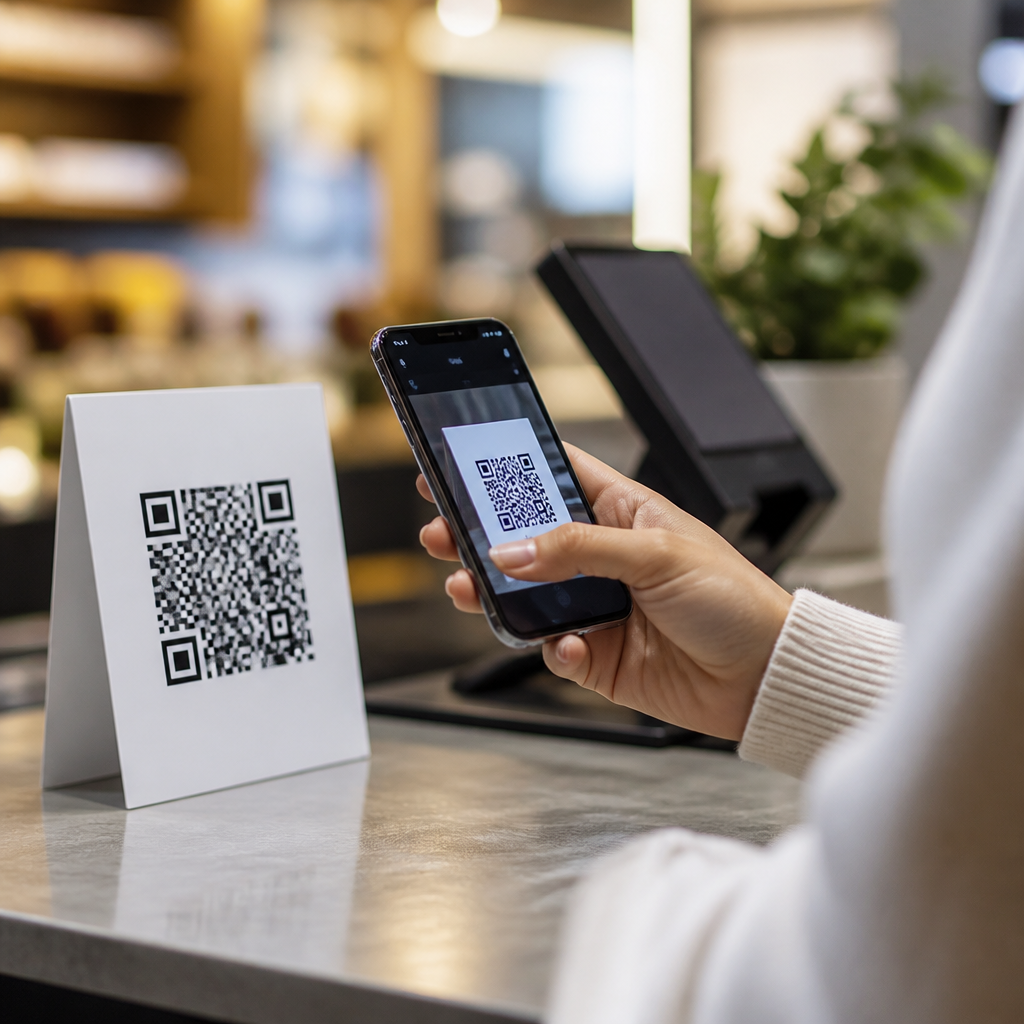
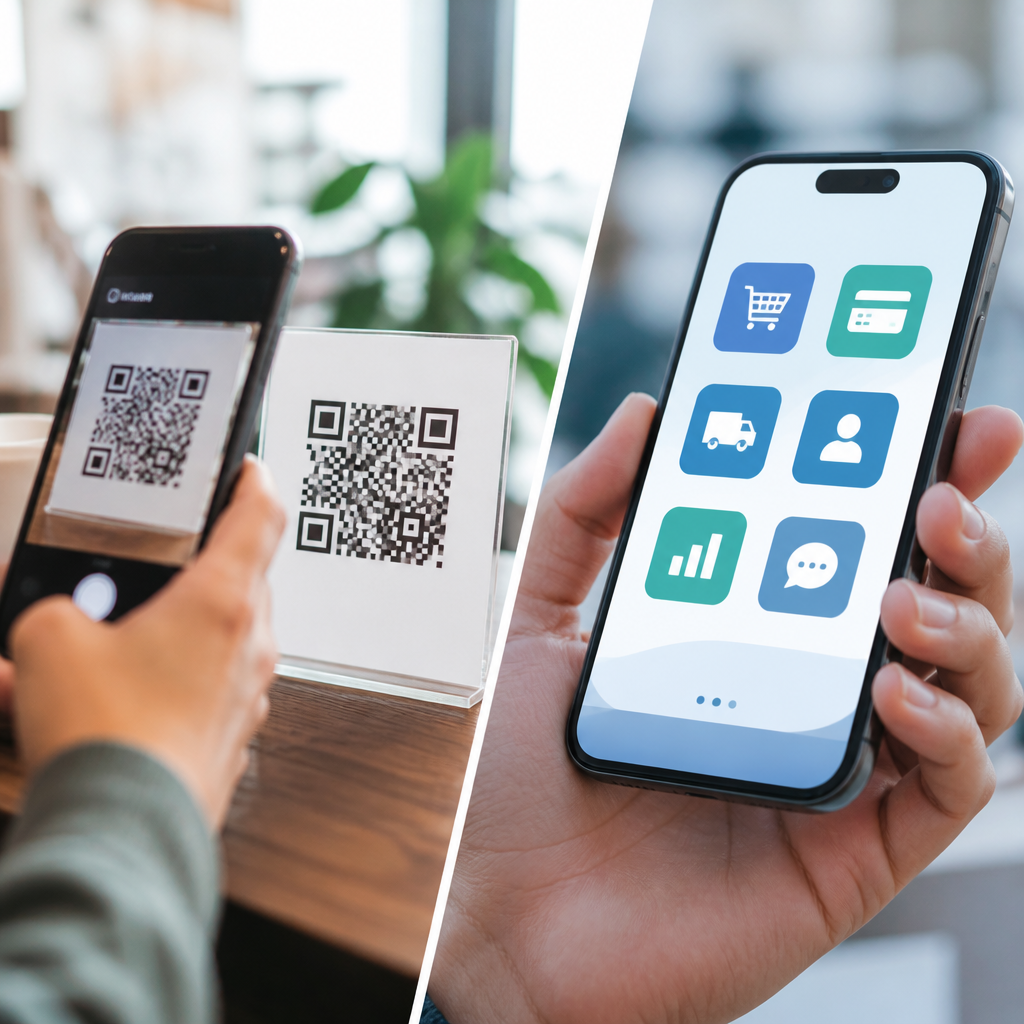
Choosing between QR codes and mobile apps is no longer a simple marketing decision; it is a broader question about how people access services, make payments, verify products, and move between physical and digital experiences. In practice, businesses also compare QR codes with NFC, Bluetooth beacons, SMS short codes, RFID, and mobile wallets because each technology solves a slightly different problem. A QR code is a two-dimensional barcode that a smartphone camera can scan to open a link, trigger a payment flow, store contact details, or authenticate an item. A mobile app is software installed on a device, usually designed to support repeat actions, personalization, offline functions, and deeper integration with phone hardware. NFC, or near-field communication, allows short-range wireless data exchange through a tap. Other technologies, from RFID tags to geofencing, fill more specialized roles. The reason this comparison matters is practical: adoption friction directly affects conversion rates, support costs, data quality, and customer satisfaction. I have seen campaigns fail because teams chose an elegant technology that customers would not use in the moment. I have also seen simple QR deployments outperform expensive app builds because speed beat sophistication. The most effective option depends on context, user intent, security requirements, and how often the interaction will happen. For most first-touch interactions, QR codes have the lowest barrier to entry. For recurring, high-value experiences, mobile apps usually create stronger long-term returns.
What QR Codes Do Best
QR codes are effective because they are immediate, inexpensive, and device agnostic. A user points a camera, sees a preview, and lands on a page without downloading anything. That single advantage explains why restaurants adopted digital menus, why packaging now links to product origin stories, and why event organizers use QR codes for check-in. Static QR codes encode fixed information, while dynamic QR codes redirect through a managed URL, allowing marketers to update destinations, measure scans, and segment traffic by campaign. In field deployments, dynamic codes are almost always the better business choice because they preserve flexibility after print production.
From an operational standpoint, QR codes are easy to distribute across posters, labels, receipts, email, product boxes, and retail displays. They work across iOS and Android through native camera scanning, which removed a major adoption barrier that existed a decade ago. They also support practical use cases beyond marketing, including Wi-Fi access, app store routing, digital business cards, loyalty enrollment, and cross-border payments. EMVCo QR payment standards and regional systems such as Alipay, WeChat Pay, PayNow, and UPI have shown that QR codes can scale from local merchants to national payment infrastructure. The limitation is equally clear: QR codes are great at initiating an interaction, but weak at sustaining an ongoing relationship unless the destination experience is excellent.
When Mobile Apps Are More Effective
Mobile apps outperform QR codes when the experience requires repetition, authentication, personalization, offline capability, or complex workflows. Banking, airline travel, grocery delivery, fitness subscriptions, and workplace collaboration all benefit from app environments because they can store preferences, enable push notifications, use biometrics, cache data locally, and integrate deeply with device permissions. If a customer checks order status three times a week, redeems loyalty points, and receives service alerts, an app reduces friction over time more effectively than repeated browser visits from a QR scan.
That said, app effectiveness is constrained by install resistance. Industry benchmarks regularly show that every extra step before first value lowers completion rates. In campaigns I have audited, a QR code leading directly to a mobile web form converted better than a QR code pushing users to an app store, unless the brand already had strong loyalty. Apps also carry ongoing costs: engineering, QA, release cycles, privacy compliance, SDK management, and support across operating system updates. For one-time or infrequent actions, those costs are often unjustified. The right question is not whether apps are powerful; it is whether users will download and keep one for the task you are asking them to complete.
QR Codes vs NFC vs Other Tech
NFC is often compared directly with QR codes because both can connect a physical object to a digital action. NFC feels seamless: tap a phone to a tag and an action launches instantly. It is excellent for access control, contactless payments, smart posters, product authentication, and configured in-store journeys. Apple Pay and Google Wallet normalized tap behavior, which helped NFC adoption. However, NFC tags cost more than printing a QR code, are harder to inspect visually, and may require closer physical interaction. A damaged poster can still show a scannable QR code, while a failed NFC tag is invisible to the user.
Other technologies serve narrower but important roles. Bluetooth Low Energy beacons support location-aware messaging indoors, but require permissions and careful app integration. RFID excels in inventory tracking and supply chain visibility because tags can be read in bulk without line of sight, yet it is not usually consumer friendly for direct engagement. SMS short codes still work well where mobile internet is limited or demographics skew toward basic phone habits. Mobile wallets bridge several categories by storing passes, tickets, and loyalty cards with lower friction than a full app. In most public-facing campaigns, QR codes win on reach and cost, while NFC wins on elegance and speed for controlled environments.
| Technology | Best Use Case | Main Advantage | Main Limitation |
|---|---|---|---|
| QR codes | Packaging, menus, promotions, payments | No app install, very low cost, easy to print | Needs camera scan and visible placement |
| Mobile apps | Loyalty, banking, repeat transactions, service management | Personalization, login, push, offline features | High install friction and maintenance cost |
| NFC | Tap payments, access control, smart products | Fast, intuitive tap interaction | Tag cost and less visible troubleshooting |
| RFID | Warehouse, asset tracking, logistics | Bulk scanning without line of sight | Limited direct consumer interaction |
| SMS | Simple alerts, low-connectivity audiences | Works on nearly any phone | Limited rich content and analytics depth |
Cost, Measurement, and Conversion Reality
Effectiveness should be measured against business outcomes, not novelty. QR codes usually have the lowest launch cost because design, printing, and landing page setup are straightforward. Platforms such as Bitly, QR Code Generator Pro, Beaconstac, and Uniqode provide dynamic routing, scan analytics, and campaign controls. Mobile apps require product planning, UX design, native or cross-platform development, analytics implementation, security review, and regular updates. NFC sits between them, with modest tag costs but higher deployment complexity when tags are embedded in products or environments.
Conversion behavior is just as important as budget. A user scanning a QR code from product packaging is often in a high-intent moment, especially if the code promises setup help, warranty registration, or authenticity verification. In contrast, asking that user to install an app before helping them usually reduces completion. I have repeatedly seen the best results from a two-step model: QR code first, app invitation second. The code resolves the immediate need through the mobile web, then the page offers app benefits for returning users. This approach mirrors funnel logic. Remove friction at entry, then earn the deeper commitment.
Security, Privacy, and Accessibility Tradeoffs
No comparison is complete without risk analysis. QR codes can be abused through malicious redirects, sticker replacement, or deceptive domains. Good practice includes branded short links, HTTPS destinations, visible call-to-action text, and routine inspection for tampering in public spaces. Mobile apps offer stronger authentication and encrypted session management, but they introduce broader privacy obligations because they often collect device identifiers, location, behavioral data, and account information. NFC can support secure elements and tokenized payments, yet physical tags can also be cloned or replaced if not managed carefully.
Accessibility and inclusion also matter. QR codes depend on camera use, adequate lighting, and printed contrast. They should be paired with short fallback URLs for users who cannot scan easily. Apps can be more accessible when designed well, with screen reader labels, scalable typography, and stored settings, but many fail basic WCAG expectations during rushed releases. SMS remains relevant because it reaches users with limited data plans or older devices. If your audience includes visitors, older adults, or low-frequency users, the more universal option usually wins. Effective technology choices account for real-world conditions, not just ideal demos.
How to Choose the Right Mix
The best answer is usually not QR codes or mobile apps, but a staged architecture that matches the customer journey. Use QR codes for discovery, activation, and instant help. Use mobile web for lightweight completion. Introduce the app only when repeat value is obvious, such as saved preferences, loyalty rewards, order tracking, or exclusive features. Add NFC where tap speed matters, such as secure access, premium packaging, or contactless service points. Reserve RFID and BLE for operational or location-sensitive workflows where consumers do not need to manage the technology directly.
For teams building a hub around QR codes vs NFC vs other tech, keep one principle in mind: the lowest-friction tool that reliably completes the task is usually the most effective. QR codes dominate broad consumer access because they are visible, cheap, and familiar. Mobile apps dominate retained engagement because they create persistent, personalized utility. NFC excels when physical proximity and speed define success. Businesses that understand these roles make better investments, design cleaner journeys, and avoid forcing users into unnecessary steps. Audit your customer journey, identify the moments where friction kills action, and choose the technology stack that removes it.
Frequently Asked Questions
What is the main difference between QR codes and mobile apps?
The biggest difference is friction versus functionality. A QR code is designed for immediate access: a person points their phone camera at the code and is taken directly to a website, payment page, menu, product verification tool, form, video, or download screen. There is usually no installation required, which makes QR codes highly effective for quick actions and first-time interactions. That low barrier to entry is why they are widely used in retail, packaging, events, restaurants, transit, healthcare, and customer support.
A mobile app, by comparison, usually asks for a larger commitment. The user may need to find the app, download it, install it, create an account, and learn the interface. That extra effort can reduce adoption at the start, but it also enables a much richer experience over time. Apps can support personalization, logins, stored preferences, loyalty programs, push notifications, offline access, in-app payments, advanced analytics, and deeper integration with device features. In other words, QR codes are excellent for access, while apps are better for ongoing engagement and repeat usage.
For most businesses, this is not really an either-or decision. QR codes often work best as an entry point into a mobile experience, while apps work best when there is a reason for customers to return repeatedly. If the goal is speed, reach, and simplicity, QR codes often win. If the goal is long-term retention, advanced features, and a controlled branded environment, a mobile app may be more effective.
When are QR codes more effective than mobile apps?
QR codes are more effective when convenience matters most. If a business wants people to access something instantly with almost no setup, QR codes are usually the stronger option. Common examples include restaurant menus, event check-ins, digital business cards, product instructions, payment links, Wi-Fi login pages, customer feedback forms, coupon redemption, and package tracking. In these situations, asking someone to download an app first would add too much friction and likely reduce completion rates.
They are also especially useful in physical environments where a customer is already standing in front of a product, poster, shelf, sign, receipt, or display. A QR code creates a direct bridge between the physical and digital worlds. That makes it ideal for in-store promotions, out-of-home advertising, museum exhibits, smart packaging, and printed marketing materials. Because nearly all smartphones now have built-in camera scanning, QR codes can reach a wide audience without requiring specialized hardware.
Another major advantage is flexibility. Dynamic QR codes can be updated without replacing the printed code, which means businesses can change landing pages, promotions, payment destinations, or campaign content after distribution. They can also be tracked to measure scans, time of interaction, device type, and location trends. For campaigns that need speed, low cost, easy deployment, and broad compatibility, QR codes are often more efficient and more scalable than launching or promoting a dedicated app.
When is a mobile app more effective than a QR code?
A mobile app becomes more effective when the interaction is not just a one-time action but part of a recurring relationship. If users need personalized accounts, saved preferences, transaction history, loyalty rewards, secure authentication, push alerts, or advanced service tools, an app usually delivers a better experience. Banking, ride-hailing, fitness tracking, food delivery, healthcare portals, travel management, and retail loyalty programs are strong examples where app-based experiences provide real ongoing value.
Apps also make sense when performance, control, and feature depth matter. An app can store data locally, work more smoothly than a mobile website in some cases, integrate with camera functions, GPS, biometrics, wallets, notifications, and background services, and provide a more polished branded interface. That is difficult for a simple QR destination to replicate on its own. In payment environments, for example, an app can support faster repeat checkout, stored payment methods, fraud controls, and account-linked rewards.
Just as important, mobile apps help businesses build retention. A QR code can bring someone into the experience, but an app can keep them there through recurring utility. If customers are likely to interact weekly, daily, or multiple times per month, the value of an app grows significantly. The key question is whether the business offers enough continuing benefit to justify the download. If the answer is yes, a mobile app may produce stronger lifetime value even if it attracts fewer users initially than a QR code campaign.
How do QR codes compare with NFC, Bluetooth beacons, SMS short codes, RFID, and mobile wallets?
These technologies are often compared because they all connect physical touchpoints with digital actions, but they solve different problems. QR codes are visible, inexpensive, easy to print, and simple to deploy at scale. They work well for customer-initiated interactions because the user can see the code and choose to scan it. NFC, on the other hand, is often faster and more seamless for tap-based interactions such as contactless payments, access control, or smart product authentication, but it requires compatible hardware and embedded tags rather than just a printed image.
Bluetooth beacons are useful when businesses want location-aware or proximity-based experiences inside stores, venues, or large facilities. They can trigger interactions based on where a person is, but they are more complex to manage and generally less transparent to users than QR codes. SMS short codes remain valuable when internet access is limited or when a business wants broad reach across many types of phones, though the experience can feel less modern and usually offers less visual richness. RFID is more common in inventory, logistics, asset tracking, and supply chain operations because it allows identification without direct line-of-sight scanning in many use cases.
Mobile wallets occupy another category. They are especially effective for payments, tickets, boarding passes, membership cards, and stored credentials. In practice, a business may combine several tools: a QR code can launch a wallet pass, an app can manage loyalty, NFC can handle tap-to-pay, and RFID can track inventory in the background. That is why the most effective strategy is rarely about finding one universal winner. It is about matching the technology to the user journey, environment, cost constraints, security needs, and business objective.
Should businesses choose QR codes or mobile apps for payments, product verification, and customer engagement?
It depends on the use case, but many businesses benefit most from using both strategically. For payments, QR codes are often excellent for fast setup and broad accessibility, especially in peer-to-peer payments, small merchants, table-service restaurants, donations, invoices, and markets where scanning is already common behavior. They reduce hardware requirements and can quickly connect customers to a payment flow. Mobile apps, however, may be better for frequent purchasers because they can store payment credentials, streamline repeat transactions, integrate rewards, and add account-level security features.
For product verification, QR codes are powerful because they can be placed directly on packaging and scanned instantly to check authenticity, view sourcing information, confirm batch details, or access usage instructions. This is especially useful in industries where trust matters, such as pharmaceuticals, cosmetics, luxury goods, electronics, and food. An app may still play a role if the brand wants to add member registration, warranty management, serialized ownership records, or advanced anti-counterfeit workflows, but the QR code is often the easiest starting point for the customer.
For customer engagement, the decision usually comes down to the depth of relationship the brand wants to build. QR codes are ideal for discovery, one-time offers, event activation, and fast response actions. Apps are stronger for long-term retention, personalization, loyalty, and repeat engagement. In many real-world strategies, the best answer is not QR codes versus mobile apps, but QR codes leading into mobile-friendly experiences and, where appropriate, into an app ecosystem. Businesses that map the customer journey carefully usually find that QR codes maximize access and conversion at the top of the funnel, while apps maximize value and retention over time.