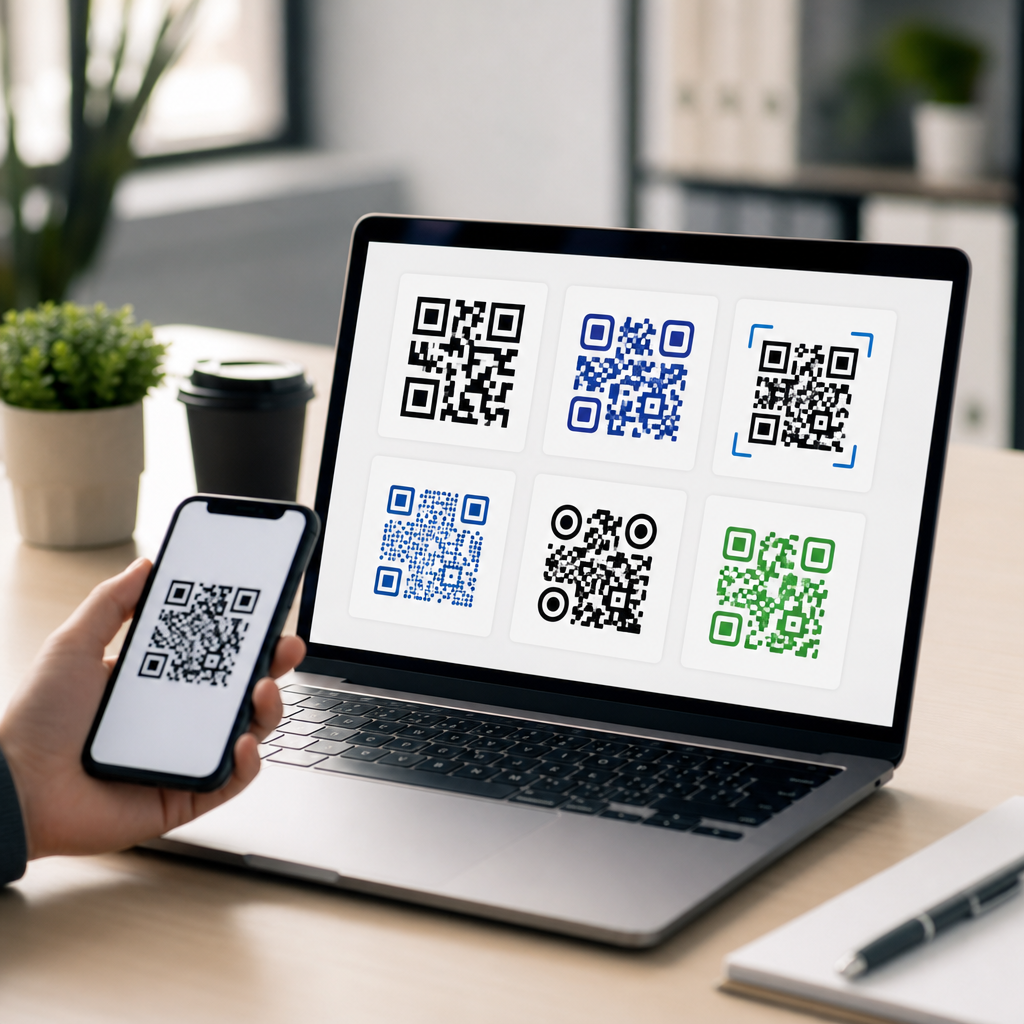

Tracking capabilities are the practical dividing line between static vs dynamic QR codes, and understanding that difference is essential for anyone building mobile-first campaigns, product experiences, or offline-to-online journeys. A QR code is a machine-readable matrix barcode that stores or points to information, usually a URL, while tracking capabilities describe what data you can measure after someone scans it: scan volume, time, device type, location patterns, and post-scan behavior. In day-to-day marketing and operations work, I have seen teams choose a code format based on design or price, then discover too late that they cannot update a broken link, attribute print performance, or compare scan rates across stores. That is why this topic matters. Static QR codes encode the destination directly into the symbol, which makes them permanent and simple but largely uneditable and limited for measurement. Dynamic QR codes encode a short redirect URL that sends users to the current destination, enabling updates and analytics. For a sub-pillar under creating mobile QR codes, this comparison is the hub because every related decision—landing page optimization, campaign attribution, print sizing, inventory labeling, and governance—depends on whether the code can be tracked and changed after launch.
What static and dynamic QR codes actually do
Static QR codes contain the final content inside the code itself. If the QR code points to a website, the entire destination URL is encoded into the pattern of black and white modules. Once printed or published, that destination is fixed. In practice, static codes work well for information that will not change, such as plain text, a Wi-Fi password, a vCard, or a permanent canonical URL on a controlled domain. Their main strength is durability: no redirect service is required, so they continue to work as long as the encoded resource remains available. Their main limitation is tracking. You may still see visits in your web analytics platform if the code sends people to a tagged URL, but the code itself does not provide management features, destination editing, or built-in scan analytics.
Dynamic QR codes work differently. The printed code usually contains a short URL managed by a QR platform. When someone scans, the platform records the event and forwards the user to the current destination. Because the destination lives behind a redirect, you can change it without changing the printed code. This is the foundation for tracking capabilities. You can measure unique versus total scans, date and time trends, approximate geolocation by IP, device and operating system mix, and campaign-level attribution when combined with UTM parameters and analytics tools such as Google Analytics 4 or Adobe Analytics. In retail rollouts, events, restaurant menus, and direct mail, this flexibility is usually more valuable than the small dependency introduced by the redirect layer.
How tracking works in real campaigns
The simplest answer to the question “Can static QR codes be tracked?” is yes, but only indirectly and with important gaps. If you encode a URL that includes UTM parameters, your web analytics package can record sessions and conversions attributed to that URL. For example, a flyer might use example.com/spring-sale?utm_source=print&utm_medium=qr&utm_campaign=spring. That setup tells you that visits came from the tagged link, but it will not let you change the destination after printing, pause a malicious destination if a page is compromised, or easily compare one poster placement to another unless you generate separate static codes for each variant. It also does not count scans that fail to load because of a network issue or abandoned browser open.
Dynamic tracking is broader and cleaner. Because every scan passes through a managed redirect, the platform can log scan events before forwarding the user. That gives you scan counts even if the destination page fails later. It also supports A/B testing, schedule-based redirects, and channel segmentation. I have used dynamic QR codes on in-store displays where each location had a unique code tied to a dashboard. Within days, scan data revealed that window posters outperformed shelf talkers by a wide margin, and Android users scanned more often during commuting hours. Those are not vanity metrics; they influence placement, staffing, and creative decisions. Dynamic systems also reduce operational risk, because a mis-typed destination can be corrected centrally instead of reprinting thousands of assets.
Key tracking differences that affect decision-making
The best way to compare static vs dynamic QR codes is to evaluate the tracking implications alongside cost and control. Static codes are not useless for measurement, but their data is downstream, fragmented, and harder to govern. Dynamic codes provide an event layer that sits between scan and landing page, creating a much stronger measurement framework for mobile QR codes.
| Capability | Static QR Codes | Dynamic QR Codes |
|---|---|---|
| Destination editing after print | No; requires a new code | Yes; update the redirect target |
| Built-in scan analytics | No | Yes; platform records scans |
| Use of UTM parameters | Yes | Yes |
| Geo and device insights | Limited to analytics stack | Common in QR dashboards |
| A/B testing destinations | Impractical | Simple with redirect rules |
| Reliance on third-party service | Minimal | Higher; redirect uptime matters |
These differences directly affect budgeting and governance. Static codes appear cheaper because many generators offer them free, but hidden costs emerge when content changes or measurement requirements grow. Dynamic platforms usually charge a subscription, yet they save money by extending print life, centralizing edits, and reducing rework. For organizations with compliance needs, dynamic management also creates an auditable layer: who changed the destination, when, and why. That matters in healthcare, finance, and regulated consumer goods.
When static QR codes are the right choice
Static QR codes make sense when the content is permanent, the tracking requirement is light, and dependency reduction matters more than editability. Good examples include equipment labels linking to a stable support page, business cards with a vCard, museum displays that point to a long-lived exhibit URL, or internal facilities signage where analytics adds little value. In these cases, I still recommend a controlled short path on your own domain rather than a raw long URL. Even with a static code, using a clean destination such as brand.com/help/pump-7 improves scan reliability because shorter encoded strings generally create less dense symbols, which are easier for older camera systems to read at small sizes.
Static codes are also useful for disaster resilience. If you do not want a campaign to depend on a vendor redirect service, a static code to a robust first-party URL can be the safer option. However, teams should be honest about the tradeoff. If you later decide to localize content, rotate promotions, or measure scans by placement, a static setup becomes restrictive. The common mistake is treating “free to generate” as “free to own.” In practice, any campaign with multiple markets, creative versions, or ongoing optimization usually outgrows static codes faster than expected.
When dynamic QR codes are the better investment
Dynamic QR codes are the default choice for campaigns, packaging, field marketing, and any mobile QR code strategy tied to performance metrics. They are particularly strong when a printed asset will live longer than the linked content. Restaurant menus change. Real estate listings close. App install links vary by device. Event pages need countdowns before launch and recap content afterward. With dynamic routing, one printed code can serve all of those phases. You can also direct users by operating system, language, or country, which improves user experience and conversion rate without fragmenting the design into multiple visible links.
The measurement advantages compound over time. In direct mail, a unique dynamic code per audience segment can show which list, geography, or offer drove the most scans and conversions. On product packaging, the same code can first route to onboarding instructions, then later to replenishment or warranty registration. In B2B events, booth signage can use dynamic codes to separate traffic from keynote sessions, expo floor placements, and follow-up email inserts. These are standard, practical use cases, not edge cases. If the business will ask “Which placement worked best?” or “Can we update this later?” the answer should usually begin with a dynamic code.
Best practices for accurate QR code tracking
Accurate measurement requires more than choosing dynamic over static. Use one code per placement when attribution matters, keep a naming convention for campaigns and assets, and pair QR platform analytics with web analytics so scan data and on-site outcomes can be compared. Google Analytics 4, server logs, CRM records, and marketing automation platforms should all agree on source naming where possible. I also recommend testing in varied conditions: bright sunlight, low light, older phones, cracked screens, and poor connectivity. ISO/IEC 18004 defines the QR Code symbology, but field performance still depends on size, quiet zone, contrast, and error correction settings. A code that is technically valid may still underperform if printed too small or placed on a curved reflective surface.
Security and trust deserve equal attention. Use HTTPS destinations, avoid changing redirects in ways that surprise users, and monitor for broken links. If you rely on a dynamic vendor, review uptime commitments, export options, and ownership of historical scan data. For long-term programs, branded domains improve confidence and preserve continuity if a platform changes. The central lesson in static vs dynamic QR codes is straightforward: static codes can support basic access and limited attribution, but dynamic codes unlock meaningful tracking capabilities, operational flexibility, and better mobile experiences. Choose static when permanence and independence are the priority. Choose dynamic when performance, optimization, and lifecycle management matter. If you are building a serious creating mobile QR codes program, audit your current use cases, map what must be measured, and standardize on the code type that matches those goals.
Frequently Asked Questions
What is the main difference between tracking capabilities in static and dynamic QR codes?
The core difference is that static QR codes do not provide built-in tracking, while dynamic QR codes are specifically designed to support measurement and ongoing management. A static QR code usually contains the final destination directly inside the code itself, such as a fixed URL, plain text, contact information, or Wi-Fi credentials. Once it is created and printed, the content is essentially locked. If someone scans it, the scan happens, but there is no native analytics layer attached to that interaction unless you add separate tracking methods beforehand, such as a tagged URL connected to an external analytics platform.
Dynamic QR codes work differently. Instead of storing the final destination directly, they typically store a short redirect URL managed through a QR platform. That redirect acts as a control point. When a person scans the code, the platform can log the event before sending the user to the final destination. That is what makes scan tracking possible. In practical terms, this means dynamic QR codes can report metrics such as total scans, unique scans, timestamps, approximate location, device type, operating system, and in some cases campaign-specific performance data. For businesses running mobile-first campaigns, retail packaging, in-store activations, or print-to-digital experiences, that visibility is often the deciding factor because it turns a QR code from a simple access tool into a measurable marketing and product channel.
Can static QR codes be tracked at all, or is tracking only possible with dynamic QR codes?
Static QR codes can be tracked to a limited extent, but not in the same direct and flexible way as dynamic QR codes. The important distinction is that static codes do not have a built-in mechanism for recording scans. If you want some level of insight, you usually need to encode a URL that already contains tracking parameters, such as UTM tags, and then rely on your website analytics platform to measure visits after the scan. In that setup, you are not really tracking the QR code itself as a managed asset. You are tracking website sessions that resulted from the link inside the code.
That approach can still be useful for simple campaigns. For example, if a flyer uses a static QR code that links to a landing page with campaign parameters, you may be able to see traffic volume, session source, device category, bounce rate, and conversions inside tools like Google Analytics. However, there are tradeoffs. You cannot change the destination later without replacing the code. You may also lose visibility if the destination URL is typed manually, shared through another channel, or if analytics settings are incomplete. By contrast, dynamic QR codes provide more reliable scan-level reporting because the redirect layer records the event before the user reaches the destination. They also allow updates without reprinting the code, which is a major advantage for long-term use cases like packaging, signage, menus, product manuals, and omnichannel campaigns.
What kind of data can dynamic QR codes track after someone scans them?
Dynamic QR codes can track a wide range of performance data, and that is what makes them so valuable in real-world marketing, operations, and customer experience workflows. At the most basic level, they can measure total scan count and often distinguish between total scans and unique scans. That helps you understand both overall engagement and repeat interaction. They can also capture time-based information, such as the day, date, or hour of the scan, which is useful for identifying peak activity periods and comparing performance across campaign windows, store hours, or event schedules.
Many dynamic QR platforms also report device and technology details, including whether the scan came from a mobile phone or tablet, what operating system was used, and sometimes the browser environment. Approximate location data is another common feature, usually inferred from IP-based signals rather than precise GPS. While this is not perfect for exact positioning, it can still reveal meaningful geographic patterns, such as which cities or regions generate the most engagement. More advanced setups may tie scans to conversion events, lead form submissions, app installs, purchases, or downstream website behavior when integrated with analytics and attribution tools. In practice, this means a dynamic QR code can help answer questions like: Which print placement drove the most scans? What time of day do shoppers engage most often? Are Android users behaving differently from iPhone users? Which region is responding best to the offer? That level of visibility is why dynamic QR codes are often preferred for campaigns where optimization and accountability matter.
Why are dynamic QR codes better for mobile-first campaigns and offline-to-online journeys?
Dynamic QR codes are better suited to mobile-first campaigns because they support the full lifecycle of optimization, not just the initial scan. In a mobile-first environment, the QR code is rarely the end goal. It is the entry point to something larger: a landing page, app experience, product onboarding flow, loyalty program, event registration, digital menu, payment screen, or personalized content journey. To improve those experiences over time, you need data. Dynamic QR codes make that possible by showing how people interact with the code across channels, locations, devices, and time periods.
They are especially effective in offline-to-online journeys because physical touchpoints are often difficult to measure without a digital bridge. A poster, package, storefront display, direct mail piece, or product insert may generate interest, but without tracking, it is hard to know what actually worked. Dynamic QR codes solve that by creating a measurable handoff from the physical world to the digital one. They also offer flexibility after launch. If a landing page changes, a promotion expires, inventory shifts, or messaging needs to be localized, the destination can be updated without replacing the printed code. That makes dynamic QR codes practical for fast-moving campaigns and evergreen assets alike. For teams focused on performance, testing, and customer journey design, they offer both visibility and control, which is why they are widely considered the stronger option for serious campaign execution.
When should you choose a static QR code instead of a dynamic QR code?
A static QR code is usually the right choice when the content is permanent, the use case is simple, and tracking is not a priority. If you are encoding information that is unlikely to change, such as plain contact details, a fixed Wi-Fi login, a personal portfolio link, or a one-time informational resource, a static QR code can be perfectly adequate. It is also useful when you want a straightforward, low-maintenance solution with no dependency on a third-party dashboard or redirect service. In these cases, simplicity can be an advantage.
That said, the decision should be made carefully. If there is any chance that you will need analytics, destination edits, A/B testing, campaign reporting, regional redirects, or future flexibility, dynamic is usually the safer choice from the start. Many organizations underestimate how often a URL changes or how quickly stakeholders begin asking performance questions after launch. Reprinting materials because a static code points to the wrong page or cannot be measured can be far more costly than using a dynamic code upfront. A good rule of thumb is this: choose static when the destination is truly final and measurement does not matter; choose dynamic when the QR code is part of a campaign, customer journey, product experience, or business process where insight and adaptability have real value.