
Choosing the best paid QR code generators for businesses is less about picking the cheapest subscription and more about selecting a platform that supports branding, analytics, security, and operational scale. A QR code generator is software that creates scannable codes linking to URLs, files, menus, app downloads, forms, payment pages, or other digital actions. Paid platforms differ from free tools because they usually offer dynamic QR codes, editable destinations, scan tracking, team management, custom domains, bulk creation, and stronger governance. For businesses, those capabilities matter. I have implemented QR campaigns for retail packaging, trade show lead capture, restaurant menus, and field service documentation, and the difference between a hobby tool and a business-grade platform shows up quickly when teams need reliable reporting, brand-safe design, and the ability to change destinations without reprinting assets.
The term dynamic QR code is central to any serious comparison. A static QR code permanently stores its destination in the pattern itself; if the link changes, the code must be replaced everywhere it appears. A dynamic QR code points through a managed short link, allowing the destination to be updated after printing. That single feature reduces waste, protects campaigns from broken links, and enables analytics such as total scans, unique scans, device type, time, and rough location. Businesses also need features that are easy to underestimate until campaigns become complex: password protection for sensitive files, expiry rules for promotions, UTM tagging for attribution, API access for automation, and role-based access for marketing teams, franchises, or agencies. A strong paid QR code generator is therefore part marketing platform, part link management system, and part governance layer.
This hub article covers the best QR code generators for business use, how to compare them, where each one fits, and what tradeoffs to expect. The goal is not to crown a universal winner, because the right choice depends on use case, compliance needs, design requirements, and integration depth. A restaurant chain may prioritize editable menu links and location-level reporting. A manufacturer may need high-volume batch generation tied to serial numbers. A B2B marketing team may care most about campaign analytics, retargeting pixels, and CRM workflows. By understanding the strengths of leading paid platforms and the evaluation criteria behind them, businesses can choose a tool that supports growth instead of creating technical debt.
What Businesses Should Look for in a Paid QR Code Generator
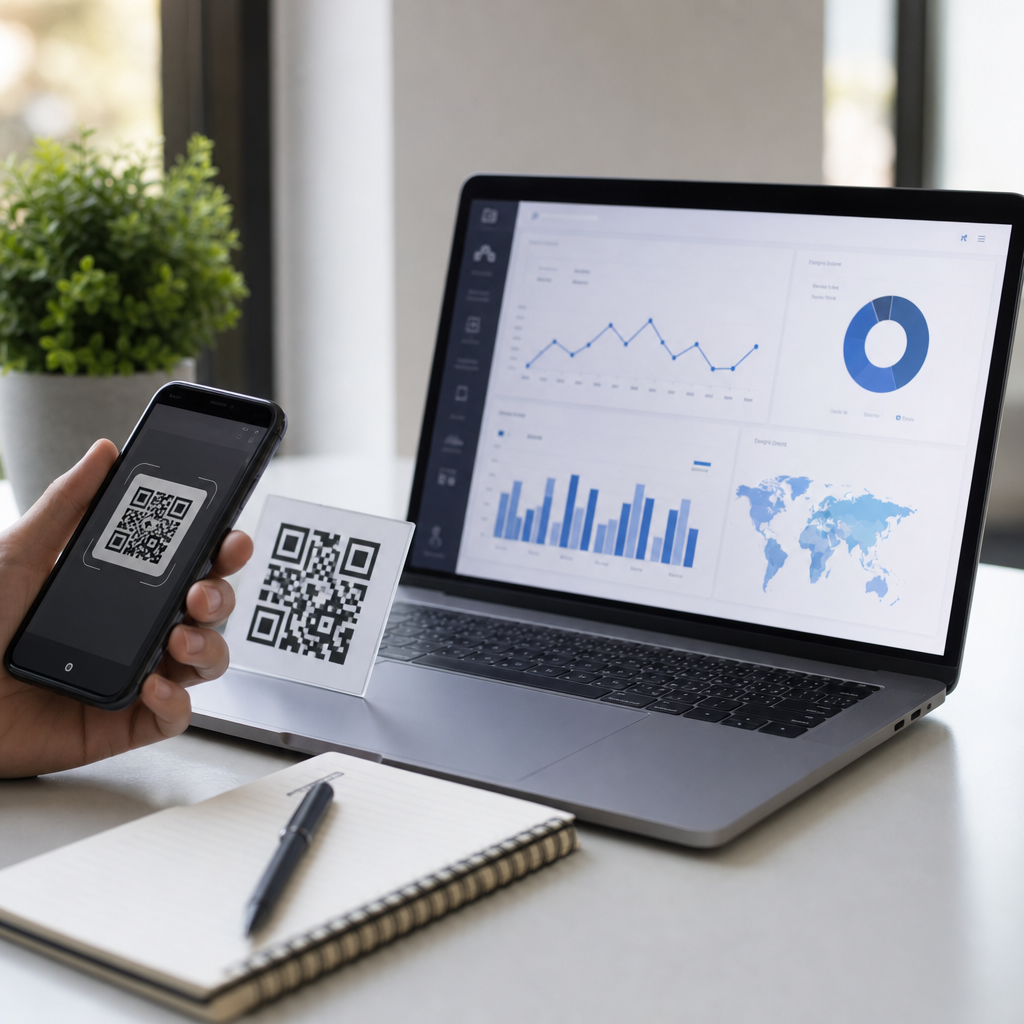
The best paid QR code generators share a core set of capabilities. First, they support dynamic QR codes and dependable redirect infrastructure. If a platform cannot guarantee stable redirects and fast resolution times, every downstream campaign is at risk. Second, they provide analytics that go beyond vanity metrics. Useful reporting includes scan counts, unique users, device type, operating system, geography, and time-of-scan trends. Better platforms also allow UTM parameters, Google Analytics integration, and exportable reports so scan activity can be tied to actual business outcomes such as purchases, form fills, or app installs.
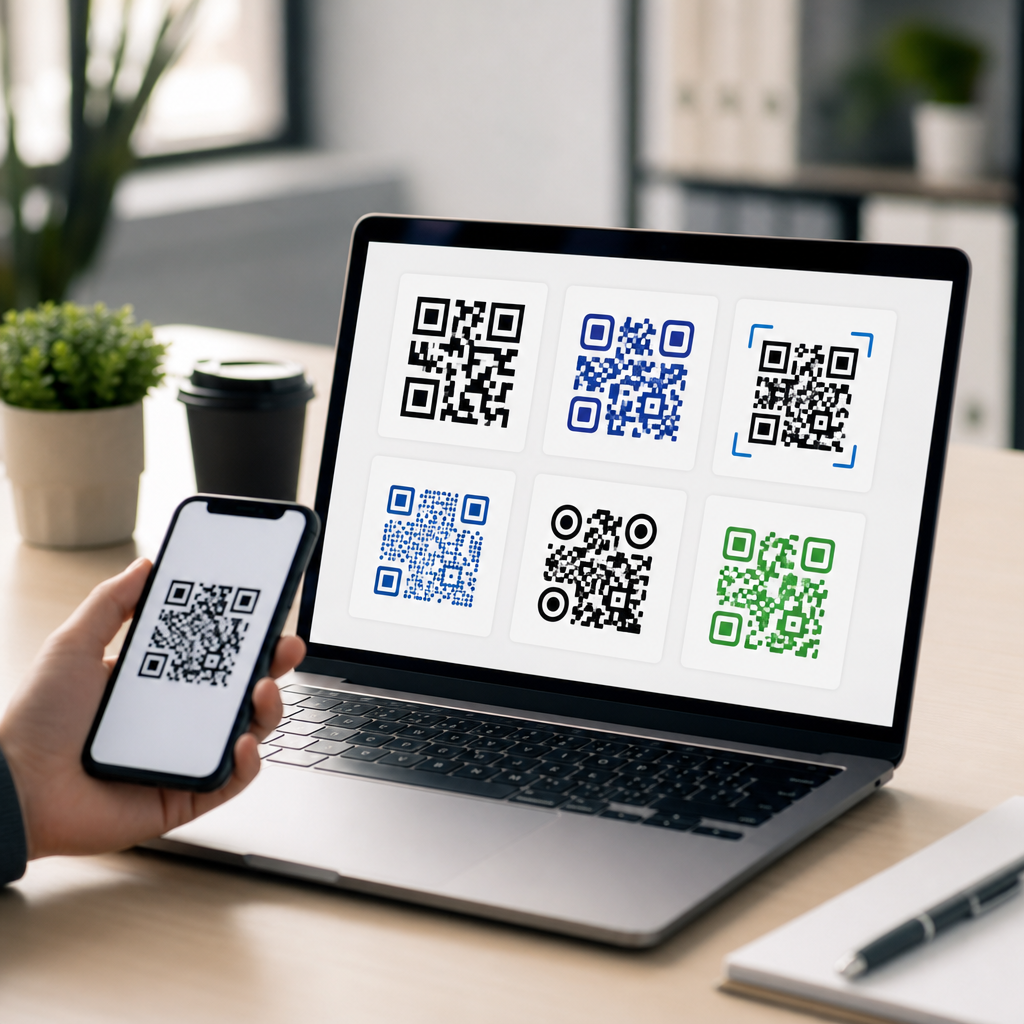
Brand control is another essential factor. Most businesses need custom colors, logos, frame text, and sometimes custom domains so users scan a branded link instead of an unfamiliar short URL. That matters because QR codes are trust-sensitive. If a customer sees a suspicious destination, scan rates drop. Security and governance features also deserve close review. Look for SSO, user permissions, audit logs, and options to pause or expire codes. In regulated industries, the ability to manage access centrally is not optional. Finally, evaluate usability at scale. Bulk upload, templates, folders, APIs, and asset organization become critical once campaigns move beyond a handful of codes.
Top Paid QR Code Generators for Businesses
Beaconstac is one of the strongest enterprise-oriented options because it combines dynamic QR codes, branded experiences, campaign analytics, and broad business integrations. It is especially useful for companies running omnichannel campaigns across packaging, print, in-store signage, and direct mail. In my experience, teams like Beaconstac when they need polished design controls without sacrificing administrative structure. Features such as bulk generation, location-aware routing, password protection, retargeting, and API access make it suitable for larger marketing operations. Its value increases further when teams need to connect QR activity with CRM and automation systems rather than treating scans as isolated traffic.
QR Code Generator Pro, from Bitly, is another leading paid platform and a frequent choice for marketers who already understand link governance. Its major advantage is the relationship between QR code management and professional link management. That makes it practical for organizations standardizing campaign links, branded short domains, and reporting in one ecosystem. Bitly’s analytics are familiar to many teams, and the platform is strong for editable destination management, campaign organization, and branded trust signals. For businesses already using Bitly widely, QR Code Generator Pro can reduce fragmentation by keeping QR assets and redirect logic in one administrative environment.
Scanova consistently performs well for midsize businesses that need flexible campaign creation with a clean user interface. It supports dynamic codes, design customization, analytics, lead generation forms, and batch operations, and it is often easier for nontechnical teams to adopt quickly. Uniqode, formerly Beaconstac’s competitor class but now recognized in many shortlist evaluations, is particularly strong for teams wanting advanced analytics, strong templates, and broad QR use cases from business cards to product packaging. Flowcode leans toward design-forward campaigns and is popular with brands that care deeply about the visual layer and mobile landing experience. QR TIGER is a practical option for organizations seeking a broad feature set at a competitive price, including dynamic codes, file QR codes, menu applications, and bulk generation.
| Platform | Best Fit | Standout Strength | Key Consideration |
|---|---|---|---|
| Beaconstac | Enterprise marketing teams | Integrations, analytics, governance | May be more than small teams need |
| QR Code Generator Pro | Organizations using Bitly workflows | Link management plus QR governance | Best value when Bitly is already adopted |
| Scanova | Midsize teams | Ease of use and flexible campaigns | Enterprise controls vary by plan |
| Uniqode | Growth-stage businesses | Strong analytics and templates | Compare pricing against scale needs |
| Flowcode | Brand and event marketing | Visual design and mobile experiences | Less enterprise-focused than some rivals |
| QR TIGER | Budget-conscious businesses | Feature breadth for the price | Validate reporting depth for advanced use |
How to Match the Platform to the Use Case
Different business scenarios reward different strengths. For product packaging, dynamic redirection and scan analytics are mandatory because packaging lives in market for months or years. A beverage company, for example, may run one QR code on a label but update the destination from a seasonal promotion to a loyalty page later. In that case, a platform like Beaconstac or Uniqode is attractive because it supports long-term code management, reporting, and campaign edits without reprinting inventory. For restaurants, hospitality groups, and local chains, ease of updating menu URLs, location pages, and promotions matters more than advanced automation. Scanova or QR TIGER can be a good fit when operations teams need speed and simplicity.
Event marketing creates another distinct requirement set. Teams often need branded landing pages, lead capture, and high scan volumes over a short period. Flowcode performs well in these environments because design and mobile experience affect conversion rates when attendees are scanning in motion. For B2B demand generation, the best paid QR code generator is often the one that connects scans to the existing measurement stack. If campaign managers are already using Bitly, HubSpot, Salesforce, or Google Analytics 4, a platform that supports attribution and exports will outperform a visually impressive tool with weak reporting. Manufacturing and logistics bring still another need: bulk generation tied to asset IDs, manuals, service records, or authentication pages. Here, API access, CSV import, and durable redirect management matter more than decorative styling.
Pricing, ROI, and Common Buying Mistakes
Paid QR code generator pricing usually scales by dynamic code volume, scan limits, user seats, analytics depth, and enterprise features such as white labeling or SSO. Businesses should avoid evaluating price in isolation. The real cost of a weak platform appears later through reprint expenses, lost attribution, fragmented team workflows, and broken campaign links. I have seen companies save a modest monthly fee on software only to spend far more replacing printed materials after a destination changed. Dynamic editing alone can justify a paid plan if QR codes appear on packaging, brochures, storefronts, manuals, or vehicle wraps.
Return on investment should be tied to measurable outcomes. If a restaurant updates one QR menu across fifty locations without reprinting tabletop cards, that is direct savings. If a retailer uses scan data to identify underperforming in-store displays and improve placement, that is optimization value. If a B2B team routes scans to campaign-specific landing pages with UTM tagging and captures qualified leads, the platform contributes to attributable pipeline. Common buying mistakes include choosing based only on visual customization, ignoring export limitations, overlooking custom domain support, and failing to test redirect reliability on weak mobile connections. Another frequent mistake is forgetting subscription dependency. Some services disable or degrade dynamic codes when a plan lapses, so procurement teams must understand continuity terms before rollout.
Implementation Best Practices for Business QR Campaigns
Even the best QR code generators produce poor results when campaigns are deployed carelessly. Start with destination quality. A QR code should lead to a mobile-optimized page that loads quickly, matches the promise of the call to action, and minimizes friction. If the printed prompt says “Scan for warranty registration,” the page should open directly to the registration workflow, not a generic homepage. Use high-contrast designs, maintain sufficient quiet zone around the code, and test scan reliability at intended print sizes and viewing distances. Standards bodies and printer guidance consistently reinforce that readability depends on contrast, size, material, and placement, not just code design.
Governance is equally important. Establish naming conventions, campaign folders, ownership rules, and review cycles. Use custom domains where possible, apply UTM parameters consistently, and document each code’s destination, asset location, and purpose. For physical deployments, test with multiple phone models, operating systems, and lighting conditions before full distribution. Track not only scans but downstream conversions, bounce rate, and assisted revenue so business value is clear. As this hub expands into related guides on dynamic versus static codes, QR code design, menu QR codes, tracking methods, and mobile landing pages, use it as the starting point for selecting a platform that can support every stage of creating mobile QR codes. The right paid QR code generator gives businesses flexibility, measurable insight, and long-term control. Review your main use case, shortlist two or three platforms, run a live pilot, and choose the one that performs reliably in the real world.
Frequently Asked Questions
1. What should businesses look for in a paid QR code generator?
Businesses should evaluate a paid QR code generator based on long-term usability, not just monthly price. The most important feature for many organizations is support for dynamic QR codes, which allow the destination URL or content behind the code to be updated without reprinting the QR code itself. That is especially valuable for packaging, in-store signage, event materials, menus, product labels, and direct mail campaigns where printed assets may stay in circulation for months or years.
Beyond dynamic functionality, branding controls matter. A strong paid platform should let businesses customize colors, frames, logos, and landing experiences so the QR code feels like part of the brand rather than a generic black-and-white square. Analytics is another major differentiator. Businesses often need visibility into scan volume, time of scan, device type, location trends, campaign performance, and conversion behavior. This reporting helps marketing teams measure ROI and optimize campaigns over time.
Security and account management are equally important. A business-grade platform should offer secure dashboards, user permissions, team collaboration features, and dependable uptime. If multiple departments or franchise locations use QR codes, centralized management becomes essential. Companies should also consider export quality, bulk generation, API access, folder organization, and integrations with CRM, marketing automation, or e-commerce systems. In short, the best paid QR code generator is the one that aligns with the company’s branding standards, reporting needs, governance requirements, and scale of operations.
2. Why are paid QR code generators usually better than free tools for businesses?
Paid QR code generators are generally better for businesses because they are designed for reliability, flexibility, and measurable outcomes. Free tools can work for simple one-off use cases, such as generating a basic static code that links to a homepage, but business needs are usually more demanding. Most organizations need the ability to edit destinations after printing, track scans, organize campaigns, and manage codes across teams and locations. These capabilities are typically found in paid plans rather than free versions.
Another advantage is professionalism. Paid platforms often provide better design customization, higher-resolution downloads, and more polished user interfaces for managing codes at scale. That matters when QR codes are used on customer-facing materials like retail packaging, restaurant menus, sales collateral, invoices, event signage, and product inserts. Businesses also benefit from stronger support, service reliability, and fewer limitations on scan counts, code expiration, or branding restrictions.
Perhaps most importantly, paid tools reduce operational risk. Some free QR generators create static codes only, while others may impose hidden conditions, limited analytics, or weak account controls. For a business running campaigns across multiple products or locations, those limitations can create unnecessary friction and lost opportunities. A paid QR code platform is typically a better investment because it supports ongoing campaign management, performance tracking, and brand consistency rather than just code creation.
3. Are dynamic QR codes worth paying for?
Yes, for most businesses, dynamic QR codes are absolutely worth paying for because they provide flexibility that static QR codes cannot. A dynamic QR code uses a short redirect URL, which means the final destination can be changed later without replacing the printed code. This is extremely useful when businesses need to update promotions, swap landing pages, correct broken links, rotate seasonal offers, or localize content for different audiences. Instead of reprinting packaging, posters, brochures, or table tents, the business can simply update the destination in the platform dashboard.
Dynamic QR codes also unlock analytics. Because scans pass through the generator’s tracking system, businesses can collect insights into how often a code is scanned, when scans happen, where scans are occurring geographically, and what types of devices are being used. This turns QR codes from simple access points into measurable campaign assets. Marketing teams can compare performance across channels, test different placements, and refine calls to action using real scan data.
The financial value becomes clear when companies use QR codes at scale. Reprinting physical materials is expensive, time-consuming, and operationally disruptive. Dynamic QR codes help protect that investment by making the printed code reusable and editable. For companies using QR codes in marketing, retail, hospitality, manufacturing, real estate, healthcare, or field operations, that adaptability often justifies the subscription cost many times over.
4. How important are analytics and reporting in a business QR code platform?
Analytics and reporting are critical because they show whether QR code campaigns are actually delivering results. Without reporting, a business may know that a QR code exists but have no clear understanding of how customers are interacting with it. A quality paid QR code generator should provide scan counts, time-based trends, approximate geolocation data, device breakdowns, and campaign-level tracking so teams can evaluate performance with confidence.
These insights are useful across departments. Marketing teams can use analytics to measure engagement from print ads, flyers, product packaging, and out-of-home media. Sales teams can track scans from brochures, presentations, and trade show materials. Operations teams may use scan data to understand adoption of digital manuals, service instructions, or internal workflows. For multi-location businesses, reporting can also help compare performance by region, store, or franchise.
Good analytics support better decision-making. If one QR code placement consistently outperforms another, the business can shift budget and attention accordingly. If scan activity spikes at certain times or in certain areas, campaigns can be refined to match customer behavior. Some advanced platforms also support UTM tagging, conversions, and integrations with tools like Google Analytics or marketing dashboards, making it easier to connect scans to downstream outcomes. In a business setting, that level of reporting is not a luxury—it is a practical requirement for optimization and accountability.
5. Can paid QR code generators support larger teams and growing businesses?
Yes, and that is one of the biggest reasons businesses choose paid platforms. As a company grows, QR code usage tends to expand across departments, campaigns, locations, and product lines. What starts as a simple marketing use case can quickly grow into a broader system involving packaging, payments, training, customer support, asset tracking, restaurant menus, event registration, and more. A paid QR code generator built for business can support that growth with team accounts, role-based permissions, shared folders, campaign organization, and centralized administration.
Scalability also includes production efficiency. Many business plans offer bulk QR code creation, CSV uploads, templates, and API access, which can save significant time when managing large inventories or recurring campaigns. For example, a retailer might need unique QR codes for hundreds of products, while a franchise brand might need location-specific codes for every store. Doing that manually in a basic tool is inefficient and error-prone. A more advanced platform makes it manageable and consistent.
Growing businesses should also think about governance and continuity. If QR codes are being used by multiple employees or agencies, the organization needs a secure way to control ownership, editing rights, and performance visibility. Paid platforms make that possible by keeping everything in one managed environment. That means fewer lost assets, less confusion over who controls what, and a smoother path as the business scales its QR strategy over time.