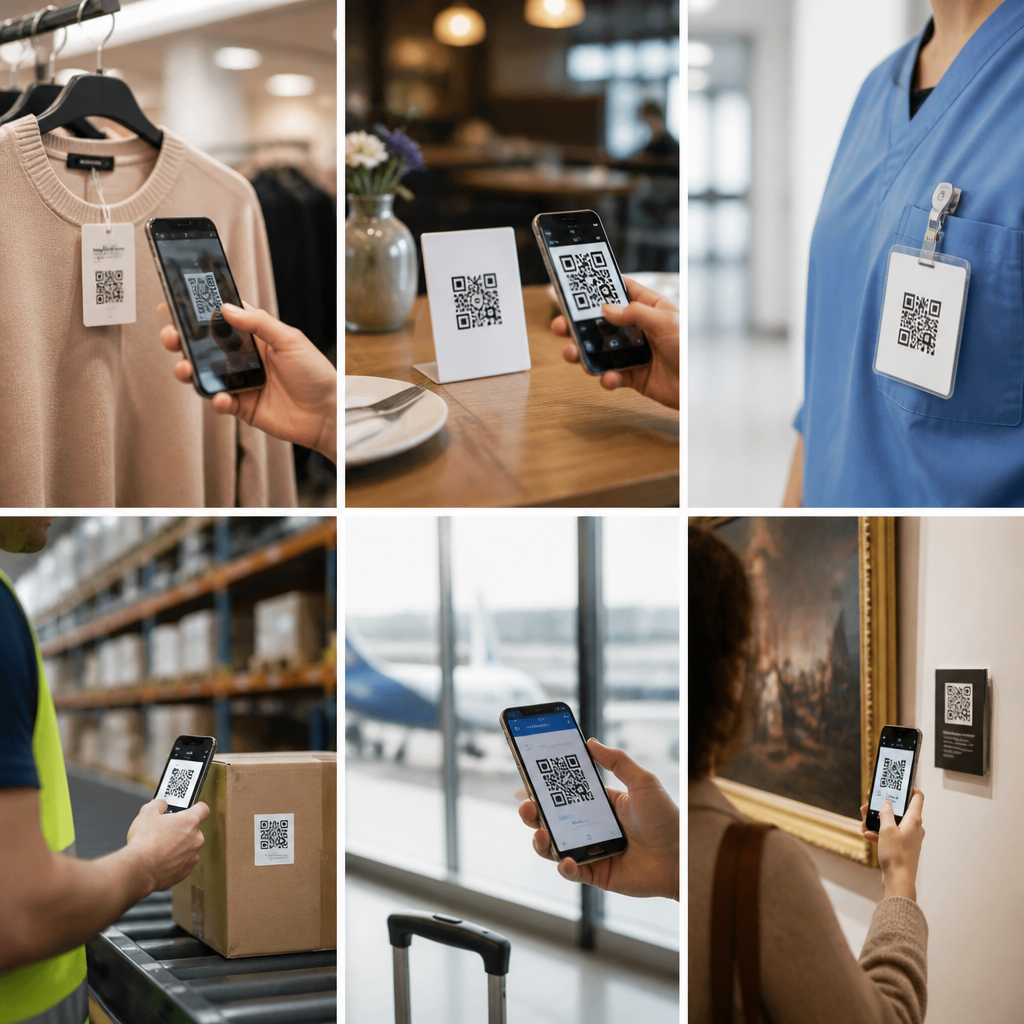
Mobile QR codes are moving from a simple shortcut to a foundational layer of digital interaction, and the future of mobile QR codes will be defined by better cameras, smarter software, stronger security, and deeper links between offline objects and online services. A QR code, or Quick Response code, is a two-dimensional matrix barcode that stores data such as URLs, payment credentials, app actions, ticket details, and product identifiers. “Mobile QR codes” refers to QR experiences designed primarily for smartphone scanning and smartphone outcomes: opening a webpage, launching a wallet, verifying identity, joining Wi-Fi, starting a chat, or completing a purchase. This matters because the smartphone is now the default interface for daily life. When brands, retailers, transit systems, restaurants, healthcare providers, and governments need a low-cost bridge between physical touchpoints and digital workflows, QR codes solve that problem immediately. I have worked on QR deployments for packaging, event access, and mobile payments, and the pattern is consistent: adoption rises when scanning is fast, the destination is useful, and the user feels safe.
The next phase is not about whether QR codes will survive; it is about how they become more intelligent and more regulated. Apple and Android have made native camera scanning routine, reducing friction that once blocked use. Payment networks, GS1 standards, digital wallets, and customer data platforms are now converging around QR-based journeys. That convergence makes this topic strategically important for marketers, product teams, and operations leaders. A future-ready QR program is not just a code on a poster. It includes dynamic routing, analytics, mobile landing page performance, campaign governance, and fraud prevention. It also connects to related subjects such as QR code security, QR code payment growth, dynamic versus static QR codes, and emerging packaging standards. As a hub for the future of mobile QR codes, this guide explains what is changing, what businesses should expect, and where the biggest opportunities and risks will appear over the next few years.
Why mobile QR codes are becoming a permanent interface
Mobile QR codes became mainstream because they reduced the cost of digital access to nearly zero. No dedicated hardware is required beyond a printed or displayed code and a smartphone camera. That simple equation explains why QR is expanding across menus, receipts, loyalty enrollment, parcel tracking, authentication, and product education. In my experience, the strongest use cases all remove a real point of friction. A diner scans to pay without waiting for a check presenter. A commuter scans a code to reload fare. A shopper scans packaging to verify authenticity or see ingredients. A field technician scans equipment to open maintenance logs. In each case, the code saves time and provides context exactly where the user needs it.
The permanence of QR as an interface also comes from platform support. Both iOS and Android have trained users to trust camera-based recognition. Browsers handle deep links more reliably, wallets can store passes generated from a scan, and app clips or instant app experiences can reduce the need for full installs. This means a mobile QR code no longer needs to send every user to the same generic page. It can detect device type, language, location, and campaign source, then route to a tailored destination. That flexibility is why dynamic QR management platforms have become standard for enterprise deployments. Companies using tools such as Bitly, QR Code Generator Pro, Flowcode, Beaconstac, or Uniqode are not just creating images; they are managing a mobile entry point with reporting, redirects, and governance controls.
How the user experience will improve
The future of mobile QR codes depends heavily on user experience, and the next improvements will come from speed, context, and accessibility. Smartphone cameras already decode codes faster than they did five years ago, especially in low light or at awkward angles. Better autofocus, computational photography, and on-device visual recognition will keep improving scan success rates. That matters because every failed scan weakens trust. The best teams I have worked with treat scanability as a design standard, not an afterthought: sufficient quiet zone, strong contrast, proper size, realistic placement height, and testing across older devices.
After the scan, the landing experience will matter even more. Users increasingly expect immediate utility, not a home page. Future mobile QR journeys will open to short, task-based pages: pay this invoice, activate this warranty, watch this 20-second setup video, or add this event pass to your wallet. Progressive web apps will play a larger role because they load quickly, work across devices, and support camera, location, and offline capabilities without demanding an app install. Accessibility will also improve. More organizations will pair QR codes with clear call-to-action text, screen-reader-friendly pages, multilingual routing, and alternative access methods for people who cannot scan easily. Better experience design will separate high-performing QR campaigns from decorative ones.
Security, trust, and regulation will shape adoption
Security is the biggest constraint on QR growth and the biggest opportunity for responsible brands. The core risk is simple: a QR code hides its destination until a user scans it. Attackers exploit that by replacing legitimate codes with stickers, sending users to phishing sites, or triggering malicious downloads. As mobile QR usage expands into payments, identity, and healthcare, trust controls will become mandatory rather than optional. Expect stronger use of branded short links, preview URLs, HTTPS-only destinations, mobile threat defense, and signed code frameworks where available. Mobile operating systems will likely show more context before opening risky destinations, and enterprises will add scan monitoring to campaign governance.
Regulation and standards will also tighten. Data privacy rules already affect what happens after a scan, especially when organizations collect personal data, geolocation, or behavioral analytics. Teams will need clear consent flows, retention limits, and documented lawful bases for data processing. In sectors like healthcare and finance, QR experiences must align with industry-specific compliance requirements as well. Product identification standards are evolving too. GS1 Digital Link is especially important because it allows a single QR code on packaging to connect users and supply chain systems to structured product data. That means the same package can support consumer information, recalls, batch tracking, and sustainability details. The companies that treat QR as governed infrastructure, not campaign ephemera, will be in the strongest position.
Payments, wallets, and identity will drive the next wave
The most transformative growth area for mobile QR codes is the combination of payments, wallets, and digital identity. QR payments are already standard in several Asian markets and are expanding elsewhere through merchant-presented and consumer-presented models. For small merchants, QR payment acceptance can be cheaper and easier to deploy than card terminals. For larger organizations, QR enables faster checkout, table service payments, donation flows, and bill settlement. What changes next is interoperability. More banks, fintech apps, and wallet providers will support common payment rails and standardized merchant data, making scans more predictable for users and less fragmented for merchants.
Identity use cases are equally important. Mobile QR codes can initiate secure login, pair devices, issue visitor badges, verify event tickets, and connect physical credentials to digital records. Airlines, venues, and employers already rely on code-based admission because it is fast, auditable, and compatible with existing phones. Over time, this will merge with digital IDs and verifiable credentials. A scan may not just open a page; it may prove age, entitlement, membership, or training status with minimal data disclosure. That reduces friction while supporting privacy by design. In practice, the winning implementations will be those that balance convenience with anti-fraud measures such as one-time tokens, expiration windows, rotating codes, and server-side validation.
| Future trend | What it means in practice | Example mobile use case |
|---|---|---|
| Dynamic routing | One code sends users to different destinations by device, language, time, or location | A global product package opens localized instructions |
| Wallet integration | Scans create or update digital passes, coupons, or tickets | A retailer adds a loyalty card to Apple Wallet or Google Wallet |
| Secure payments | Codes connect directly to bank or wallet payment flows with merchant validation | A café accepts table-side QR payment without a terminal |
| GS1-enabled packaging | One code supports product data, traceability, and consumer content | A medicine pack links to batch, recall, and usage information |
| Identity verification | Codes trigger tokenized authentication or entitlement checks | An event ticket refreshes a time-limited entry credential |
Industry-specific opportunities businesses should watch
Different industries will adopt mobile QR codes in different ways, but several patterns are already visible. In retail and consumer packaged goods, the future is connected packaging. Brands want every product to become a measurable digital touchpoint, and QR codes are the most practical route. A scan can deliver origin stories, how-to content, recycling instructions, and replenishment offers while also feeding first-party analytics. In healthcare, QR will support patient education, specimen tracking, medication verification, and secure check-in. In transportation and events, mobile QR codes remain ideal for ticketing because they work across paper, kiosks, and phones with low training overhead.
Manufacturing, field service, and B2B commerce may see even greater operational value than consumer sectors. I have seen teams place QR labels on assets, spare parts, and control panels to reduce service time dramatically. A technician scans a code and immediately sees manuals, maintenance history, warranty status, and replacement options. In real estate, codes on signs increasingly open booking flows, virtual tours, and neighborhood guides optimized for mobile. In education, they can connect printed materials to assignments and attendance systems. The lesson across industries is consistent: the future of mobile QR codes is not one giant use case but a broad set of practical, context-rich interactions. Organizations that map those interactions carefully will capture the highest return.
What companies should do now to prepare
Companies planning for the future of mobile QR codes should start with governance and measurement, not artwork. Choose dynamic codes whenever campaigns, content, or tracking may change. Build mobile landing pages that load quickly on average networks and complete a single task well. Establish naming conventions, ownership rules, expiration policies, and security review for every code placed in the market. Test scan performance across print sizes, materials, glare conditions, and older phones. Connect scan data to analytics platforms and CRM systems so teams can measure completion rate, not just scan volume. For packaging or regulated environments, align early with standards bodies, legal counsel, and operations teams.
The strategic advantage is simple: mobile QR codes turn physical surfaces into updateable digital infrastructure. Their future will be shaped by better user experience, stronger security, wallet and payment integration, and standardized product data. Businesses that treat QR as a serious mobile channel will gain clearer attribution, lower friction, and more useful customer interactions. Audit your current QR touchpoints, fix weak landing flows, and build a roadmap for the next generation now.
Frequently Asked Questions
1. What will define the future of mobile QR codes?
The future of mobile QR codes will be shaped by a combination of better smartphone hardware, more intelligent software, broader consumer trust, and tighter integration with everyday digital services. In practical terms, this means QR codes will continue evolving from simple “scan to open a link” tools into a more important layer of mobile interaction. As phone cameras improve, scans will become faster, more accurate, and more seamless in low light, at awkward angles, or from longer distances. At the same time, operating systems and apps will get better at interpreting QR content safely and contextually, helping users understand what a code will do before they interact with it.
Another major shift is that QR codes are increasingly being used as bridges between physical environments and digital systems. A code on packaging, signage, a restaurant table, a boarding pass, a product label, or a payment terminal can trigger a wide range of actions, from opening a website to launching a payment flow, verifying a product’s authenticity, checking in to an event, or activating personalized app experiences. As businesses continue to connect offline touchpoints with online services, mobile QR codes will become more embedded in commerce, logistics, healthcare, travel, identity verification, smart cities, and customer engagement.
Security and trust will also play a central role. Users are more willing to scan codes when they feel confident the destination is legitimate and the interaction is protected. That is why the future of mobile QR codes will likely include stronger preview features, verified links, brand indicators, fraud detection, and better education around safe scanning. Overall, the defining trend is clear: mobile QR codes are becoming less of a convenience feature and more of a foundational interaction layer for the mobile-first internet.
2. How will improved smartphone cameras and software change the QR code experience?
Improved smartphone cameras and software will make QR code interactions significantly smoother, faster, and more dependable. Early QR experiences often depended on users opening a separate scanning app, aligning the code carefully, and hoping the camera could focus quickly enough to read it. That friction has already started to disappear, and it will continue fading as cameras become more advanced and mobile operating systems become better at recognizing visual information in real time.
Modern phones are increasingly equipped with better autofocus, sharper image sensors, stronger low-light performance, and smarter image processing. These upgrades matter because they allow a device to detect and decode QR codes under less-than-ideal conditions, such as dim restaurants, busy retail floors, outdoor glare, wrinkled labels, moving screens, or damaged print materials. In the future, users should expect nearly instant scanning from a wider variety of surfaces and distances, with fewer failed attempts and less need for precise positioning.
Software improvements are just as important as camera hardware. Artificial intelligence and computer vision will help phones identify QR codes more intelligently, prioritize relevant codes when multiple are visible, and understand context before launching an action. For example, a phone may recognize that a code is tied to payment, ticketing, Wi-Fi access, product registration, or customer support and present clearer prompts to the user. Some systems may also analyze risk factors before opening a destination, helping prevent accidental interaction with unsafe or misleading links. Together, these hardware and software improvements will make mobile QR codes feel less like a separate task and more like a native, intuitive part of using a smartphone.
3. Will mobile QR codes become more secure in the future?
Yes, security is expected to become one of the most important areas of improvement for mobile QR codes. While QR codes themselves are simply data containers, the experiences they trigger can vary widely, and that has created opportunities for abuse. Malicious actors can place fraudulent codes over legitimate ones, redirect users to phishing pages, or disguise harmful destinations behind otherwise harmless-looking visuals. As QR usage expands into payments, account access, tickets, healthcare workflows, and identity-linked services, the need for stronger protection will only increase.
The future of mobile QR code security will likely involve several layers. First, smartphone platforms and scanning apps will continue improving link previews and destination transparency, allowing users to see where a code leads before anything opens. Second, businesses may adopt more branded and verifiable QR experiences, using recognizable domains, secure redirects, and visual trust signals that reassure users they are interacting with an authentic source. Third, fraud detection systems may become more proactive, flagging suspicious URLs, newly created domains, or destinations associated with known scams.
Dynamic QR codes may also contribute to better security and better management. Unlike static codes, which permanently store a fixed destination, dynamic codes can route users through a controlled system where operators can update links, monitor traffic, disable compromised campaigns, and collect analytics. This flexibility can help organizations respond quickly if a security issue appears. At the same time, user awareness will remain essential. Even with smarter platforms, people will still need to be cautious about scanning codes in untrusted environments or entering sensitive information on unfamiliar pages. The overall direction, however, is toward safer scanning through a combination of platform safeguards, brand verification, smarter infrastructure, and better user education.
4. What new uses for mobile QR codes are likely to grow in the coming years?
Mobile QR codes are likely to expand well beyond marketing and simple web links, with growth expected across payments, authentication, retail, product information, transportation, healthcare, education, and connected environments. One of the clearest areas of expansion is payments. In many regions, QR-based mobile payment systems are already mainstream because they are simple, low-cost, and compatible with a broad range of devices. As financial ecosystems mature, QR codes will likely play a larger role in peer-to-peer payments, merchant checkout, invoicing, subscription activation, and cross-border transactions.
Retail and product engagement are also major growth areas. Brands increasingly want packaging to do more than display static information. A QR code can open product tutorials, ingredient sourcing details, warranty registration, sustainability disclosures, loyalty rewards, reorder options, and personalized promotions. In the future, this may become even more interactive, especially as consumers expect instant access to post-purchase support and product transparency directly from their phones. QR codes may also help verify authenticity for high-value goods, making them useful in anti-counterfeiting efforts.
In public services and mobility, QR codes will continue supporting ticketing, transit access, venue entry, parking, visitor check-in, and digital identity workflows. In healthcare, they may be used for patient intake, prescription access, lab result retrieval, device tracking, and educational content tied to treatments or medications. In workplaces and industrial settings, QR codes can connect employees to equipment manuals, maintenance records, training modules, and inventory systems. The broader pattern is that mobile QR codes are becoming a flexible interface for connecting physical objects and real-world locations to digital actions. That makes them especially valuable in any setting where speed, convenience, and low-friction mobile access matter.
5. Are mobile QR codes replacing traditional apps, websites, or NFC?
Mobile QR codes are not likely to completely replace apps, websites, or NFC, but they will increasingly complement them and, in some situations, outperform them because of their simplicity and accessibility. QR codes work especially well as entry points. They are inexpensive to create, easy to print or display, and familiar to users. A person can scan a code from packaging, a receipt, a storefront window, a poster, or a device screen and immediately move into a digital experience without typing a URL or searching in an app store. That makes QR codes highly effective for reducing friction at the beginning of an interaction.
Websites will still remain essential because most QR code experiences ultimately lead to web-based content, product pages, support portals, payment gateways, or account tools. Apps will also remain important for richer, persistent experiences that depend on logins, stored preferences, offline functionality, push notifications, or advanced device features. NFC will continue to be useful in scenarios where tap-based interactions are faster or more natural, such as access control, contactless payments, or secure device pairing. Each technology has strengths, and businesses will often use them together rather than choosing only one.
What is changing is the role QR codes play in the overall digital ecosystem. Instead of being seen as a backup tool or a temporary trend, they are becoming a practical interface layer that helps connect users to deeper digital destinations. In many cases, a QR code will serve as the fast bridge to a website, an app action, a payment flow, or an identity-based service. The future is less about QR codes replacing everything else and more about them becoming a standard, highly visible access point across mobile experiences.