QR codes and digital wallets now sit at the center of contactless commerce, yet many businesses still treat them as interchangeable tools rather than distinct technologies with different strengths, costs, and user behaviors. A QR code is a two-dimensional barcode that a camera reads to open content, identify a product, or initiate a payment. A digital wallet is software, usually on a smartphone or wearable, that stores payment credentials, tickets, passes, and identity data, then uses technologies such as NFC, in-app tokens, or QR presentation to complete a transaction. NFC, or near-field communication, is the short-range radio standard behind tap-to-pay. Other proximity or scan-based options include Bluetooth Low Energy, RFID cards, and account-to-account mobile apps.
I have worked with retailers, event operators, and restaurant groups implementing both printed QR programs and wallet-based checkout, and the pattern is consistent: adoption depends less on hype and more on environment, hardware, customer familiarity, and operational discipline. A café can launch QR ordering in days with table stickers and a web app, while a transit authority rolling out wallet fares must integrate terminals, tokenization, fraud controls, and customer support. That difference matters because payment UX directly affects conversion, queue length, labor cost, and trust.
This comparison matters now because contactless behavior is no longer niche. Consumers expect fast mobile interactions, but they do not all own the same phones, keep the same apps installed, or trust the same payment flows. Merchants also face rising pressure to lower hardware costs, support omnichannel journeys, and collect clean first-party data. Choosing between QR codes, digital wallets, NFC, and related technologies is not simply a design decision. It influences security posture, accessibility, interoperability, analytics, and future scalability across markets.
How QR codes and digital wallets actually work
QR codes work by encoding data in a machine-readable square image. In commerce, the encoded payload may be a URL, a payment request, a menu link, a product identifier, or a deep link into an app. Static QR codes store a fixed destination; dynamic QR codes point through a managed short URL that can be edited, tracked, and segmented. When a customer scans with a native camera or scanner app, the phone resolves the payload and opens the next step. That makes QR especially flexible for marketing, ordering, authentication, and low-cost payments.
Digital wallets operate differently. Apple Wallet and Google Wallet store passes and credentials, while Apple Pay and Google Pay tokenize card data and send a one-time cryptogram over NFC or in-app rails. Samsung Wallet combines payment, loyalty, and identification features on supported devices. The key concept is tokenization: the merchant does not receive the actual primary account number during a properly configured wallet payment. Instead, a device account number and transaction-specific security elements reduce card exposure. This is why wallet payments generally fit established card security and EMV contactless workflows better than browser-based payment pages.
NFC is often confused with digital wallets, but NFC is just the communication method. A plastic contactless card can use NFC without any wallet app, and a wallet can complete a purchase online without NFC at all. BLE, by contrast, enables nearby discovery and hands-free interactions but is less common for mainstream payments because setup friction and privacy concerns are higher. RFID remains common in access control, transit cards, and closed-loop environments, yet consumer smartphone support varies outside NFC-based implementations.
Where each option wins in real-world use
In physical retail, digital wallets with NFC usually deliver the fastest repeat payment experience. A shopper unlocks a phone or watch, taps a certified terminal, and receives confirmation in seconds. That is why grocery, pharmacy, and quick-service chains prioritize tap-to-pay lanes. The hardware investment is higher, but cashier training is simpler once terminals are deployed. Wallets also perform well for loyalty pass integration, boarding passes, stored tickets, and age or identity use cases as mobile credentials expand.
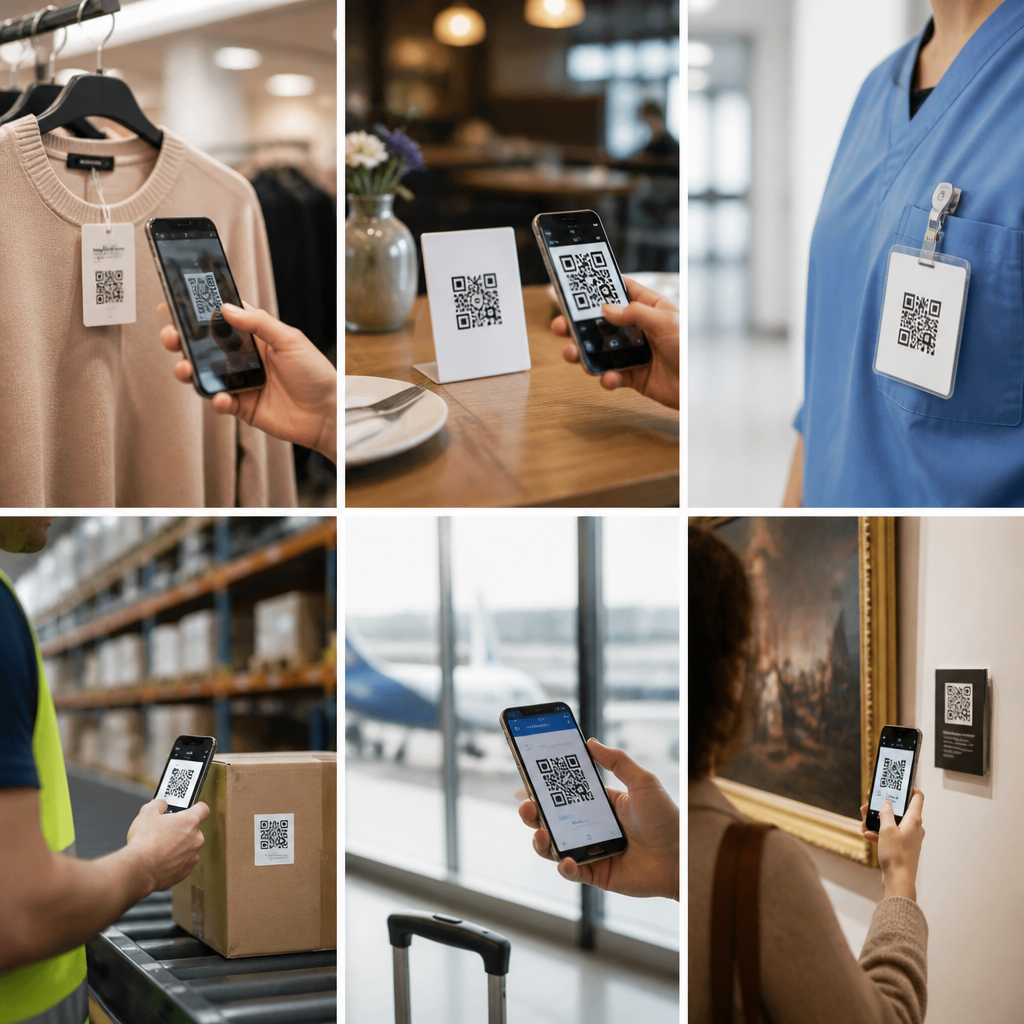
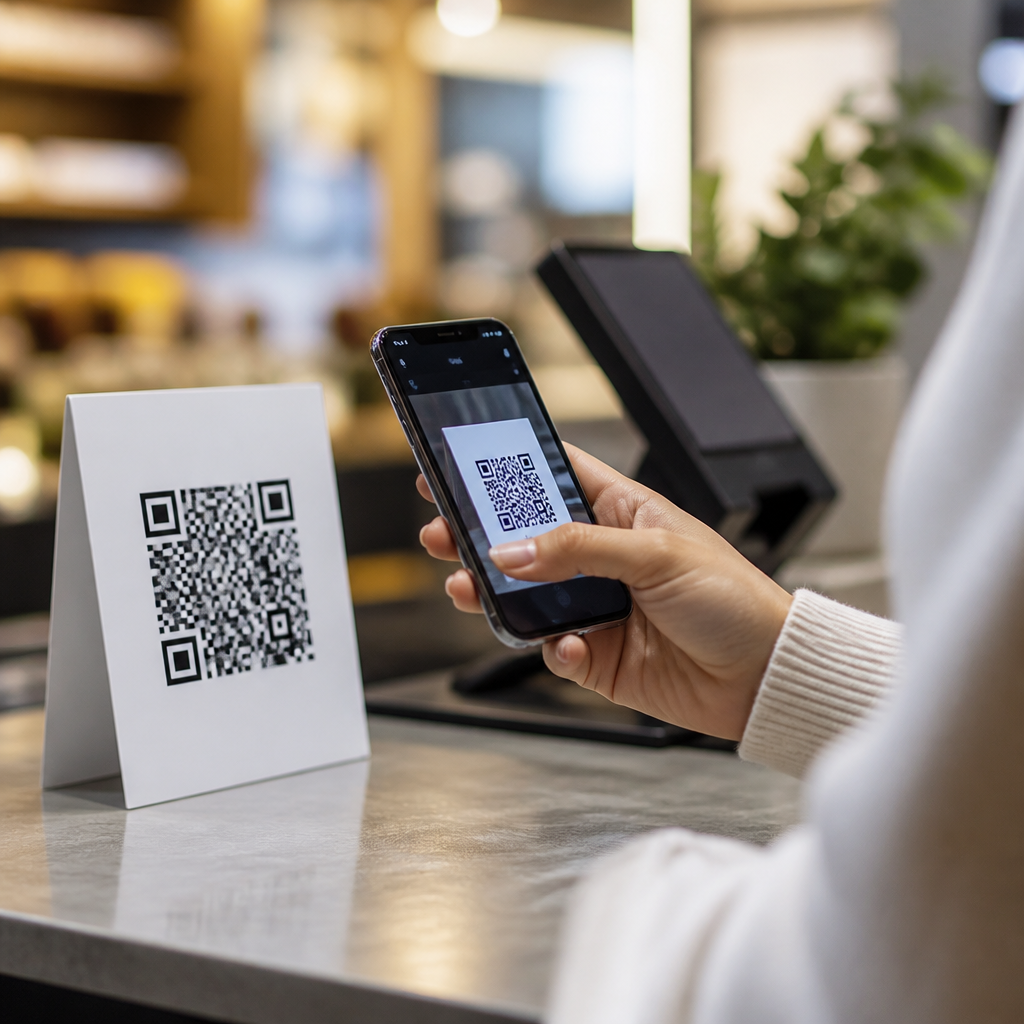
QR codes win when speed of deployment and cost matter more than pure tap convenience. Restaurants use table QR codes for menus, ordering, and bill payment without replacing every point-of-sale terminal. Small merchants in emerging markets use merchant-presented QR because a printed placard is far cheaper than an EMV-capable terminal. Events and museums use QR for self-guided content, check-in, upsells, and lead capture. In these scenarios, the same code can support payment, information delivery, and attribution, which is operationally efficient.
Other technologies fill narrower but important roles. Bluetooth Low Energy can trigger location-aware experiences in stadiums or stores, though app dependency limits universal adoption. RFID wristbands are excellent for festivals and resorts because they speed entry, support closed-loop spending, and survive weather better than phones. Account-to-account bank apps, common in parts of Asia and Europe, may use QR at the front end while bypassing card rails in the back end, reducing acceptance cost for merchants.
| Technology | Best use case | Main advantage | Main limitation |
|---|---|---|---|
| QR code | Menus, low-cost payments, marketing, check-in | Cheap, flexible, easy to deploy | Requires camera scan and on-screen flow |
| Digital wallet with NFC | Retail checkout, transit, stored passes | Fast tap experience with tokenized security | Needs compatible devices and terminals |
| BLE | Proximity experiences, venue automation | Hands-free and context-aware | Usually requires app install and permissions |
| RFID | Access control, festivals, closed-loop spend | Durable and very fast for entry | Less flexible outside managed ecosystems |
Security, fraud, and privacy differences
Security is where digital wallets generally hold the strongest consumer advantage for payment. NFC wallet transactions rely on tokenization, secure elements or equivalent device protections, biometric authentication, and EMV cryptograms. In practical terms, that means intercepted transaction data is much less useful to criminals than exposed card numbers from older card-not-present flows. Wallet providers also benefit from mature issuer risk systems, device reputation signals, and standardized dispute handling.
QR security depends heavily on implementation. The code image itself is not inherently secure or insecure; risk comes from what it points to and how the next step is controlled. Static codes placed in public can be tampered with using stickers. Links can direct users to phishing pages that mimic login or payment screens. I have seen businesses print permanent codes without governance, then struggle to rotate destinations after a campaign changes or a domain expires. Dynamic QR management, HTTPS destinations, domain consistency, and visible brand cues are essential controls.
Privacy tradeoffs also differ. Wallet transactions often share less visible personal data with the merchant at the moment of payment, especially compared with web forms that request email, phone, and billing details. QR journeys, however, can produce richer first-party analytics because they begin in a browser or app page where consent banners, campaign parameters, and event tracking are easier to instrument. That analytics advantage is valuable, but it creates responsibility to minimize data collection, state retention periods clearly, and comply with GDPR, CCPA, PCI DSS, and platform consent rules.
Cost, adoption, and operational complexity
If a business asks which option is cheaper, the answer depends on whether the constraint is upfront hardware or long-term transaction efficiency. QR programs usually have the lowest initial cost. A merchant can create dynamic codes through platforms such as QR TIGER, Bitly, Beaconstac, or in-house generators, print signage, and launch quickly. But low setup cost does not guarantee low total cost. Poor mobile pages, weak connectivity, and abandoned checkout screens can erase the savings through lost conversion.
Digital wallets demand more infrastructure. Merchants need NFC-capable terminals, processor support, EMV certification, and often updated POS software. For larger chains, that investment is justified by throughput, customer familiarity, and reduced handling friction. According to EMVCo and card network guidance, standardized contactless acceptance has matured across major markets, which lowers rollout risk compared with the early years of tap adoption. For online merchants, adding Apple Pay or Google Pay through PSPs like Stripe, Adyen, or Worldpay can also improve checkout conversion by reducing form fill.
Adoption varies by region and demographic. In China, QR-based super-app payments became mainstream partly because they leapfrogged card infrastructure. In the United States and parts of Europe, card rails and contactless terminals gave wallets a strong path in stores, while QR found traction in hospitality, parking, and peer-to-peer contexts. Older users may trust card tap more than scanning unknown codes, while younger users often accept both if the interface is clear. Accessibility matters too: camera focus issues, cracked screens, terminal placement, and poor lighting all affect performance in ways procurement teams often underestimate.
How to choose the right mix for your business
The smartest strategy is rarely QR codes versus digital wallets as a binary choice. It is usually a layered contactless stack built around customer context. If your primary goal is fastest possible in-person checkout, prioritize NFC wallet acceptance and contactless cards. If your goal is low-cost self-service, remote ordering, or campaign attribution, lead with dynamic QR codes connected to optimized landing pages. If you operate a venue, combine RFID or wallet passes for entry with QR for wayfinding, offers, and post-visit engagement.
Use a simple decision framework. Start with environment: counter, table, gate, aisle, or app. Then assess device readiness: do customers reliably have compatible smartphones, or should contactless cards and printed alternatives remain central? Next evaluate trust and risk: can users easily verify they are engaging with an official brand domain or certified terminal? Finally measure operational fit: transaction time, failure rate, support tickets, and data capture quality. Those metrics reveal more than trend reports.
The core takeaway is clear. QR codes are the most flexible and affordable bridge between physical and digital experiences. Digital wallets, especially when paired with NFC, deliver the smoothest secure payment experience at scale. Other technologies such as BLE and RFID solve specific proximity and access problems exceptionally well. Businesses that map technology to context, rather than chasing one universal winner, get better conversion, stronger security, and less customer friction. Audit your customer journey, identify the moments where speed or information matters most, and build the mix that serves those moments directly.
Frequently Asked Questions
What is the main difference between QR codes and digital wallets?
The main difference is that a QR code is a visual trigger, while a digital wallet is a secure software container for credentials and transactions. A QR code is a two-dimensional barcode that a smartphone camera or scanner can read to open a webpage, launch a payment flow, verify a product, or connect a user to digital content. It does not store money by itself, and it is not a payment account. Instead, it acts as a bridge that sends the user somewhere or starts a process.
A digital wallet, by contrast, is an application or operating system feature that stores payment cards, event tickets, boarding passes, loyalty cards, and sometimes identity credentials. Wallets typically use technologies such as near-field communication (NFC), tokenization, biometric authentication, and device-level security to complete transactions or present stored credentials. In other words, a wallet is the environment where sensitive information is securely held and used.
In practical terms, businesses should not think of these tools as direct substitutes in every case. QR codes are flexible, inexpensive, and easy to deploy across signage, packaging, menus, and invoices. Digital wallets are stronger when the goal is fast repeat payments, higher trust, and a smoother authenticated checkout experience. One is often the entry point; the other is often the secure transaction layer.
Are QR codes or digital wallets better for contactless payments?
Neither is universally better; the right choice depends on the business model, customer behavior, hardware environment, and payment expectations. QR codes are often easier and cheaper to roll out because they can be printed almost anywhere or displayed on an existing screen. That makes them attractive for small businesses, restaurants, pop-up shops, peer-to-peer payments, bill payments, and markets where specialized point-of-sale hardware is less common.
Digital wallets usually provide a faster and more seamless tap-to-pay experience, especially in retail environments with supported terminals. Because wallet payments often rely on NFC, tokenized card credentials, and biometric verification such as Face ID or fingerprint authentication, they tend to feel highly secure and convenient to consumers already familiar with services like Apple Pay, Google Wallet, or Samsung Wallet. This can reduce checkout friction and improve confidence at the point of sale.
That said, QR-based payments can work extremely well in the right setting, especially where consumers are accustomed to scanning codes for payment. They also perform well when businesses want to avoid hardware upgrades or support remote, asynchronous payment flows. Digital wallets usually shine in repeat, in-person transactions where speed matters most. QR codes often shine in accessibility, lower deployment cost, and broader marketing utility beyond payment alone.
Which option is more secure: QR codes or digital wallets?
Digital wallets are generally more secure for handling payment credentials because they are built specifically for protected storage and authenticated transactions. Most major wallets use tokenization, which means the actual card number is not shared directly with the merchant during a transaction. They also often require biometric or device-based authentication and benefit from the smartphone’s secure hardware and operating system protections.
QR codes themselves are not inherently secure or insecure; their safety depends on how they are used and what they link to. A QR code can direct a customer to a legitimate payment page, account login, product registration, or app action. However, it can also be replaced, tampered with, or used in phishing attempts if a malicious actor overlays a fake code or points users to a fraudulent destination. This is why businesses should treat QR deployment as part of a broader security process, including code verification, trusted domains, tamper checks, and customer education.
For businesses comparing the two, the key distinction is that a digital wallet includes built-in safeguards for credential management, while a QR code is simply a method of initiating an action. If a company uses QR codes for payments, the payment experience should still route through secure, encrypted, and trusted systems. The safest implementations often combine both tools: a QR code initiates the interaction, and a secure wallet or protected payment gateway completes it.
How do costs and setup requirements compare for businesses?
QR codes are usually the lower-cost and lower-complexity option to launch. A business can generate a static or dynamic QR code, print it on packaging or signage, or display it on a screen with minimal hardware investment. This makes QR codes appealing for small businesses, service professionals, restaurants, event operators, and organizations testing new customer journeys. Setup can be relatively fast, especially for uses like digital menus, payment requests, app downloads, feedback forms, and loyalty enrollment.
Digital wallets may require more ecosystem readiness, particularly for in-store tap-to-pay acceptance. Businesses often need compatible payment terminals, payment processor support, and proper integration with their point-of-sale system. If the wallet use case goes beyond payment, such as storing loyalty cards, tickets, or branded passes, there may also be development or platform integration costs. However, those costs can be justified by a better customer experience, stronger security, and potentially higher conversion among mobile-first users.
The long-term cost question is not only about setup, but also about operational value. QR codes are cost-effective and versatile, but they may introduce more steps for the customer depending on the flow. Digital wallets can streamline checkout and reduce friction, which may improve repeat business and transaction speed. For many companies, the smartest strategy is not choosing one over the other, but assigning each technology to the use case where it delivers the best return.
Can businesses use QR codes and digital wallets together instead of choosing one?
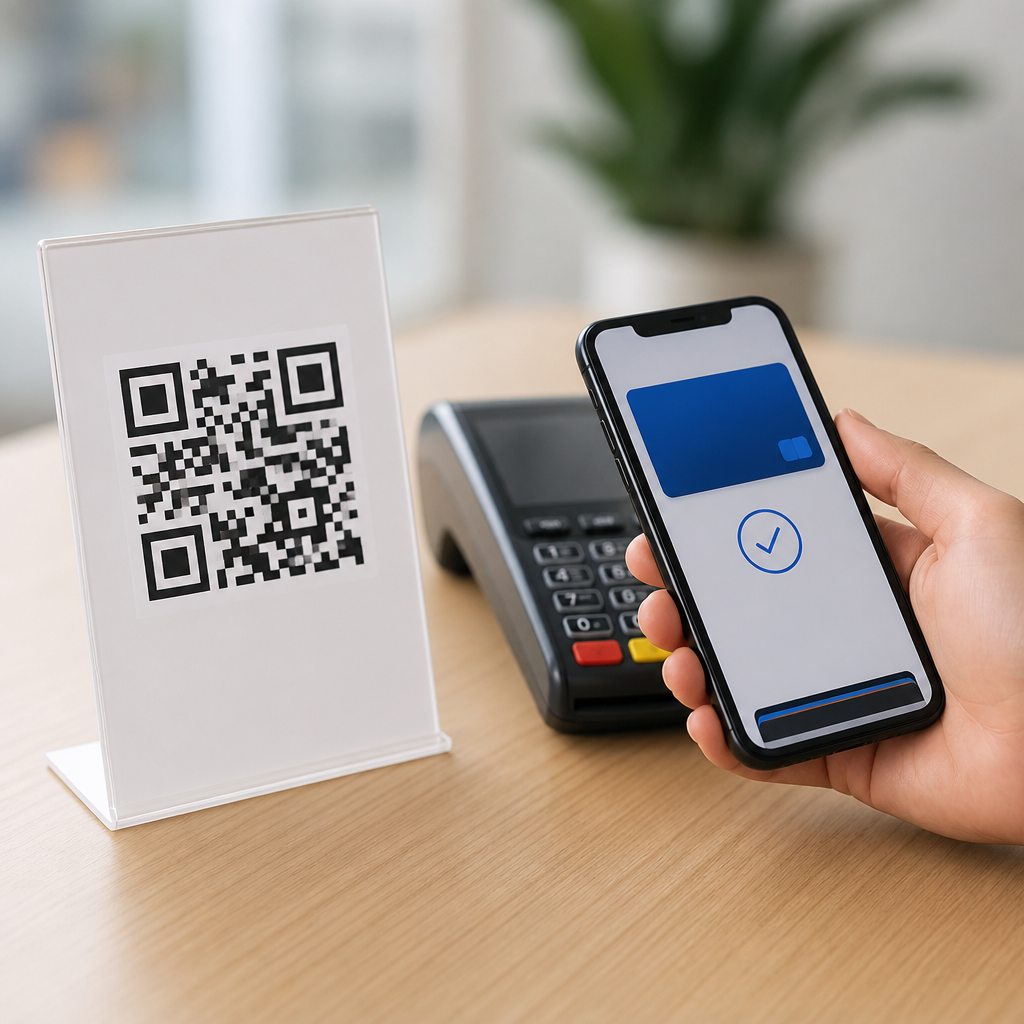
Yes, and in many cases that is the most effective strategy. QR codes and digital wallets often complement each other rather than compete. A QR code can be used to bring a customer into a digital experience, such as opening a payment page, downloading an app, claiming an offer, joining a loyalty program, or adding a pass to a digital wallet. The wallet then becomes the tool for storing credentials, redeeming benefits, and making repeat payments more quickly.
For example, a retailer might place a QR code on a countertop display that lets customers instantly save a loyalty pass to their phone’s wallet. A restaurant could use QR codes for table ordering, then allow customers to complete payment through a wallet-supported checkout. An event organizer could issue a QR code in an email that opens a ticket page where the attendee adds the pass to a digital wallet for easier entry later. These blended experiences reduce friction while extending the customer relationship beyond a single transaction.
From a strategic standpoint, combining both technologies allows businesses to meet customers where they are. QR codes lower the barrier to entry because almost any smartphone with a camera can scan them. Digital wallets deepen convenience, trust, and retention once the user is engaged. Instead of asking which technology should win, businesses often get better results by designing a customer journey in which QR codes drive access and digital wallets support secure, repeatable, high-value interactions.