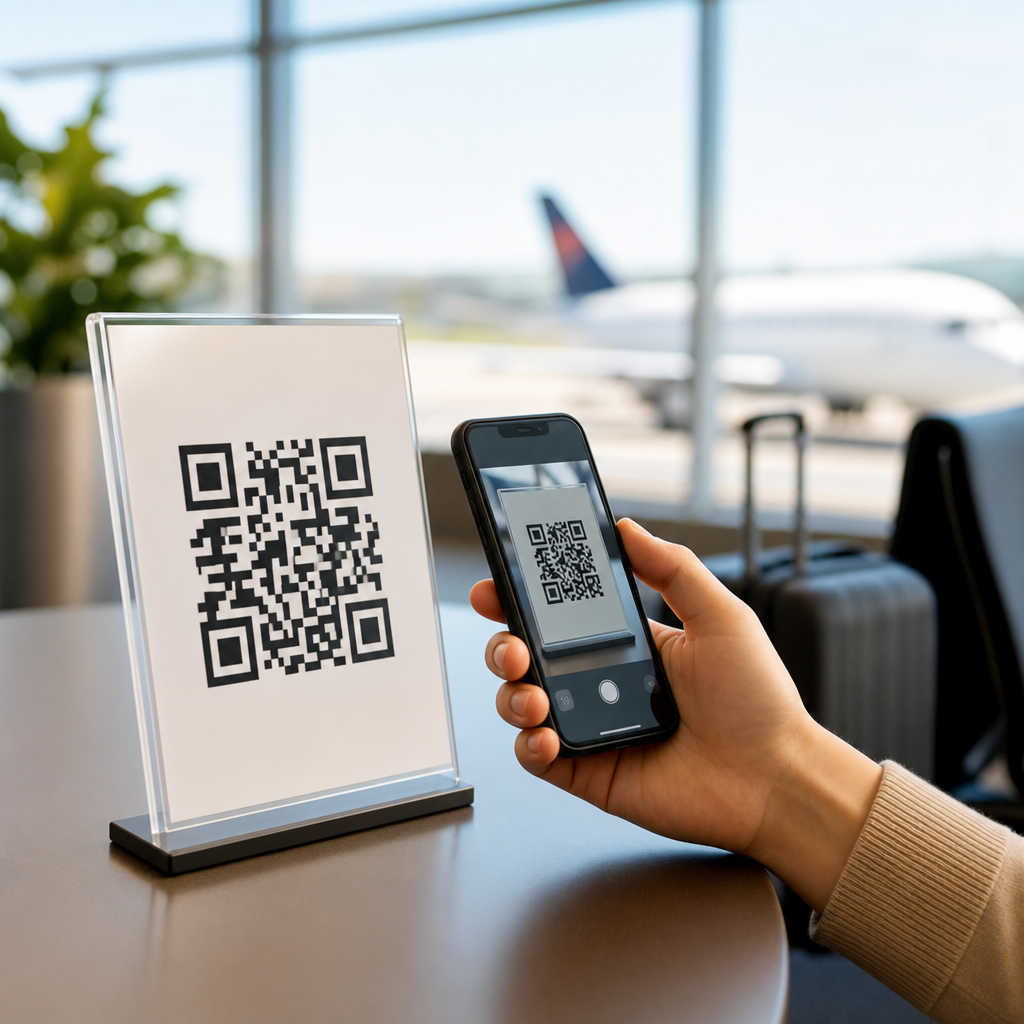
QR codes for travel promotions and deals have become one of the most practical tools in modern tourism marketing because they connect printed touchpoints to instant digital action. In travel and tourism, a QR code is a scannable two-dimensional barcode that opens a landing page, coupon, map, booking engine, menu, itinerary, loyalty form, or app download without requiring a traveler to type a URL. I have used QR campaigns across hotel, airline, attraction, and destination marketing projects, and the strongest results came from one simple principle: reduce friction at the exact moment interest peaks. A traveler seeing a poster in an airport, a rack card in a hotel lobby, or a seatback ad on a train will scan only if the value is immediate and obvious. That makes QR codes ideal for limited-time travel deals, multilingual visitor support, attraction upsells, and in-destination cross-promotion. They matter because the travel buying journey is fragmented across devices, channels, and decision moments. Research, comparison, booking, arrival, navigation, dining, and rebooking often happen in different contexts. A well-placed QR code closes those gaps, captures intent, and makes an offer actionable in seconds.
For this travel and tourism hub, the key question is not whether QR codes work, but where they fit best across the sector. Hotels use them to promote room upgrades, spa discounts, and local partner offers. Airlines and rail operators use them for lounge passes, ancillary sales, and destination guides. Museums, theme parks, tour companies, cruise lines, and destination marketing organizations use them to move visitors from awareness to purchase while also improving on-site service. The best campaigns combine concise copy, strong offer design, mobile-first landing pages, and measurable tracking. They also respect practical constraints such as poor connectivity, international roaming issues, accessibility, and data privacy. When planned well, QR codes turn brochures, window clings, key cards, event signage, menus, tickets, and out-of-home ads into measurable revenue channels. As the central guide for industry-specific travel and tourism use cases, this article maps where QR codes drive bookings, increase ancillary revenue, improve guest experience, and support local partnerships.
How QR Codes Support the Travel Booking Journey
QR codes are most effective when they match the traveler’s stage in the journey: dreaming, planning, booking, arriving, experiencing, and returning. In the dreaming stage, destination ads in airports, transit stations, and travel magazines can send users to seasonal packages, city passes, or itinerary builders. During planning, codes on brochures or social posts can open fare calendars, package comparisons, or visa requirement pages. At booking, a code can direct travelers to a dedicated landing page with a preloaded promotion code, preserving attribution and reducing abandonment.
In my campaigns, the highest scan-to-booking rates usually came from mid-funnel placements where the traveler already had intent. A hotel lobby sign advertising “Stay 2 nights, get late checkout and breakfast” often outperformed broad awareness posters because the audience was already traveling. The same pattern appears with attraction bundles. A visitor who has already entered a museum is more likely to scan a QR code for a discounted partner exhibit than a general tourist seeing a city ad weeks earlier. QR codes do not create demand by themselves; they convert existing interest faster.
Another advantage is message agility. Dynamic QR codes let marketers change the destination URL without reprinting the code, which is essential for time-sensitive travel deals. If a ski resort pivots from lift-ticket promotions to summer hiking packages, the same printed assets can continue working. Dynamic codes also support A/B testing of headlines, packages, and languages. That flexibility is particularly valuable in tourism, where pricing, inventory, weather, events, and transport disruptions change constantly.
Best Travel Promotion Use Cases by Business Type
Different travel businesses should use QR codes in different ways because traveler needs vary by context. Hotels benefit from pre-arrival and in-stay offers. A booking confirmation email or front-desk display can promote mobile check-in, room upgrades, dining reservations, airport transfers, or nearby attraction discounts. Resorts often place codes on pool signage or in-room directories to sell cabanas, spa services, and excursion packages. Vacation rentals can use welcome-book QR codes for house rules, Wi-Fi access, local recommendations, and partner coupons.
Airlines, rail companies, and coach operators are strongest at ancillary sales and destination content. A seatback card can link to lounge access, priority boarding, partner hotel offers, car rentals, or city transit passes. Airports can place multilingual QR signage near arrivals for SIM cards, airport transfer deals, and local attraction tickets. Cruise operators commonly use QR codes in daily planners for specialty dining, shore excursions, beverage packages, and onboard shopping events.
Attractions and tours use codes to bridge physical presence and digital upsells. A heritage site can promote audio guides, donation pages, family bundles, or annual memberships. Tour operators can put codes on storefront windows after hours so passersby can still book sunset cruises or walking tours. Destination marketing organizations can unite local partners by using QR-enabled visitor maps that feature redeemable offers from restaurants, museums, and retailers. This approach supports tourism ecosystems rather than isolated businesses, which is why it performs well in city-center and resort-district campaigns.
| Travel segment | Effective QR placement | Promotion or deal | Primary metric |
|---|---|---|---|
| Hotel | Key card sleeve | Room upgrade or breakfast add-on | Ancillary revenue per stay |
| Airline | Seatback card | Lounge pass or partner hotel rate | Scan-to-purchase rate |
| Attraction | Entry signage | Family package or audio guide | Attachment rate |
| Destination marketing | Visitor map | City pass or local merchant offers | Partner redemptions |
| Cruise | Daily program | Shore excursion or specialty dining | Onboard conversion rate |
Designing QR Offers That Travelers Actually Scan
The most common failure in QR travel marketing is not the code itself; it is the weak offer behind it. Travelers scan when the benefit is concrete, immediate, and easy to understand. “Scan for information” is vague. “Scan for 10% off today’s harbor cruise” is specific. Good travel offers answer four questions instantly: What do I get, how much do I save, how fast can I use it, and is it relevant where I am right now?
Placement matters as much as wording. Codes should appear where travelers naturally pause: check-in counters, elevator banks, queue lines, lobby seating areas, attraction exits, museum plaques, transit waiting zones, and restaurant tables. Size and contrast are not cosmetic details. A code that is too small, glossy, or poorly lit will fail even if the offer is strong. I recommend testing scan distance in real conditions, especially outdoors and in terminals with reflective lighting. Include a short call to action and, when useful, a fallback short URL for travelers whose camera apps do not cooperate.
Landing pages must load fast on mobile networks and should avoid forcing app downloads before value is shown. For international visitors, lightweight pages, clear pricing, and obvious language switching are essential. If redemption requires forms, keep fields minimal. In travel, every extra step loses users, particularly on the move. Use wallet-compatible coupons, one-tap map directions, and prefilled booking dates whenever possible. These small usability decisions often have a larger impact on revenue than visual branding changes.
Measurement, Compliance, and Operational Realities
Travel marketers should treat QR codes as measurable campaign assets, not decorative extras. At minimum, track scans, unique users, landing-page engagement, bookings, coupon redemptions, and revenue by placement. UTM parameters, analytics dashboards, and booking-engine event tracking make it possible to compare a train-station poster against a hotel-lobby display or a printed map against an in-room card. Dynamic QR platforms such as Bitly, Beaconstac, Scanova, and QR Code Generator Pro provide redirect control and scan analytics, but they should be integrated with first-party analytics rather than used in isolation.
Operational discipline matters. A broken destination URL, expired deal, or out-of-stock package damages trust quickly. In tourism, that trust loss is amplified because travelers have limited time and patience. Every printed code should have an owner, review schedule, and expiration policy. If the offer depends on inventory, connect the landing page to live availability or state limits clearly. I have seen campaigns fail because a code promoting same-day tickets linked to a generic homepage instead of the product page with inventory. The scans were real; the conversion path was not.
Privacy and accessibility should be built in from the start. If personal data is collected, comply with applicable rules such as GDPR and state privacy laws, disclose tracking clearly, and avoid unnecessary fields. For accessibility, pair the code with readable text, meaningful labels, and alternatives for users who cannot scan easily. Also account for roaming costs and weak signal areas by offering downloadable content, offline-friendly maps, or venue Wi-Fi prompts. These details are especially important for international tourism, where device settings, language preferences, and connectivity vary widely.
Building a Travel and Tourism QR Content Hub
As a hub topic under industry-specific applications, travel and tourism works best when this page connects broad strategy to narrower implementations. Supporting articles should branch into hotels, airlines, restaurants, attractions, events, cruises, travel agencies, and destination marketing organizations. Additional subtopics can cover multilingual QR campaigns, QR codes for visitor information centers, QR-based loyalty programs, and measuring offline-to-online attribution in tourism. This structure helps readers move from overview to execution while signaling topical depth.
The practical benefit of a hub is consistency. Core guidance such as dynamic code management, mobile landing-page design, redemption mechanics, analytics setup, and privacy standards applies across the sector, while each business type gets its own examples and playbook. That mirrors how travel operators actually work: one marketing function managing common tools, then adapting them by property, route, attraction, or destination. When the content architecture reflects those real workflows, it becomes more useful to operators and easier to maintain over time.
QR codes for travel promotions and deals work because they meet travelers in the moment, remove friction, and turn physical attention into digital action. For hotels, transport brands, attractions, tour companies, and destinations, the win is not just more scans; it is better timing, clearer offers, and measurable revenue from places that used to be offline. Start with one high-intent placement, one compelling offer, and one fast landing page, then expand based on data. Done well, QR codes become a durable part of your travel marketing system rather than a short-lived tactic. Audit your current guest touchpoints and launch the first test where traveler intent is already strongest.
Frequently Asked Questions
How are QR codes used in travel promotions and deals?
QR codes are used in travel promotions and deals to move travelers from offline marketing into immediate digital action with as little friction as possible. A traveler might see a code on an airport poster, hotel lobby sign, attraction brochure, seatback card, event banner, direct mail piece, or social graphic, scan it with a phone camera, and land instantly on a page that delivers a specific offer. That offer could be a limited-time room discount, an airline fare sale, a bundled attraction pass, a restaurant special, a guided tour booking page, a destination itinerary, or a loyalty signup form. The real value is speed: instead of asking someone to remember a URL or search later, the QR code captures interest at the exact moment of intent.
In practice, the strongest travel QR campaigns are highly targeted. A beachfront resort might place a code in nearby cafés promoting same-day spa packages. A destination marketing organization could print codes on visitor maps that unlock neighborhood guides, event calendars, and partner discounts. Airlines can use codes in emails, lounge signage, or boarding gate displays to promote seat upgrades, travel insurance, or destination offers. Attractions often use them to connect ticket buyers to timed-entry reservations, skip-the-line upgrades, audio guides, or family package promotions. Because the code acts as a bridge, it works especially well wherever printed materials still matter but the desired conversion happens online.
Another major advantage is campaign flexibility. With dynamic QR codes, marketers can update the destination link without reprinting the code, which is extremely useful in travel where pricing, availability, and seasonal promotions change quickly. That means one code can support an evolving campaign across peak season, shoulder season, and special event periods. It also allows teams to measure scans by location, date, device, and campaign source, which makes it easier to see which placements actually drive bookings or redemptions. For travel brands trying to connect physical visibility with measurable digital performance, QR codes are one of the most efficient tools available.
What are the main benefits of using QR codes for hotels, airlines, and tourism businesses?
The main benefits are convenience, higher engagement, better attribution, and improved conversion rates. Travel decisions are often made in real time or during short windows of attention, so reducing the number of steps between interest and action matters. A QR code removes the need for manual typing, searching, or downloading complicated materials later. For hotels, that can mean faster access to booking offers, upsell packages, mobile check-in, restaurant menus, and local experience guides. For airlines, it can support promotions for upgrades, ancillary services, route deals, and loyalty enrollment. For destination marketers and attractions, it can turn brochures, signage, and out-of-home media into interactive channels that drive immediate response.
QR codes also improve the usefulness of traditional print marketing. Travel remains a category where physical touchpoints are everywhere: airports, trains, lobbies, front desks, welcome centers, conference booths, magazines, room folders, maps, and event programs. Without a digital connector, these materials often create awareness but lose momentum before conversion. QR codes solve that gap by making print measurable and actionable. A campaign team can track which hotel poster, visitor guide, or terminal sign generated the most scans, which offer performed best, and where travelers dropped off in the funnel. That level of insight is especially valuable when multiple partners are involved, such as tourism boards, local businesses, and hospitality operators running a joint promotion.
There is also a customer experience benefit that should not be underestimated. Travelers want speed, clarity, and relevance, especially when they are navigating unfamiliar places. A QR code can instantly deliver directions, translated menus, attraction hours, package details, digital coupons, or last-minute booking options. When implemented well, it feels helpful rather than promotional. That balance matters. The most effective travel QR strategies are not just about pushing deals; they are about making the traveler’s journey easier while naturally presenting offers that fit the moment.
What should a travel business link a promotional QR code to?
A promotional QR code should link to the most direct, mobile-friendly destination that matches the traveler’s immediate intent. In most cases, that means a dedicated landing page rather than a generic homepage. If the QR code promotes a hotel weekend package, it should open a page with the package details, photos, pricing, dates, terms, and a clear booking button. If it advertises a destination dining pass, it should lead directly to participating venues, redemption instructions, and purchase or signup options. Sending users to a broad homepage forces extra navigation and increases drop-off, which weakens the campaign.
The destination should also be built for mobile first. Most travel QR scans happen on smartphones, often while a person is in transit, standing in line, walking through a venue, or making a quick decision. The page needs fast load times, readable text, clear calls to action, and as few steps as possible. Depending on the campaign, useful destinations include booking engines, coupon pages, itinerary builders, map-based recommendation pages, event calendars, restaurant menus, app download pages, loyalty program forms, local attraction bundles, or chat-based concierge tools. The best choice depends on whether the goal is immediate booking, lead capture, upselling, partner promotion, or on-site engagement.
It is also smart to personalize the experience where possible. A QR code placed in an airport arrival area might open an arrivals-focused page with airport transfers, nearby hotel deals, and local highlights. A code in a hotel room could connect guests to room service offers, spa promotions, excursion bookings, and checkout extensions. A code printed on a city guide could link to a curated itinerary by neighborhood or traveler type, such as families, food lovers, or business travelers. Relevance is what turns a scan into a conversion. The clearer the connection between the physical placement, the traveler’s context, and the landing experience, the more successful the QR campaign will be.
How can travel marketers make QR code promotions more effective?
To make QR code promotions more effective, travel marketers should start with a single clear objective for each code. Too many campaigns fail because the code is expected to do everything at once: promote a discount, collect email addresses, explain the destination, and drive app downloads all from the same scan. A better approach is to match one code to one primary action, such as booking a package, redeeming a coupon, joining a loyalty program, or viewing a time-sensitive offer. When the message is focused, travelers understand what they will get before they scan, and completion rates improve.
Placement and context are equally important. A QR code should appear where the traveler has both motivation and enough time to act. Good examples include hotel front desks, elevator signage, airport waiting areas, trade show booths, visitor centers, rental car counters, museum entrances, room key sleeves, restaurant tables, and printed destination maps. The design needs to support the scan with a strong call to action such as “Scan for today’s city pass discount” or “Scan to unlock your late checkout offer.” Simply placing a code without explaining the value usually underperforms. The incentive must be visible, specific, and immediate.
Technical execution matters too. Use dynamic QR codes so links can be updated without replacing printed materials. Test the code under real conditions, including low light, small screens, weak connectivity, and different phone models. Make sure the landing page is secure, loads quickly, and keeps forms short. Add tracking parameters so performance can be measured by campaign source, location, and offer type. If possible, run A/B tests on different calls to action, placements, and landing pages. Over time, those insights help marketers refine not just the code itself, but the broader customer journey around it. In travel, where timing and convenience strongly influence purchasing behavior, that optimization can make a significant difference in bookings and redemptions.
Are QR codes for travel promotions easy to track and measure?
Yes, QR codes are generally very easy to track and measure, especially when dynamic QR codes and proper analytics tagging are used. One of their biggest advantages in tourism marketing is that they make offline promotion far more accountable. Instead of guessing whether a brochure, airport display, event banner, or hotel flyer influenced action, marketers can see scan activity directly. Common metrics include total scans, unique scans, scan location, device type, time of day, repeat engagement, and conversion behavior after the scan. When connected to landing page analytics, booking engines, or coupon redemption systems, QR campaigns can provide a very clear view of what is actually working.
For example, a destination marketing organization might use separate QR codes on transit ads, visitor center signage, and hotel partner materials, all pointing to versions of the same promotional page. By comparing scan volume and downstream conversions, the team can identify which physical channel produces the most valuable traffic. A hotel group can use different codes for lobby signage, in-room promotions, and local partnership materials to see which placement drives spa bookings, restaurant reservations, or package upgrades. Attractions can track whether a family ticket offer performs better from printed maps, outdoor posters, or post-purchase emails. This kind of measurement supports smarter media spending and stronger partner reporting.
That said, measurement only becomes useful when goals are defined clearly from the start. A scan by itself is not the final objective. Travel marketers should decide whether success means bookings, lead generation, app installs, itinerary downloads, on-property upsells, or