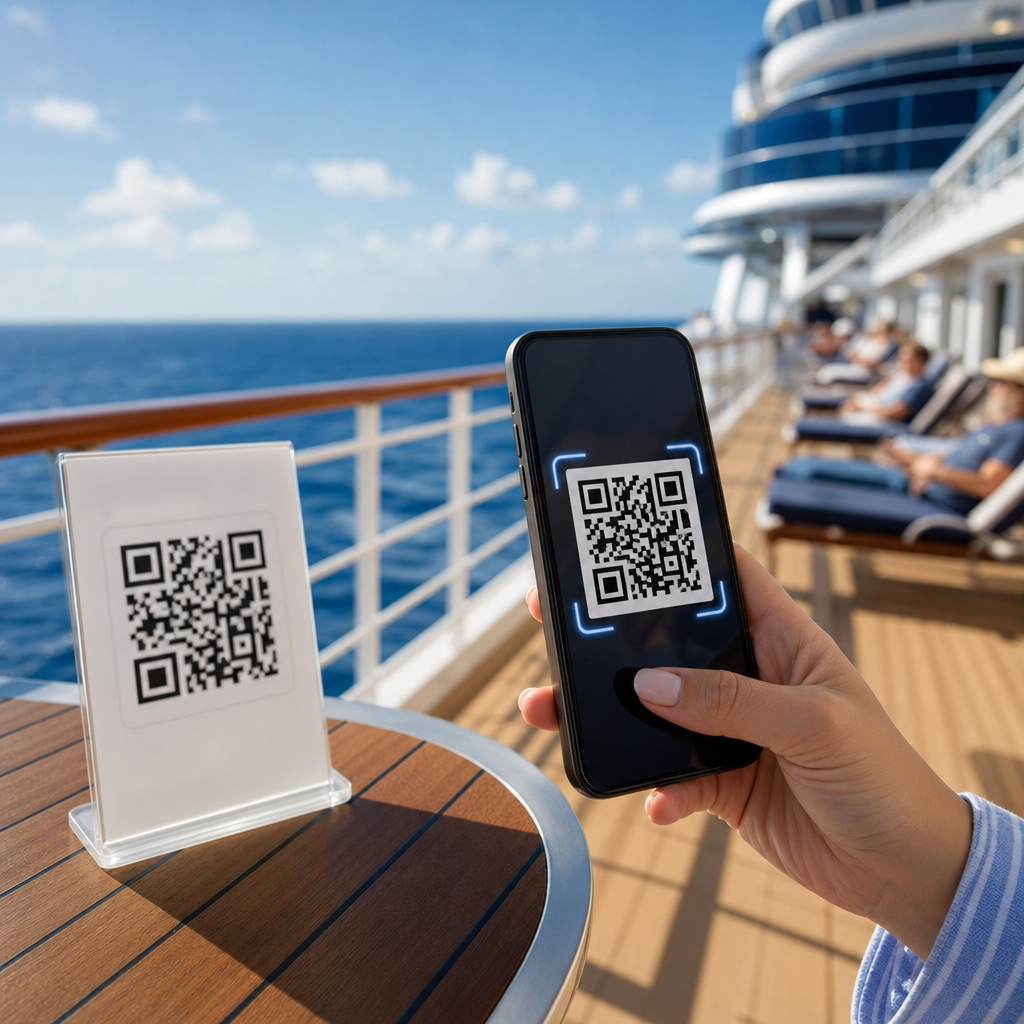
QR codes for cruise ship experiences have moved from a novelty on cabin doors to a core part of how modern cruise lines manage guest service, safety, entertainment, and onboard spending. In travel and tourism, a QR code is a scannable matrix barcode that opens digital content such as menus, excursion details, deck maps, check-in forms, payment pages, or multilingual instructions. On ships, that simple function matters more than it does on land because a cruise vessel is a self-contained destination with thousands of passengers, rotating ports, strict safety protocols, and limited staff time. I have worked on guest journey mapping for hospitality operators, and cruise environments consistently reveal the same advantage: QR codes reduce friction at moments when passengers most need speed and clarity. They also support the broader travel and tourism ecosystem by connecting pre-boarding planning, terminal operations, onboard services, shore excursions, and post-cruise follow-up. As a hub topic, cruise QR code strategy sits at the intersection of mobile check-in, digital signage, cashless commerce, accessibility, and destination marketing.
For operators, the value is measurable. Fewer printed materials lower update delays and waste. Dynamic codes let teams revise information instantly when weather changes a port call or a dining venue reaches capacity. Guests benefit because the same smartphone used for photos and messaging becomes a practical trip tool. The result is a more responsive cruise ship experience, provided the system is designed for connectivity gaps, privacy, and passengers with different levels of digital confidence.
Where QR Codes Fit Across the Cruise Passenger Journey
The strongest cruise deployments treat QR codes as a journey layer, not a one-off feature. Before embarkation, a line can place codes in booking emails, app screens, and travel documents that lead to online check-in, visa reminders, luggage tag instructions, transfer booking, and terminal maps. In the terminal, codes can direct passengers to health attestations, security preparation guidance, loyalty fast lanes, and boarding group updates. This reduces repetitive questions at counters and speeds movement through congested spaces.
Once onboard, the same approach expands. Cabin QR codes can open muster drill instructions, housekeeping requests, room service menus, children’s program schedules, and spa bookings. Public-area codes on elevators, atrium signs, pool decks, and theater entrances can show deck maps, wait times, event reservations, and accessibility information. Restaurants can use QR codes for menus, wine lists, allergy notices, and specialty dining upsells. Shore excursion desks can place codes beside displays so guests compare activity levels, departure times, and cancellation terms without queueing.
The best examples in travel and tourism connect the physical environment to context-specific digital content. A code near an art installation can trigger a short cultural story. A code by a panoramic lounge window can identify landmarks while sailing a fjord. A code in the kids club can open pickup policies for parents in multiple languages. These uses improve cruise ship experiences because they answer the immediate question a guest has in that exact location, not three screens later inside a general app.
Operational Uses That Improve Service and Revenue
Behind the guest-facing convenience, QR codes solve real operational problems. Cruise ships run on constant schedule changes driven by weather, berth availability, customs clearance, and medical or technical needs. Printed dailies and static signage become outdated quickly. Dynamic QR codes, managed through platforms such as Bitly, Beaconstac, Flowcode, or enterprise content systems, allow operations teams to update destination notes, meeting points, and revised showtimes without replacing every sign. In practice, that means fewer missed tours and fewer service desk escalations.
Revenue management also benefits. Onboard spending categories such as specialty dining, beverage packages, internet plans, spa treatments, casino promotions, and retail flash sales can be presented through targeted QR placements. A code at the pool bar can open a cocktail menu and prepaid drink offer. A theater seatback insert can promote future cruise deposits after a headline show. A boutique display can link to product details, sizes, and tax rules for duty-free purchases. These are not gimmicks; they shorten the path from interest to transaction.
Guest service teams gain another advantage through self-service requests. Instead of calling the front desk, passengers can scan a cabin card or door plaque code to request extra towels, report a maintenance issue, schedule turndown, or ask for hypoallergenic bedding. When these requests flow into a property management or service ticketing system, response times become easier to track. Cruise operators that already measure Net Promoter Score, complaint categories, and queue length can use QR touchpoints to identify friction points with much better precision.
| Touchpoint | Typical QR Destination | Main Benefit | Example Outcome |
|---|---|---|---|
| Booking confirmation | Online check-in and document upload | Faster embarkation preparation | Fewer manual document checks at the terminal |
| Cabin door | Service requests and muster info | Reduced front desk calls | Quicker housekeeping response |
| Restaurant table | Menu, allergens, beverage pairings | Better ordering accuracy | Higher specialty drink attachment rate |
| Excursion display | Tour details and booking page | Lower queue pressure | More last-minute excursion sales |
| Disembarkation lounge | Baggage timing and transport links | Smoother departure flow | Fewer missed transfer questions |
Guest Experience Design: What Makes a Cruise QR Code Program Work
A successful QR code program on a cruise ship depends less on the code itself and more on journey design. First, every code needs a clear promise. Labels such as “View tonight’s dining availability,” “Request accessible seating,” or “Track your excursion meeting point” outperform generic “Scan here” prompts because guests know the value before lifting their phone. Second, landing pages must be mobile-first, lightweight, and readable on weak shipboard Wi-Fi or cellular roaming at port.
Third, cruise lines should plan for multilingual use from the start. Travel and tourism audiences are international, and codes can route guests by device language or present a language selector immediately. Fourth, accessibility cannot be an afterthought. WCAG-aligned pages, sufficient color contrast, screen-reader friendly structure, and large tap targets matter, especially for older passengers who make up a significant share of many itineraries. If a code is mounted too low, printed too small, or placed on reflective metal in bright sun, adoption falls sharply.
Security and trust are just as important. Passengers are rightly cautious about scanning unknown codes. Cruise brands should use recognizable domains, branded short links, and consistent visual styling so guests know the destination is official. Sensitive actions such as payments or passport data review should route through authenticated app or web environments with encryption and session controls. Codes should never be the only path for safety-critical information; printed backups and staffed alternatives remain essential.
Measurement closes the loop. The useful metrics are not raw scans alone but scan-to-completion rate, abandonment point, time of day, language selection, conversion to booking, and repeat usage by location. Reviewing those patterns often reveals practical fixes. I have seen a dining QR campaign underperform simply because the sign was placed after the host stand rather than in the queue where guests had waiting time and intent.
Travel and Tourism Applications Beyond the Ship
As the hub page for travel and tourism, this topic extends well beyond the vessel. Cruise lines operate inside a larger network of airports, hotels, ground transport providers, destination authorities, museums, tour operators, and retail partners. QR codes can unify that network. A pre-cruise hotel voucher can link to shuttle pickup details. A destination partner can place a code at the pier for walking routes, local etiquette, emergency numbers, and approved taxi pricing. Post-cruise, a transfer provider can use codes for coach identification and live departure updates.
This creates continuity across fragmented stages of the trip. Travelers do not think in departmental silos; they think in moments of uncertainty. Where is my pickup point? Is this excursion strenuous? What documents do I need for reboarding? Can I pay in local currency? QR codes answer those questions at the point of need. For destination marketing organizations, they also create measurable engagement. A heritage site visited by cruise passengers can track scans by ship day, language, and offer type to refine staffing and promotions.
Travel advisors and cruise marketers can use these same mechanics in brochures, trade show displays, and post-booking nurture campaigns. A code in a printed guide can open a virtual ship tour. A sales email can route to itinerary comparison tools or cabin category explainers. Because dynamic codes can be updated without changing the printed asset, they are especially useful for seasonal travel and tourism campaigns where fares, inclusions, or border rules may shift.
Common Challenges and Best Practices for Cruise Operators
The biggest mistake is assuming every passenger wants an app-heavy journey. Many do, but some prefer human help or have limited connectivity, old devices, or accessibility needs. The right model is optional digital convenience, not forced digital dependence. Cruise lines should keep staffed desks, printed summaries, and in-cabin TV information for backup. Another common problem is code sprawl: too many codes, inconsistent destinations, and no governance. A central content owner, naming convention, and expiration policy prevent outdated links from lingering in public spaces.
Connectivity deserves special planning. Shipboard bandwidth has improved with newer satellite services, but performance still varies by itinerary and weather. Pages linked from QR codes should cache well, avoid heavy media by default, and load key text first. Operators should also test codes in real conditions: low light in theaters, motion near gangways, glare on pool decks, and multilingual use by families sharing one device. The International Maritime Organization’s safety framework does not prescribe QR usage directly, yet any digital layer on a ship must still support, not compromise, emergency communication and operational clarity.
For cruise companies building a roadmap, start with high-need, low-risk uses: embarkation guidance, deck maps, dining menus, and excursion details. Then add service requests, retail offers, and destination storytelling. Review analytics monthly, retire weak placements, and expand the journeys that guests actually use. Done well, QR codes make cruise ship experiences simpler, faster, and more personalized across the full travel and tourism journey. Audit your current passenger touchpoints, identify the moments where guests ask the same question repeatedly, and place one well-designed QR code there first.
Frequently Asked Questions
How are QR codes used on cruise ships today?
QR codes now support many of the most important touchpoints in the cruise experience, far beyond the early use of simple cabin-door links or promotional signage. On modern ships, guests can scan a code to open digital dining menus, reserve specialty restaurants, review daily activity schedules, access deck maps, book shore excursions, join virtual queues, complete embarkation forms, review spa services, and pay for onboard purchases. Cruise lines also use QR codes to connect passengers with multilingual safety information, emergency instructions, health questionnaires, and customer service channels without requiring printed materials at every location.
This matters especially on a cruise ship because the vessel operates like a self-contained city at sea. Thousands of passengers need fast access to timely information in a limited physical space where schedules, venues, and safety procedures can change quickly. A scannable code lets the cruise line update content centrally and instantly, which helps reduce confusion and improves operational efficiency. Instead of reprinting signs or handing out paper notices, the ship can direct guests to the latest version of the information with a quick scan from a phone.
Why are QR codes especially valuable for cruise guest service and operations?
QR codes are valuable on cruise ships because they streamline communication in an environment where guest expectations are high and operational complexity is constant. A single sailing may involve dining reservations, entertainment seating, shore excursion logistics, onboard account activity, accessibility requests, and language support for an international passenger base. QR codes create a simple bridge between physical spaces on the ship and digital services that can answer questions or complete transactions immediately.
From an operations perspective, this improves speed, consistency, and scalability. A guest who scans a code outside a restaurant can see wait times, dietary options, and booking availability without standing in line. A passenger near the theater can scan for show schedules, cast information, or seat policies. A traveler preparing to disembark at a port can access excursion meeting points, time-sensitive instructions, and local guidance in real time. This reduces pressure on guest services desks and onboard staff while making the experience feel more convenient and personalized. For cruise lines, QR codes also support data-driven improvements by showing which services guests are engaging with most often.
Are QR codes on cruise ships useful for safety and emergency communication?
Yes, QR codes can play a meaningful role in cruise safety communication when used as part of a broader safety system. Cruise lines may place codes in cabins, at muster stations, or in public areas so guests can quickly access digital safety briefings, evacuation procedures, emergency contact guidance, deck-specific instructions, and multilingual explanations of onboard protocols. Because cruise ships welcome travelers from many regions, the ability to deliver the same core safety content in multiple languages through one scannable link is a significant advantage.
QR codes are also useful because digital content can be updated quickly if procedures change due to weather, port conditions, itinerary adjustments, or operational considerations. That said, QR codes are best understood as a supplement rather than a replacement for core safety infrastructure such as staff instructions, public announcements, signage, mandatory drills, and printed essentials where required. Not every passenger will have a charged phone or reliable familiarity with mobile tools. The strongest approach is to use QR codes to expand access to clear, current safety information while maintaining traditional communication methods for redundancy and compliance.
Do QR codes improve the onboard entertainment, dining, and excursion experience?
In most cases, yes. QR codes help cruise lines deliver a more flexible and interactive guest experience across entertainment, food and beverage, and shore planning. In dining, they make it easy for passengers to browse menus, review allergens, compare venues, order select services, or confirm reservations without visiting multiple locations. For entertainment, guests can scan codes to see showtimes, reserve limited-capacity events, read program details, or receive updates when performances are moved or sold out. This reduces uncertainty and helps travelers make faster decisions during busy sea days and evenings.
For excursions, QR codes are especially practical because shore activities involve time-sensitive coordination. A code can link directly to meeting instructions, required waivers, activity descriptions, mobility notes, weather considerations, and post-booking updates. That creates a smoother handoff between onboard planning and port-day execution. It also helps passengers feel more informed before committing to an excursion, which can improve satisfaction and reduce misunderstandings. When implemented well, QR codes make the cruise journey feel more connected, responsive, and easy to navigate from embarkation through disembarkation.
What should cruise lines consider when implementing QR codes for the best passenger experience?
Successful QR code implementation on cruise ships depends on more than simply placing codes around the vessel. The content behind each code must be mobile-friendly, quick to load, easy to understand, and relevant to the location where it appears. A code near a pool deck should open information that supports that setting, such as drink service, activities, or safety reminders, while a code in a cabin might connect to room service, ship guides, or account details. Clear labeling is essential so guests know exactly what they will get when they scan.
Cruise lines should also consider accessibility, language coverage, internet constraints, and passenger demographics. Not every traveler is equally comfortable using mobile tools, so staff support and alternative access methods remain important. Pages should be designed for small screens, with readable text, simple navigation, and minimal friction. Where possible, QR-linked resources should work efficiently within the ship’s app or onboard network to avoid unnecessary connectivity barriers. Security is another key factor; passengers should trust that official ship QR codes lead to legitimate, secure pages for payments, forms, and personal information. When cruise lines combine thoughtful placement, useful content, good design, and staff guidance, QR codes become a practical service layer that enhances both guest satisfaction and shipboard efficiency.