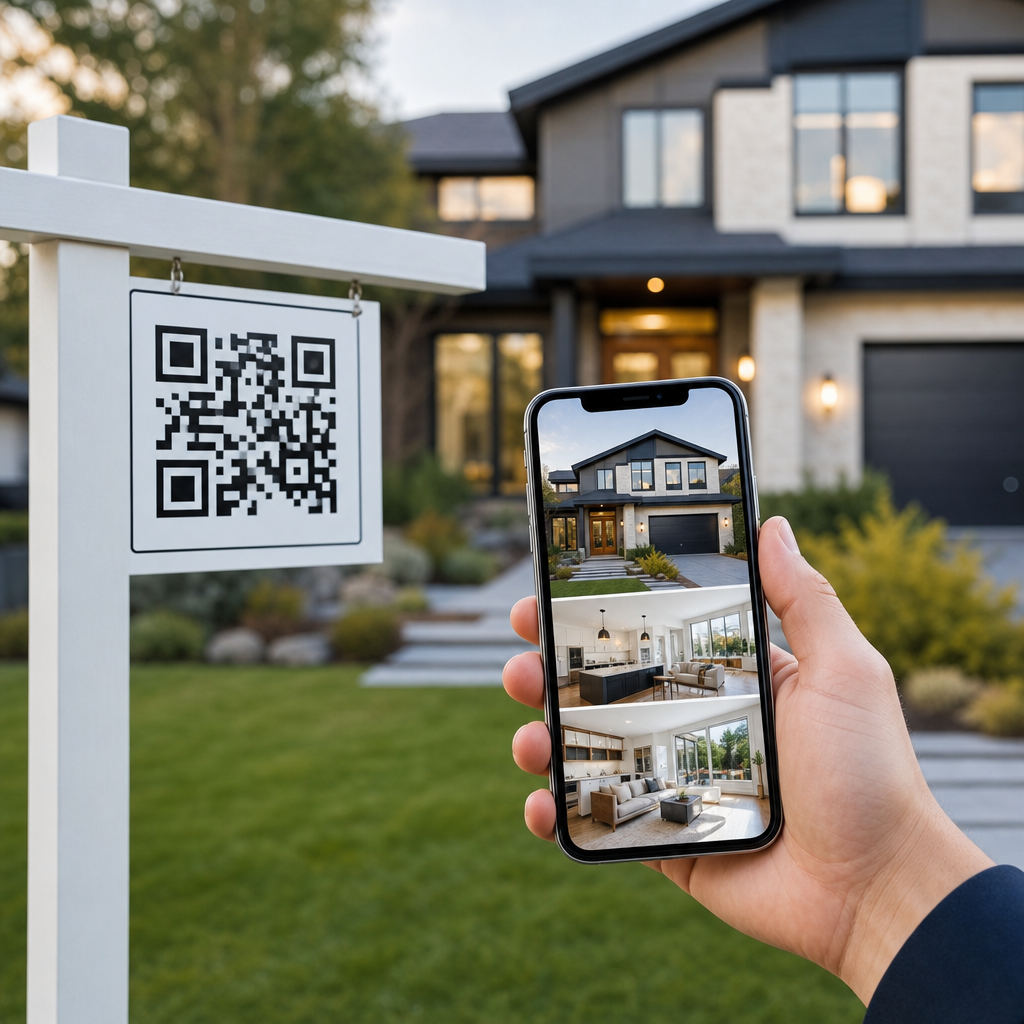
QR codes for property listings have become one of the most practical tools in real estate because they connect an offline sign, flyer, brochure, or open-house display directly to digital listing information in seconds. In real estate, a QR code is a scannable two-dimensional barcode that opens a destination such as a property page, virtual tour, disclosure packet, mortgage calculator, agent contact form, or neighborhood guide. For brokerages and agents, this matters because buyers now expect immediate access to photos, pricing, floor plans, and scheduling options while standing in front of a home. I have implemented QR code campaigns for residential listings, leasing packages, and new-development marketing, and the difference is measurable: fewer dead-end inquiries, better lead attribution, and more informed prospects before the first conversation.
The reason QR codes work so well for property listings is simple. Real estate discovery often begins in the physical world. A buyer notices a yard sign during a weekend drive, a renter sees a window placard while walking downtown, or an investor picks up a printed brochure at a trade event. Without a QR code, that interest has to survive a delay while the person later searches an address, remembers an agent name, or types a long URL. Every extra step loses attention. A properly placed code removes friction and moves the prospect from curiosity to action immediately. That convenience supports lead generation, improves listing engagement, and helps agents capture intent at the exact moment a property is top of mind.
As the real estate category grows more digital, QR codes also serve as the organizing layer for a broader marketing system. They can route traffic to MLS-compliant landing pages, video walkthroughs, CRM-connected inquiry forms, or document libraries while preserving analytics on scans by location, device, and time. They are not a gimmick when used correctly; they are a bridge between print and mobile behavior. For a real estate hub page, the important question is not whether to use QR codes, but how to use them in ways that improve buyer experience, seller reporting, compliance, and conversion quality across residential, commercial, rental, and development listings.
How QR Codes Improve the Property Search Experience
The primary benefit of QR codes for property listings is speed. A buyer scanning a sign should reach the key facts within seconds: price, square footage, bedroom count, taxes, HOA details, availability, and high-quality media. In my experience, the best-performing listing QR destinations are mobile-first pages that answer the first five buyer questions without requiring a login. If the page loads slowly, buries the photos, or forces an app download, scan rates may look healthy while conversion collapses. The scan itself is only the start; the post-scan experience determines whether the lead becomes a showing request.
QR codes also support richer property context than a sign ever could. For example, a suburban single-family listing can link to a 3D Matterport tour, school district information, utility estimates, and a map showing commute times. A downtown condo code can open building amenities, monthly carrying costs, pet policies, parking rules, and lender-friendly financing notes. Commercial property listings can connect to zoning summaries, cap rate assumptions, tenant rosters, and downloadable offering memorandums. Because the code is only an access point, the destination can be tailored to the audience and asset class without crowding the print material.
Another advantage is direct answer delivery. Buyers often want to know, “Is this home still available?” “Can I schedule a tour today?” “What does the inside look like?” and “Who do I contact right now?” A listing page designed for scan traffic should answer each of these immediately with current status, a prominent booking option, visual media, and click-to-call or text functionality. That reduces repetitive low-value inquiries and improves responsiveness. It also benefits agents because prospects who request showings after reviewing details are typically more serious than those calling from a sign with no context at all.
Where QR Codes Belong in Real Estate Marketing
Placement determines results. The most obvious location is the yard sign, but high-performing real estate teams use QR codes across every printed and on-site asset connected to a property. That includes riders, directional signs, open-house registration tables, property brochures, postcard campaigns, window decals, leasing boards, direct-mail farming pieces, and listing presentation materials. In multifamily leasing, codes on street-facing banners often generate scans outside office hours, which is crucial because many renters browse in the evening. In new construction, site signage can route traffic to interactive site maps and model home appointment scheduling before a sales rep is available.
The destination should match the context of the scan. A code on a just-listed postcard can send users to a teaser page with photo highlights and a request for early access. A code on an in-home brochure during an open house can open disclosures, renovation details, and offer instructions. A code in a luxury magazine ad should not dump users on a generic homepage; it should lead to a branded listing experience with cinematic video, agent credentials, and private showing options. In commercial real estate, property package QR codes often perform best when they open a concise mobile summary first, with the full brochure available as a second step rather than an immediate PDF download.
| Placement | Best Destination | Main Goal |
|---|---|---|
| Yard sign | Mobile listing page with photos, price, map, showing request | Capture immediate buyer interest |
| Open-house flyer | Property details, disclosures, financing tools, agent contact | Move visitors toward offers |
| Direct-mail postcard | Campaign landing page with neighborhood and listing highlights | Generate new listing and buyer leads |
| Apartment window sign | Availability grid, floor plans, application link | Convert walk-by renters after hours |
| Commercial brochure | Mobile summary plus downloadable offering memorandum | Qualify investors and tenants |
One practical rule I use is that every QR code should have a visible label explaining the benefit of scanning. “Scan for price, photos, and tour times” consistently outperforms unlabeled codes because people need a reason to act. The call to action must be plain, specific, and tied to the immediate value a buyer or tenant receives.
Best Practices for Creating High-Converting Listing QR Codes
Not all QR codes are equal. For real estate, dynamic QR codes are usually the better choice because they allow the destination URL to be updated without reprinting materials. That matters when a listing status changes from active to pending, when a property page moves, or when an open-house registration link needs to be swapped. Dynamic platforms also provide scan analytics, which help agents compare performance across signs, neighborhoods, and campaign types. Static codes have a place for permanent uses, but for active inventory, flexibility is worth the cost.
Design standards matter because signs are scanned outdoors, often from a distance and in poor light. Use high contrast, leave a sufficient quiet zone around the code, and test it on both iPhone and Android devices before printing. On yard signs, the code should be large enough to scan from a car stopped nearby or from a sidewalk without awkward positioning. Avoid placing codes on reflective surfaces, heavily textured materials, or visually busy backgrounds. A branded frame is fine if it does not interfere with readability. Error correction can improve resilience, but not enough to save a badly designed code.
The landing page must also meet real estate realities. It should load quickly, display the address and hero image above the fold, include clear compliance language where required, and connect to a CRM such as Follow Up Boss, HubSpot, kvCORE, or Salesforce. If multiple agents or teams use codes across many listings, establish a naming convention for campaigns, source tags, and UTM parameters so reporting stays clean. I also recommend building separate QR destinations for buyers, sellers, tenants, and investors instead of forcing every audience through one generic page. Relevance improves conversion more than broad messaging.
Analytics, Compliance, and Operational Considerations
One of the biggest advantages of QR codes for property listings is measurement. Traditional signage has always been difficult to attribute. With trackable codes, agents can see how many scans each property receives, when interest spikes, which marketing pieces generate action, and what percentage of visitors move from scan to inquiry. Those insights strengthen listing presentations because sellers want evidence that marketing is producing engagement, not just impressions. For broker-owners, scan data also helps determine which neighborhoods respond best to print, whether luxury listings need more immersive media, and how open-house traffic compares with drive-by activity.
Compliance deserves equal attention. Real estate advertising is regulated, and QR codes do not exempt agents from local rules, MLS policies, fair housing standards, or brokerage disclosure requirements. If a code leads to a page with pricing, incentives, or property claims, that information must remain accurate and current. Rental operators should be especially careful with application links, fee disclosures, accessibility information, and equal housing messaging. New-development teams need a review workflow so that codes on expensive signage do not point to outdated availability or unapproved promotional language. A broken or misleading QR experience hurts trust faster than a plain sign ever would.
Operationally, teams should document ownership and maintenance. Decide who creates codes, who updates destinations, who monitors analytics, and how inactive listings are handled. I have seen brokerages lose leads because printed signs remained in place while the linked page expired, redirected incorrectly, or displayed a generic error. A simple monthly audit prevents that. QR codes are low-cost, but only when supported by disciplined asset management.
Real Estate Use Cases by Property Type
Residential resale listings benefit from QR codes that emphasize speed and convenience. The ideal experience includes gallery images, financing estimates, showing requests, and neighborhood context. Luxury homes need stronger storytelling, often with drone video, architectural notes, and private-tour options. Rentals prioritize availability, floor plans, qualifications, and online applications. Commercial listings should focus on investor and tenant decision factors such as use restrictions, lease terms, parking ratios, traffic counts, or income assumptions. Land listings may need parcel maps, utility access notes, soil information, and zoning summaries before a serious prospect makes contact.
As the hub for real estate applications, this topic connects naturally to related subjects such as QR codes for open houses, rental marketing, commercial brochures, property management, and developer sales centers. The core principle stays the same across every format: reduce friction, answer the obvious questions, and direct the prospect to the next action with no confusion. When agents treat QR codes as part of a full listing system rather than a decorative add-on, they improve buyer experience and create better data for the business.
QR codes for property listings work because they turn physical attention into measurable digital engagement at the moment interest peaks. They help buyers get answers faster, help agents qualify leads better, and help sellers see that marketing is producing real activity. The most effective programs use smart placement, dynamic tracking, mobile-first landing pages, clear calls to action, and disciplined compliance reviews. If you market residential, rental, commercial, or development properties, audit your current print assets and add QR codes where a prospect needs instant access to information. Start with one listing, measure scan behavior, and build a repeatable real estate system from there.
Frequently Asked Questions
What are QR codes for property listings, and how do they work in real estate?
QR codes for property listings are scannable two-dimensional barcodes that instantly connect a physical marketing piece to digital property information. In real estate, that means a buyer can scan a code on a yard sign, brochure, postcard, window display, open-house handout, or printed flyer and immediately land on a mobile-friendly destination. That destination might be a listing page, photo gallery, virtual tour, video walkthrough, interactive floor plan, disclosure packet, neighborhood guide, mortgage calculator, or a contact form for the listing agent.
The reason they are so effective is simple: they remove friction. Instead of asking a buyer to type in a long URL, search for the property online, or save the address to look up later, the QR code creates an immediate path from interest to action. That is especially important in real estate, where timing matters and attention spans are short. A buyer standing in front of a home can scan the code in seconds and access pricing, features, availability, and next steps right from their phone.
For agents and brokerages, QR codes also improve lead capture and buyer engagement. A well-configured code can direct prospects to pages designed for conversion, such as a showing request form or a registration page for additional details. Dynamic QR codes can also be updated after printing, which means the destination can change if the price is reduced, the listing status changes, or new marketing assets become available. In practice, QR codes turn static property marketing into an interactive, measurable experience.
What information should a property listing QR code link to?
The best destination depends on the buyer’s stage of interest, but in most cases a property listing QR code should lead to the most useful next step rather than a generic homepage. For a for-sale sign, the strongest option is often a dedicated mobile landing page with listing photos, price, square footage, key features, availability, and clear calls to action such as “Schedule a Showing” or “Contact the Agent.” This gives the buyer immediate answers without making them hunt for information.
Additional high-value destinations include a virtual tour, 3D walkthrough, disclosure packet, open-house registration page, financing estimator, or downloadable brochure. For higher-end properties, the QR code might link to a branded property website with cinematic video, floor plans, neighborhood highlights, school information, and lifestyle content. For multifamily, rental, or new-construction listings, it may be more effective to send users to unit availability, community amenities, pricing ranges, or an appointment booking page.
What matters most is relevance and ease of use. The page should load quickly, look great on mobile devices, and make it obvious what the user should do next. Avoid linking to cluttered pages, non-mobile PDFs as the primary destination, or general site navigation that forces extra clicks. A QR code is most effective when it answers the buyer’s immediate questions and supports conversion in one step. In other words, it should not just provide information; it should move the buyer further into the inquiry process.
Are QR codes effective for generating real estate leads?
Yes, QR codes can be highly effective for generating real estate leads when they are paired with strong placement, clear value, and a smart landing experience. Their biggest advantage is intent. When someone scans a property listing QR code, they are actively interested in that listing or in homes like it. That level of engagement is often stronger than passive ad impressions because the prospect is choosing to interact in a specific moment, usually while viewing a sign, flyer, or display tied to a real property.
QR codes perform especially well when they are used in high-intent environments such as yard signs, open houses, print brochures, direct mail campaigns, and office windows. They can capture buyers who are driving through a neighborhood, attending an event, or browsing listings in person outside normal business hours. A code that links to a simple lead form, instant property alert signup, or showing scheduler can convert attention into action immediately, even if the agent is unavailable at that exact moment.
That said, effectiveness depends on execution. A QR code by itself does not create leads; the experience around it does. The code should be easy to scan, accompanied by clear text telling users what they will get, and placed where people can scan safely and comfortably. The landing page should be fast, mobile-optimized, and designed with a focused call to action. If buyers scan a code and land on a slow, confusing, or irrelevant page, results will drop quickly. When done correctly, QR codes can become a practical bridge between offline exposure and online lead generation.
What are the best practices for using QR codes on real estate signs, flyers, and brochures?
Start with visibility and usability. A QR code should be large enough to scan easily from the expected distance, printed with strong contrast, and placed in a location where it is not obstructed or visually crowded. On a flyer or brochure, that usually means a clean area with white space around the code. On a yard sign, it means thinking carefully about how close someone can safely get and whether the code can realistically be scanned from a sidewalk, driveway, or parked car. If scanning requires awkward movement or guesswork, adoption will suffer.
Always include a clear instruction or benefit statement near the code. Phrases like “Scan for price and photos,” “Scan for virtual tour,” or “Scan to schedule a private showing” help users understand exactly why they should take out their phone. This small cue can significantly improve engagement because it removes uncertainty. It also helps set expectations about what the scan will deliver, which is important for trust and conversion.
Use dynamic QR codes whenever possible so you can update the destination without reprinting materials. This is especially helpful in real estate, where listing status, pricing, and marketing assets often change quickly. It is also a good idea to use trackable links so you can measure scans by campaign, property, and placement. Test the code on multiple devices before printing, confirm the landing page is mobile-friendly, and avoid linking to broken URLs or oversized files. Finally, make sure the experience aligns with compliance and branding requirements, especially if the code directs users to disclosures, licensed contact information, or brokerage-specific pages. The most effective QR code campaigns combine convenience, clarity, and a seamless mobile experience.
Can QR codes be tracked and updated after they are printed?
Yes, and this is one of the biggest reasons QR codes are so valuable for property listings. If you use a dynamic QR code rather than a static one, you can change the destination URL after the code has already been printed and distributed. That means a code on a sign rider, brochure, mailer, or open-house display can continue to be useful even if the listing page changes, the home goes under contract, a new virtual tour is added, or you want to redirect traffic to a similar active property.
Dynamic QR codes also allow for better analytics. Depending on the platform you use, you can often track metrics such as total scans, time of day, device type, and in some cases approximate location data. For real estate professionals, that can provide helpful insight into which listings attract the most walk-up attention, which print pieces drive engagement, and which calls to action produce the strongest response. This makes QR codes more than a convenience feature; they become a marketing measurement tool.
To get the most from tracking, connect your QR code strategy to your broader marketing system. Use destination pages with lead forms, CRM integrations, appointment schedulers, or analytics tags so scans can be tied to inquiries and conversions. Keep in mind that privacy rules, fair housing considerations, and platform limitations may affect the level of data available, so it is important to use reputable tools and follow best practices. When managed well, dynamic and trackable QR codes give agents and brokerages a flexible way to improve the buyer experience while also learning what is working across their property marketing efforts.