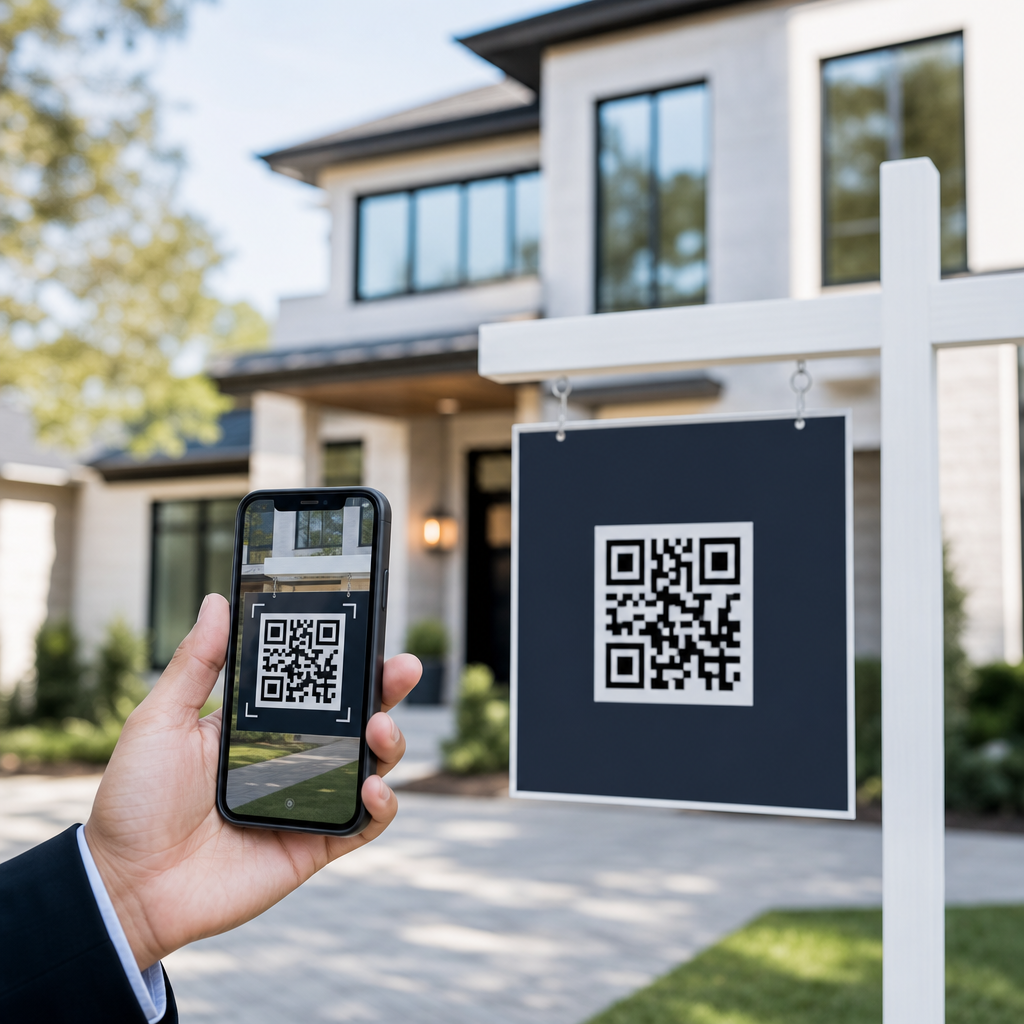
Real estate agents use QR codes to sell homes by turning every sign, flyer, brochure, and open-house handout into a direct path to property details, media, and lead capture. A QR code is a scannable two-dimensional barcode that opens a digital destination, usually a listing page, video tour, map, contact form, or saved search. In residential real estate, that simple bridge between the physical world and digital information solves a constant problem: buyers often discover a property while driving, walking, or visiting an open house, but they are not ready to call an agent on the spot. A quick scan lets them act immediately, on their own terms, without writing down a phone number or remembering a web address later.
I have seen adoption accelerate because smartphone cameras now read QR codes natively, removing the friction that made older campaigns unreliable. Agents can place one code on a yard sign, direct riders, postcards, lockbox instructions, feature sheets, window displays, business cards, and community mailers, then update the destination behind that code as the campaign changes. That flexibility matters in real estate, where listings move from coming soon to active, under contract, and sold in short cycles. For brokerages, QR codes also create measurable offline-to-online attribution, revealing which sign, flyer, or event generated interest and which prospects engaged enough to request a showing, download disclosures, or contact an agent.
As a hub topic, real estate QR code strategy covers more than marketing gimmicks. It includes lead generation, property marketing, open-house operations, document access, neighborhood storytelling, agent branding, analytics, compliance, and post-sale nurturing. When used well, QR codes shorten response time, improve listing presentation, and help agents qualify buyer intent. When used poorly, they send traffic to broken pages, force mobile users through clumsy forms, or violate disclosure rules. The difference comes down to planning the destination, placement, design, and follow-up process. Understanding those moving parts is essential for agents, teams, and brokers who want QR codes to support actual transactions rather than just decorate a sign.
Why QR Codes Work in Real Estate Marketing
QR codes work in real estate because property shopping is highly visual, location driven, and often spontaneous. A buyer sees a sign in a neighborhood they like, scans, and immediately views price, photos, square footage, school information, taxes, and showing options. That speed matters. According to the National Association of Realtors, buyers rely heavily on mobile devices during home search, and listing engagement drops fast when information is hard to access. A QR code reduces the steps between interest and action.
Agents also benefit because QR codes make offline assets measurable. A postcard with a unique code can send users to a landing page tailored to that neighborhood. A sign code can open a mobile-optimized single-property site with click-to-call and mortgage calculator tools. An open-house code can route visitors to a digital sign-in form connected to a CRM such as Follow Up Boss, kvCORE, LionDesk, or HubSpot. Instead of guessing whether print marketing influenced a lead, agents can see scan counts, time of day, device type, and conversion rate.
Another reason they work is control. Dynamic QR codes, available through platforms such as Bitly, QR Code Generator Pro, Beaconstac, and Uniqode, let agents change the destination without reprinting the code. I have used that capability to switch from a teaser page before listing launch to the MLS-backed property page on activation, then to a backup page when syndication lagged. That keeps every printed asset useful longer and protects campaigns from broken links.
Best Uses of QR Codes Across the Home Selling Process
Real estate agents use QR codes at nearly every stage of a listing campaign. Before launch, a code can collect early interest for a coming-soon property and build a waitlist for private showings. Once the listing is live, the same or an updated code can lead to a single-property website, 3D Matterport tour, floor plan, drone video, disclosure packet, or financing estimate. During open houses, codes simplify sign-in, feedback collection, and document access. After showings, they can send buyers to a price-change alert page or a form to schedule a second visit.
For sellers, QR codes can support listing presentations too. An agent can include a code in a print booklet that opens a portfolio of sold properties, testimonials, staging examples, and the marketing calendar. In competitive listing appointments, that helps connect the physical leave-behind to richer digital proof. For buyers relocating from out of town, neighborhood guide codes placed in brochures or community ads can link to school district information, commute maps, local amenities, and market reports.
| Placement | Best Destination | Main Goal |
|---|---|---|
| Yard sign | Mobile property page with photos, price, map, and call button | Capture immediate buyer interest |
| Open house sign-in sheet | CRM-connected form with consent checkbox | Lead capture and follow-up |
| Flyer or brochure | Video tour or feature-rich listing site | Increase engagement time |
| Direct mail postcard | Neighborhood landing page or valuation offer | Generate seller leads |
| Window display | Search portal filtered to brokerage listings | Drive after-hours inquiries |
The strongest campaigns match the code to buyer intent. Someone scanning a sign wants fast facts and showing options, not a long registration wall. Someone at an open house may accept a short form in exchange for disclosures or inspection summaries. Context determines conversion.
How to Create High-Converting Real Estate QR Code Campaigns
The most effective real estate QR code campaigns start with the destination, not the code itself. Build a page designed for mobile first: fast load time, large tap targets, clear headline, current status, prominent photos, and one primary action such as schedule a tour or ask a question. If the page opens an MLS listing, confirm that branding, attribution, and lead-routing rules comply with local MLS and brokerage requirements. If the destination is a custom landing page, include essential property facts above the fold so users do not bounce.
Design also affects scans. Use high contrast, quiet margins, and enough physical size for the expected scanning distance. A code on a yard sign viewed from a car must be larger than a code on a flyer held in hand. Add a short call to action near the code, such as “Scan for price, photos, and tour times.” In my campaigns, scan volume increases noticeably when the benefit is stated plainly rather than assuming users will guess.
Tracking should be built in from the start. Create unique codes by asset and channel so you can separate scans from sign riders, postcards, brochure boxes, social graphics, and office windows. Add UTM parameters for analytics in Google Analytics 4, and connect form completions to your CRM with source tagging. Review not just total scans but meaningful actions: call clicks, showing requests, disclosure downloads, and return visits. That is how agents learn whether a code generated curiosity or true buying intent.
Open Houses, Lead Capture, and Follow-Up Systems
Open houses are one of the clearest use cases because QR codes streamline both the visitor experience and the agent workflow. A code at the entry can replace a paper sign-in sheet with a branded form that captures name, email, phone, whether the visitor has an agent, financing status, and consent to receive follow-up messages. That data can feed directly into a CRM, trigger an automated thank-you text, and assign a task for personalized follow-up within minutes.
Speed is critical. Buyers touring multiple homes in one afternoon forget details quickly. A good post-scan sequence sends a concise message with the property brochure, disclosure link, financing contact, and next-step options. If the visitor scans but does not complete the form, retargeting is limited unless they land on a cookied page and accept tracking, so the page must earn conversion fast. Keep forms short, especially on mobile.
QR codes can also improve seller reporting. Agents can show sellers how many open-house visitors scanned the code, how many completed registration, and how many requested follow-up. That adds transparency beyond raw foot traffic. It also helps sellers understand buyer objections when feedback forms are linked through the same system. In practice, these small process improvements make the open house feel more professional and easier to measure.
Compliance, Limitations, and Practical Mistakes to Avoid
QR codes are useful, but they are not self-executing. Real estate agents must account for compliance, accessibility, and basic user behavior. If local regulations or MLS rules require brokerage identification, fair housing language, or listing attribution, the landing page must display those elements properly. If a property status changes, update the destination immediately to avoid misleading users. For privacy, explain what happens when someone submits information and store data in systems that match your brokerage’s policies and applicable laws.
Common mistakes are easy to fix. Do not link to a desktop page with tiny text. Do not place a code where glare, distance, or low lighting make scanning difficult. Do not print one static code to a page that may expire. Do not ask a first-time scanner for excessive information before showing the property basics. And do not rely on scans alone; some buyers will still prefer texting, calling, or taking a flyer.
Accessibility matters as well. Always include a readable short URL and phone number near the code so users have an alternative path. Test on iPhone and Android devices, over cellular and Wi-Fi, before deploying. Track performance by property type and price band because luxury buyers, investors, and first-time buyers often respond differently. Used with discipline, QR codes become an operational tool, not just a marketing add-on.
QR codes help real estate agents sell homes because they connect offline attention to online action at the exact moment buyer interest appears. They make signs, flyers, postcards, and open houses more useful by delivering property information instantly, capturing leads cleanly, and giving agents measurable data about what is working. They also support the full real estate cycle, from listing presentations and coming-soon campaigns to neighborhood guides, disclosure access, and post-visit follow-up.
The core principle is simple: every QR code should lead to the most helpful next step for that specific audience. For a drive-by buyer, that means fast listing facts and a tour request. For an open-house visitor, it means easy sign-in and immediate follow-up. For a seller evaluating agents, it means proof of marketing execution. When the destination is mobile friendly, compliant, and tracked correctly, QR codes reduce friction and improve response time across the board.
If you work in real estate, audit your current print and in-person marketing, choose two high-intent use cases, and launch trackable QR codes with dedicated landing pages. Measure scans, leads, and appointments, then refine placement and messaging. Done well, QR codes turn everyday real estate materials into reliable selling tools.
Frequently Asked Questions
How do real estate agents use QR codes on signs, flyers, and brochures to help sell homes?
Real estate agents use QR codes to turn printed marketing materials into instant digital entry points for buyers. Instead of relying on a passerby to remember an address, type in a long URL, or call later, the QR code lets them scan and immediately open a property listing, photo gallery, video walkthrough, virtual tour, neighborhood map, or agent contact page. This is especially effective on yard signs, directional signs, flyers, postcards, brochures, and open-house handouts, where buyers are already showing interest but may not be ready to speak with an agent in that moment.
The biggest advantage is speed and convenience. A buyer might see a home while driving through a neighborhood, walking the dog, or visiting an open house. In those situations, attention is limited and interest can disappear quickly. A QR code removes friction by giving that buyer instant access to the next step. Agents can also use different QR codes for different purposes, such as linking one code on the yard sign to the main listing page and another on a brochure to a mortgage calculator, floor plan, or “schedule a showing” form. That creates a smoother buying experience while helping the agent move interested prospects from curiosity to action.
What should a real estate QR code link to for the best results?
The best real estate QR codes link to a mobile-friendly destination that matches buyer intent at the moment of the scan. In most cases, that means a dedicated property landing page with professional photos, price, square footage, key features, location details, and clear next steps. If someone scans a QR code from a yard sign, they usually want immediate listing information. If they scan at an open house, they may be more interested in disclosures, financing details, nearby school information, or a way to submit an offer request. The destination should feel relevant, fast, and easy to use on a phone.
Strong QR code destinations often include video tours, 3D walkthroughs, interactive maps, neighborhood highlights, downloadable brochures, and simple lead-capture forms. Agents also benefit from including clear calls to action such as “Book a showing,” “Ask a question,” “Get price updates,” or “See similar homes.” In some cases, linking to a saved search or neighborhood-specific listings is smart, especially if the featured property goes under contract. That way, the QR code still captures buyer interest and keeps the conversation going. The key is to avoid sending people to a generic homepage or cluttered page that forces them to hunt for information after scanning.
Do QR codes help real estate agents generate more leads?
Yes, QR codes can be highly effective for lead generation because they connect offline attention with online follow-up. Real estate marketing often starts in the physical world through signage, print materials, mailers, and open houses, but the actual conversion usually happens digitally. QR codes bridge that gap by creating an immediate path from “I’m interested” to “Here is my information” or “I want to schedule a showing.” When used correctly, they reduce drop-off and capture leads who might otherwise forget the property later or move on to another listing before making contact.
Agents can improve lead quality by pairing QR codes with landing pages that offer something useful in exchange for a simple action. For example, a buyer might scan to unlock additional photos, receive property updates, download a feature sheet, request financing information, or save a list of similar homes. This approach feels more natural than pushing for a phone call upfront. QR codes also allow agents to track performance by measuring scans, time of engagement, location, and conversion behavior. That data helps identify which signs, campaigns, or neighborhoods produce the most serious buyer activity, making QR codes valuable not just for lead capture but for marketing optimization as well.
What makes a real estate QR code campaign effective?
An effective real estate QR code campaign combines good placement, a compelling offer, and a smooth mobile experience. Placement matters because the code needs to appear where buyers can realistically notice and scan it, such as on yard signs at eye level, brochures with enough white space, open-house materials, window displays, and mailers. The QR code should be large enough to scan easily and include a short prompt that tells people what they will get, such as “Scan for price, photos, and tour” or “Scan to book a private showing.” Without that context, many people will ignore it.
The digital experience after the scan is just as important as the code itself. The landing page should load quickly, look polished on mobile devices, and make the next step obvious. Agents should also use dynamic QR codes when possible, because they can update the destination without reprinting materials and often include scan analytics. Branding matters too; a code that appears trustworthy and is paired with recognizable agent or brokerage information is more likely to be used. Ultimately, the most effective campaigns do not treat QR codes as a novelty. They use them as a strategic conversion tool that supports buyer convenience, agent responsiveness, and measurable marketing outcomes.
Are QR codes still useful in real estate if buyers can already search listings online?
Yes, QR codes are still very useful because they serve a different purpose than general online search. Buyers can absolutely browse listings on portals and brokerage websites, but QR codes capture interest at the exact moment a property is discovered in the real world. That timing is powerful. Someone standing in front of a home, attending an open house, or picking up a brochure already has high intent. A QR code helps the agent capitalize on that interest immediately instead of hoping the buyer searches for the property later and finds the correct listing among many similar options.
QR codes also create a more controlled and branded experience than relying entirely on third-party listing platforms. An agent can guide buyers directly to a custom page, provide richer media, highlight local expertise, answer common questions, and collect lead information without distractions from competing listings or ads. In addition, QR codes can support follow-up journeys beyond a single home, such as links to market reports, neighborhood guides, saved searches, financing resources, and contact forms. In that sense, QR codes are not replacing online listing search. They are enhancing it by making real-world marketing more interactive, immediate, and conversion-focused.