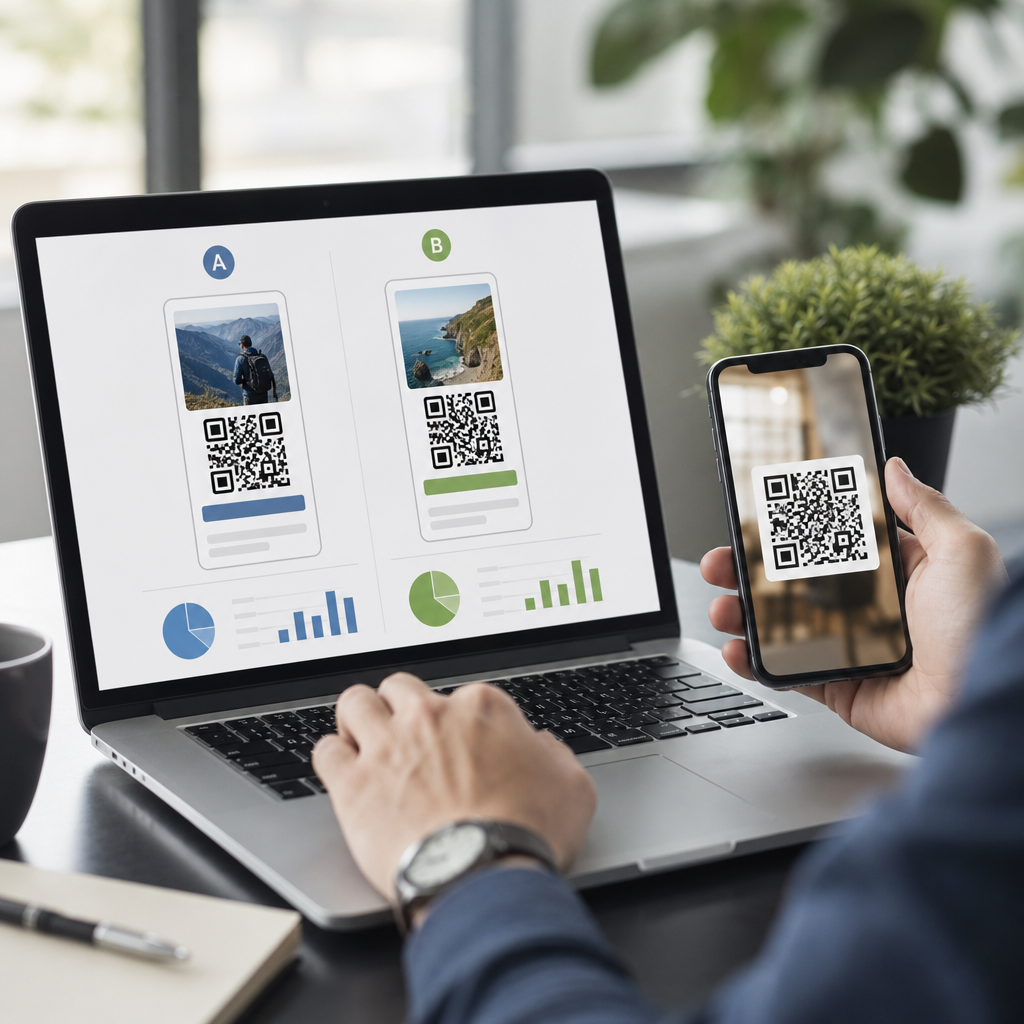

QR codes for marketing automation platforms have moved from novelty to infrastructure because they connect offline attention to digital workflows with almost no friction. In this context, a QR code is a scannable matrix barcode that sends a user to a URL, app action, file, form, or deep-linked experience, while a marketing automation platform is software such as HubSpot, Marketo, Salesforce Marketing Cloud, Klaviyo, ActiveCampaign, or Mailchimp that triggers campaigns, scoring, segmentation, and reporting based on user behavior. When these systems are integrated well, a scan from a flyer, product label, trade-show booth, postcard, in-store display, or direct mail piece can create a contact, update a CRM record, enroll a lead in a nurture sequence, notify sales, attribute revenue, and personalize the next message. I have implemented these flows for event teams and B2B demand generation programs, and the difference between a static landing page link and a fully instrumented QR journey is substantial. Marketers gain cleaner attribution, faster follow-up, and richer first-party data. Sales teams gain context about source, campaign, asset, and intent. Customers get a simpler path from physical media to relevant content. That matters more now because privacy changes have weakened third-party tracking, while budget pressure has increased the need to prove that physical and hybrid campaigns drive pipeline, not just impressions.
The key terms are straightforward but important. Dynamic QR codes point to a short redirect URL that can be changed later, which makes them better for campaign management, testing, and analytics than static codes. CRM integration means scan data can be written to systems such as Salesforce, Microsoft Dynamics 365, or HubSpot CRM, either by native connector, webhook, Zapier, Make, or custom API. Marketing automation integration means the scan can trigger workflows like lead routing, abandoned-form reminders, event attendance follow-up, product education drips, or coupon expirations. This sub-pillar hub focuses on integrating QR codes with CRM and related tools comprehensively: data architecture, tracking parameters, consent handling, lead capture, segmentation, reporting, and operational governance. If your broader program covers advanced QR code strategies, this is the page that ties execution together. It answers practical questions marketers ask before rollout: What should happen after a scan? Which fields belong in the CRM? How do you keep attribution intact across channels? Which tools support direct integration, and where do middleware or APIs make more sense? Most importantly, it explains how to design a system that operations teams can trust and sales teams will actually use.
How QR codes connect offline touchpoints to CRM and automation workflows
A QR program becomes valuable when a scan does more than open a page. The best setup treats each code as a campaign endpoint with a defined source, audience, asset, and intended conversion. In practice, that means every code should map to a destination URL carrying disciplined UTM parameters, a campaign ID, and often hidden form fields that preserve the asset context. When the user scans, the landing page or form writes those values into the CRM and automation platform. If the person is already known, the system updates the existing contact; if not, it creates a new lead with explicit source metadata such as “Direct Mail Q1 Renewal” or “Booth Demo Request.” I have found that this naming discipline is what separates useful attribution from a pile of scans that nobody can reconcile at quarter end.
The technical pattern usually follows one of three routes. First, native integrations: a QR management platform sends traffic to a landing page built in HubSpot, Marketo, or Salesforce Marketing Cloud, where forms and cookies handle identification. Second, middleware: the QR redirect or form submission passes data through Zapier, Make, Workato, or Tray to create records, enrich fields, and trigger sequences across multiple systems. Third, direct API architecture: a custom endpoint receives the scan context and posts to the CRM, CDP, warehouse, and messaging tools in one controlled flow. Native setups are fastest to launch. Middleware is ideal when marketing operations needs flexibility without engineering time. Direct APIs are best for scale, stricter governance, or complex account-based programs where one scan may need to update contact, account, opportunity, and event objects simultaneously.
Building the data model: fields, events, and attribution rules
To integrate QR codes with CRM and tools correctly, start with the data model before you design creative. Every scan should be able to answer five questions: who scanned, what they scanned, where they encountered it, when they scanned, and what happened next. In CRM terms, that usually means standard fields for lead source, latest source detail, campaign, medium, content, and date, plus custom fields for QR code ID, asset name, placement, venue, and offer. In automation terms, create events such as QR scan, form started, form submitted, coupon redeemed, appointment booked, or demo requested. If you skip this structure, downstream segmentation becomes unreliable and reporting becomes anecdotal.
Attribution needs explicit rules. A scan is not always a conversion, and a conversion is not always net new. Decide whether the QR scan will receive first-touch, last-touch, or multi-touch credit, and document how it behaves when a known contact scans a new campaign asset. B2B teams often let the scan update recent engagement while preserving original source, then associate the response with a campaign member status such as Scanned, Registered, Attended, or Requested Demo. E-commerce teams may use scans to trigger product-view events in Klaviyo or Braze and evaluate revenue within a seven-day or thirty-day window. The point is consistency. If one event team logs scans as campaign responses while another treats them as website traffic only, your dashboards will mislead executives about channel performance.
| Integration area | Recommended setup | Why it matters |
|---|---|---|
| Code type | Dynamic QR with editable redirect | Supports testing, link updates, and centralized analytics |
| Tracking | UTMs plus unique QR code ID | Preserves campaign and asset attribution inside CRM |
| Landing experience | Mobile-first page with hidden source fields | Improves conversion rate and writes context to forms |
| Data sync | Native connector, middleware, or API | Controls how scan and form events reach CRM and automation |
| Reporting | Dashboard by scans, submissions, MQLs, SQLs, revenue | Shows pipeline impact instead of top-of-funnel vanity metrics |
Choosing tools and integration methods that fit your stack
Most teams do not need a perfect stack; they need a compatible one. If you run HubSpot end to end, the simplest approach is often a dynamic QR platform that redirects into HubSpot landing pages and forms with campaign fields prepopulated. HubSpot workflows can then branch by asset, geography, lifecycle stage, or owner. In Marketo environments, QR scans commonly feed program statuses and smart campaigns, while Salesforce handles campaign influence and sales visibility. If your organization relies on Salesforce as the system of record and uses Pardot Account Engagement, ensure your connector preserves campaign member status updates, because sales teams often need to see exactly which physical asset drove the engagement.
For retailers and direct-to-consumer brands, integrations with Shopify, Klaviyo, Attentive, or Braze matter more than classic lead scoring. A code on packaging might direct to setup instructions, collect product registration, and trigger post-purchase education. A code on a shelf talker can launch a discount page and enroll the scanner in an SMS or email sequence if consent is captured. Restaurants and franchise systems often route scans into review generation, loyalty enrollment, or location-specific offers, which means the integration must also pass store ID and franchise metadata. Healthcare, financial services, and education programs require stricter controls, so QR destinations should avoid exposing regulated data and should use consent records, access rules, and approved messaging systems. The right method depends less on vendor popularity than on your data ownership, compliance requirements, and internal ability to maintain the connection over time.
Designing high-converting post-scan experiences and automated journeys
A QR code does not convert people; the destination experience does. Mobile landing pages should load quickly, state the value immediately, and ask only for the information needed at that stage. At trade shows, I usually recommend a two-step flow: first, a page that confirms the offer and captures minimal details; second, a thank-you page that lets the visitor book time, download a spec sheet, or choose content preferences. This reduces bounce rates and improves data quality. Long forms on mobile underperform, especially in noisy environments. If identification is not essential, let the first scan deliver value immediately and use progressive profiling later.
Automation should reflect scan intent. Someone scanning a booth demo code is closer to sales than someone scanning a poster for a trend report. Build workflows that use context, not just presence. Immediate actions can include confirmation email, SMS with a booking link, owner notification in Slack or Microsoft Teams, and lead assignment based on region or product interest. Follow-up actions might include nurture tracks by persona, suppression from redundant campaigns, retargeting audience creation, or tasks for business development reps. Personalization should be specific but bounded. Referencing the exact asset or event in the first follow-up usually improves response rates; overusing behavioral detail can feel intrusive. A good rule is to personalize on declared interest and campaign context, not on hidden assumptions about identity or intent.
Measurement, compliance, and operational governance
Strong reporting for QR codes in marketing automation platforms goes beyond scan counts. The metrics that matter are scan-to-visit rate, visit-to-form completion rate, known-contact match rate, MQL rate, meeting rate, opportunity creation, revenue influence, and time to follow-up. For physical campaigns, compare placements rather than only totals. A postcard insert may produce fewer scans than a booth banner but far more qualified meetings. A packaging QR code may have lower immediate conversion but higher downstream retention. Dashboard these patterns inside your BI tool, CRM reports, or platform analytics so campaign owners can see results without exporting spreadsheets every week.
Governance is where many QR programs break. Create conventions for naming, expiration dates, redirect ownership, and QA. Every code should have an owner, a documented destination, and a test checklist covering mobile rendering, parameter capture, CRM field mapping, workflow triggers, and error handling. Use 301 or platform redirects you control, not ad hoc links embedded in design files nobody can update. Compliance also matters. If you collect personal data, obtain consent where required, respect regional rules such as GDPR and CCPA, and avoid using QR flows to infer sensitive categories without a lawful basis. In regulated industries, coordinate with legal and security before launch. The biggest benefit of a governed system is trust: once stakeholders believe scan data is accurate and auditable, QR becomes a dependable acquisition and lifecycle channel rather than a one-off tactic.
QR codes for marketing automation platforms work best when they are treated as a measurable operating system for offline-to-online engagement, not as a shortcut link pasted onto collateral. The winning approach is consistent across industries: use dynamic codes, define a clean data model, pass campaign context into forms and CRM fields, trigger automations based on actual intent, and report on business outcomes rather than raw scans. When these pieces are in place, printed media, packaging, events, direct mail, and in-store signage become accountable contributors to pipeline, revenue, retention, and customer experience. That is why this hub matters within advanced QR code strategies: it connects creative execution to CRM integrity, automation logic, and usable analytics.
If you are building or fixing this capability, start with one journey that has clear value and a short path to action, such as event lead capture, product registration, or direct mail response. Map the fields, test the scan path, confirm the CRM update, and measure follow-up speed and conversion. Then expand carefully into more campaigns and tools. A disciplined integration will outperform a larger but loosely governed rollout every time. Use this hub as the foundation for your broader QR strategy, and make every scan count.
Frequently Asked Questions
How do QR codes work with marketing automation platforms?
QR codes act as a fast bridge between offline touchpoints and automated digital journeys. When someone scans a QR code on packaging, signage, direct mail, event materials, or in-store displays, the code sends them to a destination such as a landing page, lead form, product page, app deep link, downloadable file, or booking flow. If that destination is connected to a marketing automation platform like HubSpot, Marketo, Salesforce Marketing Cloud, Klaviyo, ActiveCampaign, or Mailchimp, the scan can become the starting point for a much larger sequence of actions.
In practice, the QR code usually points to a tracked URL with campaign parameters, a shortened branded link, or a dynamic redirect. Once the user lands on the destination, the marketing automation platform can capture source data, identify the campaign, log the visit, assign the contact to a segment, trigger an email or SMS follow-up, update lead scores, or notify sales teams. If the person completes a form, downloads a resource, makes a purchase, or views specific content, that behavior can be used to personalize future messaging automatically. This is what makes QR codes valuable in automation: they do not just drive traffic, they create measurable entry points into workflows that can respond in real time based on user behavior.
What are the biggest benefits of using QR codes in marketing automation campaigns?
The biggest advantage is that QR codes reduce friction at the moment of interest. Instead of asking someone to type a URL, search for a brand, or remember an offer, a single scan can take them directly into a campaign experience. That matters because offline attention is often brief. A person at a trade show booth, reading a postcard, standing in a retail aisle, or seeing a poster in a public space is much more likely to engage if the next step is immediate and simple.
From an automation perspective, QR codes also improve attribution, segmentation, and personalization. Marketers can assign unique QR codes to different channels, placements, geographies, stores, sales reps, or audience segments, making it easier to identify which offline assets generate meaningful engagement. Those scans can then feed into automated workflows that deliver tailored emails, coupon sequences, onboarding messages, abandoned-form reminders, event confirmations, or retargeting audiences. Another major benefit is agility. Dynamic QR codes allow marketers to change the underlying destination without reprinting the code, which means campaigns can be updated, tested, or optimized while assets remain in market. Taken together, these benefits make QR codes highly effective for connecting print, packaging, events, and physical environments to measurable, automated customer journeys.
What should businesses track when using QR codes with platforms like HubSpot, Marketo, or Mailchimp?
Businesses should track both scan-level engagement and downstream conversion behavior. At the top of the funnel, key metrics include total scans, unique scans, scan time, device type, operating system, location patterns where available and compliant, and the specific QR code or placement that generated the interaction. These metrics help marketers understand which offline assets are actually driving response and whether campaign timing, placement, or audience targeting needs adjustment.
However, scan volume alone is not enough. The more important layer is what happens after the scan. That includes landing page views, bounce rate, form completions, email signups, coupon redemptions, content downloads, product page visits, purchases, appointment bookings, and repeat engagement. Inside a marketing automation platform, businesses should also monitor contact creation, lifecycle stage movement, lead score changes, workflow completion rates, influenced revenue, and assisted conversions tied to the QR source. Using campaign tags, UTM parameters, hidden form fields, and CRM synchronization makes it possible to connect a physical interaction to a known contact record and ultimately to revenue outcomes. The goal is not just to prove that a QR code was scanned, but to understand whether it contributed to meaningful business results.
Are dynamic QR codes better than static QR codes for marketing automation?
For most marketing automation use cases, dynamic QR codes are the stronger choice. A static QR code points directly to a fixed destination, which means if the URL changes, the page is replaced, or the campaign strategy shifts, the printed code becomes outdated. A dynamic QR code, by contrast, points to a redirect that can be updated behind the scenes. That flexibility is extremely useful for automation campaigns because marketers often need to change landing pages, swap offers, route users by location or device, conduct A/B tests, or pause and relaunch campaigns without replacing printed materials.
Dynamic QR codes also usually offer better analytics and campaign control. Because the scan first passes through a managed redirect layer, marketers can collect more reliable performance data, attach tracking parameters, and connect scans to different automation workflows based on rules. For example, one QR code on product packaging might send new visitors to an education sequence, while returning customers are directed to loyalty content or support resources. Static QR codes still have a place for simple, permanent uses, especially when long-term stability matters more than flexibility. But when the goal is attribution, optimization, personalization, and integration with marketing automation systems, dynamic QR codes are generally the more scalable and effective option.
What are the best practices for creating high-converting QR code campaigns for marketing automation platforms?
High-converting QR code campaigns start with a clear purpose. Before generating a code, businesses should define exactly what action they want the user to take and what automation should happen afterward. The destination should match the context of the scan. Someone scanning at an event may expect registration, slides, or a demo request, while someone scanning product packaging may want setup instructions, warranty registration, cross-sell recommendations, or loyalty rewards. The landing experience should be mobile-first, fast-loading, and tightly aligned with the promise near the code.
It is also important to give users a strong reason to scan. A QR code by itself is not a strategy; it needs clear supporting copy, a visible call to action, and a relevant value exchange such as exclusive content, a discount, early access, product details, event check-in, or a personalized offer. Marketers should use distinct QR codes for each campaign, channel, or placement so results can be measured accurately. They should also carry tracking data into forms and CRM records, test the scan flow across devices, and make sure automation workflows are triggered correctly after every intended action. Finally, businesses should review performance regularly and optimize the full journey, not just the code. If scans are high but conversions are low, the issue may be the landing page, form length, offer quality, or follow-up sequence. The best QR code campaigns succeed because the scan experience, data capture, and automation logic all work together as one connected system.