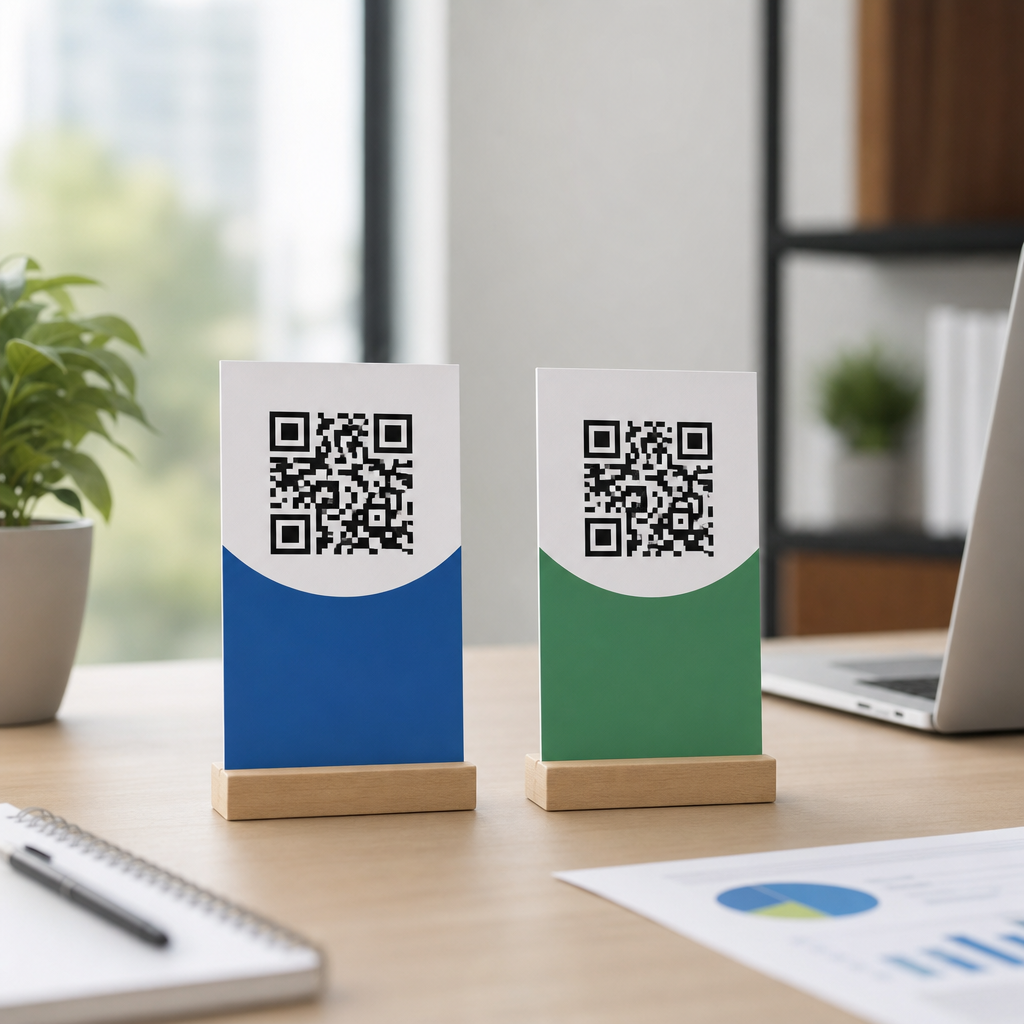
A/B testing QR code CTAs for better conversion is one of the fastest ways to improve scan rates, landing page engagement, and downstream revenue without redesigning an entire campaign. In this context, a QR code CTA is the short prompt that tells people what they will get or why they should scan, such as “Scan to claim 15% off,” “Scan for the menu,” or “Scan to watch the demo.” A/B testing compares two or more versions of that prompt, design, placement, or destination to identify which variation produces stronger results. I have run these tests across packaging, retail displays, trade show booths, direct mail, and restaurant tables, and the pattern is consistent: the QR code itself rarely drives performance alone; the surrounding message, incentive, and user journey do. That matters because QR codes sit at the bridge between offline attention and digital action. If the CTA is vague, the code gets ignored. If the promise is specific and friction is low, scan intent rises quickly. For teams building advanced QR programs, disciplined testing turns guesswork into a repeatable conversion system.
What A/B Testing QR Codes Actually Measures
A/B testing QR codes measures how small changes affect a defined business outcome. The primary metric is often scan-through rate, calculated by dividing scans by impressions or estimated exposures. But stronger programs track beyond the scan: click-through to the landing page, form completion, coupon redemption, add-to-cart rate, booked demos, or in-store visits tied back through first-party data and analytics platforms such as Google Analytics 4, Adobe Analytics, HubSpot, or Shopify. The best test starts with one hypothesis. For example, “Adding a concrete benefit to the CTA will increase scans by 20% compared with a generic instruction.” That is testable, specific, and tied to user intent.
Not every variable should be changed at once. If you alter CTA wording, code color, page design, and offer structure simultaneously, you cannot isolate the winner. I usually begin with the highest-leverage elements: value proposition, urgency, placement, and destination relevance. On a retail shelf talker, “Scan for product details” almost always underperforms “Scan to compare ingredients and see customer reviews” because the second option answers the shopper’s immediate question. On direct mail, “Scan now” is weaker than “Scan to check your personalized rate” because the CTA reduces uncertainty and clarifies the payoff. Good tests reveal behavior, not opinions.
High-Impact CTA Variables to Test First
The most important QR code CTA variables are message clarity, incentive framing, visual prominence, and context match. Clarity means the user knows exactly what happens after the scan. “Scan to download the setup guide” beats “Learn more” in technical environments because it names the next step. Incentive framing determines whether the reward feels immediate and relevant. In hospitality, “Scan for tonight’s specials” may outperform “View menu” during peak dinner hours because it aligns with what guests want right now. Visual prominence covers size, contrast, white space, directional cues, and whether the CTA is readable from actual viewing distance. Context match means the CTA should fit the physical environment, audience intent, and device conditions.
Destination consistency is another major variable. A strong CTA paired with a weak landing page wastes scans. If the QR code promises a discount, the page should open directly to the offer, not the homepage. If the code appears on product packaging, the destination should load fast on mobile, preserve campaign parameters, and show the exact product first. Dynamic QR code platforms make this easier because they let you update the destination, append UTM tags, and segment scans by time, location, or device without reprinting the code. In practice, this flexibility is what makes QR code optimization scalable across multiple channels.
How to Structure a Reliable QR Code Test
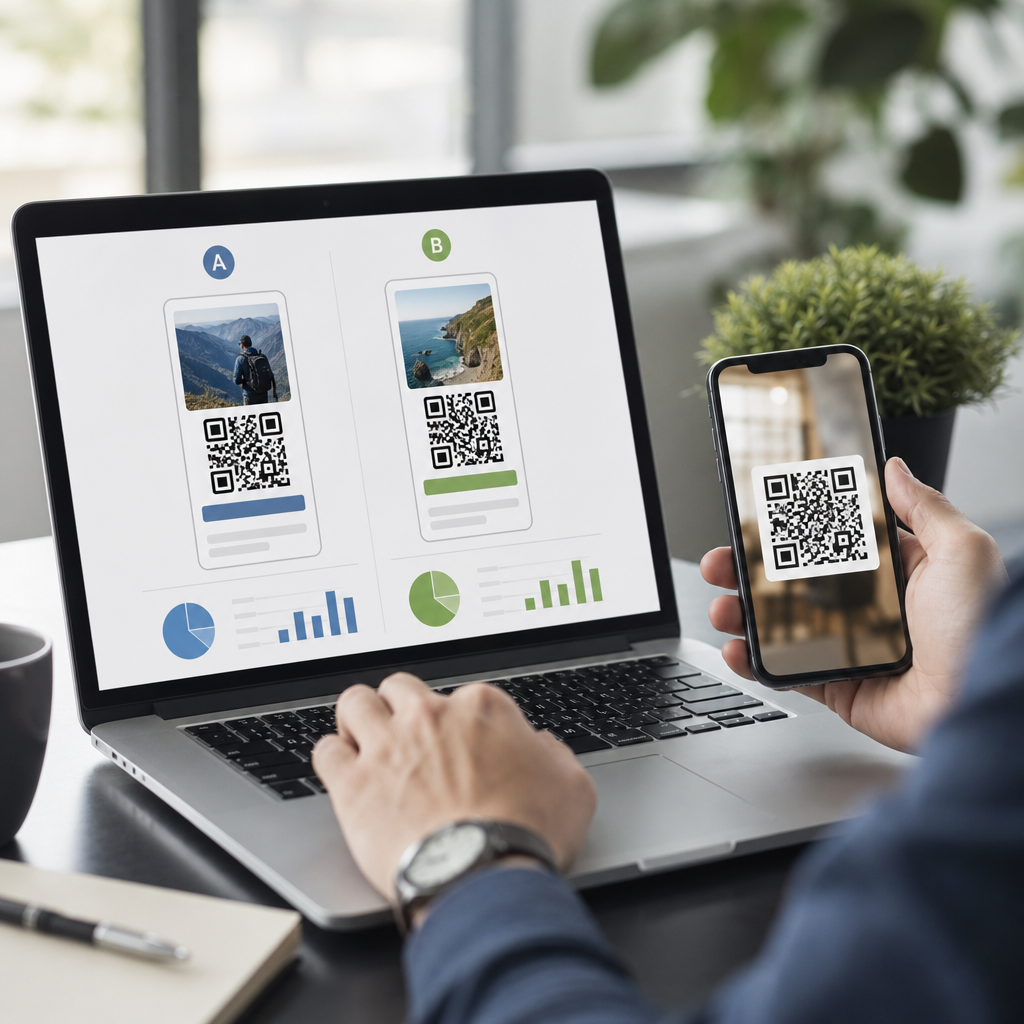
Reliable A/B testing QR codes requires clean experimental design. Start by selecting a single conversion goal and one primary variable. Then create two versions that are identical except for that variable. Split traffic as evenly as possible. For physical environments, even distribution often means alternating creative by store, region, daypart, or print batch. Keep timing consistent enough to limit seasonal distortion. Use dynamic URLs or unique tracking links so each version records scans separately. Name campaigns clearly inside your analytics stack, and document the test window, audience, hypothesis, and success threshold before launch.
Sample size matters. If one version receives only a few dozen scans, the result may be noise. Use enough exposure to detect a meaningful difference, and review confidence before acting. Also control environmental factors. A poster near an entrance will naturally receive more scans than one near the checkout line, so placement tests should rotate positions where possible. Likewise, a code shown during a product demo will perform differently from one shown on static signage. When teams skip these controls, they often credit the CTA for gains actually caused by foot traffic, staffing, or timing. Testing discipline is what separates useful insight from attractive but misleading results.
| Test Element | Version A | Version B | Primary Metric | Common Use Case |
|---|---|---|---|---|
| CTA wording | Scan to learn more | Scan to get 15% off today | Scan rate | Retail signage |
| Offer type | Free guide | Free consultation | Lead conversion | B2B events |
| Placement | Top-right corner | Centered with arrow cue | Scan rate | Packaging |
| Destination | Homepage | Campaign landing page | Form completion | Direct mail |
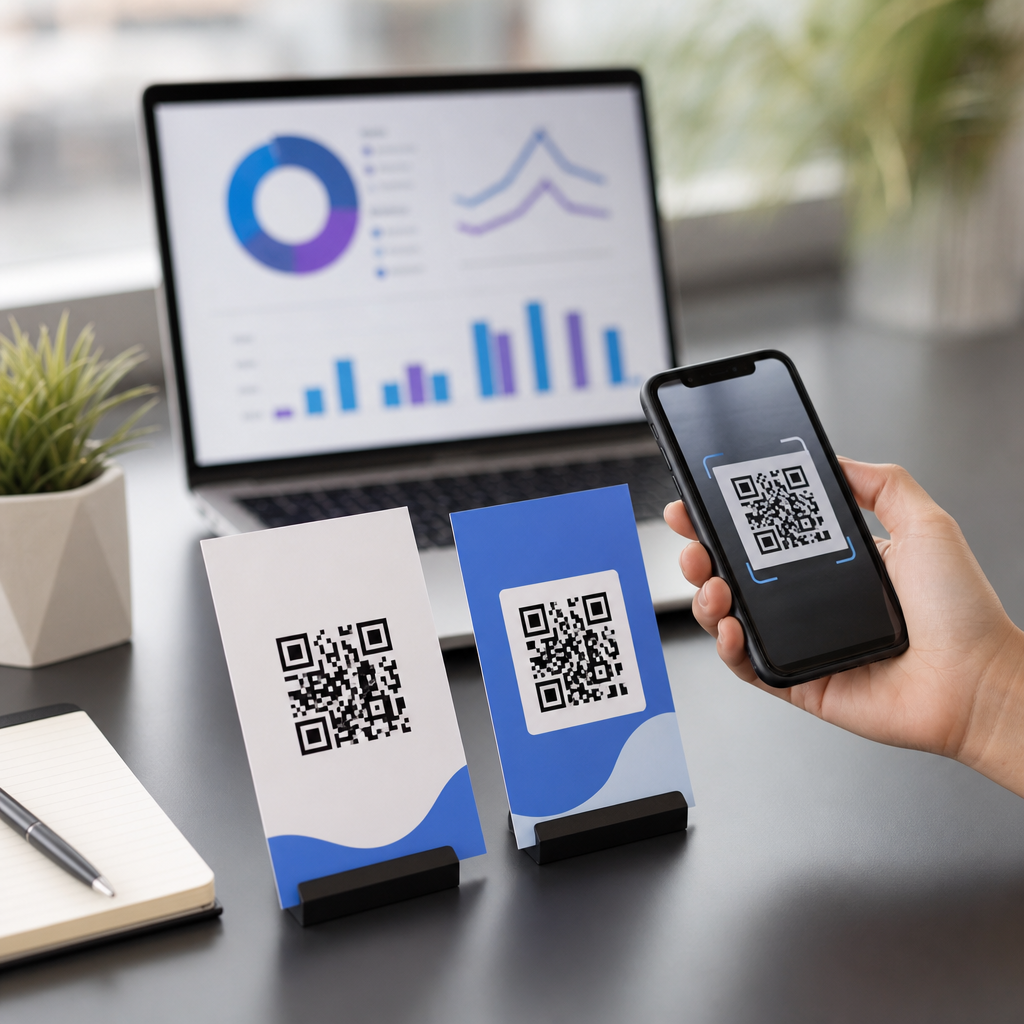
| Design treatment | Black-and-white code | Branded frame with CTA label | Scans and completions | In-store displays |
Examples From Retail, Restaurants, Events, and Packaging
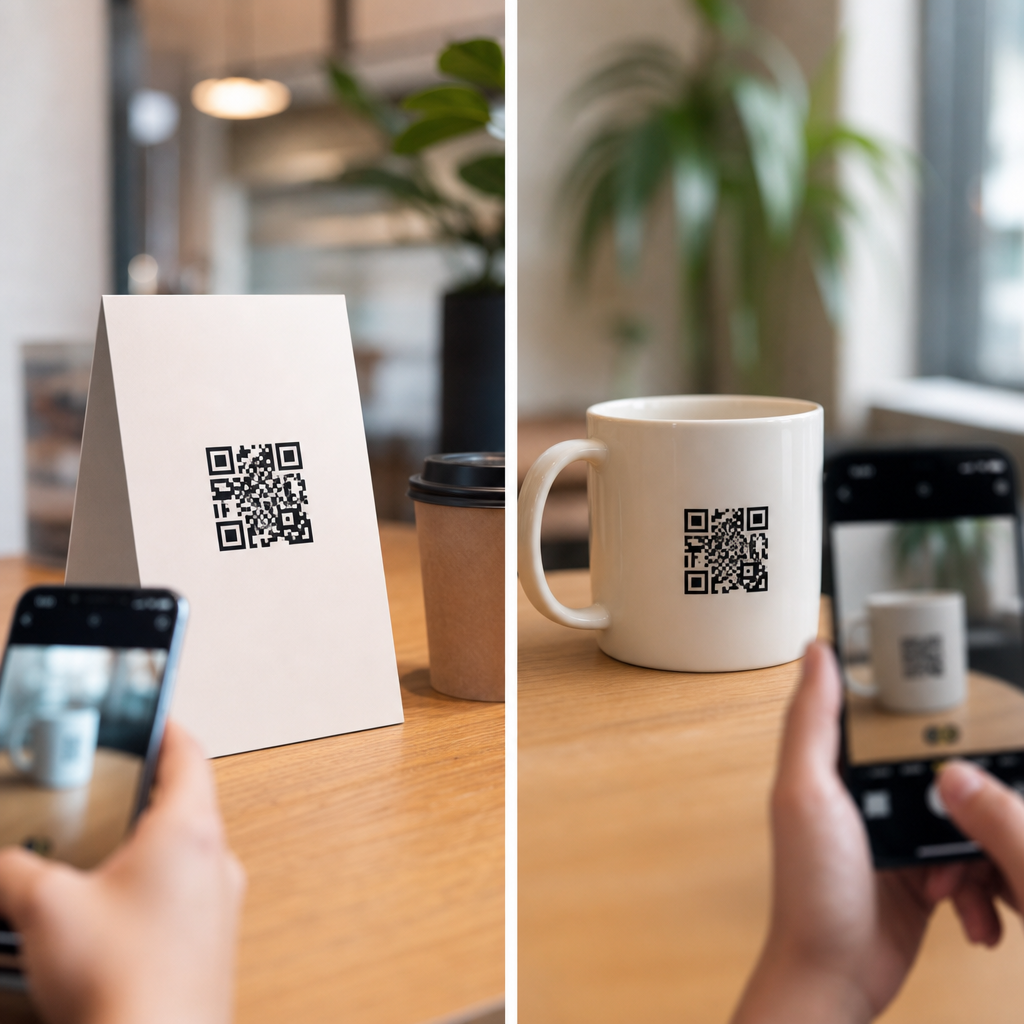
Retail offers some of the clearest examples because shopper intent changes by location. On shelf signage for a premium snack brand, we tested “Scan for nutrition facts” against “Scan for ingredients, nutrition, and reviews.” The broader CTA won because health-conscious buyers wanted validation, not just one data point. In restaurants, table-tent QR code testing often centers on speed and certainty. “Scan for the menu” performs adequately, but “Scan to order and pay from your table” can lift scans when staffing is tight and wait times are visible. The difference is convenience stated in plain language.
Trade shows reward highly specific CTAs. Booth traffic is noisy, and vague prompts disappear into the background. “Scan for product information” usually loses to “Scan to book a live demo this week” because the second promise is tangible and time-bound. Packaging behaves differently because the user may scan at home, in transit, or inside a store aisle. That means the page must load quickly on cellular connections and provide immediate utility, such as setup instructions, authenticity verification, warranty registration, or loyalty enrollment. I have seen packaging campaigns improve completion rates simply by moving from a generic product page to a prefilled registration flow with fewer fields and clearer proof of value.
Analytics, Attribution, and Statistical Confidence
Measurement should connect offline exposure to online action as cleanly as possible. At minimum, use unique URLs, UTM parameters, and a dynamic QR platform that records timestamp, device type, approximate location, and repeat scans. Then tie those scans to landing page events in GA4, server-side tagging, or your CRM. For commerce, link scans to product views, cart additions, and purchases. For lead generation, track form starts, qualified submissions, and booked meetings. If call tracking is relevant, use dedicated numbers on landing pages. The goal is not merely to know that a code was scanned, but to know whether the scan produced business value.
Confidence is essential. A variation that shows a 12% lift may not be a real winner if the sample is too small or the traffic mix changed. Use significance calculators or experimentation platforms to assess whether the observed difference is likely genuine. Also watch for QR-specific distortions: duplicate scans from the same user, accidental scans, redirects that break attribution, and iOS or Android privacy settings that mask some downstream behavior. None of these issues make testing impossible, but they do mean teams should triangulate results across scan data, session data, and conversion data before declaring success. Sound attribution protects budget and helps prioritize the next experiment.
Common Mistakes That Suppress QR Code Conversion
The biggest mistake is using a generic CTA when the user needs a clear reason to act. “Scan me” is not a strategy. Neither is sending every scan to the homepage. Another frequent problem is poor physical usability: codes printed too small, placed on curved surfaces, hidden by glare, or surrounded by low-contrast text. Branded QR codes can work well, but excessive stylization can reduce readability, especially under dim lighting or low-end phone cameras. Always test scan reliability on multiple devices before launch.
Teams also sabotage tests by ending them too early, changing variables midstream, or ignoring audience segments. A CTA that works in airports may fail in grocery because dwell time differs. A discount-focused prompt may outperform with new customers but underperform with loyal members who care more about exclusivity or access. Another overlooked mistake is failing to match the CTA to the post-scan experience. If the copy says “instant coupon,” the page cannot ask users to navigate three screens, create an account, and verify email before seeing the offer. Conversion rises when the promise, path, and proof stay aligned from first glance to final action.
Building a Repeatable Optimization Program
The best QR code teams treat testing as an ongoing operating rhythm, not a one-off tactic. Build a backlog of hypotheses based on user friction, sales objections, and campaign goals. Prioritize tests by expected impact and implementation effort. Record every result in a shared knowledge base, including losing variants, because negative findings prevent repeated mistakes. Create reusable landing page templates for common goals like coupon claims, demo requests, app downloads, and warranty registration. Standardization speeds launch while preserving room for campaign-specific CTA testing.
As the hub for advanced QR code strategies, this topic connects directly to broader work in dynamic QR codes, QR code analytics, landing page optimization, packaging QR campaigns, event activation, and first-party data capture. The practical takeaway is simple: better conversion usually comes from better alignment between user intent and the CTA around the code. Test one meaningful variable at a time, measure beyond the scan, and keep the destination tightly matched to the promise. When you do that consistently, QR codes stop being passive utilities and become measurable conversion assets. Start with your highest-traffic QR placement, write two sharper CTA variants, and run a disciplined test this month.
Frequently Asked Questions
What does A/B testing a QR code CTA actually involve?
A/B testing a QR code CTA involves comparing two or more controlled variations of the prompt, presentation, or scan experience to determine which one produces better business results. In practice, that usually means changing one meaningful variable at a time, such as the CTA wording, the visual treatment around the code, the placement on packaging or signage, the incentive being offered, or the landing page people reach after scanning. For example, one version might say “Scan to get 15% off,” while another says “Scan to unlock today’s discount.” Everything else stays as consistent as possible so you can isolate the effect of the change.
The goal is not just to generate more scans, but to improve the entire path from attention to action. A stronger QR code CTA can increase scan rate, but the winning variation should also be evaluated against landing page engagement, form completions, purchases, menu views, app downloads, or any other outcome that matters to the campaign. A test is only useful when it measures the metric that reflects actual conversion value, not just curiosity clicks.
In most campaigns, A/B testing starts with a clear hypothesis. For instance, you may believe that a benefit-driven CTA will outperform a neutral instruction, or that placing the code at eye level will produce more scans than placing it at the bottom of a flyer. From there, you deploy the versions across similar audiences or time periods, track results with unique URLs or dynamic QR codes, and compare performance after enough data has been collected. Done correctly, A/B testing replaces guesswork with evidence and helps marketers improve conversion without overhauling the entire creative strategy.
Which QR code CTA elements should be tested first for the biggest conversion gains?
The best place to start is usually the CTA message itself, because wording often has an immediate impact on whether someone understands the value of scanning. People rarely scan a QR code just because it exists; they scan because the CTA promises a clear outcome. Testing benefit-driven language against generic language is often one of the fastest wins. For example, “Scan for the menu” may perform differently from “Scan to view today’s specials,” and “Scan to watch the demo” may outperform a more passive prompt like “Learn more.”
After message clarity, the next high-impact area is the offer or incentive. If your campaign includes a discount, exclusive content, early access, a free resource, or a convenience benefit, test how explicitly that value is communicated. Users respond differently to urgency, specificity, and relevance. “Scan to save 10% today” can behave very differently from “Scan for exclusive savings,” even though both communicate an offer. The more concrete and immediate the benefit, the more likely the audience is to act.
Visual context also matters. Testing the size of the QR code, the amount of white space around it, the use of directional cues, the contrast between code and background, and the prominence of the CTA can significantly affect scan behavior. Placement is equally important. A highly optimized CTA may still underperform if the code is too low on a sign, too far from the point of decision, or surrounded by distracting design elements. Finally, test the destination experience. Even the best QR code CTA will lose value if the landing page is slow, mismatched, or confusing. In many cases, the biggest gains come from improving message clarity first, then aligning the visual design and destination so the entire experience feels consistent and frictionless.
How do you measure whether a QR code CTA test is successful?
A successful QR code CTA test should be measured using metrics that reflect both top-of-funnel interest and bottom-of-funnel business impact. The most obvious metric is scan rate, which shows how many people scanned a QR code relative to how many were exposed to it. That is useful for understanding whether the CTA and placement are compelling enough to drive initial action. However, scan rate alone is incomplete because it does not tell you whether those scans led to meaningful engagement or revenue.
To evaluate performance more accurately, track post-scan behavior. Depending on the campaign objective, that may include landing page views, bounce rate, time on page, product page visits, coupon redemptions, add-to-cart actions, purchases, form submissions, app installs, appointment bookings, or menu interactions. A variation that produces more scans but fewer conversions may not be the real winner. In many cases, the highest-performing CTA is the one that attracts the right users, not merely the largest number of users.
It is also important to define your primary KPI before the test begins. If the campaign is designed to increase sales, purchase conversion rate and revenue per scan should carry more weight than scan volume. If the goal is awareness or content engagement, completion rate and time on destination may be more relevant. Use unique tracking links, analytics parameters, dynamic QR code reporting, and consistent attribution rules so every variation can be compared fairly. A test should run long enough to gather sufficient data and avoid being skewed by temporary fluctuations such as weekday traffic changes, event timing, or uneven audience exposure. In short, a QR code CTA test is successful when it improves the metric that matters most to the campaign objective, not just the easiest metric to observe.
What are the most common mistakes to avoid when A/B testing QR code CTAs?
One of the most common mistakes is testing too many variables at once. If you change the CTA wording, the color treatment, the size of the code, the offer, and the landing page all in the same experiment, you will not know which change actually drove the result. Strong A/B testing depends on clean comparisons. In most cases, start by changing one major element at a time so the outcome is interpretable and actionable.
Another frequent issue is using weak or vague CTAs. Prompts such as “Scan here” or “Learn more” often underperform because they do not answer the user’s core question: what do I get if I scan? Effective QR code CTAs communicate a specific benefit, outcome, or next step. A related mistake is creating a mismatch between the CTA and the destination. If the code promises a discount but the landing page leads to a generic homepage, trust erodes quickly and conversion drops. Message continuity matters from first impression through final action.
Marketers also underestimate operational issues. Poor placement, low contrast, inadequate size, reflective surfaces, crowded designs, and limited mobile signal at the scan location can all compromise results and make a strong CTA appear weak. Similarly, ending a test too early is a major problem. Small sample sizes can produce misleading winners, especially in campaigns with variable traffic patterns. It is equally risky to ignore segmentation. A CTA that works well in-store may not work on direct mail, product packaging, or event signage because user intent differs across contexts. To avoid false conclusions, keep the test controlled, track the full conversion funnel, verify that the scanning experience works reliably in real-world conditions, and make decisions only after enough high-quality data has been collected.
How can businesses use A/B testing insights to keep improving QR code conversions over time?
The biggest value of A/B testing is not a single winning CTA; it is the ability to build a repeatable optimization process. Once a business identifies a stronger-performing variation, that version becomes the new baseline for future tests. From there, marketers can continue refining the message, visual design, audience targeting, placement, and destination experience in a structured way. Over time, these incremental improvements often lead to substantial gains in scan volume, lead quality, conversion rate, and revenue without requiring a full campaign redesign.
Long-term improvement comes from documenting what was tested, what changed, and what the results mean. Patterns begin to emerge. You may learn that your audience responds best to specific offers rather than generic education, that urgency works better than curiosity, or that QR codes perform best near the point of purchase rather than in awareness-focused placements. Those insights can then inform not just one campaign, but future packaging, print ads, in-store signage, event materials, direct mail, and product onboarding experiences. The strongest programs treat every test as a source of audience intelligence, not just a one-off experiment.
It is also smart to revisit past winners as conditions change. Consumer expectations, traffic sources, device behavior, seasonality, and offer sensitivity can shift over time. A CTA that won six months ago may no longer be optimal today. Businesses that consistently outperform tend to test continuously, prioritize high-impact hypotheses, and align QR code performance with broader conversion goals such as lead generation, retention, and lifetime value. When used this way, A/B testing turns QR code CTAs from static campaign elements into active conversion levers that can be improved month after month.