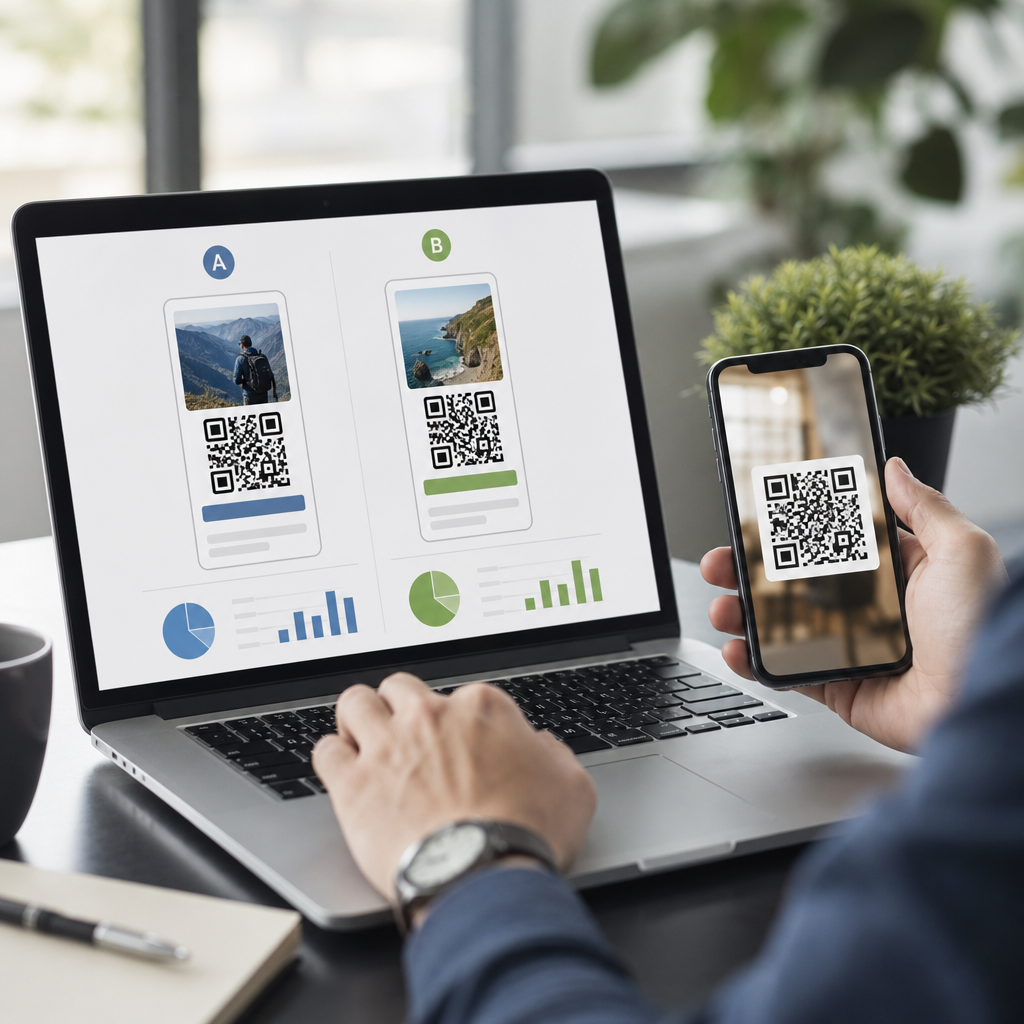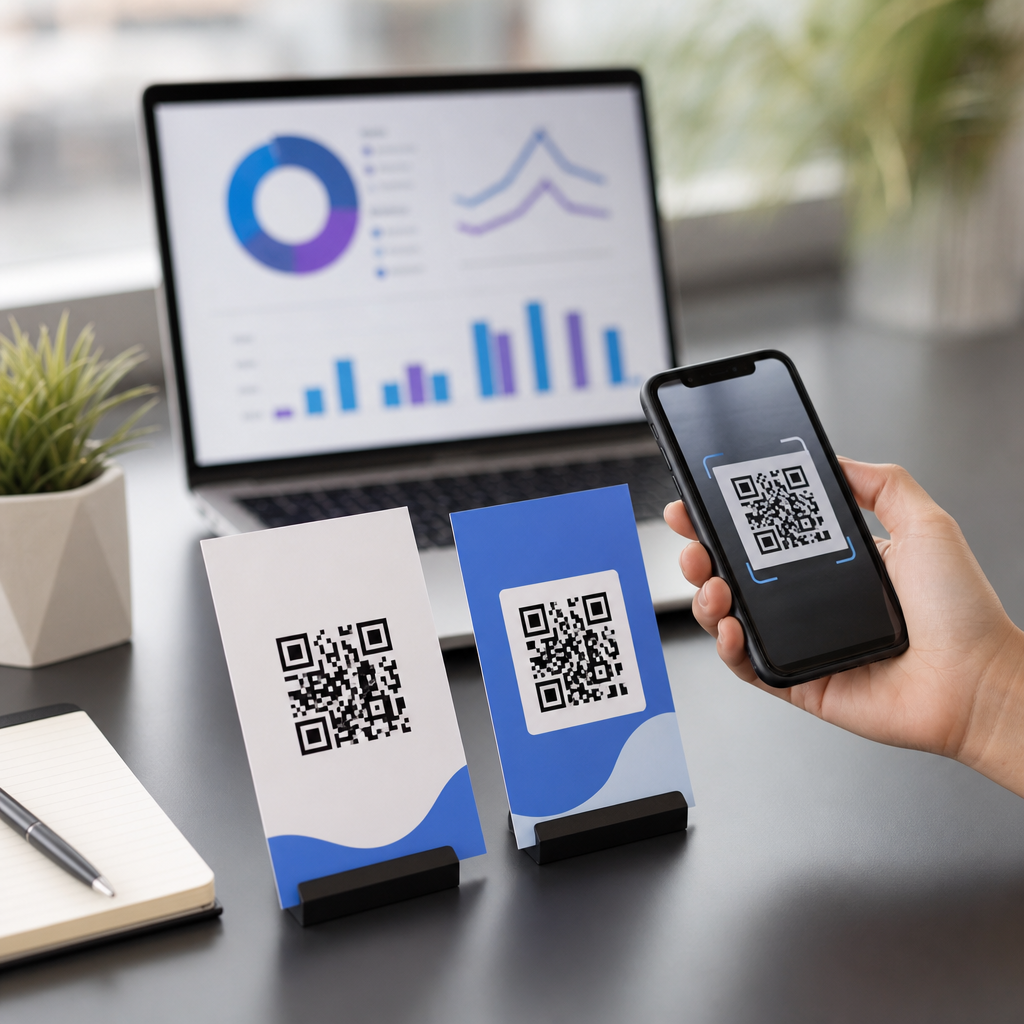

QR code marketing performs best when it is treated like a measurable conversion system, not a printed shortcut. Brands that optimize QR code campaigns with testing consistently improve scan rate, landing-page engagement, and downstream conversions because they replace assumptions with evidence. In this context, A/B testing QR codes means showing two controlled variations to comparable audiences and measuring which version produces a better result. The variation might involve the code’s size, placement, call to action, destination page, incentive, design treatment, or even the time and channel where it appears. Multivariate testing can go further, but most teams get the clearest wins by starting with a disciplined A/B framework.
I have worked on QR programs for retail packaging, direct mail, event signage, restaurant tables, and field sales leave-behinds, and the pattern is consistent: small execution changes produce large performance swings. A code placed above the fold on a mailer can outperform one on the back panel by a wide margin. A dynamic QR code tied to a mobile-optimized page with one clear next step nearly always beats a static code that drops users onto a cluttered homepage. Testing matters because QR interactions happen in imperfect real-world conditions. Lighting, distance, device quality, network speed, and message clarity all affect whether a scan turns into business value. If you want reliable campaign lift, you need a testing plan.
This hub explains how to build that plan. It covers what to test, how to structure experiments, which metrics matter, what tools support trustworthy measurement, and how to scale learnings across channels. The goal is practical: help you create QR code campaigns that are easier to scan, more persuasive after the scan, and more accountable to revenue.
What A/B Testing QR Codes Actually Measures
A/B testing QR codes measures behavior at two stages: scan initiation and post-scan conversion. The first stage answers whether people notice the code, understand its value, and can scan it easily. The second stage answers whether the destination experience fulfills the promise and moves users to the next action. Many teams focus only on scans, but a high scan count can hide weak business performance if the landing page is slow, irrelevant, or confusing.
Start with a simple funnel. Impressions estimate how many people could have seen the code. Scan rate shows how many scanned relative to exposure. Visit quality metrics such as bounce rate, engaged sessions, scroll depth, and time on page indicate whether the landing page matched intent. Conversion rate measures the actual outcome: purchase, sign-up, coupon save, lead form completion, app install, menu order, or content download. For printed placements where exact impressions are hard to know, use proxy measures such as mail volume, foot traffic, table turns, event attendance, or unit sales.
Dynamic QR codes are essential for serious testing because they let you change destinations without reprinting assets and provide centralized analytics. Platforms such as Bitly, QR Code Generator PRO, Uniqode, and Beaconstac support dynamic redirects, UTM tagging, and scan reporting. Pair those with Google Analytics 4, Adobe Analytics, or a CRM like HubSpot or Salesforce so scan data connects to actual outcomes. Without that measurement chain, you are optimizing for curiosity instead of conversions.
What Variables Produce the Biggest Lift
The highest-impact variables are usually not artistic tweaks. They are message clarity, placement, destination relevance, and friction reduction. In direct mail, I have seen a plain black code labeled “Scan to claim your 15% discount” outperform a styled brand-color code with no explicit benefit because the value proposition was immediate and concrete. In retail stores, a code beside a product comparison chart often beats one buried in a footer because the customer encounters it at the decision point.
Test the call to action first. “Scan to learn more” is almost always weaker than “Scan for assembly video,” “Scan to see ingredients,” or “Scan to reorder in 30 seconds.” Specificity increases motivation. Next, test placement and size. A QR code must be large enough for the typical scanning distance; a common baseline is at least 2 x 2 cm for close-range use, with larger sizes required for posters, shelf talkers, or windows. Also test contrast and quiet zone integrity. ISO/IEC 18004 standards matter here: if design customizations reduce contrast or compress the quiet zone, scan reliability drops.
The landing page often creates the biggest hidden gains. A fast mobile page with a single focused action beats a generic homepage because it preserves intent. If the printed piece offers a coupon, send users directly to the coupon. If the sign promises a demo, open the demo video above the fold. Test form length, autofill options, Apple Pay or Google Pay availability, and page speed. According to Google research, conversion probability declines as mobile page load time increases, so speed is not a technical detail; it is a campaign variable.
| Test Variable | Version A | Version B | Primary Metric |
|---|---|---|---|
| CTA copy | Scan to learn more | Scan for 15% off today | Scan rate |
| Placement | Back of package | Front near key benefit | Scans per 1,000 units |
| Destination | Homepage | Dedicated mobile landing page | Conversion rate |
| Incentive | No offer | Free sample or discount | Lead or sales rate |
| Design treatment | Standard black code | Branded code with logo | Successful scan rate |
How to Design a Trustworthy QR Code Test
A good QR experiment isolates one major variable at a time, uses comparable audiences, and runs long enough to reduce noise. If you change code design, CTA, placement, and landing page simultaneously, you will not know which factor caused the result. Begin with a single hypothesis, such as: “Adding a benefit-led CTA above the QR code will increase scan rate by 20% on our in-store signage.” Then define the success metric, minimum sample, campaign duration, and stopping rule before launch.
Audience control matters more than many teams realize. If one version appears in flagship stores and another appears in low-traffic locations, the test is biased. Split by matched stores, matched mail segments, alternating print runs, or randomized digital placements. In events, rotate signage by time blocks with similar traffic patterns. In packaging, test by region, production batch, or retailer group, but normalize results against distribution volume. Statistical significance is useful, yet practical significance matters too. A tiny lift that requires expensive redesign may not justify rollout, while a moderate lift on a high-volume asset often does.
Use clean naming conventions and track every touchpoint. Each QR variant should have its own dynamic link, UTM parameters, and campaign IDs. In GA4, create events for scan-origin landing visits, engaged sessions, and conversion actions. In CRM reporting, tie those records to source detail such as package version, mail creative, or store cluster. Document environmental conditions as well. I have seen weather, staffing, and even window glare distort results. The more context you capture, the better your next test becomes.
Channel-Specific Testing Strategies That Work
Different channels create different scanning behavior, so your testing approach should match the context. On packaging, the scan often happens at home after purchase or in the aisle during comparison. That means utility wins: setup instructions, recipes, authenticity checks, warranty registration, refill ordering, and product education. Test whether utility content outperforms promotional content. For example, a supplement brand might compare “Scan for ingredient sourcing” against “Scan for 10% off your next order” and discover that trust-focused content generates more repeat purchase value.
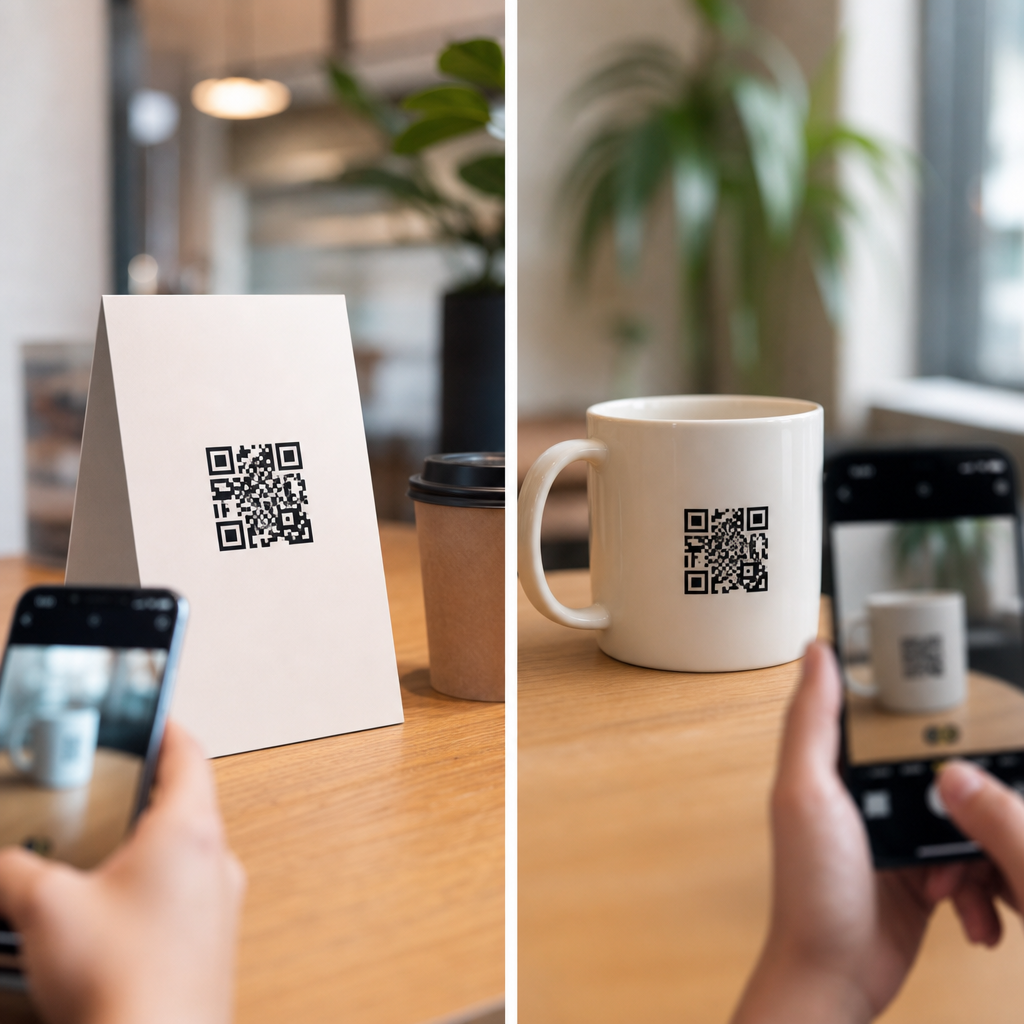
In direct mail, attention is limited, so test hierarchy aggressively. Compare envelope teaser text, code placement on the outer panel, offer framing, and personalized landing pages. A local service company can test a generic quote page against a location-specific page with local reviews, service radius, and a tap-to-call button. In restaurants, table tent QR tests should focus on menu speed, ordering flow, and add-on prompts. A QR menu that opens directly to the dinner menu and highlights top-margin items will outperform one that begins with a splash screen asking users to choose a language, location, and dining mode.
For events and out-of-home placements, scanability is the first hurdle. Test code size, mounting height, environmental lighting, and the amount of time someone has to react. A transit poster usually needs fewer words and a stronger incentive than a trade-show booth, where staff can reinforce the message verbally. On business cards and sales collateral, test whether the QR code should lead to a scheduler, portfolio, vCard download, or product demo. The right answer depends on buying stage, so segment your tests by audience intent rather than assuming one destination fits all.
Common Testing Mistakes and How to Avoid Them
The most common mistake is optimizing for scans alone. A clever incentive can spike scans while attracting low-intent traffic that never converts. Always judge performance against the business goal. Another frequent problem is using static QR codes in print, which locks you into one destination and prevents agile iteration. If the page breaks, the offer changes, or the analytics setup is wrong, you lose the campaign. Dynamic infrastructure solves that.
Teams also break scanability in the name of branding. Adding gradients, shrinking the quiet zone, reversing colors poorly, or placing the code over busy imagery can lower readability across older devices and difficult lighting conditions. Always test branded codes with multiple phones, both iOS and Android, under realistic conditions. Another mistake is sending all traffic to the homepage. The best QR destination is usually a page built for the exact scan moment, with concise copy, thumb-friendly buttons, and one obvious action.
Finally, do not stop after one winning test. The strongest QR programs build a learning roadmap. Once you identify the best CTA, test the best destination. Once the destination improves, test the offer. Over time, those compounded gains create a measurable advantage across packaging, signage, print, and field marketing.
Testing turns QR codes from passive graphics into performance assets. When you optimize QR code campaigns with testing, you learn which messages get noticed, which designs scan reliably, and which post-scan experiences convert. The process is straightforward: use dynamic codes, isolate one variable, track the full funnel, and compare outcomes in matched conditions. Focus first on CTA clarity, placement, landing-page relevance, and mobile speed because those factors usually drive the largest gains.
The main benefit is not just more scans. It is better business performance from the same media spend, print run, shelf space, or event traffic. A disciplined A/B testing QR codes program helps you reduce wasted impressions, improve customer experience, and make future creative decisions with confidence. As this sub-pillar hub grows, use it as your starting point for deeper work on QR landing pages, packaging tests, analytics setup, and conversion benchmarking. Pick one live campaign, define one hypothesis, and run your first controlled QR test this week.
Frequently Asked Questions
1. What does it mean to optimize a QR code campaign with testing?
Optimizing a QR code campaign with testing means treating the QR code as one part of a measurable conversion funnel rather than as a simple design element added to packaging, signage, mailers, or displays. Instead of assuming a code will perform well because it looks good or appears in a prominent location, you compare controlled variations and measure what actually improves results. In practical terms, this usually involves A/B testing, where two versions of a QR code experience are shown to similar audiences under similar conditions. You might test the QR code’s size, placement, call to action, surrounding design, destination page, incentive, or even the context in which the code appears.
The goal is to understand which variation drives stronger performance at each stage of the journey. That includes scan rate, click-through behavior after the scan, time on page, form completions, purchases, coupon redemptions, app downloads, or any other conversion event tied to the campaign objective. A well-optimized campaign reduces friction and increases relevance. For example, a QR code on in-store signage may get more scans when paired with a clear benefit-focused message such as “Scan for today’s offer” rather than a generic “Scan me.” Likewise, a landing page built specifically for mobile users will often outperform a desktop-style page that forces users to pinch, zoom, or hunt for the next step.
In short, testing replaces guesswork with evidence. It helps marketers identify what truly influences user behavior and allows them to make smarter decisions about creative, placement, and user experience. Over time, even small improvements can compound into significantly better campaign efficiency and stronger return on investment.
2. What elements of a QR code campaign should be tested first?
The best place to start is with the variables most likely to affect scanning behavior and post-scan conversion. For most campaigns, that means beginning with the fundamentals: the call to action, the placement of the QR code, the landing page experience, and the clarity of the offer. These factors usually have a larger impact than smaller stylistic details because they directly influence whether someone notices the code, understands why they should scan it, and feels motivated to complete the next step.
A strong first test is often the call to action placed near the code. Many QR campaigns underperform because they rely on the audience to infer the value of scanning. Testing “Scan to learn more” against “Scan for 20% off today” can reveal whether a direct incentive outperforms a general prompt. Placement is another high-value variable. A code positioned at eye level on a poster or in a visually quiet area of a package may outperform one placed near cluttered text or at the bottom of a display where it is easy to miss.
The landing page is equally important because a scan only creates opportunity; it does not create conversion by itself. Test whether a dedicated mobile landing page performs better than a general homepage, whether a shorter form increases completions, or whether a page with one clear action outperforms a page with multiple navigation options. You can also test the offer structure, such as discount versus exclusive content, or immediate redemption versus delayed follow-up.
Once those high-impact areas are addressed, you can move into secondary variables such as code size, color contrast, branding treatments, surrounding whitespace, and copy format. Those details still matter, especially in crowded environments, but they tend to be most effective when the campaign’s core value proposition and mobile experience are already solid. Starting with the biggest friction points first gives you a faster path to meaningful performance gains.
3. How do you run a valid A/B test for QR codes without getting misleading results?
A valid QR code A/B test depends on control, consistency, and clean measurement. The main principle is simple: test one meaningful variable at a time while keeping everything else as similar as possible. If you change the code size, placement, message, and landing page all at once, you may see a performance difference, but you will not know which factor caused it. A structured A/B test isolates one change so that any improvement or decline can be tied to that specific variation with much greater confidence.
Audience comparability matters just as much. Each variation should be exposed to similar conditions, whether that means comparable store locations, similar mail segments, evenly distributed print runs, or matching time periods. If version A is shown in a high-traffic retail environment and version B is shown in a low-traffic setting, the test result may reflect environmental differences rather than creative effectiveness. The same issue applies to timing. Seasonal patterns, event traffic, daypart shifts, and promotional overlap can all distort outcomes if the two versions are not evaluated fairly.
Measurement setup is another critical requirement. Each test variation should use distinct tracking so scans, visits, conversions, and downstream actions can be attributed accurately. This often means unique URLs, UTM parameters, or separate dynamic QR code destinations tied to analytics systems. Before launching the test, define the primary success metric. If the campaign is meant to drive purchases, then scan volume alone should not determine the winner. One version may generate fewer scans but a much higher conversion rate, making it the better business result.
Finally, allow enough data to accumulate before declaring a winner. Premature conclusions are one of the most common testing mistakes. Early results can be noisy and misleading, especially with low scan volume. Establish a reasonable test duration, monitor for tracking errors, and review both leading metrics and final conversion metrics. A disciplined process helps ensure your findings are reliable and actionable rather than accidental.
4. Which metrics matter most when evaluating QR code campaign performance?
The most important metrics depend on the campaign goal, but the strongest evaluation framework looks beyond scan count and measures the full user journey. Scan rate is typically the first indicator to review because it shows how effectively the QR code and its surrounding presentation capture attention and motivate action. This metric can help you assess creative visibility, message clarity, placement quality, and incentive strength. However, scan rate alone is only the beginning.
After the scan, engagement metrics reveal whether the destination experience matches user intent. Useful indicators include landing-page load speed, bounce rate, time on page, scroll depth, click-through rate, and interaction with key page elements. If people scan at a healthy rate but immediately leave the page, the issue may not be the QR code itself. It may be a mismatch between the promise made before the scan and the experience delivered after it. This is why post-scan behavior is so important in optimization work.
Conversion metrics should carry the most weight when the campaign is tied to a business outcome. These can include purchases, lead form submissions, email sign-ups, coupon redemptions, appointment bookings, app installs, video completions, or store visit confirmations, depending on the use case. In many cases, conversion rate from scan to action is more useful than raw scan volume because it reflects quality as well as quantity. A smaller number of highly qualified scans can be more valuable than a large number of low-intent interactions.
For more advanced analysis, marketers often track cost efficiency and downstream value. That can include cost per scan, cost per conversion, average order value, revenue per scan, or customer lifetime value from QR-sourced users. Looking at the complete funnel allows you to identify where performance is improving and where friction still exists. The best optimization decisions come from connecting the physical trigger, the mobile experience, and the business result into one measurable system.
5. What are the most common mistakes brands make when testing QR code campaigns?
One of the biggest mistakes is focusing too narrowly on the QR code graphic while ignoring the broader conversion experience. Brands often test cosmetic changes such as color or logo placement before addressing more important issues like unclear messaging, poor placement, weak incentives, or a slow and confusing landing page. A beautifully designed code will not rescue a campaign if users do not understand why they should scan or what they are supposed to do next.
Another common mistake is testing too many variables at once. When multiple elements change together, the result becomes difficult to interpret. This leads to false confidence and weak decision-making because the team cannot isolate what actually improved performance. Poor tracking is another major problem. If unique scans, sessions, and conversions are not attributed correctly, the test data may be incomplete or misleading. Inconsistent use of URLs, analytics tags, or destination logic can make the results unreliable.
Brands also frequently overlook context. QR code performance is highly sensitive to the environment in which the code appears. Lighting, viewing distance, print quality, traffic flow, device connectivity, and user intent all influence results. A code that performs well on product packaging may behave very differently on a billboard, direct mail piece, or restaurant table tent. Assuming one winning version will work equally well everywhere can limit performance and hide important audience differences.
Finally, many teams stop at scan metrics and never test for downstream outcomes. That creates the illusion of success without proving business impact. The strongest QR code campaigns are optimized all the way through conversion, not just to the moment of scan. Avoiding these mistakes requires a structured approach: start with a clear objective, test one significant variable at a time, ensure accurate tracking, evaluate the full funnel, and keep iterating. Consistent improvement comes from disciplined experimentation, not one-time adjustments.