QR codes are easy to print, but measuring what happens after a scan is where advanced campaigns succeed or fail. Integrating QR codes with Google Analytics means connecting an offline touchpoint, such as packaging, signage, direct mail, event badges, or receipts, to on-site behavior, conversions, and revenue inside your analytics platform. In practice, that connection is usually built with tagged destination URLs, consistent campaign naming, and a reporting setup that separates QR traffic from other channels. I have implemented this for retail promotions, trade show follow-up, restaurant menus, and field sales collateral, and the pattern is always the same: if the URL structure is sloppy, reporting becomes unreliable.
A few definitions matter at the start. A QR code is simply a machine-readable graphic that opens a destination when scanned. Google Analytics is the reporting layer that records sessions, events, users, and conversions on your website or app. UTM parameters are query-string tags added to a URL so traffic can be attributed to a source, medium, and campaign. A dynamic QR code uses a short redirect URL that can be changed later without reprinting the code, while a static QR code points directly to the final URL and cannot be edited once published. For any business running print or in-person marketing, this integration matters because it turns untracked scans into measurable acquisition data and gives teams evidence for budget decisions.
This article serves as the hub for integrating QR codes with CRM and marketing tools, with Google Analytics as the reporting foundation. It explains the setup, naming conventions, reporting model, and practical links to sales and customer systems that make scan data useful beyond vanity counts. If you want to know which poster location drove leads, whether product packaging generated repeat buyers, or how event handouts influenced pipeline, the answer starts with clean analytics architecture.
Build a trackable QR code URL structure first
The most reliable way to integrate QR codes with Google Analytics is to create a dedicated landing-page URL with UTM parameters before generating the code. At minimum, use utm_source, utm_medium, and utm_campaign. A practical convention is utm_source=qr, utm_medium=offline, and a campaign value that identifies the initiative, such as spring_catalog_2026 or expo_north_hall_booth. When placements vary, add utm_content for location or asset version, such as aisle_endcap, table_tent, or postcard_a. This is not cosmetic labeling. Google Analytics relies on these values to classify traffic consistently across reports.
In GA4, scans appear as session traffic to the tagged page, and downstream actions can be measured through key events like generate_lead, purchase, sign_up, or form_submit. I recommend keeping the destination page specific to the offer rather than sending every scan to the homepage. A menu QR code should land on the menu; a product packaging QR code should land on product support, warranty registration, or replenishment. Relevance reduces bounce rate and improves conversion probability. If the campaign needs flexibility, generate a dynamic QR code using a redirect service so you can update the final destination later while preserving the printed asset.
Set up Google Analytics so scan traffic is easy to analyze
Once the URL is tagged, configure GA4 to make QR traffic visible in standard reports and explorations. First, verify that your website has GA4 installed correctly through Google Tag Manager or gtag.js. Then confirm that key conversions are marked as key events in Admin. Common examples include lead form submission, file download, appointment booking, add_to_cart, and purchase. If you operate a multi-step funnel, also capture intermediate events so you can diagnose drop-off from scan to action.
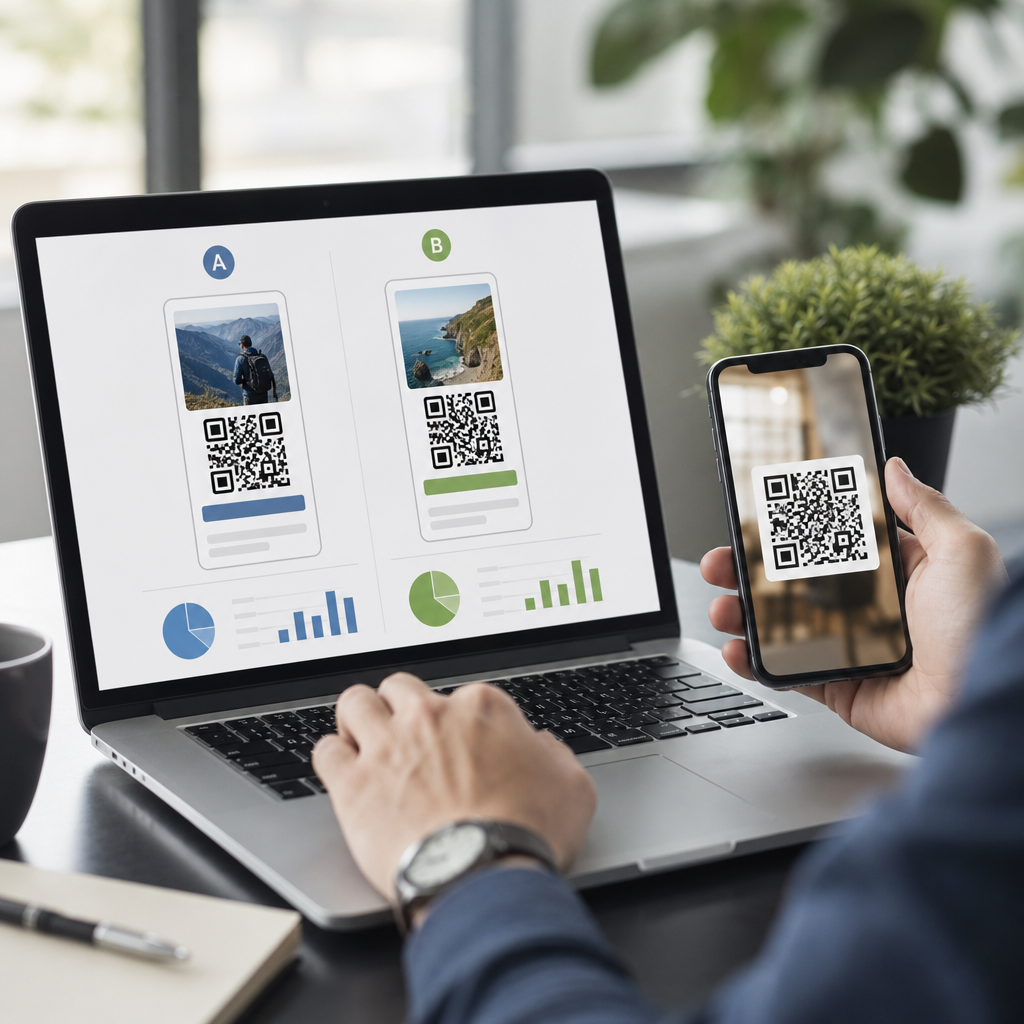
A proven workflow is to create a comparison or exploration filtered by session source/medium matching qr / offline, then break results down by session campaign and session manual ad content. That shows which physical asset drove engaged sessions, conversions, and revenue. For teams that need recurring visibility, build a Looker Studio dashboard pulling GA4 data with sections for scans by campaign, landing-page engagement, conversion rate, and revenue per campaign. The core question every dashboard should answer is simple: which QR placement produced meaningful business outcomes, not just traffic.
Because QR campaigns often begin offline, attribution requires realism. A person may scan a code, browse, leave, and return later through email or direct traffic before converting. GA4’s attribution settings and conversion paths help, but they are not magic. I advise businesses to review first user, session, and conversion path reports together. That combination usually reveals whether QR served as the discovery touchpoint, the closer, or both.
Choose naming conventions that support CRM and tool integrations
Most reporting problems come from inconsistent campaign naming. If one team uses “QR,” another uses “qrcode,” and a third labels medium as “print,” your data fragments. Establish a taxonomy before launch and publish it in a shared document. I typically standardize source as qr, medium as offline, campaign as initiative plus date or region, content as placement, and term as optional audience or product segment. Use lowercase only, avoid spaces, and decide whether dates follow YYYY_MM or quarter naming. Consistency matters more than the specific format.
That taxonomy should match fields in your CRM and automation tools. For example, when a HubSpot form captures hidden fields from UTM parameters, those values can populate original source drill-down properties or custom campaign properties. In Salesforce, the same UTM values can map to Lead Source Detail, Campaign, or custom fields through form handlers, middleware, or native integrations. This is where QR analytics become operational. Sales teams can see that a lead came from a packaging insert in the Midwest, while marketers can connect influenced opportunities back to the exact physical asset.
| Parameter | Recommended use for QR campaigns | Example value |
|---|---|---|
| utm_source | Keep constant for all QR traffic | qr |
| utm_medium | Identify the channel as offline or print | offline |
| utm_campaign | Name the initiative or promotion | summer_launch_2026 |
| utm_content | Distinguish placement or asset version | store_window_a |
| utm_term | Optional audience, product, or segment label | loyalty_members |
Connect QR code data with CRM, call tracking, and automation platforms
Google Analytics tells you what happened on the site, but CRM and adjacent tools explain business impact over time. A solid integration stack often includes GA4, a CRM such as Salesforce or HubSpot, a marketing automation platform like Marketo or Mailchimp, and sometimes a call tracking tool such as CallRail if scans drive phone inquiries. The simplest connection happens on lead forms: pass UTM values into hidden fields, store them in the contact record, and sync them to your CRM. From there, you can report on qualified leads, pipeline, and closed revenue by QR campaign.
For ecommerce, connect GA4 with Google Ads if you remarket to scanners, and ensure purchase events include item and revenue data. For B2B, create CRM reports showing lead-to-opportunity conversion by campaign. I have seen event teams discover that booth signage QR codes generated fewer total scans than badge cards, but produced higher meeting-booked rates and faster opportunity creation. Without CRM linkage, that insight would be invisible. If your campaign also includes phone calls, use unique numbers on landing pages or dynamic number insertion where appropriate, then reconcile call outcomes with the same campaign values used in analytics.
Privacy and data governance need attention here. Do not encode personally identifiable information directly in QR URLs. Avoid putting email addresses, customer IDs, or sensitive tokens in visible query strings. Use campaign tags, server-side session handling, or first-party identifiers managed securely within your forms and backend systems. Compliance with GDPR, CCPA, and your own consent framework is part of a credible implementation, not an afterthought.
Use dynamic QR codes, redirects, and testing to improve accuracy
Dynamic QR codes are especially useful when campaigns span multiple locations, long print runs, or seasonal offers. Because the QR points to a redirect, you can swap the final landing page, repair broken destinations, or A/B test variants without replacing printed materials. The redirect should use a 301 or 302 strategy that preserves UTM parameters and loads quickly on mobile. Test this before launch using several devices and camera apps. A surprising number of reporting failures come from redirects that strip parameters, app browsers that behave differently, or landing pages slowed down by heavy scripts.
Quality assurance should be treated like any other analytics deployment. Scan the code on iPhone and Android, verify the final URL, confirm GA4 receives the session with the intended source and campaign values, complete a conversion, and inspect whether the CRM record stores the same attribution fields. Also test edge cases: low-light scanning, small-format print, glossy surfaces, and weak connectivity. ISO/IEC 18004 governs QR code specifications, but production choices still matter. Adequate quiet zone, error correction level, color contrast, and print size directly influence scan success.
Measure the metrics that matter and avoid common mistakes
The best QR reporting balances volume metrics with outcome metrics. Scans and sessions indicate reach, but engaged sessions, conversion rate, assisted conversions, revenue, pipeline, and customer retention indicate value. A restaurant may care about menu views that turn into online orders. A manufacturer may care about warranty registrations that later correlate with accessory purchases. A SaaS company may track brochure scans to demo requests and sales-qualified opportunities. The right KPI set depends on business model, but it should always tie scan activity to a commercial objective.
Common mistakes are consistent across industries. Sending users to a generic homepage is the first. Using untagged URLs is the second. Failing to capture UTM fields in forms is the third. Others include using different naming conventions across teams, printing static QR codes before QA is complete, and ignoring mobile page speed. Another mistake is treating built-in scan counts from a QR platform as the primary source of truth. Those counts can help validate distribution, but Google Analytics and your CRM should be the authoritative systems for engagement and conversion analysis.
Integrating QR codes with Google Analytics is ultimately about making offline marketing accountable. Start with a tagged URL framework, use landing pages that match user intent, configure GA4 events and dashboards, and pass attribution data into your CRM and automation tools. Dynamic QR codes add flexibility, while disciplined testing protects data quality. When these pieces work together, you can identify which physical placements drive leads, sales, and long-term customer value instead of guessing. Use this hub as your starting point, then map each campaign, tool, and conversion path before you print a single code.
Frequently Asked Questions
How do QR codes work with Google Analytics?
QR codes themselves do not send data directly into Google Analytics. Instead, the QR code contains a destination URL, and that URL is what allows analytics tracking to happen. When someone scans the code with their phone, they are taken to a web page, and Google Analytics records the visit like any other website session. The key difference is that you need to make the destination URL identifiable so you can tell that the visitor came from a specific QR code rather than from organic search, direct traffic, or another marketing channel.
In most cases, this is done by adding campaign parameters to the URL before generating the QR code. Those parameters, often called UTM tags, help define where the visit came from, what campaign it belongs to, and sometimes even which specific printed asset drove the scan. For example, a QR code on product packaging can use one tagged URL, while a QR code on an event banner can use another. Once visitors land on your site, Google Analytics can attribute sessions, engagement, conversions, and revenue to those tagged links.
This is what makes QR code measurement so valuable. A printed code may look static, but the destination behind it can be tracked with precision. With the right setup, you can move beyond simply counting scans and start understanding what people do after they arrive. That includes which pages they view, whether they sign up, whether they purchase, and how much revenue they generate. In other words, integrating QR codes with Google Analytics creates a bridge between offline materials and digital performance reporting.
What is the best way to tag QR code URLs for accurate reporting?
The best approach is to use a consistent UTM tagging framework and apply it to every QR code destination URL before creating the code image. At a minimum, most marketers define source, medium, and campaign. For QR code traffic, many teams use a source that reflects the placement, such as packaging, flyer, poster, receipt, or event_booth, and a medium such as qr or offline_qr. The campaign name should describe the broader initiative, promotion, product launch, or seasonal effort. If you want more detail, you can also use content or term parameters to distinguish creative versions, locations, or audience segments.
Consistency matters more than complexity. If one campaign uses source=qr and another uses source=QRCode while a third uses source=print_qr, your reports become fragmented and much harder to trust. The same problem happens when naming conventions vary by team or vendor. A strong naming structure should be documented in advance so everyone building QR codes follows the same pattern. That makes it much easier to compare performance across signage, packaging, direct mail, in-store displays, and other offline channels inside Google Analytics.
It is also smart to think at the asset level. If you are printing multiple versions of a QR code, give each one a distinct identifier so you can tell exactly which placement performed best. For example, a trade show badge, brochure, booth wall, and follow-up postcard should not all point to the same generic tagged link if you want meaningful insights. Granular tagging enables deeper analysis, including which offline touchpoints generate the highest engagement rate, the strongest conversion rate, or the highest average order value.
How can I track conversions and revenue from QR code scans in Google Analytics?
To track conversions and revenue, you need more than a tagged URL. The destination website must also be configured correctly inside Google Analytics so important actions are measured. In GA4, that usually means setting up key events such as form submissions, newsletter signups, add-to-cart actions, purchases, appointment bookings, or lead generation events. For ecommerce businesses, revenue tracking should be implemented so purchases and transaction values are tied back to the original traffic source, including the QR code campaign parameters.
Once that foundation is in place, QR code traffic can be evaluated the same way you would assess paid campaigns, email marketing, or social traffic. You can isolate sessions coming from your QR-tagged URLs and then review engagement metrics, event counts, conversions, purchase activity, and revenue. This helps answer practical business questions such as whether a code on packaging drives repeat purchases, whether a code on a menu increases online orders, or whether event signage brings in qualified leads rather than casual visitors.
Attribution is especially important here. A person may scan a QR code, browse the site, leave, and return later to complete a conversion. Depending on your attribution settings and reporting model, that QR interaction may still receive some or all of the credit. That is why it is useful to look at both session-level performance and broader conversion reporting. If your sales process includes multiple steps or channels, integrating analytics with your CRM, ecommerce platform, or lead tracking tools can give you an even clearer view of how QR-driven traffic contributes to downstream revenue.
Should I use a direct URL or a short redirect link in my QR codes?
Both options can work, but each serves a different purpose. A direct tagged URL is simple and transparent. It sends users straight to the destination page with all campaign parameters intact, which makes implementation straightforward and reduces the number of moving parts. If your campaign is small, temporary, or unlikely to change after printing, a direct URL may be perfectly adequate. It also lowers the risk of redirect issues caused by a misconfigured link shortener or expired domain.
A short redirect link, however, is often the better choice for larger or long-running campaigns. With a redirect, the QR code points to a manageable short URL, and that short URL forwards users to the final tagged landing page. This gives you flexibility after the code has already been printed. If you need to change the landing page, update UTM parameters, fix a broken page, run an A/B test, or localize the destination by region, you can do that without reprinting the QR code itself. For printed materials with a long shelf life, that flexibility can be extremely valuable.
If you use redirects, make sure they preserve campaign parameters and do not break analytics tracking. Test the full scan flow on multiple devices to confirm that users land on the right page and that Google Analytics records the visit under the intended source and medium. Also pay attention to page speed and mobile usability, since most QR interactions happen on smartphones. The best setup is the one that combines reliable user experience, clean attribution, and enough flexibility to support campaign changes without sacrificing reporting accuracy.
What reports should I build in Google Analytics to measure QR code campaign performance?
The most useful reports are the ones that separate QR traffic clearly from other acquisition channels and connect scans to business outcomes. Start with traffic acquisition reporting filtered by your QR-related source and medium values. This allows you to see sessions, users, engagement rate, average engagement time, and other behavioral metrics specifically for QR visitors. From there, compare campaign names to understand which offline initiatives generate the strongest response.
Next, build conversion-focused views. If you are generating leads, create reports that show form submissions, phone click events, downloads, booked demos, or other key actions by QR campaign. If you run ecommerce, include purchases, revenue, conversion rate, average order value, and item performance. This helps you distinguish between QR codes that generate curiosity and QR codes that generate real commercial value. A code on packaging might drive fewer sessions than an in-store display, for example, but produce much higher revenue per user.
It is also helpful to create breakdowns by landing page, device category, geography, and new versus returning users. These dimensions often reveal optimization opportunities. If one QR placement performs poorly, the issue may not be the code itself but the landing page experience, load time, or mismatch between offline message and on-site content. If a campaign performs well in one location and poorly in another, that may point to audience or placement differences. A strong reporting setup turns QR codes from a simple access tool into a measurable acquisition channel, giving you the insight needed to refine creative, placement, messaging, and conversion strategy over time.