QR codes for loyalty programs in retail have moved from a clever add-on to a practical operating system for customer retention across stores, apps, and e-commerce checkouts. In simple terms, a QR code loyalty program uses scannable codes to identify shoppers, apply rewards, track visits or purchases, and connect offline buying behavior with digital customer profiles. Retailers use them at point of sale, on receipts, shelf tags, packaging, email campaigns, and mobile apps. I have implemented these programs for both single-location retailers and multi-store chains, and the consistent lesson is clear: QR codes reduce friction. Customers do not need a separate card, staff do not need to key in long phone numbers, and marketers gain cleaner first-party data than they usually get from paper punch cards or disconnected promotions.
This matters because loyalty economics in retail are unforgiving. Acquiring a new customer usually costs more than retaining an existing one, while margin pressure from discounts, paid ads, and marketplace fees keeps rising. A well-designed loyalty program can increase purchase frequency, average order value, and customer lifetime value, but only if enrollment and redemption are easy. QR codes solve the practical bottleneck. They can be generated dynamically or statically, tied to specific campaigns, and measured through analytics platforms such as Google Analytics 4, Shopify reports, Square Loyalty, Lightspeed, Clover, and custom CRM dashboards. For retail and e-commerce brands, they also create a bridge between physical stores and digital commerce, which is why this topic sits at the center of modern retail customer strategy.
At a foundational level, retailers should understand three terms. First, a static QR code points to a fixed destination and cannot usually be edited after printing. Second, a dynamic QR code routes through a managed short URL or platform, allowing edits, tracking, segmentation, and A/B testing. Third, a loyalty identifier is the customer record that connects scans to actions such as enrollment, points accrual, tier upgrades, referrals, or redemptions. When these pieces are integrated with the POS, e-commerce platform, and customer database, the QR code becomes more than a marketing graphic; it becomes a measurable transaction tool.
How QR Codes Power Retail Loyalty Programs
The core use case is straightforward: a shopper scans a QR code to join a loyalty program, identify themselves at checkout, claim an offer, or receive points after a purchase. In-store, the code might live on countertop signage, window decals, shelf talkers, or receipts. Online, it may appear in packaging inserts, order confirmation emails, or account dashboards. In both settings, the scan launches a mobile landing page, wallet pass, app deep link, or instant sign-up form. The best systems ask for minimal data at enrollment, usually email or phone number, and then progressively profile the customer over time through purchase history and preference capture.
Retailers use QR codes in several loyalty mechanics. Visit-based rewards work well for coffee shops, salons, and quick-service concepts inside larger retail footprints. Points-based systems fit fashion, beauty, grocery, pet supply, and specialty retail because they reward spend and can support multipliers for product categories. Tiered programs use QR-triggered check-ins and account access to show progress toward silver, gold, or VIP levels. Receipt-scan programs are especially useful when a brand sells through independent retailers and wants direct consumer relationships without controlling every POS environment. In that model, the shopper scans a code, uploads a receipt, and receives points after validation.
Operationally, QR codes reduce cashier friction when compared with searching by last name or phone number. They also improve campaign attribution. If a retailer prints one dynamic code for a fitting room mirror, another for a receipt footer, and another for an abandoned cart postcard, each placement can be tracked separately. That granularity helps answer practical questions: Which touchpoint drives enrollment? Which offer creates repeat visits without destroying margin? Which stores underperform because signage placement is poor rather than because demand is weak?
Retail and E-Commerce Use Cases That Actually Work
The strongest retail loyalty programs use QR codes across the full buying journey rather than in a single channel. A fashion retailer, for example, can place a join-now QR code near the entrance, add a member-identification QR inside the brand app for checkout, print a bounce-back QR on the receipt for a post-purchase offer, and include a packaging insert that drives the customer to style guides and referral rewards. Each code serves a distinct job, but all point into the same customer record. That structure is what turns isolated scans into a true omnichannel loyalty system.
Beauty retail offers another strong example because product education matters. A shopper can scan a shelf QR code to join the program and unlock shade-matching content, samples, or points multipliers on skincare bundles. After purchase, another QR on the package can lead to tutorials, replenishment reminders, and reviews. This is especially effective for products with natural reorder cycles. If serum customers typically repurchase in sixty days, the loyalty platform can trigger a timed reward before lapse risk rises. The code itself is not the strategy; the timing and customer journey are.
Grocery and convenience retailers often get value from speed. Long enrollment forms fail in fast-moving lines, but a simple scan that opens Apple Wallet or Google Wallet with a member pass performs better. Once the pass is saved, future scans at checkout identify the shopper instantly. For e-commerce brands with pop-ups or wholesale placements, QR codes are often the only realistic bridge back to owned channels. A code on packaging can invite the customer to register the purchase, earn points, and subscribe for replenishment, capturing first-party data the retailer would otherwise lose to marketplace intermediaries.
| Retail scenario | QR code placement | Loyalty objective | Typical metric |
|---|---|---|---|
| Apparel store | Fitting room signage | Enroll shoppers before checkout | Scan-to-signup rate |
| Beauty retailer | Product packaging | Drive repeat purchase and reviews | Repeat order rate |
| Grocery chain | Wallet pass at POS | Speed member identification | Member checkout share |
| DTC e-commerce brand | Box insert | Capture first-party data after delivery | Registration rate |
| Franchise retail network | Receipt footer | Standardize offers across locations | Redemption rate |
Technology Stack, Data Flow, and Measurement
A retail QR code loyalty program works best when four systems are connected: the QR management layer, the destination experience, the transaction system, and the customer database. The QR layer creates trackable codes and can be managed through platforms such as Bitly, Flowcode, Beaconstac, Scanova, or enterprise campaign tools. The destination layer is usually a mobile web page, loyalty portal, wallet pass, or app deep link. The transaction system may be Shopify POS, Square, Lightspeed Retail, NCR, Clover, Toast for hybrid concepts, or a custom retail POS. The customer database is typically a CRM or customer data platform such as Klaviyo, Salesforce, HubSpot, Braze, Segment, or a native loyalty system like Smile.io, Yotpo Loyalty, LoyaltyLion, or Annex Cloud.
From experience, the most common failure is not the QR code itself but broken identity resolution. If the shopper signs up with one email online, another at checkout, and a phone number during support interactions, the retailer ends up with duplicate profiles and distorted reporting. Solve this early. Use deterministic identifiers where possible, normalize phone and email formats, and set clear rules for account merging. Also establish event naming conventions before launch. A clean schema should distinguish between scan, landing page view, completed enrollment, wallet save, identified checkout, points issuance, reward redemption, and repeat purchase. Without this structure, the team cannot separate interest from revenue.
Measurement should focus on incremental business impact, not vanity scans. Useful metrics include enrollment conversion rate by placement, identified transaction rate, repeat purchase rate among members versus non-members, average order value lift, redemption rate by reward type, and time to second purchase. For e-commerce, monitor assisted conversion paths because QR scans often introduce the customer on mobile while the purchase happens later on desktop or in store. GA4, server-side tracking, UTM governance, and POS-to-CRM sync are all necessary if leadership wants reliable attribution. Retailers should also watch abuse indicators, especially for shareable codes, referral incentives, and one-time offers.
Best Practices for Design, Operations, and Customer Experience
The highest-performing QR loyalty programs are built around convenience. The code must scan quickly, the landing page must load fast on cellular connections, and the benefit must be obvious before the customer scans. Good signage says exactly what happens next: “Join in 10 seconds for 10% off today” outperforms vague copy like “Scan for more.” Contrast, quiet zone, print size, and placement matter. In-store codes should usually be mounted at natural pause points such as queue lines, mirrors, fitting room doors, cafe pickup counters, and receipt presentation areas. Tiny codes on reflective surfaces routinely underperform.
Retail staff training is equally important. Associates should know how to explain the value, when to invite the scan, and what to do if connectivity fails. In my deployments, stores with a simple script consistently outperform stores that rely on passive signage alone. That script should be short: ask at the right moment, explain the immediate reward, and reassure the customer that signup is fast. For e-commerce orders, packaging inserts need the same clarity. A code that promises points for product registration, care instructions, and reorder reminders gives customers a reason to keep engaging after delivery.
There are also compliance and accessibility considerations. If the program collects personal data, retailers must align disclosures and consent flows with applicable laws such as GDPR, CCPA, and TCPA where relevant. The destination page should be mobile accessible, with readable text, strong contrast, and alternatives for customers who cannot or do not want to scan. Never make the QR code the only way to join. Provide a short URL or cashier-assisted path as backup. Security matters too: use branded domains, HTTPS, and controlled redirects to reduce spoofing risk and maintain customer trust.
Common Mistakes and How Retailers Can Avoid Them
The first mistake is treating QR codes as the loyalty strategy instead of the entry point. If the reward economics are weak, the value proposition is unclear, or the redemption rules are frustrating, scan volume will not save the program. The second mistake is over-collecting data at signup. Every extra field lowers conversion. Start with the minimum needed to create an account and collect richer preferences later through profiles, quizzes, or post-purchase interactions. Third, many retailers fail to segment by context. A first-time in-store shopper, a lapsed online buyer, and a wholesale customer registering a product should not all see the same offer.
Another common problem is poor channel coordination. Marketing may launch a QR-driven offer without syncing inventory, POS rules, or cashier training, leading to failed redemptions and customer frustration. I have seen retailers print thousands of static codes only to change the promotion weeks later and lose flexibility. Dynamic codes avoid that trap and support testing over time. Finally, some teams stop at launch. The real gains come from iteration: test incentive size, placement, copy, page speed, wallet pass usage, and post-scan follow-up. Retail loyalty is cumulative. Small improvements in identification rate and second-purchase conversion compound into meaningful customer lifetime value.
QR codes give retail and e-commerce brands a practical way to make loyalty programs easier to join, easier to use, and easier to measure. They connect stores, packaging, receipts, apps, and websites into one customer journey, while giving teams better attribution and cleaner first-party data. The biggest wins come when retailers pair simple scan experiences with strong reward design, integrated systems, disciplined measurement, and trained staff. If you are building this hub within a broader retail strategy, start by mapping every customer touchpoint where a scan can remove friction, then test one high-intent use case first. Done well, QR codes turn loyalty from a side promotion into repeatable revenue infrastructure.
Frequently Asked Questions
How do QR code loyalty programs work in retail?
QR code loyalty programs give retailers a simple way to identify customers, record activity, and deliver rewards across physical and digital channels. In practice, each shopper scans a code at a key touchpoint such as checkout, on a receipt, from a mobile app, on packaging, or even from a shelf display. That scan can open a digital loyalty account, attach a purchase to an existing profile, apply points or discounts, confirm a visit, or unlock a personalized offer. Instead of relying on plastic cards or manual phone number entry, the QR code acts as the bridge between the shopper and the retailer’s loyalty system.
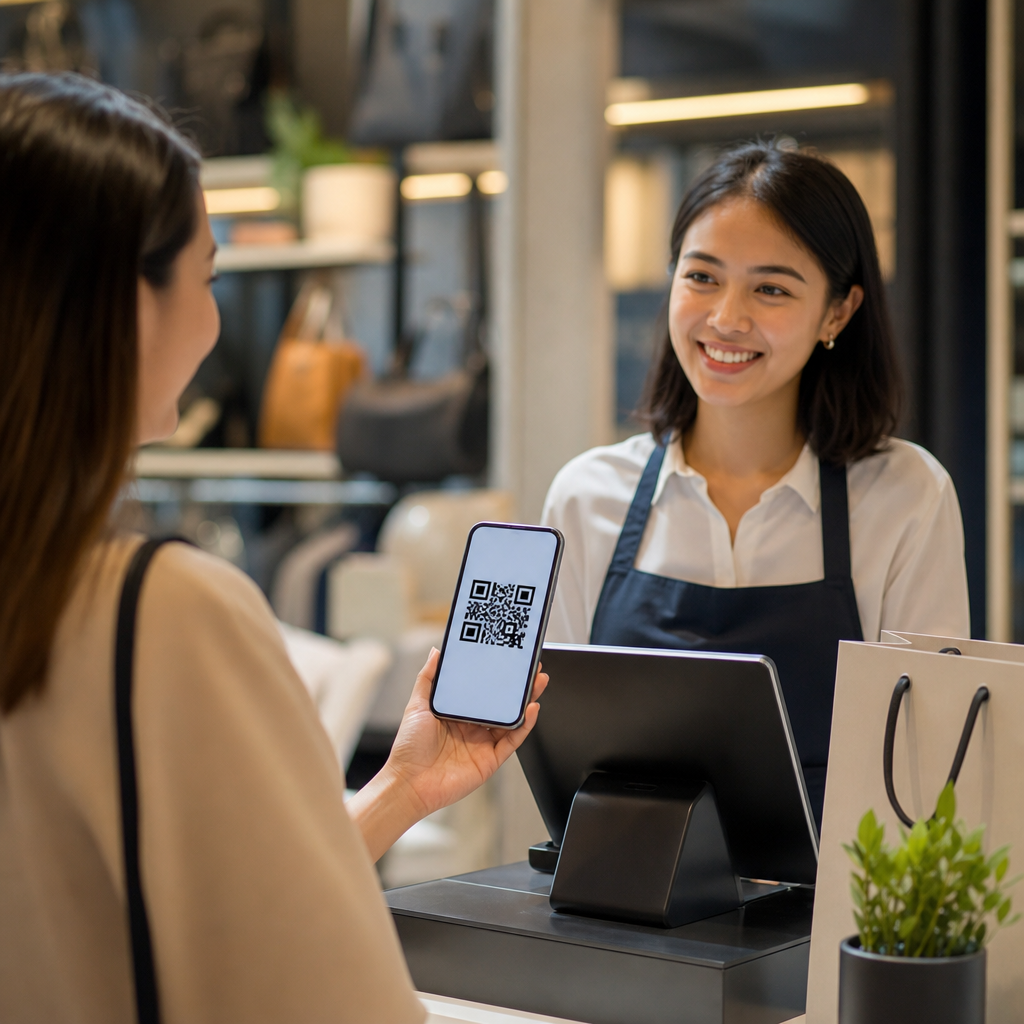
What makes this especially useful in retail is flexibility. A retailer can use one QR code to enroll new members, another to identify returning members, and others to trigger promotions, product education, or post-purchase engagement. At point of sale, a cashier can scan the customer’s app-based QR code, or the customer can scan a store code to check in. On receipts, a QR code can encourage customers to claim points after the purchase, which is helpful when the loyalty interaction did not happen at checkout. In e-commerce, the same customer can use a loyalty account online and in-store, helping the business connect behavior across channels and create a more complete customer profile.
Operationally, the best QR code loyalty systems connect directly to point-of-sale software, CRM tools, marketing automation platforms, and analytics dashboards. That integration allows retailers to measure repeat visits, basket size, promotion redemption, customer lifetime value, and campaign performance with far better visibility than traditional punch cards or disconnected discount programs. The result is a loyalty program that is easier for customers to use and easier for retailers to manage, optimize, and scale.
What are the main benefits of using QR codes for retail loyalty programs?
The biggest advantage is convenience. Customers already know how to scan QR codes, and most carry smartphones, so joining and using a loyalty program becomes fast and familiar. Removing friction matters. When customers do not need to carry another card, remember a separate account number, or fill out a long sign-up process at the register, participation rates tend to improve. A smoother experience leads to more scans, more data, and more opportunities to build repeat purchasing behavior.
QR codes also make loyalty programs more measurable and adaptable. Retailers can place codes on receipts, window displays, product packaging, direct mail, email campaigns, and mobile apps, then track which touchpoints drive the most enrollments, redemptions, and repeat purchases. This creates a more complete picture of how customers move between in-store and digital experiences. For retailers trying to unify online and offline behavior, QR codes are one of the most practical tools available because they connect a physical interaction to a digital profile without requiring expensive hardware or complicated customer training.
Another major benefit is cost efficiency. Compared with printing and managing physical membership cards or building a custom app-only ecosystem, QR code loyalty programs are relatively inexpensive to launch and easy to update. Dynamic QR codes can be redirected without reprinting every asset, which helps with campaign changes, seasonal offers, and A/B testing. From a customer retention standpoint, retailers gain a flexible system for issuing points, visit-based rewards, referral incentives, personalized coupons, and post-purchase engagement workflows. In short, QR codes turn loyalty from a static discount tool into a more responsive customer relationship engine.
Where should retailers place QR codes to get the best loyalty program results?
The most effective placement depends on the customer journey, but strong results usually come from using QR codes at multiple moments rather than relying on a single location. Checkout is the most obvious starting point because it is where purchases happen and where customers are already thinking about value. A QR code displayed at the register, on the payment terminal, or in the cashier workflow can prompt customers to join, identify themselves, or redeem rewards in real time. Receipt-based QR codes are also powerful because they extend the interaction beyond the transaction and give customers a second chance to engage after leaving the store.
Beyond checkout, high-performing retailers use QR codes throughout the store environment. Shelf tags can tie loyalty rewards to specific product categories or featured items. Endcaps and signage can promote bonus points campaigns or member-only offers. Packaging can encourage repeat purchases by linking buyers to reordering incentives, care instructions, product registration, or exclusive rewards. These placements are especially useful when retailers want to reward not just spending, but product engagement and repeat buying behavior over time.
Digital placements matter just as much. QR codes in email campaigns, SMS messages, mobile apps, inserts, social ads, and even e-commerce packaging can bring past buyers back into the loyalty loop. For omnichannel retailers, this is where QR codes become especially valuable: the same customer who bought online can be encouraged to scan in-store, and the shopper who first joined in-store can be brought into digital remarketing flows. The best strategy is to place QR codes anywhere a customer is making a decision, completing a purchase, or likely to respond to a relevant reward. Visibility, clear instructions, and a meaningful incentive are what turn placement into performance.
What should retailers consider when setting up a QR code loyalty program?
Retailers should start with program design before thinking about the code itself. The first questions should be practical: what behaviors should the loyalty program reward, how will customers identify themselves, what systems need to connect, and what business outcomes matter most. Some retailers want to reward spend, others want to encourage visit frequency, app adoption, referrals, product trial, or omnichannel purchasing. The QR code is simply the mechanism that makes those actions easy to capture. Without clear goals and rules, the program can become confusing for customers and difficult for staff to support.
Technology and integration are the next major considerations. A QR code loyalty program works best when it connects cleanly with POS systems, e-commerce platforms, customer databases, and campaign tools. Retailers should decide whether codes will be static or dynamic, whether each customer gets a unique identifier, how rewards are validated, and how fraud or duplicate redemptions will be controlled. Staff training is also critical. If associates do not understand when to prompt customers to scan, how to explain the benefit, or how to troubleshoot a failed scan, adoption can stall even when the technology is sound.
Privacy, mobile usability, and analytics should not be treated as afterthoughts. Customers need to know what data is being collected and what value they receive in return. The landing experience after scanning should be fast, mobile-friendly, and as short as possible. Every extra field or step reduces conversion. Retailers should also define success metrics upfront, such as enrollment rate, scan rate, repeat purchase frequency, redemption rate, average order value, and retention by customer segment. A well-built QR code loyalty program is not just easy to launch; it is structured to generate clean data, actionable insights, and repeatable revenue growth.
Are QR code loyalty programs better than traditional cards or app-only loyalty systems?
In many retail environments, yes, because QR code loyalty programs combine the accessibility of physical-world interactions with the measurability of digital systems. Traditional plastic cards are familiar, but they are easy to forget, expensive to produce at scale, and limited in how much real-time behavior they can capture. App-only systems can be powerful, but they often create an adoption barrier, especially for casual shoppers who do not want to download another app just to get a discount. QR codes sit in the middle: they are lightweight, widely understood, and flexible enough to support both app users and non-app users.
That said, the best choice depends on the retailer’s customer base and operational model. A grocery chain with frequent visits may benefit from a hybrid approach where app users have a personal QR code and occasional shoppers can still scan a receipt or in-store sign to participate. A specialty retailer may use QR codes to enroll customers quickly at the point of discovery, then encourage app adoption over time for deeper engagement. In both cases, QR codes reduce friction at entry while preserving the option to build richer long-term relationships through email, SMS, wallet passes, or branded mobile experiences.
Rather than viewing QR codes as a replacement for every existing loyalty tool, many retailers should think of them as the connective layer that makes loyalty more usable and more consistent across channels. They can complement apps, improve cardless identification, support receipt-based rewards, and simplify campaign activation in stores and online. For most modern retailers, that combination of flexibility, lower friction, and stronger data capture makes QR code loyalty programs a more practical and scalable choice than relying solely on legacy cards or app-only participation.