QR codes have become a practical sales tool for retail and e-commerce brands that want to increase average order value without adding friction at checkout. In simple terms, a QR code is a scannable matrix barcode that opens a digital destination, usually a product page, offer, video, cart, or app experience, from a smartphone camera. Upselling means encouraging a customer to buy a higher-value version of what they already want, while cross-selling suggests related items. When retailers use QR codes for upselling products, they connect physical touchpoints and digital merchandising in one fast action.
This matters because shoppers now move fluidly between store shelves, social content, mobile carts, and home delivery. I have seen campaigns fail when brands treat QR codes as decoration instead of a conversion path. The best results come when the code answers a buying question at exactly the right moment: Is there a premium version, a bundle, a refill, a subscription, or an accessory that improves the main purchase? In retail and e-commerce, QR codes can support product discovery, in-aisle education, checkout add-ons, post-purchase recommendations, loyalty enrollment, and repeat orders. As a hub for retail and e-commerce use cases, this guide explains where QR upsells work, how to design them, what technology to use, and which metrics prove return on investment.
For industry-specific applications, retail and e-commerce deserve special attention because customer intent is measurable and margins are sensitive to merchandising choices. A small increase in basket size can materially improve profitability, especially when labor and acquisition costs are rising. QR codes are inexpensive to deploy, easy to test, and flexible enough for packaging, endcaps, shelf talkers, receipts, direct mail inserts, and marketplace shipments. The key is not the code itself; it is the offer architecture behind it. A well-placed scan can turn a single-item purchase into a bundle, convert a one-time buyer into a subscriber, or move a customer from entry-level to premium SKU with clear value justification.
Where QR code upsells work best in retail and e-commerce
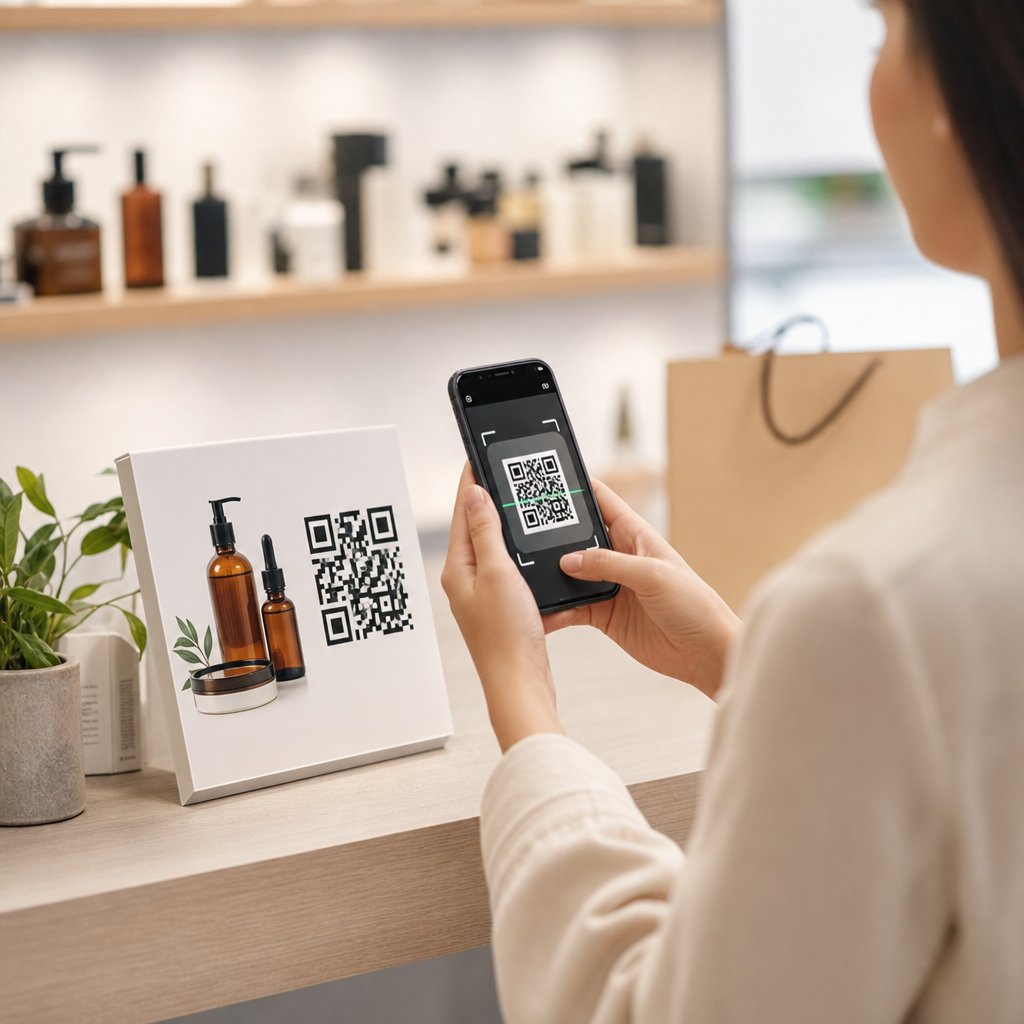
The strongest QR code upsell opportunities appear where customers pause, compare, or seek reassurance. In stores, that includes product shelves, fitting rooms, point-of-sale counters, product packaging, and pickup lockers. Online, QR codes work in shipment inserts, order confirmation pages, printed catalogs, event signage, and even television or out-of-home ads that drive to mobile-optimized bundles. A beauty retailer can place a code beside a moisturizer that opens a skin routine builder with a higher-margin serum and refill subscription. An electronics chain can add a code on a laptop display that compares base and upgraded models, then recommends extended warranty and peripherals.
Packaging is especially effective because it reaches customers after trust has already been established. I have used package inserts to promote accessories and replenishment offers with higher conversion rates than many cold traffic campaigns because the buyer already owns the core product. A coffee brand, for example, can print a QR code on the bag that leads to a subscription page for monthly deliveries and a premium grinder. Apparel brands can use garment tags to upsell care kits, matching items, or loyalty rewards. Marketplace sellers on Amazon or Etsy must follow platform rules, but compliant inserts can still direct customers to product education, warranty registration, or brand communities where future upsell paths are stronger.
The most important principle is context. A QR code should match shopper intent at that moment. At the shelf, answer comparison questions. At checkout, propose small add-ons. After delivery, suggest replenishment or premium accessories. If the offer is misaligned, scan rates may look healthy while revenue impact stays weak. High-performing retail and e-commerce hubs organize QR programs by journey stage rather than by channel alone.
How to design QR code offers that increase average order value
Effective QR upsells start with one clear commercial objective: raise average order value, lift attachment rate, improve subscription enrollment, or increase repeat purchase frequency. From there, build an offer that feels useful rather than pushy. The best structures are premium upgrade, bundle discount, threshold incentive, guided quiz, limited-time add-on, and post-purchase reorder. For example, a home goods retailer selling a standard air purifier can use a QR code to present the premium model with HEPA performance data, energy usage, and filter life savings. The customer sees why the higher price is justified, which is what makes a true upsell convert.
Landing page design matters as much as placement. Every QR destination should load fast, match the message near the code, and minimize choices. If the shelf sign says “Scan to compare standard vs premium,” the page should open to that comparison, not a generic category page. Mobile pages should use concise copy, trust signals, inventory visibility, reviews, and one primary call to action. Shop Pay, Apple Pay, and Google Pay reduce drop-off. If account creation is required too early, conversions suffer. For e-commerce brands using Shopify, BigCommerce, Adobe Commerce, or WooCommerce, dedicated landing pages and cart links make attribution cleaner and testing easier.
| Placement | Best Upsell Type | Retail Example | Main KPI |
|---|---|---|---|
| Shelf tag | Premium upgrade | Standard blender to higher-watt model | Upgrade rate |
| Packaging insert | Accessory bundle | Phone case buyer offered charger and screen protector | Attachment rate |
| Receipt or thank-you card | Reorder or subscription | Pet food reorder with autoship discount | Repeat purchase rate |
| POS counter sign | Impulse add-on | Sunglasses buyer offered lens cleaning kit | Add-on revenue |
Use incentives carefully. Discounting is not always necessary, and in premium categories it can harm perceived value. Sometimes the better lever is exclusivity, convenience, customization, or proof. A furniture retailer can use a QR code to show an augmented reality room view and upsell stain-resistant fabric. A skincare brand can link to dermatologist-backed ingredient education and upsell a regimen. The scan should resolve uncertainty and support a better purchase decision.
Technology, tracking, and execution standards
Dynamic QR codes are usually the right choice for serious retail and e-commerce programs because they let teams change destinations without reprinting assets. They also support campaign-level analytics such as scans by location, device, and time. Static codes are acceptable for permanent informational pages, but they limit optimization. Brands commonly generate and manage codes through platforms such as Bitly, QR Code Generator Pro, Beaconstac, Uniqode, or enterprise print workflows tied to product information management systems. Whatever tool you choose, insist on HTTPS destinations, UTM parameters, and naming conventions that map to store, fixture, SKU family, and offer type.
Measurement should connect scan behavior to business outcomes, not vanity metrics. A high scan count with low conversion often signals poor offer fit, weak mobile experience, or staff placing the code where the shopper lacks time or signal. In stores, pair QR data with point-of-sale reports, loyalty IDs, and test-vs-control analysis by location. Online, connect scans to sessions, add-to-cart, conversion rate, average order value, and revenue per recipient. Google Analytics 4, Shopify analytics, Adobe Analytics, and CRM tools such as Klaviyo or Salesforce can all help attribute downstream performance when links are tagged correctly.
Operational details matter. QR codes need adequate quiet zone, contrast, and print size to scan reliably under store lighting. Avoid reflective surfaces and crowded layouts. Test with both iPhone and Android cameras, not just one device. If a destination page requires an app, say so before the scan. Staff training is also critical. Associates should know what the code offers and when to mention it. I have seen simple scripts raise usage materially: “If you want to see the premium model and today’s bundle, scan here.” That direct prompt often outperforms passive signage.
Common mistakes, compliance issues, and optimization tactics
The biggest mistake is sending every scan to the homepage. That wastes intent and destroys relevance. Another common error is offering too many products at once. Upsells work best when the recommendation is narrow and obviously connected to the original item. Brands also underestimate page speed, especially on store Wi-Fi or weak mobile networks. Compress images, reduce scripts, and prioritize above-the-fold value. If checkout is impossible on mobile, at least let the customer save the offer to text or email for later purchase.
Privacy and compliance deserve attention. If the QR flow collects personal data, disclose what is being collected and why. Email capture should follow consent rules, and loyalty enrollment should be transparent. For regulated categories such as alcohol, supplements, financial products, or medical devices, all claims on the destination page must meet applicable advertising standards. Accessibility matters too. Use readable nearby text that explains the purpose of the code, and do not rely on the image alone for critical information.
Optimization should be continuous. Test placement, call-to-action wording, incentive type, product pairing, and destination format. A message like “Scan for bundle savings” may outperform “Learn more” because it states the benefit directly. Segment by store type, traffic pattern, season, and customer cohort. What works in grocery may fail in luxury retail because motivations differ. The strongest retail and e-commerce teams treat QR upselling as merchandising, not just marketing. They review margin impact, fulfillment constraints, return rates, and customer lifetime value before scaling a campaign.
QR codes give retail and e-commerce brands a low-friction way to upsell products across the full customer journey, from shelf discovery to post-purchase replenishment. The winning formula is straightforward: place codes where shoppers naturally pause, connect each scan to a tightly matched offer, and measure revenue outcomes rather than scan volume alone. Premium upgrades, accessory bundles, subscriptions, and reorder flows all work when the destination answers an immediate buying question and removes effort from the next step.
As the hub for retail and e-commerce applications, this page points to a clear strategy for every related use case: in-store signage, packaging inserts, receipts, loyalty programs, shipment inserts, and mobile checkout experiences. The practical advantage is better basket size without adding sales pressure or operational complexity. Start with one high-intent placement, one product family, and one measurable objective. Then test, refine, and expand the program based on conversion data. If you want stronger margins from existing traffic and footfall, begin with a QR upsell pilot this quarter.
Frequently Asked Questions
How do QR codes help with upselling products without disrupting the buying experience?
QR codes support upselling by giving customers a fast, low-friction way to see better, premium, or upgraded options at the exact moment they are already interested in a product. Instead of asking shoppers to search manually, download an app, or navigate through multiple pages, a simple scan can take them directly to a curated landing page, comparison chart, bundle offer, or upgraded product version. This keeps the buying process smooth while still introducing higher-value choices in a helpful way.
In physical retail, a QR code placed on shelf tags, packaging, product displays, fitting room signage, or point-of-sale materials can guide shoppers to premium alternatives, limited editions, subscription options, or add-on packages. In e-commerce, QR codes can be included in packaging inserts, email campaigns, thank-you cards, or in-store pickup materials to encourage customers to upgrade future purchases. Because the content behind the code can be tailored to a shopper’s context, the upsell feels relevant rather than intrusive.
The real advantage is timing and convenience. When a customer scans a QR code, they are signaling intent and curiosity. That is a strong moment to present an upsell message such as “See the pro version,” “Compare features,” or “Unlock a bundle and save.” If the destination page is focused, mobile-friendly, and clearly explains the added value, QR codes can increase average order value while preserving a seamless customer experience.
Where should businesses place QR codes to maximize upsell opportunities?
The best placement depends on where customers make decisions, hesitate, or look for more information. In stores, high-performing placements include product shelves, endcap displays, packaging, countertop signs, showroom samples, fitting rooms, and checkout areas. These are all moments when shoppers may be comparing options or deciding whether a higher-tier version is worth the extra cost. A QR code in these locations can link to product demos, side-by-side comparisons, customer reviews, warranty information, or premium bundles that justify the upgrade.
For e-commerce and omnichannel brands, QR codes can also be effective on shipping boxes, product inserts, printed catalogs, direct mail, event signage, receipts, loyalty materials, and even customer support cards. For example, after a customer buys a basic product, a QR code in the package can direct them to accessories, refill plans, premium subscriptions, or a more advanced model for their next purchase. This extends upsell opportunities beyond the first transaction and keeps the brand connected to the customer after checkout.
Placement should always match customer intent. A code near a high-consideration product should answer questions and reduce uncertainty. A code at checkout should focus on quick add-ons or upgrade incentives. A code on packaging should emphasize next-step value, such as maintenance kits, replenishment plans, or product enhancements. The strongest results usually come from placing codes where they are visible, easy to scan, and paired with a clear call to action that tells the customer exactly what they will get by scanning.
What kind of offers and landing pages work best for upselling with QR codes?
The most effective QR code upsell experiences are specific, relevant, and designed for mobile users. Instead of sending customers to a generic homepage, businesses should send them to a focused destination built around one clear action. Strong examples include premium product pages, “good-better-best” comparisons, product bundles, subscription upgrades, exclusive discounts on higher-tier versions, add-to-cart pages with preselected upgrades, or short videos that explain why the premium option delivers more value.
Good upsell offers usually highlight a meaningful benefit, not just a higher price. Customers respond better when they can quickly see what they gain, such as better performance, more features, larger size, longer durability, customization, convenience, or savings over time. A QR code for a skincare product, for example, might lead to a bundle that includes the serum, moisturizer, and SPF instead of only the single item. A QR code on an electronics display might open a chart comparing the standard model to the pro version with battery life, storage, and accessory compatibility clearly explained.
The landing page should load quickly, look clean on a smartphone, and remove unnecessary steps. It should include a strong headline, concise value proposition, clear product imagery, trust signals such as ratings or testimonials, and a prominent call to action. If possible, the page should connect directly to checkout or a prefilled cart. The easier it is for the customer to understand the upgrade and act on it, the more likely the QR code will convert into a successful upsell.
How can businesses measure whether QR code upselling campaigns are actually working?
To evaluate performance, businesses need to track both engagement and revenue outcomes. Basic metrics include scan volume, unique scans, scan location, device type, time of day, and conversion rate after the scan. These numbers show whether customers are noticing the code and taking the next step. However, for upselling, the most important measurements are tied to business impact, such as increased average order value, upgrade rate, bundle attachment rate, repeat purchase behavior, and revenue generated from QR code traffic.
Dynamic QR codes are especially useful because they allow brands to update the destination URL without reprinting the code and often provide built-in analytics. When combined with UTM parameters, e-commerce platform tracking, CRM data, or point-of-sale attribution, businesses can see which placements and offers drive the strongest results. For example, a retailer might compare whether a QR code on a shelf sign performs better than one on packaging, or whether a premium bundle converts better than a percentage-off upgrade. This kind of testing helps refine the strategy over time.
It is also important to look at the full funnel, not just scans. A high scan count with low conversion may signal that the offer is weak, the landing page is confusing, or the upsell is poorly matched to customer intent. A lower scan count with a high conversion rate may indicate the placement is highly qualified but needs more visibility. Businesses that regularly test call-to-action wording, placement, incentives, and page design will be in a much better position to turn QR code interactions into measurable upsell revenue.
What are the biggest mistakes to avoid when using QR codes for upselling products?
One of the most common mistakes is sending customers to a generic page that does not match the context of the scan. If someone scans a code next to a specific product, they expect to see a relevant upgrade, comparison, or complementary offer immediately. Redirecting them to a homepage or broad category page creates friction and weakens trust. Another frequent mistake is failing to explain why the customer should scan in the first place. A QR code by itself is not enough; it needs a clear prompt such as “Compare premium features,” “Unlock the bundle,” or “See the upgraded model.”
Businesses also lose conversions when the mobile experience is poor. Slow-loading pages, cluttered layouts, long forms, and difficult checkout flows can quickly stop an upsell from happening. Because most QR code scans happen on smartphones, every destination should be built for mobile-first performance. It is equally important to make the value of the upsell obvious. If the premium option costs more but the benefit is vague, customers are unlikely to convert. The offer should clearly communicate what is better, why it matters, and whether there is a savings or convenience advantage.
Another mistake is treating QR codes as static, one-time assets instead of part of an ongoing optimization strategy. Brands should test placements, offers, messaging, and landing pages instead of assuming the first version will perform best. They should also ensure the code is easy to scan, printed at an appropriate size, and placed in a well-lit, accessible area. When businesses focus on relevance, speed, clarity, and measurement, QR codes become far more effective as an upselling tool rather than just a novelty feature.