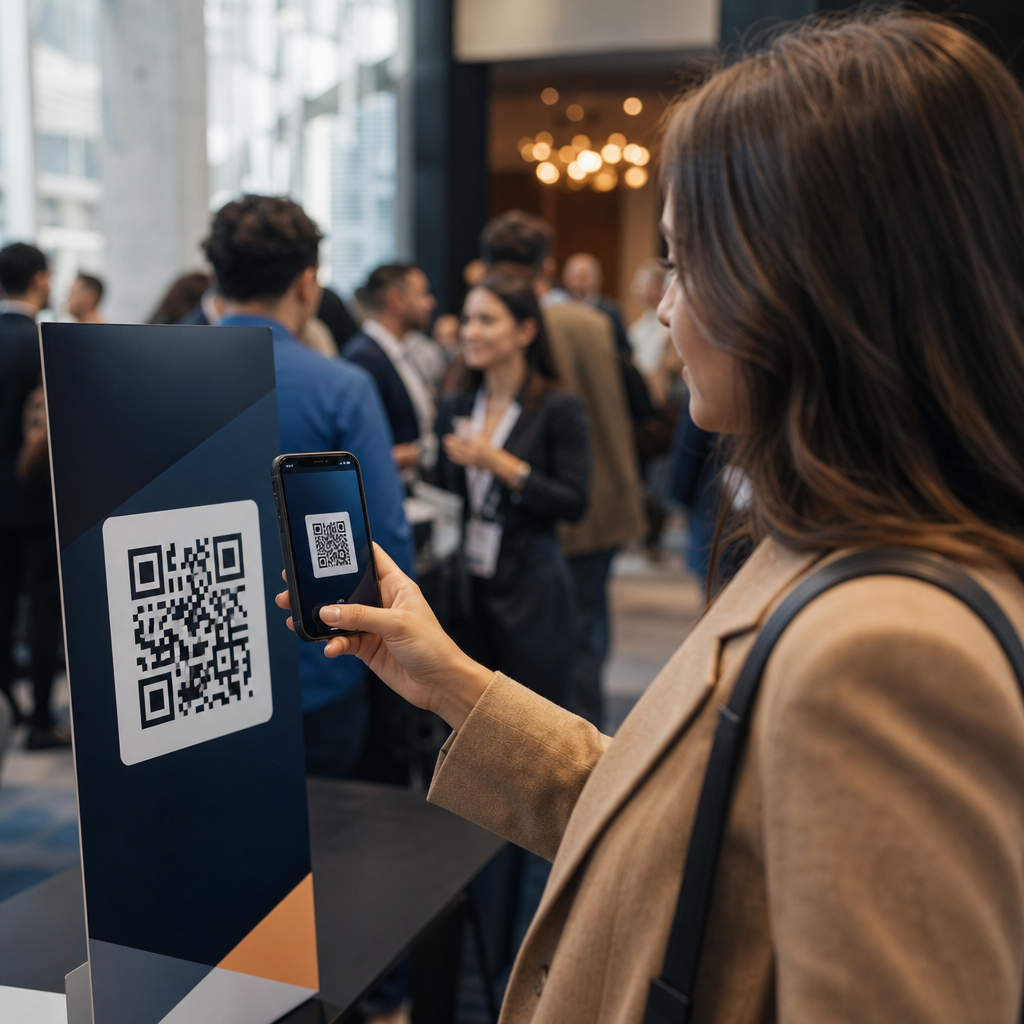
QR codes for event marketing campaigns have moved from a novelty on posters to a core tool for driving registrations, simplifying ticketing, and measuring audience behavior across the full event lifecycle. In events and ticketing, a QR code is a scannable matrix barcode that sends attendees to a landing page, opens a check-in credential, stores contact details, triggers an app download, or unlocks venue-specific content. Marketers value them because they connect physical promotion with digital action in one step, reducing friction at the exact moment a person is interested. I have used QR codes across trade shows, conferences, concerts, and local activations, and the pattern is consistent: when the destination is relevant and the scanning context is clear, response rates rise and attribution improves. This matters because event budgets are judged on registrations, attendance, sponsor value, and post-event revenue, not on impressions alone. A well-built QR strategy supports every one of those outcomes while also feeding the data systems that planners already use, including CRM, email automation, ad platforms, and ticketing software.
As the hub page for events and ticketing, this article explains how QR codes fit into event promotion, on-site operations, attendee engagement, sponsorship, and measurement. It also clarifies where they work best and where they fail. Static codes point to a fixed destination, while dynamic codes route through a short URL that can be edited later and tracked centrally. For event marketing campaigns, dynamic codes are usually the better choice because dates change, venues shift, and segmented audiences need different landing experiences. Common use cases include registration links on flyers, ticket downloads in confirmation emails, digital agendas on signage, lead capture at expo booths, cashless menu access, and feedback collection after sessions. The key principle is simple: every scan should answer a specific attendee question immediately. If the user has to search again after scanning, the code added friction instead of removing it. That practical standard separates effective QR deployment from decorative usage.
How QR codes support event promotion before launch
Before an event opens, QR codes function as response devices that turn offline exposure into measurable digital traffic. On street posters, direct mail, venue partner signage, print ads, and speaker one-sheets, a code can send prospects directly to a registration page with UTM parameters, source labels, and prefilled campaign fields. In my campaigns, the highest-performing pre-event codes always matched audience intent. A concert poster should open ticket purchase, not a generic homepage. A conference postcard sent to past attendees should open a VIP pricing page with the discount already applied. This level of alignment increases conversion because the next step is obvious. Dynamic platforms such as Bitly, QR Code Generator Pro, Beaconstac, and Flowcode make this practical by allowing redirects, scan analytics, and destination changes without reprinting materials.
Placement and context determine whether people scan. Codes need white space, strong contrast, and a plain-language prompt that states the value of scanning: “View agenda,” “Claim early-bird rate,” or “See seat options.” Industry practice is to test the code at actual print size, from realistic scanning distance, under venue lighting conditions, and across iPhone and Android camera apps. A code on a trade show banner may be visible from ten feet away, but if the linked page loads slowly on cellular data, scans will not become sign-ups. Event marketers should also create campaign-specific landing pages rather than sending all traffic to one registration form. That allows tighter message matching by segment, such as sponsors, exhibitors, alumni, members, or local attendees. The result is better conversion data and stronger internal linking pathways into related pages like pricing, speakers, accommodations, and FAQs.
Using QR codes in ticketing, check-in, and access control
In ticketing, QR codes reduce manual handling and accelerate entry. Most modern event platforms, including Eventbrite, Cvent, Bizzabo, Universe, and Ticketmaster, generate unique QR credentials tied to an order record. At check-in, staff scan the code with a mobile app or handheld device, which validates the ticket status and records entry time. This shortens queues, limits duplicate admissions, and creates a clean attendance log for reconciliation. For multi-day conferences, the same code can be tied to badge printing, workshop access, meal entitlements, or VIP zones. For concerts and sports, rotating or encrypted codes can reduce screenshot fraud. The best systems also support offline scanning, then sync once connectivity returns, which matters at outdoor venues and older convention centers where network reliability is uneven.
Operational success depends on more than the code itself. Check-in lanes need signage, trained staff, and fallback procedures for cracked screens, dead phone batteries, and name lookups. I recommend a separate help desk for exceptions so the main line keeps moving. Accessibility also matters. Printed tickets should remain available for attendees without smartphones, and confirmation emails should explain where to find the QR ticket before arrival. If the event uses wallet passes through Apple Wallet or Google Wallet, adoption usually improves because the ticket is easier to retrieve than searching email at the door. For security-sensitive events, organizers should tie QR admission to identity checks, time-window rules, or one-time validation. The code becomes one layer in a broader access-control workflow rather than a standalone guarantee of authorization.
On-site engagement, wayfinding, and session interaction
Once attendees are inside, QR codes help venues communicate without overprinting materials that will be outdated by noon. Large conferences use them for live agendas, floor maps, exhibitor directories, Wi-Fi instructions, presentation downloads, and emergency updates. Because dynamic codes can be updated instantly, the same sign can point to revised room assignments or schedule changes without staff replacing every insert. This is especially useful during festivals and multi-track events where sessions shift. Museums, brand activations, and community events use QR touchpoints to layer digital storytelling onto physical spaces, letting visitors scan for artist information, scavenger hunts, or localized offers. The practical benefit is that information stays current while print costs and waste decline.
Session-level engagement is where QR codes often outperform vanity event apps. A moderator can display a code that opens live polling, Q&A submission, resource downloads, or a continuing education form. Attendees scan with the device already in their hand, without creating another password. Response volume rises because the barrier is lower. Sponsors benefit too. A booth code can open a product demo booking page, gated brochure, giveaway entry form, or lead qualification survey. To keep data clean, each code should map to a distinct campaign or asset rather than sending every scan into one generic form. Below is a practical framework I use when planning event and ticketing campaigns.
| Event stage | Primary QR use | Best destination | Main KPI |
|---|---|---|---|
| Pre-event | Registration promotion | Segmented landing page | Scan-to-registration rate |
| Arrival | Ticket validation | Wallet pass or check-in record | Entry time per attendee |
| During event | Agenda, polls, resources | Mobile web experience | Engagement per session |
| Sponsor activation | Lead capture | Qualified form or meeting scheduler | Cost per lead |
| Post-event | Feedback and follow-up | Survey or on-demand content | Survey completion rate |
Sponsorship, attribution, and data integration
For sponsors and exhibitors, QR codes create a measurable bridge between foot traffic and pipeline. Instead of counting booth visitors loosely, teams can assign codes to product stations, staff members, or promotional surfaces, then compare scans with form submissions, meeting bookings, and eventual sales outcomes. A software sponsor at a SaaS conference might place one code on a theater presentation for demo requests, another at a coffee cart for contest entries, and a third inside a sponsored session for whitepaper downloads. Because each code has a distinct destination and tracking structure, the sponsor can report not just activity volume but source quality. That is far more valuable in renewal conversations than anecdotal booth buzz.
Integration is what turns scan data into marketing intelligence. QR destinations should feed CRM and automation systems such as HubSpot, Salesforce, Marketo, or Mailchimp with campaign IDs intact. Event teams should standardize naming conventions for source, venue, asset, audience, and date so reporting stays usable across campaigns. I also recommend connecting scans to web analytics and server-side conversion tracking where possible, since mobile privacy controls can obscure downstream actions. The limitation is that a scan alone does not prove meaningful engagement. Some attendees scan out of curiosity and bounce. That is why the destination experience matters as much as the code. Fast page speed, concise copy, progressive forms, and mobile-first design are not optional; they determine whether attribution reflects interest or accidental friction.
Best practices, compliance, and common mistakes
Effective QR codes for event marketing campaigns follow a disciplined checklist. Use dynamic codes for anything date-sensitive. Test at full size on matte and glossy print. Keep the destination mobile optimized and accessible under WCAG principles, with readable type, strong contrast, and tappable buttons. Add a short URL below the code for users who cannot scan. Use HTTPS destinations only, because attendees are increasingly cautious about unknown links. If personal data is collected, disclose usage clearly and align consent language with applicable regulations such as GDPR or CCPA. For children’s events, healthcare events, and financial services events, legal review may be necessary before deploying lead capture or gated content workflows.
The most common mistakes are predictable. Organizers place codes where connectivity is poor, link to desktop-heavy pages, or print one generic code on every asset and lose source attribution. Some create codes without a call to action, assuming people will scan out of curiosity. Many fail to update destinations after schedules change, damaging trust at exactly the moment attendees need reliable information. Others overload the landing page with sponsor logos, pop-ups, or forms that ask for too much too soon. The strongest programs stay simple. One clear promise, one obvious next step, one measurable outcome. If you are building the events and ticketing hub for your organization, start by mapping every attendee question to a scan moment: how to register, where to enter, what session to attend, how to connect, and how to follow up. Then implement QR codes where they remove friction, not where they merely decorate campaign materials. Done well, they make event marketing more measurable, ticketing more efficient, and the attendee experience noticeably better. Audit your current event journey and add QR codes to the moments that need speed, clarity, and proof of performance.
Frequently Asked Questions
How do QR codes improve event marketing campaigns from promotion to post-event follow-up?
QR codes improve event marketing campaigns by creating a direct bridge between offline attention and online action at every stage of the event lifecycle. Before an event, they can turn posters, flyers, direct mail, signage, print ads, and even speaker one-sheets into instant registration paths. Instead of asking someone to remember a URL, search for an event page, or manually enter details, a quick scan takes them straight to a landing page, ticket purchase flow, agenda, or RSVP form. This reduces friction and often increases conversion rates because the gap between interest and action is much smaller.
During the event, QR codes streamline operations and improve the attendee experience. They can be used for digital ticketing, self-check-in, badge retrieval, lead capture, session access, exhibitor interactions, app downloads, venue maps, contest entries, and access to exclusive content. For example, a single code on a welcome sign can guide guests to the event app, while codes at booths can help exhibitors collect qualified leads without relying on paper forms. This makes the event feel more modern and efficient while also generating cleaner, more trackable engagement data.
After the event, QR codes remain valuable because they can connect attendees to surveys, replay content, follow-up offers, membership signups, sponsor activations, or future event registrations. Marketers can measure which channels drove scans, when scans happened, what content was most popular, and which onsite experiences led to meaningful engagement. In practical terms, this means QR codes are not just a convenience feature; they are a measurable marketing tool that supports awareness, conversion, audience engagement, and long-term retention.
What are the best ways to use QR codes for event registrations, ticketing, and attendee check-in?
The most effective use of QR codes for registrations, ticketing, and check-in starts with clear intent and a simple attendee journey. For registrations, QR codes should lead to a mobile-optimized landing page with a concise value proposition, event details, pricing if applicable, and a short form. This is especially useful on printed materials, outdoor ads, social graphics, presentation slides, and partner promotions. If someone scans a code, they should not have to pinch, zoom, or navigate through multiple pages to complete a registration.
For ticketing, QR codes can either direct users to a secure purchase page or serve as the digital ticket itself after registration is complete. Many organizers include a unique QR code in confirmation emails, SMS messages, wallet passes, and event apps. This allows attendees to present their code at the entrance for fast scanning and validation. Compared with manual lists or printed tickets, QR-based ticketing helps reduce bottlenecks, lowers the chance of duplicate entry, and supports a more professional arrival experience.
At check-in, the best practice is to connect each attendee’s QR code to the event management or ticketing platform so staff can scan and confirm entry in real time. This can support general admission, VIP access, session-level permissions, meal tracking, and re-entry policies. It is also smart to plan for operational details such as scanner compatibility, internet reliability, backup staffing, and a manual failover process in case a device battery dies or a guest cannot access their email. When implemented well, QR-based registration and check-in reduce wait times, improve attendance visibility, and create accurate records that are useful for reporting and future marketing.
What information can marketers track with QR codes at events, and how does that data help campaign performance?
QR codes can provide valuable performance data that helps marketers understand both campaign effectiveness and attendee behavior. At a basic level, marketers can track scan volume, time of scan, location of placement, device type, and the destination that users visited. When different QR codes are assigned to different channels, materials, or areas of the venue, it becomes much easier to see whether a lobby banner, street poster, email footer, sponsor booth, or stage slide generated the strongest response.
That data becomes even more useful when paired with analytics platforms, CRM systems, marketing automation tools, or event software. For example, a registration QR code on a partner flyer can be tagged differently from one on social media or direct mail, making attribution more accurate. Onsite, marketers can measure which sessions drove app downloads, which sponsor activations earned the most engagement, or which product demos led to follow-up actions. After the event, survey completion scans, content download scans, and repeat registration scans can reveal which attendees stayed engaged beyond the venue itself.
From a strategic standpoint, this information helps teams optimize creative placement, messaging, timing, and channel mix. If one code placement generates many scans but few conversions, the issue may be the landing page rather than the promotion. If a booth QR code drives high engagement, that insight can justify expanding that activation next year. In other words, QR code analytics do more than count interactions; they help marketers make better decisions about budget, audience targeting, sponsorship value, and event design.
What are the most important best practices for creating effective QR codes for event marketing?
Effective QR codes for event marketing depend on usability, clarity, and reliable execution. First, the destination matters as much as the code itself. Every QR code should lead to a mobile-friendly experience that loads quickly and matches the promise of the call to action. If the code says “Register Now,” the user should land directly on the registration page, not a generic homepage. If it says “View Schedule,” the agenda should be immediately visible. Reducing friction is critical because scans often happen in fast-moving, distracted environments.
Design and placement also make a major difference. QR codes should be large enough to scan easily, printed with strong contrast, and surrounded by enough white space to avoid scanning issues. They should appear in places where attendees naturally pause, such as entrance signage, booth displays, table tents, posters, badges, presentation slides, and handouts. A short, specific call to action should always accompany the code so people know exactly what they will get by scanning it, whether that is tickets, directions, exclusive content, networking access, or a giveaway entry.
It is also wise to use dynamic QR codes when possible, especially for event campaigns. Dynamic codes let organizers update the destination URL without reprinting materials, which is extremely helpful if schedules change, venues shift, or landing pages need optimization. Testing is another non-negotiable best practice. Marketers should test codes across different devices, lighting conditions, print sizes, and user scenarios before launch. Finally, branding should support trust without compromising scannability. Adding a logo or brand color can improve recognition, but the code still needs to function flawlessly. The best event QR code is not just visually appealing; it is fast, clear, useful, and dependable under real-world conditions.
Are QR codes secure for event attendees, and what should organizers do to build trust and protect the experience?
QR codes can be secure and attendee-friendly when event organizers use them responsibly, but trust and implementation matter. The main concern with QR codes is not the technology itself; it is where the code leads and whether users can verify that destination. In an event setting, attendees are often asked to scan quickly, so organizers should make the experience transparent. That means placing QR codes only in official event materials, pairing them with recognizable branding, and clearly stating the purpose of each scan, such as ticket retrieval, agenda access, check-in, or sponsor content.
Organizers should direct all QR code traffic to secure, legitimate URLs, ideally using HTTPS and branded domains whenever possible. If registration, payments, or personal data collection are involved, the landing pages should follow standard web security practices and comply with relevant privacy requirements. Unique attendee QR codes used for ticketing or access control should be tied to secure backend systems to help prevent duplication, fraud, or unauthorized entry. For higher-stakes events, teams may also implement timed credentials, identity verification steps, or app-based authentication as part of the check-in process.
Building trust also involves attendee education and operational control. Event teams should tell guests where official codes will appear and advise them not to scan random stickers or altered signage. Staff should monitor venue materials for tampering, especially in public spaces. It is also helpful to keep the user experience consistent so attendees can recognize legitimate event interactions. When QR codes are deployed with secure destinations, clear labeling, brand consistency, and proper oversight, they are a safe and highly effective tool for event marketing, ticketing, and engagement.