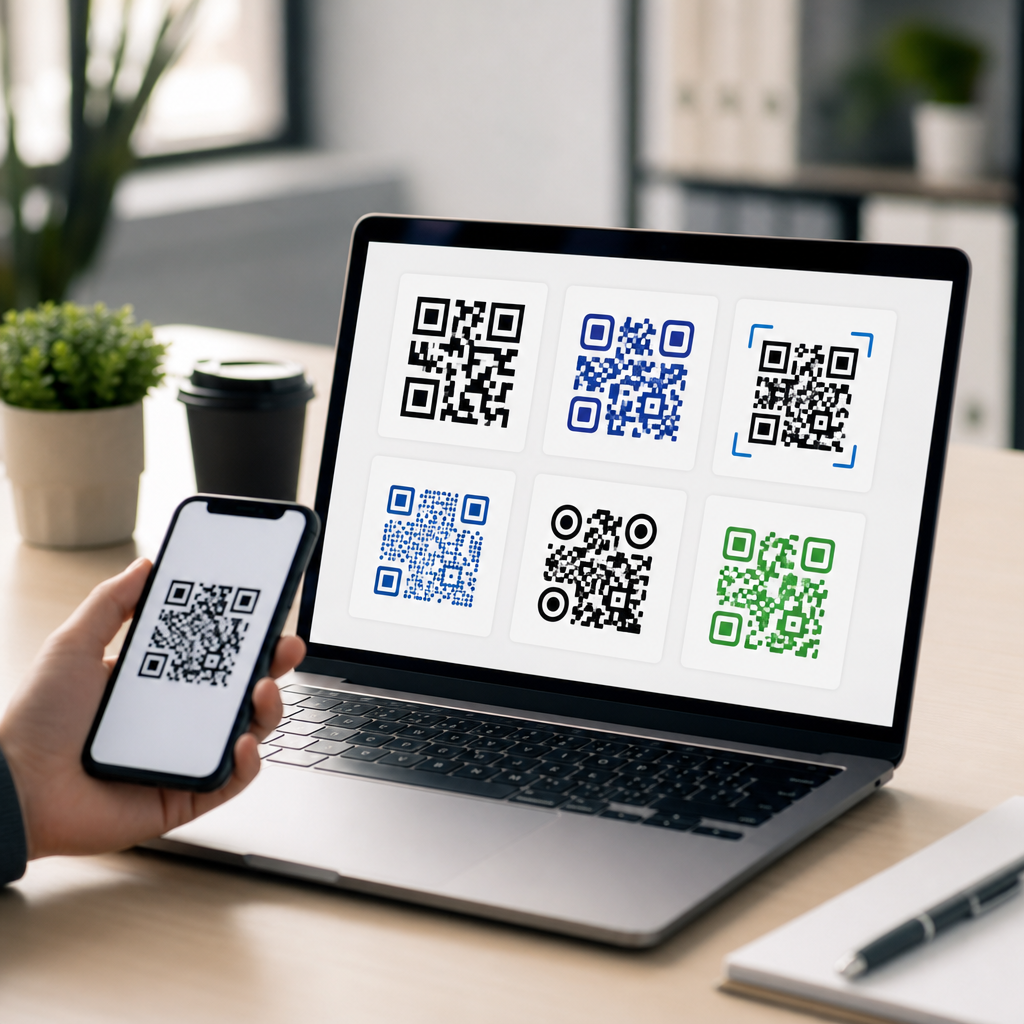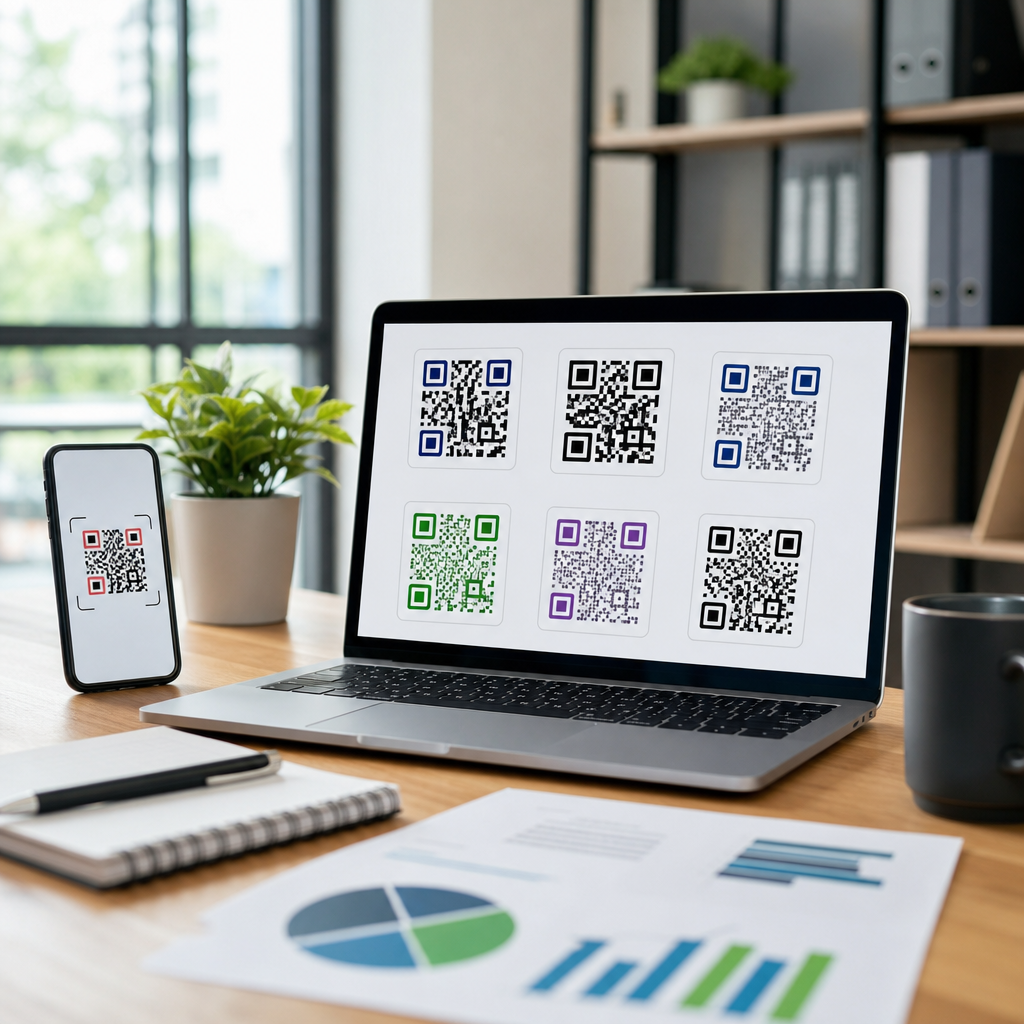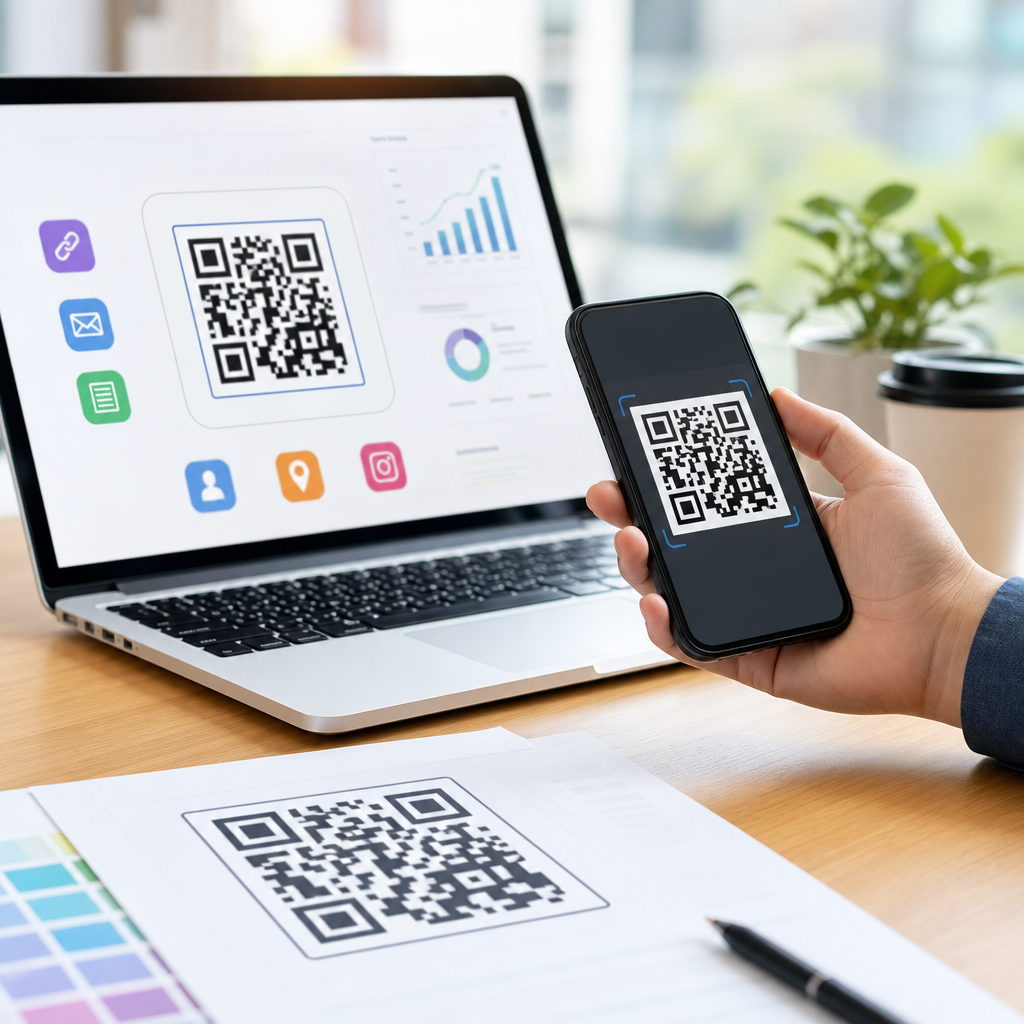

QR code file size optimization matters because the format you export, the amount of data you encode, and the way you prepare artwork directly affect scan reliability, page speed, print quality, and storage efficiency. In mobile campaigns, “file size” refers to the weight of the QR image asset itself, while “data density” refers to how much encoded information the symbol must hold. Those are related but not identical. A dense QR code can still be saved as a lightweight vector file, and a simple QR code can become bloated if it is exported as an oversized raster image. I have seen both mistakes repeatedly when building mobile landing pages, packaging inserts, event badges, and retail signage. Teams often focus on visual styling first, then discover slow-loading pages, blurry printed codes, or email attachments that strip image quality. This hub on QR Code Formats & File Types explains how to choose the right file type, reduce unnecessary weight, and keep QR codes crisp across phones, browsers, and printers. It also sets the foundation for related pages on SVG, PNG, PDF, EPS, JPG, and mobile implementation. The goal is practical: smaller files where possible, stronger scans everywhere, and assets that remain easy to manage across web, print, apps, and shared design systems.
Understand what actually makes a QR code file large
A QR code image grows in size for four main reasons: more encoded characters, higher error correction, larger output dimensions, and inefficient file format choices. The encoded content determines the QR version, which ranges from Version 1 at 21 by 21 modules up to Version 40 at 177 by 177 modules under ISO/IEC 18004. More modules mean more visual complexity. Error correction adds resilience by storing redundant data in four levels: L, M, Q, and H. Higher correction is useful for codes with logos, harsh print environments, or outdoor wear, but it also increases symbol density. If you encode a long URL with tracking parameters, add high correction, and then export at 3000 pixels square, your file will be larger than necessary even before styling choices are added.
In practice, the biggest avoidable problem is not the QR data itself but the export decision. A black-and-white QR code made of sharp geometric squares is usually ideal for vector output such as SVG, EPS, or PDF because vectors describe shapes mathematically rather than storing every pixel. The same code saved as a high-resolution PNG can still work well, especially for digital use, but it will usually weigh more than a clean SVG. A JPG is often the worst choice for standard QR artwork because lossy compression introduces artifacts along edges, which can reduce scanner confidence. When optimizing, start by asking where the code will appear, how large it will render, and whether the platform supports vector delivery.
Choose the right file format for the delivery channel
The best QR code file type depends on the destination. For websites, SVG is usually the best default because it scales without quality loss, stays sharp on high-density mobile displays, and can remain extremely small for simple designs. It also works well inside responsive layouts. PNG is a strong fallback when a platform, email client, ad network, or content management workflow handles raster images more predictably than vectors. For commercial print, PDF and EPS are standard because they preserve vector geometry and fit professional prepress workflows. For office documents or quick downloads, PNG is often the most compatible. JPG should be reserved for rare scenarios where file size is tightly constrained and the code is large enough, high contrast, and tested thoroughly on multiple devices.
I usually recommend keeping a master vector asset and exporting channel-specific derivatives. That approach prevents repeated re-rendering, which can introduce anti-aliasing or accidental scaling errors. It also makes internal linking between production guides simpler: a format hub page can direct designers to a dedicated SVG article for responsive web usage, a PNG article for transparent backgrounds and screenshots, and a PDF or EPS article for printers requesting press-ready files. The hub role matters because teams rarely use one file type everywhere. A restaurant may need SVG for its mobile menu page, PNG for social posts, and PDF for window decals printed by a local vendor. Optimization succeeds when the format matches the medium rather than when one format is treated as universal.
Compare common QR code file types by use case
| File type | Best use | Main advantage | Main limitation |
|---|---|---|---|
| SVG | Web, apps, responsive pages | Scales perfectly with very small file sizes | Some legacy workflows handle vectors poorly |
| PNG | General digital use, email, documents | Widely supported and preserves sharp edges | File size rises quickly at large dimensions |
| Print handoff, press-ready assets | Excellent for vector print workflows | Not ideal as an inline web image | |
| EPS | Professional print and signage vendors | Reliable vector exchange format | Less convenient for non-design users |
| JPG | Limited cases with careful testing | Can compress aggressively | Compression artifacts may hurt scanning |
This comparison reflects a consistent production rule: use vectors whenever the environment allows it, and use PNG when compatibility is the priority. If you are deciding between SVG and PNG for mobile QR codes, the question is simple. Do you need infinite scaling, theming flexibility, and minimal page weight? Use SVG. Do you need guaranteed support inside a system that rasterizes images anyway, such as certain email builders or marketplace upload forms? Use PNG. For storefront posters, product packaging, and exhibition graphics, hand the printer a vector PDF or EPS and confirm minimum physical size and quiet zone requirements before approval.
Reduce encoded data before you optimize the image
The fastest path to a smaller, easier-to-scan QR code is often shortening the payload. A URL with unnecessary UTM parameters, long redirect chains, and verbose query strings forces the generator to use more modules. That increases density and may require a larger print size to maintain reliable scans. Use a short branded domain when possible, strip unused parameters, and rely on your analytics platform or dynamic QR code service for tracking instead of embedding everything in the visible destination. This is especially important for mobile QR codes placed on packaging, receipts, or small labels, where physical space is limited.
Static versus dynamic encoding is another key decision. A static QR code stores the final destination directly, which can be fine for permanent links with short URLs. A dynamic QR code usually stores a short redirect URL and lets you update the destination later. In many campaigns, dynamic codes reduce the encoded length substantially while adding management benefits such as scan analytics, retargeting support, and destination changes without reprinting. The tradeoff is dependency on the redirect infrastructure. If the service fails or expires, the code breaks. Optimization therefore is not just about the smallest asset; it is about choosing a stable setup that keeps file weight low without introducing operational risk.
Optimize dimensions, contrast, and styling without harming scan performance
Many oversized QR assets are generated “just in case,” then shrunk in layouts. That wastes bandwidth and sometimes softens edges. Export at the actual maximum display size needed, with a modest safety margin, rather than at huge dimensions. For digital placements, a PNG between 512 and 1024 pixels square is often enough, while SVG can remain tiny regardless of rendered size. For print, determine the physical output size first. A practical baseline is at least 2 by 2 centimeters for short URLs at close range, but larger sizes are safer for distance scanning, lower-end cameras, and codes with logos or higher density. Keep the quiet zone at four modules minimum around the symbol.
Styling can also inflate files and reduce scan success. Rounded modules, gradients, shadows, low-contrast palettes, and busy background images may look polished but create decoding friction. I have tested branded codes that scanned perfectly in studio lighting and failed on mid-range Android phones under store lighting because the contrast ratio dropped too low against tinted packaging. Dark foreground on a light background remains the standard because scanners detect module boundaries more reliably. If you add a logo, increase error correction only as much as needed and test on iPhone and Android devices using native camera apps plus at least one third-party scanner. Good optimization accepts tasteful branding but refuses decorative effects that compromise function.
Build a repeatable workflow for web, print, and content teams
The most efficient organizations treat QR code formats and file types as a documented system rather than a one-off export task. Keep a master asset package that includes the editable source, an SVG for web, a transparent PNG for general digital use, and a print-ready PDF or EPS. Name files consistently with campaign, destination, size, and date. Store scan test notes alongside the asset. If your site uses a design system, define QR code component rules for minimum size, alt text, lazy loading behavior, and preferred format. For web performance, compress surrounding page assets first, but do not ignore QR images; oversized PNGs can still hurt Largest Contentful Paint on mobile landing pages.
Quality control should be explicit. Before publishing, confirm destination accuracy, HTTPS status, redirect behavior, final rendered dimensions, and contrast. Before printing, request a proof at real size and test from the expected scanning distance. For multi-channel campaigns, maintain internal links from this hub to deeper guides on SVG QR codes, PNG export settings, print file preparation, and dynamic QR code management. That structure helps editors, designers, and marketers find the right implementation path quickly. QR code file size optimization is ultimately about fit: the right amount of encoded data, the right file format, the right resolution, and the right testing discipline. Audit your current QR assets, replace bloated or blurry exports, and standardize a format policy that keeps mobile scans fast and dependable.
Frequently Asked Questions
What is the difference between QR code file size and QR code data density?
QR code file size refers to the actual weight of the image asset you export and store, such as a PNG, SVG, PDF, or EPS file. This affects page speed, download time, email attachment size, storage use, and how efficiently your assets can be delivered across websites, apps, and campaigns. Data density, by contrast, refers to how much information the QR code itself must encode. That includes things like long URLs, tracking parameters, vCards, Wi-Fi credentials, or other embedded content. The more data you pack into the symbol, the more complex the QR matrix becomes, which can increase the number of modules and make the code harder to scan at small sizes.
These two concepts are related, but they are not the same. A highly dense QR code can still be exported as a lightweight vector file, while a simple QR code can become unnecessarily heavy if it is saved as a large, high-resolution raster image. That is why optimization needs to happen on two levels: first, reduce the amount of encoded data whenever possible, and second, choose the most efficient file format and export settings for the intended use. Understanding this distinction helps you make smarter decisions that improve scan reliability without bloating assets.
Which file format is best for keeping QR code image size small without hurting quality?
In many cases, vector formats such as SVG, EPS, or PDF are the best choice for QR code file size optimization because they store the design as mathematical paths rather than fixed pixels. Since QR codes are made of sharp geometric shapes, vectors preserve crisp edges at any size and often remain very lightweight, especially for print workflows, brand kits, and responsive web use. They also scale cleanly for everything from a business card to a billboard without requiring multiple exported versions.
Raster formats like PNG can still be a strong option when you need broad compatibility, transparency, or easy use in content management systems and marketing platforms. However, raster files become heavier as dimensions and resolution increase. JPEG is generally not ideal for QR codes because lossy compression can blur edges and introduce artifacts that interfere with scanning. If you use PNG, export only at the dimensions you truly need rather than oversizing the asset. In short, SVG is often the most efficient and flexible format for simple black-and-white QR codes, while PNG is a practical fallback when a pixel-based format is required.
How can I reduce the amount of data in a QR code to improve scan performance and efficiency?
The most effective way to reduce QR code data density is to shorten what you encode. For marketing campaigns, that usually means using a short URL or dynamic QR code rather than embedding a long destination link full of tracking parameters and redirects. A shorter encoded string creates a less complex QR matrix, which typically scans faster and remains more dependable when printed at smaller sizes or viewed on lower-quality screens. If analytics are important, place tracking logic behind the short link rather than forcing the QR symbol itself to carry a long, messy URL.
You can also simplify payloads by removing unnecessary characters, avoiding redundant text, and choosing the right QR use case. For example, if your goal is to send users to a landing page, linking to that page is usually more efficient than embedding a large block of text, a full contact record, or multiple actions into one code. It is also important to avoid overusing high error correction unless the environment truly demands it. Error correction improves resilience, but it adds complexity to the symbol. The best approach is to encode only what users need, keep URLs lean, and test the final code in realistic conditions before publishing it.
Does higher resolution always make a QR code better for print and digital use?
No. Higher resolution does not automatically make a QR code better, and in many situations it only makes the file larger. What matters most is whether the code has enough clarity and contrast for the intended output size and scanning distance. For digital use, exporting an enormous PNG for a small on-screen placement can slow page load without improving readability. For print, extremely high raster resolution may be unnecessary if the code is being placed at a modest size and could have been delivered as a scalable vector instead.
The key is to match the export settings to the actual use case. For web pages, generate dimensions appropriate to the layout and device context. For print, prefer vector output whenever possible so the QR code stays sharp at any size. If a raster export is required, choose a resolution that supports the final print dimensions without excess. Also remember that scan success depends on more than resolution alone. Quiet zone, contrast, module sharpness, print surface, and code size relative to viewing distance all matter. Smart optimization means using enough resolution for reliability, but not so much that you waste bandwidth or storage.
What are the most important best practices for optimizing QR codes without reducing scan reliability?
Start by simplifying the encoded content. Use short links, dynamic QR codes when appropriate, and only the minimum necessary data. Then choose the right file format: SVG for flexibility and lightweight scaling, or properly sized PNG when raster output is needed. Avoid JPEG for most QR applications because compression artifacts can degrade the clean edges scanners depend on. Keep strong contrast between the foreground and background, maintain an adequate quiet zone around the code, and do not distort the symbol by stretching or applying heavy visual effects.
It is also wise to size the code according to its real environment. A QR code on product packaging, a poster, and a mobile screen each has different viewing conditions and scanning distances. Use error correction thoughtfully rather than automatically selecting the highest level. If the code may be exposed to wear, glare, or partial obstruction, extra error correction can help, but it should be balanced against increased complexity. Finally, test across multiple devices, lighting conditions, and print outputs before deployment. The best optimized QR code is not just small in file size; it is efficient, fast to load, easy to reproduce, and consistently scannable in the real world.