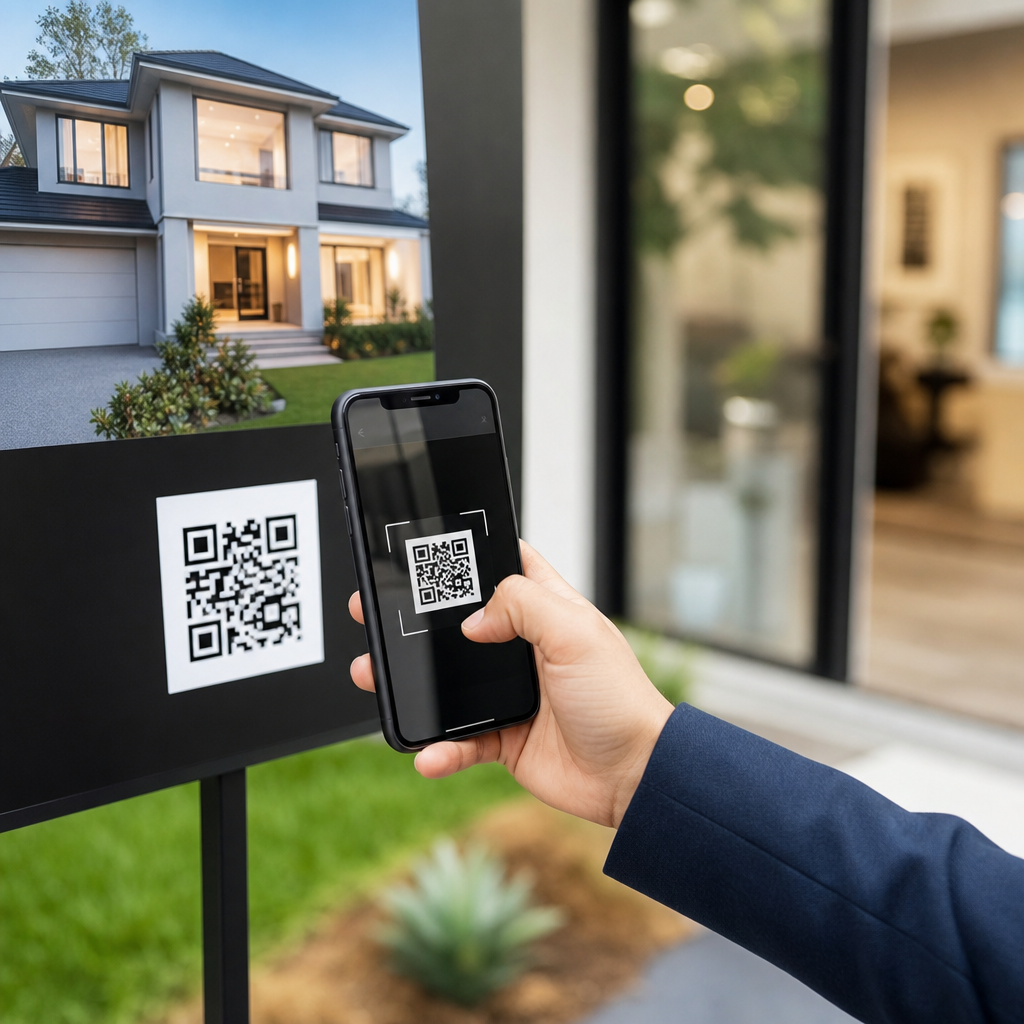
Tracking real estate leads with QR codes gives agents, brokers, and property marketers a direct way to connect offline interest to measurable digital actions. In practical terms, a QR code is a scannable image that opens a web page, form, phone number, map, video, or file on a smartphone. A real estate lead is any prospective buyer, seller, renter, investor, or landlord who shows intent by taking an action such as requesting a tour, downloading a brochure, or submitting contact details. When these two tools are combined correctly, every yard sign, flyer, open house poster, direct mail piece, and property brochure can become a trackable lead source instead of an unmeasured branding asset.
This matters because real estate marketing still depends heavily on physical touchpoints. Buyers notice signs while driving neighborhoods, renters scan lobby posters, and sellers pick up postcards from their mailbox. Yet many teams still struggle to answer a basic question: which offline materials actually generate qualified conversations? I have implemented QR campaigns for listings, leasing portfolios, and brokerage recruiting, and the same pattern appears every time. Teams spend on print, events, and signage, but attribution is weak unless scans are tied to landing pages, CRM records, and campaign labels. QR codes close that gap.
For a real estate business, better tracking improves more than reporting. It sharpens budget decisions, shows which listings attract local curiosity, reveals whether open house visitors convert after the event, and helps agents respond faster with relevant follow-up. It also supports a broader industry-specific applications strategy by linking this hub page to related tactics such as QR code open house check-ins, brochure downloads, virtual tour access, rental application flows, and agent recruiting campaigns. The core principle is simple: every QR code should point to a purpose-built destination and every destination should capture, classify, and route intent.
Where QR codes fit in the real estate lead funnel
QR codes work best when mapped to distinct moments in the buyer or seller journey. At the top of the funnel, a code on a yard sign can send a passerby to a mobile listing page with photos, price, school data, and a tap-to-call button. In the middle of the funnel, a code at an open house can launch a registration form, collect preferred move timeline, and trigger an automated property alert. At the bottom of the funnel, a code in a brochure or follow-up email can open financing options, a disclosure packet, or a calendar booking link for a private showing.
For sellers, the use cases are equally strong. A postcard code can connect homeowners to a home valuation page. A neighborhood farming flyer can open a recent sales report with a lead form. A recruiting sign at a brokerage event can send agents to a culture deck and confidential inquiry form. The key is that each code should answer one immediate question. What is this property? What is my home worth? Can I book a tour now? When the destination aligns with the user’s intent, scan rates and conversion rates both improve.
I advise real estate teams to avoid generic homepage links. Sending every scan to the main site wastes context and weakens attribution. A code on a luxury condo flyer should not land on the brokerage homepage; it should land on that exact condo page with a concise form and one clear next step. Precision is what turns a scan into a lead.
How to build a measurable QR code tracking system
A measurable system starts with structured links. Create a unique landing page or tracked URL for every property, campaign, and placement. Use UTM parameters to label source, medium, campaign, content, and even physical position. For example, a sign rider for a suburban listing might use source=yard-sign, medium=qr, campaign=123-oak-st, and content=front-panel. Those labels should flow into Google Analytics 4, your marketing automation platform, and your CRM, whether that is HubSpot, Salesforce, Follow Up Boss, kvCORE, or Lofty.
Next, decide what counts as a lead event. In most real estate programs, useful events include scan, page view, form submission, call click, showing request, valuation request, brochure download, mortgage prequalification start, and appointment booking. Set these as conversions inside analytics and pass them to the CRM with hidden fields so every contact record shows its original QR source. If your site uses call tracking tools such as CallRail, assign dynamic or campaign-specific numbers to QR landing pages so phone inquiries are attributed accurately too.
Landing page design affects data quality. Keep pages mobile first, fast loading, and narrowly focused. Include listing highlights above the fold, but gate only the information that justifies a form. For an open house page, asking for name, email, phone, buyer status, and timeline is reasonable. For a first touch property page, a softer conversion such as “Text me the full photo pack” often works better. Consent language, privacy disclosures, and fair housing compliance need to be explicit, especially when forms segment by needs or timing.
| QR placement | Best destination | Primary metric | Recommended CRM tag |
|---|---|---|---|
| Yard sign | Single-property mobile page | Showing requests | Listing sign scan |
| Open house poster | Check-in form and disclosures | Registered attendees | Open house QR |
| Direct mail postcard | Home valuation landing page | Valuation submissions | Seller postcard QR |
| Brochure or flyer | Photo gallery or brochure download | Downloads | Print flyer QR |
| Apartment lobby sign | Availability and tour scheduler | Tour bookings | Leasing QR |
Best practices for different real estate use cases
Residential listings are the most common starting point. Place the code where it can be scanned safely from a sidewalk or during a stop, and use a short branded URL as backup for older phones. The destination should feature current status, price, property facts, map, financing estimate, and a short inquiry form. If the listing generates heavy traffic, add a self-service option such as “Get instant updates on price changes” to capture leads who are not ready to schedule.
Open houses benefit from QR codes because they replace paper sign-in sheets that often produce illegible or false details. A posted code at the entrance can open a mobile check-in page, trigger a welcome text, and send attendees a disclosure packet or feature sheet immediately. During implementation, I have seen attendance data improve dramatically once agents explain the value clearly: sign in to receive comparable sales, inspection notes, or future listing alerts. That exchange feels useful rather than intrusive.
For multifamily leasing and rental marketing, QR codes belong on window posters, street signage, elevator screens, and community maps. Prospects want unit availability, pricing, pet policy, amenity photos, and tour times fast. If the experience forces multiple clicks before they see inventory, many will leave. Integrate the code with the property management stack so completed guest cards enter the leasing CRM and trigger follow-up sequences from tools like Yardi, RealPage, or AppFolio.
Commercial real estate requires a slightly different approach. Investors and tenants often need brochures, floor plans, cap rates, traffic counts, zoning summaries, and contact details for multiple stakeholders. In that context, a QR code can open a deal room page with downloadable documents and a gated interest form. Because deal cycles are longer, scoring engagement matters. A prospect who downloads an OM, reviews the site plan, and books a call is more qualified than someone who only scans a monument sign.
Common mistakes that weaken lead tracking
The biggest mistake is treating QR codes as a design accessory instead of a data asset. If the code points to an untracked URL, lacks campaign naming standards, or changes destination without documentation, reporting becomes unreliable. Another common problem is printing one code for multiple contexts. A brochure, bench sign, and postcard should not all share the same destination if you want meaningful attribution. Separate codes allow you to compare channel performance, creative variations, and local market response.
Poor mobile experience is another frequent failure point. Slow pages, oversized forms, broken maps, and intrusive pop-ups reduce conversions. Real estate shoppers often scan while standing outside, walking between showings, or juggling family members. The page must load quickly on cellular data and make the next action obvious. Accessibility matters as well. High contrast, adequate quiet space around the code, and plain-language instructions increase successful scans.
Finally, many teams measure scans but not outcomes. A high scan count can look impressive while producing few qualified conversations. Focus on conversion chain metrics: scans to visits, visits to forms, forms to appointments, appointments to closed transactions. If a code on luxury listing signs generates fewer scans but more serious showing requests than a code on community postcards, the sign campaign may be more valuable despite lower top-line volume.
How to analyze performance and improve results over time
Effective optimization starts with a weekly review rhythm. Break results down by property, placement, creative, neighborhood, and audience type. Look for patterns in both engagement and quality. For example, if open house check-ins convert well to follow-up meetings but yard sign scans mostly bounce, the sign landing page may need better photos, a more compelling headline, or a faster route to scheduling. If seller valuation postcards get many scans but few submissions, the form may ask for too much too early.
Use A/B testing where possible. Test QR code placement on signs, different calls to action such as “See price and photos” versus “Book a private tour,” and different destination formats like a short lead form against a property page with embedded chatbot support. In mature programs, tie lead data back to closed deals. That allows you to calculate cost per qualified lead, cost per appointment, and cost per transaction by offline source. Once you can see those numbers, print budgets become easier to defend or reallocate.
Real estate lead tracking with QR codes works because it turns physical curiosity into visible intent, and visible intent into action you can manage. The winning formula is straightforward: assign a unique code to each use case, send scans to focused mobile pages, capture meaningful conversion events, and push source data into your CRM. From yard signs and open houses to postcards, leasing displays, and investment brochures, the same discipline creates cleaner attribution and better follow-up.
As the hub for real estate within a broader industry-specific applications strategy, this approach supports more specialized plays without changing the foundation. Once your naming conventions, landing page templates, analytics, and CRM routing are in place, you can expand confidently into virtual tours, property brochures, seller funnels, tenant campaigns, and recruiting. Start with one listing, one postcard, and one open house workflow, measure every step, then scale what produces qualified conversations and closed business.
Frequently Asked Questions
How do QR codes help track real estate leads more accurately?
QR codes help track real estate leads by creating a direct bridge between an offline marketing touchpoint and a digital action that can be measured. In real estate, that matters because many lead sources begin in the physical world, such as yard signs, open house flyers, direct mail pieces, window displays, brochures, business cards, and property banners. When a prospective buyer, seller, renter, or investor scans a QR code, that scan can send them to a specific landing page, inquiry form, property listing, virtual tour, map, or contact option. Because that action happens digitally, it becomes much easier to record, attribute, and analyze.
Instead of guessing whether a sign or flyer generated interest, agents and marketers can see how many people scanned the code, when they scanned it, what device they used, and what action they took next. For example, you can track whether a person viewed a listing, requested a showing, downloaded a brochure, called the office, or submitted their contact details. This gives real estate professionals stronger visibility into which campaigns are generating actual engagement rather than just exposure.
QR codes also improve attribution. Rather than sending all prospects to the same generic website homepage, each code can be tied to a distinct campaign, property, neighborhood guide, or audience segment. That means a code on a luxury condo brochure can lead to one page, while a code on an investor postcard can lead to another. As a result, you can identify not just that a lead came in, but where it came from and what motivated the engagement. That level of tracking helps agents and brokers make better decisions about ad spend, listing promotion, and follow-up strategy.
What should a real estate QR code link to in order to generate and track more leads?
A real estate QR code should link to a destination that matches the prospect’s intent and makes the next step easy. The best-performing QR code experiences are usually focused, mobile-friendly, and action-oriented. In many cases, a dedicated landing page is the strongest option because it allows you to tailor the message to the property or campaign and capture lead data clearly. A landing page might include listing photos, pricing, location details, open house times, property highlights, and a short lead form for scheduling a tour or requesting more information.
Other effective destinations include virtual tours, downloadable brochures, neighborhood guides, mortgage calculators, seller valuation forms, map directions, and click-to-call pages. For example, a QR code on a yard sign may work best when it links directly to a mobile property page with photos and a “Book a Showing” form. A code on a direct mail campaign aimed at homeowners may perform better if it opens a home valuation request page. The key is to make the destination highly relevant to the person scanning the code at that moment.
From a tracking perspective, the page should include clear conversion points and analytics. That means using form submissions, call tracking, calendar bookings, downloadable assets, or CRM-integrated lead capture tools so every scan can be tied to a meaningful action. It is also important to avoid sending people to cluttered pages with too many choices, because that often reduces conversions and makes lead behavior harder to interpret. The more closely the destination aligns with the user’s interest and the campaign’s objective, the easier it is to convert scans into measurable real estate leads.
What information can agents and brokers track from a QR code campaign?
Agents and brokers can track far more than just the number of scans. A well-structured QR code campaign can reveal how prospects interact with real estate marketing across multiple touchpoints. At the top level, you can track total scans, unique scans, repeat scans, date and time of activity, and broad device information. This helps you understand when interest is strongest and whether people are returning to review a listing more than once before taking action.
Beyond scan activity, the most valuable information usually comes from what happens after the scan. You can measure page visits, time on page, brochure downloads, virtual tour views, form completions, showing requests, phone calls, text inquiries, and contact submissions. If the landing page is connected to a CRM, you can also associate the scan with lead records, follow-up status, and eventual outcomes such as consultations, offers, leases, or closed transactions. That creates a more complete picture of lead quality, not just lead volume.
Campaign structure makes this even more powerful. By using different QR codes for different signs, postcards, property types, neighborhoods, events, or office locations, you can compare performance across channels. For instance, an agent might discover that open house signage drives more immediate tour requests, while mailed market reports generate more seller leads over time. With the right setup, QR code tracking becomes a practical source of marketing intelligence that helps improve both lead generation and sales follow-up.
How can real estate professionals use QR codes on signs, flyers, and property materials without losing leads?
The biggest mistake is treating the QR code as a design element instead of a lead capture tool. To avoid losing leads, real estate professionals should build each QR code around a clear objective, a smooth mobile experience, and a strong call to action. A code placed on a yard sign should tell people exactly what they will get by scanning, such as “View price, photos, and schedule a tour.” A flyer code might promise “Download the full property brochure” or “See the virtual walkthrough.” Clear expectations increase scan rates and improve the quality of the traffic coming in.
Placement and usability matter as well. The QR code should be easy to see, large enough to scan quickly, and positioned where someone can access it safely and comfortably. For print materials, testing is essential. Agents should confirm that the code scans reliably in different lighting conditions, from varying distances, and on both iPhone and Android devices. The destination page should load quickly and be optimized for mobile, since most scans happen on smartphones. If the page is slow, confusing, or difficult to navigate, many prospects will drop off before becoming leads.
To preserve lead opportunities, the follow-up path should be simple. That means reducing friction with short forms, click-to-call buttons, calendar booking options, and instant access to key property details. It also helps to use dynamic QR codes, which allow the destination to be updated without reprinting materials. If a listing status changes or a campaign goal shifts, the code can still remain active and useful. Combined with consistent analytics and CRM integration, this approach helps ensure that offline interest turns into captured, trackable real estate leads instead of missed opportunities.
What are the best practices for measuring ROI from QR code lead tracking in real estate?
Measuring ROI from QR code lead tracking starts with defining what success means for the campaign. In real estate, that could include listing inquiries, buyer registrations, showing requests, seller valuation submissions, open house sign-ins, appointment bookings, or closed deals. Once the goal is clear, each QR code should be tied to a distinct asset, placement, or marketing campaign so results can be compared accurately. For example, separate codes can be used for yard signs, postcards, magazine ads, event signage, and office window displays rather than relying on one code for everything.
Next, track the full funnel rather than only counting scans. A high number of scans may look encouraging, but ROI depends on whether those scans become qualified leads and ultimately revenue-producing clients. Strong measurement includes scan volume, conversion rate, cost per lead, cost per appointment, and downstream results such as signed listings, accepted offers, leases, or commissions earned. When possible, connect QR-generated leads to your CRM so you can follow them from first interaction through nurturing and closing. That is what turns marketing data into business insight.
It is also important to evaluate campaign quality over time. A QR code on a premium listing sign may generate fewer scans than a broader neighborhood mailer, but those leads could be more serious and more likely to convert. ROI analysis should therefore consider lead intent, property price point, and sales cycle length. Testing different calls to action, landing page layouts, offers, and placements can further improve results. When real estate professionals consistently measure source, engagement, conversion, and closed business, QR code tracking becomes a reliable way to justify marketing spend and scale the campaigns that produce the strongest returns.