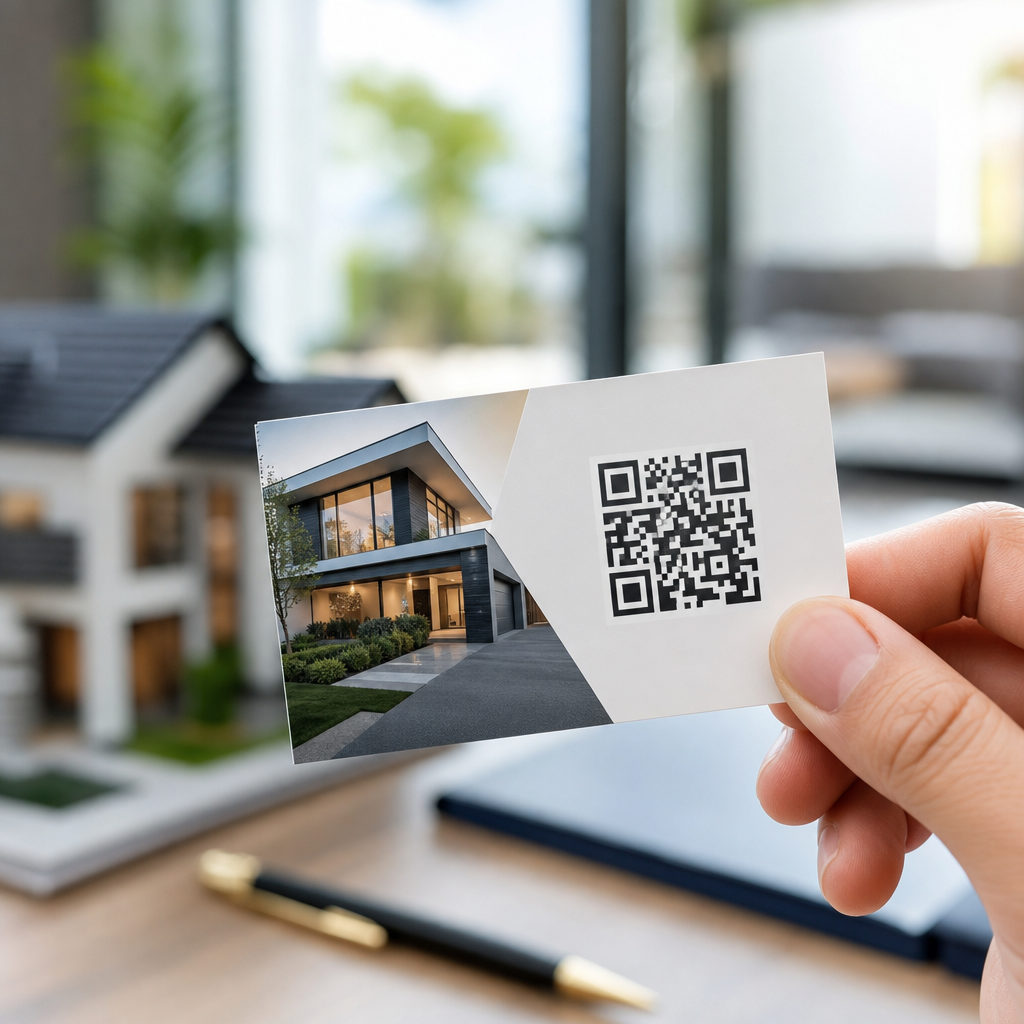
QR codes for real estate business cards turn a small printed square into a direct path from handshake to listing, calendar, contact card, or neighborhood guide. In real estate, where speed, trust, and follow-up determine who wins the client, that matters. A QR code is a scannable matrix barcode that opens digital content on a phone camera, while a real estate business card is still the fastest offline branding tool an agent carries. Combining them bridges print and digital without asking prospects to type a long URL, search your name, or remember which brokerage you mentioned at an open house.
I have used QR-enabled cards with agents, team leaders, and broker-owners, and the difference is practical rather than flashy: more saved contacts, more property page visits, and fewer lost leads after events. The best cards do one thing clearly and remove friction. Instead of sending every scan to a homepage, strong real estate QR codes direct buyers, sellers, investors, or referral partners to the next logical action. That may be a mobile landing page with featured listings, a digital business card, a home valuation form, or a scheduling link for consultations.
This matters because real estate marketing is local, relationship-driven, and time-sensitive. According to the National Association of Realtors, buyers and sellers rely heavily on mobile search, agent recommendations, and online listing information during decisions. A business card that instantly opens verified details supports all three. It also helps agents track performance, update destinations without reprinting when using dynamic QR codes, and keep branding consistent across signs, brochures, postcards, and listing presentations. As a hub topic, real estate includes residential, luxury, commercial, rental, relocation, and investor-focused use cases, each with different scan goals and compliance considerations.
What a Real Estate QR Code Business Card Should Link To
The best destination depends on audience and context. For a general networking card, I recommend a mobile-first profile page with your headshot, brokerage name, license details where required, tap-to-call button, saved contact file, recent listings, reviews, and links to neighborhood pages. For buyers at an open house, a property-specific landing page works better because it answers immediate questions: price, square footage, disclosures, financing options, and similar homes nearby. For sellers, the strongest conversion path is usually a home valuation form paired with recent local sales and a concise explanation of your pricing strategy.
Different real estate specialties need different intent paths. Commercial agents may send scans to an availability brochure, cap rate summaries, and lease contact forms. Luxury agents often benefit from a polished digital brochure with cinematic media, private showing request buttons, and concierge-style service details. Property managers can use cards that open rental applications, maintenance request portals, or owner onboarding pages. New construction representatives can route visitors to community maps, lot availability, model home tours, and lender incentive information. The QR code should not be generic; it should match the exact conversation that happened when the card changed hands.
One rule is universal: the landing experience must load fast and work on a phone. If the page is cluttered, asks for too much information, or hides your contact details below the fold, scans will not convert. I advise agents to lead with one primary action and two secondary actions. For example, “Save Contact” first, “View Listings” second, and “Book Consultation” third. This reduces decision fatigue and mirrors how prospects behave in the field, often while standing on a sidewalk, touring a property, or moving between conference sessions.
Static vs Dynamic QR Codes for Real Estate Marketing
Real estate professionals should understand the difference between static and dynamic QR codes before printing cards. A static QR code contains the final destination directly in the code. It is simple and often free, but if the URL changes, the code becomes outdated and the cards may need reprinting. A dynamic QR code uses a short redirect URL managed through a platform such as QR Code Generator Pro, Bitly, Beaconstac, Flowcode, or Uniqode. That lets you change the destination later, add campaign parameters, and view scan analytics.
In practice, dynamic codes are usually the better choice for real estate business cards because listings expire, branding evolves, and agents often need different destinations during a season. I have seen teams redirect the same card QR code from a personal bio page to a holiday relocation guide, then to a spring seller lead funnel, without reordering inventory. Analytics also matter. If a card handed out at a broker open generates twenty scans but no form fills, the issue may be the page design rather than the card itself. That insight helps refine messaging quickly.
| Option | Best For | Main Advantage | Limitation |
|---|---|---|---|
| Static QR code | Long-term contact pages | No ongoing platform dependency | Cannot change destination after printing |
| Dynamic QR code | Agents, teams, active listings | Editable links and scan tracking | Usually requires paid service for full features |
| vCard QR code | Fast contact saving | Adds details directly to phone contacts | Limited storytelling compared with a landing page |
| URL QR to landing page | Lead generation and branding | Supports listings, forms, reviews, and calls to action | Needs a well-built mobile page to convert |
For compliance-sensitive markets, dynamic platforms also make governance easier. A broker or marketing coordinator can update legal disclaimers, Fair Housing statements, office addresses, or team rosters centrally. That is valuable when agents transfer offices, assistants change, or a campaign is retired. The small subscription cost is usually justified by flexibility, especially for active producers who print premium cards and attend frequent events.
Design Best Practices That Improve Scans and Trust
A QR code business card succeeds when the design supports scanning and credibility at the same time. Size matters: keep the code large enough to scan comfortably, usually at least 0.8 inches square on a standard card, with sufficient quiet space around it. Contrast matters even more. Dark code on a light background is the safest choice. Highly stylized codes with embedded logos, gradients, or metallic finishes can work, but only if tested across iPhone and Android camera apps before printing. Matte coatings often scan more reliably than glossy finishes under bright open-house lighting.
Placement should follow attention patterns. Most agents do well with the QR code on the back, paired with a short instruction such as “Scan to save my contact and view listings.” That line sounds simple, but it increases action because people know what they will get. Avoid vague prompts like “Learn more.” In real estate, specificity builds trust. Include your full name, title, brokerage, phone, email, website, and license number where state rules require it. If you serve multiple counties or cities, naming the market can improve relevance and help referral partners remember your specialty.
Branding should support recognition without overpowering readability. Use the same colors, typography, and headshot style found on your signs, website, and social profiles. Consistency reduces friction when a prospect later sees your listing ad or email signature. If you work on a team, decide whether the QR code should route to the individual agent page or the team hub. I usually recommend the individual page for relationship-based introductions and the team page for conferences, recruiting, or broad farm-area outreach. The card should answer one question immediately: who are you, and what should the person do next?
Use Cases Across the Real Estate Funnel
Real estate is not one audience, so a hub article needs to map where business card QR codes fit across the funnel. At the awareness stage, agents use cards at chamber events, charity galas, builder expos, coffee meetings, and neighborhood festivals. Here, the goal is identity and recall, so a digital profile, review page, or market update signup works well. In the consideration stage, common settings include open houses, buyer consultations, listing appointments, investor meetups, and relocation presentations. The QR destination should answer practical questions and reduce follow-up delays.
At the decision stage, cards can reinforce urgency. A buyer’s agent may provide a QR code linking to mortgage calculator tools, showing-request scheduling, and a list of off-market opportunities. A listing agent may route sellers to a case study page with average days on market, staging before-and-after examples, and a contact form for pricing reviews. For past clients, a referral-oriented destination is often effective: home maintenance checklists, vendor recommendations, annual equity reviews, or a simple page explaining your referral process and service area.
Industry segments also shape execution. Residential resale focuses on lifestyle content, neighborhood guides, school information, and affordability context. Luxury real estate emphasizes privacy, cinematic visuals, and white-glove scheduling. Commercial real estate needs property data, tenant mix, zoning basics, lease abstracts, and investment metrics. Property management benefits from operational links such as owner statements, rental criteria, and maintenance forms. Because this page serves as a subtopic hub, every supporting article under real estate should connect back to a shared principle: the QR code must move a prospect to the next useful action faster than any manual alternative.
Measurement, Privacy, and Common Mistakes
Measurement is where QR codes become a business tool rather than a novelty. Track scans by source when possible: networking events, open houses, direct mail, print ads, and team members. Use campaign parameters in Google Analytics 4, review dashboard data from your QR platform, and compare scans with outcomes such as calls, saved contacts, showings, and listing appointments. I prefer monthly reviews because real estate volume fluctuates seasonally. A useful benchmark is not raw scans alone, but scan-to-action rate. Fifty scans with ten contact saves is stronger than two hundred scans with no meaningful engagement.
Privacy and compliance should be handled carefully. If your landing page captures personal data, use a clear form purpose, a privacy notice, and only the fields you truly need. If you display testimonials, follow advertising rules in your state and brokerage policy. If the destination includes mortgage or school information, present it responsibly and avoid implications that create fair housing concerns. Accessibility also matters. Use readable font sizes, descriptive buttons, and pages that function without forcing users into an app download.
The most common mistakes are easy to fix: linking to a desktop-only homepage, printing a tiny low-contrast code, using an expired listing URL, sending every audience to the same page, and failing to test the scan path on multiple devices. Start by scanning your own card in bright light, dim light, and from arm’s length. Then ask a colleague to do the same without explanation. If they hesitate or ask what happens after the scan, your card needs a clearer offer. Build one useful destination, test it, and put your next conversation one tap closer to conversion.
QR codes for real estate business cards work because they remove friction at the exact moment interest exists. A prospect meets you, sees a property, asks for market guidance, or wants to refer a friend, and the code turns that intent into immediate action. The core strategy is simple: choose a destination that matches the conversation, use a mobile-first page, prefer dynamic codes when flexibility matters, and design the card for readability and trust. When those elements line up, a business card stops being a reminder and starts acting like a measurable lead-generation asset.
For real estate specifically, the value extends across residential, luxury, commercial, rental, relocation, and investor segments. Buyers can save your contact and browse listings instantly. Sellers can request valuations without hunting for your website. Referral partners can confirm your service area and credentials in seconds. Teams can standardize branding and update destinations centrally. Because the medium is offline and the action is digital, QR-enabled cards also connect naturally with signs, brochures, postcards, and listing packets, creating a consistent experience throughout the client journey.
If you are building your real estate marketing hub, start with one card, one audience, and one clear next step. Test the scan, measure engagement, and refine the landing page before expanding to open houses, farming campaigns, and team-wide templates. A well-built QR code business card is inexpensive, practical, and effective when executed with precision. Put it into circulation, review the data monthly, and turn everyday introductions into trackable opportunities.
Frequently Asked Questions
1. Why should real estate agents put QR codes on business cards?
QR codes help real estate agents turn a simple business card into an immediate next step. Instead of hoping a prospect saves a phone number, types in a website correctly, or remembers to follow up later, the agent can give them a fast, friction-free way to act in the moment. With one scan, a potential buyer, seller, investor, or referral partner can open a property listing, save contact details, schedule a consultation, view testimonials, or access a neighborhood guide. That speed matters in real estate because interest is often highest right after a conversation, showing, open house, or chance introduction.
They also strengthen the connection between offline networking and digital marketing. Real estate is still a relationship-driven business, and business cards remain a practical, trusted tool at events, listing appointments, closings, and community gatherings. Adding a QR code makes that printed card more useful without changing its familiar format. It gives prospects a convenient path from handshake to action, which can improve lead capture, increase engagement, and support better follow-up. For agents trying to stand out in a crowded market, a QR code makes the card feel more current, more helpful, and more aligned with how people actually use their phones.
2. What should a QR code on a real estate business card link to?
The best destination depends on the agent’s goal, audience, and stage of the client relationship. For general networking, a digital contact card is often one of the smartest choices because it lets people instantly save the agent’s name, number, email, brokerage details, and website without manual typing. That reduces the chance of lost leads and makes follow-up easier. If the card is being used at an open house or buyer event, linking to a featured listing page, property search portal, or home valuation form may be more effective because it matches the prospect’s immediate interest.
Many agents also use QR codes to send people to a landing page that acts as a central hub. That page can include a short introduction, current listings, scheduling links, testimonials, social proof, neighborhood resources, and contact options all in one place. This approach is especially useful because it gives flexibility without forcing the card to do too much. Rather than linking directly to a homepage, which may be broad or distracting, a focused landing page gives the prospect a curated experience and a clearer call to action. The key is relevance: the destination should be mobile-friendly, easy to understand, fast to load, and designed to move the person toward a meaningful next step.
3. How do you design a real estate business card QR code so people will actually scan it?
A QR code needs to be easy to notice, easy to scan, and easy to trust. First, placement matters. The code should sit in a clean area of the card with enough white space around it so phone cameras can read it without interference from text or graphics. It should also be large enough to scan comfortably in real-world conditions. If it is too small, overly stylized, or crowded by design elements, scan performance can suffer. In most cases, clarity beats decoration. Branding can still be incorporated through color, logo integration, or surrounding design, but the code itself should remain highly functional.
Second, context matters just as much as appearance. People are more likely to scan when the card tells them exactly what they will get. A short call to action such as “Scan to save my contact info,” “Scan to view current listings,” or “Scan to book a home consultation” gives a clear reason to engage. That removes uncertainty and increases scan rates. It is also smart to test the card on multiple devices before printing in bulk. Agents should confirm the code works under different lighting conditions, with both iPhone and Android cameras, and that the destination page looks polished on mobile. A QR code that scans quickly and leads to something genuinely useful creates a better impression than one that simply exists as a novelty.
4. Are dynamic QR codes better than static QR codes for real estate business cards?
For most real estate professionals, dynamic QR codes are the more practical choice. A static QR code permanently points to one destination, which means if the linked page changes, the code itself cannot be updated. That can become a problem in real estate, where listings sell, landing pages change, campaigns evolve, and branding gets refreshed. A dynamic QR code lets the agent keep the printed card in circulation while updating the destination behind the scenes. That flexibility can save money on reprints and keep marketing materials useful for longer.
Dynamic codes can also provide tracking data, which is valuable for measuring performance. Depending on the platform, an agent may be able to see how often the code was scanned, when scans occurred, and sometimes where traffic came from. That makes it easier to evaluate whether a business card is driving listing views, appointments, or contact saves. While static codes can still work for evergreen destinations like a permanent digital contact card or main website, dynamic codes usually offer more control and better long-term marketing value. In a business where timing and responsiveness matter, being able to adapt without reprinting every card is a meaningful advantage.
5. What are the biggest mistakes to avoid when using QR codes on real estate business cards?
One common mistake is linking the code to a weak destination. If a prospect scans and lands on a cluttered homepage, a desktop-only page, a broken link, or content that does not match the conversation they just had, the opportunity can disappear quickly. The scan experience should feel intentional. Another mistake is failing to include a clear call to action. Without a short explanation of why someone should scan, many people will ignore the code. A business card has limited space, so every element should work hard, and the QR code should guide the prospect toward a specific benefit.
Other frequent problems include poor print quality, low contrast, tiny code size, and overdesigned visuals that make scanning unreliable. Agents should also avoid treating the QR code as a replacement for relationship building. The code supports follow-up; it does not replace trust, responsiveness, or a strong personal introduction. Finally, it is a mistake not to test and monitor results. Before handing cards out, scan the code repeatedly, check the page load speed, and make sure the destination reflects current branding and offers. After launch, review engagement and refine the destination if needed. The most effective QR codes are not just technically functional; they are aligned with the agent’s sales process and built to make the next step feel easy for the client.