
QR code personalization has moved far beyond swapping a destination URL, and one of the most useful techniques is customizing QR code destinations by location. In practice, that means one QR code can send a scanner in New York to a local store page, a scanner in Paris to a French landing page, and a traveler at an airport to a region-specific offer. I have implemented these campaigns for retail chains, event networks, and franchise operators, and the difference in conversion is usually immediate because the destination matches local intent. For businesses building advanced QR code strategies, location-based routing is the hub capability that connects localized content, campaign analytics, compliance rules, and customer experience into one system.
To understand why this matters, define the core terms clearly. A static QR code points to a fixed destination that cannot be changed after printing. A dynamic QR code points to a short redirect URL managed through a platform, allowing edits, rules, and tracking after deployment. Location-based destination logic uses a scanner’s geography, usually inferred from IP address, GPS permission, language settings, or predefined venue conditions, to decide where the user lands. QR code personalization is the broader discipline of tailoring the scan experience using context such as location, device type, time, language, campaign source, or audience segment. Location is often the best starting point because it is measurable, highly relevant, and easy for users to understand.
The business value is practical. Localized destinations increase relevance, reduce friction, and support operational consistency across regions. A restaurant group can route users to the nearest menu, ordering app, or reservation page. A manufacturer can direct scans to country-specific warranty terms and regulatory disclosures. A museum can use one code on printed materials while sending local visitors to ticketing and international visitors to a multilingual guide. This article serves as the central resource for QR code personalization within advanced QR code strategies, showing how location rules work, where they deliver value, what tools support them, and how to structure campaigns that scale without creating reporting chaos.
How location-based QR destination routing works
Location-based routing starts with a dynamic QR code. When someone scans, the code opens a managed short link on a routing server. That server checks one or more signals before redirecting the visitor to the final destination. The most common signal is IP geolocation, which maps the user’s network address to a probable country, region, or city using databases from providers such as MaxMind or IP2Location. Accuracy is usually strong at the country level, mixed at the city level, and weaker when mobile networks, VPNs, or corporate gateways mask true location. For high-stakes use cases, I treat city routing as a convenience feature and country routing as the dependable baseline.
More advanced systems combine location with other context. A platform may detect device operating system and send iPhone users to the App Store while also selecting the nearest regional app listing. It may use browser language to break ties when a traveler scans abroad. It may apply fallback rules, such as sending unknown locations to a global page rather than generating an error. Enterprise QR management tools, customer data platforms, and link routers commonly support this logic through conditional redirects, rule priority, and analytics tagging. Bitly, Scanova, Flowcode, Beaconstac, and enterprise web stacks built on Cloudflare Workers or AWS Lambda can all support variants of this model when configured correctly.
The key architectural principle is separation of code from destination. Print the QR code once, then control the destination centrally. That preserves packaging, signage, direct mail, and in-store displays while allowing updates by market. It also supports internal linking across the wider QR code personalization program. For example, a location-aware QR can route to pages that are also personalized by language, inventory availability, loyalty status, or event schedule. When teams understand this architecture early, they avoid the expensive mistake of printing static codes tied to pages that will become outdated or irrelevant by region.
Best use cases for QR code personalization by location
The strongest use cases share one trait: the user’s location materially changes what they need next. Retail is the clearest example. A poster for a national promotion can route shoppers to the closest store locator, local inventory page, or region-specific discount. If a chain has different product availability in Texas and Ontario, location-based routing prevents the frustration of advertising an item that cannot be purchased nearby. I have seen this reduce bounce rates on QR campaign traffic because users do not need to reselect their country, store, or currency after the scan.
Franchise and multi-location businesses also benefit. Real estate firms can place a single QR code on yard signs but direct prospects to the correct agent page based on scan location. Fitness brands can route visitors to the nearest club timetable. Healthcare systems can send patients to region-specific intake forms, physician directories, or telehealth eligibility pages. In each case, the personalized destination shortens the path from interest to action. The same approach works for tourism, higher education, transportation hubs, and public sector services where local information determines usefulness.
Packaging and cross-border commerce introduce another high-value category. Consumer brands selling in multiple markets often need country-specific pages for language, legal notices, promotions, and authorized resellers. One QR code on the package can route to the right country experience while preserving a consistent global design. This is especially useful when regulations differ by market, such as nutrition disclosures, recycling instructions, or product registration requirements. Event organizers use similar logic for venue maps, emergency guidance, agenda updates, and sponsor offers that vary between cities.
| Use case | Location rule | Destination example | Main benefit |
|---|---|---|---|
| Retail signage | Nearest city or state | Local store page with inventory | Higher purchase intent |
| Product packaging | Country | Localized product info and compliance page | Lower legal and support risk |
| Events | Venue or metro area | Local schedule, map, and offers | Better attendee experience |
| Franchises | ZIP or region | Nearest branch booking page | Faster lead routing |
How to build a scalable location-aware QR strategy
Start with destination planning, not code generation. List the pages or app endpoints that need to exist for each region, then standardize naming conventions, analytics parameters, and fallback behavior. If your U.S. pages use /us/, your Canadian pages use /ca/, and your French pages use /fr-fr/, document that pattern before launch. I recommend creating a routing matrix that maps every target market to a final URL, preferred language, campaign tag, and exception rule. This becomes the operational source of truth for marketing, web, analytics, and compliance teams.
Next, choose the routing layer. Smaller teams can use a dynamic QR platform with built-in geolocation rules. Larger organizations often prefer a managed redirect service on their own domain for governance, first-party analytics, and security control. Whichever path you choose, configure testing in real conditions. Do not assume office Wi-Fi represents customer behavior. Test on mobile data, across operating systems, with VPNs off and on, and from multiple regions using tools such as GeoPeeker, BrowserStack, Charles Proxy, or VPN-based validation. Confirm that users who cannot be confidently geolocated still reach a useful page.
Measurement is where many QR personalization projects fail. Track scans separately from successful redirects and final conversions. A high scan count with weak regional conversion usually points to poor destination match, slow load time, or location errors. Use UTM parameters, server logs, and event analytics in GA4, Adobe Analytics, or Mixpanel to compare location cohorts. Also monitor operational metrics: redirect latency, destination uptime, and rule conflicts. If a campaign spans many markets, assign owners for content updates and sunset rules. Scalable QR code personalization is less about the code image and more about disciplined destination management.
Limitations, privacy, and optimization best practices
Location-aware QR campaigns are powerful, but they are not perfect. IP geolocation can misclassify users near borders, on cellular networks, or behind privacy tools. Travelers may prefer content from their home country rather than their current location. Some users will deny precise location access if prompted, and many scans happen in low-connectivity environments where redirects need to resolve quickly. Because of these constraints, the best practice is to use location as a strong hint, not an infallible identity marker. Always provide a visible way to change region manually after arrival.
Privacy and legal compliance matter, especially when routing influences pricing, offers, or regulated disclosures. Publish a clear privacy notice, minimize data retention, and avoid collecting more location detail than the use case requires. Country-level routing is often enough. If you operate in jurisdictions affected by GDPR, CPRA, or sector-specific rules, review whether geolocation data counts as personal data in your implementation and ensure vendors have appropriate processing terms. Security also matters: use HTTPS, protect redirect rules with role-based access, and audit changes so unauthorized edits cannot hijack printed QR traffic.
Optimization should focus on relevance, speed, and clarity. Keep destination pages lightweight, localized, and aligned with the context of the scan. If someone scans shelf signage, they should land on a product or store page, not the homepage. If someone scans packaging, prioritize instructions, support, and registration before promotional clutter. Use concise local headlines, local currency, store availability, and click targets sized for mobile. Review search query data, on-page behavior, and conversion paths to refine routing rules over time. To strengthen your advanced QR code strategies, treat this article as the hub for QR code personalization, then build connected workflows for language targeting, device targeting, timed campaigns, and first-party analytics. Start with one high-impact market, document the results, and expand only after the routing, reporting, and privacy controls are proven in production.
Frequently Asked Questions
What does it mean to customize QR code destinations by location?
Customizing QR code destinations by location means using one QR code that routes people to different landing pages, offers, or experiences based on where they scan. Instead of assigning a single fixed URL to every scan, you set up location-based routing rules behind a dynamic QR code. When someone scans in one city, state, country, venue, or sales territory, they are automatically directed to the version of the destination that makes the most sense for that place.
In practical terms, this could mean sending users in New York to a Manhattan store page, users in Paris to a French-language promotional page, and airport travelers to a region-specific offer tied to that terminal or market. This is especially valuable for retail chains, franchises, events, tourism campaigns, and multi-location businesses that want to keep printed materials consistent while still delivering highly relevant digital experiences. It improves user experience because people do not have to search for the correct local page after scanning, and it improves campaign performance because the destination is more aligned with local inventory, language, pricing, and audience intent.
The key distinction is that the QR code itself stays the same, but the destination logic changes in the background. That flexibility is what makes location-based QR personalization so powerful. It allows marketers to maintain brand consistency, reduce printing complexity, and optimize conversion rates without replacing physical signage, packaging, posters, or displays every time a regional campaign changes.
How do location-based QR code redirects actually work behind the scenes?
Location-based QR code redirects typically rely on a dynamic QR code management platform. The QR code points to a short tracking URL rather than directly to a final destination page. When a person scans the code, the platform captures available scan data, such as approximate geographic location based on IP address, device settings, language preferences, time of scan, and sometimes campaign source details. It then applies predefined routing rules to decide which URL to load.
For example, you might create rules such as: send scans from the United States to a U.S. campaign page, route scans from France to a French-language page, direct scans within a certain radius of a specific venue to an event microsite, or display a distributor page for users in a franchise territory. More advanced setups may combine location with additional conditions, such as device type, scan time, or inventory availability. A traveler scanning the code in an airport on a weekend might see a different message than a local customer scanning from a downtown storefront on a weekday.
Most platforms do not use exact GPS coordinates unless the user explicitly grants permission in a browser or app, so routing is often based on inferred geographic data rather than precise real-time positioning. That level of location data is usually sufficient for country, region, city, or local campaign targeting. The process happens in seconds, and from the user’s perspective it feels seamless. They scan once and arrive at a page that feels intentionally built for their location, even though the printed QR code is identical everywhere.
What are the biggest benefits of using one QR code for multiple regional destinations?
The biggest benefit is relevance. When users land on a page that reflects their language, nearest location, local promotion, or market-specific content, they are far more likely to engage and convert. A location-aware destination reduces friction, which is one of the main reasons QR campaigns underperform when they are too generic. If someone scans a code in a local store and lands on a national homepage instead of a page for that branch, that extra effort often causes drop-off.
Another major advantage is operational efficiency. Businesses with many locations can print one version of a QR code across packaging, point-of-sale displays, direct mail, in-store signage, event booths, and franchise materials while controlling the scan experience centrally. That reduces design variation, reprint costs, and coordination issues across teams. If a regional offer changes, a local page goes offline, or a campaign needs to be updated quickly, you can change the routing rules in the platform without touching the printed asset.
There are also strong measurement benefits. Location-based QR campaigns generate more meaningful scan analytics because you can compare performance by city, market, venue, or region. That makes it easier to identify which locations are driving the highest engagement, where certain offers are working best, and which local landing pages need improvement. For chains, event organizers, and franchise systems, this kind of insight is extremely useful because it turns a simple QR scan into a source of location-level marketing intelligence.
What should businesses consider before launching a location-based QR code campaign?
Before launching, the most important consideration is destination strategy. It is not enough to route scans by geography if the pages themselves are not genuinely localized. Each destination should reflect the user’s market in a useful way, whether that means language, local store details, inventory, hours, pricing, contact information, event schedules, or regional offers. If every page looks almost identical and provides little local value, the routing logic may not produce much of a performance lift.
Businesses should also think carefully about routing rules and fallback behavior. Geographic data is not always perfect, so every campaign should include sensible default destinations in case a scan cannot be confidently matched to a location. For example, a national page with a store locator may be a better fallback than an irrelevant regional page. It is also wise to test scans from multiple cities, countries, network types, and devices before going live to make sure users are being sent to the intended destinations.
Privacy and compliance matter as well. While most location-based routing relies on approximate location rather than personally identifiable information, brands should still use reputable platforms, understand what scan data is collected, and ensure their campaign experience aligns with local privacy expectations and regulations. Finally, speed is critical. If a redirect chain is too slow or the landing page is poorly optimized for mobile, the benefit of personalization can be lost. A successful location-based QR campaign depends on fast delivery, accurate routing, strong mobile landing pages, and ongoing monitoring after launch.
How can you measure whether customizing QR code destinations by location is improving results?
The most effective way to measure success is to compare performance at both the scan level and the conversion level. Start by tracking basic QR metrics such as total scans, unique scans, scan location, device type, and time of scan. Then connect those scans to meaningful outcomes, including store page visits, coupon redemptions, appointment bookings, ticket sales, form submissions, purchases, or calls. The real value of location-based customization shows up when localized destinations outperform generic ones on these downstream actions.
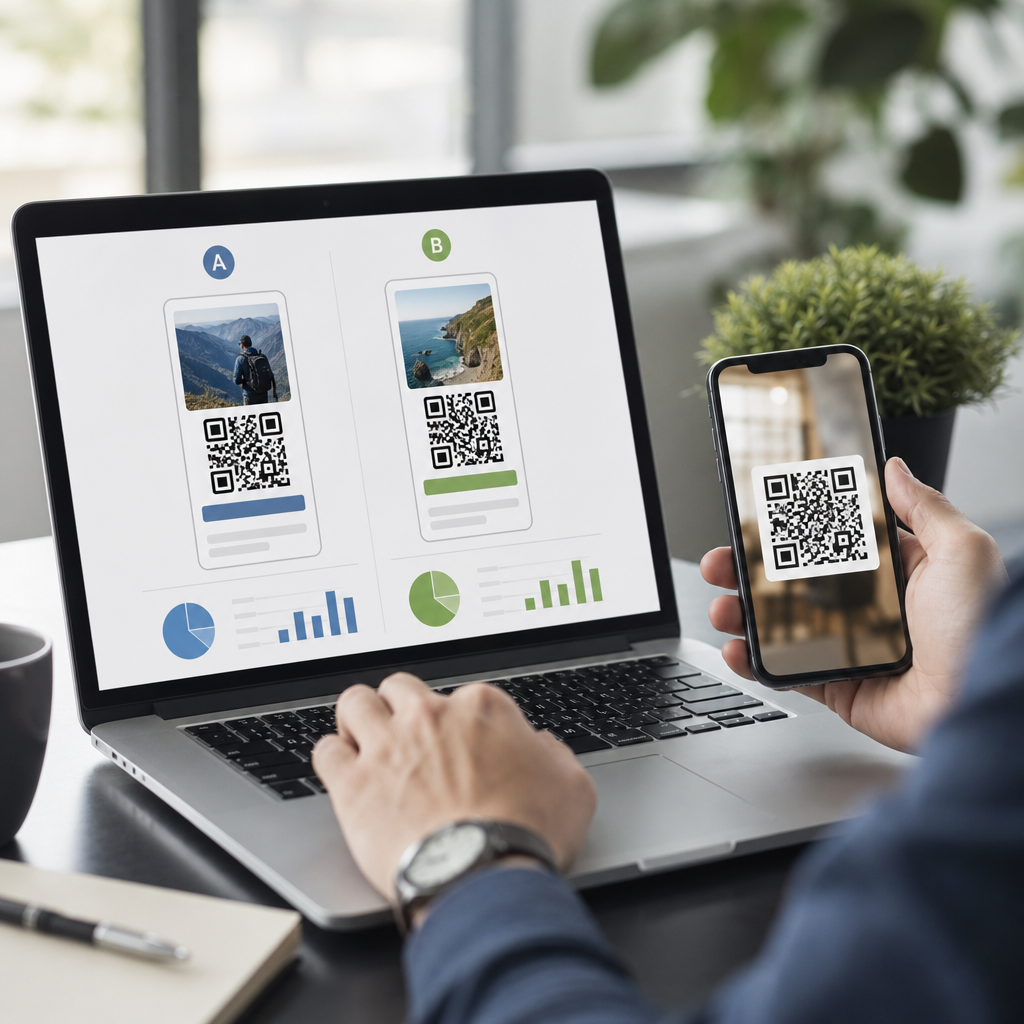
A strong measurement approach often includes A/B comparison. For example, you can compare a location-personalized QR campaign against a standard single-destination QR campaign across similar placements or markets. If the localized version shows higher click-through rates, lower bounce rates, longer session times, or stronger conversion rates, that gives you clear evidence that regional relevance is making a difference. In many campaigns, the conversion lift appears quickly because users are reaching the right content faster.
It is also useful to review results by market rather than only in aggregate. One region may respond strongly to store-specific pages, while another performs better with local promotions or language localization. That insight helps refine your routing rules over time. The best campaigns are iterative: monitor scan behavior, identify weak destinations, improve local pages, and adjust routing logic based on actual usage patterns. When measured properly, location-based QR customization becomes more than a convenience feature. It becomes a practical optimization tool for increasing engagement, improving customer experience, and generating better returns from physical marketing assets.