QR codes for account-based marketing (ABM) give revenue teams a measurable way to connect physical touchpoints with highly personalized digital journeys. In ABM, marketing and sales focus resources on a defined set of target accounts rather than broad lead volume. QR code personalization means generating codes, destinations, messages, and post-scan experiences that change by account, segment, contact role, campaign stage, or even individual recipient. This matters because enterprise buying is complex: multiple stakeholders interact across direct mail, events, field sales, packaging, and digital channels. A generic landing page wastes that context. A personalized QR code can route a finance leader to ROI proof, send a technical evaluator to implementation details, or alert an account executive that a buying committee member engaged with a leave-behind. I have seen response rates improve when the code is treated as an account-specific gateway, not a decorative shortcut. Used correctly, QR codes support attribution, sales alignment, and buying-group orchestration. They turn offline moments into data-rich signals and help teams tailor outreach with precision while maintaining the convenience users expect from a simple scan.
What personalized QR codes mean in ABM
Personalized QR codes in ABM are not just different images for different prospects. The real value comes from identity, context, and routing. At the simplest level, each code can map to a unique URL with UTM parameters tied to an account, campaign, owner, and asset. More advanced programs use dynamic QR codes, which allow the destination to be changed after print, preserving the same code while updating the experience. That flexibility matters when a sales cycle moves from awareness to evaluation, or when one executive leaves and another becomes the champion.
In practice, personalization happens at several layers. The visible layer is design: brand colors, frames, logos, or short CTA text such as “See your rollout plan.” The data layer is more important. A scan can identify the source package, event booth handout, regional field campaign, or named-account sequence. The experience layer then delivers account-specific content: a microsite with the prospect’s company name, a case study from the same industry, regional compliance notes, or a calendar link to the assigned seller. This is what makes QR codes useful in ABM rather than simply trackable in marketing.
Teams often ask whether account-specific codes are intrusive. The answer depends on execution. A code should reveal relevance, not surveillance. “Explore solutions for healthcare operations teams” feels helpful. “We know you are evaluating vendor consolidation” can feel uncomfortable unless the relationship is already established. Good ABM personalization uses known firmographic and journey-stage signals to reduce friction without violating trust.
Where QR code personalization fits across the ABM lifecycle
QR codes are most effective when mapped to buying stages and channels. In early-stage account engagement, they work well in dimensional mailers, executive event invitations, print ads in niche industry publications, and conference signage. A personalized code can open a short landing page tailored to the account’s vertical, introducing the value proposition in language that matches likely priorities. For a manufacturing account, that might emphasize downtime reduction; for a financial services account, auditability and risk controls.
During active opportunity development, QR codes become practical sales enablement tools. I have used them on one-pagers, solution briefs, tabletop cards at executive dinners, and booth follow-up kits. The destination can be a curated resource center for that account, including implementation timelines, security documentation, integration diagrams, and reference stories. Because scans are timestamped, teams can see which materials resonated and whether engagement is spreading across the buying group.
Post-sale, personalized QR codes support expansion and customer marketing. Customer success teams can place them in onboarding packets, training materials, or hardware packaging to route users to role-based enablement hubs. For ABM programs focused on land-and-expand motions, this matters. Usage by a new department, geography, or product line can become a signal for cross-sell. The same mechanics that help win an account can help grow it after signature.
How to build a personalized QR code strategy that sales will use
A workable strategy starts with account selection and use-case definition, not design software. Choose a narrow set of target accounts or a single segment, then define one behavior you want to influence. Examples include booking executive meetings after direct mail, increasing engagement with an event follow-up page, or accelerating technical validation with tailored documentation. If the objective is vague, the QR code will be too.
Next, define the routing logic. Dynamic QR platforms such as Bitly, QR Code Generator Pro, Flowcode, Beaconstac, and Uniqode allow centralized destination management and scan analytics. Connect those scans to CRM and marketing automation systems like Salesforce, HubSpot, Marketo, or Pardot through native integrations, webhooks, or middleware such as Zapier and Workato. The destination URL structure should be standardized. Consistent naming conventions for account ID, campaign ID, asset type, and owner prevent reporting chaos later.
Sales adoption depends on simplicity. Reps will use personalized QR codes when the workflow is fast and the payoff is obvious. Create templates for common motions: direct mail follow-up, conference leave-behind, executive briefing packet, and customer expansion kit. Each template should define the CTA, landing page modules, owner notification rules, and success metric. If a rep needs twenty manual steps to request a code, the program will stall. If they can choose an account, select a template, and receive a ready-to-print asset with a tracked destination, adoption rises sharply.
| ABM use case | Personalization element | Recommended destination | Primary metric |
|---|---|---|---|
| Executive direct mail | Account name, industry proof, assigned rep | Short microsite with business case and meeting link | Meeting booked rate |
| Event follow-up | Session attended, product interest, region | Recap page with relevant assets and demo CTA | Post-event engagement |
| Sales leave-behind | Role-specific messaging, opportunity stage | Resource hub with technical and ROI content | Multi-stakeholder scans |
| Customer expansion | Installed products, team function, adoption maturity | Training or cross-sell experience | Expansion pipeline influenced |
Personalization tactics that actually improve conversion
The strongest tactic is destination personalization, because it affects what the scanner sees immediately. A landing page should reflect the account’s context in the headline, proof points, and next step. I recommend building modular pages where the hero text, customer logos, case study block, CTA, and supporting resources change by account segment or industry. This can be done in CMS platforms and landing page tools without creating hundreds of fully bespoke pages. The page should load quickly, be mobile-first, and ask for minimal effort. On a phone, a long form is a conversion killer.
The second tactic is role-based relevance. ABM succeeds when content matches committee concerns. A CIO may need architecture and security information; a CFO wants payback period and total cost of ownership; an operations leader needs implementation risk and workflow impact. One printed asset can use a single QR code that leads to a smart page offering role tabs or route selection. This respects the reality that materials circulate internally after the first recipient scans.
Timing also matters. Dynamic codes make it possible to change the destination based on campaign window or opportunity stage. Before a trade show, the same code can invite meetings. During the event, it can show booth demos and session times. After the event, it can switch to a recap page and follow-up CTA. This continuity preserves printed materials while aligning the digital experience to current intent.
Finally, use progressive profiling carefully. If the account is known, reduce form friction and rely on CRM enrichment. If the visitor is unknown, ask for one next step, not a full qualification survey. The goal of personalized QR codes in ABM is to create momentum, not paperwork.
Measurement, governance, and privacy considerations
ABM leaders should measure personalized QR codes beyond raw scans. Scans are an engagement signal, not the outcome. Useful metrics include unique scanners by account, buying-group penetration, meeting conversions, influenced opportunities, pipeline velocity, and expansion revenue. Compare QR-assisted campaigns against similar non-QR motions to isolate lift. In my experience, the most revealing KPI is whether scans broaden engagement across roles. When a technical validator and economic buyer both interact from the same account, sales usually gets a clearer path forward.
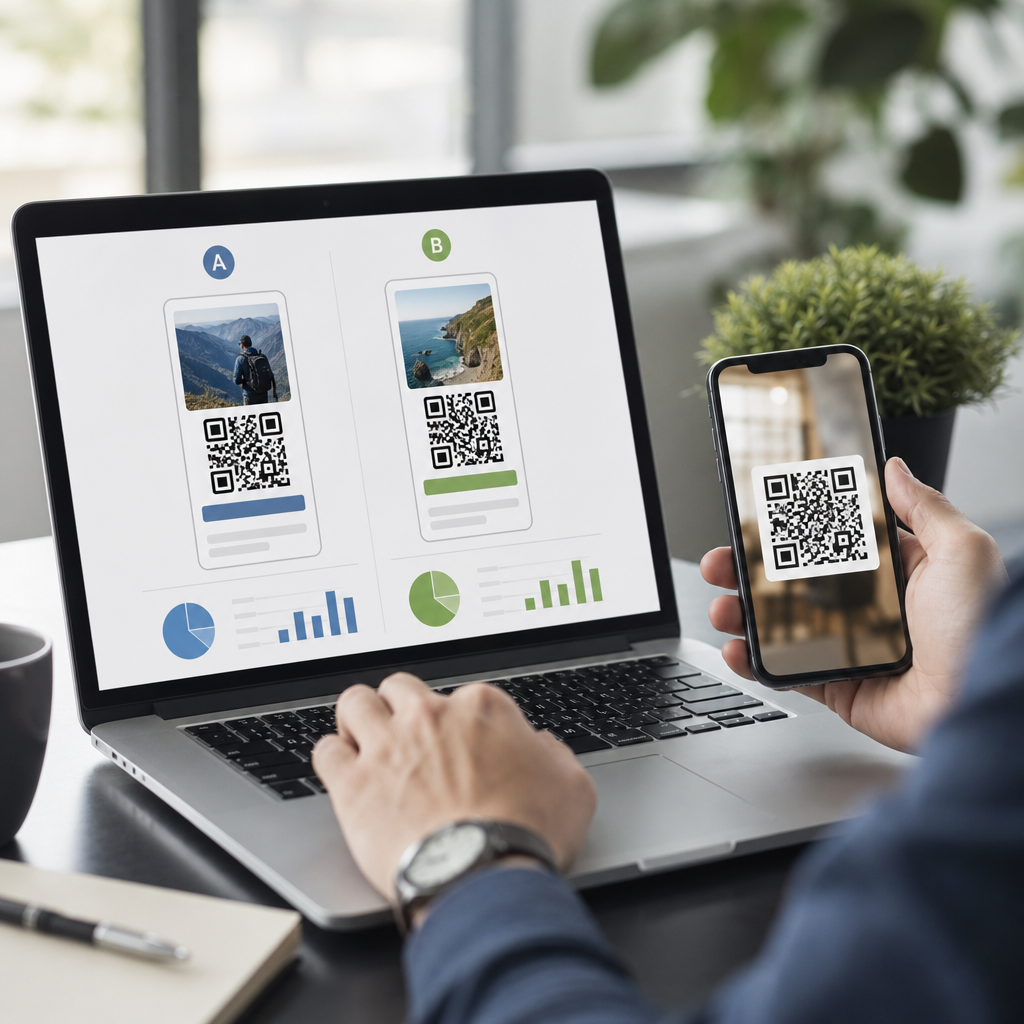
Attribution should be designed before launch. Use consistent campaign taxonomy, first-party analytics, and CRM campaign membership rules. Many teams also append UTMs to dynamic URLs, then reconcile scan events with web analytics in Google Analytics 4 or Adobe Analytics. For account-level reporting, the important question is not “How many scans did we get?” but “Which target accounts progressed because this touchpoint reduced friction?”
Privacy and compliance cannot be an afterthought. A QR scan by itself may be anonymous, and that is often appropriate. If you tie scans to named individuals through prefilled parameters, email matching, or authenticated portals, ensure lawful basis, transparent disclosures, and data minimization. Enterprise buyers are sensitive to over-personalization. Strong governance includes expiration rules, access controls, approved copy blocks, and a review process for regulated industries such as healthcare and financial services.
Common mistakes and how to avoid them
The most common mistake is sending every target account to the same generic page. That destroys the value of ABM and makes measurement shallow. Another frequent error is prioritizing visual novelty over scannability. Customized codes still need sufficient contrast, quiet zone spacing, and error correction. Test on multiple devices, lighting conditions, and print sizes before distribution. A beautiful code that fails under conference hall lighting is useless.
Teams also fail when they do not coordinate with sales. If alerts are noisy, destinations are outdated, or follow-up motions are unclear, scan data goes unused. Build service-level expectations: who is notified, how quickly they respond, and what playbook they use. Finally, avoid overbuilding. Start with a small number of high-value use cases, prove conversion lift, then expand into broader account coverage and customer programs.
QR codes for account-based marketing work best when personalization extends from the printed asset to the full account experience. The code is only the trigger; the real impact comes from routing target accounts to relevant content, capturing meaningful engagement signals, and giving sales a simple way to act on intent. For organizations building advanced QR code strategies, this subtopic deserves hub-level attention because it connects direct mail, events, field marketing, sales enablement, and customer expansion in one measurable system. Start with dynamic codes, clear naming conventions, mobile-first landing pages, and a handful of named-account templates. Then add role-based content, stage-aware routing, and CRM-connected reporting. When every scan answers a specific account need, QR code personalization becomes more than tracking. It becomes a reliable ABM lever that shortens cycles, improves buying-group engagement, and makes offline interactions visible. Audit one current ABM campaign, replace the generic destination with an account-specific QR journey, and measure the difference.
Frequently Asked Questions
1. How do QR codes support an account-based marketing strategy?
QR codes support account-based marketing by creating a direct, measurable bridge between offline engagement and personalized digital experiences for specific target accounts. In ABM, the goal is not to generate the highest possible number of leads, but to influence buying committees within a carefully selected list of accounts. QR codes make that easier by allowing revenue teams to place a trackable entry point on direct mail, event materials, executive gifts, sales leave-behinds, printed one-pagers, field marketing signage, packaging, and other physical touchpoints. When a recipient scans, the experience can be tailored to the account, industry, persona, buying stage, or campaign motion.
That personalization is what makes QR codes especially valuable in ABM. Instead of sending every prospect to the same generic landing page, teams can route each scan to a destination designed for that account’s priorities, such as a custom case study, personalized microsite, meeting scheduler, demo page, ROI calculator, or executive message. This improves relevance and helps both marketing and sales continue a coordinated conversation. It also gives teams data they often struggle to capture from physical outreach, including who scanned, when they engaged, what asset they viewed, and whether they moved deeper into the funnel. As a result, QR codes become more than a convenience tool; they become a measurable engagement mechanism that helps align campaign execution, sales follow-up, attribution, and account progression.
2. What does QR code personalization look like in an ABM campaign?
In an ABM campaign, QR code personalization goes far beyond adding a scannable image to printed material. It usually involves customizing one or more elements of the experience based on the account being targeted. The code itself may be unique to an individual account, a segment of similar accounts, a specific contact within an account, or a campaign stage. The destination URL can then resolve dynamically, meaning different people can arrive at different content depending on the context of the campaign. For example, a CIO at a healthcare enterprise might scan a direct mail piece and land on a page focused on security, compliance, and integration, while a finance stakeholder at a manufacturing account could be directed to content centered on efficiency, risk reduction, and return on investment.
Personalization can also include custom messaging, branded landing pages, personalized videos, tailored calls to action, pre-filled meeting forms, account-specific offers, regional event invitations, or content mapped to buying committee roles. More advanced programs may adapt the post-scan experience using CRM, marketing automation, or intent data so the destination reflects the account’s engagement history or known interests. This is particularly important because enterprise buying decisions involve multiple stakeholders, and each one needs a message that speaks to their responsibilities and concerns. Effective QR code personalization in ABM helps teams treat every scan not as a generic website visit, but as an opportunity to deliver a more relevant, timely, and account-aware journey that supports progression toward a deal.
3. Where should companies use QR codes in account-based marketing programs?
Companies should use QR codes anywhere physical interaction can reinforce a coordinated account-based motion. One of the most effective places is direct mail, where QR codes can connect personalized packages, letters, dimensional mailers, and executive outreach to digital follow-up experiences. They also work well at events, trade shows, private dinners, roadshows, customer advisory boards, and field marketing activations, where account-specific QR codes can drive attendees to tailored agendas, meeting booking pages, solution content, or post-event nurture assets. Sales teams can use them in printed collateral, proposal packets, presentation decks, one-sheets, and even business cards when they want to continue the conversation with a customized next step.
Beyond those common applications, QR codes can also be highly effective in partner co-marketing, account-based gifting, office drop-offs, product packaging, and customer expansion campaigns. For example, a customer success team targeting cross-sell opportunities within a strategic account could include a QR code in a quarterly business review handout that links to a curated adoption dashboard or executive value summary. The best placement depends on where target accounts are already interacting with your brand and where a low-friction transition into digital engagement would be most useful. The key is to avoid using QR codes as isolated tactics. In strong ABM programs, they are integrated into a broader orchestration strategy so that every scan supports a specific account objective, whether that is creating awareness, booking meetings, re-engaging stalled opportunities, accelerating consensus, or expanding existing relationships.
4. How can teams measure the performance of QR codes in ABM?
Teams can measure QR code performance in ABM by tracking both immediate engagement metrics and downstream account impact. At the most basic level, teams should monitor scans, unique scans, scan timing, device type, location patterns where appropriate, landing page visits, content consumption, form completions, meeting bookings, and conversions. However, ABM success is rarely determined by volume metrics alone. What matters more is whether the right accounts engaged, whether key stakeholders within those accounts interacted with the experience, and whether that engagement contributed to movement in the sales process. That means QR code data should be connected to CRM and marketing automation systems so scans can be tied back to target account records, contacts, opportunities, and campaign influence reporting.
The most useful ABM measurement framework looks at account-level outcomes. Teams should ask questions such as: Did the target account engage after receiving the physical asset? Did new members of the buying committee become active? Did the scan lead to a meeting, demo, proposal review, or expanded opportunity discussion? Did deal velocity improve for accounts exposed to the QR-driven campaign compared with similar accounts that were not? Because ABM is focused on quality of engagement and revenue impact, QR code reporting should also be analyzed by account tier, persona, campaign stage, and channel. This helps teams understand not just whether the code was scanned, but whether the personalization strategy and follow-up motion were effective. When measured properly, QR codes can provide valuable insight into offline-to-online attribution, account intent, and the real contribution of physical campaigns to pipeline and revenue.
5. What are the best practices for using QR codes effectively in ABM?
The best practices for using QR codes effectively in ABM start with strategic alignment. Every QR code should have a clear role in the account journey, not just a generic destination. Before launching, teams should define the target account list, the audience within each account, the campaign objective, and the desired post-scan action. From there, they should build personalized destinations that match the recipient’s context, such as industry, persona, opportunity stage, or recent engagement history. It is also important to keep the user experience simple. The landing page should load quickly, work well on mobile devices, and immediately confirm relevance through personalized copy, useful content, and a clear next step. If a user has to guess why they scanned or what to do next, performance will suffer.
Operational discipline matters just as much. Teams should use dynamic QR codes whenever possible so destinations can be updated without reprinting materials, and they should apply consistent tracking parameters to support attribution and reporting. Collaboration between marketing, sales, operations, and, in some cases, customer success is critical so scans trigger the right follow-up and insights are shared across the revenue team. It is also wise to test design, placement, message framing, and calls to action before rolling out at scale. The code must be easy to scan, visually integrated into the asset, and paired with a compelling reason to act, such as accessing an account-specific resource or scheduling an executive conversation. Finally, organizations should respect privacy and data governance requirements, especially when personalization becomes highly granular. The most successful ABM teams use QR codes not as novelty items, but as well-orchestrated engagement tools that combine relevance, measurability, and seamless progression from physical touchpoint to meaningful account action.