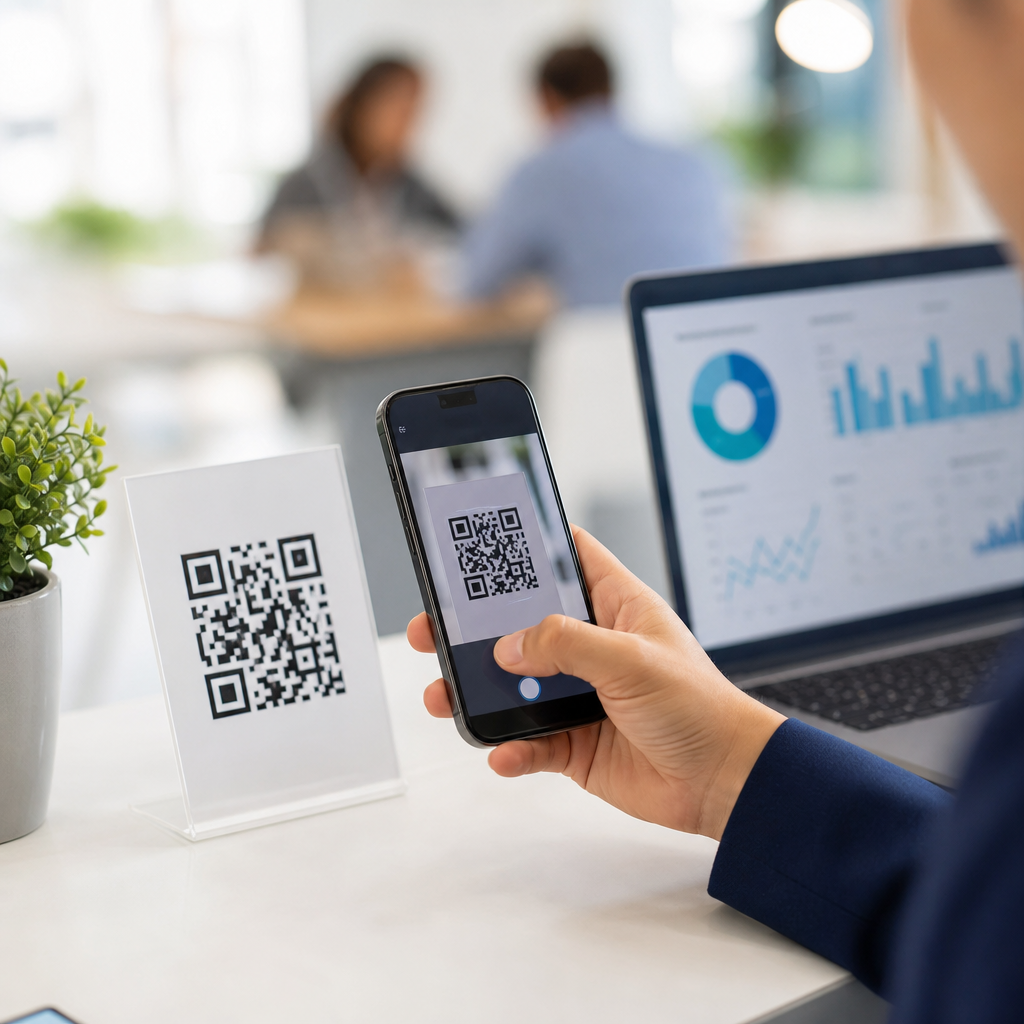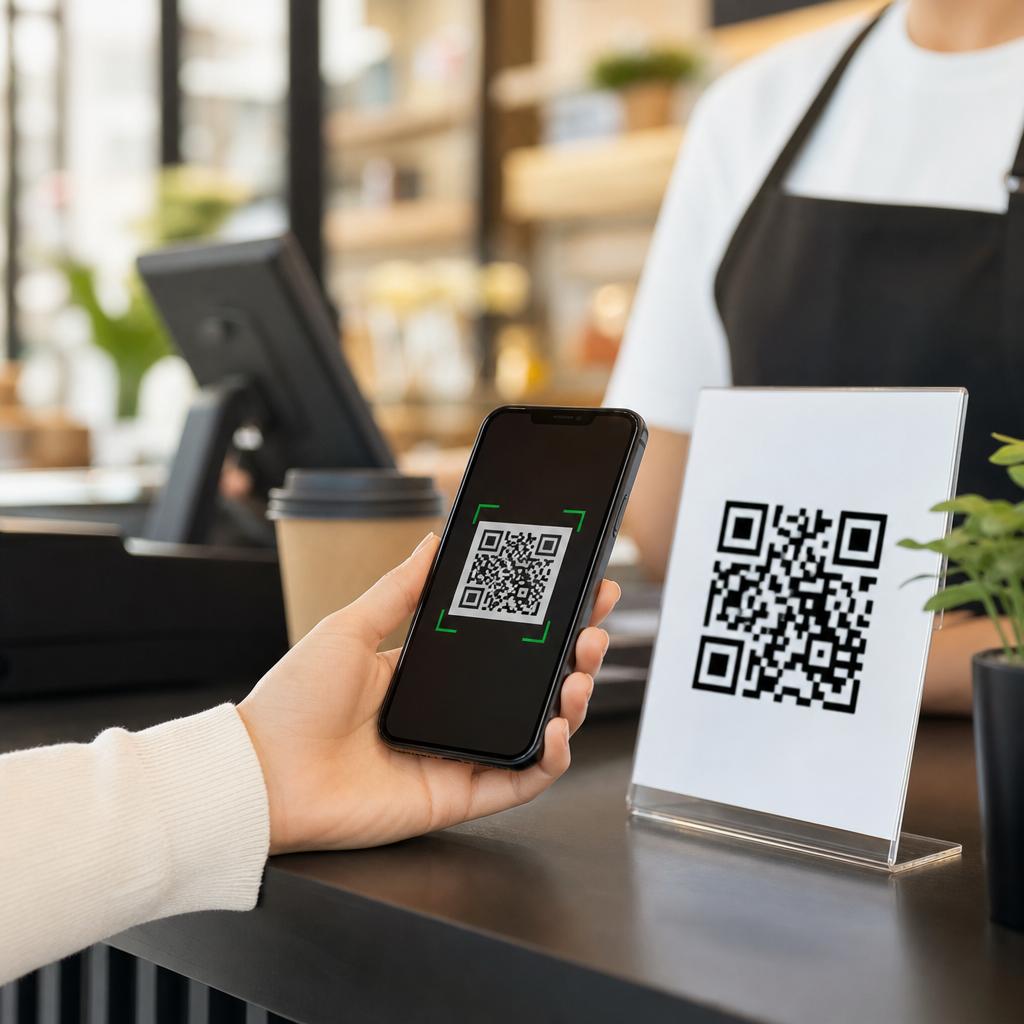
QR codes have moved from novelty to infrastructure because they shorten the path between physical attention and digital action. For brands, that matters: every printed package, storefront window, event badge, receipt, menu, direct-mail piece, or product display can become a measurable mobile entry point. When marketers ask how brands use QR codes to drive mobile traffic, they are really asking how to convert offline visibility into website visits, app opens, lead captures, product views, and purchases with as little friction as possible.
A QR code, or quick response code, is a two-dimensional barcode that a smartphone camera can scan. The scan triggers an action, most commonly opening a landing page in a mobile browser, but it can also launch an app, save contact details, start a payment flow, download a file, or initiate a text message. Dynamic QR codes, which redirect through a managed URL, are especially valuable because brands can change the destination after printing and collect scan analytics such as time, location, device type, and campaign source.
I have worked on QR campaigns for retail packaging, restaurant chains, trade-show booths, and local service businesses, and the pattern is consistent: QR codes perform best when the value exchange is immediate and obvious. “Scan to learn more” is weak. “Scan for today’s menu,” “scan for setup instructions,” or “scan to claim 15% off” is concrete. The code itself is not the strategy. The strategy is matching user intent, context, and landing-page experience so the scan feels like the fastest route to something useful.
That is why common use cases matter. Brands do not use QR codes in one generic way; they deploy them differently across packaging, out-of-home ads, events, in-store displays, print media, customer support, and loyalty programs. Each use case has different goals, metrics, and technical requirements. Understanding those patterns helps teams choose the right destination, call to action, design treatment, and tracking setup, so mobile traffic from QR codes is qualified traffic rather than accidental clicks.
Product packaging and labels
Packaging is one of the strongest QR code use cases because it reaches people at the moment of product consideration or use. Consumer packaged goods brands place QR codes on boxes, bottles, tags, and inserts to send shoppers to ingredient details, sustainability information, tutorials, warranty registration pages, or product recommendation engines. Beauty brands often link to shade finders and application videos. Electronics brands link to setup guides and troubleshooting hubs. Food and beverage brands use packaging codes for recipes, sourcing stories, and loyalty entry points.
The advantage is persistence. A package stays in the home longer than an ad stays in view, so the code can drive repeated mobile traffic after purchase. In one implementation I managed for a home appliance brand, moving setup instructions from a printed booklet to a QR-linked mobile guide reduced support calls for first-time installation questions while increasing visits to the accessories section. The code met a real need, and the landing page also created cross-sell opportunities without interrupting the support task.
For packaging, the best practice is a short, specific promise beside the code and a mobile page designed for one-handed use. Avoid sending scans to a desktop-style homepage. Link directly to the relevant SKU page or knowledge-base article, use fast-loading compressed media, and tag every campaign with analytics parameters. If the product is sold through distributors, dynamic redirects also let the brand localize destinations by market without reprinting packaging.
In-store displays, shelves, and point of sale
Retail environments are full of hesitation points, which makes them ideal for QR-driven mobile traffic. Shelf talkers, endcaps, fitting-room signage, mirror decals, countertop displays, and checkout screens can all bridge information gaps. A shopper comparing two products may scan for reviews, size charts, compatibility information, demos, or live inventory. Luxury retailers often use discreet QR codes to tell craftsmanship stories. Big-box stores use them to expose richer specifications than a shelf label can hold.
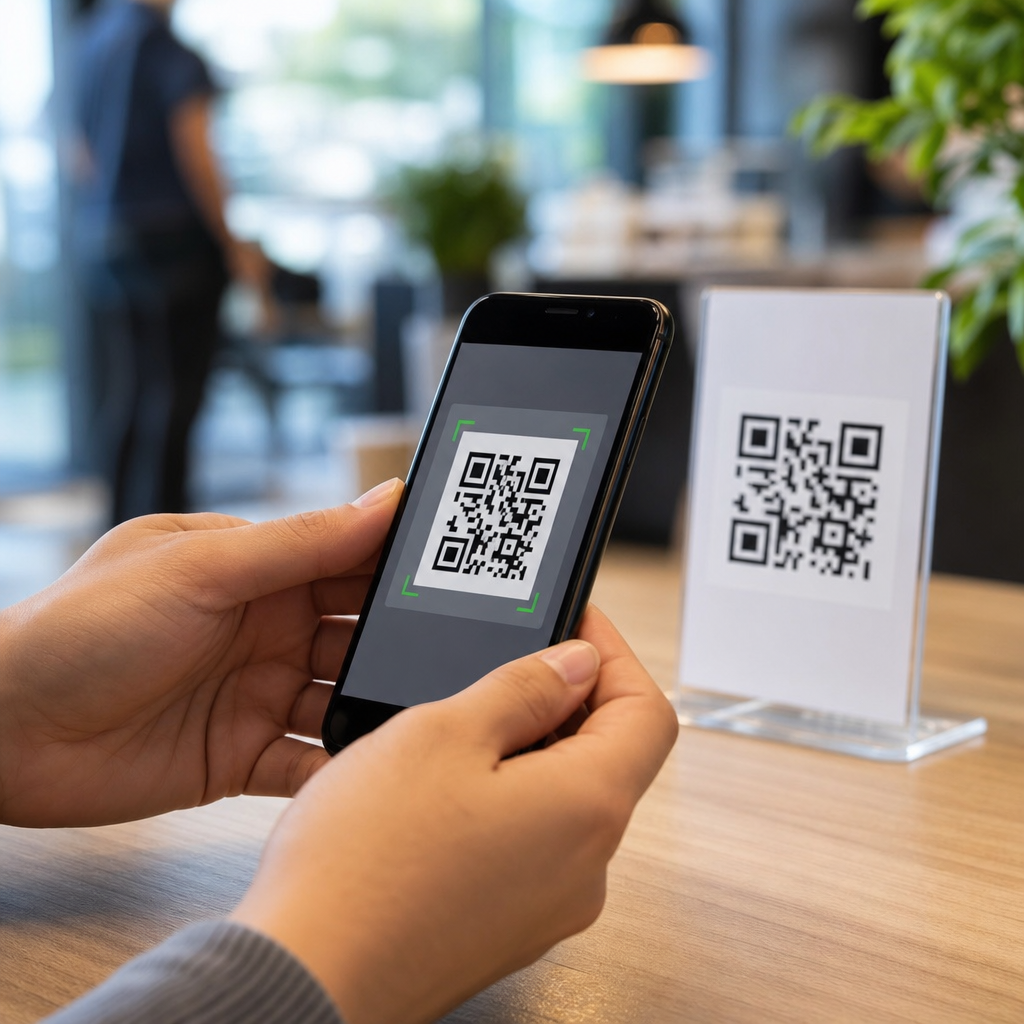
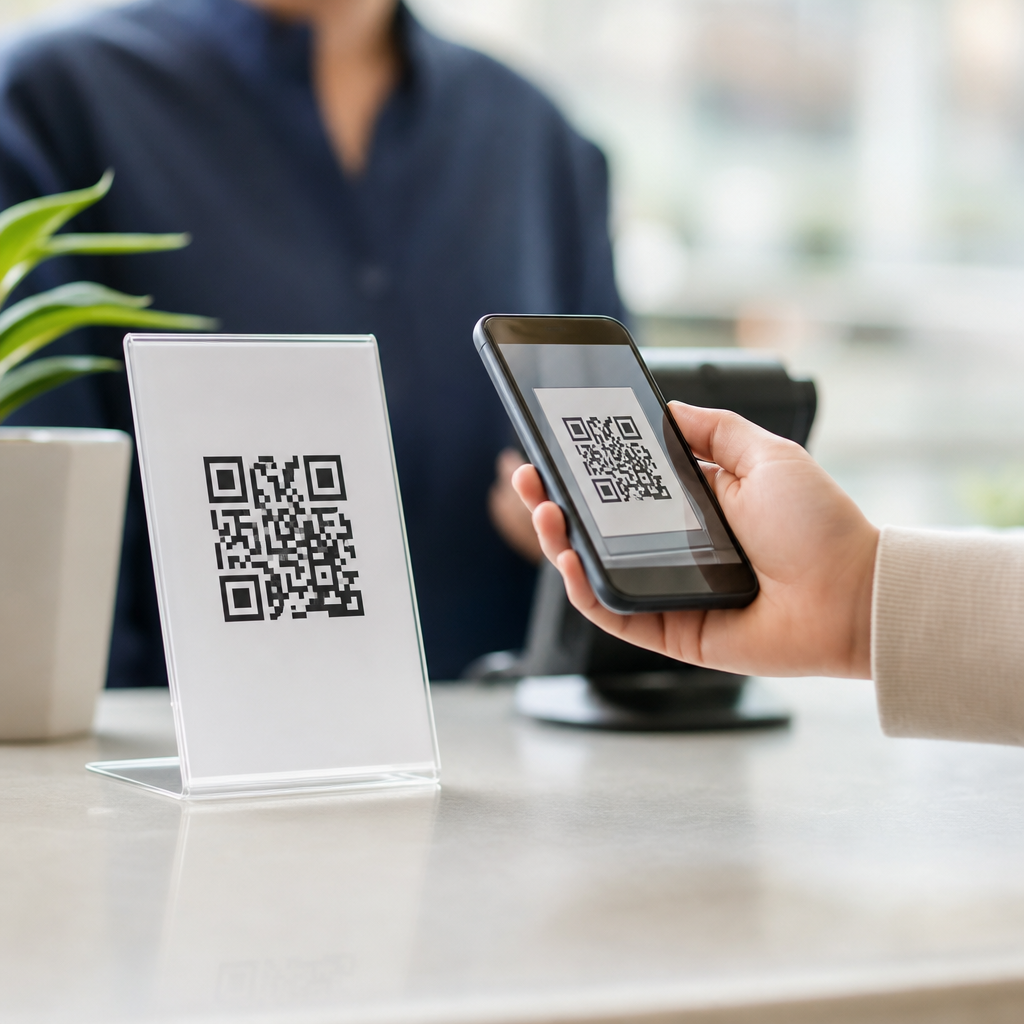
Point-of-sale use cases are equally practical. Brands place codes on receipts or payment terminals to encourage app downloads, feedback submissions, reorder flows, or loyalty enrollment. Restaurants have used tabletop QR codes for menus, split-bill payment, waitlist sign-up, and post-meal review prompts. The lesson from high-performing campaigns is simple: the store already provides context, so the mobile destination should remove doubt or extend convenience, not restart the buying journey from scratch.
Measurement in stores requires discipline. Unique dynamic QR codes by location, display type, or campaign period make it possible to compare performance. When a regional retailer tests codes on shelf strips versus freestanding displays, scan-through rate and downstream conversion often differ sharply because customer attention patterns differ. Tying QR scans to store IDs, offer redemptions, and product sales gives marketers clearer evidence of whether mobile traffic influenced revenue rather than merely generating curiosity.
Print ads, direct mail, and outdoor campaigns
QR codes make traditional media interactive. A magazine ad can open a product configurator. A postcard can send past customers to a personalized renewal page. A transit shelter poster can launch a location-based offer. Outdoor placements are especially effective when the message is time-sensitive or difficult to remember. Instead of asking someone to type a long URL later, the code captures intent in the moment, on the device people already use.
The challenge is scanability under real conditions. Outdoor codes need adequate size, high contrast, and safe margins because glare, distance, motion, and low light reduce camera performance. Direct mail campaigns need clear attribution. Many teams use a unique dynamic URL per audience segment, then route to customized landing pages based on geography, product interest, or customer status. That approach turns mobile traffic into analyzable cohort data rather than a single undifferentiated stream.
| Use case | Primary goal | Best mobile destination | Key metric |
|---|---|---|---|
| Product packaging | Post-purchase engagement | Setup guide, tutorial, warranty page | Repeat scans and task completion |
| In-store display | Purchase confidence | Reviews, specs, inventory, offer page | Scan-to-purchase rate |
| Direct mail | Response and lead capture | Personalized landing page | Conversion rate by segment |
| Event signage | Registration and follow-up | Agenda, form, app download | Qualified leads |
Events, trade shows, and sponsorships
Events concentrate attention, but they also compress time. Attendees move quickly, collect too much material, and forget brands within days. QR codes solve that by replacing friction-heavy follow-up with immediate mobile actions. Booth graphics can link to a demo booking form, a case-study library, or a lead qualification quiz. Session slides can link to downloadable resources. Name badges can support contact exchange. Sponsorship signage can route attendees to contests, maps, or limited-time promotions.
In B2B settings, I have found that QR codes work best when they respect the attendee’s pace. Asking someone at a booth to fill out a long form on a phone is usually a poor experience. Linking to a concise page with a two-field scheduler or a one-click asset download performs better. Sales teams can then continue the conversation using captured context. Event-specific QR codes also outperform generic corporate codes because the message aligns with why the visitor is there.
Brands should also plan for weak connectivity. Progressive web pages, compressed assets, and fast form handling matter at convention centers where bandwidth is inconsistent. If the event app supports deep linking, a QR code can open the exact in-app session or exhibitor profile, preserving continuity. After the event, dynamic redirects let marketers repurpose the same printed signage to a replay page or post-event offer, extending the life of the asset.
Restaurants, hospitality, and service businesses
Restaurants accelerated QR adoption, but the strongest operators use codes for more than digital menus. Quick-service brands place them on tray liners, packaging, windows, and receipts to drive app orders, reward sign-ups, and limited-time offers. Hotels use them for mobile check-in, amenity booking, local guides, and service requests. Service businesses such as salons, auto shops, and clinics use them for appointment scheduling, intake forms, aftercare instructions, and review requests.
These use cases succeed because they remove waiting. A diner scanning to reorder from a table, a hotel guest scanning to request late checkout, or a patient scanning to complete intake before arriving is choosing speed. That speed only translates into useful mobile traffic if the destination is optimized for the exact task. Forms should minimize fields, links should open to the correct location, and any required login should be justified by clear benefits such as stored preferences or loyalty rewards.
Operational teams also need governance. If every location prints its own code without standards, destinations break and reporting fragments. Centralized QR management platforms help maintain brand consistency, redirect expired promotions, and monitor scan anomalies. For regulated industries, such as healthcare, teams must ensure that destinations and data collection practices align with privacy obligations and that no sensitive information is exposed through publicly accessible URLs.
Customer support, loyalty, and lifecycle marketing
Some of the highest-value QR traffic comes after the initial sale. Instruction manuals, onboarding emails, service stickers, and account statements can all include codes that direct customers to help centers, reorder portals, account dashboards, or referral programs. This is where QR codes stop being just acquisition tools and become lifecycle infrastructure. They reduce support friction, create self-service habits, and keep customers in owned mobile channels rather than sending them to search for answers elsewhere.
Loyalty programs benefit in particular. A code on packaging can enroll a buyer. A code at checkout can identify membership instantly. A code inside an email or insert can reopen the wallet pass or rewards dashboard. Because returning customers already recognize the brand, these scans often convert at a higher rate than prospecting traffic. The key is continuity: if the customer scans for support, the page should also make the next logical action visible, such as ordering refills or registering another product.
To make lifecycle QR programs effective, brands need reliable analytics and maintenance. Track scans, sessions, bounce rate, conversion events, and assisted revenue in platforms such as Google Analytics 4, Adobe Analytics, or app attribution tools. Test code placement, destination type, and call-to-action language. Review broken links, page speed, and redirect chains regularly. A QR code is only a bridge; if the mobile experience on the other side is slow or irrelevant, traffic will not become business value.
Brands use QR codes to drive mobile traffic most effectively when they treat each scan as a context-rich moment, not a gimmick. Packaging supports education and retention. Stores reduce hesitation and increase conversion. Print and outdoor media capture offline intent instantly. Events accelerate lead flow. Restaurants and service businesses remove waiting. Support and loyalty programs extend customer value after purchase. Across all of these common use cases, the winning pattern is the same: a clear reason to scan, a mobile destination built for that exact need, and measurement strong enough to prove commercial impact.
If you are building a Mobile QR Code Basics strategy, start by mapping your physical touchpoints to customer questions and tasks. Then assign one high-intent QR destination to each touchpoint, implement dynamic tracking, and improve the landing experience before scaling distribution. Done well, QR codes turn everyday brand surfaces into dependable mobile traffic channels that are measurable, useful, and ready to support growth.
Frequently Asked Questions
How do brands use QR codes to drive mobile traffic from offline marketing?
Brands use QR codes to turn offline attention into immediate digital action. Instead of asking someone to remember a web address, search for a product later, or manually download an app, a QR code creates a direct bridge from a physical touchpoint to a mobile destination. That touchpoint could be product packaging, a storefront window, an in-store display, a printed ad, a trade show badge, a restaurant table tent, a receipt, or a direct-mail piece. When someone scans the code, they can be sent straight to a landing page, product detail page, sign-up form, loyalty program, coupon, app store listing, or mobile checkout experience.
The reason this works so well is simple: QR codes remove friction. Mobile users are far more likely to engage when the path from interest to action is short. A customer standing in front of a product display may be curious in the moment, but that curiosity fades quickly if they have to type in a long URL or search manually. QR codes capture that intent while it is still fresh. For brands, this means more website visits, more product views, more app opens, and more measurable engagement from channels that used to be difficult to track.
They also make traditional media more accountable. A flyer, poster, menu, package, or catalog can become a measurable performance asset rather than just a branding tool. By assigning specific QR codes to different campaigns, locations, or materials, marketers can see which physical placements generate the most scans, what devices people use, which landing pages convert best, and how offline campaigns influence digital behavior. In practice, QR codes help brands connect the physical world to mobile traffic in a way that is fast for the customer and highly trackable for the business.
What types of mobile destinations work best when a customer scans a branded QR code?
The best mobile destination depends on the customer’s context and the brand’s goal, but the strongest QR campaigns always send users to a mobile-optimized experience that matches the intent behind the scan. If someone scans a code on product packaging, they may want instructions, ingredients, product registration, warranty details, or complementary products. If they scan from a retail display, they may be looking for pricing, reviews, availability, or a limited-time offer. If they scan at an event, they may want a schedule, speaker information, a lead form, or a follow-up resource. The destination should feel like a natural continuation of what the user was already interested in.
Common high-performing destinations include dedicated landing pages, product pages, app download pages, mobile coupons, contact forms, loyalty sign-up pages, reservation systems, and quick checkout flows. Some brands use QR codes to open a prefilled text message, launch a map location, start a WhatsApp chat, or trigger an app deep link if the user already has the brand’s app installed. Others use them to drive traffic to video demonstrations, buying guides, user-generated content galleries, or interactive product experiences. What matters most is that the destination is immediately useful and easy to navigate on a phone.
Brands often make the mistake of sending all scans to a homepage, but that usually underperforms because it forces users to do extra work. A stronger approach is to create campaign-specific landing pages with one clear action, such as “Shop now,” “Claim your offer,” “See ingredients,” or “Book a demo.” The more tightly the destination aligns with the reason someone scanned in the first place, the more likely that mobile traffic is to convert into a meaningful business result. Relevance, speed, and clarity are what turn scans into outcomes.
How can brands measure the success of QR codes in mobile marketing campaigns?
QR codes are valuable not just because they drive mobile traffic, but because they make offline interactions measurable. Brands can track success by using dynamic QR codes, tagged URLs, analytics platforms, and conversion reporting to understand what happens after the scan. At the most basic level, marketers can measure scan volume, unique scans, repeat scans, time of day, device type, approximate location, and the specific physical asset or placement that generated the traffic. This gives a much clearer picture of how print, packaging, signage, and in-person experiences contribute to digital engagement.
Beyond scan counts, the most important metrics are what users do next. Brands should look at landing page visits, bounce rate, time on page, product views, form completions, coupon redemptions, app installs, add-to-cart actions, purchases, and assisted conversions. For lead generation, form submissions and qualified leads matter most. For ecommerce, revenue per scan and conversion rate are key. For app-focused campaigns, app opens, installs, account creations, and downstream retention are more meaningful than scans alone. The scan is just the entry point; true performance is measured by the customer action that follows.
To improve attribution, brands often create unique QR codes for each channel, region, store, product line, or creative variation. That allows teams to compare performance across placements and identify which offline assets are producing the highest-value traffic. For example, a code on shelf signage may drive more scans, but a code on packaging may generate more repeat purchases or loyalty sign-ups. With the right setup, QR codes become a practical attribution tool that helps marketers optimize creative, placement, messaging, and destination pages based on real user behavior rather than assumptions.
What are the best practices for creating QR code campaigns that actually convert?
The most effective QR code campaigns are designed around user intent, convenience, and trust. First, the code needs to be placed where people can realistically scan it without effort. That means thinking about distance, lighting, print quality, size, contrast, and surface placement. A code buried in clutter, printed too small, or placed on a reflective or curved surface can reduce scan rates dramatically. The code should also be accompanied by a clear call to action so people understand why they should scan. Phrases like “Scan to shop,” “Scan for 10% off,” “Scan for setup instructions,” or “Scan to view the menu” give immediate context and increase engagement.
Second, the mobile experience after the scan must be fast and focused. If the landing page loads slowly, is not optimized for phones, or asks for too much too soon, users will drop off. Brands should make sure the destination page is responsive, easy to read, quick to load, and built around one primary next step. Messaging should match the source. If a code on packaging promises product tips, the landing page should deliver those tips right away, not force the user through several layers of navigation. Consistency between the physical prompt and digital outcome is one of the strongest predictors of conversion.
Third, brands should test and iterate. A QR code campaign should not be treated as set-it-and-forget-it. Teams can experiment with different calls to action, incentives, landing page formats, placements, and design treatments to see what lifts scans and conversions. Dynamic QR codes are especially useful because they allow marketers to update the destination without reprinting the code. Security and transparency matter too. Users are more likely to scan when the brand is recognizable and the purpose is clear. In short, high-converting QR campaigns combine strong placement, a compelling reason to scan, and a mobile experience that rewards the user immediately.
Where are QR codes most effective for brands trying to increase website visits, leads, and purchases?
QR codes are most effective anywhere a brand already has physical visibility and a reason for the customer to take immediate action. Product packaging is one of the strongest use cases because it reaches people at the point of use or purchase. A code on packaging can lead to product education, how-to content, replenishment pages, subscription offers, warranty registration, reviews, or cross-sell recommendations. Retail environments are another high-value setting. Shelf talkers, endcap displays, fitting rooms, checkout counters, and window signage can all drive mobile traffic from shoppers who want more information before buying.
Events and experiential marketing are also ideal environments for QR engagement. Trade show booths, conference badges, handouts, demo stations, and branded installations can use QR codes to capture leads, distribute resources, schedule meetings, or continue the conversation after the event. Restaurants and hospitality brands use them on menus, table cards, receipts, room materials, and venue signage to encourage ordering, bookings, loyalty enrollment, and reviews. Direct mail remains another powerful channel because the QR code gives recipients an immediate way to respond without typing a URL, which can substantially improve response rates and reduce friction.
Ultimately, the most effective placements are the ones that align with customer intent and timing. If the person scanning is already close to a decision, the QR code can accelerate that decision and route them directly into a mobile conversion path. If they are earlier in the journey, the code can deliver useful information and move them further down the funnel. That is why brands increasingly treat QR codes as infrastructure rather than a novelty. They can be embedded across packaging, print, retail, events, and service touchpoints to consistently turn offline exposure into measurable website visits, lead generation, product engagement, and purchases.