QR code marketing has moved far beyond static links on posters and packaging, and artificial intelligence is the technology turning it into a measurable, adaptive, and highly personalized channel. A QR code is a scannable matrix barcode that directs a user to digital content, while AI in marketing refers to systems that analyze data, predict behavior, automate decisions, and generate content at scale. When those two tools work together, brands can change landing pages in real time, tailor offers by audience segment, detect fraud, forecast campaign performance, and reduce manual work across the customer journey. That matters because QR codes bridge offline attention and online action, solving one of the oldest marketing problems: connecting what people see in the physical world with what they do next. I have used QR campaigns for retail launches, event check-ins, packaging promotions, and field sales enablement, and the pattern is consistent. Teams that treat the code as a dynamic data point outperform teams that treat it as a printed shortcut. AI gives marketers the ability to interpret scan intent, route users intelligently, and continuously optimize performance instead of waiting until a campaign ends.
For brands building advanced QR code strategies, this topic deserves hub-level attention because it touches analytics, creative testing, customer experience, privacy, and operational efficiency at once. The key terms are straightforward. Dynamic QR codes allow the destination URL or content to change after printing. Automation connects scan events to downstream systems such as a CRM, email platform, help desk, or inventory database. Machine learning identifies patterns in scan timing, location, device type, and conversion behavior. Generative AI helps produce landing page copy, product recommendations, multilingual variants, and support answers tied to the scan context. Together, these capabilities make QR code marketing more responsive and more accountable. Instead of asking only how many people scanned, marketers can ask who scanned, under what conditions, what intent signals appeared, and what response produced the best outcome. Those are the questions that separate novelty from durable performance.
What AI changes in QR code marketing
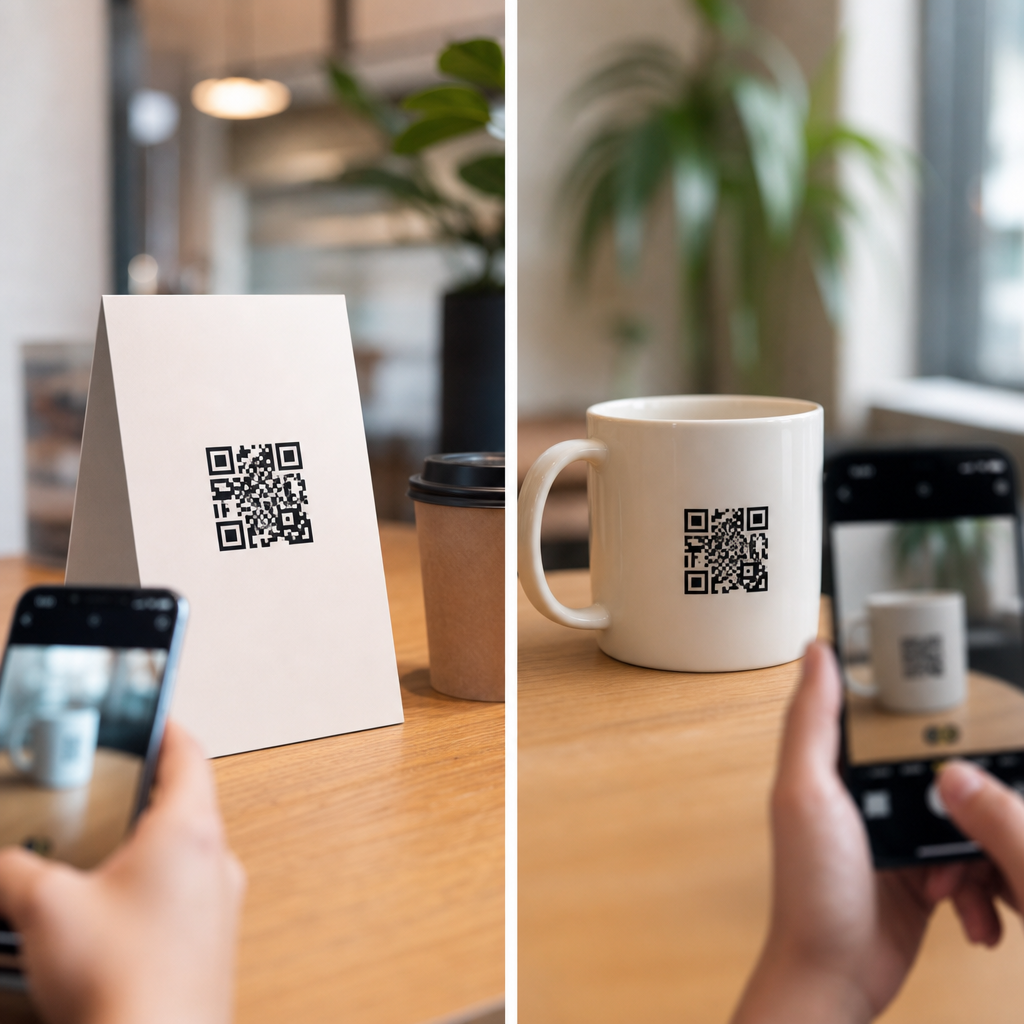
AI transforms QR code marketing by making each scan a decision point rather than a fixed redirect. In a traditional setup, every user who scans a code reaches the same destination. In an AI-assisted setup, the system can evaluate context signals such as geography, device language, time of day, referral source, weather, inventory status, loyalty tier, or previous site behavior, then send that user to the most relevant experience. A restaurant chain can print one code on table tents and let AI route lunch visitors to quick-order pages, evening visitors to reservations, and loyalty members to targeted offers. A consumer packaged goods brand can place one code on packaging and switch the destination from recipe content to replenishment offers based on product seasonality and stock levels.
This shift also improves measurement. Scan data becomes richer when paired with predictive models. If a campaign historically converts better on Android devices in commuter zones between 7 a.m. and 9 a.m., an AI model can surface that pattern early and recommend budget or content changes. The result is not magic; it is disciplined optimization based on known variables. Marketers should still validate changes with controlled testing, but AI shortens the time between signal detection and action. That speed is especially useful in out-of-home advertising, retail signage, direct mail, and event marketing, where print assets stay in market while digital experiences can still evolve.
Personalization, segmentation, and dynamic destinations
The strongest practical use of AI with QR codes is personalized destination management. A scan creates an opportunity to adapt the next step without asking the user to navigate multiple menus. In my own campaign work, the biggest lifts came when we reduced friction after the scan. For a B2B trade show program, we used one QR code on booth signage but sent buyers, existing customers, and job seekers to different experiences based on a short qualification step and CRM matching. That cut bounce rates and improved lead quality because each audience saw content aligned with intent. AI can automate much of that logic by clustering users into segments and predicting likely outcomes from prior behavior.
Dynamic QR infrastructure makes this possible. Platforms such as Bitly, Flowcode, QR Code Generator Pro, Uniqode, and Beaconstac support editable destinations, analytics, and integrations. Add AI-driven decisioning through tools such as HubSpot, Salesforce Marketing Cloud, Adobe Experience Platform, or a customer data platform, and the post-scan path becomes responsive. A retailer can show a nearest-store page to one user, a product demo to another, and a coupon to a third. A publisher can test article recommendations by reader interest. A hospital can direct patients to department-specific intake forms depending on clinic location and appointment type. Personalization works best when the decision rules are narrow, observable, and tied to a clear conversion objective.
Automation across the scan-to-conversion journey
Automation turns QR code scans into immediate operational actions. This is where marketing teams save time and reduce leakage between interest and follow-up. A scan can trigger a workflow in Zapier, Make, HubSpot, Klaviyo, Mailchimp, Salesforce, or Microsoft Power Automate. Common automations include adding leads to a nurture sequence, assigning sales reps by territory, sending event reminders, opening support tickets, updating loyalty records, or notifying store staff that a high-value customer engaged with an in-store display. For field marketing teams, automation is often the difference between collected interest and captured revenue.
A practical example is product packaging. Suppose a customer scans a code on a home appliance box. AI can identify likely intent from the timing and device behavior: a scan on delivery day often signals setup needs, while a scan months later may indicate troubleshooting or reorder interest. Automation can then route the user to assembly instructions, registration, accessory cross-sells, or service booking. Another example is real estate signage. A property QR code can trigger an SMS follow-up, update the lead record, and adjust recommendations for similar listings. The user sees a simple scan, but behind the scenes the campaign behaves like a connected system, not a disconnected print asset.
Analytics, testing, and predictive optimization
Better QR code marketing depends on better analysis, and AI helps marketers move from descriptive metrics to predictive optimization. Descriptive analytics answers what happened: scans, unique users, bounce rate, conversion rate, and dwell time. Predictive analytics estimates what is likely to happen next, using historical performance and contextual variables. Prescriptive analytics recommends which action to take. With QR campaigns, those layers matter because scan behavior changes by channel. The same code strategy rarely performs equally on product packaging, direct mail, in-store signage, connected TV, and street posters.
| Use case | AI input signals | Optimization action | Business outcome |
|---|---|---|---|
| Retail signage | Store location, time, inventory | Route to in-stock products | Higher conversion rate |
| Direct mail | Audience segment, prior purchases | Personalize offer page | Better response rate |
| Event badges | Role, session history, lead score | Trigger tailored follow-up | Improved lead quality |
| Product packaging | Scan timing, device language | Show setup or support content | Lower support friction |
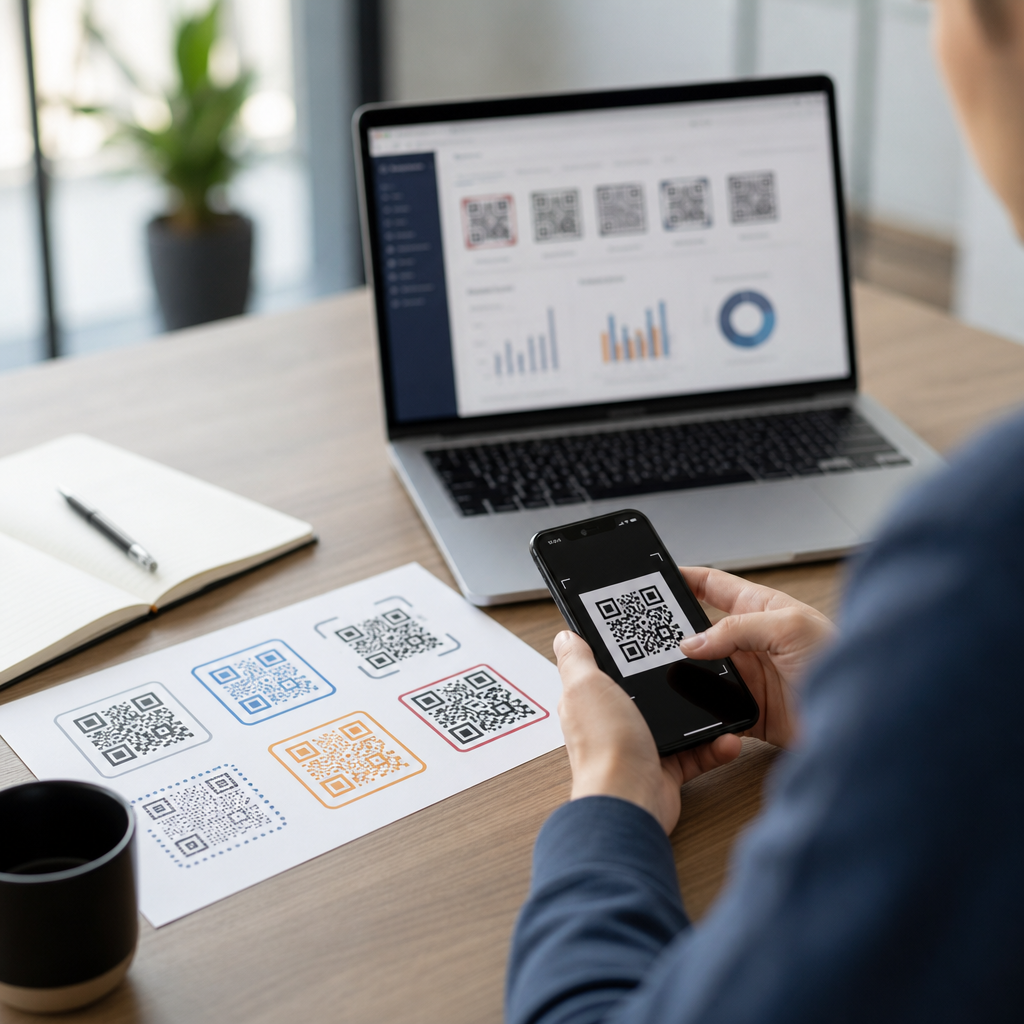
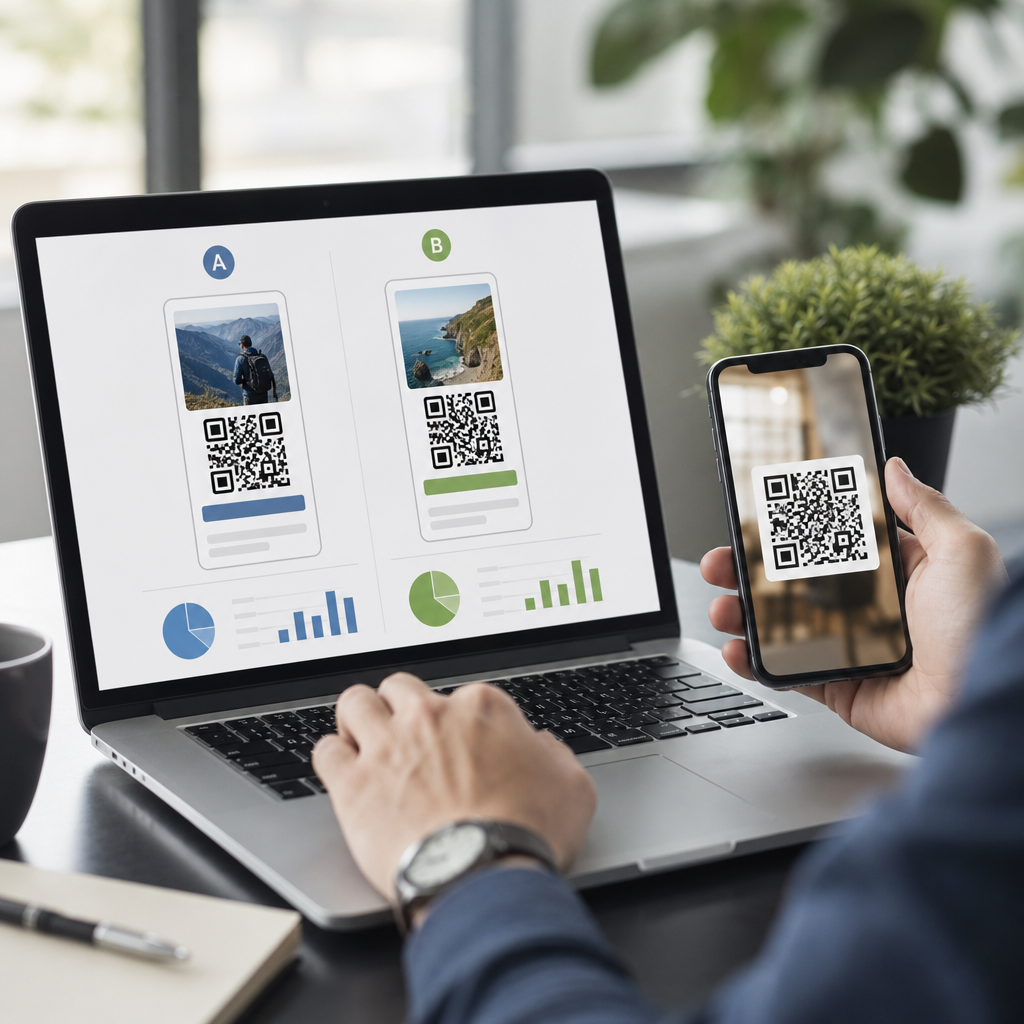
A disciplined testing framework still matters. Marketers should compare destination variants, creative prompts near the code, code placement, page load speed, and form length. AI can suggest winning combinations faster, but it cannot fix weak fundamentals. If the CTA is unclear, the landing page is slow, or the code is too small to scan easily, no model will rescue the campaign. Use UTM parameters, server-side event tracking where appropriate, and consent-aware analytics. GA4, Looker Studio, Mixpanel, and Adobe Analytics can all support QR reporting when implementation is clean. The strongest teams combine scan metrics with revenue, retention, and service outcomes, not vanity scans alone.
Generative AI for content, support, and creative operations
Generative AI expands what happens after the scan by helping teams create and maintain content at scale. A common bottleneck in QR campaigns is not printing the code; it is producing enough relevant destination experiences. One campaign may need localized landing pages, FAQs, product guides, promotional copy, translations, and chatbot responses. Generative systems can draft those assets quickly, then editors can review them for accuracy, brand tone, and compliance. This is useful for brands with large SKU catalogs, multilingual audiences, or frequent campaign refreshes.
Support is another strong application. A QR code on packaging or equipment can open an AI-assisted help experience that answers setup questions, suggests troubleshooting steps, and escalates to a human when needed. That reduces call volume while improving customer satisfaction, provided the knowledge base is current and the escalation path is clear. Creative operations also benefit. Teams can generate multiple CTA variations for posters, compare headline styles for packaging inserts, or build personalized post-scan recommendations based on product attributes. The caution is simple: generated content must be reviewed. Accuracy, accessibility, and legal requirements remain human responsibilities.
Privacy, security, and implementation standards
AI-powered QR code marketing works only if users trust it. QR codes already carry some consumer skepticism because malicious actors have used them for phishing, payment fraud, and fake logins. Brands should reduce that risk with clear visual branding, short recognizable domains, HTTPS everywhere, and transparent destination labeling. If a code leads to payments, account access, or personal data collection, add extra verification signals and avoid unnecessary redirects. Security teams should monitor destination integrity, expired links, and unusual scan spikes that may indicate abuse.
Privacy is equally important. Personalized routing should rely on data users reasonably expect the brand to process, and consent requirements still apply under regulations such as GDPR and CCPA. Use data minimization, document retention periods, and define who can edit dynamic destinations. From an implementation perspective, set naming conventions, campaign taxonomies, and governance rules before scaling. Decide which scans trigger CRM creation, which require deduplication, and which metrics count as success. Start with a narrow use case, prove it, then expand. If you are building an advanced QR code strategy, audit your current campaigns, identify where AI can improve routing, automation, or analytics, and launch one controlled pilot this quarter.
Frequently Asked Questions
1. How is AI changing the way brands use QR codes in marketing?
AI is transforming QR code marketing from a simple traffic-driving tactic into a smart, adaptive marketing channel. Traditionally, a QR code sent every user to the same fixed destination, such as a homepage, product page, or PDF. With AI involved, that same code can become dynamic and context-aware. Brands can use AI to analyze customer behavior, scan location, device type, time of day, purchase history, and engagement patterns, then adjust what happens after the scan in real time. That means one customer might see a personalized product recommendation, another might receive a location-specific promotion, and a third might be directed to educational content designed to move them further down the funnel.
This shift matters because it makes QR codes measurable and responsive rather than static and one-dimensional. AI can identify which audiences are most likely to convert, predict the best content to display, and automate campaign optimization without requiring constant manual updates. As a result, marketers can turn QR codes on packaging, signage, direct mail, event materials, and in-store displays into personalized touchpoints that support customer acquisition, retention, and sales. In practical terms, AI helps brands get more value from every scan by making the experience more relevant, timely, and performance-driven.
2. What are dynamic QR codes, and why do they work so well with AI?
Dynamic QR codes are QR codes whose destination can be changed after the code has already been printed or published. Unlike static QR codes, which are permanently tied to a single URL or asset, dynamic QR codes allow marketers to update the linked content without replacing the code itself. This is especially valuable in campaigns that run across packaging, retail displays, billboards, brochures, and other materials where reprinting would be expensive or impractical. Dynamic QR codes also make it possible to track scans, collect engagement data, and measure performance over time.
They work particularly well with AI because AI needs flexible delivery mechanisms and data feedback loops in order to optimize results. A dynamic QR code gives AI a way to change the post-scan experience based on incoming signals. For example, AI can detect that users in one region respond better to discount offers while another segment engages more with how-to videos or product comparisons. Instead of forcing all visitors into the same journey, the system can automatically route each user to the most relevant destination. AI can also test multiple versions of landing pages, messages, or calls to action, learn which combinations perform best, and continue refining the experience over time. In that sense, dynamic QR codes act as the delivery vehicle, while AI serves as the decision engine that makes the campaign smarter with every scan.
3. How can AI personalize the experience after someone scans a QR code?
AI can personalize the post-scan experience by using real-time data and historical behavior to determine what content, offer, or next step is most relevant to the individual user. After a scan, AI-powered systems can evaluate signals such as geographic location, language preference, device type, referral source, browsing behavior, previous purchases, loyalty status, and even the time and context of the scan. Based on those inputs, the system can deliver personalized landing pages, product recommendations, promotions, videos, chatbot interactions, or sign-up flows that are more likely to match the user’s needs and intent.
For example, a consumer scanning a QR code on a food package could be shown recipes tailored to their dietary interests, while a repeat customer scanning the same code might receive a loyalty reward or refill reminder. At an event, first-time visitors could be directed to introductory content, while existing leads might be sent to a product demo or consultation booking page. AI can also personalize creative elements such as headlines, images, language, and calls to action, making the experience feel more relevant and less generic. This level of personalization improves engagement because users are not just arriving at a digital destination; they are entering an experience shaped around who they are and what they are most likely to do next.
4. What metrics can marketers track when using AI-powered QR code campaigns?
AI-powered QR code campaigns can reveal much more than simple scan counts. Marketers can track when and where scans happen, what devices people use, how users behave after landing on the destination page, and whether they complete desired actions such as purchases, registrations, downloads, bookings, or email sign-ups. More advanced setups can measure bounce rate, time on page, click paths, repeat scans, conversion rate by audience segment, and engagement by campaign source. When QR codes are connected to CRM, e-commerce, or marketing automation systems, brands can also tie scans to lead quality, customer lifetime value, retention, and downstream revenue.
AI adds another layer by helping marketers interpret those metrics and act on them faster. Instead of just reporting that a campaign underperformed, AI can identify likely reasons, such as weak messaging for a particular segment, poor mobile experience, or lower-performing scan locations. It can also detect patterns humans might miss, including which time windows lead to the highest conversion rates or which audience attributes correlate most strongly with sales. In some cases, AI can automate optimization by reallocating traffic, changing offers, or adjusting content based on performance trends. This turns QR code analytics from passive reporting into an active decision-making system, allowing marketers to improve campaign results continuously rather than waiting until the campaign ends.
5. What should brands consider before using AI in QR code marketing?
Before adopting AI in QR code marketing, brands should think strategically about data, technology, customer experience, and privacy. The first consideration is campaign purpose. AI is most effective when there is a clear goal, such as increasing conversions, improving personalization, qualifying leads, boosting in-store engagement, or gathering customer insights. From there, brands need the right infrastructure, including dynamic QR code capabilities, analytics tools, landing page flexibility, and ideally integration with CRM, marketing automation, or e-commerce platforms. Without that foundation, AI may have limited ability to personalize or optimize effectively.
Equally important is data quality and responsible data use. AI systems depend on accurate, relevant data to make useful decisions, so brands should ensure their tracking is reliable and their customer data is well organized. They should also be transparent about data collection practices and comply with privacy regulations such as GDPR or CCPA where applicable. On the experience side, the post-scan journey must still be fast, mobile-friendly, and genuinely useful. AI can improve targeting and automation, but it cannot rescue a poor landing page or unclear offer. Finally, brands should start with testable use cases and measure outcomes carefully. A phased approach, such as testing personalized offers on packaging or optimizing event QR codes by audience type, often produces stronger long-term results than trying to automate everything at once. When implemented thoughtfully, AI can make QR code marketing more relevant, efficient, and accountable, but success depends on pairing smart technology with strong strategy and user-centered execution.