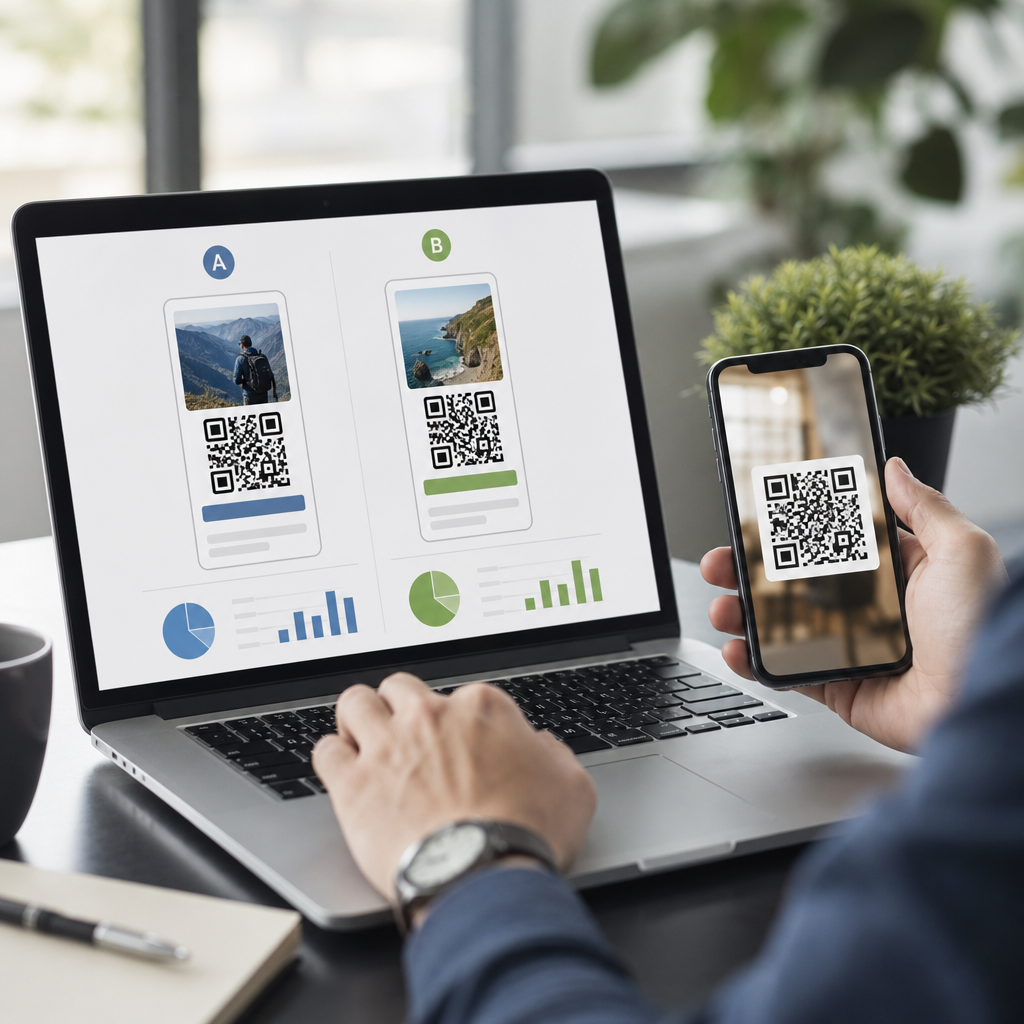
QR code personalization promises more relevant customer journeys, better attribution, and higher conversion rates, yet many teams damage results by personalizing the wrong element or adding unnecessary friction. In practice, QR code personalization means tailoring the scan experience to a person, segment, location, device type, campaign source, or stage in the buying journey. That can include dynamic destination URLs, prefilled forms, language routing, individualized offers, authenticated landing pages, or CRM-driven content. I have seen brands invest heavily in design, print thousands of codes, and still underperform because the personalization logic was weak, untestable, or disconnected from analytics. This matters because QR codes collapse the distance between an offline touchpoint and a digital action. A package insert, event badge, direct mail piece, restaurant table tent, or retail shelf talker can become a measurable, adaptive entry point into the customer experience. When personalization is done correctly, the code feels useful, fast, and context-aware. When it is done poorly, users land on irrelevant pages, face broken redirects, or question whether the scan is secure. This hub article explains the most common personalization mistakes with QR codes, why they happen, and how to avoid them using practical standards, clear governance, and measurable testing. It also frames how QR code personalization should connect with segmentation, privacy, mobile UX, and campaign operations across an advanced QR code strategy.
Personalizing the code design instead of the scan experience
One of the most common mistakes is confusing visual customization with true QR code personalization. Adding a logo, changing colors, or shaping finder patterns can support branding, but those changes do not personalize the user journey by themselves. I often see teams present a branded QR code as a personalized QR code, even though every user still reaches the same generic page. Real personalization begins after the scan, where the destination adapts to user context. For example, a cosmetics brand can place one dynamic QR code on packaging that detects geography and routes French users to French content, returning customers to replenishment options, and first-time buyers to education. The design may stay constant while the experience changes intelligently. Overemphasizing design also creates technical risk. Excessive styling can reduce scanning reliability, especially on low-contrast surfaces, curved packaging, or small print areas. ISO/IEC 18004 principles, quiet zone requirements, and error correction limits still matter. A code that looks distinctive but fails to scan is not personalized; it is broken. The smarter approach is to preserve scanability first, then use dynamic QR infrastructure to personalize the landing path, message, and measurement.
Using static QR codes for campaigns that require flexibility
Static QR codes are appropriate when the destination never needs to change, but they are a poor choice for most personalized campaigns. A static code hardwires the final URL into the symbol. If an offer expires, a page moves, language needs expand, or a segment rule changes, the printed asset becomes obsolete. I have seen direct mail campaigns lose weeks of performance because the team discovered after launch that VIP customers and prospects were receiving the same destination. With dynamic QR codes, the printed code points to a redirect service, allowing marketers to update the final landing page, add UTM parameters, rotate offers, or apply rules without reprinting materials. This flexibility is essential for QR code personalization because real campaigns evolve. Inventory changes, event schedules shift, and compliance language gets updated. Dynamic codes also enable scan-level analytics such as timestamp, device category, and coarse location, which support personalization decisions. The tradeoff is governance. Redirect logic must be documented, monitored, and secured. If multiple teams can edit the destination without change control, personalization becomes inconsistent. The answer is not to avoid dynamic QR codes; it is to manage them with clear ownership, naming conventions, and audit trails.
Building segments that are too broad, too narrow, or based on weak data
Personalization fails when segmentation lacks relevance. Many organizations create only two audiences, such as new versus existing customers, and then expect large performance gains. Others create dozens of micro-segments that are impossible to maintain and too small to measure. Effective QR code personalization starts with a small set of meaningful variables tied to user intent and operational reality: location, product owned, loyalty status, campaign source, language preference, or stage in the funnel. In retail, a shelf QR code for a premium coffee machine might route first-time buyers to setup instructions, while known owners who scanned from an email insert receive descaling reminders and accessory recommendations. That is useful because the distinction reflects different needs. Weak data causes bigger problems. If CRM records are stale, if source tags are missing, or if identity resolution is unreliable, users receive the wrong experience. A healthcare provider, for instance, should not personalize appointment reminders based on an outdated office location. Start with data you can trust, validate each decision rule, and define a fallback experience for unknown users. Good personalization is not maximum complexity; it is dependable relevance.
Ignoring consent, privacy, and trust signals
QR code personalization often depends on user data, but many teams implement it without enough attention to privacy, consent, or perceived safety. That is a mistake both legally and commercially. Users scan QR codes in public settings where they have very little context. If the destination immediately requests personal information without explanation, abandonment rises. If the redirect domain looks unfamiliar, some users assume phishing risk and leave. In regulated environments, the stakes are higher. A financial services firm using personalized QR codes on mailed statements must consider consent management, data minimization, retention rules, and region-specific obligations such as GDPR or CCPA. The safest pattern is transparent progressive disclosure: explain why the user is seeing a tailored page, request only the minimum data needed, and present recognizable branding on the redirect and landing domain. Avoid encoding sensitive personal data directly in the QR code itself. Use tokenized references, authenticated sessions, or short-lived identifiers instead. Trust also depends on operational discipline. SSL certificates, link monitoring, and redirect validation are basic requirements. Personalization should feel helpful, not intrusive. When users understand the value exchange and the destination appears legitimate, scan confidence and conversion both improve.
Overcomplicating the mobile landing experience
A personalized QR code journey succeeds or fails on the landing page. Teams often invest in sophisticated rules but send users to pages that are slow, cluttered, or impossible to navigate on a phone. Because QR scans are overwhelmingly mobile, the destination must be designed for thumb-friendly interaction, fast rendering, and immediate comprehension. In my experience, every extra second of load time weakens the benefit of personalization because the context of the scan is highly moment-based. Someone scanning a product label in a store aisle wants an answer now, not after a hero video finishes loading. Personalization should reduce effort, not increase it. Prefill forms when permission exists, surface the primary call to action above the fold, and eliminate unnecessary fields. If a user scans a conference badge QR code to book a follow-up meeting, the page should open directly to the relevant rep, timezone, and available slots, not a general contact form. Device-specific behavior matters too. Deep links can open installed apps, but only when fallback web experiences are strong. Personalized mobile UX must be tested across iOS, Android, browser variants, and weak network conditions.
Failing to measure what personalization changes
Many teams say a QR code campaign is personalized, but they cannot prove what the personalization improved. Measurement must connect scan activity to downstream outcomes, not just top-line scans. The most useful framework tracks four layers: scan rate, landing engagement, conversion action, and business outcome such as revenue, retention, or support deflection. Without this structure, it is impossible to know whether a personalized route outperformed a generic one or simply attracted more curious scanners. Use standardized event naming in tools such as Google Analytics 4, Adobe Analytics, Segment, or a CDP integrated with your QR platform. At minimum, capture campaign ID, creative version, placement, destination variant, timestamp, device category, and consent status where relevant. Then compare personalized versus non-personalized experiences through controlled tests.
| Metric | What it shows | Example personalization insight |
|---|---|---|
| Scan-through rate | How often people scan from a placement | Store shelf signage outperforms packaging inserts for first-time buyers |
| Landing completion rate | Whether users finish the intended step | Prefilled loyalty forms increase enrollments versus generic forms |
| Conversion value | Revenue or lead quality from each route | Existing customers respond better to replenishment offers than discount codes |
| Support deflection | Reduction in service contacts after scans | Personalized setup guides lower call volume for a specific device model |
Robust measurement also requires baseline benchmarks, QA before launch, and post-campaign analysis of anomalies. If one segment underperforms, inspect the logic, not just the creative.
Missing governance, testing, and cross-channel coordination
The final mistake is treating QR code personalization as a one-off tactic instead of an operational capability. Successful programs have governance for taxonomy, redirects, analytics, privacy review, and content ownership. They also connect QR interactions with email, SMS, paid media, and CRM workflows so users do not receive contradictory messages after scanning. A common failure appears in franchise or multi-location businesses. Corporate prints a personalized code on in-store materials, but the local landing pages are outdated, store hours are wrong, and offer rules vary by region. The scan experience becomes inconsistent, even though the code itself works. Prevent this with a launch checklist, test matrix, and service-level ownership. Validate scanability across print sizes and materials, test all routing rules, confirm parameter persistence, and document fallback behavior when user data is unavailable. Coordinate with sales, support, and compliance teams so personalized content stays accurate. As a hub within advanced QR code strategies, this topic links naturally to deeper work on dynamic QR infrastructure, QR code analytics, mobile landing page optimization, privacy-safe attribution, and omnichannel lifecycle design. The core lesson is simple: personalize with discipline. Use dynamic technology, trustworthy data, mobile-first execution, and rigorous measurement. Audit your current QR code journeys, fix the weak points, and turn every scan into a relevant next step.
Frequently Asked Questions
What is the most common personalization mistake brands make with QR codes?
The most common mistake is personalizing the QR code campaign in a way that feels clever internally but creates confusion or friction for the person scanning. Many teams focus on changing superficial elements, such as sending users to too many narrowly segmented landing pages, while overlooking what actually improves the experience: speed, relevance, clarity, and continuity. A personalized QR code strategy should reduce effort for the user, not add decision points or technical barriers. If someone scans a code on product packaging, in direct mail, at an event, or on in-store signage, they expect an immediate and intuitive next step. When the destination is overly complex, mismatched to the scan context, or dependent on too many assumptions about the user, performance often drops.
Another frequent issue is personalizing the wrong layer of the journey. For example, a team may invest heavily in custom visuals on the code itself but send every scanner to the same generic page. Or they may create dozens of personalized landing pages without considering whether the user is logged in, whether the form is mobile-friendly, or whether the offer matches where they are in the buying journey. The best personalization usually happens after the scan, through dynamic routing, prefilled forms, localized content, or relevant offers tied to campaign source, geography, device, or customer segment. In short, the mistake is not personalization itself. The mistake is treating personalization as decoration instead of using it to remove friction and improve relevance.
How can personalized QR codes create too much friction for users?
Personalized QR codes create friction when the experience asks too much of the user too soon, or when the personalization requires information the user has not willingly provided. One classic example is sending scanners to a landing page that immediately asks them to log in, fill out a long form, verify an identity, or navigate through multiple steps before they can access the promised content or offer. Even when personalization is technically accurate, it can still fail if it slows down the path from scan to value. QR code interactions are usually quick, mobile-first moments, so any unnecessary barrier tends to reduce completion rates.
Friction also appears when personalization is overly aggressive or poorly timed. If a QR code routes users to a hyper-specific page that does not reflect what they expected based on the physical placement of the code, trust can erode quickly. For instance, a code on a store display should not drop a user into an unrelated account portal simply because the system guessed they were an existing customer. Similarly, prefilled forms can be helpful, but only if the information is accurate, clearly presented, and easy to edit. Language routing, location-based offers, and authenticated landing pages can all be powerful, but they need sensible fallbacks. If location detection fails, if a device cannot open a certain experience, or if a session has expired, the user should still have a clear path forward. Strong QR personalization feels seamless because it quietly removes obstacles. Weak personalization feels like a maze built in the name of relevance.
Should businesses personalize the QR code itself, the destination URL, or the landing page experience?
In most cases, businesses get the best results by personalizing the destination and landing page experience rather than overcomplicating the printed code itself. The visible QR code should remain easy to scan, well-branded if appropriate, and clearly connected to the call to action. Its primary job is to get the user into the digital journey reliably. The real personalization power comes after the scan, where dynamic destination URLs can adapt based on campaign source, device type, geography, time, audience segment, or lifecycle stage. This approach gives marketers flexibility without forcing them to reprint assets every time they want to refine messaging, offers, or routing rules.
The landing page is usually where personalization has the greatest practical impact because that is where relevance converts into action. A first-time prospect might need educational content and a simple lead capture form. A returning customer may be better served by account-specific recommendations or a faster purchase path. A user scanning from a retail shelf may need local inventory or a comparison tool, while a conference attendee might respond better to a demo request page with event-specific messaging. Personalizing the code design alone rarely produces those outcomes. In fact, excessive visual customization can sometimes hurt scan reliability if contrast, sizing, or error correction are mishandled. The best practice is to keep the code technically strong and contextually clear, then use dynamic URLs and post-scan personalization to deliver the right experience for the right user at the right moment.
How do teams balance personalization with privacy and trust when using QR codes?
The key is to make personalization helpful, transparent, and proportionate. Users are generally comfortable with personalization when it clearly benefits them, such as routing them to the correct language, preselecting a nearby location, remembering a known preference, or shortening a form. Problems begin when the experience feels intrusive, opaque, or surprisingly specific. If someone scans a QR code and lands on a page that appears to know too much about them without explanation, trust can drop immediately. Personalization should never feel like surveillance. It should feel like convenience.
To strike the right balance, teams should rely on data that is appropriate for the context and clearly connected to the user’s action. Campaign source, device type, approximate location, and known customer status can be useful signals when applied responsibly. At the same time, businesses should provide clear disclosures where needed, avoid collecting unnecessary information, and ensure any prefilled or authenticated experience is secure and easy to understand. It is also important to build graceful alternatives. If a user is not recognized, does not consent, or does not want to log in, they should still be able to access a useful version of the content. The strongest QR personalization programs are not the ones that gather the most data. They are the ones that use the least amount of data necessary to create a smoother, more relevant journey while preserving trust.
What are the best ways to measure whether QR code personalization is actually working?
The best way to measure success is to track the full journey, not just the scan. A high scan rate can look encouraging, but if users bounce quickly, abandon forms, or fail to convert, the personalization strategy may be underperforming. Teams should connect scan activity to downstream metrics such as landing page engagement, click-through rate, form completion, cart starts, purchases, demo requests, store visits, or other meaningful conversion events. This is especially important because one of the main promises of QR code personalization is better attribution. If you are tailoring the experience by person, segment, location, device type, campaign source, or buying stage, then your measurement framework should reflect those same dimensions.
It is also important to compare personalized experiences against simpler versions. A/B testing can reveal whether dynamic routing, prefilled forms, language localization, or individualized offers are genuinely improving outcomes or simply adding complexity. Teams should look at device-level performance, page load speed, authenticated versus unauthenticated completion rates, and drop-off points in the funnel. For example, if personalized traffic converts better on desktop but worse on mobile, that may signal a design issue rather than a strategy problem. If one segment responds strongly to individualized offers while another prefers a more general landing page, that insight can guide future optimization. The goal is not to personalize everything possible. The goal is to identify which personalization choices create measurable gains in relevance, conversion, and user satisfaction, then scale only the tactics that prove their value.