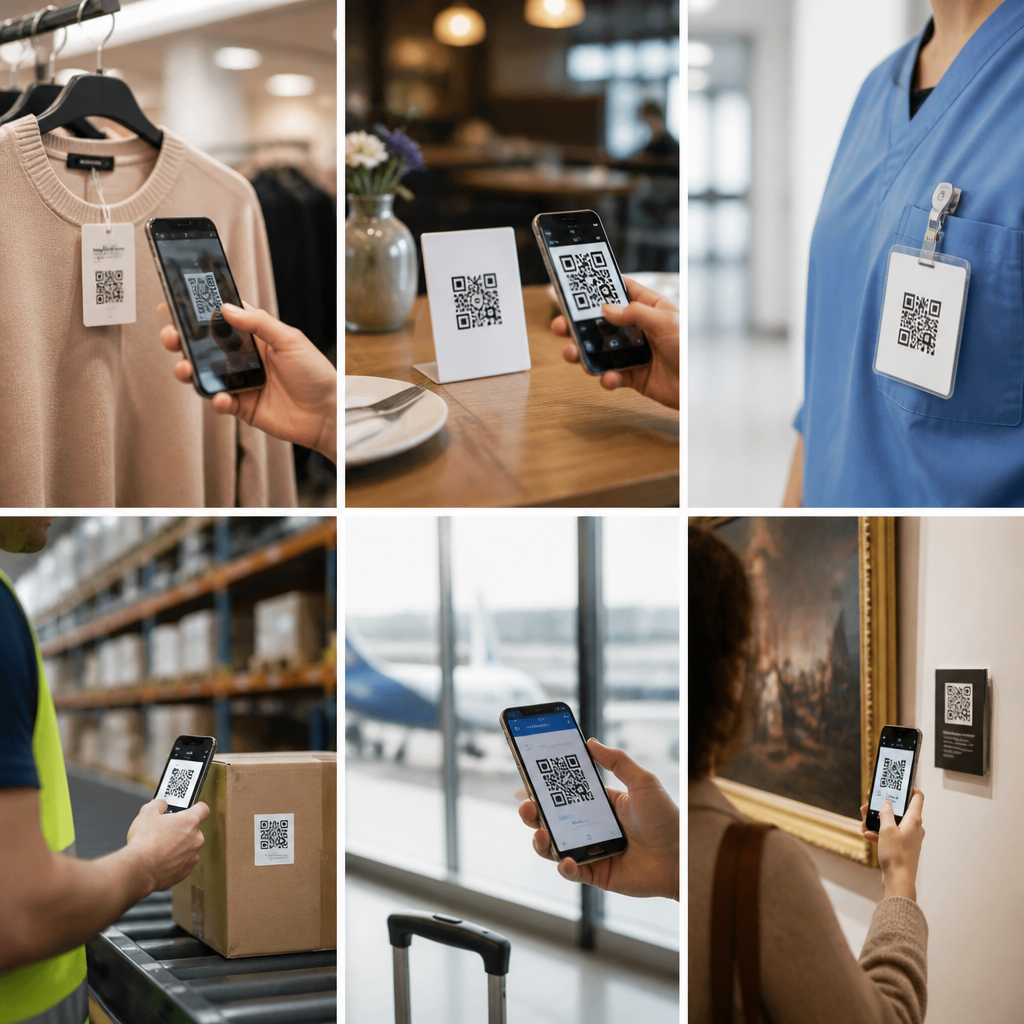
QR codes have evolved from simple inventory labels into one of the most practical tools in omnichannel marketing, connecting physical touchpoints to digital journeys with almost no friction. In this case study hub, omnichannel marketing means coordinating customer interactions across stores, packaging, print, web, email, apps, and support channels so each step feels connected rather than isolated. A QR code, short for quick response code, acts as the bridge: a customer scans with a smartphone camera and lands on a page, form, app deep link, coupon, product guide, or tracking experience. I have used QR campaigns in retail rollouts, event programs, direct mail tests, and post-purchase support flows, and the pattern is consistent: when the destination is relevant and measurable, scans turn attention into action.
This matters because customer journeys are no longer linear. A shopper may see a product on a shelf, read reviews on a phone, abandon a cart on desktop, then buy through a marketplace or in-store pickup. Traditional channel reporting often misses those handoffs. QR codes create a measurable bridge between offline intent and online behavior, giving marketers first-party engagement data at the exact point of interest. They also reduce friction. Instead of asking users to type a long URL, search for an app, or remember a promotion, the code delivers the next step instantly. For brands under pressure from rising acquisition costs and tightening privacy rules, that combination of convenience, attribution, and first-party data makes QR codes unusually valuable.
As a sub-pillar hub for case studies and success stories, this article explains what successful QR-based omnichannel marketing looks like, which campaign models produce reliable results, where implementations commonly fail, and which metrics belong on an executive dashboard. The focus is not on novelty. It is on practical outcomes: higher conversion rates, stronger retention, cleaner attribution, lower service costs, and better customer experience. Across industries, the strongest case studies share the same structure: a clear scan incentive, a mobile-optimized destination, dynamic code management, and disciplined measurement through tools such as Google Analytics 4, CRM tags, point-of-sale data, and marketing automation workflows.
What strong QR code omnichannel campaigns have in common
The best QR code case studies do not start with the code itself. They start with a customer problem. In-store shoppers need product details without waiting for staff. Event attendees need schedules, maps, and lead capture. Direct mail recipients need a fast path from print to purchase. Existing customers need setup instructions, warranty registration, or reorder links. In each case, the code works because it removes a step. Strong campaigns also use dynamic QR codes rather than static ones. Dynamic codes allow teams to change the destination, segment traffic, add UTM parameters, and pause or redirect assets without reprinting the code. That flexibility is essential in omnichannel programs where offers, inventory, and landing pages change frequently.
Execution details matter more than many teams expect. The landing page must load quickly, match the promise near the code, and be designed for mobile viewing. Scan context must be respected. A code on product packaging should not dump users onto a generic homepage; it should open the exact SKU page, ingredient list, tutorial, or loyalty prompt associated with that package. A code in a restaurant should lead directly to the menu, ordering flow, or review request, not a broad corporate site. Error correction level, print contrast, quiet zone spacing, and testing across iOS and Android devices are basic production requirements. Most scan failures I have seen came from design decisions that prioritized aesthetics over readability, especially tiny codes, low-contrast colors, or placement on curved reflective surfaces.
Retail and packaging case studies: from shelf to sale
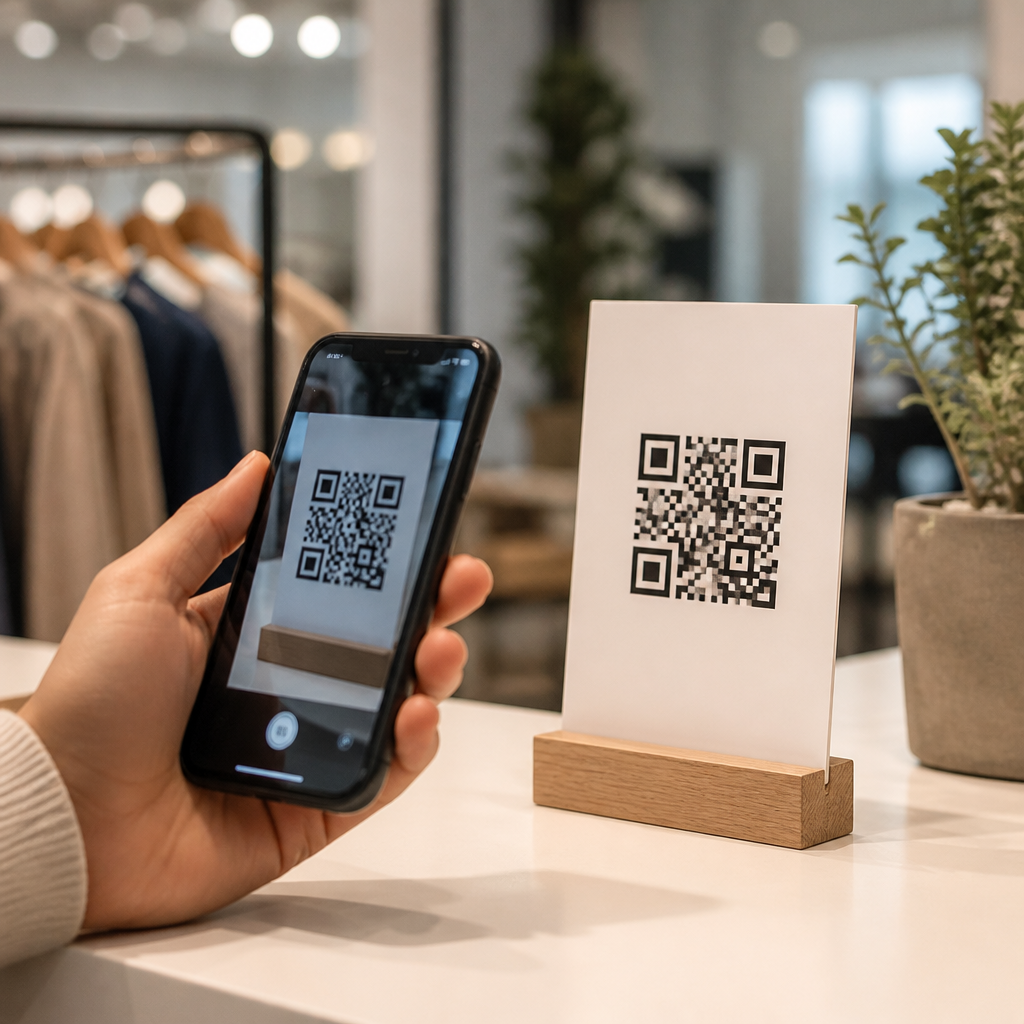
Retail is where omnichannel QR use becomes most visible. A common success model places codes on shelf talkers, product tags, and packaging to deliver richer product information than physical space allows. Beauty brands use them for ingredient transparency and shade matching. Consumer electronics brands use them for comparison charts, setup videos, and warranty registration. Grocery and food brands use them for sourcing information, recipes, and promotions tied to loyalty accounts. The measurable outcome is not only scans. It is assisted conversion. When teams connect scan data with point-of-sale records and loyalty IDs, they can see whether scanned products convert at a higher rate, produce larger basket sizes, or trigger repeat purchases.
A useful benchmark from industry reporting is that QR engagement rose sharply after smartphone camera scanning became native on major devices, and usage accelerated further during contactless commerce adoption. In practice, I have seen in-store scan rates vary from low single digits on passive packaging to double digits when the incentive is explicit, such as “see how it works,” “unlock 15% off,” or “check if this fits your device.” Packaging remains especially effective after the sale. Brands often underuse the box, label, or insert, yet those surfaces reach customers at moments of high intent. A code that opens assembly instructions, refill subscriptions, registration, or troubleshooting can reduce support tickets while extending the relationship beyond checkout.
| Use case | Typical QR destination | Primary business goal | Key metric |
|---|---|---|---|
| Retail shelf signage | Product detail page or comparison guide | Assist purchase decisions | Scan-to-sale rate |
| Packaging insert | Setup video or registration form | Improve onboarding | Activation completion |
| Direct mail postcard | Personalized landing page | Drive conversions | Response rate |
| Event badge or booth sign | Lead form or calendar booking | Capture qualified leads | Meetings booked |
| Restaurant table tent | Menu, ordering, or feedback page | Increase order value | Average ticket size |
Direct mail, out-of-home, and events: making offline media measurable
Direct mail and out-of-home advertising become more accountable when QR codes are paired with campaign-specific landing pages. On postcards, catalogs, brochures, billboards, transit ads, and in-store displays, the code turns passive awareness into an immediate digital action. The strongest direct mail examples use variable URLs behind dynamic codes so each audience segment reaches a tailored page. A home services company, for example, can send different offers by geography and route scans to local inventory, booking calendars, or financing information. Because the code identifies the creative version and distribution list, marketers can compare households, regions, and offers with unusual precision for a print campaign.
Events provide another rich category of case studies. QR codes on badges, booth graphics, handouts, and session screens can replace manual lead entry, distribute presentation decks, start demo requests, and trigger follow-up sequences in HubSpot, Marketo, or Salesforce. The difference between average and excellent event performance usually comes down to qualification. A generic “scan for more information” often produces weak leads. A stronger offer such as “scan to get the benchmark report and book a 15-minute assessment” filters for intent. I have seen event teams increase sales follow-up speed dramatically when scans feed directly into CRM records with source, booth location, and campaign tags attached, eliminating spreadsheet reconciliation after the show.
Post-purchase, loyalty, and customer service success stories
Some of the highest-return QR implementations happen after the purchase, not before it. Brands place codes on receipts, inserts, packaging, invoices, and equipment labels to support onboarding, troubleshooting, referrals, and reorders. This is where omnichannel marketing blends into service and retention. A code printed on a product insert can deep-link into an app onboarding flow, collect registration details, and trigger a welcome email series. A code on a machine label can open a service manual, maintenance checklist, or replacement parts catalog specific to that model. A code on a receipt can invite a review or loyalty enrollment. In each case, the customer gets immediate help, and the brand captures valuable first-party engagement signals.
Loyalty use cases are especially effective because they create a repeatable behavior. Restaurants and retailers use QR codes for digital receipts, points enrollment, bounce-back offers, and reorder shortcuts. Hospitality brands use them in-room for service requests, upsell menus, and local recommendations. Healthcare providers use them carefully for appointment prep, location check-in, and educational materials, while keeping protected health information off the code itself. The measurable outcomes include reduced call volume, lower return rates, faster time to first value, and increased repeat purchase frequency. These are not vanity metrics. They directly influence customer lifetime value and service economics, which is why leadership teams often support QR expansion once post-purchase wins are documented clearly.
Measurement, governance, and the lessons behind successful programs
Reliable QR code case studies are built on disciplined measurement. At minimum, every campaign should define the scan source, destination, offer, audience, and desired action before launch. UTM tagging remains essential for analytics platforms, while CRM synchronization connects scans to leads, customers, and revenue. In Google Analytics 4, teams should track landing page sessions, engaged sessions, conversion events, and downstream revenue from QR-tagged traffic. In commerce settings, matching scans to point-of-sale or loyalty data is what elevates reporting from interest to business impact. Marketers should also watch context metrics such as scan rate by placement, time-of-day patterns, repeat scans, bounce rate, and assisted conversions across devices.
Governance is equally important. Dynamic QR inventories should be documented with owners, destinations, campaign dates, and retirement rules so old codes do not send users to dead pages or outdated offers. Security matters because consumers are increasingly aware of malicious redirects. Reputable QR platforms, HTTPS destinations, and branded domains build trust. Accessibility matters too: include a short fallback URL near the code and enough contrast for easy scanning. The central lesson across omnichannel success stories is simple. QR codes work best when they solve a specific moment in the customer journey and when the organization treats them as a managed conversion channel, not a decorative add-on. If you are building out the wider “QR Code Trends, Statistics & Future” hub, use these case study patterns to audit current touchpoints, launch a measured pilot, and expand only where scans clearly improve customer experience and revenue.
Frequently Asked Questions
How do QR codes support an omnichannel marketing strategy in practical terms?
QR codes support omnichannel marketing by giving brands a fast, measurable way to connect offline moments with digital experiences. In practical terms, they turn physical touchpoints such as product packaging, shelf displays, direct mail, receipts, event signage, storefront windows, and printed ads into entry points for online journeys. Instead of asking a customer to manually type a URL, search for a product, or download an app later, a QR code lets that person move instantly from a real-world interaction to a specific digital destination with almost no friction.
That matters because omnichannel marketing is not just about being present on many channels. It is about making those channels work together in a coordinated way. A well-planned QR code campaign can send one customer to a product demo page, another to a loyalty signup flow, and another to a post-purchase support center, all based on context. For example, a code on packaging might lead to setup instructions, a code in a catalog might open a personalized landing page, and a code in-store might unlock a limited-time offer tied to the customer’s location or campaign source.
QR codes also improve continuity across the customer journey. A shopper may first encounter a product in-store, scan for reviews, later receive an email reminder, and eventually complete a purchase on mobile or desktop. Because the scan can be tracked and linked to campaign analytics, marketers can better understand how physical and digital interactions influence each other. This makes QR codes especially valuable in case study environments, where the goal is to show how channels are connected rather than isolated. When used correctly, the QR code is not just a shortcut. It is a bridge that helps unify discovery, engagement, conversion, and support.
What makes QR codes especially effective compared with other bridge tools between offline and online marketing?
QR codes are especially effective because they remove steps from the customer journey. Many other offline-to-online bridge tools depend on memory, manual entry, or extra effort. A printed URL requires typing. A coupon code requires saving and entering it later. A branded hashtag depends on social platform behavior and customer motivation. A QR code, by contrast, can be scanned in seconds with a smartphone camera, which makes it one of the lowest-friction ways to move someone from a physical interaction to a digital experience.
They are also highly flexible. A single code can direct users to product pages, app downloads, support content, reservation forms, loyalty programs, surveys, videos, or dynamic landing pages. That versatility means marketers can use the same core technology at multiple stages of the funnel, from awareness to post-purchase retention. In an omnichannel campaign, consistency matters, and QR codes can serve as a standard interaction model across channels without forcing every touchpoint to use the same message or destination.
Another major advantage is measurability. Digital analytics tied to QR code scans can reveal when, where, and from which campaign a customer engaged. This gives marketers stronger attribution than many traditional print or in-store tactics provide on their own. If a code appears on product packaging, in a magazine ad, and on an event banner, each placement can be tracked separately to compare performance and refine future campaigns. That kind of visibility is valuable in a case study because it helps show not only that the campaign worked, but how and why it worked.
Finally, QR codes are cost-effective and scalable. They can be deployed quickly, integrated into existing creative assets, and updated dynamically if the underlying destination changes. That combination of convenience, adaptability, and trackability is why QR codes have become one of the most practical bridge tools in omnichannel marketing.
What are the most important elements of a successful QR code omnichannel campaign?
A successful QR code omnichannel campaign starts with a clear purpose. Brands often make the mistake of adding QR codes because they seem modern or convenient, without defining what the scan is supposed to accomplish. The best campaigns begin with a specific customer action or business goal, such as driving product education, increasing app adoption, collecting first-party data, boosting in-store conversions, improving onboarding, or reducing support friction. When the objective is clear, every other decision becomes easier.
The next essential element is context. A QR code should match the moment in which the customer encounters it. Someone scanning a code on product packaging is likely looking for instructions, benefits, or proof points. Someone scanning from a poster in a transit station may need a fast, mobile-optimized page with a clear next step. Someone scanning after purchase may want support, registration, or cross-sell recommendations. The destination should feel like a logical continuation of the interaction, not a disconnected landing page.
Strong creative execution also matters. The code needs to be easy to notice, easy to scan, and supported by clear copy that explains why it is worth scanning. Customers should never have to guess what happens next. A simple call to action such as “Scan to see how it works,” “Scan for your exclusive offer,” or “Scan for setup help” can dramatically improve engagement because it sets expectations and communicates value immediately.
Technical readiness is equally important. The landing experience must load quickly on mobile devices, display properly across screen sizes, and align with the campaign source. If the QR code is dynamic, the destination can be updated over time, which is helpful for testing, localization, seasonal promotions, and inventory changes. Marketers should also set up analytics, UTM parameters, event tracking, and conversion measurement before launch so the campaign can be evaluated accurately.
Finally, successful campaigns are integrated with the broader customer journey. The scan should not be treated as a standalone tactic. It should connect to email follow-up, CRM data, sales enablement, customer support, retargeting, and reporting. That is where omnichannel value becomes visible. The QR code may be a small asset, but when it is tied to coordinated messaging and next-step experiences, it becomes a powerful engine for continuity and performance.
How can brands measure the performance of QR codes in an omnichannel case study?
Measuring QR code performance begins with deciding what success looks like at each stage of the customer journey. Basic scan counts are useful, but they are only the starting point. In a strong omnichannel case study, brands should look beyond raw engagement and examine what happened after the scan. Did users stay on the page, watch a video, sign up for email, add a product to cart, download an app, redeem an offer, or contact support? These downstream actions are what reveal business impact.
To capture that impact, marketers should use trackable URLs, campaign parameters, event-based analytics, and conversion goals tied to each QR code placement. This allows teams to compare performance across packaging, direct mail, in-store displays, print ads, events, and other channels. If one placement generates many scans but few conversions, while another generates fewer scans but stronger purchase intent, the campaign can be optimized based on quality of traffic rather than volume alone.
Attribution is another important part of measurement. In omnichannel marketing, a QR code scan is often one step in a larger sequence rather than the final interaction. A customer may scan in-store, return later through email, and purchase through a website or app. Brands should therefore evaluate assisted conversions, time-to-conversion, repeat visits, and cross-channel behavior, not just last-click results. This gives a more accurate picture of the QR code’s contribution to the overall journey.
Qualitative insights can strengthen the case study as well. Support teams may report fewer setup questions if packaging QR codes point to instructional content. Store associates may notice higher product confidence when shoppers scan comparison guides. Customer feedback may reveal that scanning feels easier than searching manually. These insights help explain not just performance metrics, but user experience improvements.
In a well-documented case study, the strongest measurement framework combines scan data, behavioral analytics, conversion metrics, and operational outcomes. That combination allows brands to show that QR codes are not simply generating curiosity. They are influencing movement across channels, reducing friction, and contributing to measurable marketing and customer experience goals.
What common mistakes should marketers avoid when using QR codes in omnichannel marketing?
One of the most common mistakes is sending every scan to a generic homepage. This wastes the intent behind the interaction and weakens the omnichannel experience. If a customer scans a code from packaging, a store display, or a printed ad, they expect something relevant to that exact moment. A generic destination creates disconnect and often results in drop-off. The landing page should be purpose-built, mobile-friendly, and aligned with the source context.
Another frequent issue is failing to explain why the code should be scanned. A QR code by itself is not a compelling message. Customers need a reason, whether that is accessing instructions, unlocking an offer, viewing a demo, joining a loyalty program, or getting personalized recommendations. Clear call-to-action language is essential because it frames the value exchange and helps drive higher-quality engagement.
Poor placement and technical execution are also major problems. Codes that are too small, placed on curved or reflective surfaces, printed with low contrast, or positioned where scanning is inconvenient can undercut even the best campaign strategy. In-store lighting, packaging material, distance from the viewer, and mobile signal strength should all be considered. Testing in real-world conditions is just as important as testing on a design mockup.