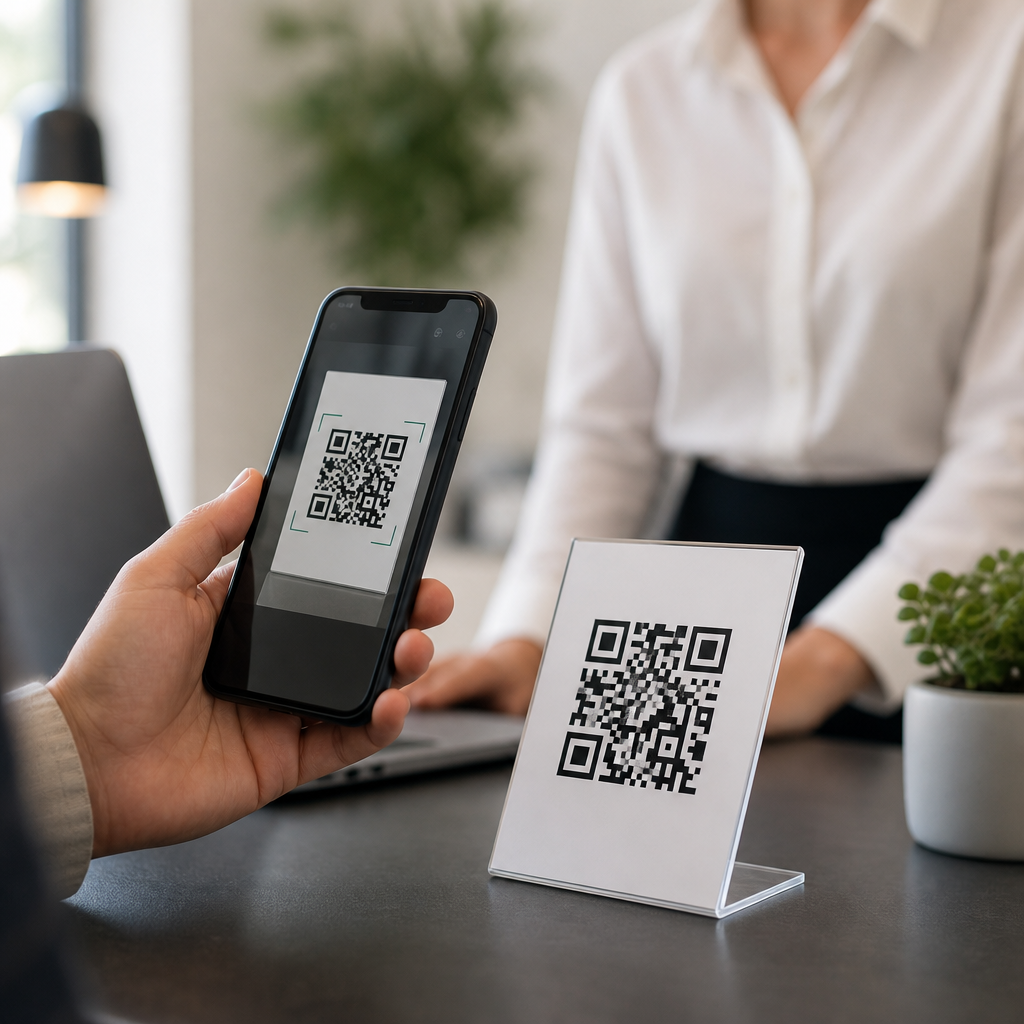
QR codes look simple on the surface, but the difference between static and dynamic QR codes affects cost, flexibility, tracking, security, and long-term usability. A QR code is a two-dimensional barcode that stores data such as a URL, text string, Wi-Fi credential, phone number, or payment instruction. When scanned by a smartphone camera or barcode reader, the encoded data opens immediately. In practice, the key distinction is straightforward: a static QR code stores the final destination directly in the pattern, while a dynamic QR code stores a short redirect URL that points to content managed elsewhere. That technical difference changes how the code behaves after printing.
I have used both types in packaging, retail signage, event badges, and support documentation, and the wrong choice usually shows up months later. A restaurant prints ten thousand menus, then needs to change the booking link. A manufacturer puts a QR code on product packaging, then wants scan analytics by region. A school creates a QR code for a PDF, then later replaces the file with an updated policy. These are not edge cases. They are the everyday reasons teams ask what static and dynamic QR codes actually do, which type lasts longer, and which one belongs on materials that cannot be reprinted cheaply.
This guide answers those questions directly and serves as a hub for general QR code FAQs. You will learn how static and dynamic QR codes work, when each one makes sense, what they cost, what they can track, and what mistakes to avoid. You will also see where broader QR code issues fit in, including scan reliability, expiration, file hosting, redirects, privacy, and maintenance. If you are choosing a QR code generator, building a campaign, or troubleshooting an existing code, understanding this distinction first will prevent most common deployment errors.
How Static and Dynamic QR Codes Actually Work
A static QR code contains the final payload inside the symbol itself. If the code points to https://example.com/menu, that exact URL is encoded into the black-and-white matrix. Once created, the content cannot be changed without generating a new code. That makes static QR codes permanent in one sense: the pattern remains valid forever as long as the destination still exists. If the encoded URL breaks, the QR code still scans, but users land on a dead page. Static codes are best for information that will not change, such as plain text, a business card, a fixed URL, or a Wi-Fi login for a location that rarely updates.
A dynamic QR code works differently. The printed symbol usually contains a short URL from the QR platform, not the final destination. When someone scans it, the platform redirects the user to the current target URL set in the dashboard. Because the redirect can be edited later, the destination can change without changing the printed code. This is why dynamic QR codes are standard for campaigns, packaging, real estate signs, restaurant menus, app downloads, and documents that need version control. The redirect layer also enables analytics such as total scans, timestamps, device types, approximate location, and campaign attribution.
In plain terms, static means fixed content in the code; dynamic means editable content behind the code. Neither format is universally better. The right choice depends on whether the destination may change, whether you need tracking, whether you can tolerate platform dependence, and how expensive reprinting would be.
When to Use Static QR Codes and When to Use Dynamic QR Codes
Use a static QR code when the information is simple, unlikely to change, and does not need analytics. Good examples include a contact card in vCard format, a short block of text, a phone number, an SMS draft, or a homepage URL that your organization plans to keep for years. Static QR codes are often cheaper because many generators offer them free. They also avoid vendor lock-in. If you create a static code for your canonical domain and maintain that page properly, there is no subscription risk and no redirect service that can fail.
Use a dynamic QR code when the printed asset will outlive the linked content. In my work, this is the default for anything expensive to reproduce: product labels, brochures, posters, event displays, storefront windows, and direct mail. Dynamic codes let teams fix mistakes after launch, swap links by season, route users by device, add UTM parameters, run A/B tests, and pause destinations if a page goes down. They are also far more suitable for marketing measurement. If leadership asks how many scans came from a trade show booth versus in-store signage, dynamic tracking provides an answer that static codes cannot.
The decision often comes down to risk. If a broken destination would create customer friction and reprinting is costly, choose dynamic. If the content is permanent and independence matters more than editability, static is usually enough.
Key Differences: Editability, Analytics, Cost, and Reliability
The most important difference is editability. Static QR codes cannot be edited after creation because the payload is baked into the matrix. Dynamic QR codes can be edited because the redirect target lives in a management layer. The second major difference is analytics. Static codes provide no built-in scan reporting. Dynamic platforms commonly report scans over time, operating system, device category, referrer context, and rough geolocation derived from IP data. For privacy-sensitive deployments, that data should be disclosed appropriately and reviewed against local requirements such as GDPR or CCPA.
Cost is another difference. Static QR codes are frequently free, while dynamic QR codes usually require a paid plan because the provider hosts the redirect and analytics infrastructure. Reliability cuts both ways. A static code has fewer moving parts, but if the destination changes, the code becomes functionally obsolete. A dynamic code is more adaptable, but it depends on the provider staying operational, your subscription remaining active, and the redirect domain maintaining a strong reputation. Reputable platforms publish uptime expectations and support custom domains to reduce platform dependence.
| Feature | Static QR Code | Dynamic QR Code |
|---|---|---|
| Can you change the destination later? | No | Yes |
| Built-in scan analytics | No | Yes, on most platforms |
| Works without a platform subscription | Usually yes | Usually no |
| Best for printed long-life assets | Only if URL will never change | Yes |
| Risk if provider shuts down | Low | Higher unless using a custom domain |
Scan performance is not inherently better with one type or the other. Reliability depends more on contrast, error correction level, quiet zone, print size, material distortion, and lighting than on whether the code is static or dynamic. ISO/IEC 18004 defines the QR Code symbology, and practical print guidance still matters: keep strong contrast, avoid glossy placement with glare, and test from realistic scanning distances before production.
Common QR Code FAQs in the Hub
Do static QR codes expire? The code pattern itself does not expire. However, if the encoded link stops working, the user experience fails. Do dynamic QR codes expire? The symbol remains scannable, but access can fail if the provider disables the redirect, the subscription lapses, or campaign settings impose an end date. Can you convert a static QR code into a dynamic one? Not without creating a new code, because the original payload is fixed. Can you track a static QR code? Only indirectly, for example by sending users to a page that logs visits in your web analytics, but the code itself has no editable tracking layer.
Why does a QR code scan on one phone but not another? Usually the problem is print quality, low contrast, too little quiet zone, excessive logo intrusion, poor lighting, or a dense payload that produced a complex symbol. Why is my QR code blurry? Raster exports like low-resolution PNG files often degrade in print; use SVG, EPS, or PDF for production. Can a QR code open an app? Yes, typically through app links, deep links, or a smart landing page. Can a QR code point to a PDF? Yes, but hosting matters; large files create slow mobile experiences, so a mobile-friendly landing page is often better than linking directly to a heavy document.
Security questions matter too. Users should be able to recognize the destination, especially in high-trust environments like payments, support, and login flows. Branded domains and HTTPS are essential. For enterprise use, I strongly prefer dynamic QR codes on a custom domain so the redirect remains under organizational control and trust signals stay consistent.
Best Practices for Choosing and Managing QR Codes
Start with the lifespan of the printed asset. If the code will be on packaging, signage, manuals, or anything expensive to replace, dynamic is usually the safer choice. Next, decide whether scan analytics are necessary. Marketing, field service, and operations teams often think they do not need reporting until someone asks for campaign proof or region-level performance. Then review ownership. If you use dynamic codes, choose a vendor that supports export, custom domains, role-based access, and clear policies on deactivation. Tools commonly evaluated for business use include QR Code Generator Pro, Bitly, Beaconstac, Flowcode, and enterprise link management platforms.
Design for scanning, not decoration. Keep a sufficient quiet zone around the code, use dark modules on a light background, maintain print sharpness, and size the code according to scan distance. A practical rule many installers use is roughly one inch of code width for every ten inches of scanning distance, then test in the real environment. Avoid placing codes on curved bottles, reflective windows in direct sun, or moving surfaces where users cannot hold the camera steady. Always test with both iPhone and Android devices before launch.
Finally, connect the scan to a useful destination. A QR code should reduce friction, not create it. Send users to mobile-optimized pages, preserve context from the physical asset, and make the next action obvious. If you are building a broader QR code knowledge base, link this hub to deeper articles on QR code sizing, error correction, tracking, expiration, design mistakes, and troubleshooting failed scans. That structure helps readers solve adjacent problems quickly and makes your QR code documentation more useful over time.
The difference between static and dynamic QR codes is simple but consequential. Static QR codes permanently encode the final content and work well when that content will not change. Dynamic QR codes use a redirect layer, which makes them editable and measurable after printing. That one design choice affects maintenance, analytics, campaign flexibility, vendor dependence, and the cost of correcting mistakes.
For most business use cases, especially printed assets with a long lifespan, dynamic QR codes are the safer and more resilient option. For basic, permanent information with no reporting needs, static QR codes remain a practical choice. The best results come from matching the code type to the lifespan of the content, using production-quality design standards, and testing before release.
If you are building or improving a QR code program, use this hub as your starting point for general QR code FAQs, then map each deployment to the right code type before you print anything at scale.
Frequently Asked Questions
What is the main difference between a static QR code and a dynamic QR code?
The core difference is where the destination information lives. A static QR code contains the final data directly inside the code itself. That might be a website URL, plain text, contact details, a phone number, Wi-Fi credentials, or payment information. Once that code is created, the content is fixed. If the destination changes later, the printed QR code does not update, which means you would need to generate and distribute a brand-new code.
A dynamic QR code works differently. Instead of storing the final destination directly, it usually stores a short redirect URL or reference that points to content managed elsewhere. Because of that extra layer, you can change the landing page, file, or other destination without changing the printed QR code. That makes dynamic codes much more flexible for real-world marketing, packaging, menus, signage, events, and any campaign where details may need to change over time.
In simple terms, static means permanent and direct, while dynamic means editable and managed. That one distinction affects everything else, including cost, analytics, maintenance, tracking, and long-term usefulness.
When should you use a static QR code instead of a dynamic one?
A static QR code is a good choice when the information will never need to change and there is no need for scan tracking or campaign management. Common examples include permanent Wi-Fi login details for a home or office, a fixed phone number, plain text instructions, a personal contact card, or a website URL that is highly unlikely to change. If the destination is stable and the code serves a simple utility function, a static code is often perfectly sufficient.
Static QR codes are also appealing because they are usually simple to create and may not require an ongoing subscription or platform account. For individuals, small organizations, or one-time uses where budget is the main concern, that can make them attractive. Since the encoded data is directly embedded, there is also no dependency on a redirect management service to route the user after scanning.
That said, static codes are best for situations with very low risk of future updates. If a business changes domains, updates a PDF, replaces a menu, changes a campaign page, or wants to measure engagement later, a static code quickly becomes limiting. So the right time to use static is when permanence is a benefit rather than a problem.
Why are dynamic QR codes usually better for businesses and marketing campaigns?
Dynamic QR codes are often the better choice for businesses because they provide flexibility after printing. In a business setting, content changes constantly. URLs get updated, promotions expire, product pages move, documents are revised, and campaign goals evolve. With a dynamic QR code, you can keep the same code on packaging, posters, labels, brochures, or storefront displays while updating the destination behind the scenes. That reduces waste, saves reprint costs, and makes campaigns easier to manage.
Another major advantage is analytics. Dynamic QR codes commonly support scan tracking, which can include total scans, time of scan, approximate location, device type, and other performance data depending on the provider. That information is valuable because it turns a printed code into a measurable marketing channel. Instead of guessing whether people engaged with a flyer or sign, businesses can review actual scan activity and improve future campaigns based on evidence.
Dynamic codes can also support advanced features such as A/B testing, scheduled redirects, password protection, scan limits, retargeting integrations, and centralized dashboard management. For restaurants, retailers, manufacturers, event organizers, real estate agents, and service businesses, these capabilities make dynamic QR codes far more practical than static ones. In most commercial use cases, the ability to edit and track results is what makes dynamic codes the smarter long-term investment.
Are static QR codes or dynamic QR codes more secure and reliable?
Security and reliability depend on how the code is used, but each type has different strengths and trade-offs. A static QR code can be reliable because it points directly to the final content with no redirect management layer in between. If the encoded data is a stable URL or fixed piece of information, there is less infrastructure involved. However, if that destination later becomes outdated, broken, or compromised, the code cannot be edited to correct the problem. That lack of control can become a reliability issue over time.
Dynamic QR codes give the owner more control, which can improve long-term reliability and security management. If a landing page changes, a link breaks, or a security concern appears, the destination can be updated immediately without replacing the printed code. That ability to respond quickly is a major operational advantage. Some dynamic QR platforms also offer access controls, expiration settings, and monitoring tools that help businesses manage risk more effectively.
At the same time, dynamic QR codes depend on the provider or platform handling the redirect. If that service is poorly managed, discontinued, or misconfigured, scans may fail. That is why choosing a reputable QR code platform matters. In practice, static codes may be simpler, but dynamic codes are often more manageable and resilient over the long term because they can be updated, monitored, and corrected as needs change.
Do dynamic QR codes cost more, and are they worth it?
Yes, dynamic QR codes often cost more than static QR codes because they typically rely on a service platform that provides editable links, analytics, hosting, dashboard access, and campaign controls. Static QR codes are frequently free or low-cost because they do not require that ongoing management layer. For basic personal use, that price difference may make static codes the obvious choice.
For businesses, though, the value of dynamic QR codes usually outweighs the extra cost. One wrong URL on printed materials, one outdated menu, or one campaign landing page that needs to be changed can create expensive reprint costs and lost opportunities. A dynamic code helps avoid those problems by letting you update the destination instantly. That alone can justify the investment, especially for organizations that print codes on packaging, displays, labels, advertisements, or other materials with a long shelf life.
There is also the value of data. If a dynamic QR code helps you understand engagement, measure campaign performance, or optimize customer journeys, it becomes more than a simple link tool. It becomes a business intelligence asset. So while static QR codes are cheaper upfront, dynamic QR codes are often worth the higher cost when flexibility, tracking, brand control, and long-term usability matter.