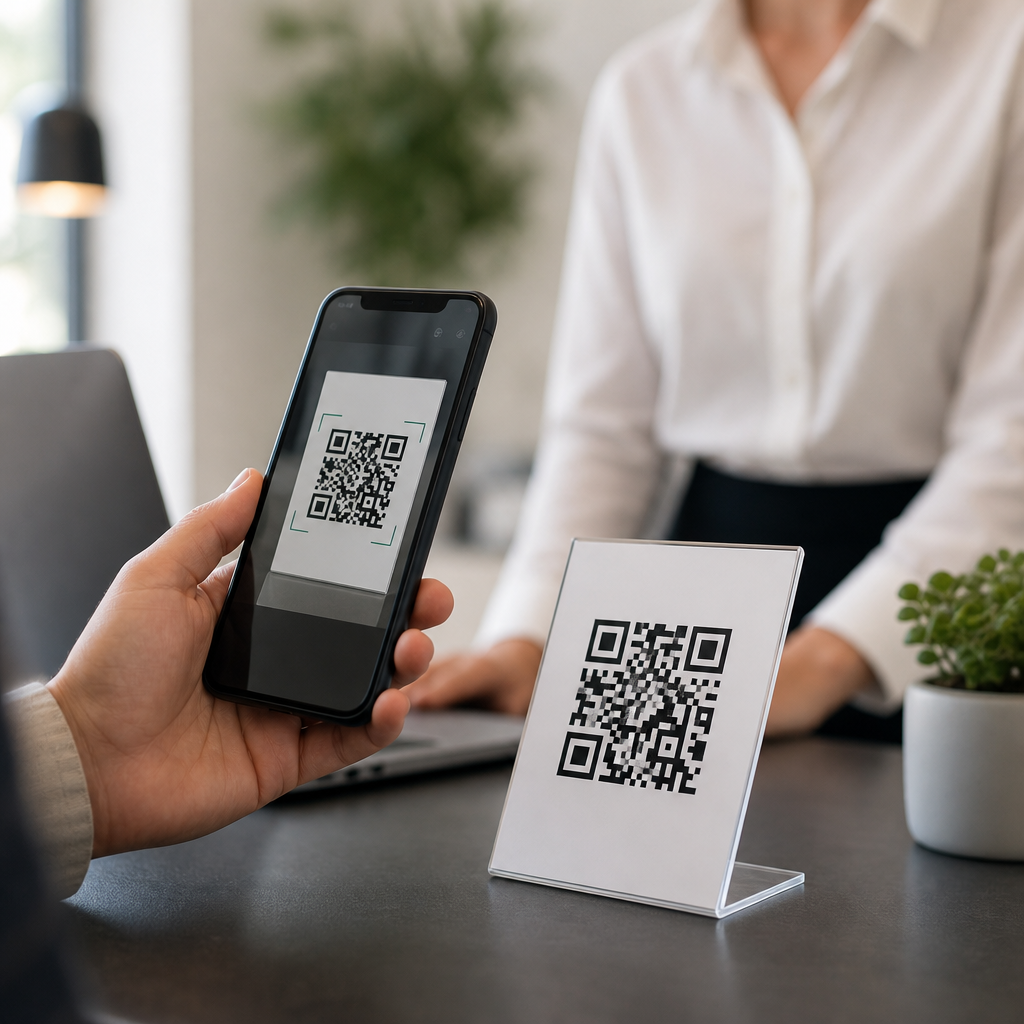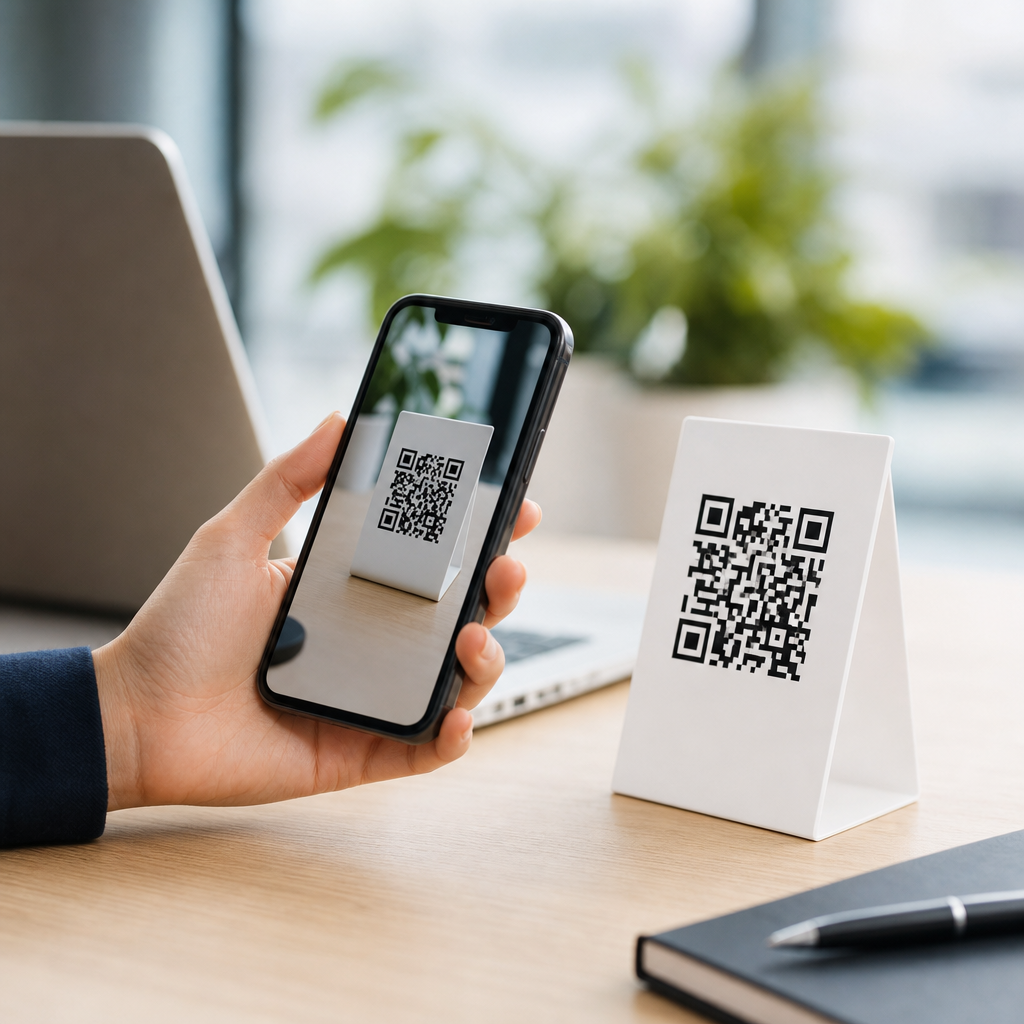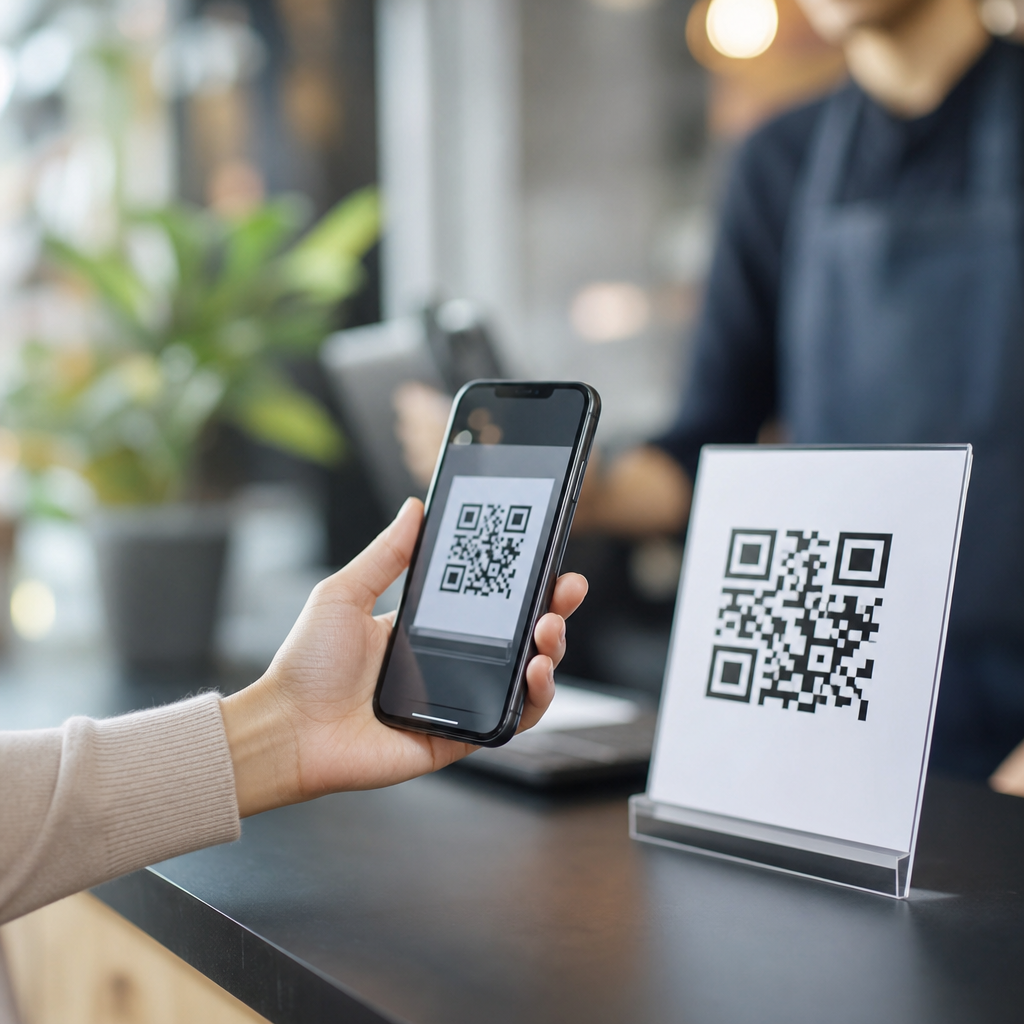
QR codes are effective for marketing when they reduce friction, connect an offline moment to a useful digital action, and give marketers measurable response data. A QR code, or quick response code, is a two-dimensional barcode that a smartphone camera can scan to open a webpage, download a file, launch a payment screen, save contact details, or trigger another digital experience. In marketing, effectiveness means more than scan volume. It includes qualified traffic, lead generation, coupon redemption, event attendance, app installs, and post-scan conversion rates. I have used QR codes in retail displays, direct mail, trade show booths, restaurant menus, and product packaging, and the pattern is consistent: when the offer is clear and the landing page is fast, they perform well; when they are added as decoration, they do not.
This matters because customer behavior has changed. Smartphone adoption is nearly universal in many markets, native camera scanning is standard on iPhone and Android devices, and consumers are now comfortable moving between physical and digital channels in seconds. That shift makes QR codes one of the simplest tools for omnichannel marketing. They can bridge a shelf talker to a product demo, a postcard to an appointment form, or a billboard to a store locator. They also help businesses answer common business and marketing questions: How do we track offline campaign ROI? How do we shorten the path from attention to action? How do we personalize follow-up after an in-person interaction? As a hub topic, QR code marketing sits alongside landing page optimization, attribution, conversion tracking, local marketing, and campaign troubleshooting, because success depends on all of them working together.
The short answer is yes, QR codes can be highly effective, but only under specific conditions. The destination must match user intent, the value proposition must be explicit, the code must be easy to scan, and the campaign must be measured with disciplined tagging and analytics. Businesses that treat QR codes as a channel rather than a gimmick gain the most value. That means using dynamic codes when content may change, adding UTM parameters for source tracking, testing scan distance and lighting, and creating mobile-first landing pages with one obvious next step. These practical details determine whether a QR campaign produces revenue or just curiosity.
When QR codes work best in marketing
QR codes work best when they remove effort at a decisive moment. In-store signage is a strong example. A shopper standing in front of a product often wants reviews, sizing guidance, ingredients, warranty details, or a comparison chart. A QR code can deliver that instantly. I have seen specialty retailers increase assisted conversions by linking display tags to short product explainers and customer testimonials. Restaurants also use them effectively for loyalty enrollment, menu updates, and payment. At events, exhibitors commonly place QR codes on booth graphics to capture leads without manual form filling. Real estate agents use yard signs to connect drive-by interest to listing photos, virtual tours, and booking forms. In each case, the code succeeds because it answers the customer’s next question immediately.
Context determines performance. A QR code on packaging may continue the customer journey after purchase with setup instructions, subscription offers, or referral programs. A QR code in direct mail can outperform a typed URL because it eliminates keyboard friction, especially for long campaign links. On outdoor advertising, results are mixed. Billboards can work in pedestrian zones, transit stations, or airports where people have time to scan safely, but they are weak on high-speed roads. The lesson is simple: choose placements where the audience has both motivation and enough dwell time to act. Marketers should also consider accessibility. High contrast, adequate quiet zone spacing, and a clear call to action improve usability across lighting conditions and device types.
What makes a QR code campaign effective
Effective QR code marketing depends on execution more than novelty. The first requirement is a clear call to action. “Scan to see colors in your room,” “Scan for 10% off today,” or “Scan to book a demo” tells people exactly why they should act. “Scan me” rarely converts well because it asks for trust without offering value. The second requirement is mobile experience. The landing page must load quickly, display correctly on small screens, and continue the promise made next to the code. A scan that lands on a generic homepage wastes intent. The third requirement is measurement. Dynamic QR codes from platforms such as Bitly, QR Code Generator Pro, Flowcode, and Beaconstac allow destination edits and scan tracking, while Google Analytics 4 records campaign sessions and downstream conversions.
Design also matters. The code should be large enough for the expected scanning distance, printed sharply, and tested on multiple phones before launch. A practical rule is that larger viewing distances require larger codes; tiny codes on posters or glossy surfaces often fail. Error correction helps if a logo is placed inside the code, but aggressive styling can reduce reliability. I advise clients to prioritize scan success over brand decoration. Placement matters too. Put the code where a person naturally pauses, and pair it with supporting copy. On packaging, place it near usage instructions or a benefit statement. On direct mail, place it above the fold with a deadline or incentive. On point-of-sale signs, position it where checkout waiting time can be converted into action.
| Use case | Best destination | Main metric | Common mistake |
|---|---|---|---|
| Retail display | Product comparison or reviews | Add-to-cart rate | Sending users to homepage |
| Direct mail | Offer landing page | Redemption rate | No incentive or deadline |
| Trade show | Lead form with autofill | Qualified leads | Long forms on mobile |
| Packaging | Setup guide or reorder page | Repeat purchase rate | Broken links after print |
| Restaurant table | Menu, payment, loyalty | Order value | Poor Wi-Fi and slow pages |
How to measure ROI and troubleshoot weak results
To measure whether QR codes are effective for marketing, track the full path from scan to business outcome. Start with campaign tagging. Every QR destination should include consistent UTM parameters for source, medium, campaign, and content. In Google Analytics 4, define conversions such as form submissions, purchases, calls, coupon use, or booked appointments. If sales happen offline, connect CRM records or point-of-sale data back to the campaign. For lead generation, compare scan-to-lead rate and lead-to-opportunity rate rather than scans alone. I have seen campaigns with modest scan numbers outperform flashy campaigns because the audience was highly qualified. A small QR code on an equipment brochure sent to procurement teams can generate more revenue than a high-traffic poster aimed at broad awareness.
When results are weak, the failure is usually diagnosable. Low scans often indicate poor placement, weak copy, low trust, or inadequate scanability. Strong scans but low conversions usually point to a mismatch between the call to action and the landing page, excessive form fields, or a slow mobile experience. Use page speed testing tools such as PageSpeed Insights, review heatmaps in Microsoft Clarity or Hotjar, and compare completion rates across devices. If people scan but bounce, ask whether the page answered the exact question implied by the code. Also check operational issues: expired links, redirects blocked by in-app browsers, and PDF files that are difficult to read on phones are common culprits. Dynamic codes help because they let marketers replace broken or outdated destinations without reprinting materials.
Best practices for businesses using QR codes as a hub topic
For businesses building a broader business and marketing FAQ resource, QR codes should be treated as one practical entry point into a larger system. The code itself is not the strategy; it is the connector. The surrounding articles in a troubleshooting hub should cover landing page best practices, coupon tracking, local campaign attribution, event lead capture, CRM follow-up, print design standards, and privacy considerations. Teams should document naming conventions for campaigns, establish testing checklists, and define ownership for destination pages before anything goes to print. That operational discipline prevents the common problem of marketing materials circulating with stale links or inconsistent reporting.
There are also limits. Not every audience wants to scan, and not every message benefits from a digital detour. Older printed materials in low-connectivity environments may perform better with short URLs and phone numbers alongside the code. Regulated industries must be careful with consent, disclosures, and data collection. International campaigns should verify landing page language detection and local app behavior. Still, for most modern businesses, QR codes remain one of the fastest ways to move a customer from interest to action. They are inexpensive to produce, easy to test, and flexible enough to support awareness, acquisition, service, and retention. Used correctly, they improve convenience for the customer and visibility for the marketer.
Are QR codes effective for marketing? Yes, when they serve a clear purpose, appear in the right context, and lead to a mobile experience that fulfills the promise of the scan. Their strength is not the square graphic itself but the reduction of friction between intent and action. Businesses can use them to connect print to digital, stores to ecommerce, events to CRM workflows, and packaging to post-purchase support. The most successful campaigns share the same fundamentals: a visible benefit, reliable scanning, fast landing pages, and measurable outcomes tied to revenue or retention.
For teams managing business and marketing FAQs, QR code strategy deserves a central place because it touches attribution, conversion optimization, local promotion, customer experience, and campaign troubleshooting. Start with one high-intent use case, such as direct mail offers, product packaging, or event lead capture. Create a dynamic code, tag it correctly, test it in real conditions, and monitor conversion quality instead of vanity metrics. Then expand what works across channels. If you want better results from offline marketing, audit every place customers pause, ask what information they need next, and give them a QR code that earns the scan.
Frequently Asked Questions
Are QR codes actually effective for marketing?
Yes, QR codes can be highly effective for marketing when they are used with a clear purpose and tied to a useful next step for the customer. Their main advantage is that they reduce friction between an offline touchpoint and an online action. Instead of asking someone to type in a long URL, search for a brand, or manually enter contact information, a QR code lets them scan and immediately reach the intended destination. That speed matters because the easier it is to act, the more likely people are to follow through.
That said, effectiveness is not just about getting a high number of scans. A successful QR code campaign should also produce meaningful outcomes such as qualified website visits, lead form completions, coupon redemptions, product page views, app downloads, event registrations, menu views, or purchases. In other words, the best QR codes do not simply attract attention; they move users into a measurable marketing funnel. When the offer is relevant, the placement is logical, and the landing experience is useful, QR codes can be a very practical tool for turning interest into action.
What makes a QR code campaign successful?
A successful QR code campaign starts with strong alignment between context, audience, and destination. The code should appear where people naturally have time and motivation to scan it, such as on product packaging, direct mail, posters, in-store signage, event booths, menus, business cards, or printed advertisements. Just as important, the destination must match the user’s expectation. If someone scans a code on a retail display, they should land on a relevant product page, coupon, buying guide, or limited-time offer rather than a generic homepage.
Clear calls to action are another major success factor. People are much more likely to scan when they know what they will get. Phrases like “Scan to get 15% off,” “Scan to see the full demo,” or “Scan to book your consultation” create a reason to engage. Mobile optimization is also essential because the scan experience typically begins on a smartphone. If the page loads slowly, looks broken on mobile, or asks for too much information too soon, performance will suffer. The strongest campaigns keep the experience simple, relevant, and immediately valuable while also making it easy for marketers to measure results through analytics, tracking links, and conversion goals.
How should marketers measure whether a QR code is working?
Marketers should measure QR code performance by looking beyond raw scan counts and focusing on business outcomes. Scan volume is useful as a starting metric because it indicates initial interest and reach, but by itself it does not prove marketing effectiveness. A campaign that generates many scans but few conversions may be less valuable than one with fewer scans and stronger downstream results. The more meaningful question is what users do after they scan.
Useful performance indicators include landing page visits, time on page, bounce rate, lead submissions, email sign-ups, purchases, coupon redemptions, appointment bookings, app installs, and revenue attributed to the campaign. Marketers can also compare QR code results by location, creative version, placement, audience segment, and offer type to see what drives the best response. Using trackable URLs, campaign parameters, and analytics dashboards allows teams to connect the offline moment to digital behavior in a measurable way. This is one of the biggest strengths of QR codes in marketing: they help bridge physical media and real response data, making it easier to test, improve, and prove ROI.
Where are QR codes most useful in marketing?
QR codes are most useful where they create a fast bridge from a physical environment to a digital experience. They work especially well in places where consumers are already engaged but need a quick way to continue the journey. Common examples include packaging that links to setup instructions or product details, retail displays that connect to reviews or promotions, restaurant tables that open menus or payment pages, mailers that drive recipients to a personalized offer, and event materials that link to schedules, speaker profiles, lead capture forms, or follow-up content.
They are also effective in out-of-home advertising and print campaigns because they add a measurable response layer to channels that were once harder to track. For example, a poster, flyer, or magazine ad can send users directly to a campaign page, making it easier to evaluate interest by location and creative. In B2B marketing, QR codes can support trade shows, sales collateral, product catalogs, and business cards by giving prospects instant access to demos, case studies, contact details, or meeting booking pages. The best use cases share one trait: the QR code solves a convenience problem and gives the user something useful immediately.
What are the biggest mistakes to avoid when using QR codes for marketing?
One of the biggest mistakes is using a QR code without a clear value proposition. If people do not understand why they should scan, many will ignore it. A code should always be paired with a direct, specific call to action that explains the benefit. Another common mistake is sending users to a generic homepage instead of a focused landing page. When the destination is too broad or disconnected from the original context, the experience feels confusing and conversion rates drop.
Other major issues include poor placement, low visibility, technical errors, and weak mobile experiences. A QR code should be easy to see, large enough to scan, and placed where people can access it comfortably. It should also be tested across different devices, lighting conditions, and scanning distances. Marketers should avoid cluttering designs, shrinking the code too much, or placing it where internet access is unreliable. Finally, failing to track results is a missed opportunity. Without analytics, marketers lose one of the core benefits of QR codes: the ability to measure engagement and optimize performance. The most effective campaigns treat the QR code not as a gimmick, but as a practical conversion tool built around usability, relevance, and measurable outcomes.