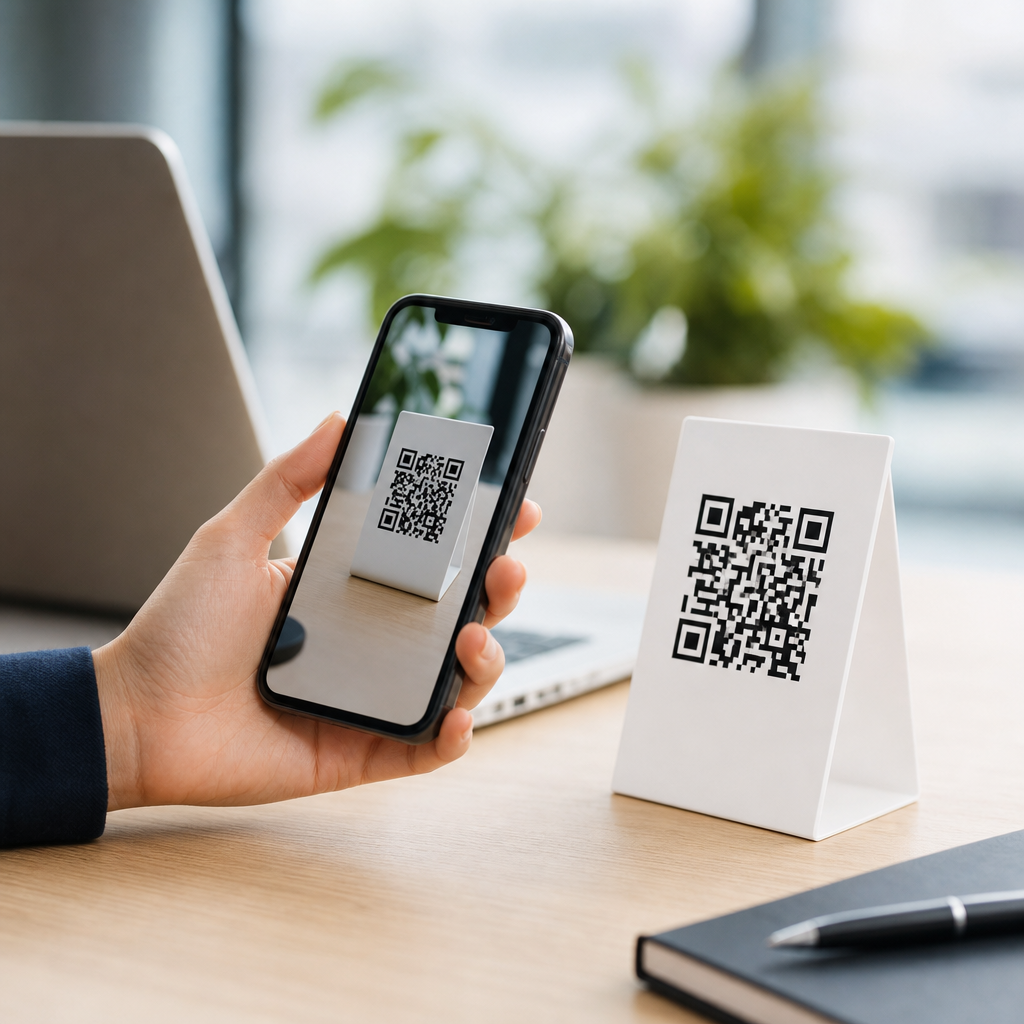
QR code marketing ROI is the measurable business return generated when a company uses scannable codes to drive actions such as website visits, coupon redemptions, app downloads, event check-ins, product education, and purchases. ROI, or return on investment, is usually calculated as revenue gained minus campaign cost, divided by campaign cost. In practice, the answer is broader than a simple formula because QR code campaigns often influence offline-to-online behavior, first-party data collection, attribution quality, and customer experience. I have used QR codes in retail displays, direct mail, packaging, trade shows, and restaurant operations, and the strongest results came from campaigns built around one clear action, a mobile-optimized landing page, and disciplined tracking through UTM parameters, analytics dashboards, and conversion events.
For businesses evaluating QR code marketing, the core question is not whether codes are cheap to print; it is whether they change behavior at a profitable rate. That matters because QR codes sit at the intersection of physical media and digital conversion. A poster can become a lead form. A package insert can become a reorder path. A table tent can become a review request. Since smartphone camera scanning is now standard on iPhone and Android devices, friction is far lower than it was a decade ago. According to industry reporting from firms such as Statista and eMarketer, QR code use has expanded steadily in payments, menus, authentication, and promotions. As a result, businesses now treat QR codes less as novelty graphics and more as response mechanisms that can be tested, optimized, and tied to revenue.
This article serves as a practical hub for Business and Marketing FAQs around QR code ROI. It explains how to measure returns, what benchmarks matter, which campaign formats perform best, and where common failures destroy results. It also addresses a frequent misconception: a QR code does not create ROI by itself. The code is simply the bridge. The return comes from the offer, placement, audience intent, page speed, creative, and follow-up process behind it. When those pieces are aligned, QR code marketing can be one of the most cost-efficient ways to capture high-intent action from offline touchpoints.
How to calculate the ROI of QR code marketing
The standard formula is straightforward: ROI = (campaign return – campaign cost) / campaign cost x 100. If a mailer with a dynamic QR code costs $4,000 to design, print, distribute, and track, and it generates $10,000 in attributable gross profit, the ROI is 150 percent. The important word is attributable. To measure QR code marketing accurately, define one primary conversion before launch. That might be a purchase, qualified lead, booked demo, reservation, donation, subscription, or redeemed offer. Then assign value to that action. For ecommerce, value is clear. For lead generation, use historical close rates and average gross profit per sale. For example, if 100 QR scans produce 20 form fills, four sales calls, and one closed deal worth $8,000 in gross profit, the code contributed measurable pipeline even if the transaction happened later.
Strong measurement requires campaign architecture. Use dynamic QR codes rather than static ones when possible because they let you change destinations without reprinting assets and provide scan-level analytics such as location, time, device, and repeat scans. Add UTM parameters to the destination URL so Google Analytics 4, Adobe Analytics, HubSpot, or similar platforms can attribute sessions and conversions to the exact placement. I typically create separate codes for each channel variation: packaging, window signage, direct mail, receipts, booth graphics, and print ads. That prevents blended reporting and reveals which physical touchpoints actually produce profitable behavior. Without this setup, teams often see scans but cannot tell which asset worked, whether users bounced, or how many converted downstream.
What factors most affect QR code campaign performance
QR code marketing performance depends on context, intent, and usability more than on the code itself. Placement matters first. A code on product packaging reaches an existing customer with immediate relevance, while a code on a highway billboard gives a brief, low-attention impression and may be unsafe to scan. Offer quality matters next. Users scan because they expect value: a discount, menu, instructions, product verification, loyalty points, a quick quote, or exclusive content. If the destination is generic home page traffic, scan rates and conversion rates drop sharply. The landing page must also load quickly, display cleanly on mobile, and match the message beside the code. Any disconnect between the physical prompt and the digital experience creates abandonment.
Design and trust signals play a major role. The QR code should be large enough to scan easily, usually at least 2 x 2 centimeters in close-range use, with strong contrast and quiet zone spacing. Include a clear call to action next to it, such as “Scan to reorder in 30 seconds” or “Scan for a 15% first-visit offer.” Brand cues matter because users are cautious about unknown links. Adding your logo, brand colors within tolerance, and a short explanation of what happens after scanning increases confidence. In my own campaign testing, simply replacing “Scan me” with specific action language improved scan-through rates because it answered the user’s immediate question: why should I bother?
Audience-device fit also affects outcomes. Younger urban consumers may scan naturally in retail and event settings, while older audiences may need more explicit guidance. Internationally, QR behavior varies by market because some regions normalized QR payments and super-app interactions earlier than others. Industry influences expectations too. Restaurant diners readily scan menus; industrial buyers at trade shows may scan spec sheets or book consultations; patients in healthcare settings may scan intake forms, but privacy and compliance constraints are stricter. A profitable QR strategy aligns the scanning moment with existing user behavior instead of trying to force a new habit in a low-intent context.
Where QR code marketing delivers the highest ROI
The highest ROI usually appears where a physical touchpoint reaches high intent and the next step is simple. Packaging inserts are a classic example. A consumer who already bought from you is more likely to scan for setup help, accessories, warranty registration, refill reminders, or loyalty enrollment. That creates upsell revenue and first-party data at very low incremental cost. Restaurants often see strong returns from table QR codes used for menus, order-ahead, loyalty enrollment, or review generation because the user is already engaged and mobile-ready. Retailers can connect shelf talkers and endcap signage to product demos, comparison guides, or instant coupons, reducing reliance on staff while improving conversion on considered purchases.
Direct mail is another strong performer when targeted well. A postcard with a personalized QR code can drive recipients to a prefilled landing page, quote request, or appointment scheduler. In sectors such as home services, insurance, education, real estate, and elective healthcare, that bridge from mailbox to mobile can outperform generic vanity URLs because it removes typing friction. Events and trade shows also generate measurable value. Booth signage, badges, product displays, and presentation slides can move visitors directly into lead capture, downloadable materials, or meeting bookings. Because event traffic is expensive, even modest improvements in lead capture efficiency can materially improve ROI. For local businesses, window decals, receipts, flyers, and takeout packaging often work well because they capture people already near the point of purchase.
| Use case | Primary goal | Typical KPI | Why ROI can be strong |
|---|---|---|---|
| Packaging inserts | Upsell or registration | Repeat purchase rate | Targets existing buyers with low added cost |
| Direct mail | Lead generation | Cost per qualified lead | Reduces friction from offline to online response |
| Restaurant tables | Ordering or reviews | Average order value | Captures intent during active service moments |
| Trade shows | Lead capture | Meetings booked | Improves follow-up speed on expensive traffic |
| Retail signage | Product education | Conversion lift | Supports decisions at the shelf edge |
What metrics businesses should track beyond scans
Scans are only the top-of-funnel indicator. A campaign with 5,000 scans and no sales is worse than one with 300 scans and 30 purchases. Businesses should track scan rate by placement, unique versus repeat scans, session engagement, bounce rate, form completion, add-to-cart rate, purchase rate, average order value, assisted conversions, and customer lifetime value. For lead generation, include qualified lead rate, sales acceptance rate, opportunity creation, close rate, and time to revenue. For retention campaigns, track reorders, subscription renewals, support deflection, and review volume. If the QR code is used for service content like setup instructions, the return may show up as fewer support tickets, lower call-center volume, and better post-purchase satisfaction rather than direct sales.
Attribution should also reflect assisted value. A QR code on packaging may not trigger an immediate sale, but it may register a product, enroll a customer in email or SMS, and lead to repeat purchases later. In GA4, use event-based conversion paths and compare last-click with data-driven attribution where available. In CRM systems such as HubSpot or Salesforce, store the original QR campaign source so downstream revenue is not lost when a lead converts weeks later. I have seen teams understate QR ROI because they counted only same-session purchases, ignoring the email captures and quote requests that later produced meaningful revenue. The right reporting window depends on the sales cycle.
Common reasons QR code marketing fails
Most poor results come from execution mistakes, not from the technology. The first failure is sending traffic to a generic homepage instead of a dedicated page aligned to the scan context. The second is weak mobile experience: slow load times, intrusive pop-ups, long forms, or pages that require pinch-and-zoom. The third is unclear value exchange. If users do not know what they get by scanning, response rates remain low. Other common problems include poor print quality, codes placed too far away, inadequate contrast, destinations blocked by app stores or logins, and broken links caused by rushed campaign changes. Static QR codes can become a hidden liability when businesses need to change URLs after printing thousands of assets.
Trust and compliance can also limit performance. Users may hesitate to scan codes from unknown sources because phishing scams have made people cautious. Businesses should use recognizable branding, HTTPS destinations, and plain-language context about where the code leads. In regulated sectors, privacy disclosures matter. Healthcare, financial services, and education campaigns may need consent language, data handling notices, or accessibility accommodations. There is also a strategic limitation: QR codes are not a fit for every environment. If the user is driving, carrying bags, or far from the sign, scanning is impractical. In those cases, short URLs, NFC, SMS keywords, or search-friendly brand terms may work better.
How to improve ROI from QR code marketing campaigns
To improve ROI, start with one job for the code and engineer the experience around that outcome. Match each placement to a dedicated landing page, compress the path to conversion, and test the offer. Use dynamic QR platforms with analytics, set up event tracking, and create separate codes for each creative variation. Pair the code with explicit action language, visible brand identity, and a reason to act now. Optimize for mobile-first speed using compressed images, minimal scripts, and short forms. Then review results by cohort, location, and placement, not just in aggregate. Small changes often produce disproportionate gains, especially when campaigns run across packaging, print, signage, and in-store materials. Audit one active QR campaign this week, fix friction, and measure profit, not just scans.
Frequently Asked Questions
What does ROI mean in QR code marketing?
In QR code marketing, ROI refers to the measurable return a business gets from using scannable codes in campaigns that drive actions such as website visits, coupon redemptions, app downloads, purchases, event check-ins, and product engagement. The standard formula is straightforward: subtract the total campaign cost from the revenue generated, then divide that number by the campaign cost. However, QR code marketing ROI is often more nuanced than a simple revenue calculation because these campaigns frequently connect offline touchpoints to digital outcomes. A QR code on packaging, signage, direct mail, menus, or in-store displays can influence customer behavior long after the initial scan, helping brands capture first-party data, move prospects into email or SMS funnels, and improve attribution across channels. That means the real return may include both direct sales and broader business value such as lead generation, customer retention, lower acquisition costs, and improved visibility into customer journeys.
How do you calculate the ROI of a QR code marketing campaign?
To calculate the ROI of a QR code marketing campaign, start by identifying the full cost of the campaign, including QR code platform fees, creative design, printing, distribution, landing page development, analytics setup, incentives or discounts, and any paid promotion tied to the campaign. Next, measure the outcomes generated by the QR code itself. These may include transactions, qualified leads, app installs, bookings, registrations, or coupon redemptions. If the campaign generated direct revenue, apply the standard ROI formula: (Revenue Gained – Campaign Cost) / Campaign Cost. For example, if a campaign cost $2,000 and produced $8,000 in attributable revenue, the ROI would be 300 percent. In more advanced cases, businesses also evaluate assisted conversions, average order value from scan traffic, customer lifetime value, and repeat purchases tied to users acquired through QR scans. When direct sales are not the only goal, companies may calculate return using cost per lead, cost per acquisition, or downstream conversion value. The key is to define success metrics before launch and use trackable URLs, campaign parameters, unique landing pages, and analytics tools so the impact of each QR code placement can be measured accurately.
What metrics should businesses track to measure QR code marketing ROI accurately?
Businesses should look beyond raw scan counts and track the full chain of performance from scan to business outcome. Important top-of-funnel metrics include total scans, unique scans, scan rate by placement, device type, time of day, and location-based engagement when available. Mid-funnel metrics may include landing page views, bounce rate, time on page, form completions, app download starts, account sign-ups, coupon claims, and product page interactions. Bottom-of-funnel metrics are where ROI becomes clearer: purchases, revenue per scan, conversion rate, average order value, qualified leads, event attendance, and customer acquisition cost. For campaigns focused on retention or loyalty, businesses should also monitor repeat purchase behavior, customer lifetime value, and redemption frequency over time. Another important dimension is attribution quality. By assigning unique QR codes to packaging, posters, direct mail pieces, retail displays, or event materials, marketers can compare channel performance and identify where the strongest returns come from. Accurate ROI measurement depends on connecting these metrics in one reporting system so the business can see not just who scanned, but what they did next and how much value they generated.
Can QR code marketing deliver ROI even if it does not lead to an immediate sale?
Yes, absolutely. Many QR code campaigns create meaningful ROI even when the first scan does not result in an immediate purchase. That is because QR codes often play a valuable role in moving customers from offline discovery to digital engagement, where future conversions become more likely and easier to measure. For example, a code on product packaging might lead to tutorials, setup instructions, or product education content that reduces returns and increases satisfaction. A restaurant QR code may drive loyalty sign-ups that lead to repeat visits. A direct mail QR code could capture an email address, which then enters an automated nurture sequence that converts weeks later. In each of these cases, the return comes from actions that improve revenue efficiency, customer experience, and retention rather than only instant transactions. QR codes can also help brands collect first-party data at a time when privacy changes are making traditional tracking harder. That data has strategic value because it supports better segmentation, remarketing, personalization, and campaign optimization. So while immediate sales are one way to assess ROI, a well-designed QR code campaign can deliver strong returns through lead quality, lower support costs, stronger engagement, and improved long-term customer value.
What factors have the biggest impact on the ROI of QR code marketing?
The biggest drivers of QR code marketing ROI are usually strategy, placement, user experience, and measurement. Strategy matters because the QR code must be tied to a clear goal, whether that is driving purchases, collecting leads, increasing app downloads, or improving in-store engagement. Placement has a major effect because a code needs to appear where the audience is both likely and motivated to scan, such as on packaging, receipts, product displays, storefronts, event signage, menus, or print ads. The offer and destination experience are equally important. If the code leads to a slow, generic, or confusing landing page, scan activity will not translate into meaningful results. High-performing campaigns usually connect the code to a specific and relevant action, such as claiming a discount, watching a product demo, checking into an event, or unlocking exclusive content. Mobile optimization is essential, since the entire experience happens on a phone. Strong ROI also depends on using dynamic QR codes, trackable links, and analytics tools so the business can test variations and improve performance over time. Finally, campaign economics matter: lower production costs, better conversion rates, and stronger post-scan follow-up all increase the return. When these elements work together, QR code marketing can be a highly efficient way to bridge offline attention and online action.