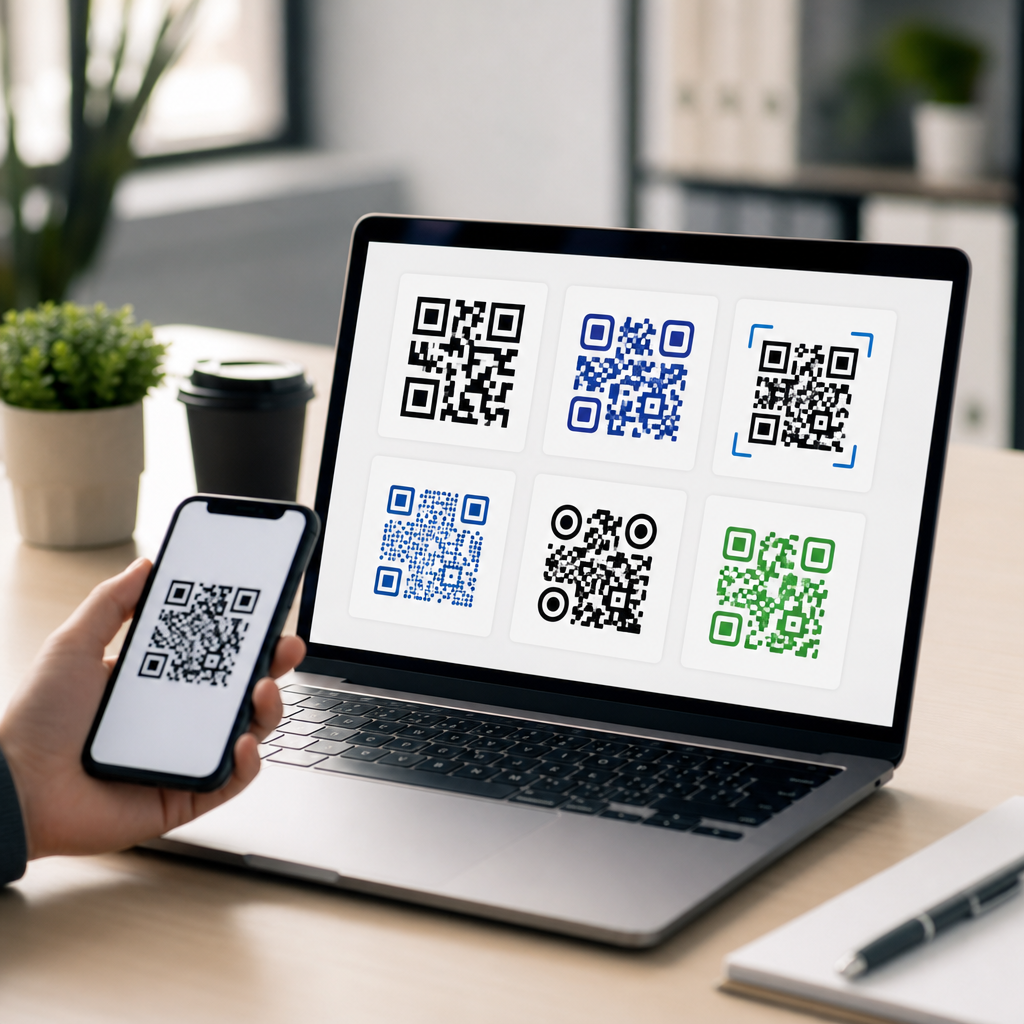
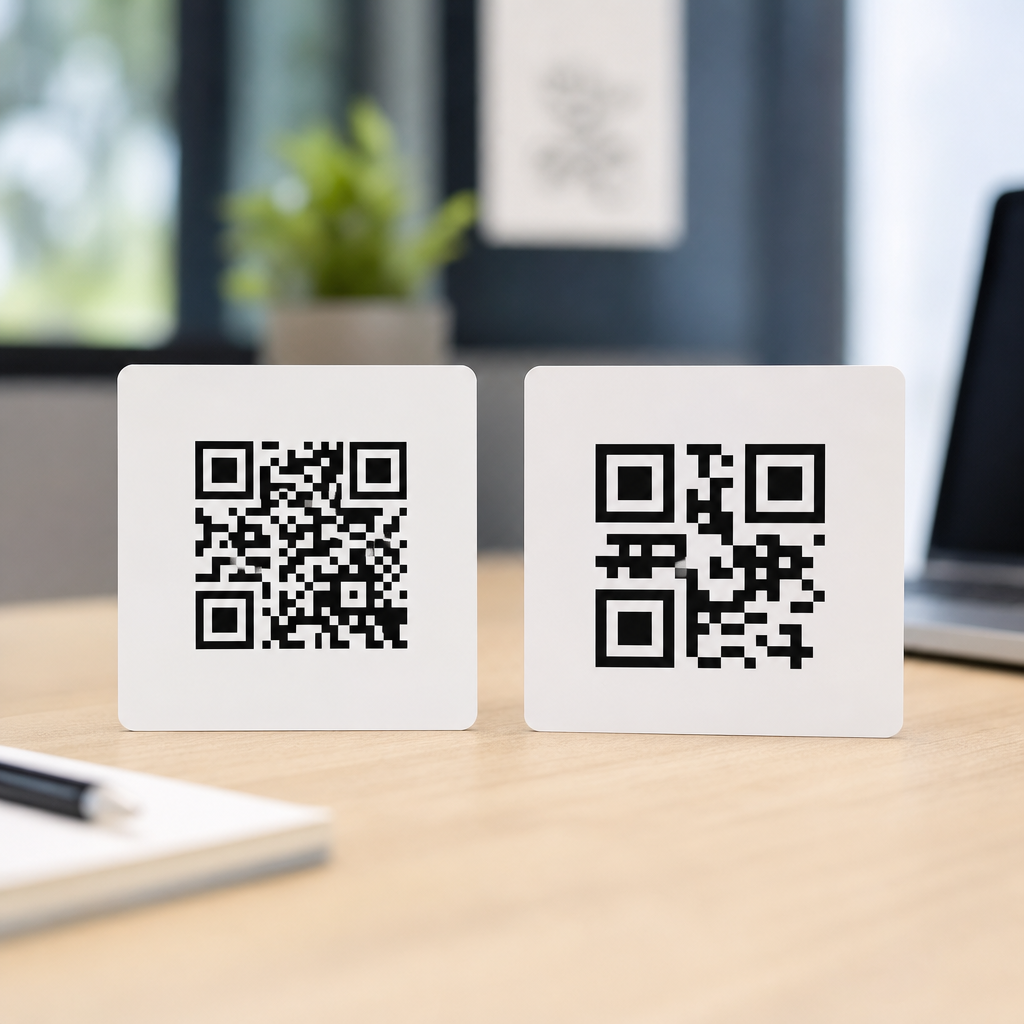
Static and dynamic QR codes solve the same basic problem—connecting a physical surface to digital content—but they behave very differently once printed. A QR code is a two-dimensional matrix barcode, standardized under ISO/IEC 18004, that stores data as dark and light modules readable by smartphone cameras and scanners. In mobile marketing, packaging, retail signage, event access, and field operations, the practical choice is not whether to use a QR code, but whether the code should be fixed forever or managed after deployment. That decision affects cost, flexibility, tracking, security, and the lifespan of every campaign.
In simple terms, a static QR code contains the destination data directly inside the symbol. If the code points to a URL, phone number, Wi-Fi credential, vCard, or plain text, that data is permanently encoded. A dynamic QR code usually encodes a short redirect URL managed by a QR platform. When someone scans it, the platform forwards the user to the current destination and can log scan activity such as time, approximate location, device type, or campaign source. Because the redirect target lives on a server, the destination can be edited later without reprinting the code itself.
This difference matters because mobile QR codes often live in expensive, slow-moving places: product boxes, restaurant menus, billboards, instruction manuals, direct mail, shelf talkers, ID badges, and vehicle wraps. I have seen teams save thousands by switching a broken landing page behind a dynamic code instead of pulping printed inventory. I have also seen simple static codes outperform more complex setups when the content was truly permanent and privacy obligations were strict. Choosing correctly at the start prevents rework, protects user trust, and makes the rest of your QR strategy easier to scale across channels.
What static QR codes are and when they work best
A static QR code is best understood as a sealed container. Once generated, the encoded payload does not change. That makes static codes ideal for information that will remain accurate for the full life of the printed asset. Common examples include plain text instructions, a permanent company homepage, a phone number for a stable support desk, a prefilled SMS message, or a Wi-Fi login displayed inside a venue. Because no redirect service is required, static codes can be created by many free generators and will continue to resolve as long as the encoded destination itself remains valid.
The main advantages are simplicity, low cost, and independence from a third-party management platform. There is no subscription requirement to keep the code functioning if you encoded the final destination directly. Static codes can also be preferable for privacy-sensitive environments because they do not inherently depend on scan logging. For small organizations, classrooms, museums, or internal operations where analytics are unnecessary, static codes are often the cleanest option. Error correction still applies, so the code can tolerate some damage, but the symbol may become denser as more data is encoded, which can reduce scan reliability on small print formats.
The biggest limitation is permanence. If you print ten thousand brochures with a static URL and later redesign the site structure, every brochure may become outdated. The same risk applies to seasonal promotions, PDF files that move, app deep links that change, and event pages that expire. Static codes also provide little visibility into performance unless the destination URL contains tagged parameters and your analytics platform captures visits after the scan. Even then, you are measuring page sessions, not always unique scans, failed scans, or scans segmented by the QR asset itself.
What dynamic QR codes are and why marketers prefer them
A dynamic QR code separates the printed symbol from the final destination. The code usually contains a short URL hosted by a QR management service. When a user scans, the service records the event and redirects the device to the current target. This architecture creates flexibility that static codes cannot match. You can change a landing page after printing, rotate destinations by geography or date, pause a campaign, or route users to different mobile experiences without touching the physical code. For any campaign with evolving content, dynamic is usually the safer default.
In practice, this matters most when QR codes sit on assets with long print runs or high replacement costs. A beverage brand can print one dynamic code on millions of labels, then switch from a contest microsite to nutrition guidance after the promotion ends. A real estate firm can keep the yard sign but update the property URL when a listing changes. A conference organizer can redirect the same badge code from registration to agenda updates to post-event feedback. These are common, everyday uses, not edge cases, and they explain why dynamic QR codes dominate modern campaign management.
Dynamic platforms also add measurement and control. Vendors such as QR Code Generator Pro, Bitly, Beaconstac, Uniqode, and Flowcode typically provide dashboards for total scans, unique scans, timestamps, city-level location estimates based on IP, device breakdowns, and UTM integration with Google Analytics 4. Some platforms support password protection, expiration rules, A/B testing, custom domains, and bulk management. The tradeoff is dependency: if the subscription lapses, the service changes terms, or the redirect domain loses trust, performance can suffer. Good governance means choosing reputable vendors, documenting ownership, and testing codes regularly.
Static vs dynamic QR codes: key differences that affect results
The right comparison is not just editable versus non-editable. The two types differ across operations, analytics, branding, compliance, and risk. Static codes are straightforward and resilient because fewer moving parts are involved. Dynamic codes are adaptable and measurable because the redirect layer adds intelligence. Most teams should compare them based on lifecycle needs: how long the code will be in market, how likely the destination is to change, whether analytics are required, and who will maintain the system over time.
| Factor | Static QR Code | Dynamic QR Code |
|---|---|---|
| Destination | Encoded directly in the symbol | Managed through a redirect URL |
| Edit after printing | No | Yes |
| Scan analytics | Limited and indirect | Built-in on most platforms |
| Ongoing cost | Usually none | Usually subscription-based |
| Best for | Permanent information | Campaigns, changing content, long print runs |
| Risk profile | Broken if destination changes | Dependent on vendor uptime and governance |
Another important distinction is data density. A static code that stores a long URL, vCard, or full Wi-Fi configuration may need a larger symbol and a quieter zone around it to scan consistently. A dynamic code often encodes only a short redirect URL, which can make the printed pattern less dense and easier to scan at smaller sizes. This is especially useful on product packaging, business cards, and labels where space is constrained. However, a short, scannable code is only valuable if the redirect service is fast and reliable on mobile networks.
How to choose the right QR code for mobile use cases
If the destination will never change and you do not need scan data, use a static QR code. If the content might change, if multiple stakeholders need reporting, or if the code will be printed in volume, use a dynamic QR code. That rule covers most decisions accurately. The exceptions usually involve legal retention, privacy, or procurement constraints. For example, a hospital may prefer static codes for patient education PDFs hosted on a stable domain to minimize third-party dependencies, while a retailer will usually favor dynamic codes for packaging campaigns that require attribution and post-launch edits.
For mobile QR codes specifically, think about the full scan journey. The code should open a mobile-optimized destination, load quickly on cellular networks, and match the promise made near the code. A dynamic setup supports this better because you can correct a poor landing page, swap in region-specific content, or redirect iPhone and Android users differently if needed. Still, dynamic is not an excuse for weak planning. Before printing, test scan distance, contrast, quiet zone, destination speed, and fallback behavior across current iOS and Android devices using native camera apps and popular third-party scanners.
Governance is often the deciding factor in mature organizations. Someone must own the redirect rules, naming conventions, analytics taxonomy, and access controls. I recommend using a custom domain for dynamic QR redirects, applying UTM standards consistently, and keeping an inventory of where each code is printed. That inventory becomes critical when campaigns end, product labels remain in circulation, or compliance teams ask what data is being collected. If your team cannot maintain that discipline, a well-planned static implementation may be more reliable than a neglected dynamic one.
Common mistakes, security concerns, and best practices
The most common mistake is choosing static for content that is not actually permanent. A homepage redesign, CMS migration, or URL parameter change can quietly break thousands of printed codes. Another frequent error is treating dynamic analytics as perfect truth. Scan counts can be inflated by repeated scans, internal testing, bot traffic on exposed short links, or redirects that fail after the initial event is logged. Use dashboard metrics directionally, and validate campaign outcomes in your web analytics, CRM, or point-of-sale systems.
Security and trust also matter. Users are increasingly cautious because QR codes can hide malicious destinations. Brands should reduce uncertainty with clear labels, recognizable domains, and destination previews where practical. For dynamic codes, choose platforms that support HTTPS, custom domains, role-based access, and audit logs. Avoid free, unvetted redirect services for business-critical deployments. In regulated sectors, review whether IP-based location data, device fingerprints, or consent banners create obligations under GDPR, CCPA, or internal privacy policies.
Print execution still determines scan performance. Follow established best practices: high contrast, adequate quiet zone, no distortion, and a size matched to scan distance. A common baseline is at least 2 x 2 centimeters for close-range use, though packaging, outdoor signage, and moving environments often need more. Test under glare, curved surfaces, and low light. Add a clear call to action such as “Scan for setup guide” or “Scan to track your order.” When people know what they will get, scan rates rise and support requests drop.
Static and dynamic QR codes are not competing trends; they are different tools for different operational needs. Static codes are durable, simple, and cost-effective when the information is permanent. Dynamic codes are flexible, measurable, and safer for campaigns where destinations, audiences, or business goals change over time. For most organizations creating mobile QR codes at scale, the real question is how much control you need after print, not which format sounds more advanced.
The best results come from matching the code type to the asset lifecycle, the need for analytics, and your ability to manage redirects responsibly. If you print once and never revise, static is often enough. If you market continuously, test offers, or need attribution, dynamic will usually pay for itself by preventing reprints and preserving campaign agility. In both cases, scan success depends on strong mobile landing pages, careful testing, and clear labeling that builds user confidence.
Use this page as your starting point for the broader “Creating Mobile QR Codes” workflow, then map each use case—packaging, print, events, support, and product education—to the right format before you generate anything. A few decisions made upfront will save budget, reduce broken experiences, and make every scan more useful.
Frequently Asked Questions
What is the main difference between a static QR code and a dynamic QR code?
The core difference is what the QR code actually contains and what can happen after it has been printed. A static QR code directly stores the final destination or data inside the code itself, such as a website URL, plain text, contact information, Wi-Fi credentials, or another fixed payload. Once created and printed, that content is essentially permanent. If the destination changes later, the code must be replaced everywhere it appears because scanners will keep reading the original embedded data.
A dynamic QR code works differently. Instead of storing only the final content, it typically stores a short redirect URL or identifier that points to a server-managed destination. That means the code printed on packaging, posters, labels, manuals, or signage can stay the same while the destination behind it can be updated later. In practical terms, static means fixed after printing, while dynamic means editable after deployment.
This difference matters because both types solve the same basic problem—linking a physical object to digital content—but they do so with very different levels of flexibility. Static QR codes are simple and direct, which makes them useful for permanent information that will not change. Dynamic QR codes are usually better when businesses need to update landing pages, swap campaign destinations, correct mistakes, control scan behavior, or measure performance over time.
When should you use a static QR code instead of a dynamic one?
A static QR code is a strong choice when the information is truly permanent and does not need to be edited, tracked, or managed later. Common examples include basic contact cards, a fixed URL for a company homepage, a permanent product instruction page, a prewritten text message template, or Wi-Fi login details that are unlikely to change. In these cases, the simplicity of a static code can be an advantage because there is no dependency on a redirect platform or management dashboard to keep the destination functioning.
Static QR codes can also make sense for low-risk, one-time, or highly stable use cases where future updates are unnecessary. If the code is going onto a surface that is easy and inexpensive to reprint, the downside of being non-editable may not matter much. For example, temporary flyers, internal office signage, or small-run promotional materials may not justify the added control of a dynamic system.
Another reason to choose static is durability of the encoded data itself. Because the content is directly embedded in the code, there is no intermediate redirect layer that must stay active. However, that benefit comes with an important limitation: if the underlying URL changes, if a typo was introduced during setup, or if the campaign evolves, the printed code becomes outdated. In short, static QR codes are best for content that is expected to remain unchanged for the full life of the printed material.
Why are dynamic QR codes usually better for marketing, packaging, and business operations?
Dynamic QR codes are often the better option in real-world business settings because they allow the destination to change without requiring a new printed code. That single capability has major operational value. A business can print one QR code on product packaging, retail displays, brochures, event signage, field labels, or equipment tags and later update where the user lands. The destination could shift from a launch page to a support page, from a seasonal promotion to a product registration form, or from an outdated PDF to a current knowledge base article.
They also support analytics and campaign optimization in ways static codes generally do not. Because scans pass through a managed redirect, organizations can often measure scan counts, timestamps, approximate locations, device types, and other useful performance indicators depending on the platform used and privacy settings. That helps marketers compare placements, improve calls to action, test landing pages, and understand whether printed assets are delivering results.
Dynamic codes are equally valuable outside marketing. In operations, they can connect field technicians to updated manuals, safety procedures, maintenance logs, or inventory systems. In events, they can point attendees to changing schedules or registration workflows. In packaging, they can support multilingual content, product authentication, updated instructions, and post-purchase support. Because physical print is expensive to replace at scale, the ability to change digital content behind a persistent code can reduce waste, lower reprint costs, and extend the useful life of printed materials.
Can you track scans and edit the destination after printing with both types of QR codes?
No. That is one of the most important practical distinctions. With a static QR code, the destination is embedded directly in the symbol, so there is no built-in way to edit the destination after printing. If you need the code to go somewhere else, you must generate a new code and replace the old one anywhere it appears. Static codes also do not inherently provide scan analytics because scanners typically go straight to the encoded content without first passing through a controllable tracking layer.
Dynamic QR codes, by contrast, are designed for post-print management. In most implementations, you can log into a dashboard and change the final URL or linked resource while keeping the same printed code in circulation. That makes dynamic QR codes especially useful for long-lived assets like packaging, storefront signage, posters, trade show displays, product labels, instruction inserts, and equipment tags.
Tracking is also usually tied to dynamic QR systems. Since the code routes the scan through a managed redirect, the platform can record activity such as the number of scans, time of scan, broad location, and device characteristics, subject to the platform’s capabilities and applicable privacy rules. This visibility is what allows businesses to evaluate campaign performance, identify underperforming placements, and make informed decisions about future print and digital investments. So if editability and analytics matter, dynamic is generally the right choice.
Are there any drawbacks or risks to dynamic QR codes compared with static QR codes?
Yes, and it is important to understand them before choosing a format. The biggest tradeoff is dependency. A dynamic QR code usually relies on a third-party platform, redirect service, or managed infrastructure to resolve the final destination. If that service is discontinued, misconfigured, allowed to expire, or not properly maintained, the QR code may stop working even though the printed symbol itself is still physically intact. That means long-term reliability depends not just on the code, but on the system behind it.
There can also be cost considerations. Many dynamic QR code services charge subscription fees for advanced features such as editable destinations, analytics, access controls, bulk management, branded short links, or API integrations. For organizations deploying QR codes at scale, these features are often worth the investment, but they still represent an ongoing operational commitment that static codes do not require in the same way.
Finally, governance and privacy need attention. Because dynamic codes can collect scan data, businesses should use them responsibly, follow privacy regulations, and ensure users are being directed to secure, trustworthy destinations. Redirect chains should be fast and stable, and ownership of domains, accounts, and campaign assets should be clearly managed internally. In other words, dynamic QR codes offer far more flexibility and insight, but they work best when supported by reliable infrastructure, clear ownership, and a long-term management plan.