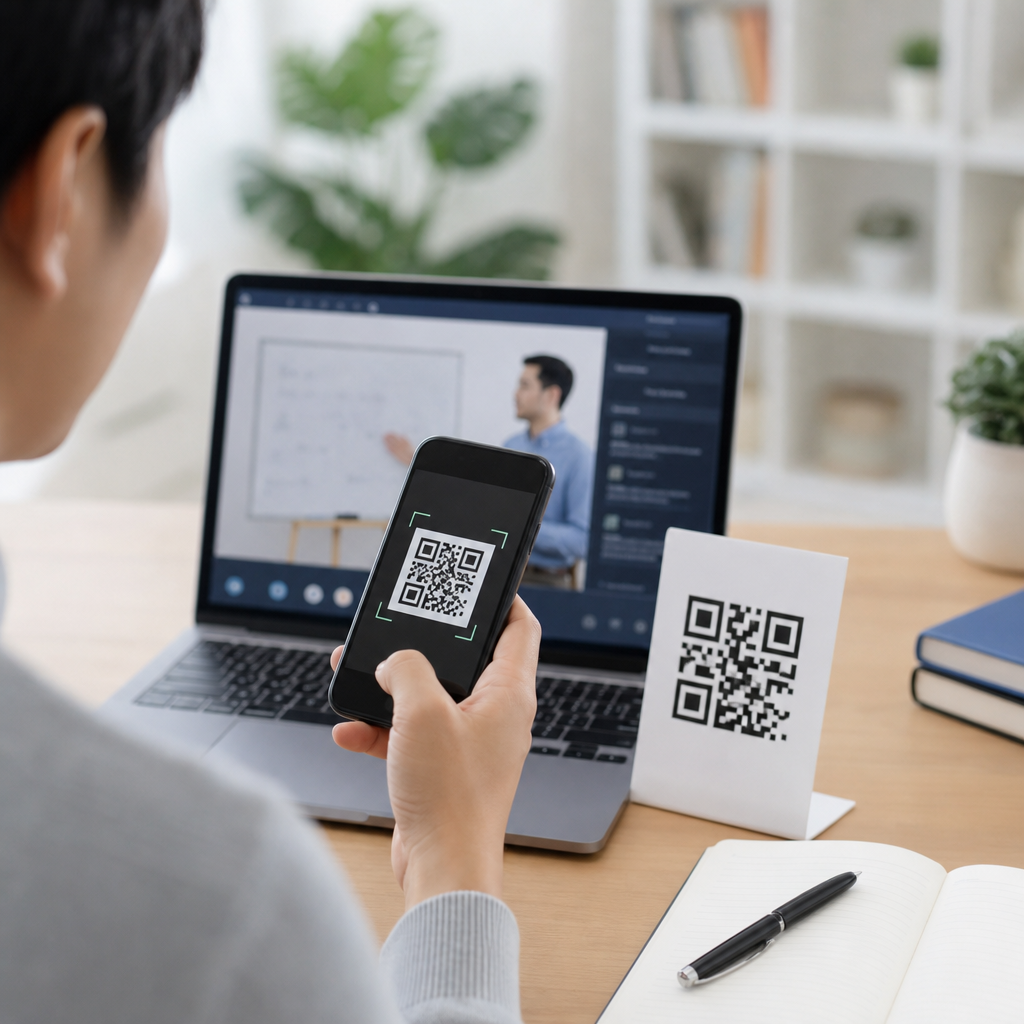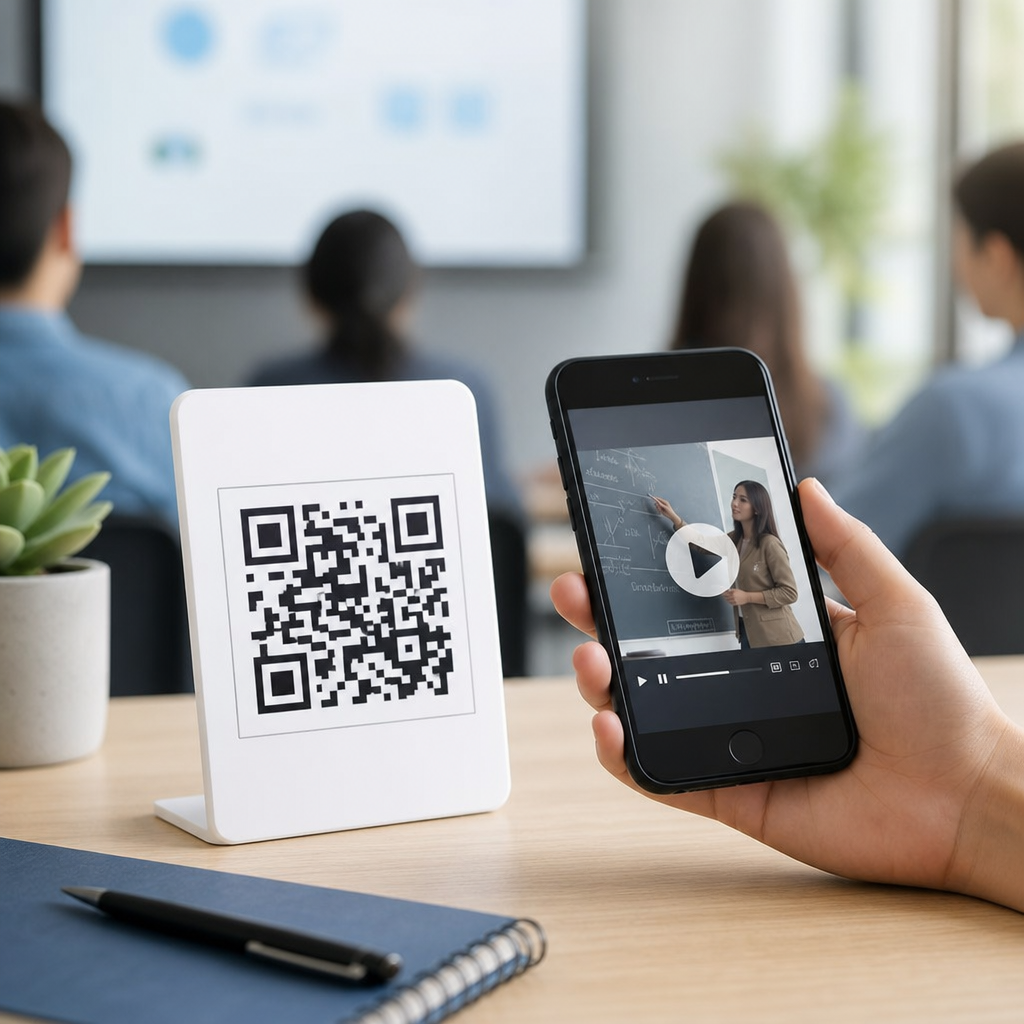

QR codes for trade show lead capture have moved from a novelty on booth graphics to a core workflow for events and ticketing teams that need faster follow-up, cleaner data, and better attribution. In this context, a QR code is a scannable two-dimensional barcode that opens a landing page, form, digital pass, product sheet, meeting scheduler, or payment flow with one camera scan. Lead capture means collecting contact details and qualifying information from attendees in a way that sales and marketing can actually use after the event. For event operators, exhibitors, sponsors, and venue marketers, this matters because trade shows compress hundreds of buying conversations into a short window, and any delay or manual step reduces conversion.
I have seen the difference on busy show floors: paper business card bowls and handwritten lists create duplicate records, illegible fields, and slow follow-up, while well-placed QR workflows produce immediate CRM entries and trigger personalized email sequences before attendees leave the hall. The broader events and ticketing category depends on speed, measurability, and attendee convenience. That makes QR codes useful not only for exhibitor lead capture, but also for registration, badge pickup, session check-in, sponsored activations, coupon delivery, contactless payments, and post-event content access. As the hub page for this subtopic, this guide explains how trade show QR codes work, where they fit in event operations, which setup choices affect results, and how to connect scans to revenue instead of vanity metrics.
The best trade show lead capture systems are simple for attendees and disciplined behind the scenes. They use mobile-first forms, dynamic QR destinations, consent language, CRM syncing, and clear calls to action tied to attendee intent. They also account for practical limits such as weak venue Wi-Fi, badge scanning rules, privacy laws, and staff training. When event teams design QR experiences around specific use cases rather than generic “scan me” signs, scans become qualified conversations, scheduled demos, and attributable pipeline.
How QR codes fit into events and ticketing workflows
Within events and ticketing, QR codes solve one recurring problem: reducing friction at the moment an attendee is ready to act. At a trade show booth, that action may be requesting a demo. At an event entrance, it may be validating a mobile ticket. At a breakout room, it may be checking in for continuing education credits. The same underlying mechanism applies across these scenarios. A printed or digital QR code points to a destination that records an action and often identifies the source, time, campaign, and user response.
For exhibitors, this creates a bridge between top-of-funnel foot traffic and downstream sales activity. Instead of asking every visitor to wait while staff type notes into a tablet, teams can route interested people to a short form connected to HubSpot, Salesforce, Zoho CRM, or Microsoft Dynamics 365. For organizers, QR codes also support attendee movement and sponsor reporting. Session attendance, prize entry, exhibitor referrals, food vouchers, and digital ticket redemption can all be tracked through scan events. Because the event environment is noisy and time-constrained, the strongest QR journeys remove optional fields, prefill where possible, and present a clear next step such as “Book a 15-minute demo” or “Download the buyer guide.”
Best use cases for trade show lead capture
The most effective use cases align the QR code with attendee intent. A visitor comparing vendors wants fast access to proof points, pricing ranges, or a meeting slot. A current customer may want support documentation or an account review. A sponsor may want to collect contest entries while qualifying job title and purchase timeline. In each case, the QR code should lead to a destination built for one decision, not a generic homepage.
Common high-performing applications include booth lead forms, scan-to-schedule pages, gated product sheets, interactive giveaways, speaker slide downloads, and post-session surveys. Event teams also use unique QR codes by location, creative variation, staff member, or sponsor tier to measure what actually drives engagement. For example, one manufacturer can place separate codes on a hanging banner, demo station, and printed brochure. If the demo station QR yields fewer scans but a higher booked-meeting rate, the team has evidence that live product interaction is producing stronger leads than passive signage.
Ticketing teams can extend this model beyond the expo floor. A registration confirmation email may include a QR code for badge pickup. VIP lounges can use QR validation for access control. Sponsored sessions can distribute exclusive content through post-session scans, giving organizers better sponsor value reporting. This is why QR codes belong in the events and ticketing stack, not as an isolated booth gimmick but as a reusable mechanism for attendance, engagement, and attribution.
What a high-converting QR lead capture flow includes
A high-converting flow has five parts: a visible offer, an easy scan, a fast landing experience, a concise form, and an immediate follow-up action. In practice, that means the booth sign tells attendees exactly what they get, the QR code is large enough to scan from a comfortable distance, the landing page loads quickly on mobile, the form asks only necessary questions, and completion triggers something useful right away. Useful can mean a calendar booking page, a coupon, a case study, a text message confirmation, or a sales rep alert.
I recommend dynamic QR codes rather than static codes for most trade shows because the destination can be changed without reprinting signage. That matters when offer messaging changes, inventory runs out, legal language needs updating, or UTM parameters must be corrected. Error correction level also matters. Show-floor signs get scratched, bent, and viewed under glare, so a code generated with appropriate error correction is more reliable. Testing should include different phone cameras, operating systems, and viewing angles, especially under venue lighting.
| Element | Best practice | Why it matters |
|---|---|---|
| Offer | State one clear benefit such as “Get pricing” | Specific value increases scan intent |
| Destination | Use a mobile landing page, not a homepage | Reduces drop-off and confusion |
| Form fields | Ask for minimal data plus one qualifier | Improves completion while preserving lead quality |
| Tracking | Add UTM tags and source labels | Enables campaign and booth asset attribution |
| Follow-up | Trigger instant email or rep notification | Short response time lifts conversion rates |
Integration, data quality, and compliance
Lead capture only works when the captured data moves cleanly into operating systems. The minimum integration is a form tool syncing to a CRM with source tagging. Better implementations also connect to marketing automation, calendar scheduling, analytics, and event management platforms such as Cvent, Eventbrite, Bizzabo, or Stova. The goal is to avoid CSV exports after the show, because delayed manual import creates duplicates and weakens attribution.
Data quality starts with field design. Use standardized dropdowns for country, company size, or purchase timeline when that information is needed. Validate email syntax and normalize phone formats. If badge scanning is available through the organizer, map badge fields carefully and avoid collecting the same data twice. Sales teams need notes too, so pair QR form submissions with a quick internal scoring or note entry process on staff devices. That preserves context from conversations that a form alone cannot capture.
Privacy and consent cannot be an afterthought. If attendees are entering contact data for follow-up, the form should explain what they are opting into, especially for promotional emails or SMS. Teams operating across regions should account for GDPR, CAN-SPAM, and other local rules. Secure transport through HTTPS is mandatory, and any integrations should be reviewed for data retention and access controls. Trust increases scan completion, particularly when the landing page matches booth branding and uses a recognizable domain.
Design and placement strategies that increase scans
Placement affects performance as much as copy. On a crowded booth, attendees scan what they can understand instantly. Put the code near the related offer, not hidden at knee level or buried in a paragraph. Include a short instruction and a benefit-focused label. “Scan to enter” is weaker than “Scan to book your product demo.” For larger graphics, maintain quiet space around the code and strong contrast between the code and background. Avoid reflective laminates and patterned surfaces that interfere with camera recognition.
Real-world testing consistently shows that multiple context-specific codes outperform one catchall code. A theater presentation area can promote “Get the slides.” A product pedestal can offer “See specs and pricing.” A hospitality counter can route to “Claim your coffee voucher.” Each scan reveals intent. Staff behavior matters too. Booth teams should actively invite scans as part of the conversation, then confirm completion and explain the next step. When reps simply point at a sign, scan volume rises less than expected because attendees are distracted and moving quickly.
Offline fallback planning is also essential. Some venues have overloaded cellular service. Teams can mitigate this with lightweight pages, dedicated hotspots, progressive web app techniques, or organizer-supported networks. For ticketing and access control, local caching and scanner redundancy are even more important because queue delays damage attendee experience immediately.
Measuring success across the event lifecycle
Scan counts are only the starting metric. To judge trade show lead capture accurately, track scan rate by asset, form completion rate, meeting-booked rate, qualified lead rate, cost per lead, opportunity creation, and influenced revenue. For organizers, add attendee check-in speed, session attendance, sponsor engagement, and content redemption. The point is to connect each QR interaction to an operational or commercial outcome.
A practical reporting model separates pre-event, on-site, and post-event performance. Before the event, monitor registration scans from email and social campaigns. On-site, compare booth assets, session signage, and sponsor activations. After the event, evaluate which QR journeys generated replies, demos, purchases, or renewals. If one code produced fewer total scans but the highest pipeline per scan, that is the asset to expand next time.
As the events and ticketing hub for industry-specific applications, this topic leads to every major workflow in the category: registration, mobile ticket delivery, badge pickup, access control, exhibitor lead capture, sponsor activations, session check-in, venue wayfinding, concessions, and post-event nurture. QR codes work best when they are treated as infrastructure, not decoration. Build each code around a defined attendee action, integrate it with the systems that run the event, and measure outcomes that matter to sales, sponsors, and operations. If you are planning your next trade show, audit every attendee touchpoint and replace friction with one purposeful scan.
Frequently Asked Questions
1. How do QR codes improve lead capture at trade shows compared with paper forms or badge scanning alone?
QR codes improve trade show lead capture by removing friction at the exact moment an attendee is interested. Instead of asking visitors to fill out a paper form, wait for a staff member to enter notes, or rely only on a generic badge scan, a QR code can send them directly to a mobile-friendly form, meeting scheduler, product page, demo request, or digital brochure in seconds. That speed matters on a busy show floor where attention is limited and booth staff may be juggling multiple conversations at once.
They also improve data quality. Handwritten notes are often incomplete, difficult to read, or never entered into a CRM quickly enough to support timely follow-up. With a QR-driven workflow, attendees can submit their own contact details, choose areas of interest, answer qualification questions, and opt into communications in a structured format. That means fewer typos, more complete records, and cleaner segmentation for the sales and marketing teams after the event.
Another major advantage is attribution. Different QR codes can be tied to specific booth zones, product displays, signage, sessions, staff members, or calls to action. That lets event and demand generation teams see which assets actually drove engagement, not just how many badges were scanned overall. In practice, this makes post-event reporting much more useful because teams can connect booth traffic to content downloads, appointment bookings, lead quality, and downstream pipeline activity.
QR codes also support better follow-up speed. As soon as a form is completed or a meeting is booked, the lead can flow into a CRM, marketing automation platform, or event system in real time. That allows sales reps to act while intent is still high, rather than waiting days for spreadsheet uploads or manual data cleanup. For trade show programs where conversion depends on fast outreach, that operational advantage can be just as important as the attendee experience itself.
2. What should a QR code for trade show lead capture link to?
The best destination depends on the attendee journey you want to create, but in most cases a QR code should link to a focused, mobile-first experience with one clear next step. Common destinations include lead forms, meeting schedulers, product detail pages, gated assets, digital business card exchanges, giveaway entry forms, demo requests, payment flows, and event-specific landing pages. The key is alignment between the code’s placement, the attendee’s intent, and the value promised on the sign or screen.
For example, a QR code on a large booth banner might work best when it leads to a short “book a demo” or “get the product guide” page. A code next to a hardware display may be better suited to a spec sheet, case study, or video walkthrough tied to that exact product. A code shown during a speaking session could route attendees to presentation slides, a follow-up resource hub, or a consultation request form. When each code matches the context around it, scan-to-conversion rates tend to be much higher.
The destination should also be optimized for minimal friction. That means fast load times, clean design, large tap targets, minimal required fields, and a form length appropriate to the setting. On a trade show floor, attendees are standing, distracted, and often using cellular data. If the landing page is slow, cluttered, or asks for too much information up front, abandonment rises quickly. Strong pages usually ask only for what the team truly needs to qualify and route the lead effectively.
Finally, the destination should support your operational goals after the event. If the sales team needs qualification data, include fields for timeline, budget range, use case, or product interest. If the marketing team is focused on nurture, include a content preference or consent checkbox. If appointments are the priority, route directly into a calendar tool. A QR code should not simply open “something digital”; it should lead to a workflow intentionally designed to capture useful data and move the conversation forward.
3. What information should businesses collect through a QR code lead capture form at a trade show?
A strong trade show lead capture form balances conversion rate with qualification quality. At a minimum, most businesses should collect name, company, work email, and a clear indication of interest such as product category, solution area, or reason for inquiry. Those core fields make it possible to identify the person, connect them to an account, and route follow-up based on what they actually care about.
Beyond that, the ideal form includes a small number of qualification questions that help sales and marketing prioritize leads after the event. Useful fields often include job title, company size, industry, purchase timeline, geographic region, budget range, current solution, and requested next step. For example, asking whether someone wants a quote, product demo, follow-up call, or downloadable information gives immediate context that is much more actionable than a simple contact record.
It is important not to overload the form. The trade show environment is not the place for a long enterprise intake process unless the value exchange is very high. In many cases, the best approach is progressive data collection: gather the essentials at scan time, then ask deeper questions later through follow-up email, a meeting, or a second-step form. This keeps scan completion rates high while still supporting lead qualification over time.
Compliance and consent should also be part of the form strategy. If you plan to send marketing emails or store personal data for ongoing outreach, include the necessary consent language and privacy links based on the regions and regulations relevant to your audience. Clear opt-in practices are not just a legal safeguard; they also help maintain list quality and trust. In short, the right form captures enough information to make the lead useful immediately, without creating so much friction that interested attendees walk away.
4. How can teams track and measure the performance of QR codes used at trade shows?
Effective measurement starts with using unique QR codes for distinct placements, campaigns, and goals. Instead of printing one code for everything, create separate codes for booth signage, product stations, speaking sessions, printed collateral, sponsor activations, and staff-specific outreach if needed. Each code should point to a destination with trackable parameters so you can identify where scans came from and what happened after the scan.
The first layer of measurement is engagement data: scans, unique visitors, form starts, form completions, meeting bookings, downloads, and bounce rates. These numbers help teams understand whether the code was visible, whether the call to action was compelling, and whether the landing page experience was effective. If scans are high but conversions are low, the problem may be the form or destination page. If visibility is low, the issue may be design, placement, or message clarity rather than attendee interest.
The second layer is lead quality and pipeline impact. The most valuable QR code program does not just count scans; it connects captured leads to CRM records, opportunity creation, pipeline value, and closed revenue where possible. This allows event teams to compare which booth assets or campaign messages generated not only the most activity, but the most meaningful business outcomes. That level of attribution is especially important when justifying event spend and improving future trade show strategy.
Real-time visibility is another major benefit. If QR code data is integrated with analytics, CRM, and automation systems, teams can monitor performance during the event rather than waiting until afterward. That makes it possible to adjust signage, reposition codes, change calls to action, or prompt staff to direct visitors toward the highest-performing workflows while the show is still in progress. The result is not just better reporting, but a more agile and effective event operation overall.
5. What are the best practices for creating QR codes that attendees will actually scan at a trade show?
The most important best practice is to make the value proposition obvious. Attendees should know exactly what they will get when they scan: “Book a live demo,” “Download the buyer’s guide,” “Enter to win,” “Get pricing,” or “See product specs.” A QR code by itself is not a call to action. Clear surrounding copy is what turns it into one. The benefit should be immediate, relevant, and worth the small effort of taking out a phone.
Design and placement also matter. The code should be large enough to scan easily from a natural viewing distance and placed where people can stop without blocking traffic. Good contrast is essential, and the code should not be distorted, overly stylized, or crowded by visual clutter. Testing in real conditions is critical because trade show halls often include glare, inconsistent lighting, reflective surfaces, and varying camera quality across devices. A code that works on a designer’s screen may fail on a busy show floor if not tested properly.
Use dynamic QR codes whenever possible. Dynamic codes allow you to change the destination URL without reprinting signage, which is extremely useful if messaging changes, a landing page needs correction, or you want to repurpose materials for future events. They also support better tracking and reporting than static codes. For event teams managing multiple campaigns, this flexibility can prevent costly reprints and make optimization much easier.
Finally, the post-scan experience has to be excellent. Even the best-designed QR code will underperform if it leads to a slow, confusing, or desktop-oriented page. Keep the destination fast, mobile optimized, and tightly aligned with the promise made next to the code. If the form is short, the content is relevant, and