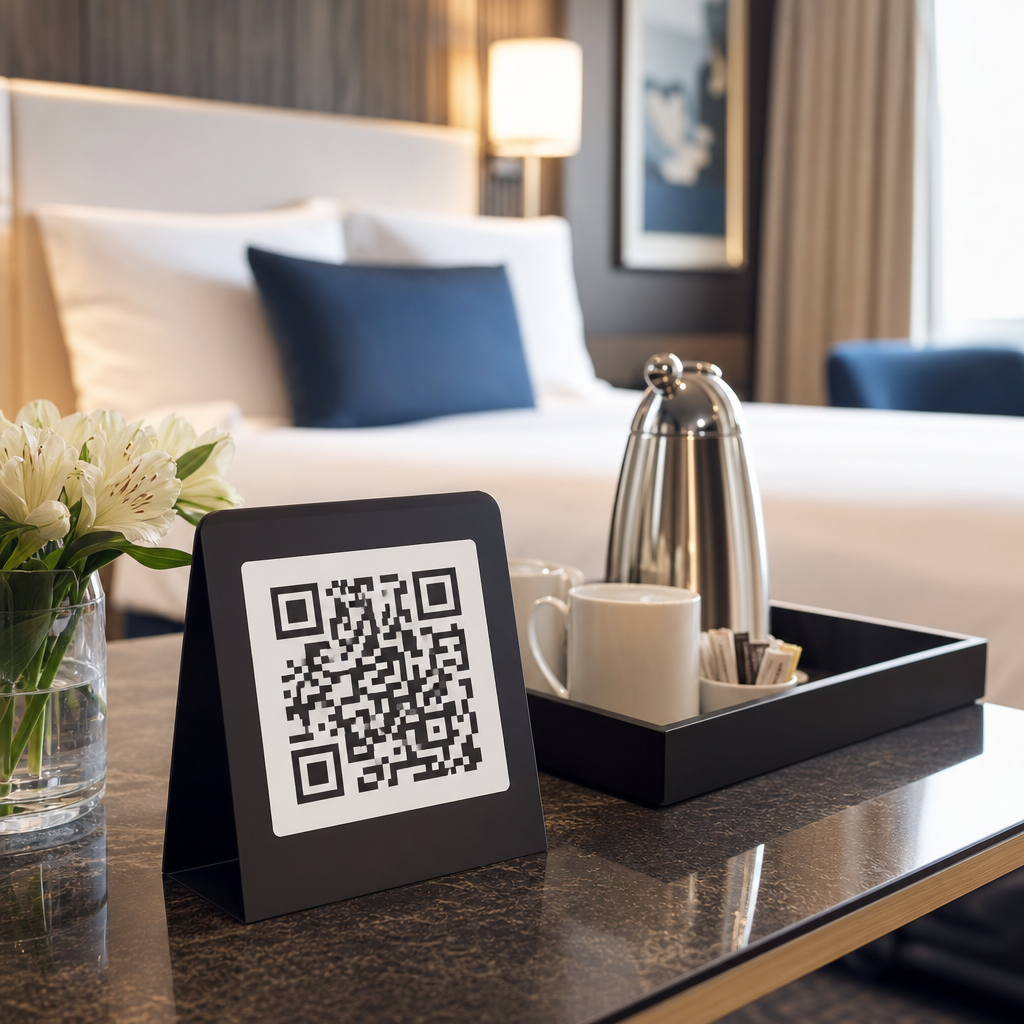
QR codes for room service and amenities have moved from novelty to operating standard in restaurants and hospitality because they reduce friction, speed service, and connect guests to exactly what they need with a simple scan. In this context, a QR code is a scannable matrix barcode that opens a digital destination such as a menu, ordering page, concierge guide, spa booking form, feedback survey, or Wi-Fi instructions. For hotels, resorts, serviced apartments, and boutique properties, the value is practical: fewer printed materials, faster updates, measurable guest engagement, and service access without forcing guests to download an app. I have helped hospitality teams deploy these systems across guest rooms, pool decks, lobbies, and in-room dining programs, and the pattern is consistent. When QR codes are planned as part of the guest journey rather than added as decoration, they improve convenience and raise revenue. This hub explains how QR codes support room service and amenities, which use cases matter most, what tools and standards should guide implementation, and how restaurants and hospitality operators can build a reliable, guest-friendly program that scales.
Why QR Codes Matter in Restaurants and Hospitality
Hotels and restaurants operate on speed, accuracy, and perceived ease. Guests want answers immediately: What can I order? When is breakfast served? How do I book a massage? Where is the gym? QR codes solve these micro-frictions by putting a current digital touchpoint at the point of need. A placard on a nightstand can open room service ordering. A sign near the elevator can show amenity hours. A code at the pool can launch food and beverage service without requiring guests to leave their chairs.
The hospitality advantage is not just convenience. Dynamic QR codes let staff update prices, availability, or service hours without reprinting collateral. That matters when menus change daily, spa slots sell out, or local recommendations need seasonal edits. Tracking also improves. With analytics from platforms such as Bitly, Scanova, Beaconstac, or QR Code Generator PRO, operators can see scan volume by location, time, and campaign. In practice, that data helps managers decide whether guests engage more with in-room dining from bedside cards, television screens, minibars, or welcome emails.
Restaurants inside hotels benefit as well. A breakfast venue can use table QR codes for menus and allergen details, while the room service team uses separate codes for late-night dining. The result is cleaner segmentation, better reporting, and less confusion for guests.
Core Use Cases for Room Service and Amenities
The strongest QR code programs cover the full stay, not one isolated function. In-room dining is usually the starting point. Guests scan a code, browse a mobile menu, select modifiers, add dietary notes, and submit payment or room charge details. If the property uses a hospitality platform such as Oracle OPERA integrations, Mews, Stayntouch, Toast, Square, or Shopify-based ordering workflows, the QR path can feed directly into kitchen and front office processes. That reduces phone traffic, order errors, and wait times.
Amenities are the second major category. A single code can open a mobile hub with gym hours, spa services, restaurant reservations, housekeeping requests, pillow menus, valet instructions, and local area guides. Some properties break this into multiple codes by location. For example, I prefer a room code for room-specific services and a lobby or elevator code for broader property navigation. This mirrors guest intent and improves completion rates.
Other proven use cases include multilingual guest directories, minibar reorder requests, maintenance reporting, digital tipping, event schedules, wedding itineraries, loyalty enrollment, and post-stay review capture. For resorts, beach and pool service often generate the highest incremental revenue because guests can order in the moment. For urban business hotels, quick-access laundry, airport transfer booking, and express checkout tools tend to be scanned more often than leisure content.
Best Placement Strategy Across the Guest Journey
Placement determines performance. A QR code hidden in a drawer will underperform no matter how good the landing page is. The best installations match location to intent. In guest rooms, place codes on the desk, bedside table, tent cards, and television welcome screen. Near minibars, use a code for replenishment or snack upgrades. In bathrooms, codes can point to spa bookings or premium bath amenities, but only if the printed material is moisture-resistant and easy to scan under indoor lighting.
Public areas need similar discipline. At the pool, weatherproof signage should link to menus optimized for bright outdoor viewing. At the gym, codes should focus on towel requests, class schedules, and wellness services rather than broad property information. Elevators and corridor signage work well for amenity reminders because dwell time is high. For meetings and events, codes at registration desks can open agendas, venue maps, dietary forms, and banquet contact details.
| Location | Best QR destination | Primary goal |
|---|---|---|
| Bedside table | Room service menu and guest requests | Increase overnight orders |
| Desk or TV screen | Digital guest directory | Reduce front desk calls |
| Pool or beach | Food and beverage ordering | Raise ancillary revenue |
| Elevator lobby | Amenity hours and reservations | Improve discovery |
| Restaurant table | Menu, allergens, wine list | Speed ordering decisions |
Always add a clear call to action beside the code. “Scan for room service” performs better than “Scan me” because it states the benefit. Good signage also includes a short fallback URL and front desk phone number for guests who prefer not to scan.
Design, Accessibility, and Technical Standards
QR codes in hospitality must be easy to scan, secure, and readable by a diverse guest base. Use high contrast, maintain a quiet zone around the code, and avoid shrinking below practical scan size for the viewing distance. ISO/IEC 18004 governs QR code symbology, and following standard generation practices prevents failures caused by decorative distortion. In my experience, branded codes are fine if the core finder patterns remain intact and the error correction level is chosen appropriately.
The landing page matters as much as the code. Mobile-first design is mandatory. Menus should load quickly, use large tap targets, and present modifiers clearly. For accessibility, include alt text on linked images, strong color contrast, readable font sizes, and language options where relevant. If a hotel serves international travelers, translated menus and amenity pages are not optional extras; they directly affect conversion and service quality.
Security deserves equal attention. Use HTTPS destinations, reputable QR management platforms, and governance rules for who can edit links. Dynamic codes are valuable because they can be updated, but that also means access control is essential. Properties should monitor for broken links, redirect loops, and outdated offers. A quarterly audit is the minimum; high-volume operations should review key destinations monthly.
Operational Integration and Staff Adoption
Technology alone does not improve service; process design does. Before launch, map each scan destination to an owner, service-level target, and escalation path. If a guest submits a housekeeping request through a QR code, who receives it, how quickly should it be acknowledged, and what happens if the team is short-staffed? Without those answers, digital convenience becomes a guest frustration.
Staff training should cover more than “the code opens a page.” Front desk, housekeeping, food and beverage, and concierge teams need to know where codes are placed, what each one does, and how to assist guests who encounter issues. I recommend testing every code on both iPhone and Android devices, on hotel Wi-Fi and cellular data, before materials are printed in volume. Also test edge cases: low light in rooms, glare at the pool, and multilingual flows.
Integration with PMS, POS, CRM, and ticketing systems creates the biggest operational gains. When room service orders flow into the kitchen display system and post to the guest folio automatically, staff avoid manual re-entry. When spa bookings sync with availability in real time, double-booking risk drops. When feedback scans route into a CRM, management can recover service issues before checkout.
Measuring Success and Building the Sub-Pillar Strategy
The right metrics depend on the use case, but every property should track scans, unique users, conversion rate, average order value, request completion time, and revenue by location. For room service, compare QR-driven orders against phone orders, labor time per order, and check averages. For amenities, track reservations, service requests, and reduction in repetitive front desk questions. These figures show whether the system is improving both guest experience and operating efficiency.
As the hub page for restaurants and hospitality, this topic also connects to related articles that operators typically need next: QR codes for digital menus, contactless ordering, hotel guest directories, event signage, loyalty enrollment, review generation, and multilingual visitor experiences. Structuring the program this way keeps strategy coherent. The room service code is not a standalone tactic; it is one node in a broader digital service layer across the property.
Successful hospitality teams start small, prove value, then expand. Launch with one high-intent use case such as in-room dining or poolside ordering, measure adoption for thirty to sixty days, refine the landing page, and only then roll out additional amenity journeys. That sequence lowers risk and produces cleaner data.
QR codes for room service and amenities work because they meet guests at the exact moment of need and remove unnecessary effort from the hospitality experience. When deployed well, they shorten ordering time, reduce print costs, improve service visibility, and create measurable paths to ancillary revenue. The strongest programs use clear placement, mobile-first landing pages, secure dynamic management, and operational ownership behind every scan destination. They also recognize real tradeoffs: some guests still want human assistance, some environments make scanning harder, and every digital touchpoint requires maintenance.
For restaurants, hotels, resorts, and mixed-use hospitality venues, the practical lesson is straightforward. Treat QR codes as service infrastructure, not a marketing accessory. Build around real guest questions, connect scans to live systems, and review performance data regularly. That approach turns a simple square code into a working channel for dining, amenities, and guest communication across the entire stay.
If you are building your restaurants and hospitality QR strategy, start with one guest journey this month, test it in the field, and expand only after the experience is fast, clear, and reliable.
Frequently Asked Questions
What are QR codes for room service and amenities, and how do hotels use them?
QR codes for room service and amenities are scannable codes placed in guest-facing locations that instantly open a digital page or action on a smartphone. In a hospitality setting, that digital destination might be a room service menu, minibar list, spa booking page, housekeeping request form, concierge guide, airport transfer request, local recommendations page, feedback survey, or Wi-Fi instructions. Instead of asking guests to flip through printed directories, call the front desk, or wait on hold, the property can give them immediate access to the exact service they need with a simple scan.
Hotels, resorts, serviced apartments, and boutique properties use these codes in guest rooms, elevators, lobbies, pool areas, restaurants, bars, and welcome materials. A code on the nightstand might open late-night dining options. A code near the bathroom mirror could link to housekeeping or extra towel requests. A code by the pool can connect guests to beverage ordering or cabana reservations. In-room tablets can be useful, but QR codes are often easier to deploy, less expensive to maintain, and faster to update across multiple touchpoints.
The biggest advantage is operational flexibility. Because the destination behind the QR code is digital, properties can update menu items, pricing, service hours, promotions, and booking availability without reprinting materials throughout the building. That makes QR codes especially valuable for dynamic services such as room service, spa appointments, seasonal experiences, and event-based amenities. For guests, the experience feels simple and self-directed. For staff, it reduces repetitive inquiries and helps route requests more accurately.
Why have QR codes become a standard for room service and guest amenities in hospitality?
QR codes have become a standard because they solve several hospitality problems at once: they reduce friction, improve response speed, simplify communication, and support a more modern guest experience. Guests increasingly expect instant, mobile-friendly access to services, and QR codes meet that expectation without requiring a separate app download or a complicated onboarding process. One quick scan can take a guest directly to the action they want to complete, whether that is ordering breakfast, reserving a massage, requesting extra pillows, or finding the property’s Wi-Fi details.
From an operations standpoint, QR codes help properties streamline service delivery. Instead of relying heavily on phone calls, printed binders, and manual explanations from staff, hotels can centralize information in a digital format that is easy to maintain. This reduces errors caused by outdated print materials and lowers the burden on front desk and in-room dining teams, who often spend valuable time answering routine questions. When common requests move into a digital workflow, staff can focus more on service quality and less on repetitive administrative tasks.
Another reason for widespread adoption is adaptability. Hospitality teams can use QR codes across many service categories, from food and beverage to housekeeping, wellness, transportation, and guest communications. They also generate useful data, such as what guests are scanning, when demand peaks, and which amenities receive the most attention. That insight helps management refine staffing, promotions, and service design. In short, QR codes are no longer seen as a temporary convenience; they are now a practical, scalable tool for improving both efficiency and guest satisfaction.
How do QR codes improve the guest experience for room service and amenities?
QR codes improve the guest experience by removing delays and uncertainty from common service interactions. A guest does not need to wonder where to find the room service menu, what time the spa closes, how to request housekeeping, or whether a particular amenity is available. Instead, they can scan a code and get a clear, current answer immediately. That speed matters, especially in hospitality, where convenience and responsiveness often shape the overall perception of the stay.
They also make services feel more accessible and personalized. A well-designed QR destination can include descriptions, photos, pricing, service hours, upsell options, language choices, and direct booking or ordering tools. For example, a room service QR code can show dietary notes, preparation times, and add-on options. A concierge QR code can highlight local attractions, transportation booking, and property-specific experiences. This gives guests more confidence in their choices and reduces the need to call for clarification.
For many properties, QR codes also support a more discreet and comfortable experience. Some guests prefer not to make a call for every request, especially late at night, early in the morning, or when traveling internationally. Scanning a code allows them to interact with services on their own terms. In addition, QR-based flows can support multilingual content, accessibility features, and mobile-first design, making the property easier to navigate for a wider range of travelers. When implemented thoughtfully, QR codes do not replace hospitality; they make hospitality easier to access.
What should hotels include in a QR code system for room service and amenities?
A strong QR code system should cover the services guests actually need most often and present them in a clear, mobile-friendly format. At a minimum, many properties benefit from QR access to room service menus, amenity booking pages, housekeeping requests, concierge information, Wi-Fi instructions, property directories, and guest support contacts. Depending on the property type, it can also be helpful to include spa services, fitness schedules, transportation options, laundry requests, minibar ordering, poolside service, event information, and digital tipping options.
Just as important as the service list is the user experience behind each scan. The destination pages should load quickly, be easy to read on a phone, and guide the guest toward a simple next step. Menus should have accurate pricing, service hours, and item availability. Booking pages should show real options, not just general information. Request forms should be short and intuitive. If the property serves international travelers, multilingual support can make a major difference. Contact information should always be available in case a guest prefers to speak with someone directly.
Hotels should also think strategically about placement and labeling. A QR code works best when the guest instantly understands what it is for. Clear prompts such as “Scan for Room Service,” “Scan for Spa Booking,” or “Scan for Wi-Fi and Hotel Guide” are more effective than a generic code with no explanation. Placement should match guest intent: bedside tables for dining, desks for property information, bathrooms for housekeeping items, and public areas for location-specific services. Finally, the system should be easy for staff to update, track, and manage so it remains accurate over time.
Are QR codes for room service and amenities secure, and what are best practices for implementation?
QR codes can be secure and highly effective when they are implemented carefully. The main security principle is simple: guests should be directed only to trusted, branded digital destinations controlled by the property or its approved service providers. That means hotels should use secure web pages, maintain clear branding on landing pages, and avoid linking to confusing or unverified destinations. If guests scan a code and see a clean, recognizable hotel experience, they are much more likely to trust and use it.
Properties should also protect against physical tampering and digital inconsistency. Printed QR codes in rooms and public spaces should be monitored so unauthorized stickers are not placed over them. Links should be tested regularly to confirm they work correctly, especially after menu updates, booking changes, or system migrations. If a property uses dynamic QR codes, management can update destinations without replacing printed materials, which reduces operational disruption and helps maintain accuracy. It is also wise to keep a backup path available, such as a phone number or front desk extension, for guests who prefer traditional service or have difficulty scanning.
Best practices for implementation include using short, clear instructions; designing pages for mobile devices; minimizing the number of steps required to complete an action; and integrating requests with internal workflows whenever possible. Staff training matters as much as technology. Employees should understand what each code does, how to assist guests, and how digital requests are routed. Successful implementation is not just about generating a QR code and placing it in a room. It is about creating a reliable service pathway that is easy to trust, easy to use, and aligned with the property’s broader guest experience standards.