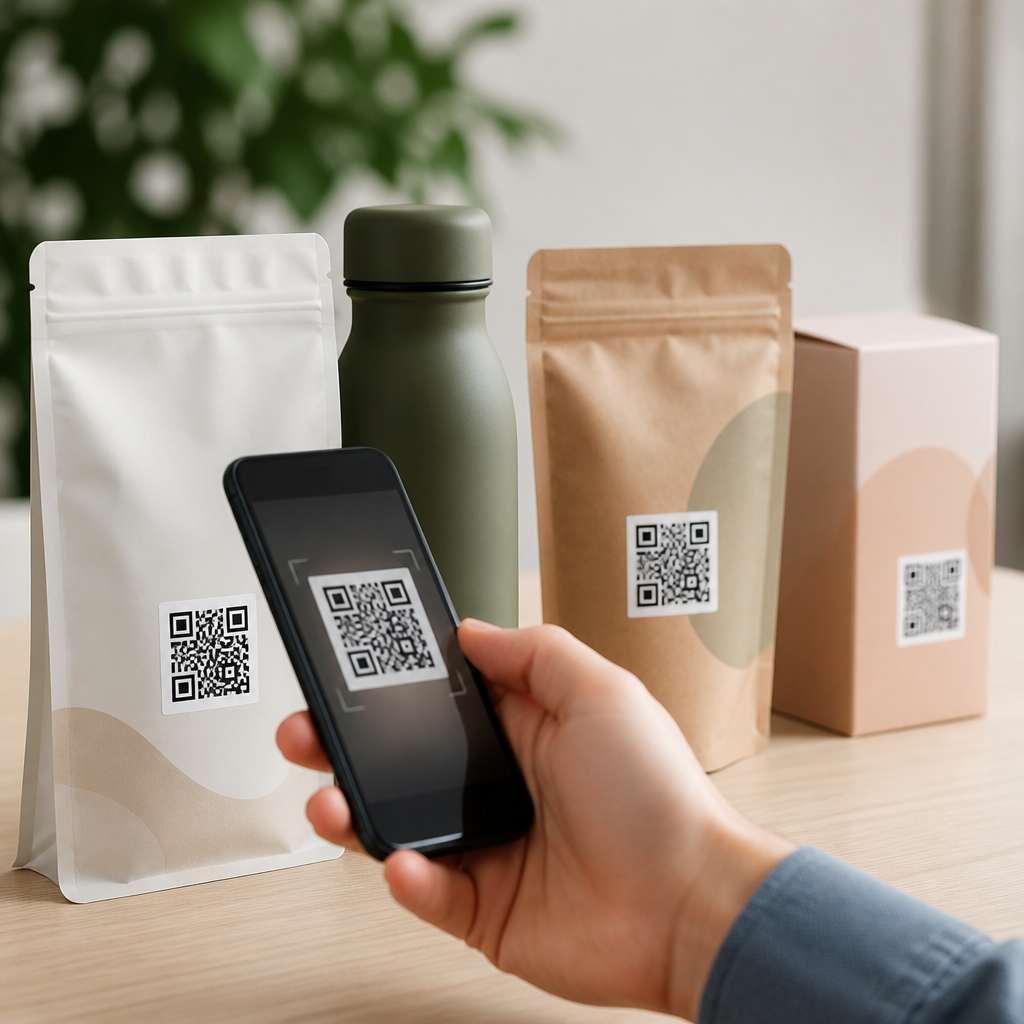
QR codes have evolved from simple inventory markers into one of the most flexible tools in modern mobile marketing, especially for companies running multi-brand campaigns across shared audiences, retail channels, and regional markets. In practice, a multi-brand campaign uses one strategic framework to promote two or more brands at the same time, whether those brands sit under one parent company, appear in a co-marketing partnership, or support a temporary product collaboration. Branding with QR codes means shaping the scan experience so every code reflects visual identity, campaign intent, and user context without sacrificing usability. This matters because the code is often the first touchpoint between a physical asset and a mobile experience, and a weak design can reduce scans, confuse users, or dilute brand equity.
I have worked on QR programs spanning packaging, in-store signage, event booths, and direct mail, and the same pattern appears repeatedly: teams focus on adding logos and colors, but the highest-performing campaigns treat the QR code as a branded interaction system. That system includes scan destination, redirect logic, landing-page continuity, analytics tagging, print contrast, quiet zone integrity, accessibility, and governance across participating brands. For a sub-pillar topic like branding with QR codes, multi-brand campaigns are especially important because they expose every design and UX decision. One code may need to satisfy a flagship brand, a retail partner, a sponsorship asset, and a local market team at once. When done well, QR codes unify those interests, increase attribution accuracy, and create a seamless mobile journey that feels intentional rather than improvised.
For marketers, designers, and UX teams, the central question is straightforward: how do you make a QR code clearly branded by multiple parties while keeping it instantly scannable and easy to trust? The answer starts with disciplined design rules, then expands into measurement, governance, and customer experience. This article serves as the hub for that broader subtopic by explaining the principles, constraints, and real-world tactics that make QR codes effective in multi-brand environments.
What makes a QR code work in a multi-brand campaign
A QR code works in a multi-brand campaign when it does three jobs at once: it signals who is involved, it promises a clear benefit for scanning, and it resolves to a mobile experience that matches the expectation created by the physical touchpoint. In plain terms, users should immediately understand what the code is for, which brands stand behind it, and what they will receive after scanning. If any of those elements are unclear, scan rates and conversion rates usually drop.
The strongest executions align four layers. First is visual branding: colors, logo placement, surrounding copy, and layout hierarchy. Second is technical reliability: sufficient contrast, error correction suited to the design treatment, proper size, and testing on common devices such as recent iPhone and Samsung Galaxy models. Third is destination strategy: a dynamic URL, campaign parameters, geo or language routing, and fast mobile load time. Fourth is trust signaling: recognizable domains, plain-language calls to action, and a landing page that confirms the partnership instantly.
Consider a beverage company partnering with a music festival and a retail chain. A can printed with a code might invite users to scan for backstage content and store-exclusive rewards. If the code uses the beverage brand’s palette, the festival logo, and the retailer’s coupon language but lands on a generic microsite with no continuity, users often bounce. By contrast, when the landing page opens with all three brand marks, a concise reward explanation, location-aware offers, and a frictionless opt-in flow, users understand they are in the right place. That continuity is not cosmetic; it directly affects confidence and completion.
Design rules that protect both brand identity and scan performance
Branded QR code design succeeds only when scannability remains the nonnegotiable priority. The core QR matrix must preserve finder patterns, module clarity, and an adequate quiet zone, typically at least four modules wide around the code. In client reviews, I often see pressure to crop the margins, soften corners excessively, or push low-contrast color combinations because they fit a campaign style guide. Those changes are where many failures begin. ISO/IEC 18004 defines the QR Code specification, and while designers do not need to memorize it, they do need to respect its implications.
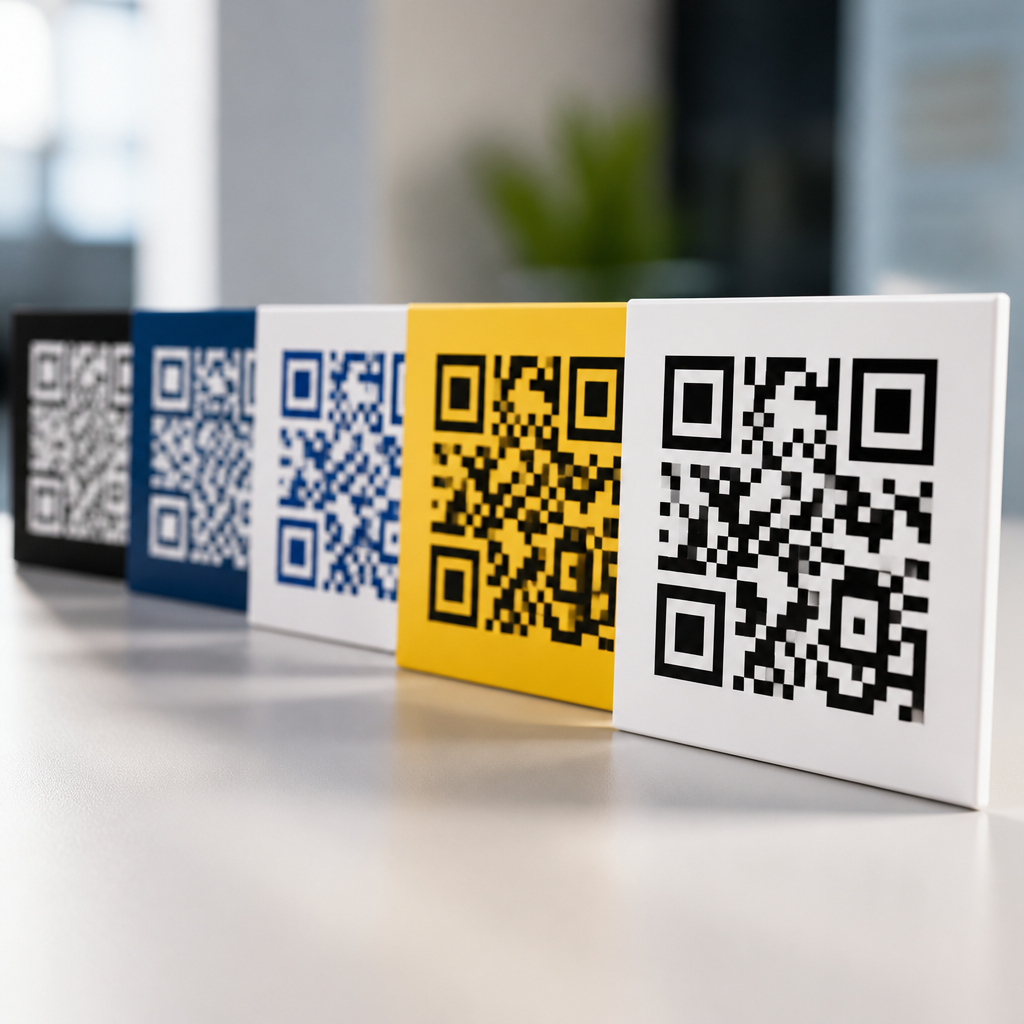
Color choice is the most common issue. Dark foreground on a light background remains the safest option. Reversing that relationship, using metallic inks, or placing codes over photography increases failure rates, especially under glare or uneven lighting. Logo insertion can work if the code uses suitable error correction and the logo does not interfere with key patterns, but “can work” is not the same as “always works.” For packaging, curved surfaces and small print areas reduce tolerance for experimentation. For outdoor signage, distance and weathering matter more than decorative flourishes.
In multi-brand systems, a useful practice is to separate code styling from campaign framing. Keep the code itself relatively clean, then express multiple brands through adjacent logos, headline copy, CTA buttons on the landing page, and background design. This approach preserves scan performance while still delivering a co-branded look. Teams that insist on embedding every identity element into the code symbol usually end up with weaker usability than teams that use surrounding layout strategically.
| Design element | Best practice | Multi-brand risk | Recommended fix |
|---|---|---|---|
| Logo in code center | Keep small and test at production size | One partner logo dominates others | Use neutral code center and place all logos nearby |
| Brand colors | Maintain strong luminance contrast | Shared palette creates low contrast | Use campaign colors outside the matrix |
| Code size | Match viewing distance and print surface | Too small on crowded packaging | Move code to a dedicated panel |
| Destination URL | Use dynamic redirect and branded domain | Partner distrust of third-party links | Create approved vanity domain structure |
| CTA copy | State benefit clearly | Mixed offers confuse the user | Lead with one primary action |
Building a branded mobile journey after the scan
The scan is only the handshake. The branded mobile journey begins the moment the camera resolves the code, and this is where many multi-brand campaigns either justify the creative effort or waste it. The landing experience should load quickly, render cleanly on mobile, and confirm the value proposition within the first screen. If users scanned for recipes, rewards, product registration, event access, or how-to content, that promise should be visible immediately without forcing them to hunt through a cluttered page.
For multi-brand journeys, hierarchy matters. The page should show which brand is leading the experience, which partner is supporting it, and what action the user should take next. A parent company running house-of-brands campaigns may choose a neutral campaign shell with product-specific modules underneath. A co-marketing partnership may instead present equal branding with a short explanation of the collaboration. In both cases, concise microcopy reduces uncertainty: “Scan to unlock a joint offer from Brand A and Brand B” is stronger than “Discover more.”
Dynamic QR codes are usually the right choice because they let teams update destinations without reprinting assets. That is critical when one campaign spans regions, retail partners, or seasonal promotions. A single printed code can route users by geography, language, inventory status, or source asset using URL parameters and redirect rules in platforms such as Bitly, QR Code Generator PRO, or enterprise campaign tools integrated with Adobe Experience Manager. The underlying governance is simple: one visual code can support many experiences, but only if naming conventions, UTM parameters, and ownership rules are established before launch.
Measurement, governance, and brand architecture across campaigns
In a multi-brand environment, analytics discipline is what turns QR codes from decorative assets into measurable campaign infrastructure. Every code should map to a documented objective: traffic, redemption, app download, lead capture, content engagement, or product education. Scans alone are not enough. Teams need to compare scan volume with landing-page sessions, bounce rate, conversion rate, assisted revenue, and downstream events in tools such as Google Analytics 4, Adobe Analytics, or a CRM-connected dashboard.
Governance becomes more complex when several brands share one code ecosystem. Someone must own redirect rules, QR generation standards, asset approvals, expiration policies, and data access. Without that ownership, duplicate codes proliferate, partner teams launch inconsistent destinations, and legal review slows execution. The most effective organizations maintain a central QR design system with reusable templates for packaging, point-of-sale materials, event signage, and paid print. That system includes approved color ratios, minimum sizes, CTA formulas, domain rules, and testing checklists.
Brand architecture should guide every decision. In a branded house, one master identity can anchor the code while sub-brands appear in offer-level messaging. In a house of brands, keeping the code visually neutral may be wiser so the landing page handles differentiation. In joint ventures or sponsorships, parity may matter more than hierarchy. I have found that resolving this architecture question early prevents endless revision cycles later, because teams stop arguing about aesthetics and start designing for the actual relationship users need to understand.
Common mistakes and the practices that improve results
The most common mistake is assuming that a branded QR code is successful because it looks distinctive in a mockup. Real success depends on scan reliability in context: under store lighting, through glossy packaging, from different camera apps, and at the distances people actually stand. Another frequent mistake is vague CTA language. “Scan me” is weaker than “Scan for store-specific savings” or “Scan to compare all three product lines.” Specificity improves intent and sets the right expectation.
Another avoidable problem is broken continuity between media. A mailer may show three partner logos and a premium visual treatment, then send users to a plain page on an unrelated domain. That gap damages trust. Likewise, too many options on the landing page can undercut a campaign. When three brands each demand equal prominence, users may get a menu instead of a path. The fix is to define one primary conversion and place secondary options below it.
Accessibility and compliance also deserve attention. Sufficient text alternatives near the code help users understand the destination. Privacy disclosures should appear before data capture, especially for contest entries or SMS opt-ins. Regulated sectors such as healthcare, alcohol, and financial services need additional review of claims, age gating, and consent flows. Strong multi-brand QR programs do not treat these requirements as obstacles. They treat them as part of user experience design.
For teams building the broader branding-with-QR-codes program, the takeaway is clear: start with scannability, align every brand signal around one user promise, and connect the code to a measurable mobile journey. When multi-brand campaigns are planned this way, QR codes become more than access points. They become durable brand connectors across packaging, retail, events, and print. Audit your current codes, standardize your design rules, and build each scan experience to feel intentional from first glance to final conversion.
Frequently Asked Questions
What makes QR codes especially useful for multi-brand campaigns?
QR codes are uniquely effective in multi-brand campaigns because they give marketers one flexible bridge between physical touchpoints and digital experiences, even when several brands are involved. Instead of forcing customers to search for separate landing pages, apps, or offers, a single scan can guide them into a coordinated campaign experience that reflects the relationship between the participating brands. This is valuable when brands share audiences, retail placements, loyalty ecosystems, or seasonal promotions, because the QR code can act as the unifying entry point across packaging, shelf displays, event signage, direct mail, and social extensions.
They are also useful because they support central campaign management without removing brand-specific customization. A company can use one campaign structure while still routing users to different content based on product line, store location, market, language, or audience segment. That means a parent company can support multiple sub-brands under one promotional strategy, or two partner brands can collaborate without creating a confusing customer journey. In practical terms, QR codes reduce friction, improve measurability, and make it easier to connect awareness, engagement, and conversion across brands that need to work together but still maintain distinct identities.
How can a single QR code support multiple brands without creating a confusing customer experience?
A single QR code can support multiple brands successfully when the scan experience is designed around clarity and intent. The most effective approach is to send users to a landing page or mobile experience that immediately explains the partnership, promotion, or shared value proposition. Instead of dropping visitors into a generic page, the destination should clearly show why the brands are connected, what the user can do next, and how each brand contributes to the offer. For example, a code on a co-branded retail display might lead to a page featuring both logos, a short campaign message, a product selector, and clear calls to action for coupons, product bundles, or store locator tools.
Dynamic routing can make this even smoother. The same QR code can present different content depending on context, such as geography, language, device type, time of day, or campaign source. A customer scanning from one retailer may see a retailer-specific redemption page, while a customer in another region may be directed to a localized offer featuring the same participating brands. The key is not to overload the user with too many choices at once. Strong information hierarchy, clear branding, concise messaging, and a mobile-first design help ensure the experience feels coordinated rather than cluttered. When done well, the QR code becomes a convenience tool, not a complexity point.
What are the best practices for branding QR codes in campaigns involving more than one brand?
In multi-brand campaigns, QR code branding should balance recognition, scanability, and fairness among participating brands. The first best practice is to make the code easy to scan under real-world conditions. That means preserving contrast, using adequate quiet space, avoiding excessive visual effects, and testing the code across devices and lighting environments. While it may be tempting to heavily stylize a code with multiple brand colors or layered logos, performance should come first. A beautifully designed code that fails to scan consistently will undercut the entire campaign.
From a brand perspective, the visual presentation around the code usually matters more than over-customizing the code itself. It is often more effective to place the QR code within a well-designed co-branded frame, add a strong call to action, and use surrounding creative elements to represent each brand clearly. If a logo is embedded in the code, it should be done conservatively and tested thoroughly. It is also important to establish rules for logo hierarchy, messaging order, and landing page ownership before launch. In campaigns involving a parent company and sub-brands, one visual system can create consistency. In partnerships between separate companies, a shared style guide helps prevent one brand from dominating the presentation. Good QR branding in this context is less about decoration and more about trust, clarity, and a smooth path from scan to action.
How do marketers track performance when one QR code is used across several brands, channels, or regions?
Performance tracking starts with using dynamic QR codes connected to analytics-enabled destinations. Dynamic codes allow marketers to update URLs, segment traffic, and measure scans without replacing printed materials, which is essential in complex multi-brand campaigns. A well-structured setup can track not only total scans, but also where scans occurred, when they happened, what device was used, which creative asset drove engagement, and how users behaved after landing on the page. This helps teams understand whether the QR code is driving awareness, coupon redemption, email signups, app downloads, product exploration, or direct sales.
For multi-brand use cases, tracking should be planned around a clear taxonomy. Campaign managers often assign identifiers for brand, partner, region, retail channel, packaging type, and placement. That makes it possible to compare performance across a shared initiative without losing visibility into the contribution of each brand. For example, one campaign may reveal that Brand A performs best in in-store displays, while Brand B gains stronger engagement through packaging scans in urban markets. Regional routing and UTM structures can further improve attribution inside analytics platforms. The most effective teams also align success metrics before launch, such as scan-through rate, landing-page engagement, conversion rate, assisted revenue, or loyalty enrollments, so all participants evaluate the campaign using the same reporting framework.
What common mistakes should brands avoid when using QR codes in multi-brand campaigns?
One of the most common mistakes is treating the QR code as a simple add-on rather than a core part of the campaign journey. In multi-brand marketing, that usually leads to disconnected messaging, inconsistent landing pages, or unclear value for the user. If customers cannot quickly understand why the brands are working together or what benefit they receive from scanning, engagement will suffer. Another frequent problem is sending traffic to a generic homepage instead of a dedicated mobile landing experience. That forces users to do extra work and weakens the campaign’s ability to convert interest into measurable action.
Brands should also avoid poor technical execution. Low-contrast codes, codes placed on curved or reflective surfaces, tiny print sizes, and insufficient testing can all reduce scan rates. From a strategic standpoint, failing to define ownership is another major risk. Multi-brand campaigns need clear agreements on creative approvals, data access, customer privacy handling, lead sharing, and post-scan responsibilities. It is equally important to avoid overcomplicating the destination with too many choices, too many logos, or conflicting calls to action. The best-performing campaigns stay focused: one scan, one clear next step, and one coordinated experience that respects the identities of each brand while serving the user first.