QR codes for flash sales and discounts have become one of the fastest ways for retail and e-commerce brands to connect urgency, convenience, and measurable customer action in a single scan. In simple terms, a QR code is a scannable two-dimensional barcode that opens a landing page, coupon, product listing, checkout flow, app screen, or payment prompt on a smartphone. A flash sale is a limited-time promotion designed to trigger immediate purchases, while a discount can range from a percentage-off code to a bundle offer, free shipping incentive, loyalty reward, or first-order promotion. When these tools are combined well, retailers shorten the path from discovery to conversion and reduce the friction that causes shoppers to hesitate or abandon carts.
I have used QR-driven promotions in stores, on packaging, in event booths, and across paid social campaigns, and the pattern is consistent: the strongest results come when the scan leads to a highly specific offer with a clear deadline and minimal clicks. Retail shoppers respond to speed. E-commerce buyers respond to relevance and trust. QR codes support both because they can be updated dynamically, segmented by channel, and tracked in detail. For a hub page covering retail and e-commerce applications, the key point is this: QR codes are not just a coupon delivery tool. They are a bridge between physical retail, mobile commerce, loyalty programs, attribution reporting, and post-purchase retention.
This matters because consumer behavior is now fluid across channels. A shopper may discover a product in a storefront window, compare prices on a phone, complete the purchase online, and redeem a follow-up discount in an app. Traditional promo methods often break under that complexity. Printed coupons are hard to attribute. Short URLs are easy to mistype. Generic discount banners create noise. QR codes solve these practical problems by moving shoppers directly into a controlled digital experience where retailers can personalize messaging, enforce expiry rules, track performance, and connect promotional traffic to inventory or customer data systems.
How QR Codes Power Retail Flash Sales
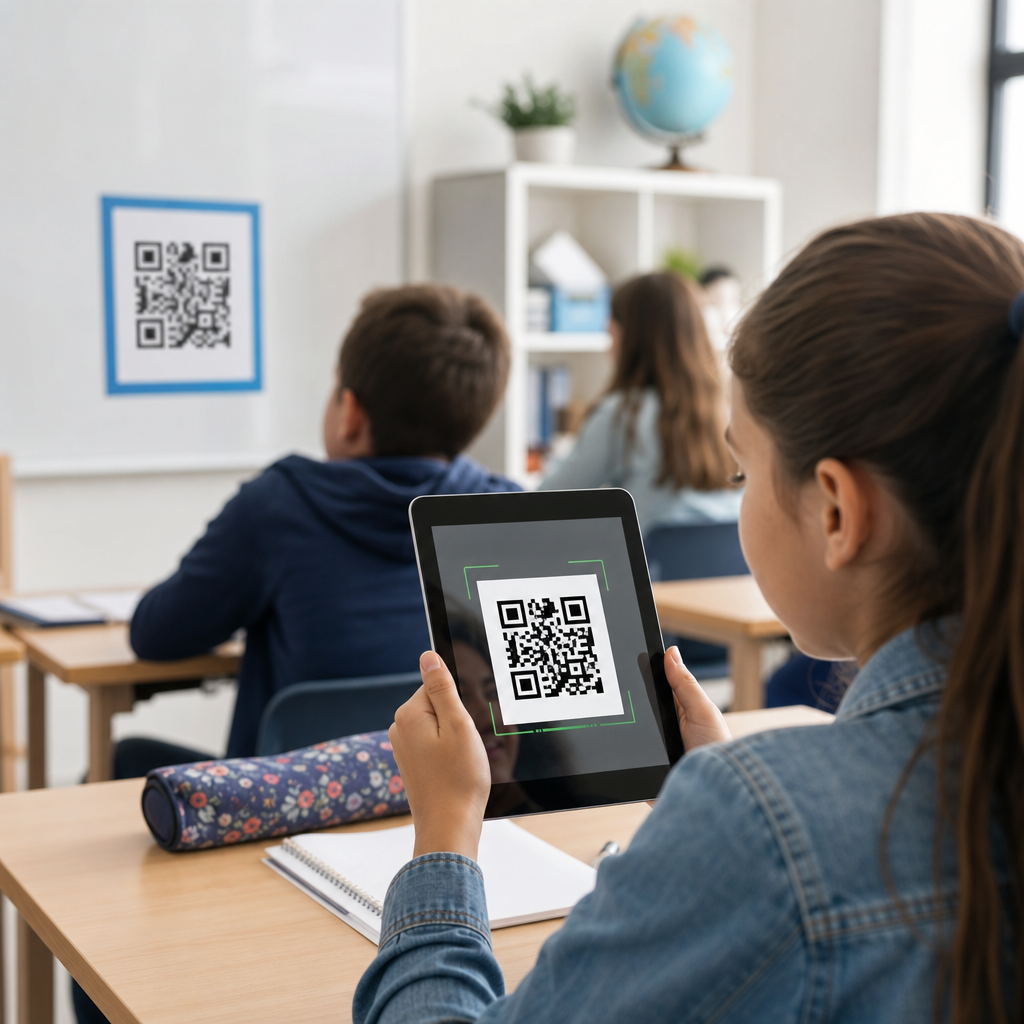
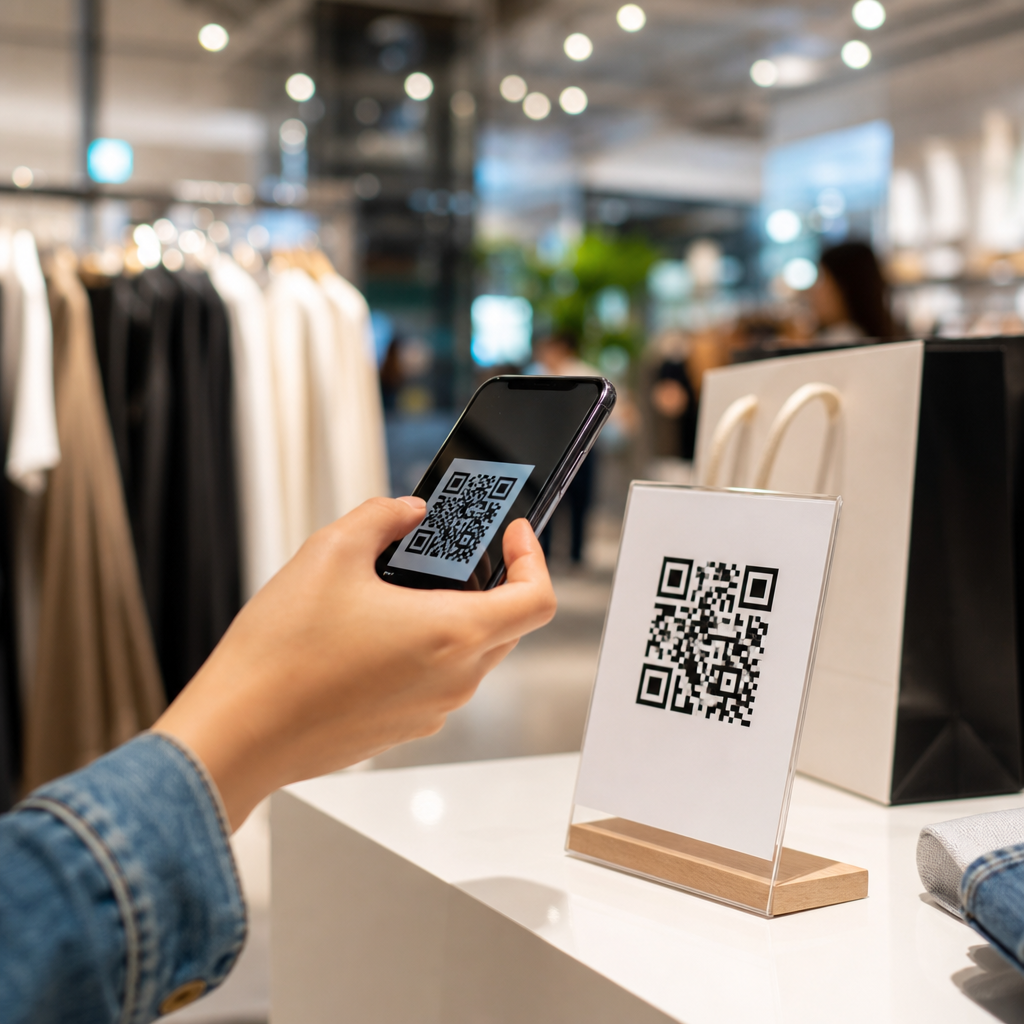
In retail, speed and placement determine whether a flash sale succeeds. QR codes work because they turn any physical surface into a live digital entry point. A shelf talker can trigger a “two hours only” product markdown. A fitting room sign can offer a same-day bundle discount. A window poster can convert after-hours foot traffic into online purchases even when the store is closed. Dynamic QR platforms such as Bitly, QR Code Generator Pro, Beaconstac, and Flowcode let marketers update the destination without reprinting signage, which is critical when inventory changes or promotions end early.
The best retail executions align the code with shopper intent at the exact moment of consideration. For example, a cosmetics retailer can place a QR code beside a new skincare launch that opens a mobile page with a 15 percent discount valid for thirty minutes, plus ingredient details and social proof. A grocery chain can attach codes to endcap displays during a weekend flash sale and route scans to digital coupons clipped automatically to a loyalty account. In both cases, the scan removes uncertainty. The shopper knows the price, the deadline, and the redemption path immediately.
Operational discipline matters. Staff need clear training, signage needs enough contrast and quiet space for reliable scanning, and the landing page must load quickly on mobile networks. I have seen strong in-store offers fail because the code opened a desktop page, the coupon required account creation before revealing the discount, or the discount terms were buried below the fold. Retail flash sales work best when the QR code opens directly to the product or redemption screen, displays the savings instantly, and uses obvious expiration language such as “Ends at 6 p.m. today.”
Using QR Codes Across E-Commerce Discount Campaigns
In e-commerce, QR codes extend beyond packaging inserts and can be used in direct mail, out-of-home ads, print catalogs, trade show materials, receipts, and even livestream overlays. Their main advantage is reducing friction between promotional discovery and purchase. Instead of asking a user to remember a promo code or search for a product later, the code can deep-link into a cart with the discount already applied. Platforms including Shopify, Adobe Commerce, WooCommerce, BigCommerce, and Klaviyo support campaign structures where UTM parameters, discount rules, and audience segmentation can be tied to a scan source.
One effective example is abandoned-cart recovery through offline remarketing. A fashion brand can send a postcard with a QR code that restores the shopper’s cart and applies free shipping for forty-eight hours. Another is product sampling: a beauty company can include a QR code in sample kits that unlocks a first-purchase discount on the featured SKU collection. Subscription brands also use codes in packaging to promote limited renewal offers or add-on products. These campaigns work because they meet customers in the real world while preserving digital precision in tracking and conversion.
For e-commerce teams, the landing destination should match campaign intent exactly. If the offer is category-based, send users to a filtered collection page. If the goal is fast conversion, route to a prefilled cart or express checkout. If customer acquisition is the priority, request an email after the offer is visible, not before. Discount abuse controls are also important. Set one-time use rules, define minimum order values carefully, and monitor coupon-sharing sites if the promotion is intended for a narrow audience. A QR code accelerates access, so governance must be equally fast and precise.
Where to Place QR Codes for Maximum Conversion
Placement strategy determines scan volume more than design trends do. In stores, high-performing locations include storefront windows, endcaps, queue areas, dressing rooms, product displays, and receipts. In e-commerce-related touchpoints, packaging inserts, catalogs, direct mail, event signage, and order confirmation materials often produce strong results because they reach customers who already recognize the brand. The common principle is relevance at the moment of attention. A QR code beside an item someone is evaluating will outperform a generic code placed in a low-intent environment.
Retailers should also match placement to promotion type. Short-duration flash sales benefit from locations with immediate footfall, such as entrance posters or checkout counters. Cross-sell discounts perform well on packaging and receipts because the customer has already bought once. Win-back offers fit direct mail and bag inserts. Staff-assisted selling environments can go further by giving associates codes tied to departments or even individuals, making it easier to measure which store zones and conversations drive redemptions.
| Placement | Best Use | Why It Converts |
|---|---|---|
| Store window | After-hours flash sale | Captures foot traffic when the store is closed |
| Shelf or endcap | Limited-time product discount | Reaches shoppers at the point of decision |
| Receipt | Bounce-back coupon | Targets recent buyers with high brand familiarity |
| Packaging insert | Cross-sell or replenishment offer | Connects directly to post-purchase intent |
| Direct mail | Cart recovery or customer win-back | Reactivates known audiences with a tangible prompt |
Whatever the placement, test scan distance, lighting, and call-to-action wording. “Scan for 20% off today” consistently outperforms vague prompts such as “Learn more.” Clear value beats clever language. A code without an explicit benefit is decoration, not performance media.
Measuring Performance and Avoiding Common Mistakes
QR code campaigns are measurable if the tracking plan is built before launch. At minimum, retailers should capture scans, unique scans, device type, time of scan, conversion rate, average order value, revenue per scan, coupon redemption rate, and store or channel source. UTM tagging is essential for analytics platforms such as Google Analytics 4 and Adobe Analytics. For stores, tie QR coupon redemption to point-of-sale data and loyalty IDs where possible. That linkage is what turns a simple scan count into attributable retail revenue.
In practice, I judge flash sale QR performance on three questions. First, did the code get noticed and scanned? Second, did the landing experience convert quickly? Third, did the promotion generate incremental sales instead of subsidizing purchases that would have happened anyway? The third question is the hardest, and it requires holdout testing, audience comparisons, or time-based benchmarks. If a campaign lifts unit sales but crushes margin, it is not automatically a success. Discount strategy has to protect profitability as well as volume.
Common mistakes are avoidable. Do not send every scan to the homepage. Do not use static codes for promotions likely to change. Do not print codes too small; many retail teams follow a minimum size near 2 x 2 centimeters, but larger is safer for window and poster placements. Do not ignore error correction and contrast; black on white remains the most reliable combination. Most important, do not separate marketing from operations. A flash sale promoted via QR code can fail if stock runs out, store staff are uninformed, or redemption logic breaks at checkout.
Building a Retail and E-Commerce Hub Strategy
As a hub topic within industry-specific applications, QR codes for flash sales and discounts should connect to broader retail and e-commerce use cases: product information pages, loyalty enrollment, buy online pick up in store, digital receipts, packaging experiences, contactless payments, returns, and customer reviews. The strategic advantage of this hub approach is clarity. Retail leaders rarely need one isolated tactic; they need a coordinated system where each scan serves a defined stage of the customer journey. Flash sales attract attention, but the long-term value comes from the data, segmentation, and repeat engagement those scans enable.
A mature program usually starts with a few high-intent use cases, then expands. For example, a retailer might begin with in-store markdown QR codes and package inserts for repeat-purchase offers. Next, it can add loyalty-triggered discounts, regional testing, and app deep links. Eventually, QR codes become part of merchandising, CRM, and store operations, not just campaign execution. That is the practical path to scale: start with urgent offers, measure rigorously, and build reusable infrastructure that supports every retail and e-commerce touchpoint.
QR codes for flash sales and discounts work because they compress discovery, urgency, and redemption into one simple customer action. For retail stores, they activate physical space, improve attribution, and turn signage into a live sales channel. For e-commerce brands, they connect offline attention to digital checkout, recover demand, and personalize promotions with precision. The strongest campaigns use clear value propositions, direct landing paths, strong tracking, and operational coordination across marketing, merchandising, and support.
The main benefit is not just more scans. It is better control over when, where, and how discounts influence buying behavior. Brands can launch time-sensitive offers quickly, adapt creative without reprinting materials, measure results down to revenue per scan, and connect promotions to loyalty and inventory systems. That combination makes QR codes especially effective in modern retail, where customers move constantly between physical and digital environments.
If you manage retail or e-commerce marketing, audit your current discount journey and identify one high-intent moment where a QR code can remove friction today. Start with a focused offer, track every scan, and expand from the results.
Frequently Asked Questions
How do QR codes improve flash sales and discount campaigns?
QR codes improve flash sales and discount campaigns by removing friction between promotion and action. Instead of asking shoppers to type in a URL, search for a product, or manually enter a coupon code, a single scan can take them directly to the exact destination you want them to reach. That could be a limited-time landing page, a product collection, an automatically applied discount at checkout, an app-exclusive offer, or a mobile payment screen. In a flash sale, speed matters, and QR codes help brands capitalize on urgency in the moment.
They also work exceptionally well across both physical and digital environments. A retailer can place a QR code on in-store signage, shelf talkers, packaging inserts, email graphics, SMS campaigns, social posts, event banners, and printed flyers. This makes it easier to unify a promotion across channels while maintaining a consistent customer journey. For brands running short promotional windows, this flexibility is valuable because it allows immediate deployment and fast customer response.
Another major advantage is measurability. QR code campaigns can be tracked for scans, time of access, device type, location trends, and downstream actions such as purchases or redemptions. That means businesses are not just launching a flash sale and hoping for the best; they can evaluate how customers interacted with the offer and optimize future campaigns accordingly. In practical terms, QR codes combine urgency, convenience, and analytics, making them a powerful tool for driving limited-time conversions.
What should a QR code link to during a flash sale or discount promotion?
The best destination depends on the goal of the campaign, but in most cases the QR code should link to the shortest possible path to conversion. For a flash sale, that often means a dedicated landing page featuring the sale countdown, qualifying products, promotional terms, and a clear call to action. If the discount applies to a single item or category, linking directly to that collection or product page can reduce distractions and keep the shopper focused on completing the purchase before the offer expires.
In some campaigns, the QR code should open a checkout-ready experience instead of a general promotional page. For example, brands may send users to a cart with a discount already applied, a coupon reveal page, a digital wallet pass, or an in-app screen that unlocks member pricing. The key is alignment between expectation and destination. If the QR code promises “25% off today only,” the user should not have to hunt for the discount after scanning. Every extra step introduces abandonment risk, especially when the promotion is time-sensitive.
It is also important to optimize the destination for mobile use because most QR code scans happen on smartphones. The page should load quickly, display the offer prominently above the fold, and make it obvious what the customer should do next. Include expiration details, product availability, and redemption instructions, but keep the experience clean and easy to act on. A QR code is only as effective as the page or flow it opens, so the destination should be purpose-built for urgency, clarity, and immediate conversion.
Where should businesses place QR codes to maximize flash sale participation?
High-performing placement depends on where customer attention is already concentrated. In physical retail, effective placements include storefront windows, entrance displays, checkout counters, shelf signage, fitting rooms, receipts, product packaging, table tents, and point-of-sale screens. These placements work because they capture shoppers at moments of intent, whether they are browsing, comparing products, or preparing to buy. If the flash sale is intended to move inventory quickly, placing the QR code directly next to the featured product can shorten the decision cycle significantly.
For e-commerce and omnichannel brands, QR codes can also be embedded in email campaigns, direct mail pieces, catalogs, event materials, social graphics, and even shipping inserts that drive repeat purchases. A post-purchase insert offering a 24-hour discount on a complementary product is a strong example of using QR codes to create urgency after the initial transaction. Similarly, temporary signage at pop-up shops, trade shows, or live events can direct attendees into an exclusive discount flow while interest is highest.
The most effective placements usually pair strong visibility with a specific incentive and clear instruction. Customers should immediately understand what they get when they scan, such as “Scan for 20% off in the next 2 hours” or “Scan to unlock early access pricing.” Avoid placing a code without context, because people are less likely to scan if the benefit is unclear. Good placement is not just about physical location; it is also about message relevance, timing, and making the reward feel immediate and worthwhile.
How can brands track the success of QR code discount campaigns?
Brands can track success by measuring both engagement metrics and business outcomes. At the top of the funnel, common indicators include total scans, unique scans, scan time, geographic trends, device types, and channel-specific performance. For example, a retailer might compare scans from an in-store poster versus an email campaign to see which audience responded more strongly to the same flash sale. Using dynamic QR codes or campaign-tagged URLs can make this attribution more accurate and more actionable.
Deeper performance analysis should focus on what happens after the scan. Important conversion metrics include landing page visits, add-to-cart rate, coupon redemption rate, completed purchases, average order value, revenue generated, and return on ad spend or promotional spend. If a QR code leads to a discount page but produces heavy traffic with low conversions, that may indicate a problem with page speed, offer clarity, mobile usability, pricing, or inventory availability. Looking beyond scans helps brands avoid mistaking curiosity for success.
Brands should also compare results across variables such as offer type, placement, audience segment, and promotion length. A 15% discount may outperform free shipping in one channel, while a two-hour flash sale may convert better than a 24-hour offer in another. Over time, QR code campaign data can reveal patterns about when customers are most responsive and which messages create the strongest urgency. In short, the best tracking approach connects scans to revenue and uses the findings to refine future promotional strategy.
What are the most important best practices when using QR codes for limited-time offers?
The first best practice is clarity. Customers should know exactly what the QR code unlocks before they scan it. A strong call to action, a visible expiration window, and a clearly stated reward all increase trust and participation. Messaging like “Scan to get 30% off until midnight” is more effective than displaying a code with no explanation. When urgency is central to the campaign, the language around the code should reinforce immediacy without creating confusion.
The second best practice is creating a seamless mobile experience. The landing page or app screen should load quickly, present the offer immediately, and minimize the number of steps required to redeem it. Ideally, the discount is automatically applied or easy to activate. Complicated forms, slow pages, and unclear redemption rules can undermine even a compelling flash sale. Brands should also test the QR code across different devices, operating systems, screen sizes, and lighting conditions to make sure scanning works consistently in real-world settings.
Finally, businesses should pay close attention to campaign setup and operational details. Use dynamic QR codes when possible so destinations can be updated without reprinting materials. Make sure stock levels match expected demand, and be transparent about exclusions, expiration times, and usage limits. It is also wise to track scans and conversions from the beginning so performance can be evaluated accurately. When executed well, QR codes turn limited-time promotions into fast, measurable, low-friction customer experiences that support both immediate sales and smarter long-term marketing decisions.