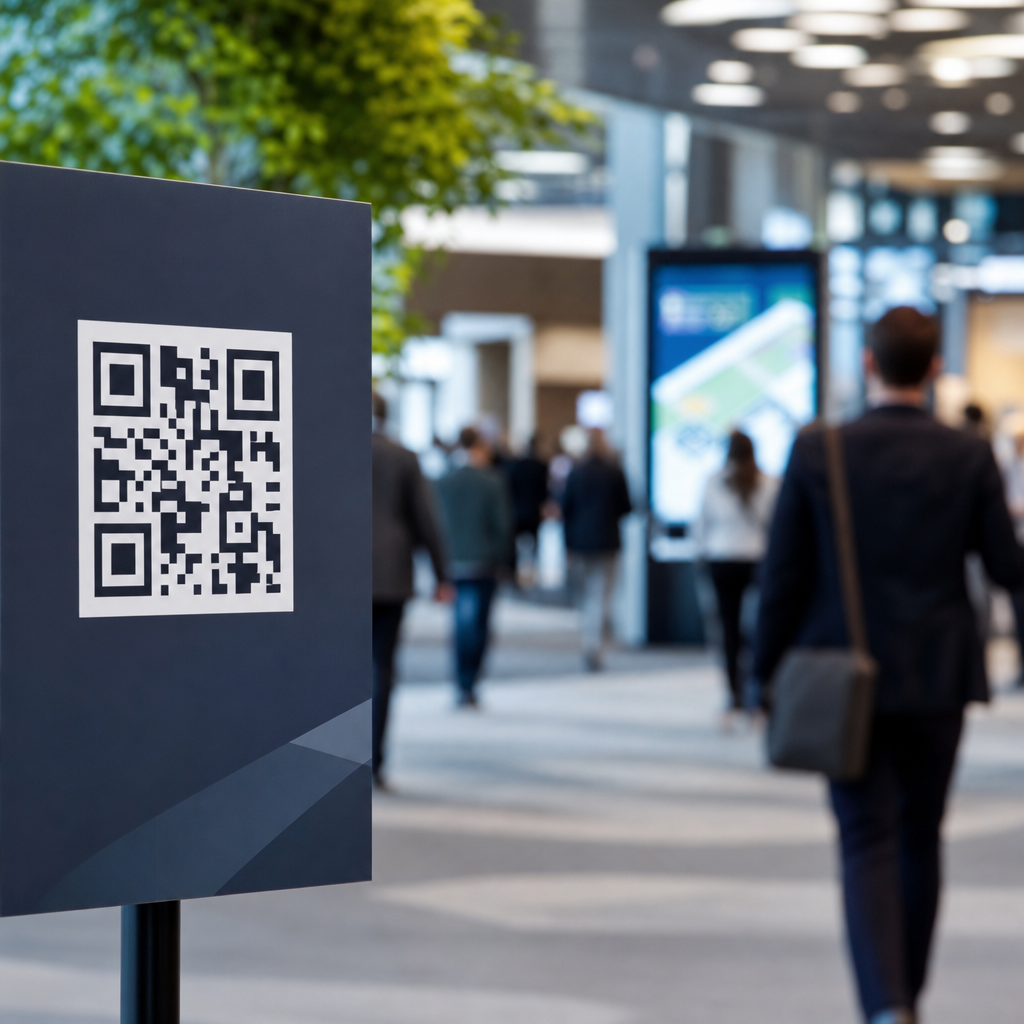
QR codes for event maps and navigation solve one of the most common problems in events and ticketing: helping people find the right place fast without relying on paper signs that become outdated the moment a room changes. In practice, these scannable codes connect attendees to mobile-friendly venue maps, parking instructions, session locations, exhibitor booths, emergency exits, and live wayfinding updates. I have implemented them for conferences, trade shows, festivals, and university events, and the pattern is consistent: when navigation is easier, lines shorten, staff answer fewer repetitive questions, and attendees spend more time engaging with the event itself.
In events and ticketing, navigation is not a cosmetic detail. It affects check-in flow, session attendance, exhibitor traffic, sponsor visibility, accessibility compliance, and even safety. A bad map experience creates hidden costs. People miss keynotes because they cannot find the ballroom. VIP guests arrive at the wrong entrance. Drivers circle lots with no clear parking guidance. During schedule changes, printed maps and static signs become liabilities. QR codes give organizers a way to publish a single source of truth that can be updated in real time, whether the event is a corporate summit, a music festival, a sports venue activation, or a multi-building campus conference.
A QR code, short for Quick Response code, is a two-dimensional barcode that stores a destination such as a URL, vCard, Wi-Fi credential, PDF, or app deep link. For event navigation, the most effective use is a dynamic QR code that points to a mobile landing page rather than a static file. Dynamic codes can be edited after printing, tracked for scans, segmented by placement, and redirected to different content by time, language, or audience. That flexibility matters because event operations change constantly. Doors move, weather changes outdoor routes, and shuttle pickup points shift. A dynamic code preserves the printed asset while allowing the destination to change instantly.
Why QR codes work so well for event maps and navigation
The main advantage is immediacy. Attendees already use their phones as tickets, wallets, calendars, and cameras, so scanning a code near an entrance or hallway is a natural behavior. Instead of forcing a guest to download an app or search a cluttered website, the code opens exactly the right map or route. At a convention center, a code at the parking garage can open walking directions to registration. A code outside a breakout floor can open a level-specific map with room names, sponsor lounges, restrooms, elevators, and accessibility routes. A code on a badge can link to the attendee’s personalized agenda and turn-by-turn path to the next session.
Another reason they work is operational resilience. Printed signage has long lead times and high reprint costs. Event teams know the pain of discovering, the night before opening, that a sponsor booth moved or a meeting room was renamed. With QR codes, the physical sign stays in place while the digital layer updates. This is especially valuable for festivals and stadium events, where weather, security perimeters, and crowd flow can change by the hour. During one outdoor event rollout, we used codes at every gate that redirected to entry-specific maps. When one gate closed because of lightning protocols, the code destination was switched within minutes to a rerouting page.
They also produce measurable data. Most event teams can estimate foot traffic, but QR scans show where visitors actively seek help. Scan analytics reveal which entrances confuse people, which shuttle stop needs better signage, and which sponsor zones attract attention. Platforms such as Bitly, Flowcode, QR Code Generator Pro, and Beaconstac provide timestamp, device, and location reporting, while event platforms like Cvent, Bizzabo, and Eventbrite can complement those insights with registration and attendance behavior. The result is better staffing, better sign placement, and better post-event planning.
Core use cases across events and ticketing
QR codes support far more than a generic venue map. The strongest programs break navigation into specific moments across the attendee journey. Before arrival, confirmation emails and digital tickets can include codes for parking lots, rideshare zones, hotel entrances, campus buildings, or public transit stops. At arrival, large-format signs can direct guests to registration, will-call, accessibility entrances, press check-in, or VIP hospitality. Inside the venue, codes can open floor maps, exhibitor directories, session finders, dining locations, charging stations, and restrooms. At departure, the same framework can guide guests to shuttle loops, ride pickup areas, after-parties, and exit routes.
Trade shows benefit in a particularly visible way. Exhibitors often pay premium rates for booth placement, yet attendees still struggle to locate specific brands in large halls. A QR code directory placed at hall entrances can let a visitor search by company, product category, or booth number, then show a highlighted path. For conferences, room-level codes can open session descriptions, capacity notices, speaker bios, and overflow room directions. For concerts and sports events, concourse codes can direct guests to sections, concessions, merchandise stands, and nearest amenities. For weddings, fundraisers, and nonprofit galas, table cards can guide guests to ceremony spaces, coat checks, photo booths, and transportation pickup areas.
| Event type | Best QR navigation use | Operational benefit |
|---|---|---|
| Conference | Session room maps and agenda-linked routes | Fewer late arrivals and fewer staff interruptions |
| Trade show | Exhibitor directory with booth wayfinding | Higher booth traffic and better sponsor value |
| Festival | Gate, stage, food, and emergency route maps | Faster rerouting during weather or crowd changes |
| Stadium event | Section, concession, and exit navigation | Reduced congestion and smoother guest flow |
| Campus event | Multi-building walking directions | Lower confusion across large properties |
How to build a high-performing QR map experience
The code itself is only the doorway. The landing page determines whether the attendee gets useful guidance or abandons the task. The page should load quickly on cellular data, use large tap targets, and prioritize immediate answers: Where am I, where do I need to go, how long will it take, and what should I know along the route? A good event map page includes a labeled “you are here” marker, landmark-based directions, accessible route options, and links to schedule updates. If the event has multiple floors or zones, the first screen should identify the current zone automatically based on the code placement rather than making users choose from a long menu.
Dynamic segmentation makes this easier. Instead of one master QR code for the whole venue, create distinct codes for each entrance, hall, parking lot, shuttle stop, and major corridor. Name them consistently in your dashboard so reporting is readable later. Use UTM parameters if the destination is on your website and connect scans to analytics in Google Analytics 4. Add short vanity URLs beneath the code for accessibility and redundancy. Test codes under realistic conditions: poor lighting, reflective surfaces, crowd distance, older phones, and slow connections. The minimum practical print size depends on scanning distance, but a reliable rule is about one inch of code width for every ten inches of scanning distance.
Design and placement matter as much as technology. A QR code on a cluttered sponsor backdrop will underperform because people do not know what they will get. The call to action must be explicit: “Scan for parking map,” “Scan for exhibitor finder,” or “Scan for accessible entrance route.” Place codes at decision points, not after confusion has already happened. That means garage elevators, cross corridors, escalator landings, queue starts, and venue thresholds. In large events, pair every printed directional sign with a code so the digital layer reinforces the physical one. Contrast should be high, quiet zones should surround the code, and branded styling should never compromise scannability.
Accessibility, safety, and operational standards
Good event navigation must serve everyone, not just the average smartphone user. Accessibility starts with the destination page. Maps need readable text, strong color contrast, keyboard-friendly controls where possible, descriptive alt text for images, and compatibility with screen readers. Provide plain-language directions alongside visual maps, such as “Take elevator B to level 2, turn left at registration, room 204 is the third door on the right.” For Deaf, blind, low-vision, neurodivergent, and mobility-limited attendees, step-by-step route descriptions are often more useful than a complex image. If your event serves international audiences, offer language toggles at minimum for the top attendee languages.
Safety is another major reason to use QR codes thoughtfully. Emergency procedures should not depend on a scan, because cellular networks can fail and people may not have devices available. However, QR codes can strongly support preparedness by linking to first-aid locations, lost child procedures, severe weather updates, and reunification points. For temporary sites, codes can help staff and vendors access restricted-area maps, load-in routes, and service corridors without distributing outdated PDFs. Align all signage and digital directions with venue security protocols, fire code requirements, and any crowd management plan. For major public events, coordinate with venue operations and local authorities before publishing public route information.
Trust also depends on privacy and reliability. Avoid sending users through suspicious-looking redirects, and keep destination domains consistent with the event brand. If you collect analytics, disclose it in your privacy notice and avoid gathering unnecessary personal data simply to provide a map. Redirects should be monitored, and broken links should trigger immediate alerts. I recommend a documented ownership model: one person controls the QR platform, one approves map changes, and one validates on-site placement. Without that governance, duplicate codes, stale destinations, and conflicting routes appear quickly, especially when sponsors, exhibitors, agencies, and venue teams all contribute assets.
Measuring success and scaling the hub across subtopics
The best way to judge QR codes for event maps and navigation is by operational outcomes, not by scan volume alone. Useful metrics include average scans per entrance, registration queue time, percentage of late session arrivals, exhibitor directory usage, customer service inquiries about wayfinding, and shuttle boarding errors. Compare these metrics against baseline events that relied primarily on print. Post-event surveys can add qualitative insight by asking whether attendees found parking easily, located sessions on time, and understood venue layout. Heat maps from scan locations often reveal friction points that deserve more staff, better signs, or different route architecture next time.
As a hub page within events and ticketing, this topic connects naturally to related subtopics your content ecosystem should cover in depth: QR codes for mobile ticketing, contactless check-in, exhibitor lead capture, sponsor activations, cashless concessions, event feedback collection, digital programs, and emergency communications. Navigation sits at the center because every one of those experiences depends on people getting to the right place at the right time. Build your event map strategy around dynamic codes, mobile-first pages, accessibility, analytics, and clear governance, then extend the same framework across the full attendee journey. If you manage events, audit your current wayfinding touchpoints and replace the highest-friction ones with QR-guided navigation first.
Frequently Asked Questions
How do QR codes improve event maps and navigation for attendees?
QR codes make event navigation faster, simpler, and far more flexible than relying on printed signs or static handouts. When attendees scan a code with their phones, they can instantly access a mobile-friendly map that shows exactly where they are supposed to go, whether that is registration, parking, a keynote room, a breakout session, an exhibitor booth, a food area, or an emergency exit. This removes the usual friction of stopping at information desks, trying to interpret large wall maps, or following signs that may no longer reflect last-minute room changes.
They are especially useful because event logistics rarely stay fixed. Rooms get reassigned, entrances close, lines form, and schedules shift. A QR code can point to a live destination page that updates in real time, so attendees always see the latest route and location details without organizers needing to reprint materials. In practice, that means fewer lost guests, less crowding around staff, smoother traffic flow, and a more professional event experience overall. For conferences, trade shows, festivals, and campus events, QR-based navigation gives people confidence that they can find the right place quickly without unnecessary confusion.
What information should a QR code for event maps and navigation include?
The best QR code experiences do more than open a generic map. They should lead attendees to a page designed specifically for the event and optimized for mobile use. At minimum, that page should include venue maps, building entrances, check-in locations, room assignments, exhibitor sections, restrooms, food and beverage areas, accessibility routes, and emergency exits. Parking instructions are also extremely valuable, especially for large venues, festivals, and university events where attendees may arrive from multiple directions and need clear guidance before they even reach the main entrance.
For stronger usability, event organizers should also include session-specific directions, searchable exhibitor listings, landmark-based wayfinding, and links to live schedules. If the venue is spread across multiple buildings or floors, interactive maps with “you are here” context are even better. It is also smart to include practical details such as elevator access, shuttle pickup zones, VIP areas, sponsor lounges, and help desks. The goal is not just to provide a map, but to give attendees all the information they need to move through the event efficiently. The more clearly the destination page answers common navigation questions, the less likely guests are to get stuck, arrive late, or require staff intervention.
Where should event organizers place QR codes for the best navigation results?
Placement is critical. Even the best QR-powered map will underperform if attendees do not see the code at the moment they need it. The most effective locations are high-decision points where people naturally pause and ask themselves where to go next. That includes parking areas, venue entrances, registration desks, lobby spaces, escalators, elevator banks, hallway intersections, exhibitor aisles, and outside major session rooms. Codes should also appear on badges, tickets, email confirmations, event apps, digital agendas, printed programs, and signage near transportation drop-off points.
Good placement strategy also means thinking through the attendee journey before the event begins. A QR code in a pre-event email can help people access parking and arrival instructions before they leave home. A code at registration can guide them to keynote halls or first sessions. Codes placed throughout the venue can support ongoing wayfinding as people move between sessions, networking areas, and exhibits. To maximize scans, each code should be easy to spot, large enough to scan quickly, and paired with a clear call to action such as “Scan for Live Map” or “Scan for Parking and Session Directions.” Organizers should avoid placing codes in dim lighting, behind reflective surfaces, or in congested areas where people cannot stop comfortably to scan.
Can QR codes be updated if event rooms, schedules, or routes change?
Yes, and that is one of the biggest advantages of using QR codes for event maps and navigation. If organizers use dynamic QR codes, the destination linked to the code can be changed without replacing the printed sign or material. That means a single code posted at an entrance, on a badge, or in a program can continue working even if the keynote moves rooms, a breakout session is reassigned, a hallway is closed, or parking instructions need to be revised. Instead of managing the cost and confusion of outdated printed signage, organizers can push updates instantly and keep attendees informed in real time.
This flexibility is especially valuable for large or fast-moving events where last-minute changes are common. Trade shows may need to redirect foot traffic, festivals may need to adjust entry routes, and university events may shift rooms due to capacity or weather. With an updated landing page, attendees can see the latest information the moment they scan. Organizers can also use these live pages to post temporary alerts, directional changes, or safety notices. In practical terms, that reduces frustration, improves crowd management, and helps maintain a smooth attendee experience even when logistics change unexpectedly.
Are QR codes for event navigation useful for accessibility and safety?
Absolutely. QR codes can significantly improve both accessibility and safety when they are planned thoughtfully. For accessibility, they can link attendees to routes that avoid stairs, identify elevators and ramps, highlight accessible entrances, and point out restrooms, seating areas, hearing assistance stations, or shuttle services. They can also provide information in a more readable digital format than many printed signs allow, which benefits guests who need zoom, screen readers, or translation tools on their phones. This gives attendees more independence and reduces the need to repeatedly ask staff for directions or accommodations.
From a safety perspective, QR codes can direct people to emergency exits, first aid stations, security desks, weather shelter areas, and evacuation instructions. During a live incident or operational disruption, organizers can update the destination page quickly so attendees receive the most current route guidance. This is far more adaptable than static signage alone. While QR codes should never replace core physical safety signage required by venue regulations, they are an excellent supplemental layer that helps people access detailed, real-time information fast. When implemented well, they support a safer, more inclusive, and more organized event environment for everyone.