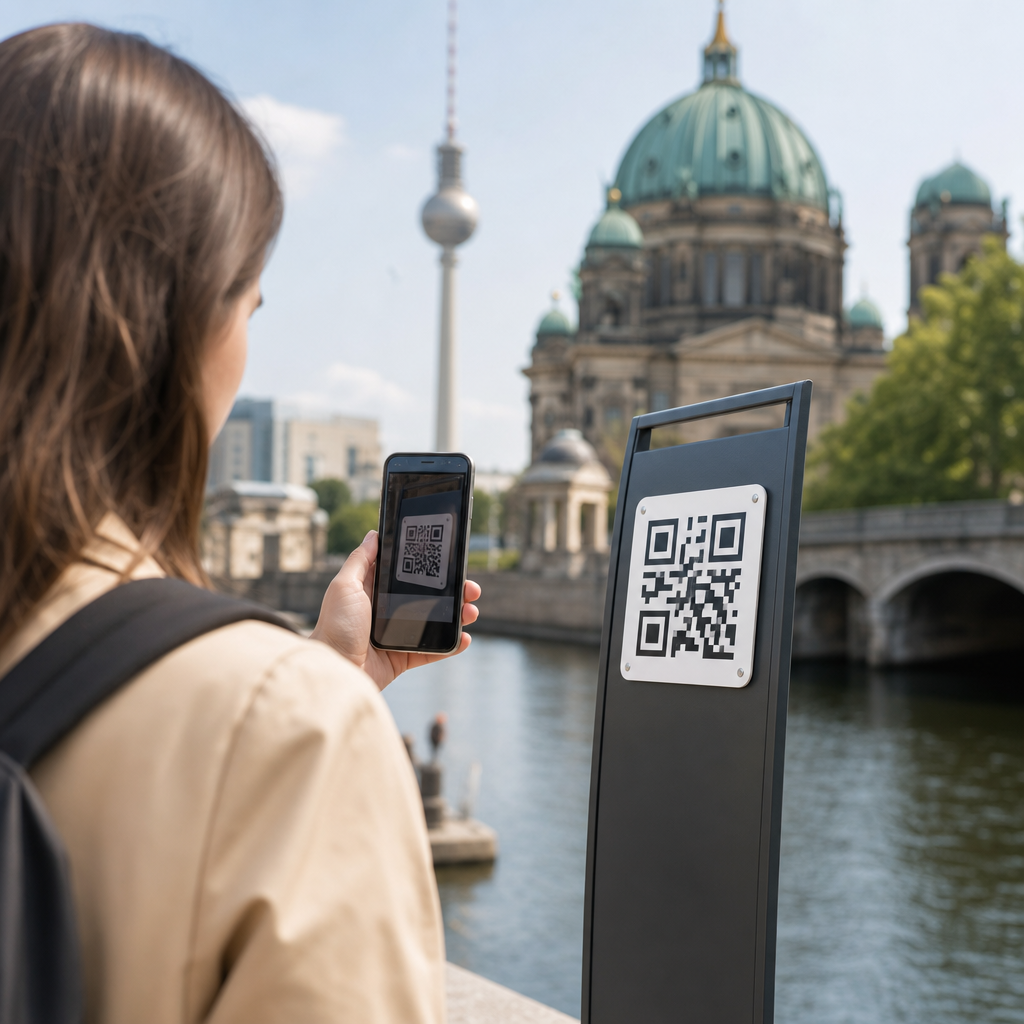
QR codes for tourist guides and local attractions have become one of the most practical tools in travel and tourism because they connect physical places to useful digital information in seconds. In simple terms, a QR code is a scannable two-dimensional barcode that opens a webpage, map, menu, ticket, audio guide, video, payment page, or contact form when scanned with a smartphone camera. For tourism operators, destination marketers, museums, walking tour companies, hotels, and municipal visitor bureaus, this matters because travelers increasingly expect self-service information that is fast, multilingual, mobile friendly, and available at the exact moment of need. I have implemented QR code programs for visitor centers, heritage trails, and attraction signage, and the results are consistent: fewer repetitive staff questions, stronger engagement with exhibits and landmarks, and clearer attribution for what visitors actually use. As a hub topic within travel and tourism, this article explains where QR codes fit, how they improve the visitor journey, what destinations should link them to, and how to measure whether they are delivering real operational value.
Why QR codes work so well in travel and tourism
Travel is full of decision points. Visitors need directions, opening hours, translation help, ticket access, transportation guidance, safety rules, and local recommendations, often while standing outside an attraction or navigating an unfamiliar street. QR codes solve a basic tourism problem: they reduce friction between curiosity and action. A sign can only hold limited text, but a scan can open a full landing page with maps, seasonal notices, accessibility details, and booking links. For tourist guides, QR codes also bridge live and self-guided experiences. A walking tour guide can hand out a printed map with codes for each stop, allowing guests to revisit stories, photos, and source material later. A heritage site can place weather-resistant plaques beside monuments so visitors access narration in multiple languages without installing an app. In high-traffic destinations, this lowers printing costs and keeps information current, because a dynamic QR code can point to updated content without replacing the physical sign.
Tourism adoption accelerated after contactless service became standard. Restaurants added scan-to-view menus, hotels replaced printed directories, and attractions moved to mobile ticketing. Those habits stayed because they are efficient. According to industry reporting from hospitality technology providers and booking platforms, mobile-first trip planning now dominates for many traveler segments, especially city break visitors, international tourists, and younger independent travelers. The best use of QR codes is not novelty. It is utility tied to a clear visitor task: find, learn, book, pay, navigate, or share.
Best uses for tourist guides, attractions, and destination managers
QR codes are most effective when mapped to the full visitor journey before, during, and after the visit. Before arrival, codes on brochures, transit ads, event posters, and partner materials can lead to itinerary pages, reservation systems, or seasonal highlights. During the visit, codes on trailheads, gallery labels, zoo enclosures, bus stops, hotel lobbies, and public wayfinding signs can open contextual information exactly where it is needed. After the visit, QR codes on receipts, room cards, or souvenir packaging can request reviews, encourage donations, or promote nearby experiences.
For local attractions, the strongest applications usually fall into a few categories: ticketing, interpretation, navigation, commerce, and feedback. Ticketing codes shorten lines by moving visitors directly to booking pages or digital passes. Interpretation codes support richer storytelling through audio tours, archival images, augmented overlays, and expert commentary. Navigation codes can launch Google Maps, Apple Maps, or indoor maps to parking, entrances, restrooms, and accessible routes. Commerce codes support gift shop offers, food ordering, or membership upsells. Feedback codes capture in-the-moment sentiment while memories are fresh, which is far more useful than a generic email survey days later.
| Tourism setting | Best QR destination | Main visitor benefit | Operational benefit |
|---|---|---|---|
| Museum or gallery | Object page with audio, translation, captions | Deeper context at each exhibit | Less label clutter, easier updates |
| City walking tour | Stop-by-stop map and narration | Flexible self-guided exploration | Scalable tour delivery without extra staff |
| Historic district | Heritage archive and old photos | Better sense of place | Preserves stories without large installations |
| Theme park or zoo | Live schedule, queue info, feeding times | Better planning on site | Distributes crowds more efficiently |
| Hotel concierge area | Curated local attraction hub | Fast trusted recommendations | Reduces repetitive front-desk requests |
What to link from a QR code for local attractions
A QR code is only as useful as the destination behind it. Sending visitors to a generic homepage is usually a mistake. The landing page should match the context of the scan and answer the immediate question first. At a landmark, visitors want the story, not the site navigation menu. At a trail entrance, they want route difficulty, distance, weather considerations, restrooms, and emergency contact information. At a family attraction, they want opening times, age suitability, stroller access, food options, and pricing.
In practice, the highest-performing tourism landing pages include seven elements: a clear title, concise summary, practical information, map integration, language options, accessibility details, and one primary action. Practical information should include hours, admission, timing, transportation, and safety notes. Accessibility details should be explicit, covering step-free entry, hearing loops, captioned media, tactile exhibits, or accessible toilets where relevant. If the page includes media, it must load quickly over mobile networks. I recommend compressing images, hosting video selectively, and testing pages on 4G in the exact environment where visitors will scan. Stone buildings, remote parks, and underground transit spaces expose weak mobile experiences immediately.
For a tourism hub page, internal connections matter. A destination website should link QR-supported pages to related resources such as city passes, event calendars, transportation guides, restaurant districts, seasonal itineraries, and family travel advice. That structure helps visitors keep exploring and helps teams maintain a coherent content system instead of isolated campaign pages.
Implementation standards that prevent failure
Most QR code failures are not technical; they are operational. The code scans, but the experience disappoints because the sign is placed poorly, the page is outdated, or the content ignores real traveler needs. Good implementation starts with choosing dynamic QR codes rather than static ones for public tourism assets. Dynamic codes allow destinations to update the destination URL, track scans, and manage campaigns without reprinting every sign. Established platforms such as Bitly, QR Code Generator Pro, Beaconstac, and Uniqode provide governance features, analytics, and asset management that matter once a tourism network includes dozens or hundreds of codes.
Placement is equally important. Codes should sit where visitors naturally pause, with enough lighting and contrast to scan comfortably. On exterior signage, print at a size appropriate for the scanning distance, use matte finishes to reduce glare, and maintain quiet space around the code. Add a plain-language call to action such as “Scan for audio guide in 8 languages” or “Scan for live opening hours and tickets.” Without that instruction, scan rates drop because people do not know what value they will receive.
Accessibility and privacy must be treated seriously. A QR-based experience should never be the only way to access essential information. Core safety instructions, hours, and directional cues must still be visible in print. If analytics are collected, destinations should disclose cookie use where required and avoid gathering more personal data than necessary. Public tourism agencies should also maintain URL governance so codes do not break during website migrations, vendor changes, or rebranding projects.
How to measure success across the visitor journey
The right metrics depend on the purpose of the code. If the goal is interpretation, look at scans per location, average engagement time, audio completions, and language selection. If the goal is ticketing, track scan-to-purchase conversion rate, cart completion, and reductions in box office queue time. If the goal is navigation, measure map launches, route starts, and lower demand for in-person directional assistance. For hotels and visitor centers, review whether QR content reduces common front-desk questions while increasing partner referrals and local bookings.
Use UTM parameters and event tracking in Google Analytics 4, Matomo, or Adobe Analytics so each sign, brochure, or room card can be measured separately. I advise operators to run small pilots first: one museum wing, one historic trail, one hotel lobby display. Compare performance by call to action, placement height, and landing page format. In one city heritage project, adding “Scan to hear this story in your language” nearly doubled interaction compared with a generic “Learn more” label because the benefit was immediate and specific. Data should inform maintenance too. If one stop gets many scans but short engagement, the content may be weak. If another gets low scans, the problem may be visibility, not demand.
Future-proofing QR strategy for travel brands and destinations
QR codes are not a trend to bolt onto tourism marketing; they are infrastructure for connected visitor experiences. As destinations expand digital guides, mobile ticketing, smart signage, and multilingual content, QR codes remain the simplest bridge between place and information. The winning strategy is straightforward: use them where visitors need instant context, send them to focused mobile pages, maintain the content rigorously, and measure outcomes by real visitor tasks. For tourist guides and local attractions, that means better storytelling, smoother operations, and more inclusive access to information across languages and ability levels.
Travel and tourism organizations that treat QR codes as part of a broader content ecosystem will outperform those that use them as isolated stickers. Build pages for landmarks, neighborhoods, museums, tours, transport links, food districts, and event venues, then connect them into a clear hub visitors can navigate easily. Start with your highest-traffic locations, document standards for signage and analytics, and update content seasonally. If you manage a destination, attraction, or guided experience, audit every place where visitors stop and ask, “What would help them right here?” Then create the QR journey that answers it.
Frequently Asked Questions
1. How are QR codes used in tourist guides and local attractions?
QR codes help tourist guides and local attractions connect visitors to digital information instantly, without requiring printed materials to carry every detail. When a traveler scans a code with a smartphone camera, the code can open a mobile-friendly page that provides attraction history, opening hours, ticket options, maps, multilingual descriptions, transportation directions, safety instructions, nearby recommendations, or guided tour content. This makes QR codes especially useful at monuments, museums, heritage sites, parks, walking tour stops, hotel lobbies, visitor centers, and public spaces where travelers need fast, self-serve information.
In practice, a single attraction can use QR codes in several ways at once. One code might launch an audio guide, another could link to an interactive map, and a third could send guests to online booking or a feedback form. Local tourism boards and destination marketers also use QR codes on brochures, signage, buses, event posters, restaurant tables, and storefront windows to bridge the gap between offline discovery and online action. Because the scan experience is immediate and familiar to most smartphone users, QR codes reduce friction and make it easier for visitors to explore more deeply, even when staff availability is limited.
They are also highly effective for updating content over time. Instead of reprinting signs every time information changes, operators can connect dynamic QR codes to webpages that can be edited whenever schedules, prices, routes, or seasonal recommendations change. This flexibility is one of the main reasons QR codes have become such a practical tool in modern tourism: they improve the visitor experience while helping operators deliver accurate, current, and accessible information at scale.
2. What are the biggest benefits of using QR codes for tourism operators and destination marketers?
The biggest advantage is convenience for both the visitor and the organization. Travelers want instant answers, and QR codes provide a fast path to the information they need in the moment. Instead of searching online manually, asking staff, or relying on outdated printed guides, visitors can simply scan and access relevant content in seconds. For tourism operators, this means fewer barriers between interest and action. A person standing in front of an attraction can immediately book tickets, start a self-guided tour, view opening hours, or learn the story behind what they are seeing.
QR codes also improve operational efficiency. Museums, tour companies, municipal visitor offices, hotels, and local attraction managers can reduce printing costs, minimize the need for constant brochure updates, and provide digital resources in multiple languages without expanding physical signage. This is especially valuable in high-traffic or international destinations where visitors come from many regions and expect flexible, mobile-first service. QR codes also support contactless experiences, which remain important in many travel settings for speed, accessibility, and guest comfort.
Another major benefit is measurability. Dynamic QR codes can provide scan analytics that show when, where, and how often visitors engage with specific materials. This data helps tourism teams understand which exhibits, attractions, neighborhoods, or campaigns generate the most interest. With those insights, marketers can refine messaging, improve placement, promote under-visited locations, and better allocate budgets. In short, QR codes are not just a convenience tool; they are also a practical marketing and visitor engagement channel that supports better decisions and stronger guest experiences.
3. What kind of information should a QR code link to at a local attraction?
The best QR code destinations are the ones that solve an immediate visitor need. At a local attraction, this usually includes essential information such as opening hours, admission pricing, accessibility details, restroom locations, parking instructions, rules for photography, and contact information. For cultural or historical sites, QR codes often work best when they link to short but engaging content such as audio narration, timeline overviews, translated descriptions, archival photos, curator notes, or short videos that explain why the site matters. The goal is to enrich the on-site experience, not overwhelm the visitor with unnecessary clicks.
Interactive and action-oriented content is also highly effective. A QR code can lead to ticket booking pages, event calendars, guided walking routes, wayfinding maps, augmented reality experiences, scavenger hunts, donation pages, volunteer sign-ups, or special offers from nearby local businesses. In destinations that welcome international travelers, multilingual landing pages are especially important. A single code can direct users to a language selection page so the same sign serves a broader audience without visual clutter.
It is also smart to think in terms of visitor journey stages. Before arrival, QR codes can link to planning information such as transport, reservations, and itineraries. During the visit, they can support orientation, interpretation, and engagement. After the visit, they can collect reviews, encourage social sharing, promote future events, or invite visitors to join an email list. The most effective QR code strategies are designed around what travelers need at each moment, making the digital experience feel useful, timely, and intuitive.
4. Are QR codes a good fit for museums, walking tours, hotels, and city visitor programs?
Yes, QR codes are an excellent fit for nearly every part of the tourism ecosystem because they adapt well to different environments and visitor expectations. In museums, they can power exhibit labels, deeper educational content, audio guides, accessibility support, and multilingual interpretation. For walking tours, they can mark route stops, share storytelling content, display maps, and provide check-in or ticket validation. Hotels can place QR codes in rooms, lobbies, and concierge areas to direct guests to local attraction recommendations, restaurant guides, room service menus, transportation options, spa bookings, and digital guest services.
City visitor programs and municipal tourism offices benefit especially from QR codes because they often manage large amounts of changing information across many locations. QR codes can be placed on street signage, kiosks, transport hubs, historic districts, event venues, and public art installations to create a connected citywide information network. This helps distribute visitor traffic, highlight lesser-known neighborhoods, and support local businesses by guiding travelers to nearby experiences, dining, retail, and cultural sites.
The key is implementation quality. QR codes work best when they are easy to scan, clearly labeled, and linked to mobile-optimized pages that load quickly. Visitors should know exactly what they will get from scanning, whether it is “Listen to the audio guide,” “View this stop on the map,” or “Book today’s tour.” When organizations treat QR codes as part of a larger visitor experience strategy rather than just a technical add-on, they become a powerful tool for education, navigation, conversion, and guest satisfaction.
5. What are the best practices for creating effective QR code experiences for travelers?
Start with clarity and purpose. Every QR code should have one primary job, and that purpose should be obvious from the sign or surface where it appears. A traveler is much more likely to scan a code labeled “Open map,” “Buy tickets,” “Hear the story of this landmark,” or “See today’s opening hours” than a code with no explanation. Strong calls to action improve scan rates because they reduce uncertainty and show immediate value. It is also essential to link codes to mobile-friendly landing pages that load fast, display cleanly on small screens, and avoid unnecessary pop-ups or long forms.
Design and placement matter just as much as the digital destination. Codes should be large enough to scan comfortably, printed with strong contrast, and positioned at a practical height with adequate lighting. Avoid placing them where visitors have poor mobile signal, little room to stop, or too much visual clutter. In outdoor environments, weather-resistant materials are important. For international audiences, use simple wording and offer language options whenever possible. Accessibility should also be considered by providing readable fonts, descriptive instructions, and alternative ways to access the same content if needed.
Finally, use dynamic QR codes whenever possible so content can be updated without replacing the printed code. This is especially helpful for seasonal attractions, rotating exhibits, event schedules, temporary closures, or limited-time offers. Track scan analytics to learn which locations and content types perform best, then refine the experience over time. Testing is critical: scan the code on multiple devices, confirm the page loads quickly, check for translation accuracy, and review the full visitor flow from scan to action. The most successful QR code programs in tourism are not just visually present; they are thoughtfully planned, regularly maintained, and built around real traveler behavior.