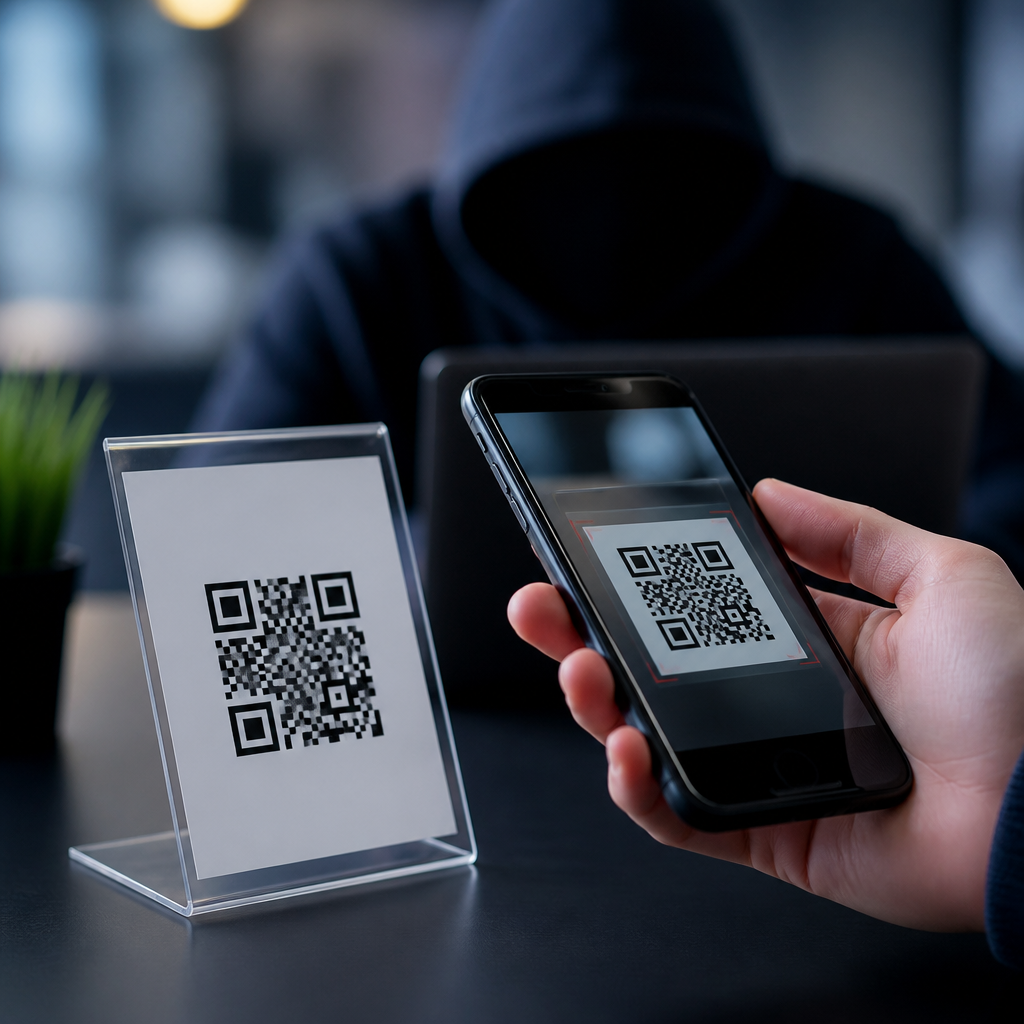
QR codes have become a standard bridge between physical and digital payments, but convenience only creates value when the payment flow is secure, private, and compliant. In payment systems, a QR code is simply a machine-readable symbol that encodes transaction data, while secure QR code implementation refers to the controls that protect that data from tampering, interception, fraud, and misuse across the full lifecycle. I have worked on QR-based payment rollouts for merchants, event venues, and service businesses, and the pattern is consistent: teams focus first on scan speed and checkout design, then discover that payment integrity, consumer trust, and regulatory obligations determine whether adoption lasts.
This matters because QR payments now sit inside high-risk environments: point-of-sale terminals, printed invoices, parking meters, restaurant tables, peer-to-peer transfers, and utility bills. Each setting exposes different attack surfaces. A static code on a sticker can be replaced. A dynamic code on a screen can be generated from a compromised backend. A payment request can route through a legitimate acquirer but still leak customer data if logging practices are poor. For businesses, the stakes include chargebacks, account takeover, merchant disputes, customer support costs, and brand damage. For consumers, the risks include phishing, fake merchants, malware redirects, and unauthorized payment collection.
Secure QR code implementation therefore combines payment architecture, fraud controls, device security, network protection, user verification, and governance. The strongest deployments do not rely on the code itself as a trust signal. Instead, they validate the destination, sign or tokenize critical payment data, enforce transaction limits, monitor anomalies, and provide clear user cues before payment authorization. Standards also matter. EMVCo QR specifications, PCI DSS requirements, PSD2 strong customer authentication in applicable markets, and local data protection laws all shape how payment data should be encoded, transmitted, stored, and audited. A business that treats QR payments as a marketing shortcut will eventually face preventable security failures.
How secure QR payment systems actually work
A secure QR payment system is best understood as a chain of controls rather than a single technology. The code may contain a merchant identifier, transaction amount, payment network information, and a reference token, but sensitive cardholder data should not be exposed in plain text. In stronger designs, the scan opens a trusted payment app or secure web session that retrieves transaction details from the payment processor after server-side validation. That means the QR image acts as a pointer, not a container for secrets. If the code is copied, the backend can still reject reused, expired, or altered requests.
There are two main implementation models: static and dynamic QR codes. Static codes usually represent a fixed merchant account or payment address and are common in small retail, donation, and bill-pay contexts. They are easy to deploy but inherently riskier because the same code persists over time and can be tampered with physically. Dynamic codes are generated per transaction or session, often tied to amount, timestamp, terminal, and order number. In practice, dynamic codes are more secure because they support expiration, transaction binding, reconciliation, and fraud scoring. When I audit merchant deployments, dynamic QR is usually the first recommendation for higher-volume or higher-risk environments.
Secure payment authorization also depends on the user’s banking or wallet application. Well-designed apps display the merchant name, amount, and transaction context before confirmation, then require biometric or device-based authentication. This step is crucial because it creates an independent verification layer that is harder for a fake sticker or malicious redirect to bypass. If a scan lands on a browser page requesting card details without a recognizable payment flow, that is a warning sign. Strong systems route payment through established wallets, banking apps, or PCI-scoped hosted payment pages instead of improvised forms.
Core threats in QR code payment environments
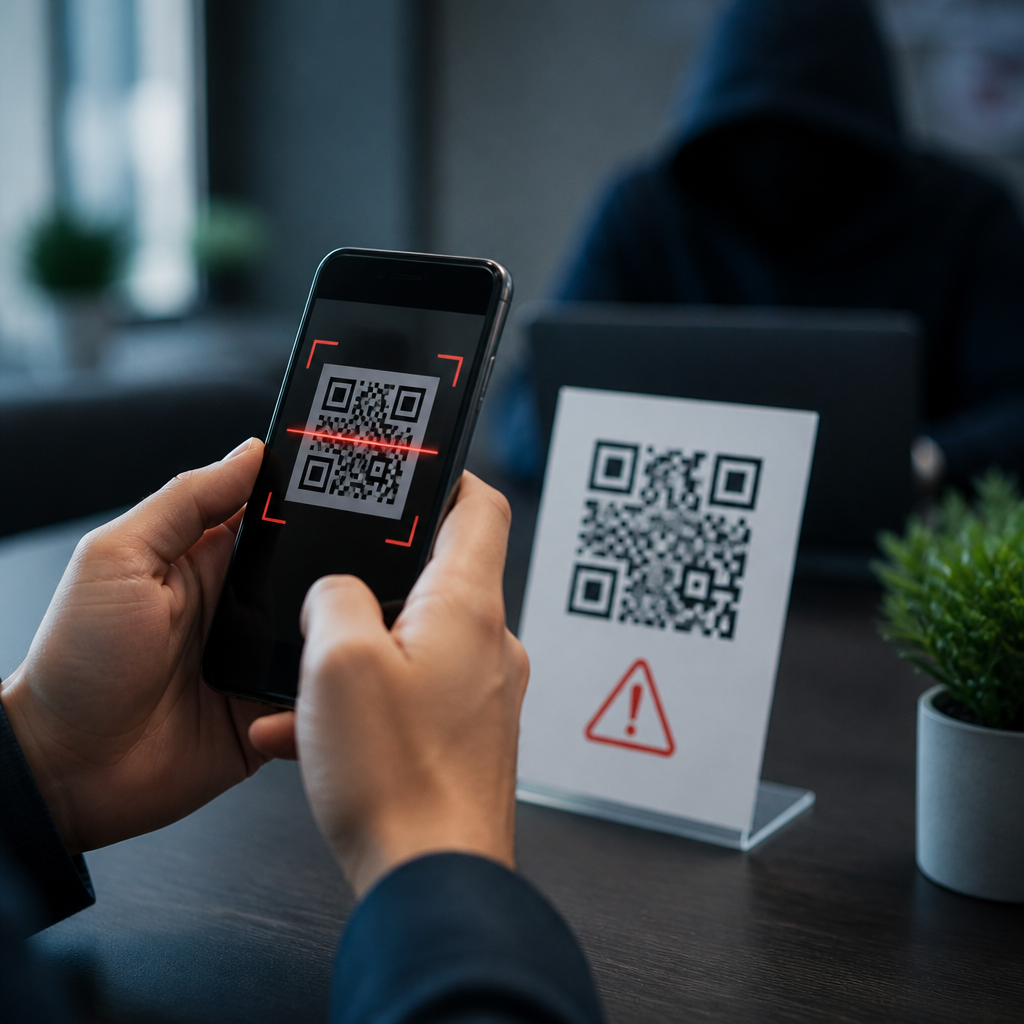
The most common QR payment threat is code substitution: an attacker places a fraudulent QR sticker over a legitimate one or changes the code in a digital display. The victim scans, sees a plausible payment page, and sends funds to the attacker. This is common in unattended environments such as parking kiosks, vending machines, and table-service restaurants. Another threat is malicious redirection. The QR code points to a lookalike domain that captures credentials, one-time passcodes, or card data. Because users often trust the act of scanning, they may lower normal phishing defenses.
Backend manipulation is less visible but often more damaging. If a merchant’s content management system, payment middleware, or QR generation API is compromised, attackers can modify destination accounts at scale. I have seen organizations lock down public-facing materials while leaving generation endpoints weakly authenticated, which creates a false sense of security. Other risks include replay attacks against reusable payment references, excessive data collection in scan analytics, insecure logs containing tokens or payer identifiers, and malware on point-of-sale devices that changes order metadata before code generation.
Operational failures matter too. Staff may print outdated codes after a merchant account change, leading to failed or misrouted payments. Customer support teams may lack a process to verify disputed QR transactions quickly. Incident response plans often cover card-present fraud but not QR-specific abuse such as counterfeit table tents or fraudulent utility bill inserts. Secure implementation requires both technical and procedural controls, because many QR payment incidents begin with simple physical tampering and end with expensive financial and reputational consequences.
Secure QR code implementation best practices
The most effective security control is to minimize what the QR code exposes. Encode a transaction reference or signed token rather than raw account details whenever possible. Use dynamic QR codes for transactions that need amount integrity, one-time use, or strong reconciliation. Apply short expiration windows, enforce nonce validation, and reject duplicate submissions server-side. If your payment network supports merchant-presented QR under EMVCo rules, implement the specification correctly instead of creating a custom format that is difficult to validate and monitor.
Protect the destination environment with standard web and payment controls. Use HTTPS everywhere, HSTS, certificate monitoring, web application firewalls, bot detection, and strict access control for QR generation services. Hosted payment pages should be PCI-compliant, mobile-optimized, and linked only to approved merchant domains. For in-store deployments, pair QR materials with visible merchant branding, terminal identifiers, and tamper-evident placement. In field audits, a simple inspection checklist for cashiers and service staff catches many substitution attacks before customers are affected.
| Control Area | Recommended Practice | Why It Reduces Risk |
|---|---|---|
| Code type | Use dynamic QR for most payment sessions | Limits reuse, supports expiry, and binds amount to transaction |
| Data design | Encode tokens or signed references, not sensitive data | Prevents exposure if code is copied or logged |
| User verification | Show merchant name and amount before authorization | Helps customers detect fake destinations |
| Infrastructure | Secure APIs, enforce HTTPS, monitor certificate changes | Blocks interception and backend tampering |
| Operations | Inspect physical placements and train staff regularly | Reduces sticker replacement and procedural errors |
| Monitoring | Alert on unusual geographies, velocity, and destination changes | Detects fraud patterns early |
Payment authentication should be layered. Combine device binding, biometrics, risk-based checks, and transaction confirmation screens. High-risk transactions may warrant step-up authentication, especially for first-time payees or unusual amounts. Logging should support forensics without storing unnecessary personal data. Keep immutable records of QR generation events, merchant account mappings, amount changes, and authorization outcomes. Finally, test the full journey. Red-team the physical environment, scan from multiple devices, verify app-link behavior, and simulate merchant account compromise. Secure QR code implementation is not complete until monitoring, response, and recovery are proven in practice.
Compliance, privacy, and governance for payment QR codes
Compliance starts with understanding which data elements flow through the QR experience. If card data enters the environment, PCI DSS scoping becomes central. If customer identity, location, or payment history is processed, privacy laws such as GDPR, CCPA, or sector-specific rules may apply. In Europe, PSD2 and strong customer authentication affect how payment approval is initiated and confirmed. The secure path is to reduce stored data, segment systems, and route sensitive processing through regulated providers that can demonstrate audited controls.
Governance is where many QR payment programs either mature or stall. Someone must own code issuance, merchant mapping, key rotation, vendor review, and incident handling. Third-party dependencies deserve special scrutiny: QR generation libraries, payment gateways, mobile SDKs, analytics tags, and printing vendors all sit in the trust chain. I advise teams to maintain an asset register for every QR payment touchpoint, including where each code appears physically, which domain it resolves to, which processor it calls, and how updates are approved. That inventory dramatically speeds up fraud investigations and routine audits.
Privacy by design also improves customer trust. Ask only for data required to complete the payment, publish a clear notice, and avoid using payment scans as a hidden marketing surveillance channel. If analytics are needed, aggregate them and set retention limits. Customers are increasingly willing to use QR payments when the flow is predictable, the merchant identity is obvious, and the app asks for appropriate permissions only. Security and privacy are not separate workstreams here; they reinforce each other because a payment journey that collects less data presents fewer opportunities for fraud and fewer liabilities after an incident.
Building a durable hub strategy for secure QR payments
As a hub topic, secure QR code implementation should connect technical teams, compliance leaders, fraud analysts, and merchant operators around a shared model: trust the payment workflow, not the square image. That model supports deeper content on static versus dynamic QR codes, EMVCo implementation, phishing prevention, PCI scope reduction, merchant onboarding, physical tamper controls, secure invoice QR payments, and incident response for code substitution. The hub page should define these concepts consistently so every supporting article answers a narrower operational question without repeating the fundamentals.
The main takeaway is straightforward. QR codes can support fast, low-friction payments, but only when the implementation binds each scan to a verified merchant, a protected backend, and a user-confirmed authorization step. Businesses that use dynamic codes, minimize encoded data, secure their infrastructure, inspect physical placements, and document governance decisions reduce fraud significantly while preserving convenience. If you are building or reviewing a QR payment program, start with a full control map of the scan journey, identify where trust is assumed instead of verified, and close those gaps before scaling.
Frequently Asked Questions
1. How do QR codes work in secure payment systems?
In a payment environment, a QR code acts as a machine-readable container for transaction-related information such as a merchant identifier, payment address, transaction reference, amount, or a link to a payment session. The code itself is not inherently secure or insecure; security depends on how the payment system generates, delivers, validates, and processes the data encoded inside it. In other words, the QR code is only one visible part of a much larger trust framework.
Secure payment systems typically use either static QR codes or dynamic QR codes. A static QR code usually points to a merchant account or payment destination and remains unchanged over time. These are simple to deploy, but they require stronger downstream controls because the customer may need to manually confirm the merchant name, amount, and transaction details. Dynamic QR codes are generally more secure for many use cases because they can be generated uniquely for each transaction, include exact payment amounts, expire after a short period, and tie directly to a live payment session on the backend.
From a security perspective, the process should include several layers of protection. The payment app needs to verify that the QR payload is well-formed and legitimate. The backend should authenticate the merchant or payee, confirm that the transaction request has not expired, and detect duplicate, altered, or suspicious requests. Data exchanged after scanning should move over encrypted channels, and sensitive values should never be exposed more broadly than necessary. Strong implementations also use digital signatures, tokenization, transaction IDs, and server-side validation to make sure the QR code cannot be easily copied, modified, or reused for fraud.
Well-designed secure QR payment flows also emphasize user verification. Before approval, the payer should clearly see who they are paying, how much they are paying, and what the transaction is for. That final user confirmation step matters because it helps prevent redirection attacks, manipulated amount changes, and social engineering. So while the QR code initiates the payment experience, the actual security comes from cryptographic protections, app integrity, backend controls, monitoring, and clear transaction visibility.
2. What are the biggest security risks associated with QR code payments?
The most common risks fall into a few broad categories: tampering, redirection, phishing, replay, and weak operational controls. One of the simplest threats is physical tampering, where a malicious actor places a fraudulent QR sticker over a legitimate one. A customer scans what appears to be the merchant’s code, but the payment is actually routed to a criminal-controlled account. This is especially relevant in unattended environments such as counters, kiosks, parking locations, and event venues where visual code replacement can go unnoticed.
Another major issue is malicious redirection. Some QR codes encode URLs that send users into payment flows or hosted checkout sessions. If that destination is fake, compromised, or poorly validated, the user may be tricked into entering credentials, card information, or authorizing a payment to the wrong party. This turns the QR code into a phishing gateway. The risk increases when users are conditioned to scan quickly without checking the app screen, merchant details, or domain legitimacy.
Replay and reuse attacks are also important. If a QR code contains predictable or reusable transaction data, an attacker may be able to submit it multiple times, alter it, or present it outside its intended context. Dynamic QR codes with expiration controls and one-time transaction references reduce this risk significantly. Without those controls, disputes, duplicate payments, or unauthorized reuse can become much harder to prevent or investigate.
There are also backend and integration risks. Even if the QR image is fine, weak API authentication, poor input validation, insecure session management, or insufficient logging can expose the system to fraud. For example, if a backend trusts client-supplied values too much, an attacker might manipulate amounts, merchant IDs, or callback parameters. That is why mature QR payment security is never limited to the image itself. It has to extend across the full lifecycle: code creation, distribution, scanning, transaction approval, settlement, and post-transaction monitoring.
Finally, privacy and compliance risks should not be overlooked. A QR code should not expose unnecessary personal or account data. If it encodes too much sensitive information, anyone with a camera can potentially capture and misuse it. Good design minimizes the data in the code, keeps sensitive processing server-side, and applies access controls, encryption, and audit trails to support privacy obligations and regulatory requirements.
3. Are dynamic QR codes more secure than static QR codes for payments?
In many real-world payment environments, yes, dynamic QR codes are generally more secure than static QR codes because they support transaction-specific controls that are difficult or impossible to achieve with fixed codes alone. A dynamic QR code can be created for a single purchase, tied to a precise amount, linked to a live order record, and configured to expire after a short window. That dramatically reduces opportunities for misuse, substitution, and replay.
Dynamic QR codes also improve transaction integrity. Because each code can carry a unique reference, the backend can verify that the request matches a real session and has not already been used. If someone copies a screenshot of the code and tries to present it later, the system can reject it as expired or already processed. This is particularly valuable in retail, hospitality, transportation, and events, where payment requests are often time-sensitive and transaction volumes are high.
Static QR codes still have legitimate use cases. They are easy to deploy, inexpensive, and practical for low-complexity merchant acceptance, donations, person-to-business payments, and small sellers. However, because the code usually remains the same over time, security has to rely more heavily on controls outside the QR image. The customer must verify the merchant name and amount in their banking or payment app, the payment provider must perform strong merchant validation, and the merchant must monitor for signs of tampering or diversion. Static codes also increase the importance of physical inspection because a replaced sticker can silently redirect funds.
That said, dynamic does not automatically mean secure. If a system generates dynamic codes but fails to authenticate merchants, does not encrypt API traffic, or allows parameter tampering, it can still be vulnerable. The security advantage comes from combining dynamic generation with signed payloads, time limits, one-time use logic, backend verification, fraud analytics, and clean user confirmation screens. When implemented properly, dynamic QR codes offer a much stronger foundation for secure payment experiences, but they are still part of a broader security architecture rather than a standalone solution.
4. What best practices should merchants and payment providers follow to secure QR code payments?
The first best practice is to treat QR payments as an end-to-end security problem rather than a simple code-generation task. That means protecting every layer: merchant onboarding, QR code creation, application security, backend APIs, user confirmation, settlement logic, and dispute handling. The QR code should contain only the minimum data required, and sensitive values should be tokenized or resolved server-side whenever possible. If the code includes references or session identifiers, they should be hard to predict and tightly scoped to the intended transaction.
Payment providers should strongly prefer dynamic QR codes for higher-risk or higher-value transactions. Those codes should expire quickly, support one-time use where appropriate, and be linked to backend transaction records that can be validated before authorization. Digital signatures or message authentication methods can help detect tampering. All communications between apps, APIs, and backend systems should be encrypted in transit, and internal systems should enforce strict authentication and authorization controls so that only approved services can create, modify, or redeem payment requests.
Merchants also need practical operational safeguards. Printed codes should be inspected regularly for sticker replacement or visible alteration. Staff should be trained to recognize tampering and understand what a legitimate payment confirmation looks like. In staffed environments, employees should encourage customers to confirm the merchant name and amount before approving payment. In unattended environments, camera coverage, tamper-evident materials, and routine audits can help reduce fraud opportunities.
On the application side, the customer experience should support security rather than weaken it. The payment app should display clear merchant identity, exact payment amount, transaction context, and any warning signs before the user confirms. It should avoid auto-approving transactions immediately after scan. Strong customer authentication may be required depending on the jurisdiction, transaction type, and risk level. Rate limiting, anomaly detection, and device or behavioral analytics can further reduce account compromise and fraud.
Finally, compliance, monitoring, and incident response are essential. Providers should maintain complete audit logs, monitor for unusual redemption patterns, and investigate duplicate or redirected payment activity quickly. They should align controls with applicable payment regulations, privacy laws, and security standards, especially when customer identifiers, transaction histories, or wallet credentials are involved. Secure QR payment systems are successful not because they make scanning easy, but because they make trust measurable, enforceable, and resilient under real operating conditions.
5. How can businesses balance convenience, privacy, and compliance in QR-based payment systems?
The key is to design for all three from the start instead of treating them as competing priorities. Convenience matters because QR payments succeed when users can move quickly from a physical interaction to a confirmed digital transaction. But speed should not require exposing unnecessary data or skipping controls. The best implementations keep the scan-and-pay flow simple for the user while shifting security and validation work into the backend, where it can be enforced consistently and audited properly.