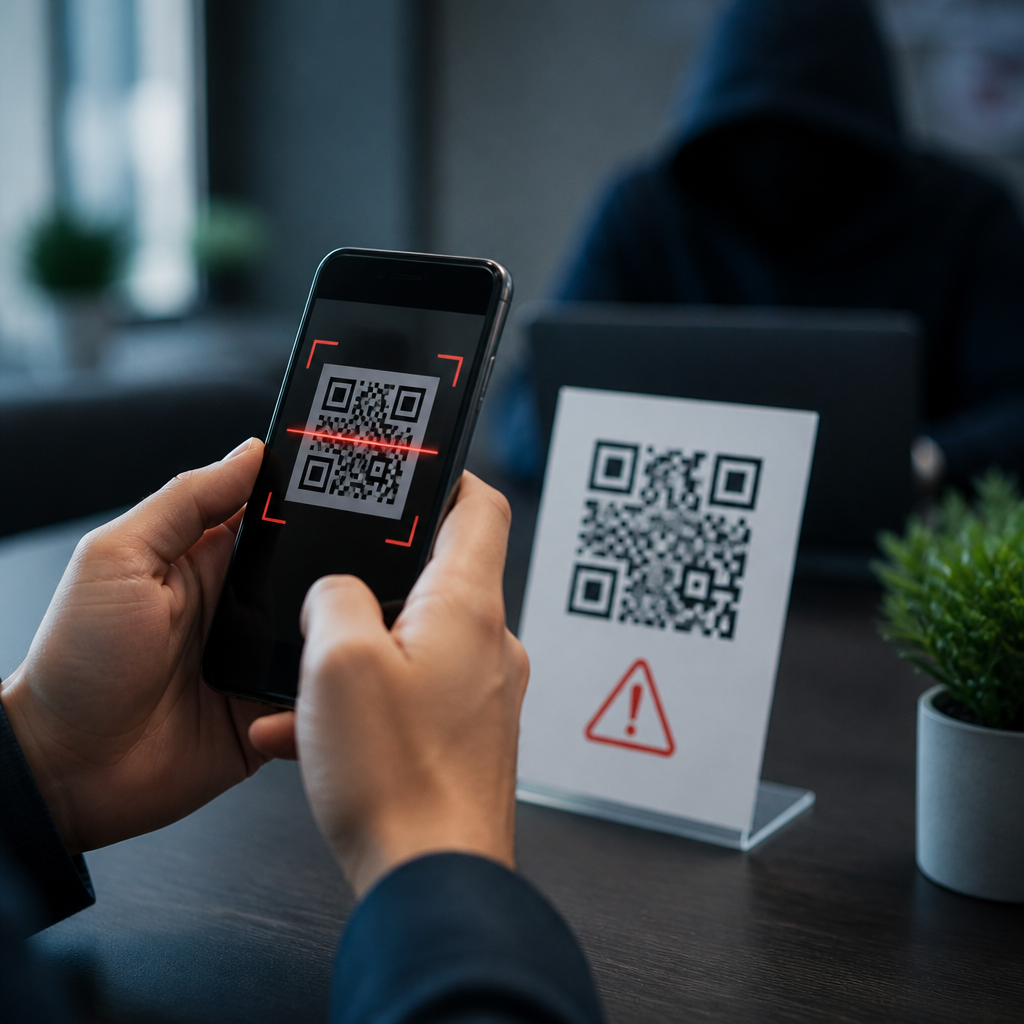

QR codes sit at the intersection of convenience and risk, which makes QR code security monitoring a core discipline for any organization using them in marketing, payments, authentication, packaging, or field operations. A QR code is simply a machine-readable matrix barcode that stores data such as a URL, contact record, payment string, or device instruction. The security problem is not the symbol itself; it is the destination and behavior triggered after scanning. In practice, I have seen teams treat QR codes as static creative assets, then discover too late that the linked landing page changed, the redirect chain was hijacked, or printed codes were replaced in public spaces. Secure QR code implementation means designing, deploying, and continuously monitoring the full lifecycle: code generation, destination control, user experience, analytics, incident response, and retirement.
This matters because QR codes remove visible context. Users cannot reliably inspect a destination before opening it, especially on mobile devices where browser chrome is limited and redirect chains are hidden. Attackers exploit that gap with phishing, malware delivery, credential theft, payment redirection, and tracking abuse. Regulators and standards bodies also care: payment flows, healthcare records, and customer data collection can all trigger obligations under PCI DSS, GDPR, HIPAA, or sector-specific retention rules. A secure implementation protects users, preserves campaign performance, and reduces legal exposure. The goal is not to avoid QR codes. The goal is to monitor QR code security risks with the same discipline used for web applications, email domains, and mobile apps.
Effective monitoring starts with a clear asset inventory and a realistic threat model. Know which QR codes exist, where they are displayed, who owns them, what they do, and which systems they touch. Separate static codes, whose data cannot be changed after printing, from dynamic codes, which usually point to a short URL or redirect service that can be updated centrally. Dynamic codes offer governance and analytics advantages, but they also create a control plane that must be secured with least-privilege access, multifactor authentication, change logging, and domain monitoring. Once inventory and ownership are established, security teams can track the controls that actually prevent abuse: destination validation, tamper resistance, redirect hygiene, TLS enforcement, content scanning, and user reporting.
Build a QR code asset inventory and classify risk
The first operational step is to catalog every production QR code and classify it by use case, exposure, and impact. In my own deployments, this inventory becomes the hub document that links design files, final encoded content, campaign owners, expiration dates, and security controls. Record where each code appears: product packaging, storefront posters, invoices, ID badges, kiosks, shipping labels, emails, social posts, or app screens. Then score the risk. A QR code printed on a public bus shelter and linked to a payment page carries far more abuse potential than an internal warehouse code used only on managed devices.
Classification should answer direct security questions. Does the code initiate a payment? Does it collect credentials or personal data? Does it invoke a mobile app deep link? Is the destination controlled by a third party? Can the underlying content be changed after distribution? These questions let teams prioritize monitoring coverage and approval workflows. High-risk codes should have named business owners, security review before launch, and periodic revalidation. Low-risk informational codes may need lighter governance, but they still require domain control and retirement rules so abandoned destinations do not become takeover opportunities.
| QR code type | Main risk | Best monitoring control | Example |
|---|---|---|---|
| Static URL code | Destination compromise | Scheduled URL, TLS, and content checks | Poster linking to event registration |
| Dynamic redirect code | Unauthorized redirect change | Admin audit logs and change alerts | Packaging code updated per region |
| Payment code | Payment redirection or fraud | Transaction reconciliation and tamper inspection | Restaurant table payment placard |
| App deep link code | App spoofing or unsafe fallback | Deep-link validation and store verification | Device setup guide |
Monitor the destination, not just the image
Most QR attacks succeed after the scan, so destination monitoring is the center of secure QR code implementation. At minimum, every QR-linked URL should be checked for DNS changes, certificate validity, HTTPS enforcement, redirect count, and final landing domain. A simple website uptime check is not enough. Security teams should alert when a final destination changes, when a redirect introduces a new domain, when a certificate expires, or when the page begins prompting for credentials unexpectedly. Tools commonly used for this include standard synthetic monitoring platforms, certificate monitors, DNS logging, and web application security scanners.
Content integrity matters as much as availability. I recommend periodic visual and DOM snapshots of landing pages so teams can spot phishing-style page swaps, injected scripts, or consent-banner regressions that break compliance. For example, a legitimate donation QR code can be abused if an attacker compromises the CMS and replaces the form action to exfiltrate card data. The QR image has not changed, but the risk profile has. Monitoring should therefore include page hashing, screenshot comparison, script inventory, and malware reputation checks through services such as Google Safe Browsing or commercial threat intelligence feeds. If the QR code points to a file download, verify file hashes and signing status as well.
Secure dynamic QR management platforms and redirect chains
Dynamic QR platforms are powerful because they allow central editing, campaign attribution, and location-based routing. They are also a concentration point for risk. If an attacker gains access to the management console, they can silently retarget large numbers of printed codes at once. For that reason, the platform should sit under enterprise identity controls, with multifactor authentication, SSO, IP allowlisting where practical, role separation, and exportable audit logs. Marketing users may need permission to view analytics, while only a small group should be able to alter destinations. Every redirect change should generate a log entry and, for sensitive use cases, a real-time alert.
Redirect chains should be short, deterministic, and documented. Long chains create blind spots and increase the chance of broken attribution, mixed content, or unexpected third-party tracking. I advise teams to standardize on first-party short domains rather than free consumer link shorteners, because branded domains improve trust and simplify monitoring. They also reduce the risk of platform lock-in. If a third-party QR service is used, assess its logging retention, breach history, administrative controls, and incident notification terms. A secure redirect service should support custom domains, HTTPS by default, version history, and API access for inventory synchronization.
Detect physical tampering and social engineering
Printed QR codes introduce a physical attack surface that digital teams often underestimate. The classic attack is sticker replacement: a malicious code is placed over a legitimate one on a parking meter, restaurant menu, or transit sign. Monitoring therefore has to extend beyond logs and into field operations. For high-traffic public placements, create inspection schedules, require staff to photograph codes during routine checks, and compare those images against approved originals. Tamper-evident labels, protected enclosures, and placement that makes overlays obvious all reduce risk. In retail and hospitality settings, I have seen success with adding a short human-readable URL beneath the code so users can verify the domain before they scan.
Social engineering controls matter because even a technically secure QR campaign can fail if users are trained to trust any code they see. Secure implementations should present clear brand signals at the moment of scan and on the landing page: consistent domain naming, recognizable page titles, and plain-language explanations of what happens next. For example, if a code opens a payment page, state the merchant name, transaction purpose, and support contact immediately. User reporting is another overlooked monitor. Add a visible “report a suspicious QR code” path so employees, customers, and partners can flag anomalies quickly. Those reports often surface tampering before automated systems do.
Align QR deployments with privacy, compliance, and incident response
QR code monitoring is not complete unless it covers data handling and response obligations. Many dynamic QR systems capture scan time, approximate location, device type, language, and referral data. That telemetry can be valuable, but it may also be personal data under privacy laws depending on context and retention. Map what data is collected, where it is stored, who can access it, and how long it is retained. If the code leads to forms, payments, or account actions, verify consent flows, cookie behavior, and vendor contracts. A secure QR program should document lawful basis, retention schedules, cross-border transfer considerations, and deletion procedures where required.
Incident response should be defined before launch, not improvised during a phishing event. Establish thresholds for disabling a code, changing a redirect, posting a warning, and notifying affected parties. Keep a tested runbook covering investigation steps, evidence collection, destination takedown, CMS rollback, WAF rules, and customer support messaging. Metrics help prove control effectiveness: percentage of codes with active owners, mean time to detect destination drift, number of unauthorized redirect attempts blocked, and completion rate of field inspections. The strongest secure QR code implementation is not the one with the most controls on paper. It is the one that continuously validates destinations, limits administrative access, detects tampering early, and responds fast when conditions change. Audit your QR inventory, tighten ownership, and monitor every scan path with the same rigor you apply to any public-facing digital asset.
Frequently Asked Questions
What does it actually mean to monitor QR code security risks?
Monitoring QR code security risks means continuously checking what happens before, during, and after someone scans a QR code, rather than treating the code itself as the only thing that matters. A QR code is just a visual container for data. The real risk comes from the destination it points to, the action it triggers, and whether that behavior changes over time. In practical terms, monitoring includes verifying where each code resolves, confirming that the linked content is still legitimate, watching for unauthorized changes to redirect targets, and reviewing scan activity for anomalies such as unusual geographies, sudden traffic spikes, repeated scans from automated systems, or scans leading to suspicious follow-on behavior.
Good monitoring also includes asset inventory and governance. Organizations often create QR codes for marketing campaigns, product packaging, login flows, service manuals, field equipment, event tickets, and payments, but they do not always maintain a central record of where those codes are deployed or who owns them. That creates blind spots. Effective QR code security monitoring starts with knowing which codes exist, what business process they support, where they are physically or digitally displayed, what URL or payload they contain, and who is responsible for reviewing them. Once that visibility exists, teams can layer in technical controls such as domain monitoring, certificate checks, redirect validation, tamper detection, and alerting on unusual scan patterns. The goal is not just to detect obvious malicious codes, but to identify subtle drift, misuse, or compromise before it harms users or the business.
What are the most common QR code threats organizations should watch for?
The most common threats fall into a few clear categories. First is malicious redirection, where a QR code points users to a phishing site, malware download, fake payment page, or fraudulent login screen. This can happen because an attacker replaces a legitimate printed code with a sticker, edits the destination behind a dynamic QR code, compromises the landing page, or abuses an open redirect in the URL chain. Second is content tampering. Even if the code itself has not changed, the page it resolves to may be altered to collect credentials, payment data, personal information, or device permissions under the appearance of legitimacy.
Another major risk is lack of ownership and expiration control. Teams sometimes launch QR codes for campaigns or operations and then forget about them. Over time, the destination domain may expire, be repurposed, or fall out of maintenance, which opens the door to domain takeover, spoofing, or user confusion. There is also the risk of unauthorized code generation inside the organization, where departments create untracked QR codes using third-party generators or shorteners outside approved systems. That makes it difficult to audit destinations, enforce branding, or investigate incidents. For payments and authentication use cases, attackers may manipulate payment details, swap wallet identifiers, or direct users to fake verification flows. For physical environments such as retail shelves, equipment labels, or public signage, sticker overlay attacks remain a simple but effective tactic. Security monitoring should be built around these realistic failure modes rather than assuming the QR image itself is the only object worth protecting.
How can a business tell whether a QR code or its destination has been compromised?
The most reliable approach is to validate both the visible artifact and the full destination path. On the physical side, organizations should inspect whether stickers, labels, posters, packaging, or display materials show signs of replacement, overlay, distortion, or poor print alignment. In high-risk environments such as payments, transportation, hospitality, healthcare, and unattended public displays, routine physical inspection is essential because attackers often exploit the fact that users trust what they see in the real world. If a code is dynamic, the organization should also confirm that the management console shows the expected target and that recent edits were authorized and documented.
On the technical side, teams should follow the entire scan flow and not stop at the first URL. Review the initial target, every redirect, the final landing page, the TLS certificate, page content, scripts, and any forms or download prompts. Compare current behavior to a known-good baseline. Signs of compromise include sudden changes in destination domains, shortened links resolving to unfamiliar infrastructure, mismatched branding, unexpected credential requests, downloads that were not part of the original experience, or payment details that differ from approved records. Scan analytics can also reveal compromise. For example, if a code used locally suddenly receives traffic from unrelated countries, if scans surge outside campaign timing, or if users bounce immediately after landing, those patterns may indicate abuse, automated testing, or a malicious redirect. Monitoring tools that perform scheduled URL resolution checks, screenshot comparisons, certificate monitoring, and content change detection can make these issues visible early, before customers report them.
What security controls are most effective for reducing QR code risk?
The strongest controls combine governance, secure architecture, and ongoing monitoring. Start with a centralized QR code program so every code has a clear owner, approved purpose, documented destination, and review schedule. Standardize code creation through approved platforms rather than allowing ad hoc generators. Whenever possible, use company-controlled domains, avoid unnecessary third-party redirects, and enforce HTTPS everywhere. If dynamic QR codes are used, restrict who can edit destinations, require strong authentication, log all changes, and review redirects regularly. This is especially important because dynamic codes offer business flexibility, but they also create a valuable control point for attackers if poorly managed.
Operationally, maintain an inventory of all deployed QR codes and classify them by risk level. A QR code that initiates a payment or login deserves tighter controls than one linking to a generic brochure. Add monitoring for domain health, DNS changes, TLS certificate expiration, page integrity, and scan anomalies. In physical spaces, use tamper-evident placement methods, branded visual treatments that are harder to counterfeit casually, and inspection procedures for locations where overlays are realistic threats. User-facing controls matter too. Train employees and customers to preview links when possible, verify the domain before entering credentials or payment information, and report suspicious behavior. Finally, align QR code security with broader security processes such as incident response, change management, vendor review, and digital asset governance. QR codes should not be treated as a novelty channel; they should be protected like any other path that can route users into sensitive systems or transactions.
How often should QR codes be reviewed, and what should be included in a monitoring plan?
Review frequency should match business risk, exposure, and change rate. High-risk QR codes used for payments, authentication, account access, or sensitive operational workflows should be monitored continuously with automated checks and reviewed manually on a regular schedule. Medium-risk codes used in active campaigns, customer service flows, packaging, or field documentation should be checked at defined intervals and whenever a destination, vendor, domain, or workflow changes. Lower-risk informational codes can be reviewed less frequently, but they should still remain in the organization’s inventory and be revalidated before renewals, reprints, relaunches, or major site changes. One of the most common mistakes is assuming that because a QR code was safe at launch, it will remain safe indefinitely.
A strong monitoring plan should include several elements: a complete inventory of active and retired codes; ownership assignments; business purpose and risk classification; documented approved destinations; automated checks for redirects, domain changes, certificate issues, and content drift; analytics review for anomalous scan behavior; physical inspection procedures for public-facing placements; and escalation paths if a code is suspected of being compromised. The plan should also define what happens when a problem is found, including how to disable or redirect a code, notify affected stakeholders, replace printed materials, preserve logs, and investigate whether the issue was accidental misconfiguration or malicious interference. The best monitoring programs are disciplined but practical. They focus on the real user journey after the scan and treat QR codes as living assets that need oversight throughout their entire lifecycle.