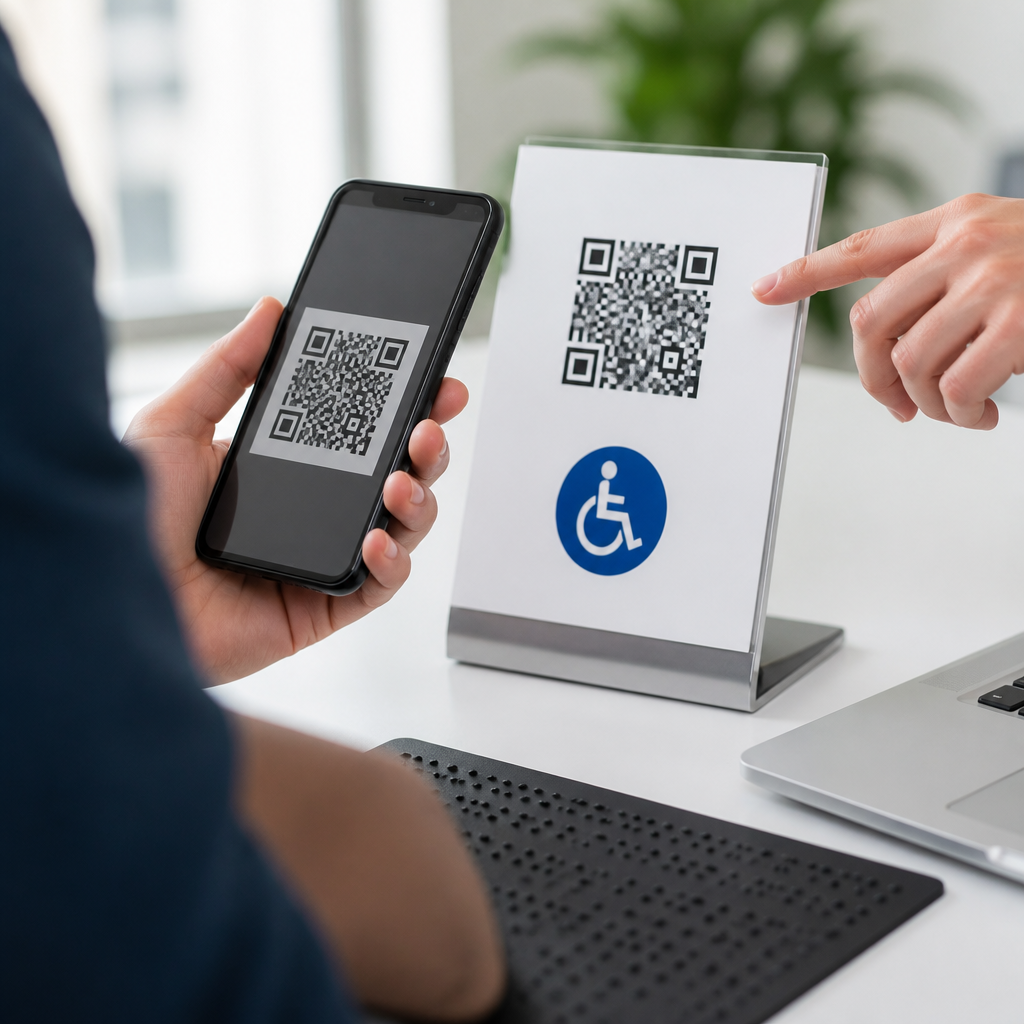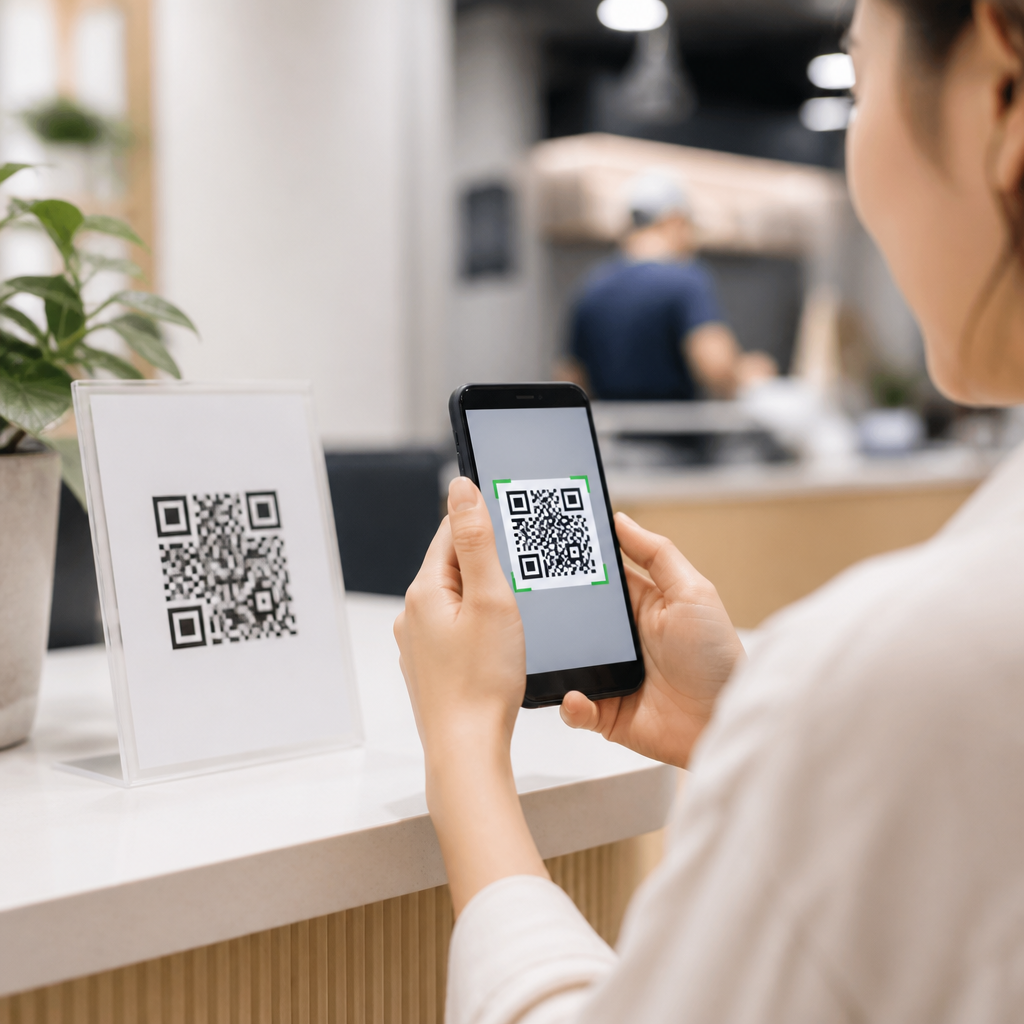

QR code CTA testing strategies determine whether a scan becomes a conversion or a missed opportunity. In this context, a CTA, or call to action, is the text, design cue, placement, or incentive that tells someone why they should scan a QR code and what will happen next. CTA optimization for QR codes matters because people do not scan out of curiosity alone; they scan when the value proposition is immediate, credible, and friction feels low. After testing QR programs across packaging, retail displays, direct mail, and event signage, I have seen the same pattern repeatedly: the code itself rarely causes failure. The surrounding message does. A well-rendered code with weak instruction underperforms a simpler code with a sharper promise, better timing, and cleaner landing experience. This article explains how to test QR code CTAs systematically, what variables move scan rate and post-scan conversion, and how to build a repeatable framework that improves results without guessing.
What a QR code CTA includes and what success looks like
A QR code CTA includes more than a button-style phrase. It combines the lead-in copy, visual hierarchy, incentive, placement, trust signal, and the expectation set for the landing page. “Scan to view menu” is a CTA. So is “Scan for 15% off today only,” “Scan to verify product authenticity,” or “Scan to watch the 30-second setup guide.” Each creates a different level of urgency, intent, and downstream behavior. For practical measurement, separate scan rate from conversion rate. Scan rate reflects how many viewers scanned relative to exposures. Conversion rate reflects what happened after the scan, such as email signup, coupon redemption, purchase, app download, form completion, or content engagement. This distinction matters because some CTAs lift scans but lower quality. A sweepstakes CTA may outperform a product education CTA on raw scans, yet produce weaker revenue per visitor.
Start with a clear test hypothesis tied to one business outcome. If the goal is first-party data capture, compare value-led CTAs such as “Scan for exclusive early access” against utility-led CTAs such as “Scan to build your custom quote.” If the goal is retail sell-through, test CTAs that remove uncertainty, including “Scan to compare sizes” or “Scan to see real customer photos.” When I audit campaigns, weak performance usually traces back to fuzzy success criteria. Teams test copy variations without agreeing whether the primary metric is scan volume, assisted revenue, basket size, time on page, or repeat purchase. Good QR code CTA testing begins by defining the user action that matters most and instrumenting it before any creative is changed.
Core testing variables that influence scan behavior
The strongest QR code CTA tests isolate one variable at a time while keeping scan conditions stable. Message framing is the first major variable. Benefit-first language generally outperforms generic commands because it answers the user’s immediate question: why scan? “Scan to unlock installation tips” usually beats “Scan here.” Specificity is the second variable. Precise outcomes such as “Scan to get a two-minute video demo” set expectations better than broad claims like “Learn more.” Urgency is the third variable, but it must be authentic. Time-boxed promotions on packaging can create distrust if inventory sits on shelves for months, while urgency works well on event signage, shelf talkers, and in-store displays that clearly change by date.
Visual treatment also changes behavior. In field tests, adding a short directional cue above the code, increasing white space around the quiet zone, and pairing the CTA with one supporting icon often lifts scans because the interaction becomes easier to process at a glance. Placement matters just as much. A QR code below knee level on a retail endcap may be technically visible but practically ignored. On direct mail, moving the CTA and code to the response side near the primary offer reduces cognitive distance and improves action. Trust signals deserve their own test plan. Users are more likely to scan when they know the destination and purpose, especially in public spaces. Brand logos, short destination labels, privacy reassurance, or platform cues such as “no app required” can remove hesitation without adding clutter.
How to structure a QR code CTA testing program
Build your program in stages: baseline, message testing, experience testing, and scale validation. Baseline means documenting current performance by channel, audience, and context. A QR code on product packaging behaves differently from one on a tradeshow banner because dwell time, distance, lighting, and intent differ. Once the baseline is stable, run message tests first. These are the lowest-cost changes and often produce the fastest gains. Compare one primary promise against another, keeping code size, placement, and destination constant. After a winning promise emerges, test experience variables such as landing page speed, prefilled forms, mobile wallet coupon delivery, or app deep links. Many teams stop at scan rate and miss the larger win that happens after the scan.
Use disciplined segmentation. Separate new and returning users, iOS and Android traffic, and campaign contexts such as packaging, print, point-of-sale, and out-of-home. Dynamic QR platforms like Bitly, Flowcode, Beaconstac, QR Code Generator Pro, and Uniqode allow destination changes, UTM tagging, and sometimes geo or device routing, which makes this segmentation practical. Analytics should combine scan data with downstream behavior in GA4, Adobe Analytics, Shopify, HubSpot, or your CRM. I recommend naming conventions that capture channel, placement, audience, creative version, and offer type so later analysis is not guesswork. A test only becomes reusable knowledge when the variables are documented tightly enough that another team can repeat it under similar conditions.
High-performing CTA patterns by use case
Different contexts require different CTA logic. On packaging, utility usually beats novelty because the user is already holding the product and wants help deciding, using, or verifying it. CTAs like “Scan for ingredients and allergen details,” “Scan for setup help,” or “Scan to check compatibility” align with that moment. In retail aisles, confidence-building CTAs often win: “Scan to compare models,” “Scan for size guide,” and “Scan to see it in your room” reduce purchase anxiety. For direct mail, the best performers usually combine incentive and immediacy, such as “Scan to claim your renewal offer” or “Scan to book in 60 seconds.” At events, speed matters most. “Scan to get slides,” “Scan to join the waitlist,” and “Scan for your badge photo” work because the benefit is instant and context-specific.
| Use case | Effective CTA pattern | Why it works |
|---|---|---|
| Product packaging | Scan for instructions, ingredients, warranty, or authenticity | Matches post-purchase or decision-stage questions |
| Retail display | Scan to compare, visualize, or verify fit | Reduces uncertainty at the shelf |
| Direct mail | Scan to redeem, book, or personalize an offer | Creates a fast bridge from print to action |
| Events | Scan for slides, entry, lead capture, or follow-up | Supports high-intent, time-sensitive interactions |
One lesson from repeated campaigns is that “learn more” is rarely the best hub CTA unless the audience is still very early in discovery. It is too vague, and vague CTAs underperform because they hide the reward. Better hub pages for CTA optimization for QR codes should branch into article clusters around copywriting, placement, incentives, landing page alignment, analytics, accessibility, and industry-specific examples. That structure supports both users and internal linking because a searcher looking for “QR code CTA examples on packaging” needs a focused answer, while a team building a broader testing roadmap needs the framework tying those examples together.
Measurement, significance, and common testing mistakes
Reliable testing depends on enough volume and clean attribution. If a retail sign receives low foot traffic, small differences in scan count may be noise rather than signal. Use confidence thresholds appropriate for your stakes, and avoid declaring winners after a day because one location happened to be busier. Pair quantitative results with observational research. In-store intercepts, session recordings on mobile landing pages, and simple staff feedback often reveal why a CTA won. I have seen a “Scan for reviews” CTA beat a discount offer in specialty retail because shoppers wanted validation more than savings. The raw numbers alone did not explain that motivation.
Common mistakes are predictable. Teams change too many variables at once, making the result impossible to interpret. They place the winning CTA on a slow page, then blame the copy when conversion drops. They shrink the code to fit design constraints, reducing scan reliability and corrupting the test. They forget accessibility basics such as sufficient contrast, readable supporting text, and plain-language instructions. They also ignore environmental factors: glare on laminated print, awkward scan distance on window clings, or poor cellular service in venues. ISO/IEC 18004 governs QR code symbology, but technical compliance is only the floor. Performance comes from designing for the real scanning conditions people face with mobile cameras, variable bandwidth, and limited patience.
Building a durable optimization loop
The best QR code CTA testing strategies become an operating habit, not a one-off campaign task. Create a testing backlog ranked by expected impact and implementation effort. Start with high-leverage variables: promise clarity, incentive relevance, placement, and landing page alignment. Record each test in a shared library with screenshots, hypotheses, audience, environment, metrics, and outcome. Over time, patterns emerge. You learn which verbs drive action in your category, which offers generate quality leads instead of empty scans, and which placements work under real constraints. That institutional memory is the main advantage of a hub-led content and testing program.
For teams responsible for mobile QR code design and UX, the central principle is simple: the CTA must reduce uncertainty before the scan and fulfill the promise immediately after it. Test the promise, the proof, and the path together. If you manage QR codes across packaging, stores, mail, or events, audit your current CTAs, define one primary conversion goal per use case, and run the next controlled test this month. Better prompts create better scans, and better post-scan experiences turn those scans into measurable business results.
Frequently Asked Questions
1. What should you test first when optimizing a QR code CTA?
The best place to start is with the promise behind the scan. In most QR code campaigns, the biggest performance difference does not come from changing the code itself, but from changing the message around it. People need an immediate reason to act, so the first tests should focus on what the CTA says the user will get. Clear value propositions such as “Scan to save 15%,” “Scan to watch the setup video,” or “Scan to see today’s menu” usually outperform vague prompts like “Scan me” or “Learn more” because they reduce uncertainty and make the benefit obvious.
After value proposition, test the amount of friction implied by the CTA. Users respond better when the next step feels quick and easy. Phrases like “Scan for instant access” or “Scan to get your coupon now” signal low effort, while generic or overly formal copy can make the interaction feel less rewarding. Once messaging is dialed in, move into testing design cues such as arrows, icons, color contrast, whitespace, and the visual hierarchy around the QR code. A strong CTA is not just wording; it is a combination of text, placement, and visual reinforcement that tells the user exactly what to do.
Placement should also be prioritized early because even a strong CTA can fail if it appears in a low-attention area. On packaging, retail displays, direct mail, and signage, users often make scan decisions in seconds. That means placement near a key product benefit, offer, or decision point can materially improve scan rate. In practice, a smart testing order is: benefit statement first, friction-reduction language second, visual emphasis third, and placement fourth. This sequence helps isolate what actually increases scans and downstream conversions rather than making too many changes at once.
2. How do you measure whether a QR code CTA test is actually successful?
A successful test should never be judged on scans alone. Scan volume is important, but it is only the top of the funnel. The real goal is to understand whether the CTA attracts qualified engagement that leads to a business outcome. That means your measurement framework should include at least three levels: scan rate, landing page behavior, and conversion rate. Scan rate tells you whether the CTA got attention. Landing page metrics such as bounce rate, time on page, clicks, or form starts show whether the CTA set the right expectation. Conversion rate reveals whether the promise and post-scan experience worked together effectively.
For example, a more aggressive CTA might increase scans, but if those users immediately leave the landing page, the test may have improved curiosity rather than intent. On the other hand, a more specific CTA may generate fewer scans but produce better lead quality, higher purchases, or stronger sign-up completion. This is why the most useful KPI is often conversion per impression, not just conversion per scan. You want to know how many people exposed to the QR code ultimately took the desired action, because that reflects the full impact of the CTA.
It is also important to segment results by environment and audience. A CTA that performs well on product packaging may not work the same way on an in-store display or event banner. Distance from the code, lighting, urgency, and user intent all affect behavior. Whenever possible, use unique tracking URLs, campaign parameters, or dynamic QR code management tools so each variation can be measured independently. Strong QR CTA testing is disciplined testing: one meaningful variable at a time, enough traffic to make the result credible, and a measurement plan tied to business outcomes rather than vanity metrics.
3. What types of QR code CTA variations tend to improve scan and conversion rates?
The highest-performing QR code CTA variations usually improve one of four things: clarity, motivation, trust, or ease. Clarity means the user immediately understands what will happen after the scan. Motivation means the outcome feels valuable enough to justify the action. Trust means the scan feels safe and legitimate. Ease means the interaction feels fast and low effort. Most successful CTA tests are simply different ways of strengthening one or more of these drivers.
In terms of copy, specificity almost always matters. “Scan to get 20% off” is stronger than “Scan for deals.” “Scan to register your warranty” is stronger than “Scan for product support.” Time-based language can also increase urgency when used honestly, such as “Scan for today’s offer” or “Scan to claim your free sample while supplies last.” Incentive-based CTAs often perform well, but they need to match user intent. A discount may work on packaging or retail displays, while educational CTAs like “Scan for instructions” or “Scan for ingredients and sourcing” may perform better in product-use contexts.
Design variations can be just as influential. Adding a short line of explanatory text above the code, framing the QR code with a bordered box, increasing contrast, and using directional cues such as arrows or a simple “point and scan” visual can all improve comprehension. Trust signals also matter, especially when the audience is not already familiar with the brand. Including your brand name, a brief reassurance like “No app required,” or a statement about the destination such as “Opens our official product page” can reduce hesitation. The strongest QR CTA testing programs combine message testing with visual testing to make the reason, reward, and action unmistakable.
4. How can you avoid common mistakes when running QR code CTA tests?
One of the biggest mistakes is testing too many variables at once. If you change the wording, color, placement, incentive, and landing page at the same time, you may see a performance shift without knowing what caused it. A better approach is to isolate major variables in sequence. Test the offer first, then the CTA wording, then the design treatment, then placement. This makes the findings more actionable and lets you build a clearer optimization roadmap over time.
Another frequent mistake is disconnecting the CTA from the landing page experience. If the QR code says “Scan to get a coupon,” the destination should immediately deliver that coupon or make it effortless to claim. If the CTA says “Scan to watch how it works,” the first screen should be the video, not a generic homepage. Mismatch between CTA and destination is one of the fastest ways to lose trust and reduce conversion rates. Good QR code CTA testing always evaluates the full path from first impression to final action, not just the label printed near the code.
Brands also often ignore context. A CTA on shelf signage is competing with distraction, movement, and time pressure, while a CTA on product packaging may be scanned later in a calmer environment. Testing should reflect these realities. Code size, viewing distance, lighting, and surface material all affect performance, and a strong CTA cannot fully overcome poor execution in those areas. Finally, avoid drawing conclusions from too little data. Small sample sizes can produce misleading winners. Give each variation enough exposure, monitor results by channel, and look for repeatable patterns before making permanent changes. The most reliable improvements come from patient, structured experimentation rather than one-off creative guesses.
5. How often should businesses retest QR code CTAs, and when is a new test necessary?
QR code CTAs should be retested whenever the audience, context, offer, or destination changes in a meaningful way. Unlike static print language, QR performance is highly dependent on user intent and environment. A CTA that worked six months ago may lose effectiveness if customer expectations shift, the incentive becomes less compelling, or the landing page experience changes. As a practical rule, businesses should review QR code performance on a regular cadence and schedule new tests any time scan rates or conversion rates flatten, decline, or vary significantly by placement or campaign type.
Retesting is especially important during seasonal promotions, product launches, packaging redesigns, store layout changes, and new-channel rollouts. For example, a CTA that performs well on direct mail may not translate to countertop displays or outdoor signage. Similarly, if your landing page load speed, form flow, or mobile design changes, you should validate that the current CTA still sets the right expectation. New tests are also necessary when analytics reveal a funnel problem. If scans are strong but conversions are weak, the CTA may be overpromising or attracting low-intent users. If impressions are high but scans are weak, the issue is more likely with message clarity, visual hierarchy, or perceived value.
The most mature programs treat QR CTA optimization as an ongoing process, not a one-time setup. Build a testing calendar, document winners and losers, and create a knowledge base by channel, audience, and use case. Over time, this gives you a much stronger understanding of which CTA structures drive action in different environments. That is where QR code testing becomes strategically valuable: not just in improving one campaign, but in creating a repeatable system for turning scans into measurable conversions.