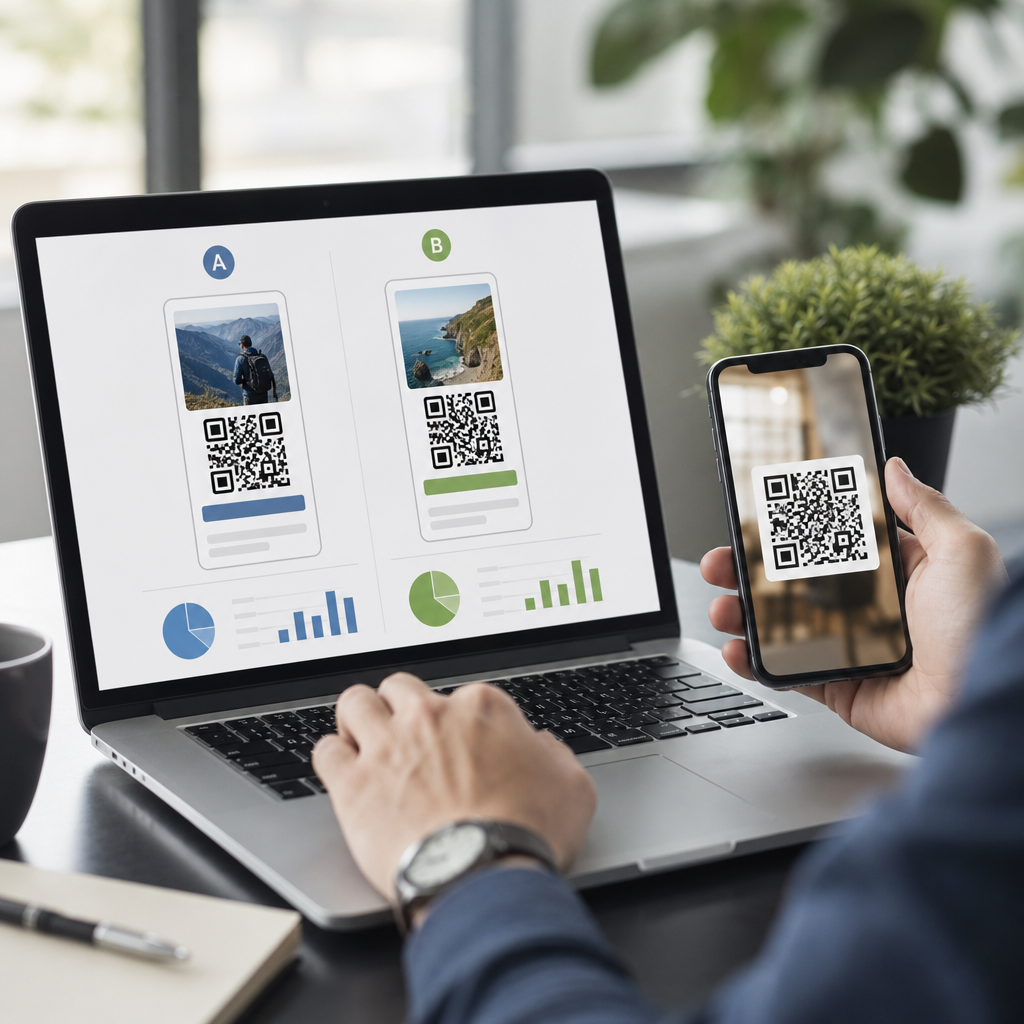

QR codes have moved far beyond simple links, and today they can become a practical engine for customer journey personalization when they are tied to context, first-party data, and clear decision rules. QR code personalization means using a scannable code to deliver different content, offers, messages, or actions based on who scans, when they scan, where they scan, and what stage of the journey they are in. That matters because customers now expect relevance at every touchpoint, yet brands still struggle to connect physical experiences like packaging, signage, direct mail, and in-store displays with digital journeys that feel tailored rather than generic. In my work with retail, hospitality, and event campaigns, the highest-performing QR programs were never about the code itself; they were about matching the scan moment to the customer’s intent. A code on product packaging should not behave like a code on a loyalty email insert, and a first-time scanner should not land on the same page as a returning buyer. When used well, personalized QR codes help marketers identify intent, reduce friction, improve attribution, and move people smoothly from awareness to purchase and retention.
The foundation is straightforward. A static QR code points to a fixed destination and is useful for permanent information, but a dynamic QR code routes through a managed short URL so the destination can change and the scan can be measured. That dynamic layer is what makes personalization possible. It allows you to vary landing pages by campaign, segment users by scan behavior, append UTM parameters for analytics, and trigger automation in a CRM or customer data platform. Common inputs include device type, geolocation, scan time, referral context, purchase history, loyalty status, and product SKU. Common outputs include localized pages, personalized coupons, onboarding flows, reorder prompts, review requests, and cross-sell recommendations. The key is to define a journey map first, then assign each QR placement a job to do. For a broad strategy, this article serves as the central guide to QR Code Personalization and connects naturally with deeper work on dynamic QR codes, QR code tracking, first-party data collection, personalized landing pages, CRM integration, loyalty marketing, and privacy-safe campaign measurement.
Map the scan to the customer journey stage
Personalization starts with journey design, not software. Before generating a single code, define the stage you are influencing: awareness, consideration, purchase, onboarding, usage, retention, or advocacy. Each stage has a different user question. Someone scanning a storefront poster may be asking, “What is this brand?” Someone scanning a package insert after delivery may be asking, “How do I get the most value from this product?” The destination, message, and call to action should answer that question immediately. I typically create a simple matrix listing the placement, audience, likely intent, desired action, and success metric. This prevents a common mistake: reusing one destination across every asset because it is convenient. Convenience lowers relevance, and relevance is what lifts conversion rates.
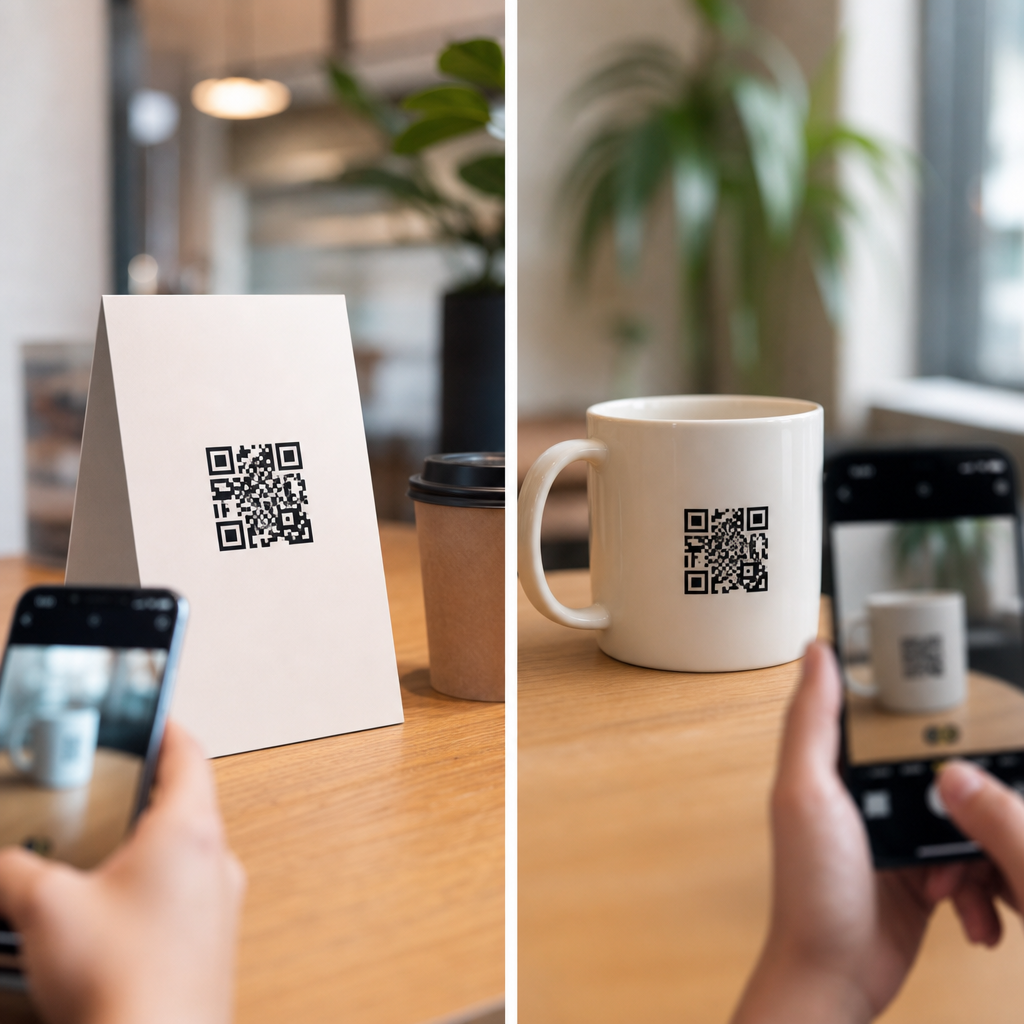
Consider a coffee chain running three QR placements. A table tent in-store points to a seasonal menu with a one-tap loyalty join form. A code on the cup sleeve triggers a post-purchase survey and rewards completion with bonus points. A code in a neighborhood mailer opens a map-based offer page showing the nearest store and a limited-time breakfast coupon. All three use QR, but each serves a different stage and intent. That difference is the essence of customer journey personalization. It also improves reporting because each code has a distinct business purpose tied to a measurable outcome, such as sign-ups, repeat visits, or redemptions.
Choose the personalization variables that actually change outcomes
Not every available signal deserves to shape the experience. The best QR code personalization uses a small number of variables that materially affect relevance. Location is powerful when local inventory, events, pricing, or store hours differ. Time matters for daypart offers, appointment reminders, and event agendas. Device type can influence page layout, app deep linking, or wallet pass delivery. Known-customer status matters when a CRM can identify existing buyers and suppress acquisition offers they no longer need. Product context matters when a scan comes from packaging tied to a specific SKU, batch, or warranty class. In contrast, adding obscure micro-segments often creates complexity without increasing performance.
The table below shows a practical way to align variables with real outcomes and implementation needs.
| Variable | Best use case | Personalized output | Key tool or data source |
|---|---|---|---|
| Location | Retail, restaurants, events | Nearest store, local offer, event schedule | Dynamic QR platform with geo-rules |
| Time and date | Daypart promos, product launches | Breakfast coupon, launch countdown, after-hours form | Rule-based redirect engine |
| Known customer status | Loyalty, subscriptions, renewals | Member pricing, reorder page, retention offer | CRM or CDP integration |
| Product or SKU | Packaging, manuals, support | Setup guide, refill reminder, accessories | PIM or product database |
| Campaign source | Direct mail, OOH, inserts | Channel-specific landing page and attribution | UTM framework and analytics |
A cosmetics brand offers a clear example. A QR code printed on foundation packaging can route customers to shade-match videos for that exact product line, then offer replenishment at the right interval based on average usage. A code on a sample card in a beauty box should do something else entirely: collect shade preference, email consent, and store locator intent. Same brand, same customer category, different moment. Personalization works because the scan context changes what the next best action should be.
Build landing experiences that feel personal in the first five seconds
The landing page determines whether a personalized QR strategy delivers value or wastes attention. A good rule is that the first screen should confirm the scan context instantly. If the code came from a cereal box, the page should reference that product, not a generic homepage. If the code was placed at an event booth, the page should show the booth offer, speaker resource, or demo booking form before anything else. Headline matching is critical because users decide quickly whether they landed in the right place. In practice, I have seen response rates rise simply by changing a generic “Welcome” heading to a specific one such as “Register Your Blender for Warranty and Recipe Access.”
Personalized landing pages should also reduce form friction. Prefill when lawful and feasible. Keep mobile fields minimal. Use progressive profiling instead of asking for every detail at once. If a user scans from packaging after purchase, ask for serial number and email, then collect preferences later. If a user scans from a loyalty prompt in-store, prioritize phone number or wallet pass enrollment, not a six-field registration. Tools like HubSpot, Salesforce Marketing Cloud, Braze, Klaviyo, and Adobe Journey Optimizer can all support this flow when connected to dynamic QR infrastructure. The principle is simple: the scan should open the shortest possible path to the promised value.
Connect QR codes to data, automation, and measurement
Personalized QR codes become strategically useful only when scan data flows into the rest of your stack. At minimum, every code should carry campaign parameters and feed a reporting view that tracks scans, unique users, destination performance, and downstream conversions. Google Analytics 4 can capture session and event data, but meaningful personalization usually requires CRM or CDP integration so scans can influence segmentation and triggered messaging. For example, a home fitness brand can send setup instructions immediately after a packaging scan, then trigger a seven-day activation series if the customer does not complete onboarding. That sequence is far more useful than treating the scan as an isolated click.
Measurement should go beyond scan volume. Useful metrics include scan-to-landing-page load rate, click-through rate from landing page to desired action, form completion rate, coupon redemption rate, repeat scans, and assisted revenue. In retail, I often compare store-level scans against footfall and point-of-sale data to see whether localized QR offers are driving incremental visits rather than merely capturing existing demand. For direct mail, personalized QR codes are especially valuable because they close an attribution gap: the household receives a physical piece, scans on mobile, and enters a trackable digital path. That is much cleaner than relying on vanity URLs or coupon codes alone.
Respect privacy, consent, and operational limits
Customer journey personalization works best when it is helpful, expected, and transparent. Do not imply identity if you do not actually know the scanner. A QR code can infer context, but context is not consent. If you want to tie a scan to a known profile, ask clearly and explain the value exchange, such as faster support, loyalty rewards, saved preferences, or reorder reminders. Follow regional requirements where applicable, including GDPR and CCPA standards around data collection, disclosure, and user rights. If minors may scan, add extra caution and avoid unnecessary profiling. Trust is a performance factor; once people feel watched rather than assisted, conversion drops.
There are operational limits too. QR code personalization depends on accurate redirects, fast mobile pages, and disciplined governance. Broken links, expired offers, poor cellular performance, and unmaintained rules can damage both campaign results and brand credibility. I recommend a quarterly audit of dynamic QR destinations, analytics tags, and automation triggers, plus QA testing across iPhone and Android camera apps before launch. Also plan fallback behavior. If geo-detection fails, serve a store locator. If a CRM match is unavailable, show a general offer rather than an error. Personalization should degrade gracefully.
The most effective QR Code Personalization strategy is not the most complex one; it is the one that reliably delivers the right next step at the right moment. Start by mapping scan locations to journey stages, choose a few variables with clear impact, and build landing pages that acknowledge context immediately. Then connect scans to analytics, CRM workflows, and practical business outcomes such as sign-ups, repeat purchases, support completion, and loyalty growth. Use dynamic QR codes to keep destinations flexible, but keep governance tight so every code remains accurate and useful over time. When brands treat QR as a bridge between physical touchpoints and digital intelligence, customer journeys become measurably smoother and more relevant. If you are building out Advanced QR Code Strategies, use this hub as your baseline, then expand into dynamic code management, tracking architecture, CRM integration, personalized landing pages, and privacy-safe first-party data capture to turn every scan into a purposeful customer interaction.
Frequently Asked Questions
What does customer journey personalization with QR codes actually mean?
Customer journey personalization with QR codes means using a single scannable touchpoint to deliver a more relevant next step based on context and customer signals. Instead of sending every scanner to the same generic landing page, a personalized QR code strategy uses decision rules to change what appears after the scan. That could mean showing a first-time visitor an educational page, giving a returning customer a loyalty reward, displaying store-specific inventory, or presenting different content depending on time of day, campaign source, device type, or purchase stage. In practice, the QR code becomes a gateway to dynamic experiences rather than just a shortcut to a URL.
The reason this matters is simple: customers expect brands to recognize intent and reduce friction. A person scanning a code on product packaging has different needs than someone scanning from an in-store sign, direct mail piece, event booth, or post-purchase insert. When QR codes are connected to first-party data and clear business logic, brands can guide people into the most useful action at that moment, whether that is learning more, claiming an offer, registering a product, reordering, joining a membership program, or accessing support. The result is a journey that feels more helpful and less generic.
How can businesses personalize QR code experiences without making them overly complicated?
The most effective approach is to start with a small number of clear personalization rules tied to real customer journey stages. Many brands overcomplicate the idea by assuming they need advanced AI or dozens of audience segments on day one. In reality, a strong setup often begins with a few practical distinctions: new versus returning visitors, pre-purchase versus post-purchase scans, location-based differences, and campaign-specific destinations. For example, a QR code on a shelf tag could lead to product education and reviews, while the same product’s packaging code could lead to onboarding tips, warranty registration, and cross-sell recommendations. That is personalization, but it is still manageable.
To keep things simple, businesses should map each QR code placement to a likely customer intent, then define the most useful response. Use dynamic QR codes so the destination can change without reprinting materials. Tie scans to first-party data only where there is clear value, such as loyalty identification, order history, or known preferences. Establish a few decision rules that are easy to maintain, such as geography, time-sensitive promotions, language selection, or lifecycle stage. Most importantly, measure outcomes like scan-to-conversion rate, time on page, offer redemption, repeat visits, and assisted sales. Simplicity works best when each personalized experience is directly tied to a business goal and a customer need.
What kinds of data should be used to personalize QR code journeys?
The best data for QR code personalization is first-party data combined with immediate scan context. First-party data can include loyalty membership, purchase history, registration status, service plan level, product ownership, communication preferences, and prior engagement with the brand. Contextual data can include scan location, device type, referral source, campaign ID, time of day, language, and whether the person is scanning from packaging, print media, retail displays, receipts, or post-purchase materials. Together, these inputs help brands make smart decisions about what content, offer, or action should appear next.
That said, data collection should always be purposeful and proportionate. Businesses should avoid collecting information just because it is technically possible. The most effective personalization strategies use only the signals needed to improve relevance and reduce friction. For instance, if a customer scans from a product box after purchase, the most useful journey might be setup instructions and care tips, not a broad homepage. If a known loyalty member scans in-store, it may make sense to show member pricing or personalized recommendations. The key is to connect each data point to a clear customer benefit, maintain transparency, and ensure privacy and consent practices are aligned with applicable requirements and brand trust standards.
Where in the customer journey do personalized QR codes work best?
Personalized QR codes can add value across the full customer journey, but they tend to be especially effective at moments where customers need guidance, reassurance, or a convenient next step. In the awareness stage, QR codes on out-of-home ads, packaging previews, event materials, or print campaigns can direct people to location-aware landing pages, product explainers, or limited-time offers. In consideration, they can connect shoppers to reviews, comparison tools, demo videos, FAQs, or store inventory information. At the point of purchase, they can reduce hesitation by surfacing promotions, financing options, product details, or instant sign-up incentives.
Post-purchase is often where QR code personalization becomes most powerful and most underused. A code placed on packaging, inserts, receipts, or onboarding materials can guide customers to setup help, how-to videos, warranty registration, replenishment options, accessories, loyalty enrollment, or support channels tailored to the purchased product. This is also where brands can extend retention and lifetime value by serving relevant cross-sell offers, educational content, or reorder paths based on actual ownership data. In other words, personalized QR codes are not just for acquisition; they are highly effective for activation, service, retention, and advocacy when matched to the right customer moment.
What are the most important best practices for using QR codes for customer journey personalization successfully?
The first best practice is to design around intent, not just technology. Every QR code should answer a simple question: what is the customer trying to do at this moment, and what is the fastest, most relevant next step? Start by defining the use case, then build the personalized destination around that use case. Use dynamic QR codes so content can be updated over time, and make sure scan destinations are mobile-first, fast-loading, and friction-light. If a customer needs to fill out a long form, create an account, or search for information after scanning, the experience is likely too cumbersome. Relevance only helps when the path forward is easy.
The second best practice is to support personalization with measurement, governance, and trust. Set clear rules for how scan data will be used, what content variants exist, and how often they should be refreshed. Track performance by placement, audience segment, and business outcome so you can tell which journeys are truly helping customers and which are creating drop-off. Test messaging, calls to action, destination pages, and timing. Also make sure the value of scanning is obvious before the scan happens by using strong surrounding copy such as “Scan for setup help,” “Scan for local availability,” or “Scan for your member offer.” Finally, be transparent about data usage and avoid personalization that feels intrusive or surprising. The strongest QR code programs feel useful, timely, and earned, which is exactly what customers want from modern personalized experiences.