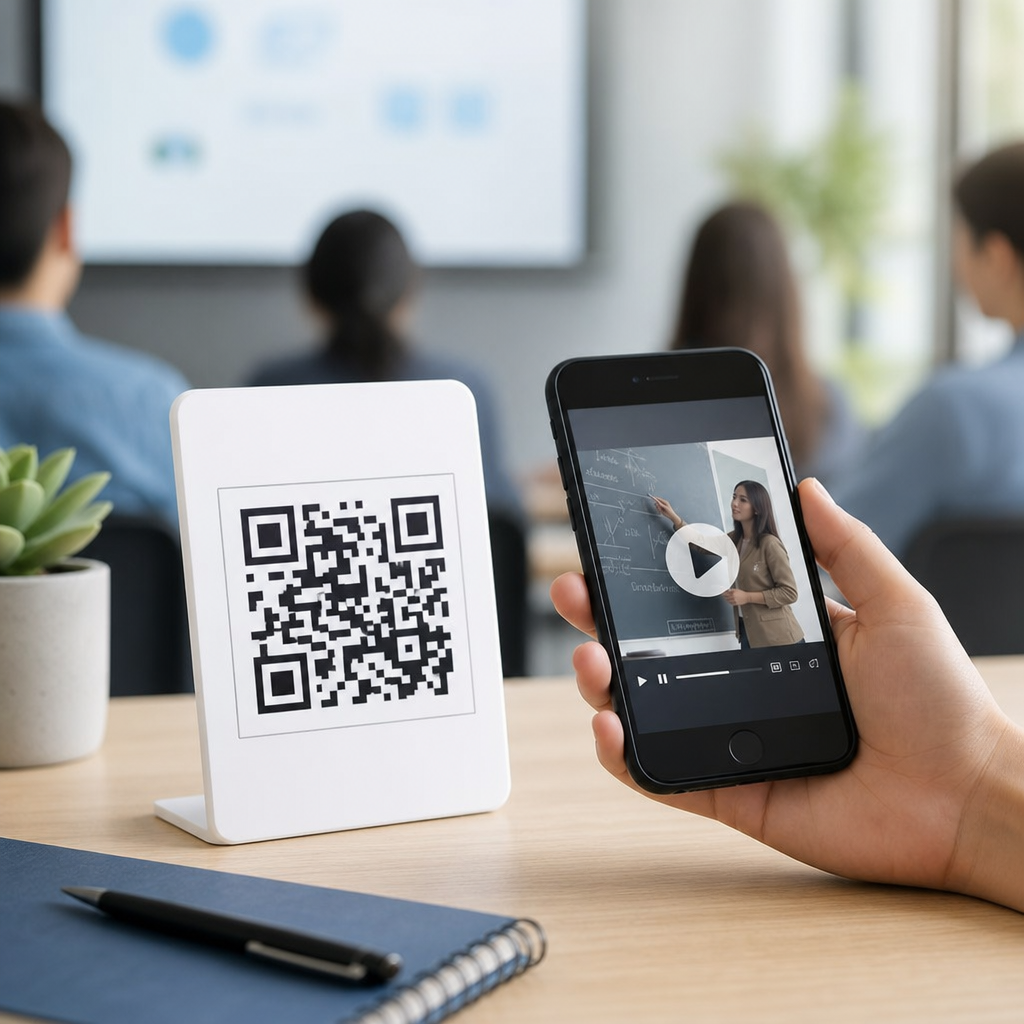

Healthcare organizations increasingly use QR codes to connect patients, staff, and devices, but every scan that touches protected health information must be designed for HIPAA compliance from the start. In practical terms, a HIPAA compliant QR code workflow is one that protects the confidentiality, integrity, and availability of protected health information, or PHI, while still making access fast enough for clinical use. I have helped teams deploy QR codes for patient intake, medication administration, telehealth check-ins, and device labeling, and the same lesson appears every time: the code itself is rarely the problem; the destination, data flow, permissions, and audit trail determine whether the implementation is safe.
HIPAA, the Health Insurance Portability and Accountability Act, sets national standards for safeguarding PHI. PHI includes names, medical record numbers, appointment details, insurance identifiers, test results, and any other information that can identify a patient in connection with care. QR codes are simply machine-readable links or encoded text, but in healthcare they can trigger access to patient portals, forms, imaging records, prescription instructions, discharge education, or internal asset systems. Because QR codes bridge the physical and digital world, they create convenience and risk at the same time.
This matters because healthcare settings are crowded, fast moving, and heavily regulated. A receptionist may want a patient to scan a code for registration. A nurse may scan a wristband-linked code to confirm medication rights. A biomedical technician may scan equipment labels to review maintenance records. If those experiences expose PHI on an unlocked device, send users to insecure web pages, or route data through vendors without a business associate agreement, the organization can create reportable risk. A compliant strategy lets healthcare teams gain the speed of contactless access without compromising privacy, security, or patient trust.
What makes a QR code HIPAA compliant in healthcare
A QR code is not inherently compliant or noncompliant. Compliance depends on what the code contains, where it leads, how the destination is secured, and whether the organization can document appropriate administrative, technical, and physical safeguards. The safest baseline is to keep PHI out of the QR code itself. Instead of encoding names, dates of birth, or medical record numbers directly, encode a random token or a short URL that resolves on a secure server after authentication and authorization checks. This design reduces exposure if the code is photographed, copied, or scanned by the wrong person.
In healthcare, I recommend treating every QR code implementation as a small application rather than a graphic asset. Run a risk analysis under the HIPAA Security Rule. Identify the users, devices, environments, data elements, retention periods, and vendors involved. Require HTTPS with modern TLS, role-based access control, session timeout rules, device management for workforce endpoints, and detailed audit logging. If a third-party QR platform stores scan logs, landing page content, or patient-submitted data, determine whether that vendor creates, receives, maintains, or transmits PHI. If it does, a business associate agreement is required before launch.
Another key requirement is minimum necessary use. If a patient scans a code in a waiting room, the resulting page should request or display only what is needed for that task. For example, a registration code should lead to a secure form asking for current intake details, not a page that displays historical diagnosis information before the patient signs in. Likewise, workforce QR workflows should align with least privilege. Environmental services staff may need room turnover instructions, while clinicians may need chart-linked content. A single generic code should not expose both groups to the same information.
Common healthcare use cases and their compliance risks
Patient intake is one of the most common healthcare QR code use cases. Clinics place a code at check-in so patients can complete demographic updates, consent forms, and symptom screening on their own phones. The convenience is real, but so is the risk. If the code links directly to a form prefilled with PHI and no identity verification, anyone who scans a photographed code could see sensitive data. A stronger design uses a secure patient portal session, multifactor authentication when appropriate, and a short-lived token tied to a scheduled appointment. That way the scan begins the process, but identity controls gate the data.
Medication administration and specimen collection also use QR codes, often alongside barcodes, to reduce documentation errors. In these workflows, the code may point to a medication administration record, lab order, or bedside verification screen. The risk is not only data disclosure but also patient safety. If a code resolves to stale information because a cached page remains on a shared workstation, staff could act on outdated orders. Systems should therefore enforce real-time retrieval, automatic logout, device lock policies, and reconciliation with the electronic health record, commonly Epic, Oracle Health, or MEDITECH.
Healthcare organizations also place QR codes on discharge packets, prescription instructions, and education materials. This is generally lower risk if the code links to generic content, such as post-surgical recovery guidance by procedure type. The risk rises when the link includes patient-specific identifiers or opens a personalized page without authentication. Telehealth is another major area. A QR code on an appointment reminder can simplify joining a virtual visit, but it must not expose visit details through an unsecured meeting link. Platforms should use authenticated sessions, encrypted communications, and waiting room controls.
Technical safeguards that actually protect PHI
Strong HIPAA compliance with QR codes starts with architecture choices. Use dynamic QR codes that resolve through a controlled redirect service rather than static codes containing sensitive strings. Dynamic codes let security teams rotate destinations, expire tokens, and disable compromised links without reprinting signage or wristbands. Pair this with short-lived signed URLs, server-side validation, and tokenization. In my experience, teams that rely on static links regret it when a workflow changes or a code appears in an unexpected setting, because revocation becomes difficult and exposure persists.
Authentication should match the sensitivity of the task. A public-facing code for general clinic directions needs no sign-in, but a code that opens a patient-specific questionnaire should require portal login or a verified identity flow. Workforce tools should integrate with single sign-on through SAML or OpenID Connect and support multifactor authentication for remote access. Audit logs must record who scanned, when, from what device or IP address, what records were accessed, and whether data was changed. Logging is not optional; it is how privacy officers investigate incidents and demonstrate control during audits.
| Healthcare QR use case | Recommended approach | Main HIPAA risk reduced |
|---|---|---|
| Patient check-in | Dynamic code to portal with appointment-bound token and identity verification | Unauthorized access to prefilled PHI |
| Medication administration | SSO, device lock, real-time EHR retrieval, full audit logs | Wrong-patient access and stale clinical data |
| Discharge education | Generic educational page or authenticated personalized page | Exposure of diagnosis-specific information |
| Telehealth join flow | Authenticated encrypted session with waiting room controls | Uninvited meeting access and disclosure |
Encryption must cover data in transit and, where applicable, data at rest. Landing pages should avoid storing PHI in browser parameters, local storage, or unencrypted cookies. Mobile device management is equally important for organization-owned tablets and scanners. Enforce remote wipe, operating system patching, approved app lists, and screen lock timeouts. For printed QR labels, physical safeguards matter too. Do not place patient-linked codes where visitors can casually photograph them. In hospitals, I have seen the best results when privacy, security, clinical operations, and application teams review placements together before anything reaches production.
Governance, vendors, and policy controls
Technology alone does not make healthcare QR code programs compliant. Governance determines whether controls stay effective after launch. Start by assigning ownership. Someone must approve new QR code use cases, maintain an inventory, review destination changes, and retire codes that are no longer needed. Policies should define whether PHI may ever be embedded directly, which departments can publish codes, how expiration works, and what incident response steps apply if a code is misdirected or publicly exposed. Without central governance, organizations end up with disconnected campaigns and no defensible record of oversight.
Vendor management is especially important because many popular QR platforms were built for retail marketing, not healthcare security. Before using any platform, verify where data is stored, what analytics are collected, how long logs are retained, whether landing pages are indexed by search engines, and whether the vendor will sign a business associate agreement when PHI is involved. Ask about encryption, penetration testing, subcontractors, access controls, and breach notification timelines. A platform that tracks geolocation, device identifiers, and referral data without strict controls can create unnecessary privacy exposure even if no diagnosis appears on the screen.
Training closes the gap between written policy and real behavior. Front-desk staff should know when to offer an alternative for patients who do not want to use personal devices. Clinicians should understand that photographing QR-labeled materials for convenience can create secondary disclosure risk. Security teams should test for open redirects, phishing substitution, and code tampering in public areas. I also advise periodic privacy walkthroughs: scan every code in the facility as a patient or visitor would, document what appears, and confirm that each experience matches the intended audience and data classification.
Building a scalable healthcare hub strategy
As a hub for healthcare applications, this topic extends beyond a single compliant workflow. Hospitals, clinics, dental groups, pharmacies, labs, behavioral health providers, and home health agencies use QR codes differently, so the best strategy is to create a repeatable framework. Classify each use case by audience, PHI sensitivity, authentication requirement, device ownership, and physical environment. Then map controls accordingly. A public lobby sign, a patient wristband, an infusion pump label, and a home care instruction sheet should never share the same design assumptions, because the threat models are fundamentally different.
The main benefit of this framework is consistency. When healthcare organizations standardize tokenization, access control, vendor review, logging, and code lifecycle management, they can scale QR code adoption without reinventing compliance for every department. Start with a documented risk analysis, involve privacy and security early, prefer dynamic codes, keep PHI out of the code itself, and validate every destination like a clinical application. If you are expanding healthcare QR code programs, audit your current scans this week, identify any direct PHI exposure, and replace risky links with secured, governed workflows.
Frequently Asked Questions
1. What makes a QR code workflow HIPAA compliant in a healthcare setting?
A HIPAA compliant QR code workflow is not defined by the QR code image itself, but by everything connected to it: the data encoded, the system it points to, who can access that system, how activity is logged, and what safeguards are in place before and after each scan. In healthcare, the key question is whether a scan can expose, transmit, store, or help someone retrieve protected health information. If it can, the workflow must be designed to meet HIPAA’s privacy, security, and breach notification expectations from the beginning.
In practice, that means healthcare organizations should avoid putting raw PHI directly inside the QR code whenever possible. A better approach is to use the QR code as a secure pointer to a protected application or web session, where user authentication, encryption, role-based access controls, timeout settings, and audit logging can be enforced. For example, if a QR code is used for patient intake, medication administration, specimen tracking, or bedside device association, the code should ideally reference a secure record identifier or token rather than embedding names, diagnoses, medical record numbers, or other identifiable information in plain text.
A compliant workflow also includes administrative and technical controls. Teams should perform a risk analysis, define who is authorized to scan and view the linked data, secure the mobile devices used for scanning, encrypt data in transit and at rest, and maintain logs showing when codes were created, scanned, accessed, or modified. If a vendor hosts the linked platform and may handle PHI, a business associate agreement is typically necessary. The strongest HIPAA compliant QR code implementations are the ones that treat the code as one small part of a larger secure ecosystem rather than as a standalone convenience tool.
2. Can a QR code contain PHI, or should healthcare organizations avoid that entirely?
Technically, a QR code can contain PHI, but in most cases, healthcare organizations should avoid embedding PHI directly in the code unless there is a compelling operational reason and very strong safeguards are in place. A QR code is easy to scan, copy, photograph, print, forward, or access with an unauthorized device. If the code itself contains identifiable patient data in readable form, anyone who scans it may be able to see information that should have been protected. That creates unnecessary exposure and increases the risk of an impermissible disclosure.
A safer design pattern is to store minimal information in the QR code and keep sensitive data inside a secured application. Instead of encoding a patient’s name, date of birth, diagnosis, and treatment details, the code can contain a randomized token, a short-lived session reference, or a unique internal identifier that is meaningless outside the protected system. After the scan, the user should be required to authenticate through approved credentials before any PHI is displayed. This approach supports the “minimum necessary” principle by making sure the scan alone does not reveal more than it needs to.
There are also important downstream considerations. Even if the QR code links to a secure portal, the organization must think about screenshots, browser caching, device storage, email forwarding, and whether the scanning app captures scan history. For that reason, many healthcare teams choose dynamic QR codes tied to managed systems where access can be updated, revoked, or monitored centrally. The best answer is usually not “never use PHI in a QR code,” but rather “design so the QR code itself exposes as little PHI as possible and only grants access through layered safeguards.”
3. What security controls should be in place when using QR codes for patient intake, medication administration, or device access?
The necessary controls depend on the use case, but several protections are consistently important across healthcare environments. First, any system opened by a QR code should use secure transmission methods such as HTTPS with current encryption standards. Second, users should authenticate before viewing or editing PHI unless the workflow is deliberately limited to non-sensitive information. Third, access should be role-based, so staff members only see the patient, medication, device, or task information relevant to their responsibilities.
For clinical workflows like medication administration, specimen collection, or patient verification, organizations should also implement audit trails that record who scanned the code, when the scan occurred, what record was accessed, and what action followed. This is critical for both HIPAA accountability and operational integrity. Device-level protections matter too: managed smartphones, tablets, and scanners should use mobile device management, screen locks, remote wipe capabilities, approved applications, and restrictions that prevent data from being copied into unsecured tools. If staff use personal devices, the organization should carefully evaluate whether that creates unacceptable compliance and security risks.
Additional safeguards can greatly reduce exposure. Dynamic QR codes can be disabled or redirected if a label is compromised. Time-limited tokens can prevent stale codes from being used later. Anti-tampering measures, secure printing practices, and regular label replacement help prevent malicious code substitution in public or semi-public areas. For patient intake, organizations should ensure forms are hosted in a secure environment and that data entered after the scan flows directly into approved systems rather than being stored in unsecured spreadsheets or email inboxes. The goal is to make scanning fast for clinical users without sacrificing identity verification, auditability, and control over PHI.
4. Do vendors, QR code platforms, or scanning apps need a Business Associate Agreement for HIPAA compliance?
If a vendor creates, receives, maintains, or transmits PHI on behalf of a covered entity or another business associate, then a Business Associate Agreement, or BAA, is generally required. This is a major issue with QR code programs because organizations often focus on the label or code generator while overlooking the services behind it. A QR code platform might host landing pages, store scan logs tied to patient activity, manage dynamic redirects, process form submissions, or integrate with EHR and workflow systems. If PHI is involved anywhere in that service chain, the vendor relationship must be evaluated carefully.
Scanning apps deserve the same level of scrutiny. Some consumer-grade QR scanners collect scan history, device information, location data, or destination URLs in ways that are not appropriate for regulated healthcare workflows. If staff are scanning codes that lead to PHI, organizations should strongly prefer approved enterprise tools or built-in managed applications that do not create uncontrolled data trails. The same applies to form builders, cloud storage tools, analytics platforms, and messaging integrations connected to the QR code experience. A workflow is only as compliant as its weakest vendor.
Before selecting any QR code solution, healthcare organizations should confirm whether the vendor will sign a BAA, what security controls it offers, how data is encrypted, where information is stored, how access is logged, and whether administrators can control retention and deletion. They should also review incident response commitments, subcontractor use, and support for least-privilege access. A QR code project can seem simple on the surface, but if third-party services are involved, vendor due diligence and proper contracting are essential parts of HIPAA compliance.
5. What are the most common mistakes healthcare organizations make with HIPAA compliant QR codes?
One of the most common mistakes is assuming that because QR codes are small and convenient, they are low risk. In reality, they can become a direct access point to PHI, clinical systems, and patient-facing workflows. Organizations often make the mistake of embedding too much information in the code, using static links that cannot be changed if exposed, or placing codes in locations where unauthorized individuals can scan them. Another frequent issue is failing to require authentication after the scan, which can turn a useful workflow shortcut into an unauthorized disclosure risk.
Teams also commonly underestimate operational and vendor risks. They may use free QR generators, consumer scanning apps, or unapproved cloud forms without understanding where data is stored or who can access it. In some cases, scan destinations are built quickly for convenience and never reviewed by compliance, legal, security, or IT. Labels may be printed and deployed without controls for versioning, expiration, tamper detection, or inventory tracking. In medication administration and device workflows especially, poor governance can create both HIPAA issues and patient safety concerns.
The best way to avoid these problems is to treat QR code deployment like any other health IT initiative. Start with a formal risk assessment, map the data flow, identify whether PHI is involved, minimize the information encoded, validate vendors and BAAs, and test the workflow under real clinical conditions. Train staff on when and how codes should be scanned, what to do if a code appears altered, and how to report incidents. When organizations combine secure design, clear policy, and practical user training, QR codes can support speed and usability without undermining HIPAA compliance.