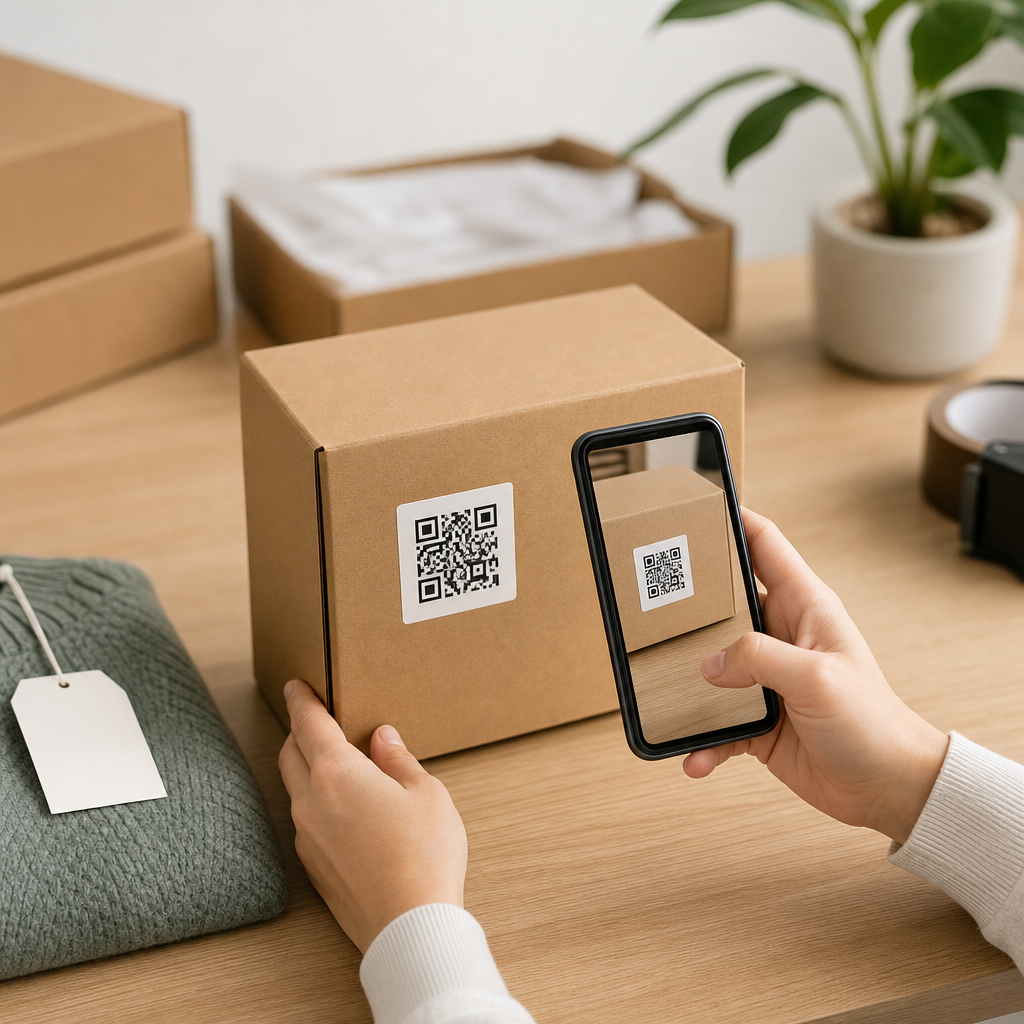
eCommerce brands use QR codes in packaging to connect a physical delivery box with the digital customer journey, turning a one-time shipment into a measurable marketing, service, and retention channel. In practical terms, a QR code is a machine-readable square barcode that opens a URL, app experience, product record, or workflow when scanned with a smartphone camera. Packaging includes outer cartons, inserts, hang tags, labels, mailers, product sleeves, and instruction cards. For retail and e-commerce teams, that simple scan matters because packaging is one of the few branded touchpoints every buyer actually handles. I have helped online retailers deploy these programs, and the difference is clear: static packaging explains, while smart packaging responds. Brands can guide setup, authenticate goods, collect reviews, drive repeat purchases, support loyalty, and reduce service costs without adding friction.
This topic sits at the center of retail and e-commerce because it links acquisition, fulfillment, support, and retention. A customer who scans a code on a skincare carton may watch a usage tutorial, register for replenishment, confirm ingredients, and join an SMS list in under a minute. A fashion brand can place a code on a return insert that opens a self-service portal, cutting inbound support tickets. A marketplace seller can use dynamic QR codes to update destination pages without reprinting packaging, which is critical when promotions, inventory, or regulations change. The strongest programs are not gimmicks. They are built around measurable customer needs, secure destinations, and clear operational ownership across marketing, CX, logistics, and product teams.
As a hub article for retail and e-commerce applications, this guide explains where QR codes belong in packaging, what goals they serve, how leading brands structure campaigns, what metrics matter, and where limits apply. It also clarifies an important distinction: not every packaging QR code should sell. Some should educate, some should verify authenticity, and some should solve post-purchase problems fast. When brands match the code to the customer moment, scan rates rise and customer satisfaction improves.
Where QR codes fit in retail and e-commerce packaging
In e-commerce, packaging arrives at the exact moment purchase intent turns into product experience. That makes it ideal for QR code placement. Outer box codes work well for broad actions such as order tracking, loyalty enrollment, or referral offers. Inner inserts are better for onboarding, warranties, care instructions, and review requests because they are seen when the product is being unboxed. Product-level packaging, such as labels or sleeves, is best for item-specific content including assembly videos, ingredient lists, compatibility guidance, and authentication. In retail, the same logic extends to shelf-ready packaging, receipts, counter cards, and gift-with-purchase materials.
Placement must follow user intent. A code printed under sealing tape is likely to be ignored because the shopper sees it too early. A code inside a shoebox lid, paired with “Find your fit and care guide,” aligns with the first use moment and performs better. I have seen home goods brands improve engagement simply by moving the code from the shipping mailer to the product insert and rewriting the call to action from “Scan me” to “Watch setup in 60 seconds.” Context drives scans more than design alone.
Retail and e-commerce brands also need to choose between static and dynamic QR codes. Static codes point to one fixed destination and are suitable for evergreen pages like universal care instructions. Dynamic codes redirect through a managed platform, allowing brands to change the destination, attach UTM parameters, run A/B tests, and monitor scans by time, device, or geography. For packaging that may remain in homes for months, dynamic management is usually the safer option.
Core use cases that deliver measurable value
The best packaging QR code strategies are tied to a business outcome. In retail and e-commerce, the most common objectives are product education, post-purchase support, review generation, repeat purchase, loyalty enrollment, returns management, cross-sell, and anti-counterfeit verification. Each use case should have its own destination page, message, and success metric. A single generic landing page creates confusion and weakens attribution.
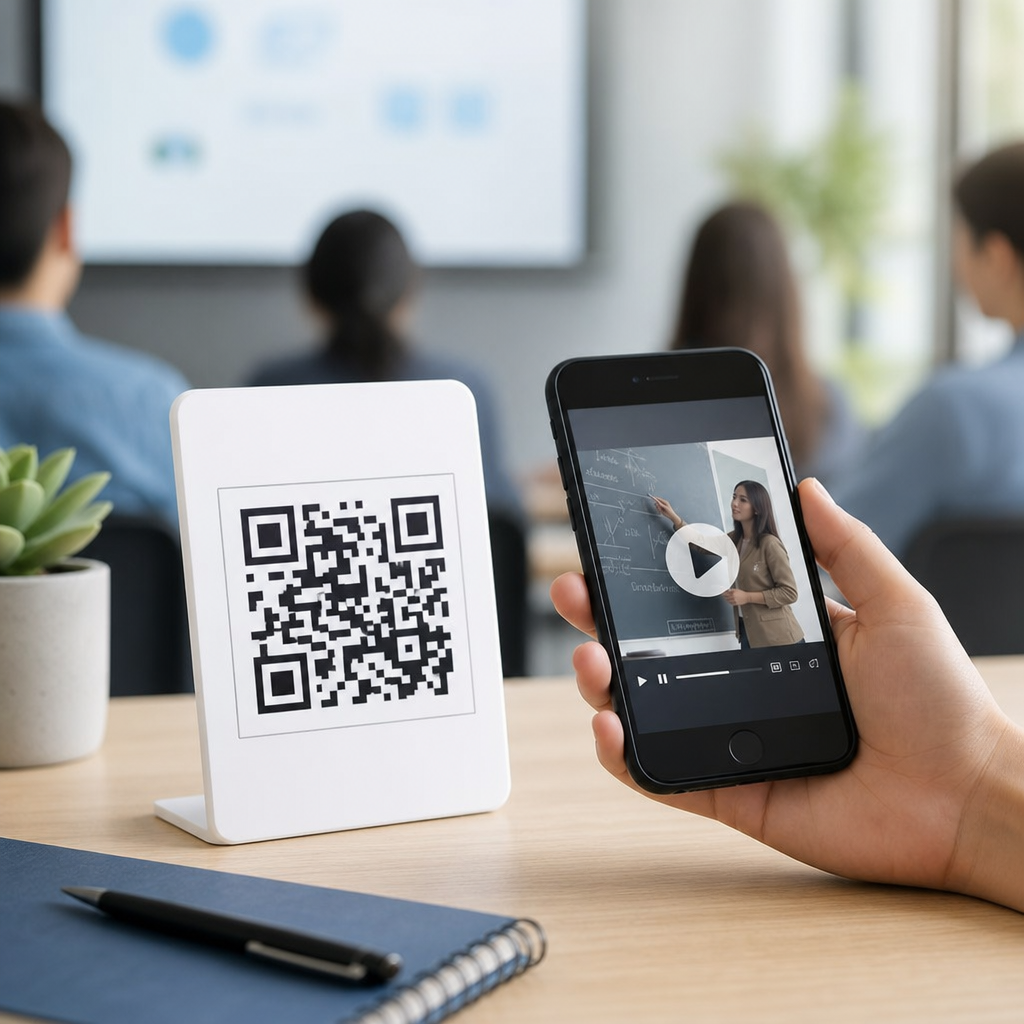
Product education is often the fastest win. Beauty, electronics, wellness, and home categories all benefit from guided usage content. A supplement brand can link to dosage timing, ingredients, certifications, and FAQs. A furniture seller can link to step-by-step assembly video and parts replacement ordering. Support-oriented scans reduce customer effort and lower contact center volume. Review generation works best after value is delivered, so many brands place a code on the insert that says, “Love it? Leave a review in 30 seconds,” rather than asking for feedback on the shipping carton.
Repeat purchase and retention are especially powerful. Consumable brands use packaging codes to push replenishment subscriptions, reorder pages, or personalized offers. Apparel brands use them to register purchases for points, care guidance, and complementary product recommendations. Authentication matters in premium retail categories such as sneakers, cosmetics, collectibles, and luxury accessories. A secure verification flow can reassure buyers and help brands detect gray market leakage.
| Use case | Best packaging location | Primary metric | Example |
|---|---|---|---|
| Setup or how-to content | Instruction insert or inner lid | Scan-to-completion rate | Electronics brand links to 90-second setup video |
| Review collection | Post-use insert | Review conversion rate | Skincare order links to verified buyer review page |
| Reorder or subscription | Product carton or refill pouch | Repeat purchase rate | Coffee brand links to subscription reorder flow |
| Returns and exchanges | Packing slip or insert | Self-service resolution rate | Apparel brand links to return portal |
| Authentication | Tamper-evident label | Verification scans | Luxury goods brand checks serial-linked product record |
What leading brands do differently
Strong retail and e-commerce programs do three things consistently: they make the value proposition obvious, they reduce friction after the scan, and they connect scan data to downstream outcomes. Obvious value means the text around the code answers “Why should I scan?” in plain language. “Activate your warranty,” “Start setup,” and “Reorder in one tap” outperform vague prompts. Reduced friction means mobile-first pages, fast load times, no unnecessary form fields, and content matched to the purchased SKU. A code on a blender box should not dump users on a generic homepage.
The third difference is data integration. Brands that treat packaging QR codes as a real channel pass campaign data into analytics, CRM, and commerce systems. Google Analytics 4, Shopify, Klaviyo, Attentive, Yotpo, and Zendesk are common parts of this stack. With the right taxonomy, teams can see not only scan volume but assisted revenue, review lift, support deflection, and subscriber growth. In one implementation I worked on, a consumables brand discovered that insert-based reorder scans converted far better than email reminders during the first 45 days, because the package was near the product at the moment of depletion.
Leading brands also localize. If a brand sells across regions, the scan destination should respect language, compliance requirements, and market-specific offers. Consumer packaged goods sold online may need region-specific ingredient disclosures or recycling guidance. Dynamic QR routing makes this manageable without splitting packaging runs.
Design, technology, and compliance considerations
Good execution depends on details that are easy to miss. The code must be large enough to scan reliably, printed with strong contrast, and placed on a flat or minimally curved surface. Error correction matters when packaging may scuff during fulfillment. Destination URLs should use HTTPS, and shortened domains should still be recognizable to build trust. If the code opens an app, provide a web fallback. Many scan failures are not technical failures of the code itself; they are poor landing page experiences, weak connectivity handling, or mismatched expectations.
For measurement, use structured UTM conventions and unique campaign parameters by placement, product line, and market. If multiple codes appear in one shipment, each needs separate attribution. For serialized authentication programs, link each code to a product identifier or secure token rather than a plain public URL. Premium categories may require cryptographic or database-backed verification to resist cloning. Basic printed QR codes can be copied, so anti-counterfeit claims should be scoped carefully.
Compliance is equally important in retail and e-commerce. If scans collect personal data, consent and privacy disclosures must align with applicable rules such as GDPR or CCPA. If claims relate to health, sustainability, or product performance, the landing page needs substantiation. Return flows, warranty terms, and loyalty offers should be consistent with consumer protection requirements. Accessibility should not be overlooked; the printed callout should be readable, and the destination page should support screen readers and keyboard navigation. Packaging QR codes work best when they are treated as customer-facing product experiences, not just print assets.
Common mistakes and how to avoid them
The most common mistake is adding a QR code because it seems modern, without defining the customer job to be done. That produces low scan rates and internal skepticism. The fix is simple: start with one high-intent moment, such as setup, returns, or replenishment. Another frequent mistake is sending every scan to the homepage. Homepages force users to search again, which breaks momentum. Deep-link users to the exact answer or action.
Brands also underestimate packaging operations. If creative, manufacturing, and fulfillment teams are not aligned, codes may be printed in the wrong place, tied to expired campaigns, or missing from some SKUs. Governance solves this. Assign one owner for destination management, one for analytics, and one for packaging QA. Test on real devices under real lighting before full production. Finally, do not overpromise. QR codes can improve post-purchase experience and attribution, but they will not rescue a weak product, poor shipping performance, or confusing return policy.
QR codes in packaging give retail and e-commerce brands a practical way to extend the customer experience beyond the checkout page and into the home, where product use, satisfaction, and repeat purchase decisions actually happen. They can educate buyers, speed support, drive reviews, increase replenishment, verify authenticity, and reduce friction across the post-purchase journey. The key is strategic alignment: place the code where intent is strongest, offer one clear action, build a fast mobile destination, and measure outcomes that matter to revenue and service quality.
For this Industry-Specific Applications hub, the broader lesson is that retail and e-commerce succeed with packaging QR codes when they treat them as an operating channel, not a decorative add-on. Effective programs combine packaging design, analytics, lifecycle marketing, compliance, and customer support into one coordinated system. They acknowledge tradeoffs, especially around security and privacy, and they improve through testing rather than assumptions. That disciplined approach is why some brands see packaging as a cost center while others turn it into a durable growth asset.
If you manage an online store, marketplace brand, or omnichannel retail operation, start with one packaging QR code use case tied to a clear metric and a clear customer benefit. Launch small, validate scan behavior, refine the landing experience, and then expand across your catalog with confidence.
Frequently Asked Questions
How do eCommerce brands use QR codes in packaging to improve the customer experience?
eCommerce brands use QR codes in packaging to bridge the moment a customer opens a shipment with the next step in the digital journey. Instead of treating packaging as a passive container, brands turn boxes, inserts, labels, instruction cards, product sleeves, and hang tags into interactive touchpoints. When scanned with a smartphone camera, a QR code can send the customer to setup instructions, product tutorials, care guides, order tracking updates, registration pages, loyalty programs, or personalized landing pages. This reduces friction because the customer does not need to search for information manually or type in a web address.
From a customer experience standpoint, QR codes are especially valuable right after delivery, when engagement is naturally high. A first-time buyer might scan a code to learn how to use the product correctly, while a repeat customer might scan for refill options, subscription enrollment, or recommendations based on what they purchased. Brands also use QR codes to provide digital receipts, FAQs, troubleshooting flows, warranty activation, and easy access to customer support. The result is a smoother post-purchase experience that feels more helpful and modern. In many cases, the packaging itself becomes part of onboarding, service, and retention rather than simply the final step of fulfillment.
What types of content should a packaging QR code link to?
The best destination depends on the product, buyer intent, and stage of the customer lifecycle. For many brands, the most effective QR code experiences are highly practical: setup instructions, assembly videos, product authentication pages, ingredient or material details, sizing help, care instructions, or reorder links. These destinations work well because they solve real customer needs immediately after unboxing. A beauty brand might link to a routine tutorial, a supplement company might link to dosage guidance and FAQs, and an electronics seller might send customers to a quick-start guide or app download page.
Beyond service content, eCommerce brands also use packaging QR codes for marketing and retention goals. Common examples include review requests, loyalty program signups, referral campaigns, cross-sell product recommendations, subscription offers, user-generated content prompts, and social community invitations. Some brands create dynamic landing pages that change based on season, campaign, inventory, or customer segment, allowing the same printed code to support multiple initiatives over time. The most effective rule is simple: link to something useful, relevant, and easy to act on. If the QR code promises value but sends customers to a generic homepage, scan rates and trust usually suffer.
Are QR codes in packaging measurable, and what metrics should brands track?
Yes, one of the biggest advantages of QR codes in packaging is that they are measurable in a way traditional printed packaging often is not. Because each code can direct to a specific URL or workflow, brands can track scans, unique users, time of scan, device type, location patterns, and downstream actions such as registrations, purchases, review submissions, support deflections, or loyalty enrollments. This turns packaging from a static cost center into a measurable channel that can support attribution, testing, and optimization.
The most important metrics depend on the campaign objective. If the goal is onboarding, brands should track scan rate, tutorial completion, and reduction in support tickets or returns. If the goal is retention, useful metrics include repeat purchase rate, subscription conversions, loyalty signups, and reorder revenue generated from the packaging experience. For customer service use cases, brands often monitor scan-to-resolution rates, FAQ engagement, and cost savings from lower contact center volume. It is also smart to compare performance by packaging format, message placement, and call-to-action wording. A QR code printed on an outer carton may perform differently than one placed on an insert or instruction card. In practice, the strongest programs combine scan analytics with broader commerce and CRM data so brands can see not just who scanned, but what business outcome followed.
What are the best practices for designing QR codes on packaging so customers actually scan them?
Successful packaging QR codes are built around clarity, visibility, and trust. The code should be easy to find, large enough to scan quickly, and printed with strong contrast against the background. Placement matters: if the code is hidden under folds, distorted on curved surfaces, or crowded by other visual elements, response rates will drop. The call to action is just as important as the code itself. Customers are much more likely to scan when the packaging clearly explains the benefit, such as “Scan for setup in 60 seconds,” “Scan to register your product,” or “Scan for care instructions and warranty support.”
Brands should also make the destination mobile-friendly, fast-loading, and directly aligned with the promise on the package. If a customer scans a code expecting instructions and lands on a broad homepage, that creates frustration and lowers future trust. Testing is essential before full production: scan the code under different lighting conditions, with different phones, at different print sizes, and on all final packaging materials. For broader programs, dynamic QR codes are often preferred because they allow the destination URL to be updated without reprinting the packaging. Finally, brands should consider context. An outer shipping box may be ideal for delivery confirmation, referrals, or branded storytelling, while an insert or label inside the package may be better for product education, support, and upsells after the unboxing moment.
Can QR codes in packaging help with retention, repeat purchases, and long-term brand loyalty?
Absolutely. One of the strongest strategic reasons eCommerce brands use QR codes in packaging is that they extend the relationship beyond the first transaction. The package arrives at a high-attention moment, and a QR code can guide customers into the next action while interest is still fresh. For consumable products, that might mean a reorder page, subscription signup, or refill reminder. For durable goods, it could mean registration, educational content, accessories, replacement parts, or membership in a loyalty program. Instead of letting the unboxing moment end with delivery, the brand creates a path into continued engagement.
QR codes can also support loyalty by making the post-purchase experience more useful and personalized. A customer who quickly finds setup help, receives product tips, and gets relevant follow-up offers is more likely to trust the brand and buy again. Brands often use packaging scans to trigger segmented journeys in email, SMS, apps, or customer databases, allowing for more relevant retention marketing based on actual product ownership or engagement behavior. In addition, QR codes can strengthen emotional loyalty by inviting customers into branded communities, how-to content series, rewards programs, or exclusive experiences. When done well, the packaging QR code is not just a convenience feature; it becomes a practical retention channel that connects fulfillment, service, marketing, and customer lifetime value.