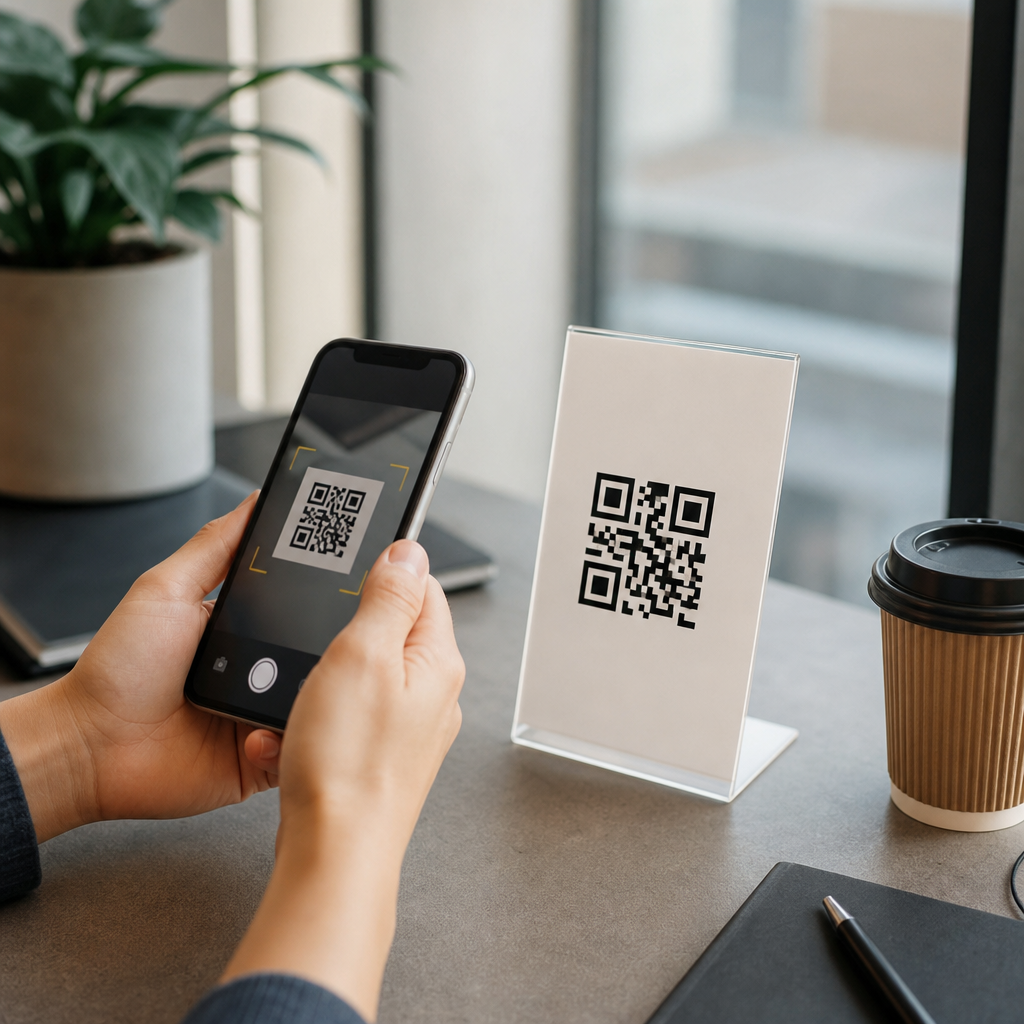
QR codes have moved from a novelty on posters and packaging to a dependable conversion tool across retail, events, direct mail, hospitality, and B2B sales. When businesses ask how to optimize QR codes for conversions, they usually mean a practical goal: getting more people to scan, complete an action, and become measurable leads or customers. Conversion optimization for QR codes is the process of improving every element around the code itself, including placement, design, destination page, tracking setup, and follow-up experience, so that scanning feels easy and worthwhile.
I have worked on QR campaigns for storefront windows, restaurant tables, trade show booths, and product inserts, and the pattern is consistent. A QR code rarely fails because the technology is broken. It underperforms because the context is weak. People need a clear reason to scan, confidence that the scan is safe, and a landing experience that matches the promise in front of them. If any of those pieces are missing, scan rates and conversions drop fast.
This matters because QR codes bridge offline attention and digital action better than most channels. A print ad can become an online purchase path. Packaging can become a review request. A sales sheet can become a booked demo. Modern smartphone cameras made scanning friction low, but low friction does not guarantee results. Businesses still need strong messaging, mobile-first journeys, accurate analytics, and testing discipline. This hub article explains the fundamentals, answers the most common business and marketing questions, and gives you a framework you can apply across future QR campaigns.
Start with conversion intent, not the code itself
The first step in QR code optimization is defining the exact conversion you want. If your objective is too broad, the campaign becomes vague. A restaurant may want table scans to increase online reorders. A manufacturer may want brochure scans to collect distributor leads. An ecommerce brand may want package insert scans to drive repeat purchases through a loyalty offer. Each objective requires different copy, landing pages, and measurement.
I advise teams to choose one primary conversion per code. Secondary actions are fine, but the page should have one dominant next step. If a user scans a QR code on an event banner and lands on a page with five unrelated choices, you create decision fatigue. If the same user lands on a short registration page with event details, time, location, and one clear button, the path is stronger. The simplest QR campaigns often convert best because they respect the user’s limited attention in the moment of scan.
Offer clarity matters as much as objective clarity. “Scan for more information” usually underperforms “Scan to claim 15% off today” or “Scan to see pricing in 30 seconds.” Specificity increases intent because it reduces uncertainty. The user can judge whether the reward is worth the action before opening the camera.
Design QR codes for scan reliability and brand trust
A QR code must scan quickly under real conditions, not just in a design mockup. That means preserving contrast, quiet space, and error correction. Dark modules on a light background remain the safest standard. Reversing that treatment can work, but it is less reliable in low light or on poor-quality print materials. I have seen brands weaken scan performance by prioritizing visual flair over readability, especially by shrinking the quiet zone or placing codes on patterned backgrounds.
Size and distance matter. A useful field rule is roughly one inch of code size for every ten inches of scanning distance, then increase from there for public signage. A code on product packaging may work at a smaller size because users hold it close. A code on a window poster viewed from a sidewalk needs more physical area. Test with multiple devices, camera apps, and lighting conditions before launch.
Customization should support trust without compromising function. Adding a logo can lift recognition when done carefully, especially if you use sufficient error correction and keep the center mark small. Branded frames and a short call to action around the code often improve response because users immediately understand what the code is for. Dynamic QR platforms such as Bitly, QR Code Generator Pro, Beaconstac, and Flowcode also help by allowing destination updates without reprinting assets, which is critical when offers, inventory, or tracking parameters change.
Match placement and context to user motivation
Where a QR code appears often determines who scans and why. High-converting placements align with user intent at that exact moment. On packaging, users may want setup instructions, warranty registration, or a reorder link. In a waiting room, they may accept a newsletter signup or appointment booking because they have spare time. At a trade show booth, they are more likely to scan for a spec sheet, case study, or calendar booking than for a generic homepage.
Environmental factors also shape conversion rates. Glare on glass, poor lighting, moving foot traffic, weak mobile signal, and awkward scan angles all reduce performance. For outdoor placements, I prefer destination pages that load fast on cellular and still function if the user opens them later. For in-store signage, placing the code at chest height with a concise benefit statement usually outperforms placing it low on a counter among cluttered materials.
The best placements answer a natural question. A shelf talker can say “Scan to compare models.” A direct mail piece can say “Scan to activate your quote.” A hotel room placard can say “Scan for late checkout options.” These prompts convert because they connect the scan to the user’s current task, not to the marketer’s internal goals.
Build landing pages that complete the promise fast
The landing page is where QR conversion is won or lost. Users who scan from an offline environment expect speed and relevance. Send them to a homepage and many will bounce. Send them to a mobile-first page that mirrors the exact wording on the QR prompt, and conversion rates improve. Message match is nonnegotiable. If the code says “Get today’s menu,” the first screen should show the menu, not a general brand page with navigation clutter.
Page performance matters because QR scans frequently happen on mobile networks. Core Web Vitals are not just search metrics; they affect user patience. Compress images, reduce scripts, and keep forms short. If the goal is lead capture, ask only for essential fields. If the goal is a purchase, support digital wallets and autofill. If the goal is a phone call, use a tap-to-call button above the fold.
| QR use case | Best landing page focus | Primary conversion metric |
|---|---|---|
| Retail packaging | Reorder, setup guide, loyalty signup | Repeat purchase rate |
| Restaurant table tent | Menu, order flow, upsell offer | Average order value |
| Trade show badge sign | Demo booking, brochure download | Qualified leads |
| Direct mail postcard | Personalized offer, quote request | Form completion rate |
| Storefront poster | Coupon, hours, appointment booking | Redemption or bookings |
Trust signals improve completion rates as well. Include recognizable branding, privacy reassurance near forms, visible contact methods, and proof points such as reviews, client logos, or delivery guarantees where relevant. A QR scan is a small act of trust. The page should validate that trust immediately.
Track scans and conversions with disciplined measurement
Many businesses can generate scans but cannot prove business impact because their measurement is incomplete. A strong setup uses dynamic URLs, campaign parameters, analytics events, and downstream conversion tracking in systems such as Google Analytics 4, HubSpot, Salesforce, or Shopify. Scans are a top-of-funnel signal, not the final metric. The metrics that matter depend on your objective: purchases, appointments, leads, app installs, redemptions, or repeat orders.
I recommend naming conventions that capture channel, asset, location, date range, and offer. For example, a window poster in Chicago promoting spring appointments should have different tracking than a package insert offering loyalty points. Distinct codes let you compare placement performance instead of guessing. If multiple stores use the same creative, unique identifiers per location reveal which environments actually drive action.
Attribution requires nuance. Some users scan, browse, and convert later on another device. Others scan and save the page. To reduce blind spots, connect QR traffic to CRM records when possible, use first-party data capture, and monitor assisted conversions in addition to last-click results. If the campaign includes coupon codes, vanity URLs, or offer IDs, tie them back to the QR source so offline-to-online performance becomes visible.
Test the variables that actually change results
QR optimization is not about changing random colors each week. It is about testing the few variables that strongly influence behavior. The most important are the call to action near the code, the offer itself, the placement, the destination page, and the conversion step count. In campaign reviews, these factors consistently produce larger gains than cosmetic redesigns alone.
Run controlled tests where possible. Compare “Scan to get a quote” versus “Scan to see pricing now.” Test a discount against a value-add incentive such as free setup or priority access. Evaluate whether a shorter form improves lead quality or only volume. On packaging, test whether the code performs better near unboxing instructions or near loyalty messaging. At events, compare booth wall placement with handout placement.
Do not ignore operational feedback. Sales teams, store managers, and event staff often know why users hesitate. They hear objections in real time: not enough signal, unclear reward, too many form fields, no immediate confirmation. Those observations are often more actionable than surface-level scan counts.
Common business and marketing FAQ answers
What makes people scan a QR code? A clear benefit, visible safety, and low effort. People scan when the reward is immediate and the wording is specific.
Should a QR code go to a homepage? Usually no. Direct users to a page built for the exact context and action.
Do branded QR codes convert better? Often yes, if branding improves trust and does not reduce scan reliability.
Can static QR codes work for marketing? Yes, but dynamic codes are better for optimization, analytics, and post-print destination changes.
How do you improve offline campaign ROI? Pair each physical placement with unique tracking, a mobile-first landing page, and an offer aligned to user intent.
Are QR codes good for B2B? Absolutely. They work well for spec sheets, demo bookings, gated assets, and field sales follow-up when the destination is relevant and concise.
Optimizing QR codes for conversions is ultimately about respecting context. A successful scan journey gives the right person a compelling reason to act, removes friction from the mobile experience, and captures clean data for improvement. When you define one primary goal, design for reliable scanning, place codes where motivation is naturally high, and send users to pages that fulfill the promise quickly, conversion rates rise for measurable reasons rather than luck.
Use this article as the hub for your broader business and marketing troubleshooting efforts. Audit one live QR code this week: review its call to action, placement, landing page, and tracking setup. Then test one meaningful change and measure the result. That disciplined approach is how QR codes become a repeatable conversion channel instead of a decorative add-on.
Frequently Asked Questions
1. What makes a QR code convert well instead of just getting scanned?
A high-converting QR code does more than attract attention; it creates a smooth path from curiosity to action. In practice, that means the code must be easy to notice, easy to scan, and connected to a destination that matches the user’s expectations. Many campaigns fail because they focus only on the QR code graphic itself and ignore the surrounding conversion experience. A scan is only the first micro-commitment. The real performance comes from what happens immediately after that scan.
Several factors drive stronger QR code conversion rates. First is context. People are far more likely to scan when the code is placed where interest is already high, such as on product packaging, event signage, restaurant tables, direct mail offers, trade show materials, or in-store displays near a purchasing decision. Second is a clear call to action. Instead of showing a code with no explanation, tell people exactly what they will get, such as “Scan to get 15% off,” “Scan to view the demo,” or “Scan to book your consultation.” Specific value increases intent.
Design also matters, but usability matters more. The code should have enough contrast, a proper quiet zone, and a size appropriate for scanning distance. Custom branding can improve trust and recognition, but overdesigning the code can reduce readability. Then there is the landing experience. If the QR code sends users to a slow, cluttered, non-mobile-friendly page, conversions will drop quickly. The destination should load fast, reflect the offer presented next to the code, and remove unnecessary friction. In short, the best-performing QR codes are optimized as complete conversion funnels, not as standalone graphics.
2. Where should you place QR codes to increase conversions?
Placement is one of the biggest variables in QR code performance because it affects both visibility and intent. The best location is not always the one with the most traffic; it is the one where people are most likely to take the next step. For example, a QR code on product packaging can work extremely well because the customer is already engaged with the brand. A QR code on a trade show banner can perform well if it is paired with a clear offer and placed at eye level where visitors naturally pause. A code in direct mail can generate strong response because it bridges offline attention with immediate digital action.
Good placement starts with physical practicality. The code should be easy to see, well lit, and positioned where scanning is comfortable. If users need to bend awkwardly, stand too far away, or compete with visual clutter, scan rates fall. Size must match distance. A code on a business card can be relatively small, while a code on a storefront window or conference display needs to be much larger. Testing matters here because real-world conditions, including glare, motion, lighting, and print quality, affect results more than many marketers expect.
To improve conversions rather than just scans, place the QR code close to the decision point. In retail, that may be next to pricing or product comparison information. In hospitality, it may be at the table where a guest is deciding whether to order, join a loyalty program, or leave a review. In B2B sales, it may be on a brochure or booth display where a prospect is actively evaluating solutions. The closer the code appears to a relevant moment of interest, the better it tends to perform. The strongest placements align timing, visibility, and user intent.
3. How should you design a QR code and its call to action for better conversion rates?
The most effective QR code design balances brand appeal with effortless scanning. A code can absolutely be customized with brand colors, a logo, or a frame, but functionality has to come first. High contrast between foreground and background is essential. The code should include enough empty space around it, often called the quiet zone, so smartphone cameras can detect it accurately. Avoid shrinking the code too much, distorting its pattern, or placing it over busy backgrounds. If the code is difficult to scan even once, conversion performance will suffer immediately.
Equally important is the call to action that appears around the code. People are much more likely to scan when they understand what they will gain and how quickly they can get it. Generic language like “Scan me” is weaker than benefit-focused copy like “Scan to claim your free sample,” “Scan to compare plans,” or “Scan to watch the 2-minute demo.” The best calls to action reduce uncertainty and answer the user’s mental question: “Why should I do this right now?” If there is urgency, exclusivity, or convenience involved, make that explicit.
Supporting visual elements can also improve trust and response. Add a short line of explanatory text, a recognizable brand mark, or a small icon indicating what the scan leads to, such as a menu, registration page, coupon, product details, or app download. In some environments, adding a simple backup URL is smart because it gives users another path if scanning fails. Before launch, test the code on multiple phones, operating systems, camera apps, and print surfaces. Great QR code design is not just attractive; it removes hesitation, clarifies the value, and makes the desired action feel immediate and low risk.
4. What kind of landing page should a QR code link to if the goal is more conversions?
A QR code should almost never send users to a generic homepage if conversions are the priority. Instead, it should link to a dedicated landing page that matches the message, offer, and audience tied to that specific code. When someone scans from a poster, package, menu, flyer, or event display, they expect continuity. If they were promised a discount, demo, menu, appointment form, review page, or product information, the landing page should deliver exactly that without making them search for it. Message match is one of the most important parts of QR code conversion optimization.
The page itself should be mobile-first because virtually every QR code scan happens on a smartphone. That means fast load speed, clear headlines, simple layouts, readable text, thumb-friendly buttons, and forms with as few fields as possible. Friction is the enemy. If users must pinch to zoom, wait for heavy elements to load, or complete a long form, abandonment rises. The page should make the next step obvious, whether that step is buying, booking, downloading, subscribing, requesting a quote, or calling a sales rep.
Strong landing pages also support measurement and testing. Use campaign-specific URLs or dynamic QR codes with analytics so you can track scans, clicks, conversions, and downstream outcomes. This helps identify which physical placements, offers, and creative versions produce the best results. You can then A/B test headlines, button copy, form length, incentives, and page structure to improve performance over time. In other words, the landing page is where QR code traffic becomes measurable business value. If the destination experience is optimized, the code itself becomes much more profitable.
5. How do you track and improve QR code conversions over time?
Improving QR code conversions requires more than counting scans. Scans are useful, but they are only the top of the funnel. To evaluate actual performance, businesses need to measure what happens after the scan: visits, engagement, form submissions, purchases, bookings, downloads, calls, and revenue. The best way to do this is by using dynamic QR codes, campaign-tagged URLs, and analytics tools that connect offline touchpoints to digital outcomes. This setup allows marketers to compare results across channels, locations, print materials, audiences, and offers.
Start by defining the primary conversion goal for each QR code campaign. In one case, the goal may be coupon redemption. In another, it may be demo requests, menu orders, email signups, or product registrations. Once the goal is clear, track the full path from scan to completion. Useful metrics often include scan rate by placement, landing page bounce rate, click-through rate, form completion rate, conversion rate, and cost per acquisition. If possible, connect QR data to CRM or ecommerce systems so you can measure lead quality and revenue, not just surface-level engagement.
Ongoing optimization usually comes from testing one variable at a time. You might test different calls to action, incentives, landing page layouts, placement heights, code sizes, colors, or environmental contexts. For example, one direct mail piece may outperform another simply because the CTA promised a clearer benefit. One in-store sign may convert better because it was placed next to a high-intent product category. Over time, these insights compound. The businesses that get the most from QR codes treat them as measurable conversion assets, continuously refined through data, user behavior, and real-world testing.