QR codes moved from a niche industrial marking system to a mainstream consumer interface between 2010 and 2026, and the historical growth of QR codes is best understood through usage statistics, smartphone adoption, payment infrastructure, and changing consumer habits. A QR code, or Quick Response code, is a two-dimensional matrix barcode invented by Denso Wave in 1994 to store more data than a standard linear barcode and to be read quickly from multiple angles. By 2010, the technology already existed, but everyday consumer usage was inconsistent because camera quality, mobile operating systems, and merchant readiness were still immature. What changed over the next sixteen years was not the code itself so much as the ecosystem around it: better smartphone cameras, native scanning in iOS and Android, mobile wallets, restaurant digitization, public health requirements, and low-cost printing at scale.
When I look at QR code usage statistics across campaigns, payments, packaging, retail signage, and customer support workflows, one pattern stands out: growth happened in waves rather than in a straight line. Early marketing enthusiasm produced curiosity but weak repeat behavior. The late 2010s delivered technical readiness. The pandemic years pushed mass behavior change. The period from 2022 through 2026 has been defined by normalization, where scanning a code is no longer novel and is often the fastest path to menus, app downloads, ticket validation, product information, authentication, and cashless payment. That is why this topic matters for any business studying QR code trends, statistics, and future adoption. Understanding where the numbers came from helps explain which use cases are durable, which were temporary, and which industries are still underusing a simple tool that now sits comfortably inside everyday digital behavior.
2010 to 2014: Early Consumer Adoption and Marketing Experiments
From 2010 to 2014, QR code growth was real but uneven. Brands in North America and Europe placed codes on posters, magazine ads, product packaging, and in-store displays, hoping to connect offline attention with mobile landing pages. The promise was attractive: scan once, skip typing a URL, and move directly to an offer or video. In practice, several frictions held adoption back. Many users needed a separate scanning app. Some campaigns linked to non-mobile-friendly pages. Others gave people no compelling reason to scan. As a result, scans often spiked around novelty-driven promotions rather than becoming habitual behavior.
Still, important foundations were laid in this period. Smartphone penetration was rising rapidly, especially after the iPhone and Android ecosystems matured. Camera hardware improved, autofocus became faster, and app stores filled with scanning utilities. Retailers and publishers began learning basic QR code implementation rules: use adequate contrast, provide a clear call to action, test across devices, and link to a page designed for mobile screens. In Asia, especially Japan and China, consumer familiarity progressed faster because mobile internet behavior was already more advanced in everyday commerce. Those regional differences mattered, because they previewed where global usage statistics would later surge.
2015 to 2019: Infrastructure Catches Up and Utility Improves
The years from 2015 to 2019 were a turning point because QR codes became easier to scan and more useful once scanned. Apple added native QR reading in the iPhone camera app with iOS 11 in 2017. Google improved native recognition across Android devices. That single shift removed a major barrier: users no longer had to search for a separate app before interacting with a code. In my experience advising on print-to-digital campaigns, scan rates improved immediately when user education became unnecessary. Convenience is the difference between curiosity and habit.
This phase also saw stronger adoption in payments and platform ecosystems. WeChat Pay and Alipay demonstrated that QR code payments could scale to hundreds of millions of people when merchant acceptance was simple and transaction costs stayed low. Small vendors could print a static payment code and begin accepting digital transactions without expensive point-of-sale hardware. That model influenced other markets, including India, where Unified Payments Interface, or UPI, accelerated QR-led payment behavior. Meanwhile, airlines, event organizers, logistics teams, and customer service departments used QR codes for boarding passes, ticketing, parcel tracking, setup instructions, and warranty registration. The use case shifted from “scan for marketing” to “scan to complete a task,” and that distinction drove stronger repeat usage statistics.
| Period | Primary Driver | Typical Use Cases | Main Limitation |
|---|---|---|---|
| 2010–2014 | Brand experimentation | Ads, posters, packaging | Need for separate scanner apps |
| 2015–2019 | Native smartphone scanning | Payments, tickets, onboarding | Inconsistent merchant implementation |
| 2020–2021 | Contactless demand | Menus, check-ins, health forms | Rapid deployment quality issues |
| 2022–2026 | Behavior normalization | Commerce, authentication, support, packaging | Security education and governance |
2020 to 2021: Pandemic Acceleration and Mass Behavior Change
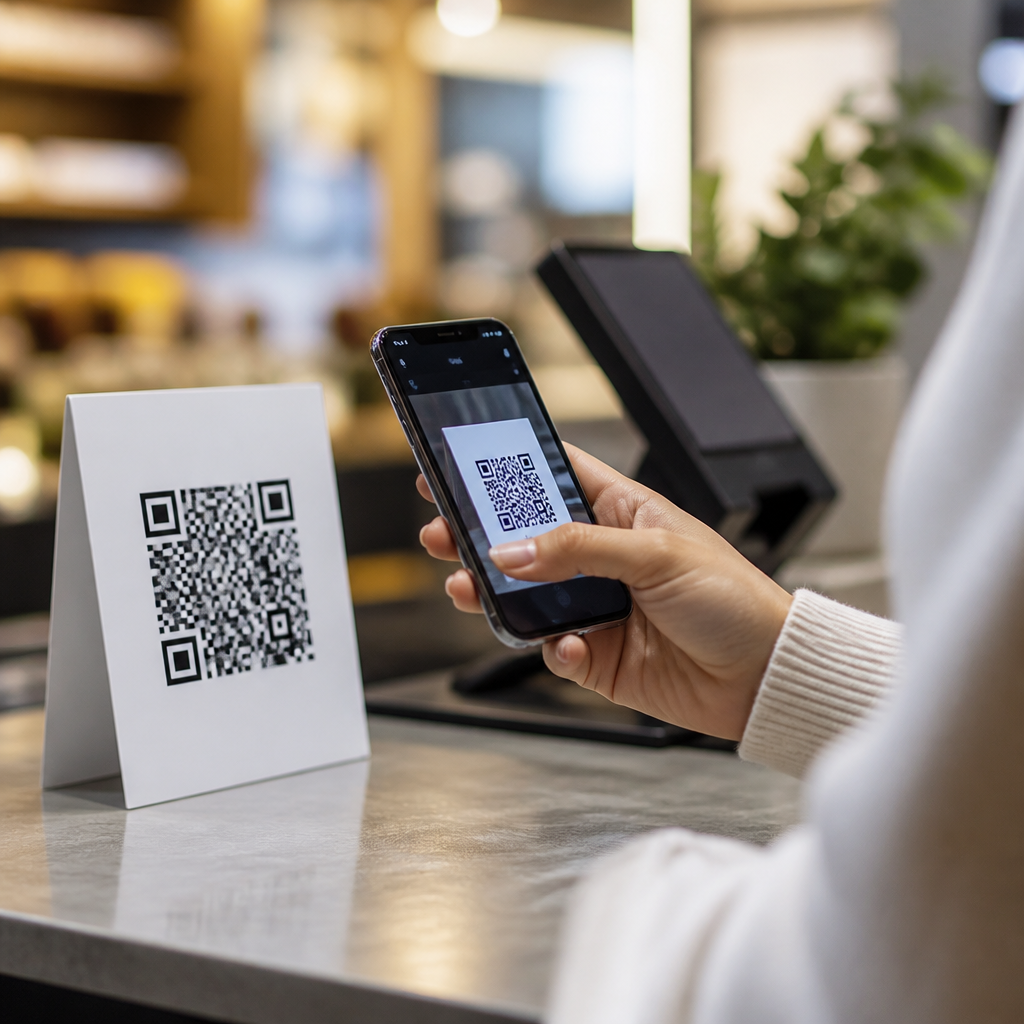
No discussion of the historical growth of QR codes is complete without the pandemic spike. In 2020 and 2021, QR code usage statistics jumped because contactless interactions became an immediate operational need. Restaurants replaced printed menus with table codes. Offices, venues, and clinics used codes for check-in, health declarations, and visitor logs. Governments and health systems introduced QR-linked passes, test records, or location-tracing workflows in multiple countries. What had previously been optional became routine almost overnight.
This was the period when scanning behavior crossed from tech-savvy users to the broad public. People who had never scanned before learned quickly because the value exchange was obvious: fewer shared surfaces, faster access to information, and simpler digital forms. Payments also benefited. According to industry reporting from payment networks and market intelligence firms, global contactless payment behavior expanded sharply during the pandemic, and QR rails captured part of that growth where card-terminal penetration was low or merchants wanted cheaper alternatives. However, the surge also exposed weaknesses. Some codes led to broken links, PDFs not optimized for phones, or insecure destinations. The lesson was clear: adoption can spike quickly, but durable performance depends on governance, testing, and user trust.
2022 to 2026: Normalization, Measurement, and Smarter Deployment
From 2022 through 2026, QR codes entered a more mature phase defined by normalization rather than emergency adoption. Consumers now expect codes in restaurants, on product packaging, in transit systems, at self-service kiosks, inside direct mail, and on television ads. eMarketer, Statista, GSMA reporting, and payment-industry analyses all point in the same direction: smartphone ownership remains high, camera-based interactions are standard, and merchants increasingly see QR codes as a low-friction bridge between physical environments and digital services. In the United States, scan usage has continued to rise from its pre-pandemic base, while markets such as China and India remain global leaders in payment-centered QR behavior.
The most important change in this period is better measurement. Dynamic QR codes allow teams to edit destinations without reprinting assets, segment traffic by location, and connect scans to analytics tools such as Google Analytics 4, Adobe Analytics, HubSpot, Salesforce, or custom attribution models. That means businesses can compare scan-through rates by store, campaign, package type, or channel. Packaging teams use codes to deliver ingredient transparency, sourcing information, recycling guidance, and loyalty enrollment. Manufacturers use serialized QR codes for anti-counterfeit verification and track-and-trace workflows aligned with GS1 Digital Link initiatives. Support teams place codes on devices and invoices to route users directly to setup videos, spare parts catalogs, or troubleshooting trees. The statistic that matters most in this era is not just total scans; it is task completion after the scan.
What the Statistics Really Show Across Industries
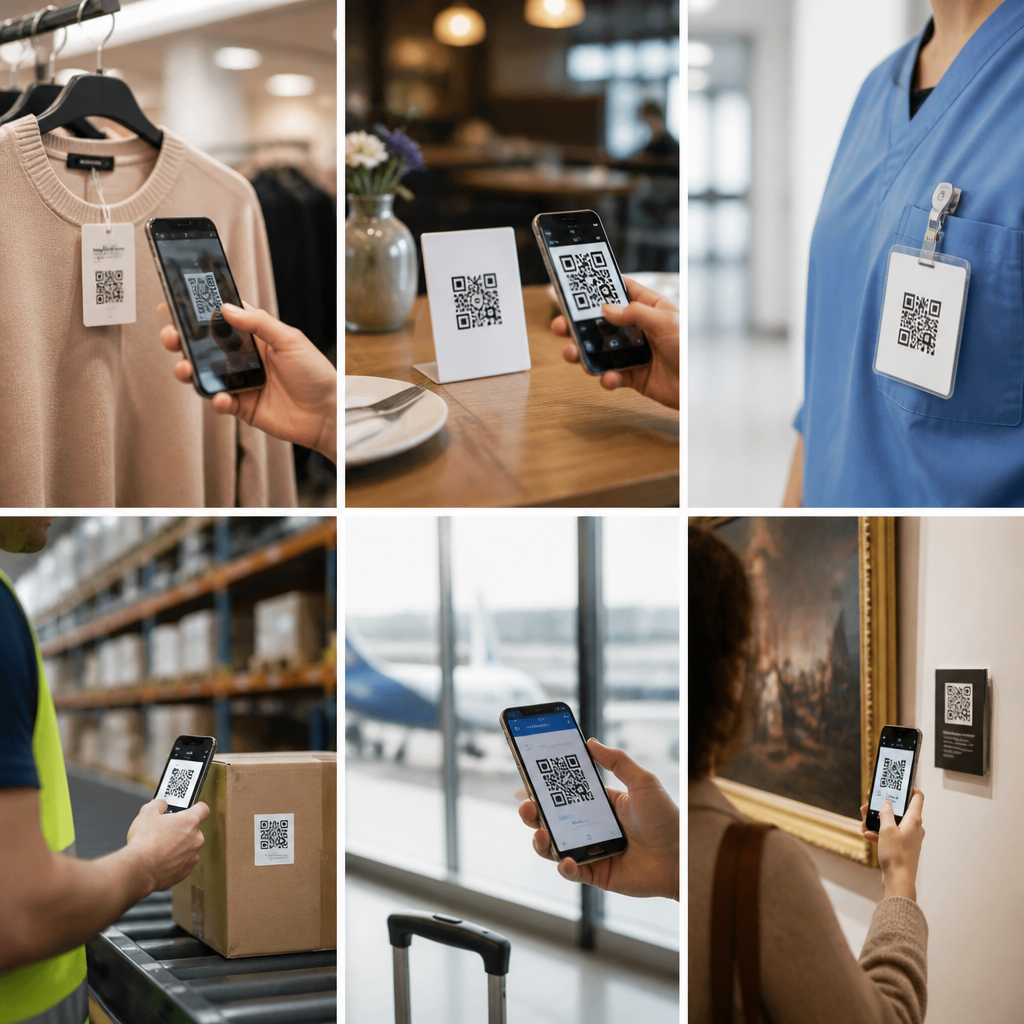
QR code usage statistics vary by industry, but the pattern is consistent: the strongest performance appears where the code removes a real step, not where it adds one. In restaurants, menu access and table ordering work because scanning is faster than waiting for staff. In retail packaging, codes perform well when they unlock authenticity checks, tutorials, or loyalty rewards. In healthcare, patient intake and prescription information benefit when forms are secure and mobile friendly. In logistics, warehouse teams and delivery operators rely on machine-readable labels because accuracy and speed matter more than aesthetics. In events and travel, QR tickets reduce printing, accelerate entry, and integrate with identity checks.
The weaker use cases are equally instructive. Codes placed in hard-to-scan locations, linked to generic homepages, or used without a clear benefit underperform. Static codes become a problem when destinations change. Security also matters more as adoption rises. Users increasingly need to recognize safe scanning practices because malicious actors can place fraudulent stickers over legitimate codes, a tactic sometimes called quishing. Mature programs respond with short branded domains, HTTPS, visible context, and regular inspections of physical assets. The history from 2010 to 2026 shows that QR codes succeed when they are treated as infrastructure, not decoration.
Why This Growth Matters for the Future of QR Code Trends
The historical growth of QR codes from 2010 to 2026 proves that adoption follows utility, standardization, and trust. Early campaigns taught marketers that novelty is not enough. The mid-2010s established the technical base through native smartphone scanning. The pandemic years trained the mass market. The post-2022 period has turned QR codes into a practical layer of digital access across payments, packaging, service, and identity workflows. For anyone tracking QR code trends, statistics, and future opportunities, the main takeaway is simple: focus on use cases where scanning removes friction and where performance can be measured beyond the scan itself. Audit your current customer journey, identify one high-intent touchpoint, and deploy a tested, trackable QR code that solves a real task.
Frequently Asked Questions
1. Why did QR codes grow so dramatically between 2010 and 2026?
The growth of QR codes between 2010 and 2026 was driven by several overlapping trends rather than one single breakthrough. In the early 2010s, QR codes were already technically capable and widely known in certain industries, but mainstream consumer use was limited because smartphone ownership, mobile internet reliability, and camera-based scanning behavior were still developing. As smartphones became more affordable and more common worldwide, the practical barrier to using QR codes dropped significantly. Better cameras, faster processors, and built-in scanning features made the experience easier and more natural for everyday users.
Another major factor was the expansion of real-world use cases. QR codes moved beyond product tracking and industrial labeling into retail packaging, event ticketing, restaurant menus, app downloads, logistics, education, healthcare, and digital payments. Once consumers began encountering QR codes in multiple contexts, they no longer seemed like a novelty. They became a convenient bridge between physical spaces and digital actions, allowing people to open websites, verify information, claim offers, make payments, or access services instantly.
Changing consumer habits also played an important role. By the late 2010s and early 2020s, people were increasingly comfortable using their phones as everyday tools for shopping, banking, ordering, and identity verification. The pandemic period accelerated this pattern by normalizing touchless interactions, which pushed QR codes into the center of hospitality, food service, public health, and payments. By 2026, QR codes had become mainstream not just because the technology improved, but because the surrounding digital ecosystem matured enough to make them consistently useful.
2. How did smartphone adoption influence the historical growth of QR codes?
Smartphone adoption was arguably the single most important force behind the historical growth of QR codes. A QR code only becomes valuable at scale when a large share of the population has a device capable of scanning it quickly and acting on the information immediately. In 2010, many consumers still used feature phones or early smartphones, and scanning a QR code often required downloading a separate app. That extra step created friction and limited widespread use.
As smartphone penetration increased throughout the 2010s, that friction started to disappear. Mobile operating systems and camera apps gradually added native QR scanning, which changed user behavior dramatically. People no longer needed to know what scanner to install or how to use it. They could simply point their camera at a code and receive a link, menu, payment prompt, login request, or contact card. This shift turned QR codes from a niche interaction into a default mobile behavior.
Smartphone growth also mattered because it brought other enabling technologies with it. Better mobile browsers, digital wallets, faster mobile networks, and location-aware apps all made QR interactions more useful. A scanned code could now lead to a rich landing page, secure payment flow, loyalty program, video, authentication system, or dynamic customer experience. In other words, smartphones did not just make QR codes scannable; they made them meaningful. The historical rise of QR codes is therefore closely tied to the broader rise of the smartphone as the primary consumer interface for digital life.
3. What role did digital payments play in making QR codes mainstream?
Digital payments were one of the strongest catalysts for QR code adoption, especially in markets where low-cost payment infrastructure was essential. Traditional card payment systems often require specialized hardware, merchant contracts, and transaction processes that can be expensive or difficult for small businesses to implement. QR codes offered a simpler alternative. A merchant could display a printed or screen-based code, and a customer could scan it with a mobile wallet or banking app to complete a transaction quickly.
This model was especially powerful in emerging and mobile-first economies, where QR-based payment systems helped expand financial access and bring informal or cash-heavy businesses into digital commerce. In these environments, QR codes became more than a convenience. They became part of everyday economic infrastructure. Street vendors, taxis, market stalls, and small retailers could accept cashless payments without investing heavily in terminal hardware. As consumers became accustomed to scanning for transactions, trust and familiarity with QR interactions increased more broadly.
In developed markets, payments also helped reposition QR codes from a marketing tool to a utility. Instead of simply scanning for a coupon or website, users could now complete a meaningful financial action. That practical value encouraged repeat use. By the early 2020s, QR payments had become common in food service, transit, e-commerce pickup, peer-to-peer transfers, and in-store checkout. This repeated exposure reinforced scanning behavior and made QR codes feel normal, reliable, and embedded in daily routines by 2026.
4. Were QR codes always popular with consumers, or did adoption happen in stages?
QR code adoption clearly happened in stages. They were not uniformly popular with consumers from the beginning. In the early 2010s, many brands experimented with QR codes in advertising, packaging, and outdoor media, but user engagement was inconsistent. In many cases, codes were placed without clear value to the user, leading to frustrating experiences such as broken links, non-mobile-friendly pages, or generic homepage redirects. This period created awareness, but not always trust or habit.
The next stage came as mobile technology improved and companies became better at designing useful QR experiences. Instead of asking people to scan out of curiosity alone, businesses started connecting codes to specific actions: download this app, pay this bill, view this menu, track this package, join this event, or verify this product. Utility replaced novelty. That change mattered because consumers are far more likely to adopt a technology when the benefit is immediate and obvious.
A final major stage of adoption occurred when QR codes became embedded in essential services and daily routines. Hospitality, transportation, healthcare, education, public information, and payments all contributed to this shift. Once consumers started scanning codes regularly in practical settings, resistance dropped sharply. By 2026, QR codes were no longer seen as experimental or optional in many markets. They had become a standard interface layer between offline environments and digital systems, reflecting a gradual but powerful transition from awareness to utility to habitual use.
5. Why is the period from 2010 to 2026 important in the history of QR codes?
The period from 2010 to 2026 is important because it captures the transformation of QR codes from a mature but underused technology into a globally familiar consumer tool. QR codes themselves were invented much earlier, in 1994, for industrial and manufacturing purposes. Their core technical advantages were already established: they could store more data than linear barcodes, be read quickly, and function from multiple angles. What changed after 2010 was not the basic invention, but the scale and diversity of its adoption.
This period includes several key transitions. First, it covers the mass adoption of smartphones, which gave billions of people a scanning device in their pocket. Second, it includes the evolution of mobile software and camera systems that made scanning seamless. Third, it reflects the rise of platform-based consumer behavior, where people increasingly relied on phones for communication, shopping, banking, travel, and identity-related tasks. QR codes fit naturally into that environment because they provide a fast, low-cost link between physical objects and digital actions.
It is also a historically useful timeframe because it shows how social and economic circumstances can accelerate an existing technology. By the early 2020s, touchless service models, digital menus, contactless payments, and mobile check-ins pushed QR codes into highly visible everyday use. By 2026, their role had broadened far beyond marketing into infrastructure, commerce, authentication, and customer experience. Looking at 2010 through 2026 makes it easier to understand not just how much QR codes grew, but why they became one of the most practical and widely recognized interfaces in the mobile era.