
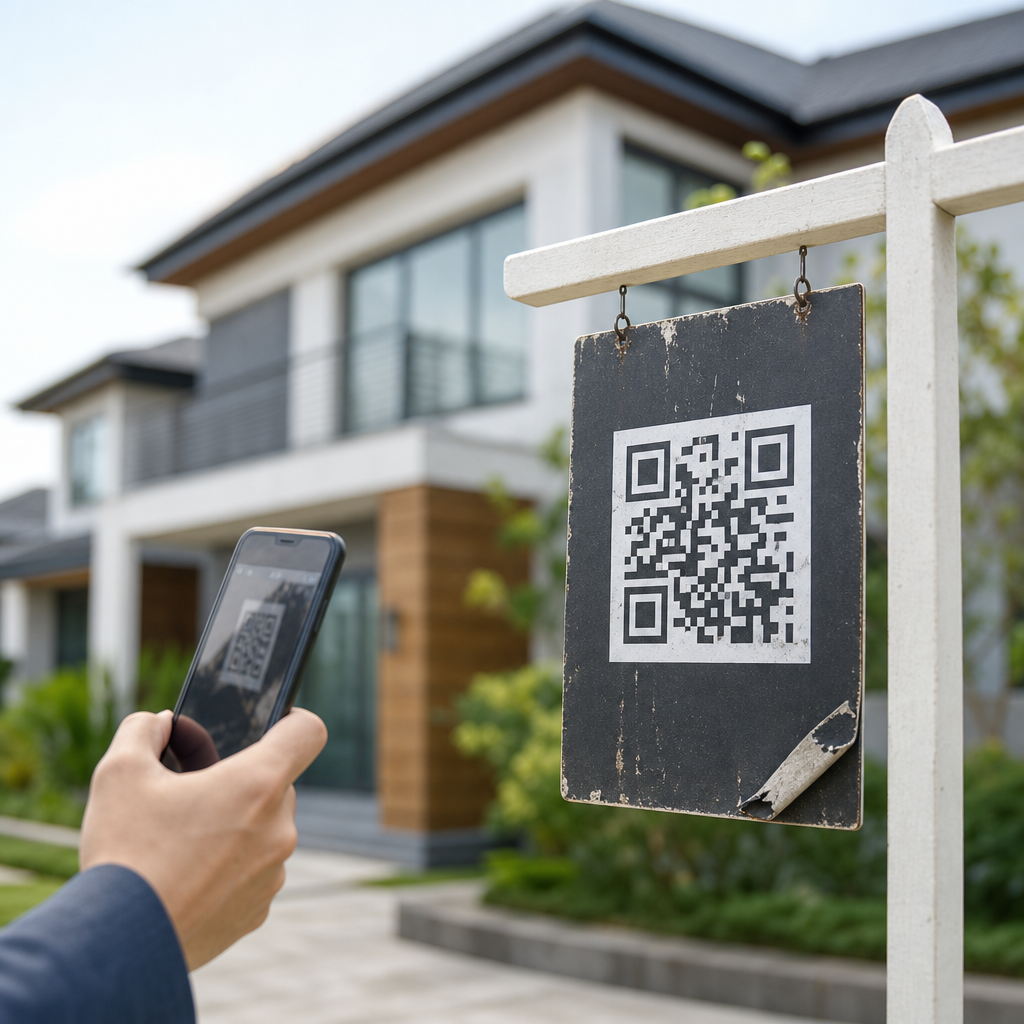
Real estate QR codes promise a simple bridge between physical property marketing and digital lead capture, yet many agents, brokers, and developers use them poorly. A real estate QR code is a scannable image that sends a buyer, seller, tenant, or investor to a landing page, video tour, contact form, digital brochure, map, or saved listing. In practice, I have seen QR codes on yard signs, window cards, brochures, direct mail, open house displays, lockbox instructions, and new development hoardings. The opportunity is obvious: a prospect can move from curiosity to action in seconds. The risk is just as real: if the code is badly designed, poorly placed, or linked to weak content, the scan goes nowhere and the lead disappears.
This matters because real estate marketing happens in motion. People scan while driving past a sign, walking a neighborhood, touring a building, or comparing listings at night on a phone. Those moments are short, and the buyer’s intent is often high. A QR code that fails undercuts trust, wastes paid media, and makes campaign performance harder to measure. Good implementation improves response rate, tracks offline-to-online attribution, and shortens the path to inquiry. For a sub-pillar page under industry-specific applications, real estate is one of the clearest examples because property marketing depends on location, timing, and immediate access to accurate information. The common mistakes below are the issues I repeatedly audit when reviewing agent campaigns, brokerage templates, builder signage, and listing funnels.
Linking to the wrong destination
The most common mistake with real estate QR codes is linking to a generic homepage instead of a task-specific destination. A buyer scanning a sign in front of a condo does not want to land on a brokerage home page with dozens of menu choices. They want the property page, price, photos, floor plan, neighborhood details, and a fast way to book a showing. When the destination does not match the scan context, bounce rates rise immediately. The right destination depends on intent: for-sale signs should open the listing page, open house materials should open a registration or feedback form, print brochures should open a digital brochure or virtual tour, and investor packets should open a project overview with downloadable documents.
I also see agents send scans to mobile-hostile PDFs. That is a conversion killer. PDFs can support disclosure packets or full brochures, but the first destination should be a mobile landing page that summarizes the offer and lets the visitor choose the next step. Include clear calls to action such as “Schedule a tour,” “Ask about financing,” or “See comparable homes.” If a listing is no longer available, redirect the code to a relevant alternative page rather than leaving users at a dead end. Dynamic QR platforms make that possible without reprinting signs, and in real estate, where listing status changes quickly, dynamic routing is not a luxury; it is standard operating discipline.
Poor placement, sizing, and scanability
A QR code works only if people can scan it easily. In real estate, placement errors are frequent because marketers design for visual symmetry rather than real-world use. A code printed too small on a yard sign may be impossible to scan from the sidewalk. A code placed behind reflective glass in a brokerage window may fail in daylight. A code on a directional sign near a road may encourage dangerous behavior if the only way to scan is from a moving car. The fix is practical: size the code for expected distance, maintain high contrast, preserve white space around the symbol, and test it on multiple phones under actual lighting conditions.
Another mistake is overbranding the code until it becomes unreadable. Adding a logo is acceptable if error correction and module clarity remain intact, but heavy gradients, decorative frames, and low-contrast colors often break scanning. ISO/IEC 18004 defines the technical standard for QR symbols, and staying close to standard contrast and structure improves reliability. For property signage, I advise clients to test with iPhone and Android default camera apps, not only a specialty scanner. If the code needs instructions, add a plain-language prompt such as “Scan for price, photos, and tour times.” People still respond better when the benefit is explicit.
Ignoring the mobile landing page experience
Even when a code scans correctly, the mobile experience often falls apart. Real estate teams sometimes route traffic to a desktop-first listing page with oversized image files, intrusive pop-ups, or forced account creation. That loses high-intent prospects. A real estate QR landing page should load fast on cellular data, prioritize the property headline, show current price and status, display strong photos, and make contact options obvious. Tappable buttons for call, text, WhatsApp if appropriate, email, and booking are more effective than burying contact details in a footer.
Page speed matters because many scans happen outdoors with inconsistent service. Compress images, use modern formats, lazy-load galleries, and avoid scripts that delay rendering. Core Web Vitals are not abstract metrics here; they affect whether a prospect stays long enough to act. I have seen luxury listing pages with cinematic autoplay video underperform simpler pages because the first useful content appeared too late. The principle is straightforward: let the user get the answer before asking for commitment. If registration is required for premium assets such as full due diligence documents, explain why and collect only necessary fields.
Failing to track performance and lead quality
Many real estate QR code campaigns are unmeasured. Teams print codes on signs, brochures, and mailers, then judge success by gut feel. That wastes one of the biggest advantages of QR marketing: attribution. Use dynamic QR codes with analytics, UTM parameters, and event tracking in Google Analytics 4 or a comparable platform. Distinguish scans by asset type and location. A code on a yard sign should not share the same destination and tracking parameters as a code on a postcard or an open house handout. Without segmentation, you cannot tell which offline channels generate qualified inquiries.
Lead quality tracking matters as much as scan volume. A campaign that produces many scans but few appointments may have a weak landing page, poor listing-market fit, or an audience mismatch. Tie QR traffic to CRM stages in tools such as HubSpot, Follow Up Boss, Salesforce, or kvCORE. That lets you compare scans, form fills, calls, showings, offers, and closed deals. In one brokerage audit I worked on, a neighborhood farming mailer produced fewer scans than yard signs but a higher appointment rate because the mailer audience was local owners considering a move. Better tracking changed the budget allocation for the next quarter.
Using static codes for changing listings and campaigns
Static QR codes are a frequent operational mistake in real estate because listings, prices, agents, and status change constantly. A static code permanently encodes one destination. If the property goes under contract, the agent changes, or the campaign shifts, every printed asset becomes outdated. Dynamic QR codes solve this by letting you edit the destination while keeping the same printed symbol. For brokerages managing many listings, that flexibility prevents expensive reprints and reduces the risk of stale information reaching buyers.
The tradeoff is vendor dependence. Dynamic codes usually rely on a subscription platform, so teams must choose a provider carefully and maintain account access. If a service lapses, the codes may stop working. That is why governance matters. Document ownership, naming conventions, destination rules, and archival procedures. Treat QR assets like digital infrastructure, not decorative marketing extras.
| Mistake | Typical real estate example | Better practice |
|---|---|---|
| Static destination | Code on sign points to sold listing forever | Use dynamic routing to a live listing or similar property page |
| No segmentation | One code used on flyers, signs, and mailers | Create separate tracked codes by channel and location |
| Weak mobile UX | Scan opens a slow PDF brochure | Send users to a fast landing page with clear next steps |
| Poor scan design | Tiny code under reflective sign panel | Increase size, contrast, and test in field conditions |
Neglecting compliance, privacy, and information accuracy
Real estate marketing carries legal and reputational obligations, and QR codes do not bypass them. If the code leads to a page with outdated price, missing disclosures, unlicensed claims, or fair housing issues, the problem is still yours. Brokers should review linked content using the same compliance standards applied to listings, ads, and email campaigns. In the United States, that can include brokerage identification requirements, equal housing language where applicable, and accurate representation of property details. Developers and commercial teams may also need to handle securities, leasing, or zoning-related statements with care depending on the offer.
Privacy deserves equal attention. If the landing page collects names, phone numbers, financing details, or tour preferences, disclose what happens to that data and store it in approved systems. Do not surprise users with aggressive lead capture. Ask for information in exchange for something clear, such as private showing times, price updates, or access to a full brochure. Trust rises when the value exchange is obvious and the data request is proportional.
Missing the hub strategy for real estate content
Because this page serves as a hub within industry-specific applications, another mistake is treating real estate QR codes as a single-use tactic instead of a connected content system. The strongest real estate programs link each campaign to deeper resources: QR codes for residential listings, open houses, rental leasing, multifamily developments, commercial property tours, property management requests, and agent recruiting should each connect to dedicated pages. That structure helps users find the exact answer they need and gives search engines a clear map of topical authority.
In practice, that means building internal pathways from this hub to supporting articles on sign riders, listing brochures, virtual tours, floor plans, lead routing, neighborhood guides, and compliance checklists. A buyer scanning a suburban listing may need school district information and commute data. A retail tenant prospect may need foot traffic, parking, and co-tenancy details. Real estate QR code strategy works best when each scan opens a page designed for that audience and then guides them naturally to the next relevant resource.
Common mistakes with real estate QR codes are rarely about the code itself; they are usually failures in destination strategy, mobile usability, measurement, governance, and content relevance. When the code points to the right page, scans easily in real conditions, loads fast on a phone, tracks by channel, and stays accurate over time, it becomes a practical lead-generation tool rather than a gimmick. That is why real estate teams that treat QR codes as part of their full marketing and sales process consistently outperform teams that add them as an afterthought.
For a real estate hub page, the central lesson is simple: match every scan to a specific property or audience need, then support that interaction with reliable content and measurable follow-up. Buyers want speed and clarity. Sellers want confidence that marketing is modern and accountable. Brokers want attribution they can use to improve spend. Review your existing signs, print pieces, open house materials, and listing pages against these mistakes, fix the weak links, and build the next layer of your real estate QR strategy from there.
Frequently Asked Questions
1. What is the most common mistake people make with real estate QR codes?
The most common mistake is treating the QR code as the strategy instead of as the entry point to the strategy. Many agents, brokers, and developers place a code on a yard sign, brochure, window card, direct mail piece, or open house display and assume the job is done. In reality, the scan is only the first step. If the code leads to a generic homepage, an outdated listing, a desktop-only page, or a page with no clear next action, the opportunity is usually lost. A real estate QR code should guide the user to a highly relevant destination that matches the context of where the code appears. For example, a code on a for-sale sign should ideally open a fast-loading mobile page with property photos, price, location details, viewing options, and a simple way to contact the agent or book a showing.
Another common version of this mistake is failing to define the purpose of the scan. Is the goal to generate buyer leads, capture seller inquiries, book open house appointments, share a digital brochure, deliver a video walkthrough, or collect investor interest in a new development? Without a clear objective, the QR code becomes a gimmick instead of a conversion tool. The best-performing real estate QR codes are tied to one specific action and one specific audience. When the user immediately understands what they will get by scanning, engagement and lead quality both improve.
2. Why do so many real estate QR codes get scanned but fail to convert into leads?
Most failed conversions happen after the scan, not before it. People often assume a low lead count means the QR code itself is the problem, but the real issue is usually the destination experience. If a potential buyer scans a code and lands on a slow page, a cluttered listing portal, an unoptimized PDF, or a page that asks for too much information too soon, they are likely to leave. Real estate marketing is highly intent-driven, especially when someone is standing outside a property, reading a brochure, or attending an open house. That person wants quick, relevant information and a frictionless next step.
Strong conversion requires message match. If the QR code appears next to “Scan for price, photos, and video tour,” the landing page must deliver exactly that. If the code is on lockbox instructions or new development hoarding, the page should reflect that use case rather than dumping the visitor onto a generic website menu. It also helps to keep forms short and focused. Asking for name, email, phone number, financing status, move timeline, and property preferences before showing any useful content can kill momentum. A better approach is to provide immediate value first, then offer a simple follow-up action such as “Book a viewing,” “Request the full brochure,” or “Get similar listings.”
Trust also plays a major role. A page with inconsistent branding, missing agent details, unclear contact options, or no visible privacy reassurance can make users hesitate. In real estate, people are often making high-value decisions, so confidence matters. A good QR code journey should feel seamless, professional, mobile-friendly, and directly tied to the property or campaign that prompted the scan in the first place.
3. Where should real estate QR codes link to for the best results?
The best destination depends on the marketing context, but one rule applies almost universally: the code should link to the most relevant, mobile-optimized page for the specific audience and asset being promoted. For a single property, that often means a dedicated landing page with photos, price, key features, map, floor plan, viewing availability, and a prominent contact or booking option. For a brochure or direct mail campaign, it may be better to link to a digital brochure, neighborhood guide, mortgage calculator, or property collection page tailored to the recipient’s likely interest. For new developments, a QR code may work best when it leads to a project microsite with unit availability, CGI visuals, downloadable floor plans, and an inquiry form.
Video tours can perform particularly well when placed in the right context. Someone scanning from a window card or signboard often wants a fast visual sense of the property before deciding whether to inquire. In other cases, a map, open house registration form, saved listing page, or WhatsApp contact option may produce better engagement. The important point is not to default to the homepage or a broad property portal page unless there is a strong reason to do so. Generic destinations force users to search again for the information they expected to receive immediately, and every extra click reduces conversion potential.
It is also smart to use dynamic QR codes when possible. Dynamic codes allow you to change the destination later without reprinting physical materials, which is especially useful if a listing status changes, a campaign evolves, or you want to redirect traffic from a sold property to similar available homes. This flexibility can significantly extend the usefulness of printed real estate marketing assets and help reduce wasted scans.
4. How important are design, placement, and call-to-action when using QR codes in property marketing?
They are extremely important, and they are often underestimated. A QR code may be technically functional, but if it is poorly placed, too small, visually crowded, or unsupported by a clear call-to-action, performance will suffer. In real estate, people scan in varied environments: outdoors near a yard sign, through a shop window, at an open house, from a brochure on a coffee table, or from direct mail in a hallway. That means readability, spacing, contrast, and positioning all matter. The code should be large enough to scan comfortably from the expected viewing distance, printed with sufficient contrast, and surrounded by enough clear space that mobile cameras can detect it easily.
The call-to-action is just as important as the code itself. “Scan me” is weak because it tells people what to do but not why they should do it. A better prompt explains the benefit, such as “Scan for price, photos, and floor plan,” “Scan to book a private viewing,” or “Scan for the full digital brochure.” Specificity increases motivation because it sets an expectation and gives the user a reason to engage. In competitive real estate markets, even a small improvement in scan motivation can produce a meaningful increase in lead volume.
Placement should also reflect user intent. On a yard sign, the code should be positioned where pedestrians or passengers can scan it safely and quickly. On brochures and window cards, it should sit near the most compelling property details. At open houses, codes can be placed where visitors naturally pause, such as entry tables, feature boards, or printed information stations. On lockbox instructions or site hoarding, clarity becomes even more critical because the user may be standing in a less convenient environment. A good QR code experience is not just about digital destination quality; it starts with thoughtful physical presentation.
5. How can agents and developers measure whether their real estate QR codes are actually working?
Measurement is essential because without it, it is impossible to know whether a QR code is generating meaningful engagement or simply adding visual clutter to marketing materials. The first step is tracking scans, but scan volume alone is not enough. A strong evaluation should include what happened after the scan: page visits, time on page, form submissions, brochure downloads, viewing requests, calls, messages, and eventual lead quality. For example, a code on a direct mail campaign might produce fewer scans than one on a high-traffic window display, yet still generate better-qualified seller or buyer inquiries. Performance must be judged in relation to business goals, not vanity metrics.
Using trackable links, campaign-specific landing pages, analytics tags, and dynamic QR code platforms can make this much easier. Separate codes for yard signs, brochures, open house displays, and development hoarding allow you to compare channels and identify where intent is strongest. You may discover that one listing gets many sign scans but poor follow-through because the landing page is weak, while another converts well because the page includes a strong video tour and a one-tap contact option. That kind of insight helps refine both marketing creative and sales process.
It is also wise to test variables over time. Try different calls-to-action, different landing page layouts, different form lengths, or different destination types such as video versus brochure versus booking page. In real estate, small user experience improvements can have a large effect because the audience is often highly motivated but time-sensitive. The most effective teams treat QR codes as measurable conversion assets, not static print add-ons. When tracked properly, they can reveal what buyers, sellers, tenants, and investors respond to most across every physical marketing touchpoint.