
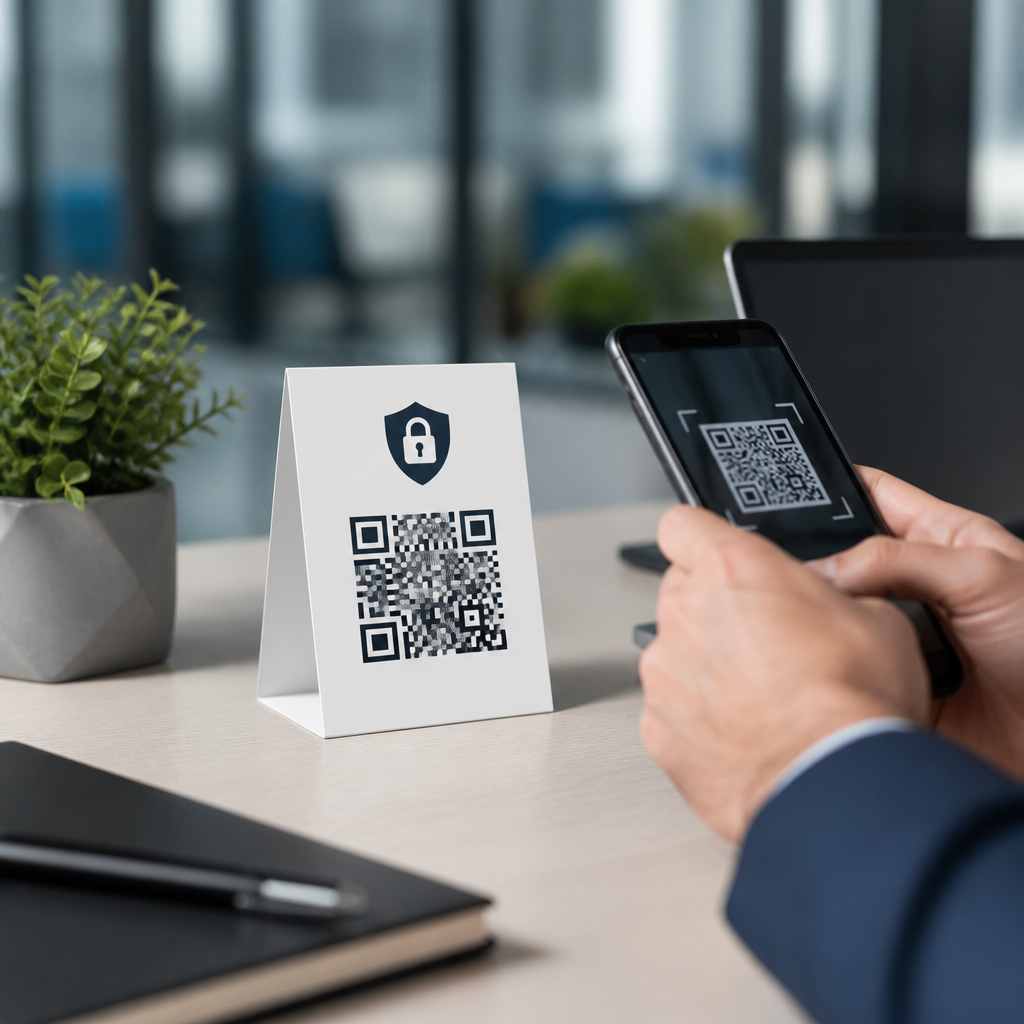
Secure QR code campaigns convert offline attention into measurable digital action, but they also create a direct bridge between a printed object and a live web destination, which makes security a design requirement rather than an optional add-on. In practice, secure QR code implementation means controlling where the code resolves, protecting the data it carries, monitoring for tampering, and giving users enough context to trust the interaction. Teams that treat QR codes as simple graphics usually miss the real risk surface: redirects, spoofed stickers, weak landing pages, over-collection of personal data, and unmanaged third-party generators. Because QR codes appear on packaging, payments, posters, menus, badges, direct mail, and product labels, a single weakness can affect thousands of scans in hours. This hub explains the best practices for secure QR code campaigns, defines the main threats, and shows how to build safer campaigns that support privacy, compliance, and reliable measurement.
Why QR code security matters in real campaigns
QR codes are machine-readable shortcuts, not trust signals. A user cannot inspect the destination the way they might read a printed URL, so the campaign owner must reduce uncertainty before and after the scan. I have seen strong creative campaigns fail basic security checks because the team focused on design placement and scan rate while ignoring redirect governance, domain consistency, and incident response. Attackers exploit that gap with quishing, malicious replacement labels, typo-domain redirects, and fake login pages designed for mobile screens.
The risk is not theoretical. Financial regulators and consumer protection agencies have repeatedly warned about QR-based fraud in parking meters, restaurant ordering, utility payments, and package delivery notices. In enterprise environments, QR codes can also trigger unsafe device actions, initiate credential theft, or collect more personal information than the user expects. For brands, the impact extends beyond stolen data. A compromised QR campaign can damage customer trust, create compliance exposure, and contaminate attribution data, making marketing reports unreliable.
Secure QR code implementation therefore starts with a simple rule: every code must be tied to an approved destination, an owned domain, a documented business purpose, and a monitored user journey. If any one of those elements is missing, the campaign is not production ready.
Core principles of secure QR code implementation
The most effective QR code security programs apply a few consistent controls across every use case. First, use HTTPS everywhere. The QR destination, every redirect hop, embedded content, forms, and payment pages must use valid TLS certificates. Browsers now warn aggressively on insecure pages, and mixed content still creates avoidable risk.
Second, prefer dynamic QR codes managed through a controlled platform instead of static codes that hardcode long or opaque destinations. Dynamic codes let teams update links without reprinting assets, pause campaigns during incidents, and route users to cleaner branded URLs. That flexibility is only safe when access controls, audit logs, and change approval are in place.
Third, minimize the payload. A QR code should usually contain a short URL or tokenized reference, not sensitive personal information, credentials, Wi-Fi secrets, or internal identifiers. Encoding data directly into the symbol increases exposure because anyone with a scanner can read it, copy it, or share it.
Fourth, make the destination predictable. Branded subdomains such as scan.brand.com or go.brand.com improve recognition and help users learn what legitimate campaign links look like. Consistency across signage, packaging, and emails reduces spoofing success because customers know the approved domain pattern.
Threats and controls across the campaign lifecycle
Secure QR code campaigns are built by mapping threats to each stage: creation, distribution, scanning, conversion, and retirement. During creation, the biggest risk is unauthorized generation through free tools with unclear data handling. Use approved generators, restrict who can publish codes, and store source files in version-controlled repositories. During distribution, physical tampering becomes the main concern. Posters, tables, kiosks, and mailed assets can be altered with overlay stickers. Tamper-evident labels, frequent field inspections, and placement inside protective surfaces reduce that risk.
During scanning, the user needs immediate reassurance. Add a nearby callout that states the destination purpose, for example, “Scan to verify product authenticity at verify.brand.com.” That plain-language instruction lowers abandonment and makes suspicious redirects easier for users to spot. During conversion, secure the landing page like any other acquisition surface: enforce HTTPS, use a web application firewall, validate input, protect forms from abuse, and limit scripts from third parties. During retirement, expired campaigns must not leave orphaned redirects active forever. Sunset rules, redirect reviews, and archival procedures prevent old assets from becoming forgotten attack paths.
| Campaign stage | Primary risk | Recommended control |
|---|---|---|
| Creation | Unauthorized or shadow QR generation | Approved platform, role-based access, audit logging |
| Printing and distribution | Sticker replacement or artwork tampering | Tamper-evident materials, proof checks, field audits |
| Redirect and landing | Malicious destination changes or insecure pages | Branded domains, HTTPS, change management, WAF |
| Data capture | Excessive collection or exposed identifiers | Data minimization, consent notices, tokenization |
| Retirement | Abandoned links and unmanaged redirects | Expiration rules, redirect review, decommission checklist |
Designing trustworthy scan experiences
A secure QR code campaign is also a usability project. When people are unsure where a code leads, they either avoid scanning or proceed without confidence. Both outcomes hurt performance. The code should be paired with visible context: brand name, purpose statement, fallback URL, and where relevant, customer support information. On packaging, I recommend printing a short human-readable URL directly below the code so users have another path if their device blocks scans or they want to inspect the domain manually.
Visual integrity matters too. Codes should be large enough to scan quickly, printed at adequate contrast, and tested across common devices and camera apps. Failed scans push users toward repeated attempts, screenshots, or third-party scanner apps, which increases friction and sometimes introduces privacy issues. For high-risk use cases such as payments or identity verification, add a confirmation page that repeats the merchant name, amount or purpose, and key transaction details before submission. This extra step prevents silent handoffs to fraudulent destinations and aligns with well-established payment security principles.
Accessibility should not be overlooked. Provide descriptive nearby text for users who cannot scan, and ensure the landing page works with mobile screen readers, keyboard navigation, and clear form labels. Security that excludes legitimate users is not effective security.
Data protection, privacy, and compliance requirements
Most QR campaigns collect more than scan counts. They may capture location, device data, campaign identifiers, form submissions, payment details, loyalty activity, or product verification events. That means secure QR code implementation must follow the same privacy and compliance standards applied to any digital touchpoint. Start with purpose limitation. Define what data the campaign actually needs, then avoid collecting anything else. If a poster campaign only requires aggregate scan analytics, do not ask for personal details on the first screen.
Use tokenization for transactional flows and avoid placing account numbers, email addresses, or customer IDs inside the QR itself. If personal data is captured, disclose the purpose clearly at the point of collection and link to the relevant privacy notice. Regional requirements vary, but principles from frameworks such as GDPR, CCPA, and PCI DSS remain highly relevant: lawful basis or notice, data minimization, secure processing, retention limits, and restricted access. If children may scan the code, age-related rules and parental consent requirements may also apply.
Vendor due diligence is equally important. QR management providers, hosting companies, analytics tools, and payment processors all sit in the trust chain. Review their security documentation, data processing terms, retention settings, and support for access controls. A campaign is only as secure as the weakest provider handling its redirects or data.
Governance, testing, and incident response
Strong governance turns one-off secure launches into a repeatable operating model. Assign clear ownership across marketing, security, web operations, legal, and field teams. Every QR campaign should have an inventory record listing the code ID, destination URL, owner, placement, launch date, approval history, and expiration date. Without that inventory, organizations cannot audit what is live or respond quickly when a problem appears.
Testing should cover more than whether the code scans. Verify redirect chains, certificate validity, mobile performance, analytics tagging, consent flows, localization logic, and failure handling when the landing page is unavailable. For physical deployments, perform spot checks after installation and during the campaign, especially in public spaces where overlays are common. Security teams should also review open redirects, query parameter handling, and third-party scripts on destination pages.
Finally, create an incident response playbook specifically for QR campaigns. It should define who can disable redirects, how to replace compromised assets, how to notify affected teams, and what evidence to preserve. In the best programs I have worked on, redirect shutdown can happen in minutes because the campaign uses dynamic codes on controlled domains.
Best practices for secure QR code campaigns come down to disciplined implementation, not complicated technology. Use owned domains, HTTPS, dynamic management with access controls, minimal data payloads, clear on-page context, and monitored landing pages. Protect the physical asset from tampering, protect the digital destination from abuse, and protect the user from ambiguity. When privacy and compliance are built into the campaign from the start, teams avoid the common mistake of treating QR codes as exempt from standard web governance.
As the hub for secure QR code implementation, this guidance supports every related topic under QR code security, privacy, and compliance: safer redirects, anti-tamper deployment, secure analytics, payment protection, data minimization, and lifecycle governance. Organizations that follow these practices get more than risk reduction. They gain cleaner attribution, higher user trust, and faster incident containment when conditions change. Review your current QR inventory, identify any unmanaged codes or third-party dependencies, and standardize your launch checklist before the next campaign goes live.
Frequently Asked Questions
What makes a QR code campaign secure in the first place?
A secure QR code campaign is built around the idea that a scan is not just a marketing interaction, but a trust event. When someone points their phone at a code on packaging, signage, direct mail, or an event display, they are moving from a physical environment into a live digital destination. That handoff needs to be controlled carefully. At a minimum, secure implementation means using trusted domains, encrypting any sensitive data in transit with HTTPS, minimizing the amount of information embedded directly in the code, and managing redirects so the final destination cannot be changed by unauthorized parties.
Security also includes operational controls. Teams should know who can create QR codes, edit landing page destinations, and access campaign analytics. Role-based permissions, approval workflows, and audit logs help reduce the risk of accidental or malicious changes. In addition, every code should be tied to a documented campaign purpose, expected destination, and lifecycle plan so it does not remain active indefinitely without oversight.
Equally important is the user experience around trust. People are more likely to scan a code when the surrounding design clearly identifies the brand, explains what will happen after scanning, and points to a recognizable domain. In other words, secure QR code campaigns are not just about technical safeguards. They are about combining destination control, data protection, monitoring, and clear communication so users can feel confident that the code is legitimate and safe to use.
Should QR codes link directly to final pages, or is it better to use redirects?
In most cases, using a controlled redirect is the better and more secure practice. A redirect allows your team to manage the destination without reprinting the physical code, which is especially valuable for long-running campaigns, distributed materials, and situations where a page may need to be updated quickly. If a page moves, a campaign ends, or a security issue is discovered, a managed redirect lets you respond immediately while preserving the same printed QR code in the field.
That said, redirects should be implemented carefully. The redirect service or platform must be under your organization’s control or provided by a reputable vendor with strong security standards. Open redirects should be avoided because they can be abused to send users to unauthorized destinations. Ideally, the redirect system should only allow preapproved domains, log every destination change, support user permissions, and require secure authentication for administrators. These controls help ensure that the code remains a safe entry point rather than becoming a weak link.
Redirects also improve campaign resilience and measurement. They make it easier to track scan activity, detect unusual traffic patterns, and pause suspicious behavior if tampering or abuse is suspected. For best results, use short, branded URLs behind the QR code, keep redirects simple and transparent, and make sure the final landing page clearly reflects the campaign’s branding and purpose. The flexibility of redirects is a major advantage, but only when paired with governance and monitoring.
How can businesses protect QR code campaigns from tampering or malicious replacement?
Physical tampering is one of the most common real-world risks in QR code campaigns. A malicious actor may place a sticker over a legitimate code, replace signage, or alter printed materials so scans are diverted to a fraudulent website. To reduce that risk, start with print and placement strategy. Use tamper-evident materials when possible, avoid locations where codes can be easily covered or swapped unnoticed, and integrate the QR code into the design in a way that makes unauthorized overlays obvious.
Routine inspection is another best practice. High-traffic installations such as retail displays, public posters, kiosks, and event signage should be checked on a documented schedule. Staff should know what the legitimate code looks like, where it should resolve, and how to report issues immediately. In more sensitive environments, businesses may include visual verification elements such as branded frames, campaign identifiers, or human-readable URLs near the code so users and employees can confirm authenticity at a glance.
Digital monitoring matters just as much as physical controls. Track scan analytics for unusual spikes, unexpected geographies, or changes in device patterns that could indicate tampering or abuse. If a code suddenly receives traffic outside the expected campaign footprint, investigate quickly. Maintain the ability to disable or reroute a code fast if a problem is detected. The strongest protection comes from treating tampering as both a physical security issue and a digital incident response issue, with clear ownership and escalation procedures for each.
What data should and should not be stored in a QR code?
As a general rule, a QR code should contain as little sensitive information as possible. The safest approach is usually to encode a secure URL that points to a controlled landing page rather than embedding personal, confidential, or business-critical data directly in the code itself. If someone can photograph, copy, or redistribute the code, anything stored inside it may be exposed or reused beyond the original context. That is why QR codes are best treated as pointers, not containers for sensitive content.
Businesses should avoid placing personally identifiable information, payment details, login credentials, internal system paths, or confidential operational data directly into the code. Even if the intended use case seems limited, printed or displayed codes can travel far beyond the original audience. If the campaign requires personalization, use a tokenized or campaign-specific identifier that maps to data securely on the server side. This allows access rules, expiration logic, and monitoring to be applied centrally without exposing the underlying information in the code image.
When data must be connected to a scan, apply privacy and security principles consistently. Use HTTPS, validate all parameters server-side, minimize retention of scan-related data, and disclose tracking practices where required. It is also wise to establish expiration dates or rotation policies for codes used in temporary promotions or sensitive workflows. The key principle is simple: put only what is necessary in the QR code, and keep valuable or sensitive data protected behind controlled systems rather than printed into the code itself.
How do you build user trust so people feel safe scanning a campaign QR code?
User trust starts before the scan happens. People are more cautious than they used to be, and with good reason. A secure QR code campaign should clearly tell users what they are scanning, why they should scan it, and what they can expect next. Simple context such as “Scan to view the official product guide” or “Scan to register on our secure event page” reduces uncertainty and helps users distinguish legitimate brand communications from suspicious codes with no explanation.
Brand consistency is a major trust signal. Use recognizable logos, consistent visual design, and a destination associated with your official domain. If possible, display a human-readable web address near the code so users know where they are headed. Once they arrive, the landing page should match the campaign message and branding exactly. Any mismatch between the printed material and the destination can create hesitation and increase bounce rates, even if the page is technically secure.
Trust is also reinforced by good security hygiene behind the scenes. Secure certificates, fast-loading mobile pages, limited intrusive permissions, and clear privacy messaging all contribute to a safer experience. Avoid surprise downloads, aggressive pop-ups, or requests for unnecessary personal information immediately after scanning. If a campaign requires a form, explain why the information is needed and how it will be used. The most effective secure QR code campaigns make users feel informed, respected, and in control from the first glance at the printed code to the final digital action.





