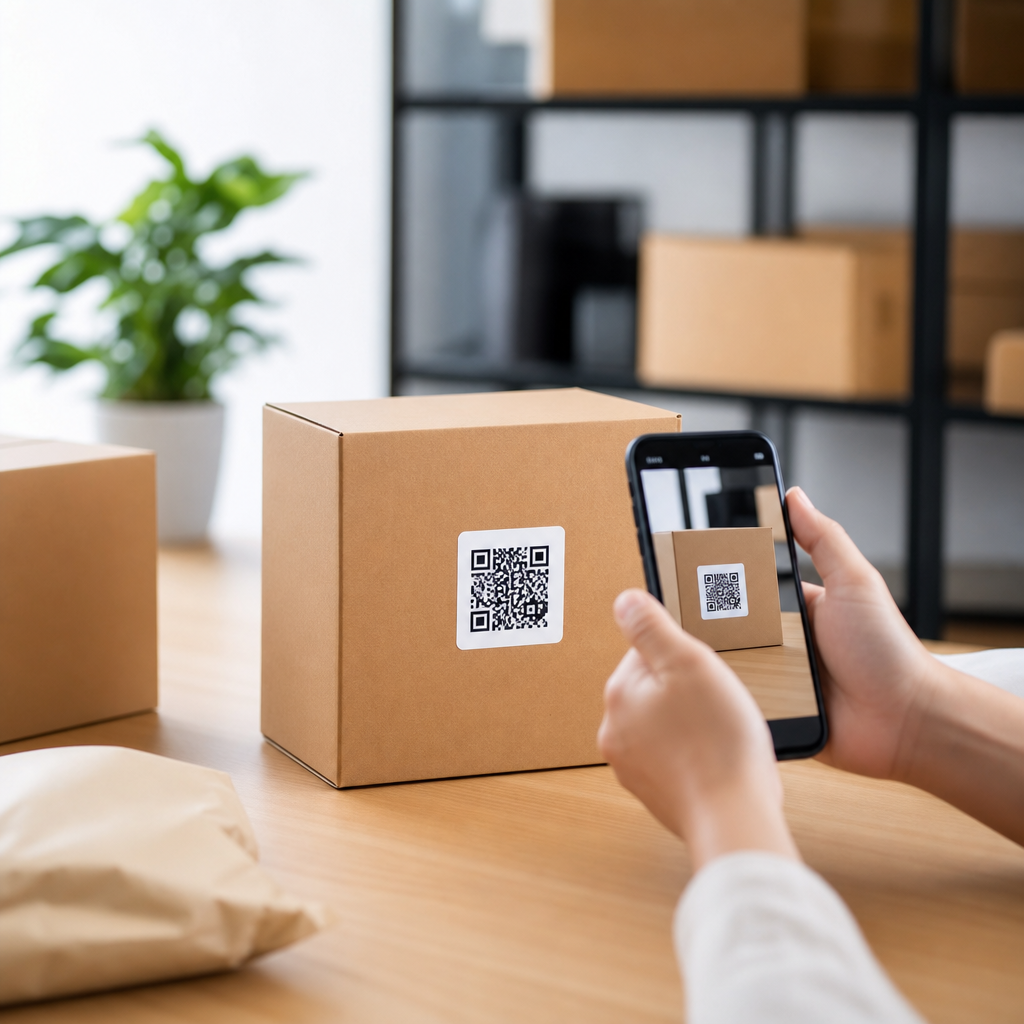
QR codes for product packaging in eCommerce have moved from a novelty to a practical growth tool because they connect a physical product to a measurable digital experience in seconds. In retail and eCommerce, a QR code is a two-dimensional barcode that a smartphone camera can scan to open a webpage, launch a support flow, verify authenticity, register a warranty, or trigger a post-purchase campaign. Product packaging includes shipping boxes, inserts, labels, hangtags, bottles, cartons, and any printed surface that reaches a buyer during fulfillment or on the shelf. When those surfaces carry dynamic, trackable QR codes, brands gain a direct channel after delivery without relying on paid media, crowded inboxes, or marketplace algorithms.
I have implemented packaging QR programs for direct-to-consumer brands, subscription retailers, and omnichannel manufacturers, and the pattern is consistent: the best results come when the code solves a real customer task immediately. Shoppers scan when they want assembly instructions, ingredient details, styling ideas, loyalty rewards, reorder links, or proof that a product is genuine. They do not scan because a package says “scan me” with no clear value. That distinction matters because packaging is one of the few touchpoints every customer physically encounters. Used well, it lifts retention, reduces support tickets, improves review generation, and creates first-party data that retailers can own across channels.
This hub explains how QR codes for product packaging in eCommerce work across retail and eCommerce, where they fit in the customer journey, what technical and design choices matter, and which use cases deliver measurable return. It also frames the operational reality: packaging print cycles, scan reliability, privacy requirements, analytics setup, and the limitations of codes that lead to dead pages or generic homepages. For brands building a broader retail and eCommerce QR strategy, this page serves as the starting point before going deeper into fulfillment inserts, in-store signage, loyalty packaging, traceability, and post-purchase automation.
Why QR codes belong on eCommerce packaging
Product packaging in eCommerce is often treated as branding only, but it is also a conversion surface. A delivered box reaches the buyer at peak attention: the moment of unboxing, first use, gifting, or replenishment. A QR code turns that attention into action. For a cosmetics brand, the code can open a shade-matching tutorial and capture an opt-in for replenishment reminders. For a furniture seller, it can route the customer to model-specific assembly videos and reduce costly “how do I build this” contacts. For a nutrition brand, it can show certifications, usage instructions, and a subscribe-and-save reorder page tied to the exact SKU purchased.
The strongest business case is that packaging scans are intent-rich. Unlike ad clicks, these scans come from people who already received or touched the product. That means lower acquisition waste and better downstream conversion. In practice, I look at four primary outcomes: support deflection, repeat purchase rate, review submission rate, and customer lifetime value. If a package code moves even one of those metrics meaningfully, the program usually pays for itself. Printing costs are low, especially when QR artwork is incorporated into existing packaging plates or variable print workflows, while the upside compounds over every unit shipped.
Core use cases across retail and eCommerce
Different retail categories benefit from different QR journeys, so the landing experience should match product complexity and customer intent. Apparel brands use packaging codes for fit guidance, care instructions, and user-generated styling galleries. Beauty and personal care brands use them for ingredient transparency, tutorials, and subscription replenishment. Consumer electronics brands rely on setup, troubleshooting, app pairing, and authenticity checks. Food, beverage, and supplements use QR codes for sourcing details, nutrition facts, recipes, lot-level traceability, and freshness education. Home goods and furniture brands focus on assembly, replacement parts, and room inspiration tied to cross-sells.
Marketplace sellers can also use package inserts with QR codes to bring customers into owned channels, but they must respect marketplace policies. The safe approach is utility first: registration, manuals, care, and support, with optional prompts to join a loyalty program or access exclusive content. For direct-to-consumer brands, the options are broader. A post-purchase landing page can identify the product, ask one preference question, and branch the user into tutorials, accessories, referrals, or reorder flows. The key is relevance. A code on a shoe box should not dump every buyer onto the brand homepage; it should open the exact experience that helps this buyer use, care for, or repurchase this item.
| Use case | Best fit categories | Primary metric | Example landing experience |
|---|---|---|---|
| Assembly and setup | Furniture, electronics, fitness equipment | Support ticket reduction | Model-specific video guide with parts checklist |
| Reorder and subscription | Consumables, beauty, pet, supplements | Repeat purchase rate | One-click replenish page for the purchased SKU |
| Authenticity verification | Luxury, collectibles, electronics | Fraud reduction | Serialized verification page with ownership registration |
| Reviews and referrals | Most DTC products | Review submission rate | Timed prompt after setup or first-use education |
| Compliance and transparency | Food, cosmetics, regulated goods | Engagement and trust | Ingredients, certifications, sourcing, and FAQs |
Design, printing, and technical setup that affect scan rates
Scan performance depends more on execution than enthusiasm. The code must be large enough, placed on a reasonably flat surface, and printed with high contrast. As a baseline, I recommend dark modules on a light background, at least 0.8 by 0.8 inches for most consumer packaging, then larger if scan distance increases. Glossy curved surfaces, metallic inks, heavy texture, and folds near the quiet zone can hurt readability. Testing should include common devices, low-light conditions, and realistic handling situations, not just a perfect proof sheet in the printer’s office.
Dynamic QR codes are usually the right choice because they allow destination updates without reprinting packaging. They also support campaign parameters, device detection, and scan analytics. For enterprise programs, connect codes to a redirect domain you control, then route by SKU, batch, geography, or language. That architecture protects continuity if the landing platform changes later. The destination page should load fast, be mobile-first, and clearly state the benefit before asking for any data. If a scan leads to a generic homepage, broken link, or forced app download, customers quickly learn that scanning your packaging is not worth the effort.
Measurement, data, and compliance
To measure packaging QR codes properly, define the event chain before launch. At minimum, track scans, unique visitors, landing-page engagement, and the conversion event tied to the use case, such as warranty registrations, help article completion, repeat orders, or review submissions. Use UTM parameters consistently, but do not stop there. A serious retail and eCommerce setup also maps package code traffic into product, order, and cohort data so you can compare outcomes by SKU, acquisition channel, package version, and fulfillment node. Tools vary by stack, but Google Analytics 4, Shopify analytics, Segment, and warehouse reporting can all support this work when naming conventions are disciplined.
Compliance matters because packaging often reaches customers in regulated regions and can collect personal data after the scan. If the page requests an email, phone number, location, or registration details, disclosures and consent flows must match the rules where you sell, including GDPR and CCPA requirements where applicable. For products in food, health, cosmetics, or children’s categories, ensure that claims on the landing page align with packaging claims and any relevant labeling standards. I advise brands to treat packaging QR destinations as extensions of the label itself. Legal review is faster and safer when that principle is clear from the start.
How to build a high-performing hub strategy for this topic
As a hub page under industry-specific applications, this article should connect retail and eCommerce readers to narrower implementations without repeating them in full. The hub’s job is to establish the strategic model, then branch into subtopics such as QR codes for shipping box inserts, product authentication, loyalty enrollment, omnichannel shelf-to-cart experiences, subscription replenishment, returns reduction, and traceability for regulated products. Each child article can target a distinct question while reinforcing the same core principle: put a useful mobile action on the package and tie it to measurable business outcomes.
Operationally, start with one high-frequency product line, one customer task, and one measurable outcome. Build the landing page, print a test run, and review scan data after thirty to sixty days. Then expand by category, fulfillment channel, or region. In every rollout I have seen succeed, three habits stand out: package copy explains exactly why to scan, the destination is specific to the product in hand, and the team has an owner spanning packaging, lifecycle marketing, and analytics. QR codes for product packaging in eCommerce work best when they are treated as part of the product experience, not as decorative print. Audit your current packaging, identify one friction point customers face after delivery, and launch a QR journey that solves it clearly.
Frequently Asked Questions
What are QR codes on product packaging, and why are they valuable in eCommerce?
QR codes on product packaging are scannable two-dimensional barcodes placed on items such as shipping boxes, product labels, cartons, inserts, hangtags, bottles, and other packaging components. When scanned with a smartphone camera, they can instantly direct a customer to a digital destination such as a product page, setup guide, warranty registration form, support portal, authenticity check, reorder page, review request, or loyalty program. In eCommerce, that matters because packaging is often the first physical brand touchpoint after an online purchase, and a QR code turns that moment into an interactive experience.
The value comes from bridging offline and online behavior in a measurable way. Instead of packaging serving only a protective or decorative purpose, it becomes a conversion and retention channel. Brands can use QR codes to reduce customer friction, answer common post-purchase questions, encourage repeat orders, collect first-party data, and improve customer satisfaction. For example, a scan can help a buyer verify they received the right product, learn how to use it correctly, access care instructions, or quickly contact support without searching manually. That convenience improves the user experience while also giving the business visibility into scan rates, engagement patterns, and post-purchase behavior.
From a growth perspective, QR codes are especially useful because they are low-cost to deploy, easy to update when using dynamic links, and highly flexible across product categories. A beauty brand might link to tutorials, a food brand might provide sourcing and nutritional details, and an electronics seller might direct customers to setup videos and troubleshooting. In all cases, the QR code helps packaging do more than deliver a product—it helps extend the customer journey.
How can eCommerce brands use QR codes on packaging to improve the post-purchase experience?
QR codes are one of the most effective ways to improve the post-purchase experience because they remove effort at the exact moment customers are most engaged: when they receive and open the package. Instead of asking buyers to search for instructions, return policies, FAQ pages, or customer support links, the packaging can provide an immediate path to the right resource. That reduces confusion, lowers support volume, and helps customers get value from the product faster.
Common post-purchase use cases include linking to onboarding instructions, assembly videos, product registration, care guides, return portals, refill or replenishment pages, and customer service chat flows. A QR code can also trigger more relationship-focused experiences, such as review requests, referrals, loyalty program signups, exclusive content, or personalized recommendations based on the item purchased. For subscription brands or consumable goods, a scan can send customers straight to a reorder page, which can significantly shorten the path to repeat purchase.
The strongest implementations match the QR destination to the customer’s likely needs in that specific moment. For instance, a QR code on the outside of a shipping box might focus on order confirmation, tracking, or unboxing content, while a code on the product label might lead to usage instructions or authenticity verification. Inserts can be used for review generation or cross-sells after the initial setup is complete. By mapping the placement and call to action to the stage of the customer journey, brands make the scan more relevant and more likely to deliver measurable business value.
Just as important, QR codes can make support feel more seamless. If a customer needs help, scanning a code can pre-fill product details, direct them to the correct help center article, or route them to a support flow tailored to that specific SKU. That saves time for both the customer and the business. In practical terms, this means fewer avoidable returns, fewer “how do I use this?” tickets, and a smoother ownership experience overall.
What information or experiences should a QR code on product packaging link to?
The best QR code destinations are those that solve a real customer need or move the relationship forward in a meaningful way. That typically includes practical, high-intent experiences such as setup instructions, user manuals, care information, sizing help, troubleshooting guides, warranty registration, and support contact options. These are especially useful for products that require assembly, education, repeat usage, or ongoing maintenance. If the customer is likely to have a question after opening the package, that question is a strong candidate for a QR-linked experience.
Beyond utility, QR codes can also support trust and brand building. Many eCommerce companies use them to verify product authenticity, explain ingredients or materials, share sourcing information, provide sustainability details, or highlight compliance and safety information. This is especially valuable in industries where transparency affects purchasing confidence, such as cosmetics, supplements, food, electronics, fashion, and baby products. A quick scan can reassure the customer that the product is genuine, safe, and aligned with the brand promise.
There are also strong marketing applications, as long as they are relevant and not intrusive. Packaging QR codes can direct customers to loyalty rewards, referral programs, product education content, community pages, refill subscriptions, complementary products, or review collection flows. The key is to avoid using every code purely for promotion. Customers are more likely to scan when the value is immediate and obvious. A clear call to action such as “Scan for setup,” “Register your warranty,” or “See how to use your product” generally performs better than a vague “Scan me.”
In many cases, dynamic QR codes offer the most flexibility because the linked destination can be changed without reprinting packaging. That allows brands to update campaigns, swap out outdated resources, personalize by region, or test different landing pages over time. For eCommerce teams, this makes the QR code not just a static tool, but an adaptable part of the customer experience and retention strategy.
How do businesses measure the performance of QR codes on product packaging?
Measuring QR code performance starts with tracking scans, but the most useful analysis goes well beyond that. At a basic level, businesses should monitor total scans, unique scans, scan timing, location data where available, device type, and the specific packaging asset or product associated with the code. This helps identify which products, placements, and calls to action generate engagement. For example, a QR code on a bottle label may perform differently from one on a box insert, and a support-focused CTA may outperform a promotional one depending on the product category.
The next layer is measuring what happens after the scan. Businesses should track landing page visits, time on page, bounce rate, completed actions, review submissions, warranty registrations, support deflection, repeat purchases, subscription signups, and any revenue tied to the destination. If the QR code leads to a reorder page, then conversion rate and average order value matter. If it leads to a help center, then reduction in customer service contacts may be the primary success metric. In other words, the right KPI depends on the purpose of the code.
Dynamic QR code platforms, campaign parameters, and analytics integrations make this possible. Many brands use UTM tracking, dedicated landing pages, customer journey tools, and CRM connections to tie scans to broader post-purchase behavior. This is where packaging becomes a measurable channel rather than a passive asset. Teams can compare performance across SKUs, campaigns, regions, or packaging formats and then optimize based on real customer behavior.
It is also smart to test variables intentionally. Brands can experiment with code size, placement, surrounding design, CTA wording, destination type, and timing of the ask. A code printed prominently on the inside flap of a shipping box may produce more scans than one placed discreetly near the barcode label. Likewise, “Scan for 30-second setup” may outperform “Learn more.” Measurement should not be treated as a one-time reporting task; it should be part of an ongoing optimization process that improves customer experience and business outcomes over time.
What are the best practices for adding QR codes to eCommerce product packaging?
Effective QR code implementation starts with clarity of purpose. Before placing a code on packaging, a brand should decide exactly what action it wants the customer to take and why that action is valuable to the customer. The strongest QR programs are built around usefulness, not novelty. If the destination is confusing, generic, or unrelated to the customer’s moment of need, scan rates will usually be low. Every code should have a specific job, whether that is onboarding, support, verification, education, or retention.
Design and placement matter a great deal. The QR code should be large enough to scan easily, printed with strong contrast, and positioned where customers will naturally notice it. It should not be distorted, crowded by other visual elements, or placed on curved or reflective surfaces without testing. A short, direct call to action should appear near the code to explain what the customer will get by scanning. People are much more likely to engage when the value is explicit. For example, “Scan for care instructions,” “Scan to verify authenticity,” or “Scan to reorder in seconds” provides context and intent.
Mobile experience is equally important because the scan almost always leads to a phone-based interaction. The landing page should load quickly, be easy to navigate on a small screen, and align with the message on the packaging. If a customer scans for setup help and lands on a cluttered homepage, trust drops immediately. Dedicated mobile landing pages typically perform better than generic website destinations because they reduce friction and focus the user on one clear next step.
Brands should also think operationally. Dynamic QR codes