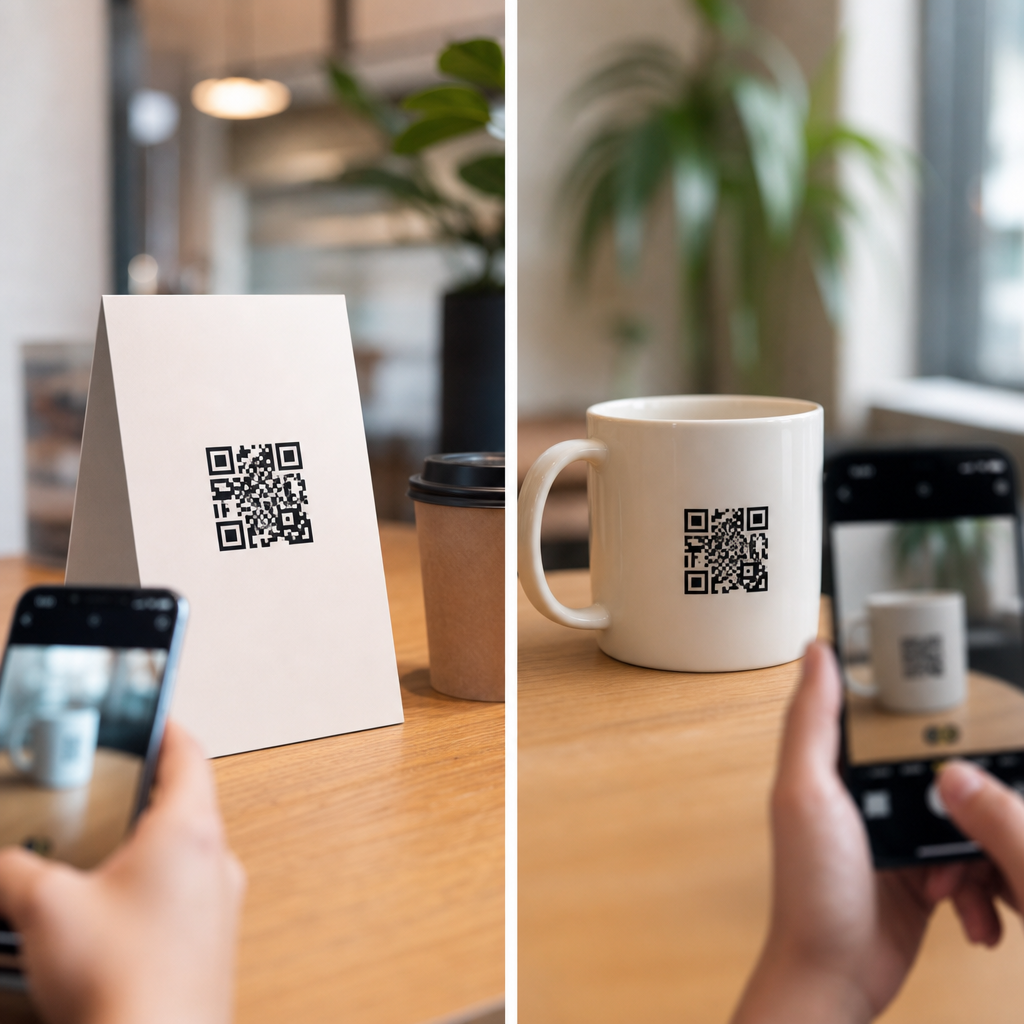

Advanced dynamic QR code strategies give marketers a flexible way to change destinations, personalize journeys, and measure offline-to-online performance without reprinting creative. A dynamic QR code uses a short redirect URL embedded in the code, allowing the final landing page, tracking parameters, and routing logic to change after publication. That distinction matters because static codes hardwire one destination forever, while dynamic codes support optimization, governance, and campaign longevity. I have used them across retail packaging, out-of-home media, direct mail, trade shows, and field sales enablement, and the pattern is consistent: teams that treat dynamic QR codes as a managed marketing channel outperform teams that treat them as a design accessory. The value is not simply convenience. It is operational control. Marketers can pause broken pages, swap destinations by market, test offers by audience, and connect scan behavior to analytics platforms such as Google Analytics 4, Adobe Analytics, HubSpot, and Salesforce. In an environment where media costs are rising and attribution remains fragmented, dynamic QR code strategies help bridge print, physical space, and digital conversion with measurable intent.
For a sub-pillar hub, the goal is to understand the core strategy layers that make dynamic QR programs durable. Those layers include redirect architecture, campaign taxonomy, analytics instrumentation, creative placement, audience segmentation, compliance, and post-launch optimization. A restaurant chain may need location-based routing and menu updates. A B2B marketer may need lead capture tied to account-based campaigns and sales territories. A consumer packaged goods brand may need one package design that points to different promotions over time while preserving a single code on millions of units. These are not edge cases; they are common uses that reward planning. Standards from GS1, privacy requirements such as GDPR and CCPA, and mobile UX expectations all shape implementation choices. The strongest programs answer simple user questions immediately: where does this code take me, why should I scan it, and what happens next. Everything else, from testing to reporting, should support that clarity while preserving the ability to adapt as campaigns evolve.
Build the redirect and measurement foundation first
The most important dynamic QR code strategy is to design the redirect layer before creative goes live. In practice, that means choosing a QR platform or redirect system that supports editable destinations, HTTPS, low-latency delivery, UTM parameter management, scan logs, and role-based permissions. If your team uses Bitly Enterprise, Beaconstac, QR Code Generator PRO, Flowcode, or a custom redirect domain managed through a CDN, the principle is the same: the QR code should point to a stable short URL you control, and that URL should route users based on campaign logic. I strongly recommend using a branded domain rather than a generic shared shortener because it improves trust, simplifies governance, and preserves continuity if vendors change. The redirect layer should also support 301 or 302 behavior intentionally. Use temporary redirects during active testing; lock in permanent redirects only when the destination architecture is settled.
Measurement should be standardized from day one. Every dynamic code needs a naming convention that aligns with your broader campaign taxonomy: channel, placement, audience, region, creative version, and objective. In GA4, define events for scan landings and downstream actions such as form_submit, purchase, store_locator_use, or video_start. If scans trigger app deep links, configure deferred deep linking carefully so users without the app receive a relevant mobile web fallback. In CRM-connected campaigns, pass source metadata into hidden form fields or server-side event pipelines so the scan does not disappear into a generic “direct” bucket. A retailer running window posters, shelf talkers, and receipts should not use one code for all placements. Separate codes reveal which physical context drives response. Once naming and tracking are disciplined, dynamic QR data becomes actionable instead of anecdotal.
Use segmentation to make one code work harder
Dynamic QR codes are powerful because the same printed asset can deliver different experiences based on context. The most useful segmentation dimensions are geography, device type, language, daypart, inventory status, loyalty status, and campaign phase. A national franchise can place one QR code on a menu board, then route users to the nearest store page based on geolocation, defaulting to a store finder if permission is denied. A software company can use one event booth code that sends iPhone users to an App Store page, Android users to Google Play, and desktop users to a demo request page if the QR is scanned from a laptop camera. This is not novelty; it is friction reduction. The fewer choices a user must make after scanning, the higher the completion rate.
Segmentation also supports lifecycle marketing. I have seen direct mail campaigns perform better when the same QR code changes destination by week. In week one, it can lead with a limited-time offer. In week two, if the offer has expired, it can redirect to a buying guide or consultation page rather than a dead end. For product packaging, the code can shift from launch messaging to reviews, recipes, warranty registration, or replenishment subscriptions over time. That extends the value of expensive physical inventory. The caution is transparency. If a package promises recipes, do not suddenly route to a sweepstakes microsite. Users scan because the call to action set an expectation. Dynamic routing should personalize the experience, not violate the promise made on the printed surface.
Match placement, design, and landing pages to user intent
Creative execution determines whether a dynamic QR code gets scanned at all. The code must be large enough, high contrast, and surrounded by quiet space; as a rule, test from the expected scanning distance and under the actual lighting conditions. On out-of-home placements, moving traffic and glare can cut scan rates dramatically, so short dwell environments usually need simpler offers and larger codes. On packaging, the challenge is often curvature, folds, and varnish. I advise printing and field-testing production proofs, not just reviewing digital mockups. Error correction level matters too: higher redundancy can improve resilience when a code is partially obscured, but it also increases density. Balance durability with scanability.
The landing page must honor mobile intent within seconds. If a user scans a code on a poster in a subway station, they want quick value, not a desktop-style homepage. Keep the page lightweight, prefilled when possible, and focused on one next action. For example, a healthcare provider promoting flu shots should route to a mobile scheduling page filtered by nearby clinics and current appointment availability, not a generic services page. A B2B manufacturer promoting technical documentation at a trade show should deliver the exact spec sheet, CAD library, or certification page referenced on the booth graphic. The shortest path wins. Dynamic QR code strategies fail most often not because the code breaks, but because the destination ignores the reason the person scanned.
Choose tactics based on campaign objective
Different objectives call for different dynamic QR code tactics. The table below summarizes common patterns marketers use successfully.
| Objective | Best dynamic tactic | Example | Key metric |
|---|---|---|---|
| Lead generation | Source-tagged form routing by event, region, or rep | Trade show badge alternative linking to meeting scheduler | Qualified form completion rate |
| Ecommerce sales | Inventory-aware redirects to in-stock SKUs or nearest store | Catalog code switching from sold-out item to comparable product | Revenue per scan |
| Retail foot traffic | Geolocation routing to store pages, maps, and local offers | Window decal leading to today’s store-specific promotion | Store locator usage and redemption rate |
| Packaging engagement | Lifecycle destination changes after product launch | Beverage can code moving from campaign video to loyalty sign-up | Repeat scan rate |
| Customer support | Language and product-SKU based help routing | Appliance label linking to model-specific setup instructions | Self-service resolution rate |
For every objective, define the success metric before deployment. If the goal is revenue, optimize for conversion value, not raw scans. If the goal is support deflection, measure fewer inbound calls and faster resolution. This discipline prevents the common mistake of celebrating scan volume without proving business impact. A coupon scan that never redeems is weaker than a smaller audience that purchases at a high rate. Dynamic QR code strategies work best when the redirect logic, creative promise, and KPI are tightly aligned.
Governance, privacy, and optimization keep programs scalable
As dynamic QR usage expands, governance becomes a growth enabler rather than a bureaucratic burden. Maintain a registry of active codes with owner, campaign dates, destination rules, expiration policy, and fallback URL. Set alerts for broken pages, unusual scan spikes, and SSL issues. If agencies create codes on your behalf, insist on account ownership clauses and exportability so assets do not disappear when contracts end. For enterprise brands, integrate QR naming conventions into campaign briefs and asset management workflows. This avoids duplicate codes, conflicting UTMs, and mystery redirects months later. Where products move through long supply chains, document how long a code may remain in market and what evergreen destination will replace campaign-specific pages after sunset.
Privacy and compliance need equal attention. Geolocation, personalized routing, and CRM enrichment can improve relevance, but they also increase data responsibility. Disclose what data is collected, minimize personally identifiable information, and honor regional consent requirements. Avoid routing users through unnecessary third parties if first-party infrastructure can do the job. Finally, optimization should be continuous. Run A/B tests on calls to action, destination types, and incentive structures. Compare scans by placement height, surrounding copy, and time of day. Review heatmaps and session recordings carefully, but prioritize server-side conversion data when judging performance. Dynamic QR code strategies create an unusual advantage: the printed asset stays fixed while the digital experience improves. Treat that capability as an ongoing testing program. Audit your current QR inventory, map each code to a measurable goal, and upgrade static placements where flexibility and reporting will materially improve results.
Frequently Asked Questions
What makes a dynamic QR code more valuable than a static QR code for modern marketing campaigns?
A dynamic QR code is more valuable because it separates the printed code from the final destination. Instead of permanently encoding one fixed URL, it points to a short redirect link that can be updated after the code has already been printed, mailed, packaged, or displayed in-store. That flexibility is a major strategic advantage for marketers running campaigns across multiple channels, timelines, and audience segments. If a landing page changes, an offer expires, a product goes out of stock, or a regional promotion needs to be swapped, the destination can be changed without reprinting the asset.
Beyond simple convenience, dynamic QR codes support true campaign optimization. Marketers can test different landing pages, modify routing rules, append tracking parameters, and adapt the post-scan experience based on campaign performance. This is especially useful in out-of-home, direct mail, retail packaging, event signage, and print advertising, where creative may remain in circulation for weeks or months. A static QR code locks in every early decision; a dynamic QR code preserves room to improve results over time.
Dynamic codes also provide a stronger measurement framework. Because scans pass through a managed redirect layer, marketers can track usage patterns such as scan volume, time of day, geography, device type, and referral context depending on the platform being used. That makes dynamic QR codes an important bridge between offline media and online analytics. In practical terms, they turn printed assets from one-time placements into measurable, adaptable campaign touchpoints with a longer useful life and better operational control.
How can marketers use dynamic QR codes to personalize customer journeys without creating operational chaos?
The key is to treat the dynamic QR code as an intelligent routing point rather than just a clickable shortcut. A single code can direct different users to different destinations based on factors such as location, language, device type, campaign source, time window, or audience segment. For example, one printed QR code on national point-of-sale material could send customers in different regions to localized landing pages, route iPhone users to an App Store experience, send Android users to Google Play, or present a mobile web fallback when no app install is appropriate. This allows personalization at scale while keeping creative production simpler.
To avoid operational chaos, marketers should establish governance before launch. That means defining naming conventions, ownership, routing logic, expiration rules, and documentation for every code. Each dynamic QR code should have a clear purpose, a controlled redirect structure, and a designated team responsible for updates. It is also smart to maintain a central inventory that records where each code appears, what campaign it supports, what its current destination is, and what changes have been made over time. This prevents the common problem of “mystery codes” still active in the market with no clear owner.
Personalization also works best when it remains strategically restrained. Marketers should prioritize variations that meaningfully improve conversion or relevance rather than creating excessive fragmentation. Instead of building dozens of barely different journeys, focus on high-impact routing decisions such as new versus returning customers, store-level offers, product category interest, or event-specific follow-up. Combined with strong analytics and disciplined governance, dynamic QR codes can deliver personalized experiences that feel seamless to the customer and manageable to the team.
What are the most effective ways to measure offline-to-online performance with dynamic QR codes?
Effective measurement starts with understanding that the QR code itself is not just a response mechanism; it is a trackable media identifier. Each dynamic QR code should be tied to a specific placement, audience, or creative variant so scan activity can be attributed accurately. Rather than reusing the same code everywhere, marketers should create distinct dynamic codes for major channels, formats, or locations, such as in-store signage, packaging inserts, direct mail versions, trade show booths, and outdoor ads. That structure makes it possible to compare performance across offline touchpoints and identify which placements generate the most engagement and downstream value.
Tracking should go beyond raw scan counts. Strong measurement includes scan-to-visit rate, landing page engagement, form completion, purchase activity, app installs, coupon redemptions, and assisted conversions where possible. Dynamic QR codes are especially useful because they can append UTM parameters or other campaign identifiers at the redirect stage, helping data flow into analytics platforms more cleanly. When combined with CRM, ecommerce, or marketing automation systems, scans can be linked to lead quality, revenue, retention, and lifetime value rather than being treated as a vanity metric.
Marketers should also account for context when evaluating performance. A lower scan volume from premium packaging may outperform a high-volume poster campaign if it drives better conversion or higher order value. Time-based patterns can reveal when audiences are most responsive, and geographic patterns may point to regional differences in messaging effectiveness. Testing is essential: different calls to action, placement positions, incentive structures, and destination experiences can all influence performance. When dynamic QR codes are deployed with disciplined campaign structure and integrated analytics, they become a reliable framework for quantifying how offline media contributes to digital outcomes.
What best practices help extend campaign longevity when using dynamic QR codes in print, packaging, and physical environments?
Campaign longevity depends on planning for change from the beginning. Because physical materials often remain visible long after launch, marketers should avoid sending scans to overly narrow or time-sensitive destinations unless the redirect can be updated later. Dynamic QR codes are ideal for this because they let teams refresh landing pages, swap expired offers, replace discontinued products, or shift messaging seasonally while keeping the same printed code active. This is particularly valuable for packaging, brochures, catalogs, retail displays, and durable signage that may continue driving engagement for months or even years.
One best practice is to route scans to evergreen content structures with flexible campaign logic behind them. For example, instead of printing a QR code that conceptually belongs to a single short-lived promotion, it can point to a maintained campaign hub where featured offers, product recommendations, educational content, or store information can be updated over time. That keeps the customer experience relevant even after the original promotion has ended. It also protects brand credibility by reducing the risk of dead pages, outdated messaging, or broken journeys.
Another important factor is governance and maintenance. Dynamic QR codes should be reviewed regularly to ensure destinations still work, analytics are still capturing correctly, and the post-scan experience remains aligned with business goals. Teams should define sunset rules, redirect fallback pages, and escalation paths if a linked experience becomes unavailable. In long-running campaigns, periodic optimization can improve results without changing the visible creative. In short, dynamic QR codes extend campaign lifespan not merely because they are editable, but because they allow marketers to maintain relevance, continuity, and performance long after physical assets have entered the market.
What risks should marketers watch for when implementing advanced dynamic QR code strategies?
The biggest risk is treating dynamic QR codes as purely tactical tools rather than managed digital assets. Because the destination can be changed at any time, poor governance can create inconsistency, broken customer journeys, compliance issues, or brand confusion. A QR code printed on regulated packaging, partner collateral, or national advertising may not be appropriate for unrestricted destination changes. Marketers need approval workflows, access controls, and clear policies about who can edit redirects, what kinds of changes are allowed, and how those changes are documented. Flexibility is powerful, but unmanaged flexibility can become a liability.
Another common risk is weak user experience. Some campaigns focus so heavily on the code itself that they neglect what happens after the scan. If the landing page is not mobile-optimized, loads slowly, mismatches the call to action, or asks for too much too soon, scan performance will not translate into business outcomes. Dynamic QR strategies should always connect the physical prompt, the scan moment, and the landing experience into one coherent journey. Security and trust also matter. Users should feel confident that the code is legitimate, leads to a branded environment, and does not trigger suspicious redirects or low-quality pages.
Measurement can also become distorted if codes are reused indiscriminately or tracking frameworks are inconsistent. A single generic code used across many placements may hide which offline asset actually performed best. Likewise, changing routing logic mid-campaign without proper annotation can make historical reporting difficult to interpret. To reduce these risks, marketers should combine dynamic QR flexibility with disciplined campaign architecture, QA testing, analytics standards, and ongoing monitoring. When handled strategically, dynamic QR codes are highly effective. When handled casually, they can undermine attribution, customer trust, and campaign control.