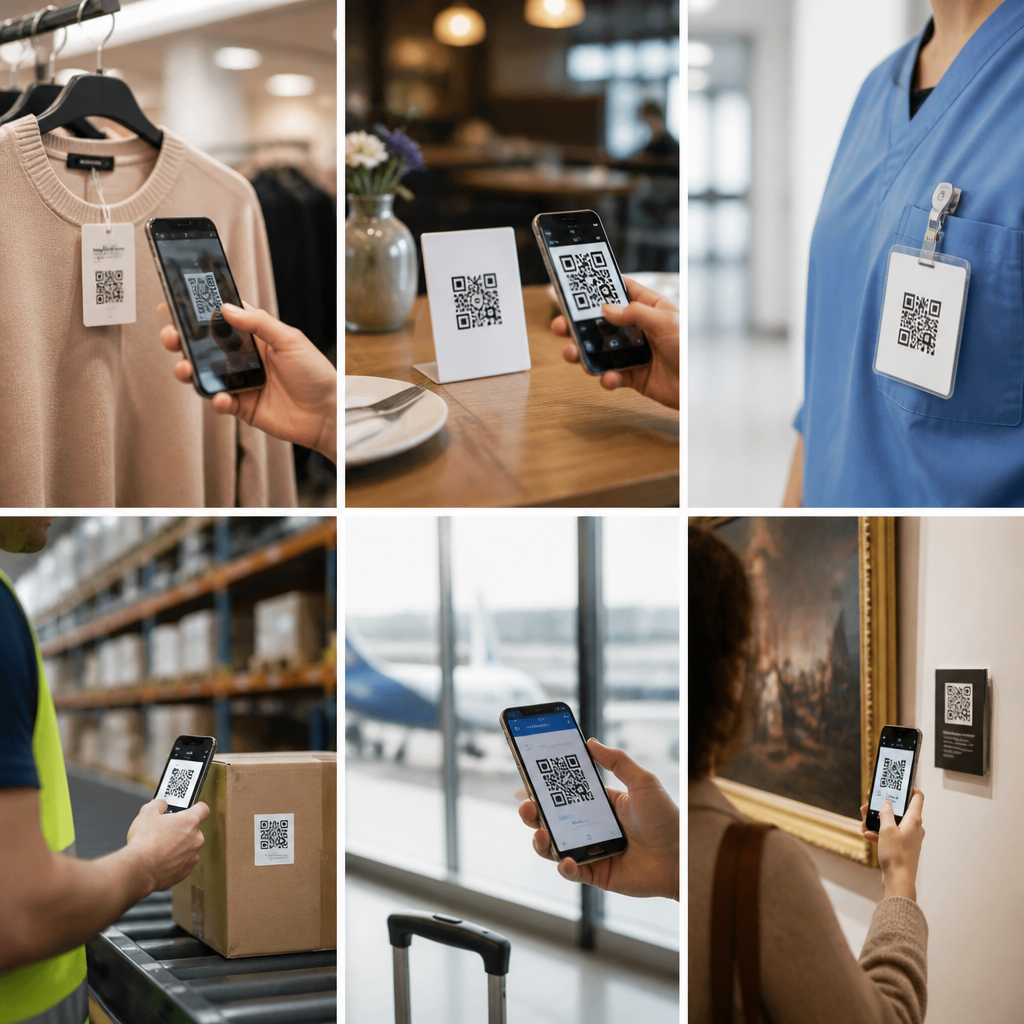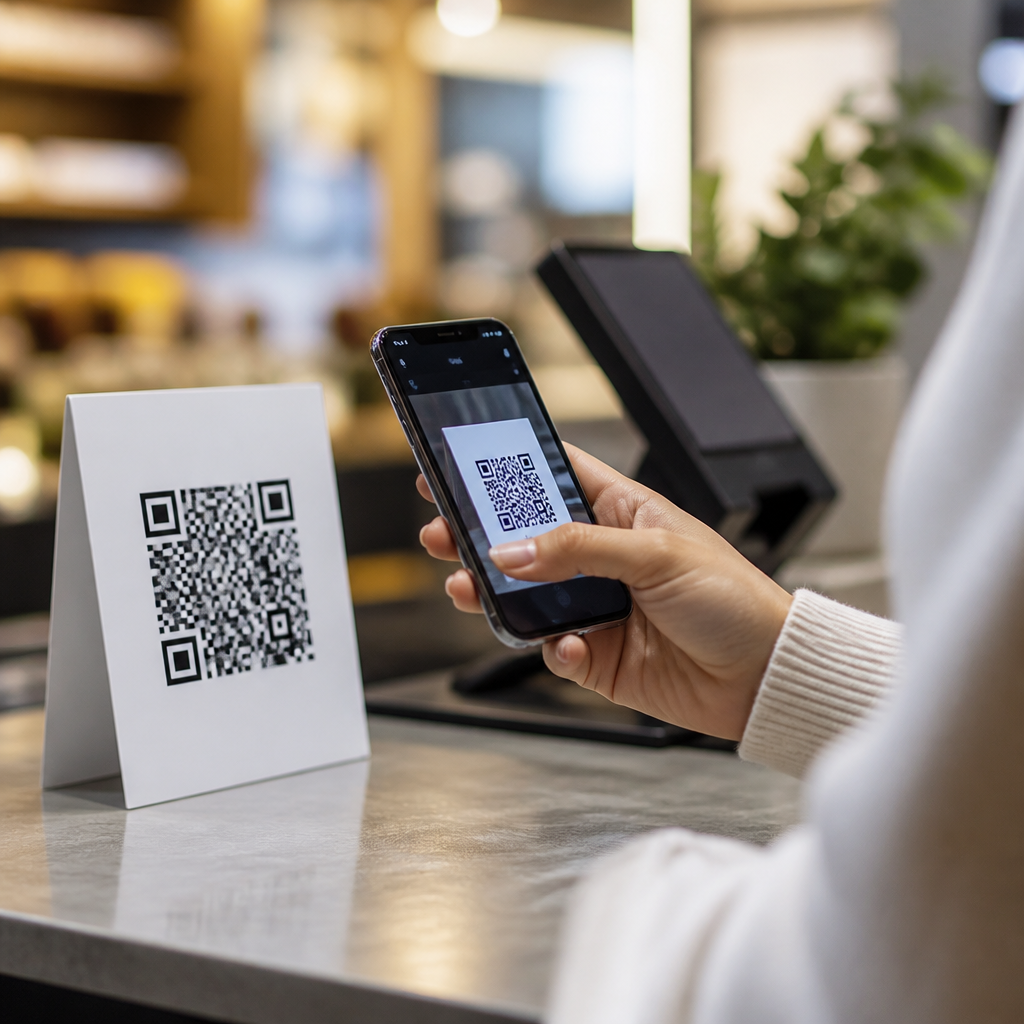

QR codes moved from a niche packaging tool to critical digital infrastructure during and after COVID, and their role in the post-pandemic economy is still expanding. A QR code, or quick response code, is a two-dimensional barcode that stores data such as a URL, payment token, menu, ticket, product identifier, or app action. Unlike traditional one-dimensional barcodes, QR codes can hold far more information and can be scanned quickly by smartphone cameras without dedicated hardware. That simple usability change matters because the smartphone has become the default interface for payments, commerce, identity, customer service, and media consumption.
In my work with retail, hospitality, and events teams, the biggest shift I saw after 2020 was not just higher scan volume. It was a change in expectations. Customers began to assume that physical spaces should connect instantly to digital actions: scan to pay, scan to order, scan to verify, scan to join Wi-Fi, scan to review, scan to register, scan to authenticate. Businesses that once treated QR codes as a temporary health measure now use them as a permanent bridge between offline attention and online conversion. This is why the future of mobile QR codes matters: they reduce friction at the exact moment a user is ready to act.
The phrase future of mobile QR codes refers to how QR technology evolves within smartphone ecosystems, payment networks, operating systems, analytics platforms, and privacy rules. It includes dynamic QR codes that can change destination without reprinting, first-party measurement tied to campaigns, wallet-based credentials, and secure login or authentication flows. It also includes consumer behavior. A technology becomes durable when people trust it, understand it, and encounter it in consistent ways across industries. QR codes now meet that standard in many markets, especially where mobile payments and app ecosystems are mature.
For businesses building digital journeys, this topic is strategically important because QR codes sit at the intersection of convenience, cost efficiency, and measurable performance. Printing one code on packaging, signage, direct mail, receipts, or tables can launch a trackable customer path faster than deploying kiosks or training staff on new hardware. At the same time, the long-term opportunity is bigger than replacing touchpoints. QR codes are becoming identifiers within connected commerce, linking physical products and places to verified digital records, loyalty systems, personalized offers, and support content. Understanding that evolution helps brands make better decisions now, not after competitors define the standard.
Why QR codes became a permanent mobile behavior
COVID accelerated adoption by turning contactless interaction from a convenience into a necessity. Restaurants replaced printed menus with QR menus. Offices used codes for check-in forms and health declarations. Retailers added scan-to-pay and curbside pickup flows. Event organizers used mobile tickets instead of paper stubs. Once users learned that their camera app could trigger these actions instantly, scan behavior became habitual. The critical point is that habit outlasted the original health context because it solved real usability problems.
Smartphone platform support reinforced that habit. Apple integrated code recognition directly into the Camera app and Control Center. Android device makers and Google Lens made scanning equally accessible. That removed the old barrier of needing a separate reader app, which had limited mainstream use for years. In practice, every recent smartphone became a QR scanner by default. When a technology becomes native at the operating-system level, adoption typically moves from novelty to infrastructure.
Businesses also discovered that QR codes were operationally efficient. A dynamic restaurant menu can be updated instantly without reprinting. A retailer can redirect a packaging QR code to a seasonal landing page, warranty registration, or inventory-specific product guide. A venue can issue mobile entry credentials that are easier to validate and harder to duplicate than casual paper alternatives. These are not theoretical gains. They reduce print waste, shorten service times, and create measurable digital trails that teams can optimize.
Core use cases shaping the future of mobile QR codes
The future of mobile QR codes is being defined by a small set of high-value use cases where speed and context matter most: payments, product information, omnichannel marketing, authentication, and service access. In payments, QR formats such as EMVCo merchant-presented and consumer-presented codes support account-to-account transfers, wallet payments, and merchant checkout, especially in markets where card infrastructure is uneven or expensive. In product experiences, brands use codes to open setup videos, ingredient disclosures, recall notices, repair instructions, and loyalty enrollment flows at the point of use.
Marketing teams increasingly treat QR codes as offline entry points into measurable funnels. A code on out-of-home media can direct users to a city-specific landing page. A code in direct mail can prefill a promotional offer for a known audience segment. A code on in-store displays can connect shelf browsing to product comparison content or customer reviews. In campaigns I have audited, the highest-performing implementations use a clear value exchange, such as instant access, exclusive content, or faster checkout, rather than a generic “scan me” label.
Authentication is another major growth area. QR codes can initiate secure device pairing, passwordless login, visitor management, or document verification. The value here is not that the code itself is inherently secure; it is that the code can trigger a secure workflow anchored to an encrypted session, signed credential, or one-time token. This distinction matters because businesses sometimes overestimate the code and underestimate the surrounding security architecture.
| Use case | Primary benefit | Best example | Main limitation |
|---|---|---|---|
| Mobile payments | Faster checkout with lower hardware dependency | Counter service restaurant using wallet-based scan-to-pay | Adoption varies by region and banking rails |
| Product support | Immediate access to setup, warranty, and care information | Electronics brand linking packaging to video onboarding | Poor landing pages reduce completion rates |
| Marketing attribution | Track offline-to-online conversions | Poster campaign with location-specific URLs | Weak creative lowers scan intent |
| Identity and access | Quick verification and reduced manual entry | Event ticketing with rotating mobile credentials | Requires secure backend validation |
What businesses need to build effective QR experiences
Effective QR deployment is not mainly about graphic design; it is about journey design. Start with destination quality. The landing page or app action must load quickly, match user intent, and minimize steps. If a customer scans a table code expecting a menu, do not send them to a homepage. If they scan packaging for support, do not force account creation before basic instructions. In field testing, the biggest conversion losses usually happen after the scan, not before it.
Code format and management matter too. Static QR codes are useful for fixed destinations, but dynamic QR codes are better for campaigns, packaging, and long-lived signage because they allow destination changes, scan analytics, and controlled redirects. Teams should standardize naming conventions, UTM parameters, expiration logic, and ownership rules. Without governance, organizations end up with orphaned codes, broken redirects, and inconsistent reporting across departments.
Placement and usability directly affect scan rate. Codes need sufficient size, quiet zone spacing, contrast, and lighting. ISO/IEC 18004 sets the technical standard for QR code symbology, and practical print guidance still matters: avoid reflective surfaces, warped packaging seams, and tiny placements that force awkward camera angles. Add a concise call to action that explains the benefit in plain language, such as “Scan for assembly video” or “Scan to reorder in 30 seconds.” Specificity increases scans because it removes uncertainty.
Measurement should connect scans to outcomes, not vanity metrics. Track unique scans, repeat scans, location, device type, conversion events, assisted revenue, and downstream behavior. Tools commonly used include Google Analytics 4, Adobe Analytics, Bitly, QR Code Generator PRO, Flowcode, and enterprise campaign platforms that support redirect rules and event tagging. The strongest programs compare scan rate by surface, creative, and audience segment, then iterate like any other performance channel.
Security, privacy, and consumer trust in the next phase
As QR usage expands, trust becomes the deciding factor between utility and avoidance. Users know that malicious QR codes can redirect to phishing pages, fake payment screens, or malware prompts. That risk is manageable but real. Responsible brands reduce it by using recognizable domains, HTTPS, minimal redirects, branded short links, and transparent on-page identity cues. In physical spaces, tamper-resistant placement matters because fraud often starts with a sticker placed over a legitimate code.
Privacy also shapes the future of mobile QR codes. A scan can reveal approximate location, device information, and behavioral intent, especially when tied to campaign parameters or authenticated sessions. Businesses should collect only what is necessary, disclose tracking clearly, and align with regulations such as GDPR and CCPA where applicable. In my experience, teams that treat QR scans as high-intent first-party interactions, rather than excuses for excessive data capture, perform better over time because they preserve trust while still learning what matters.
There is also a broader standards question. Payment ecosystems, digital identity frameworks, and product passport initiatives are pushing QR codes beyond simple links toward structured data exchange. As this happens, interoperability will matter more than novelty. The winners will be brands and platforms that make scanning predictable, secure, and genuinely useful across many contexts, from checkout counters to connected packaging.
Where the future of mobile QR codes is heading
The next stage is deeper integration with wallets, identity credentials, and connected products. Mobile operating systems already recognize URLs, Wi-Fi onboarding, app clips, and payment intents. Increasingly, a QR code will not just open a webpage; it will trigger a context-aware mobile action, such as adding a pass to a wallet, launching an authenticated return flow, or displaying product provenance data. For manufacturers and retailers, this supports circular economy goals, resale verification, and after-sales service.
Expect stronger use in omnichannel commerce as well. Stores will use QR codes to connect shelves with endless-aisle inventory, customer-specific offers, and self-service checkout. Consumer packaged goods brands will treat packaging as a renewable media channel rather than a static label. B2B firms will use codes on equipment for maintenance logs, parts ordering, training, and compliance records. These applications work because the phone is always present, and the code is the fastest bridge from object to action.
QR codes in a post-COVID digital world are no longer a temporary fix for touchless interaction. They are a practical mobile interface layer for payments, information, identity, and conversion. The key lesson is simple: the future of mobile QR codes belongs to organizations that design the full experience, not just the symbol. Build around user intent, use dynamic management and clear measurement, protect trust with visible security and restrained data collection, and connect each scan to a meaningful outcome. If you are planning your digital roadmap, audit every physical customer touchpoint and identify where a well-executed QR journey can remove friction today while preparing your business for the next wave of mobile commerce.
Frequently Asked Questions
Why did QR codes become so important during and after COVID-19?
QR codes became essential during COVID-19 because they solved a very immediate problem: how to connect people to digital information and services without requiring physical contact. Restaurants replaced printed menus with scannable digital menus, businesses used QR codes for contactless check-ins, healthcare providers linked patients to forms and appointment systems, and event venues used them for digital ticketing and capacity management. What had once been seen as a niche technology suddenly became practical everyday infrastructure.
That importance did not disappear when lockdowns eased. Instead, consumer habits changed. People became more comfortable scanning codes with their phones to pay, order, register, verify identity, access product details, or move between offline and online experiences. Businesses also realized that QR codes are inexpensive, flexible, and easy to update when paired with dynamic links. In the post-COVID digital world, QR codes are no longer just a temporary health-era workaround. They have become a scalable bridge between physical spaces and digital systems, supporting convenience, speed, and operational efficiency across retail, hospitality, healthcare, logistics, education, and public services.
What makes QR codes different from traditional barcodes?
A QR code is a two-dimensional barcode, which means it stores data both horizontally and vertically. Traditional one-dimensional barcodes typically store a limited amount of numeric information in a series of parallel lines and are mainly used for product identification at checkout. By contrast, QR codes can hold much more data, including website URLs, payment tokens, contact information, ticket details, app actions, product identifiers, and authentication data.
Another major difference is usability. Traditional barcodes usually require a dedicated scanner, while QR codes can be scanned directly with most smartphone cameras. That simple shift dramatically lowered the barrier to adoption because businesses did not need specialized consumer hardware, and users did not need to learn a new device. QR codes also include error correction, which allows them to remain scannable even if part of the code is damaged or obscured. In practical terms, that makes them more versatile for real-world environments such as packaging, posters, restaurant tables, warehouse labels, kiosks, and transportation systems.
How are QR codes used in the post-pandemic economy today?
In the post-pandemic economy, QR codes are used far beyond menus and check-ins. Retailers use them for product information, loyalty programs, digital receipts, and frictionless payments. Restaurants and hospitality brands use them for ordering, guest onboarding, room information, and service requests. Event organizers rely on QR codes for mobile ticketing, access control, and attendee engagement. In healthcare, they support patient intake, prescription workflows, vaccination records, and secure access to medical information. Manufacturers and logistics companies use them for inventory tracking, traceability, maintenance records, and supply chain visibility.
They also play an increasingly important role in marketing and omnichannel commerce. A QR code on packaging, signage, or direct mail can instantly move a customer to a landing page, subscription form, product tutorial, social campaign, or personalized offer. For businesses, that creates measurable offline-to-online journeys that were much harder to track in the past. In short, QR codes are now part of the digital operating layer for many industries, helping organizations streamline workflows while giving consumers faster access to information and services.
Are QR codes safe to use, and what security risks should people know about?
QR codes themselves are not inherently dangerous, but like any tool that links users to digital destinations, they can be misused. The main risk is that a malicious QR code may direct someone to a fraudulent website, trigger a harmful download, or impersonate a legitimate payment or login page. This is especially relevant in public places, where a scammer might place a fake sticker over a real code. Because scanning feels fast and routine, users may not always stop to verify where the link leads before interacting with it.
To use QR codes safely, people should scan only from trusted sources, preview the destination URL when their phone allows it, and avoid entering sensitive information unless they are sure the page is legitimate and secure. Businesses should also follow best practices by using branded domains, secure HTTPS destinations, tamper-resistant placement, and clear labeling about what the code does. In regulated or high-risk environments, organizations may add authentication layers or digitally signed QR systems. As QR codes become more deeply embedded in payments, identity, and access control, security and trust are becoming just as important as convenience.
What is the future of QR codes in a more digital, mobile-first world?
The future of QR codes looks strong because they solve a lasting need: simple, low-cost connection between physical objects and digital experiences. As more commerce, communication, and customer service move to mobile devices, QR codes provide an easy entry point without requiring users to type URLs, download special tools, or interact with expensive hardware. That makes them especially valuable for fast transactions, self-service environments, and real-time information delivery.
Looking ahead, QR codes are likely to become even more integrated with digital payments, smart packaging, authentication, loyalty ecosystems, transit systems, and connected product experiences. Dynamic QR codes will continue to grow because businesses want the ability to change destinations, personalize campaigns, and measure performance without reprinting materials. We are also likely to see stronger links between QR codes and technologies such as digital wallets, augmented reality, first-party data strategies, and product traceability systems. In a post-COVID digital world, QR codes are not just surviving as a convenience feature. They are evolving into a durable part of modern digital infrastructure.